Recollecting Poi, Pikake, and Paniolos
Working with the Mayor’s Office of Culture and the Arts (MOCA) I worked on this exhibition in Honolulu Hale, the city hall building in Honolulu. Below is the instagram post they did on me…
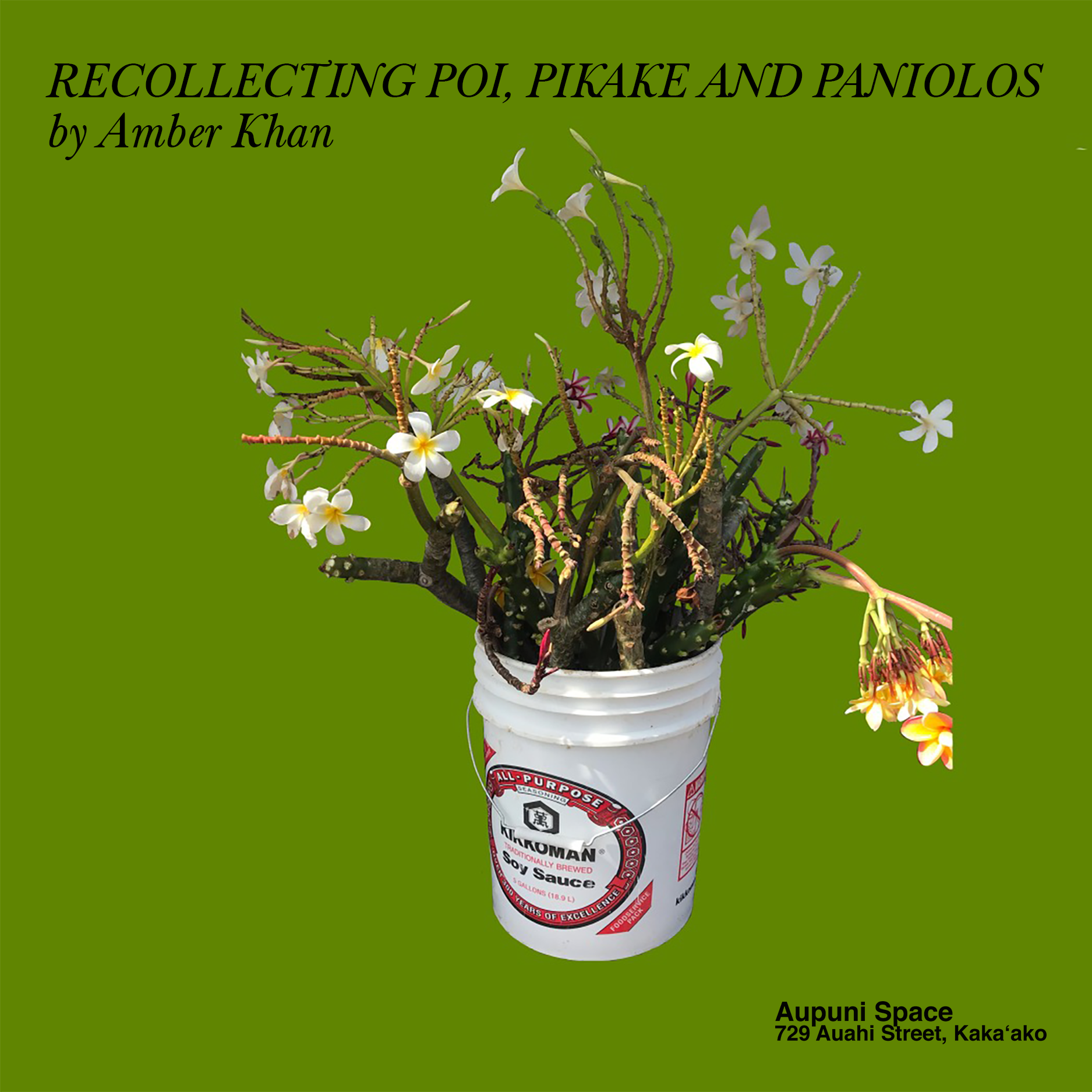
'Recollecting Poi, Pikake and Paniolos'
by Amber Khan @colour.amber
Presented by Aupuni Space @aupunispace
August 19 – September 30, 2022
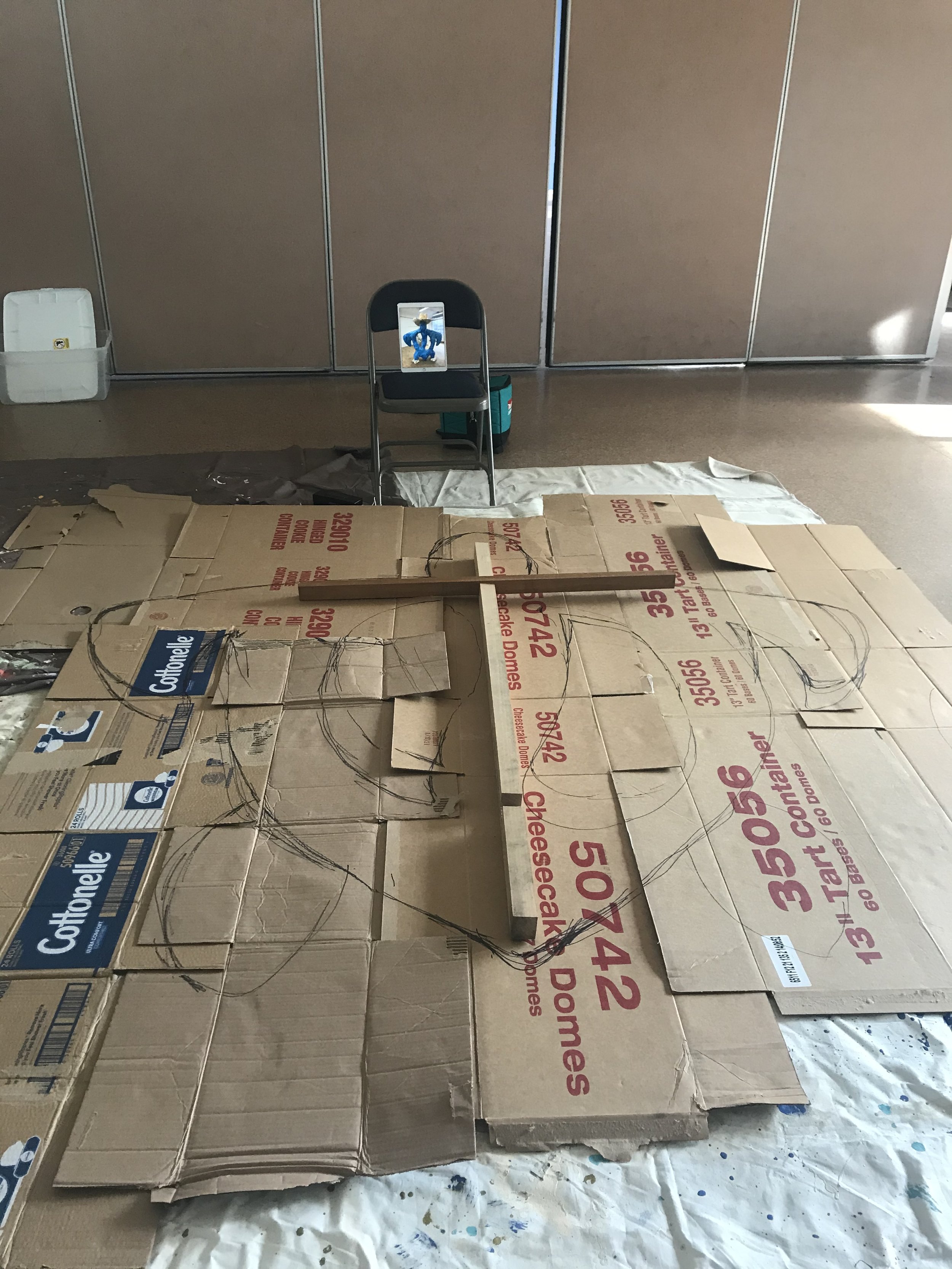
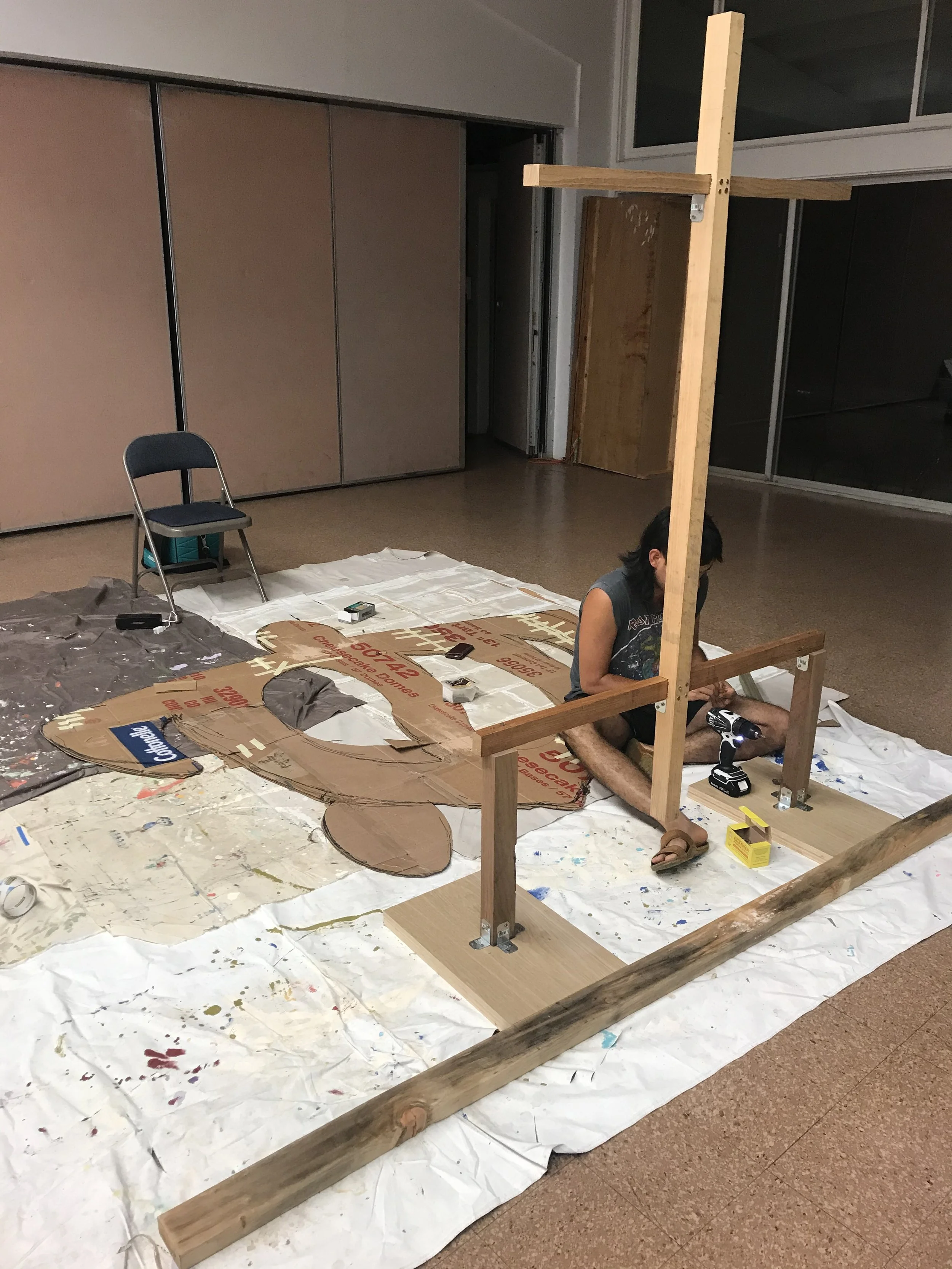
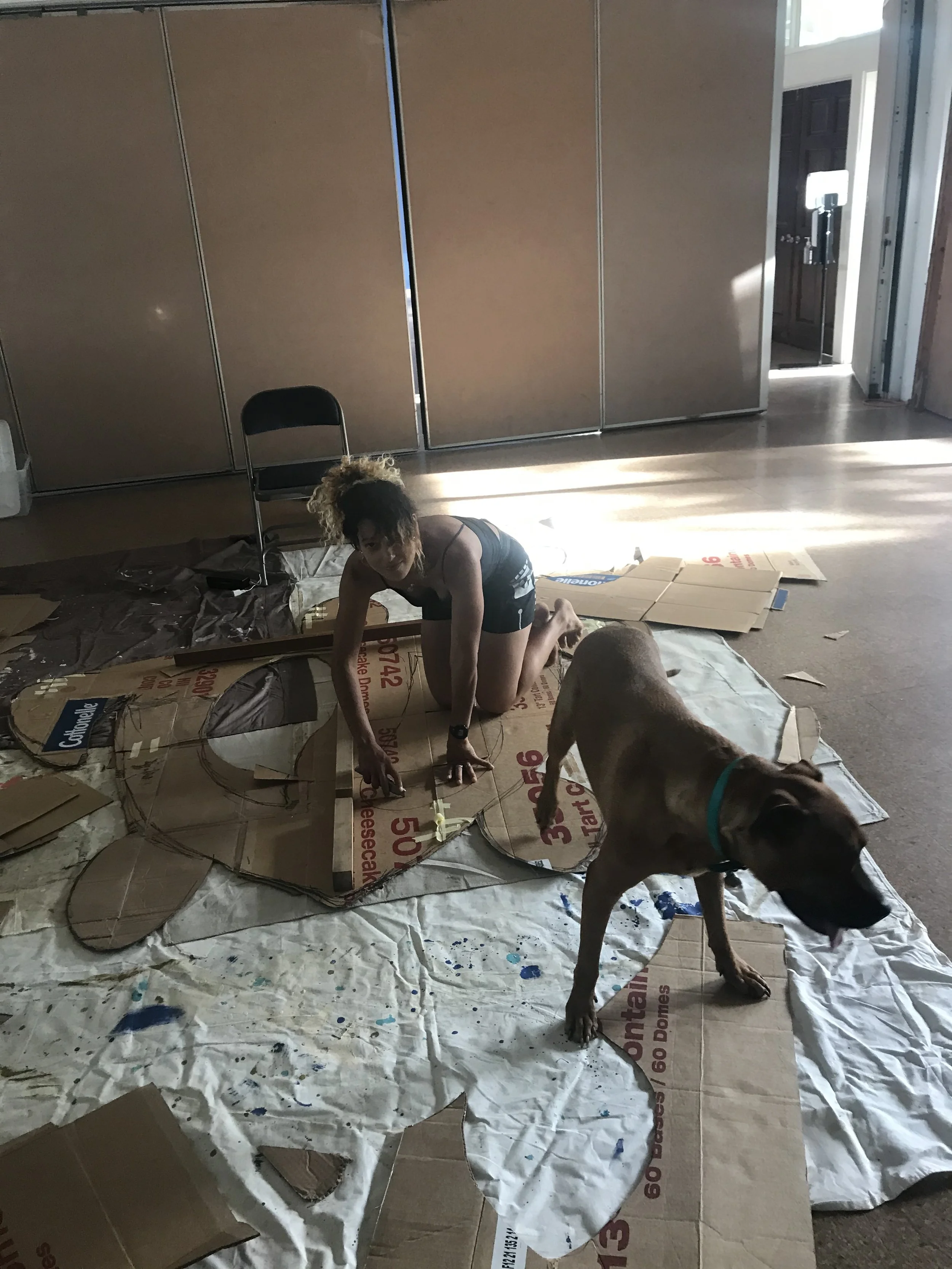
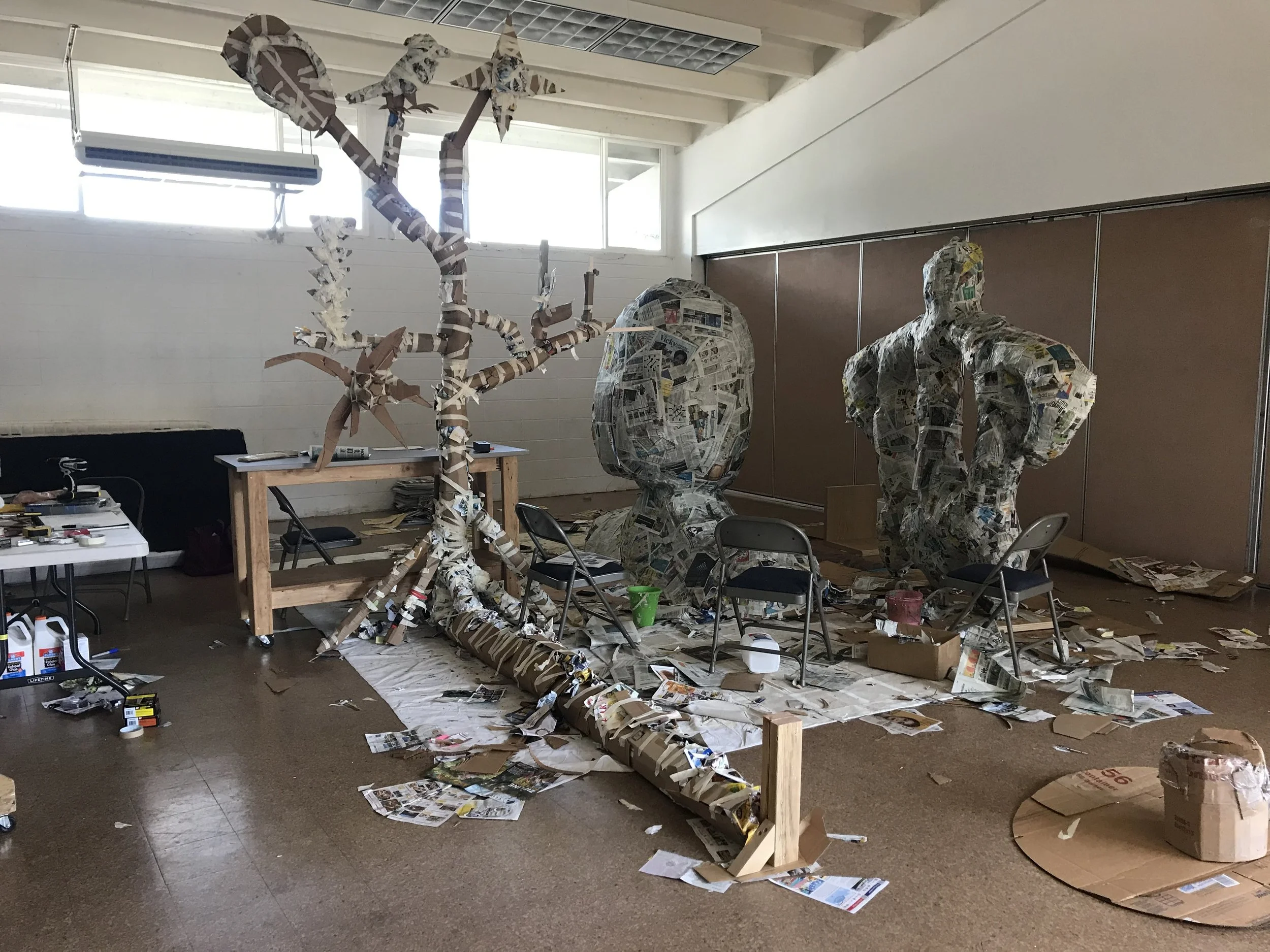
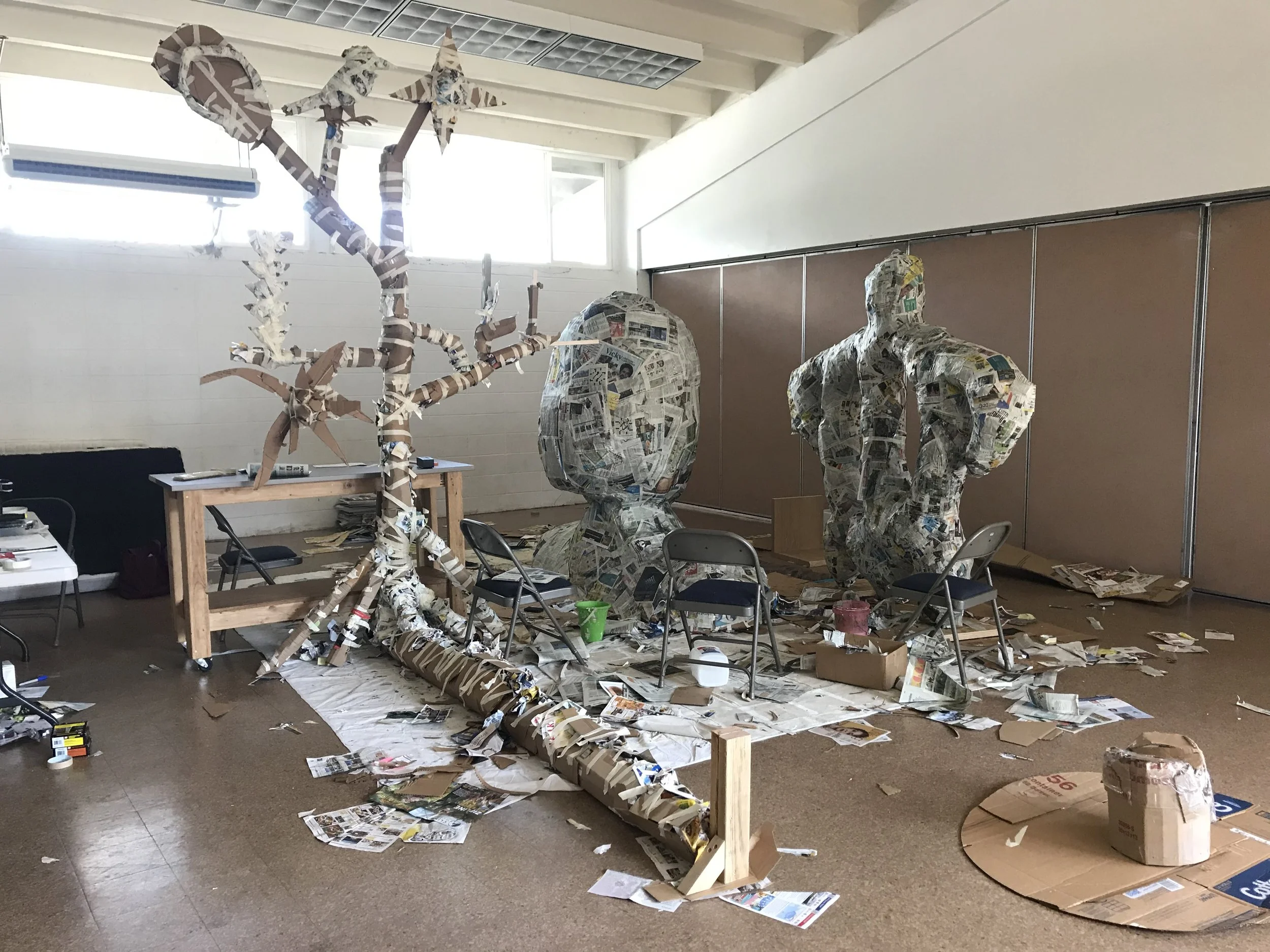
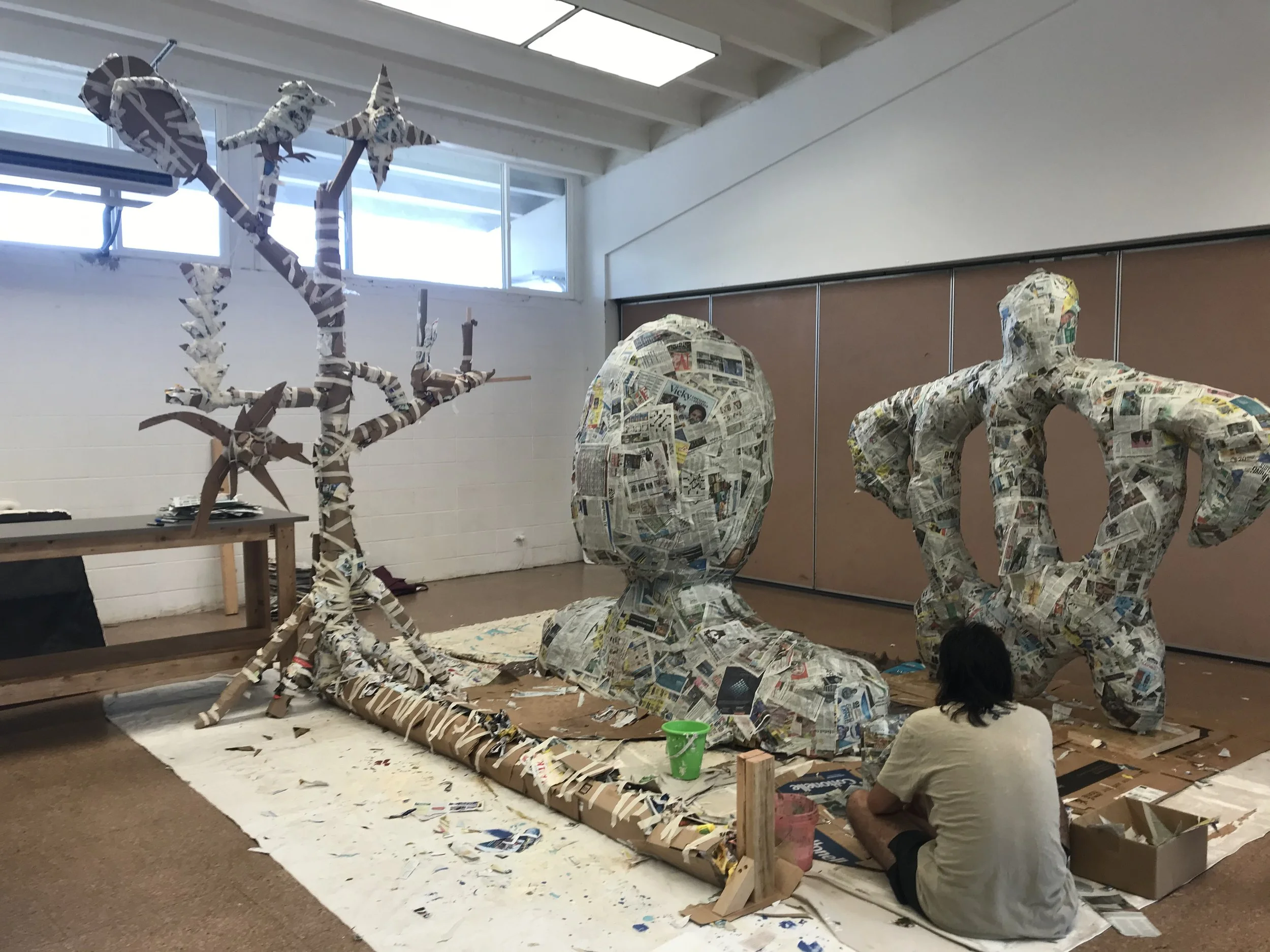
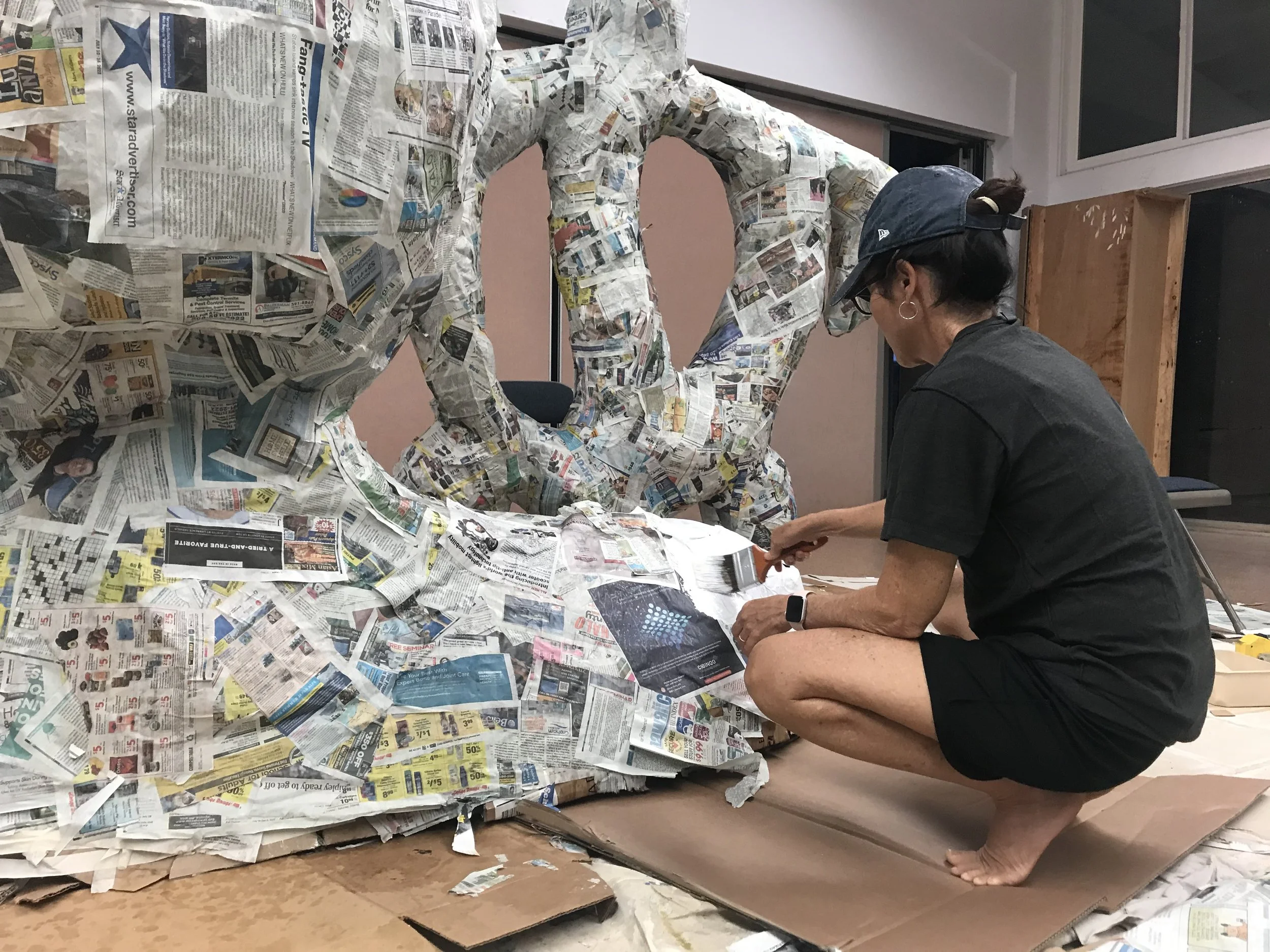
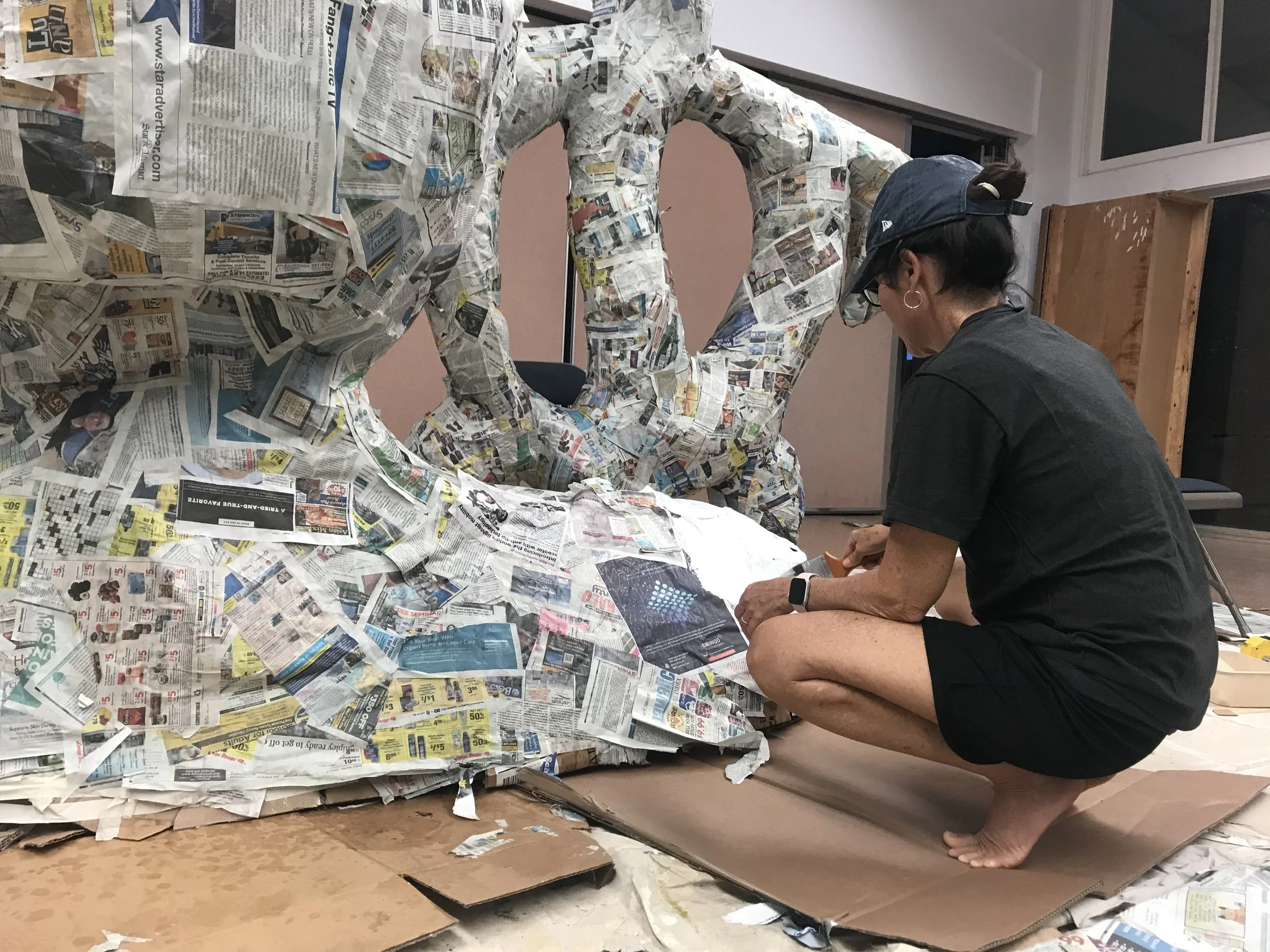
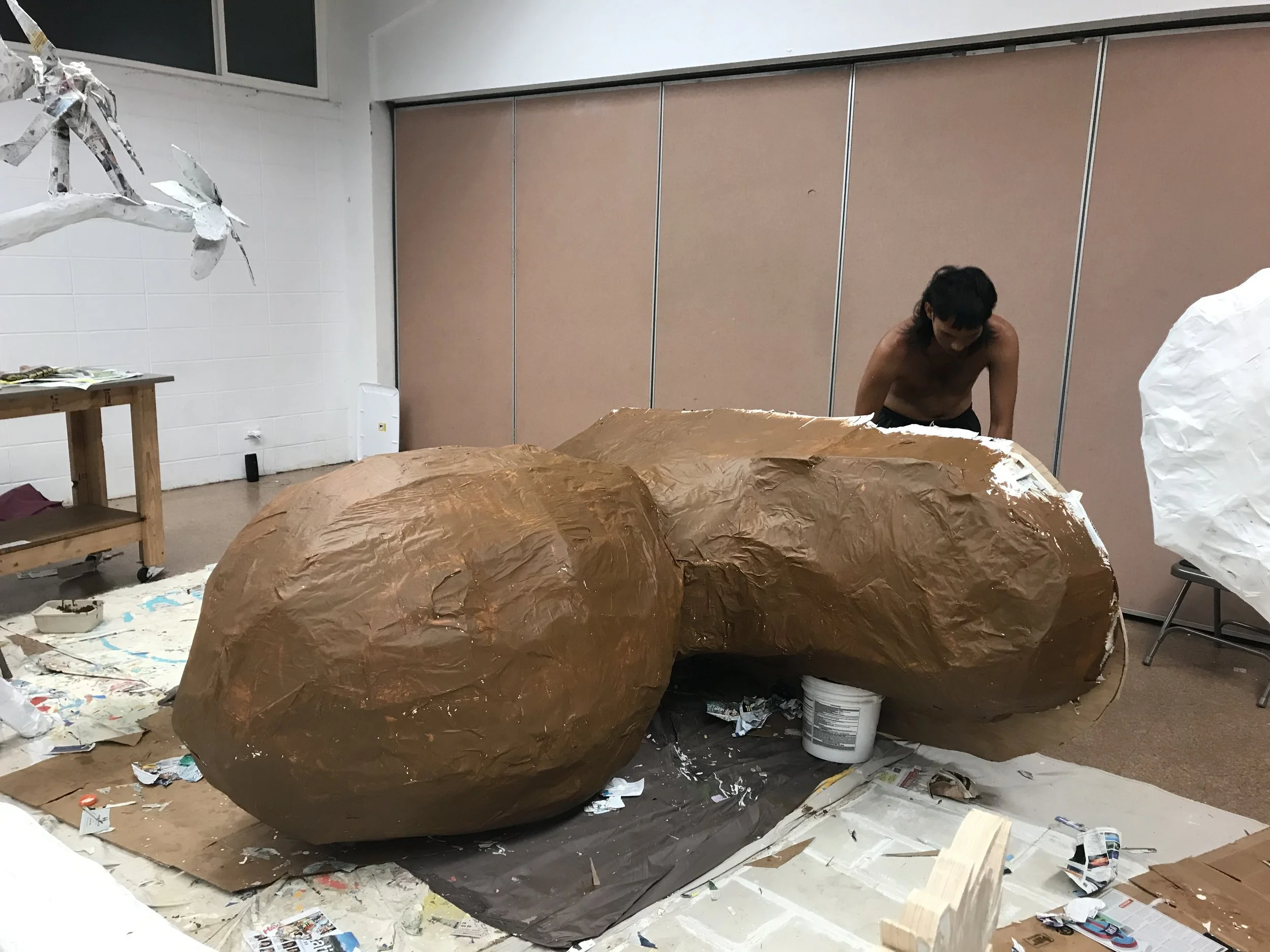
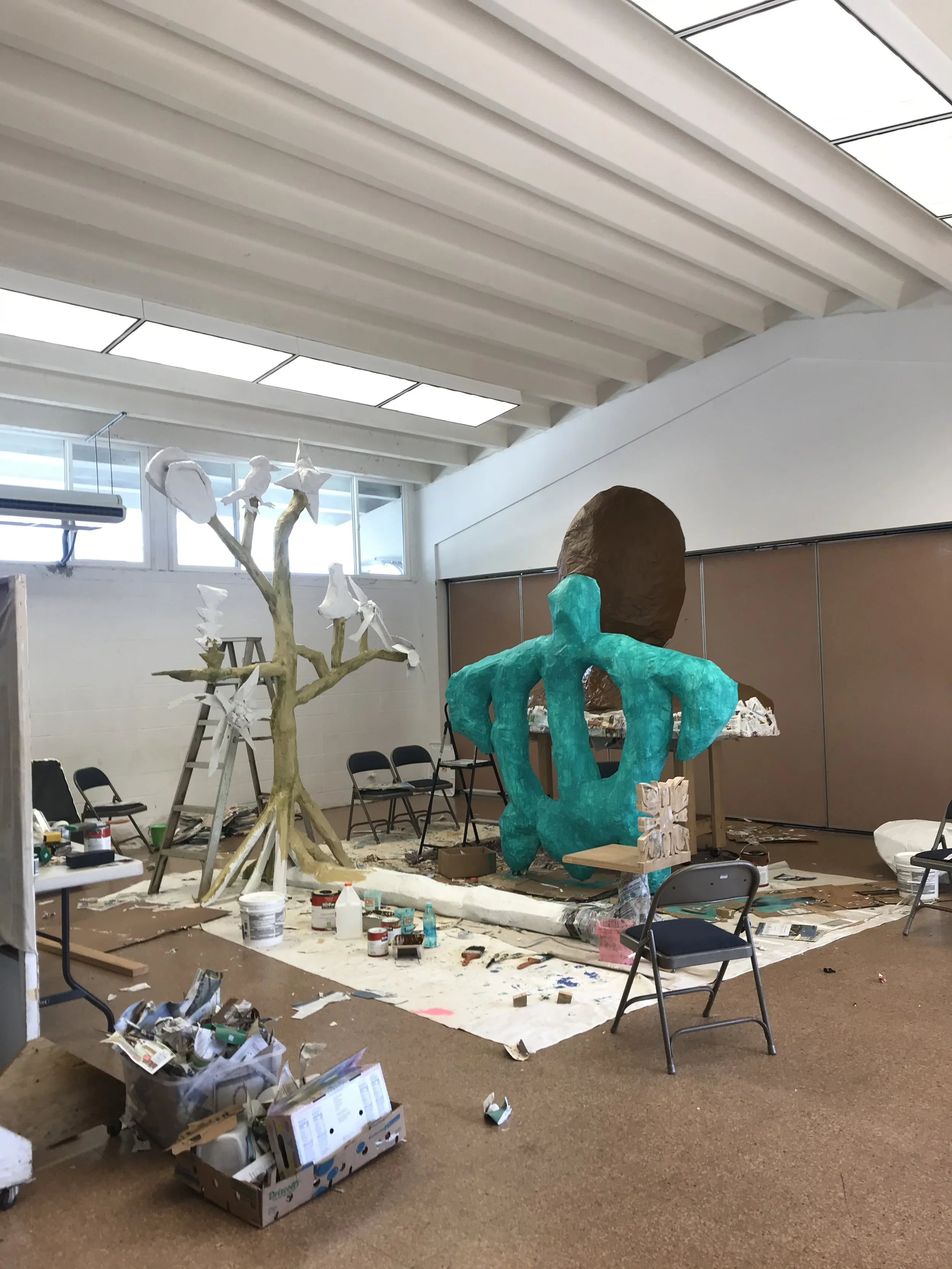
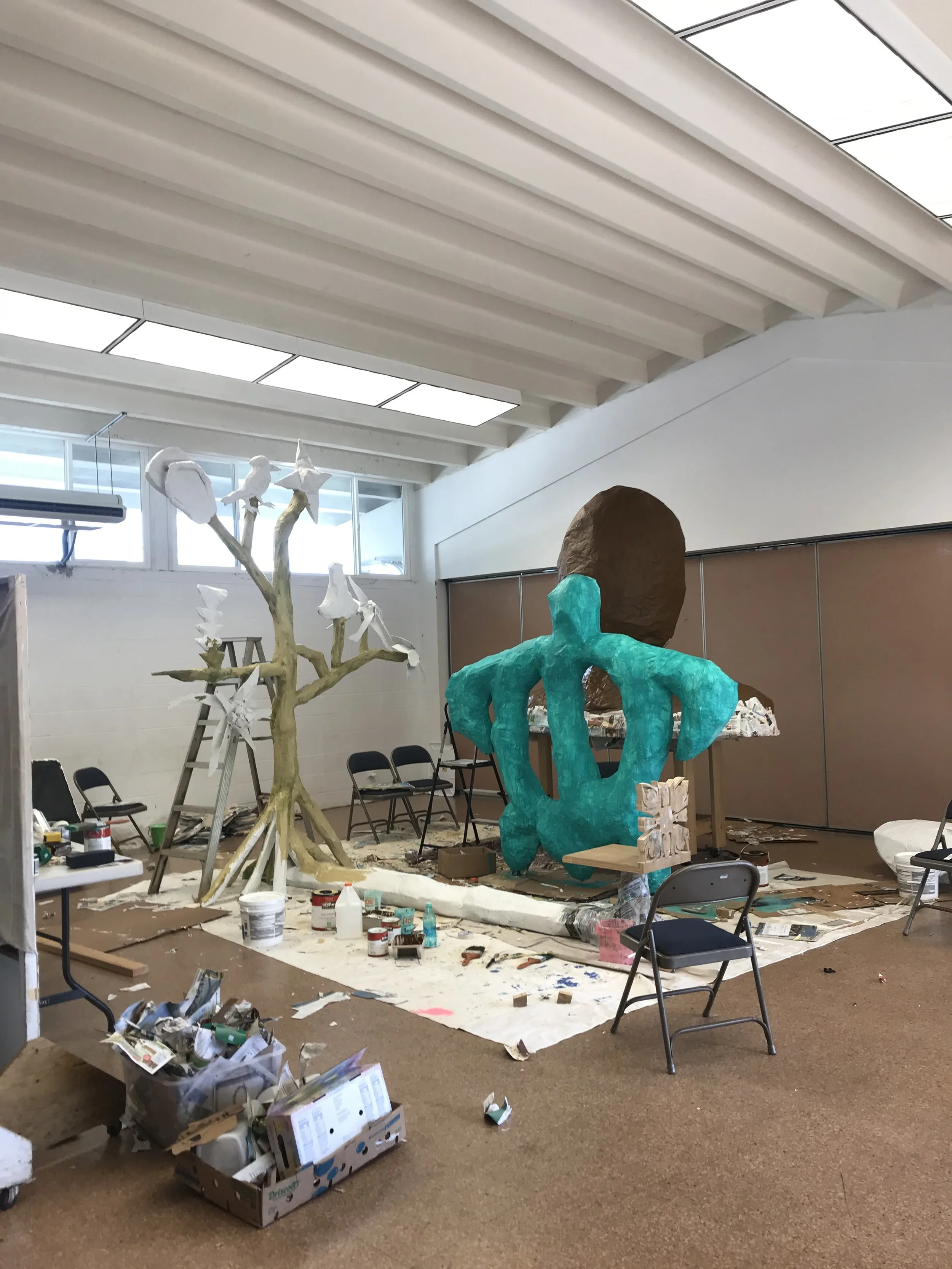
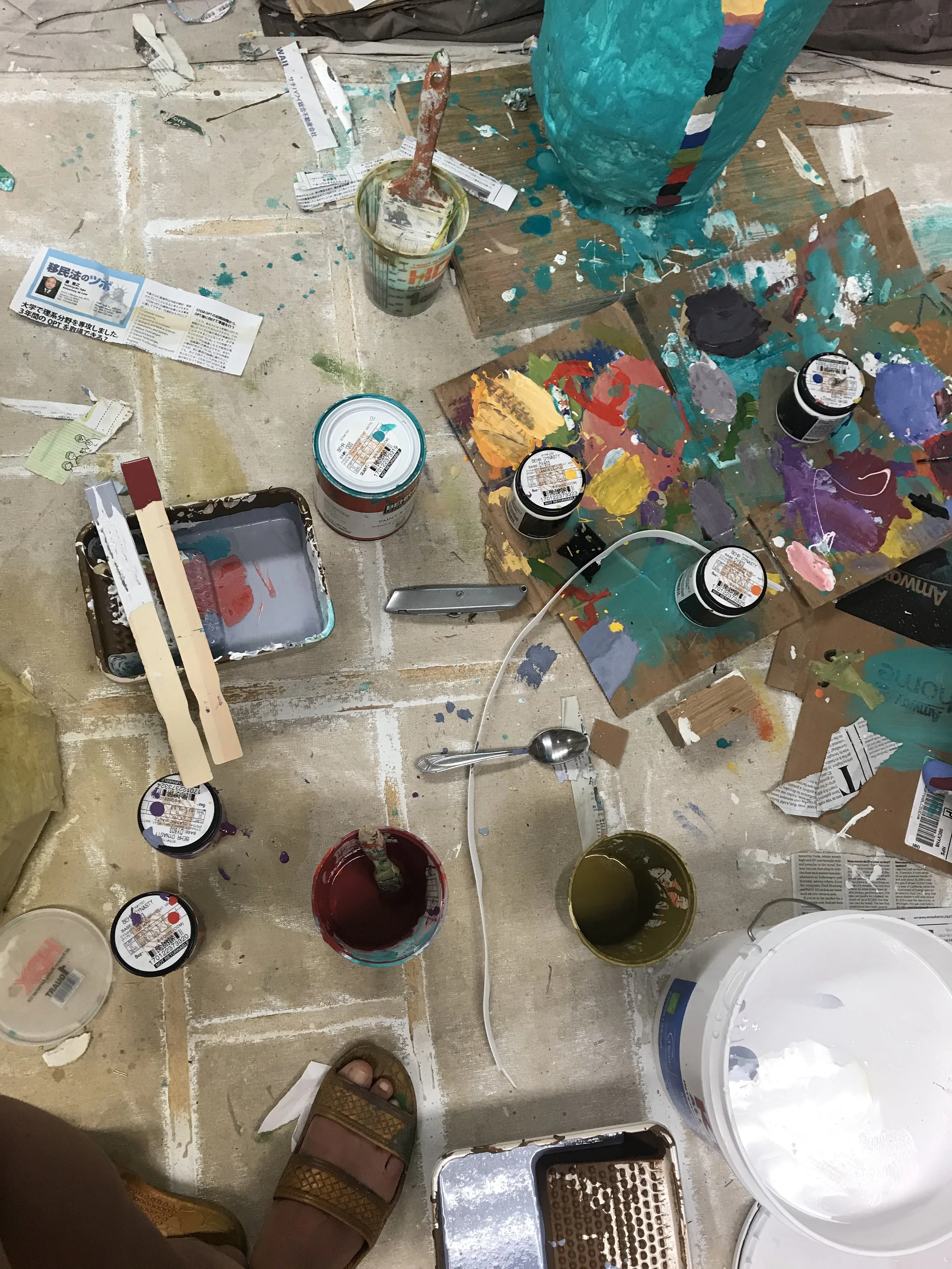
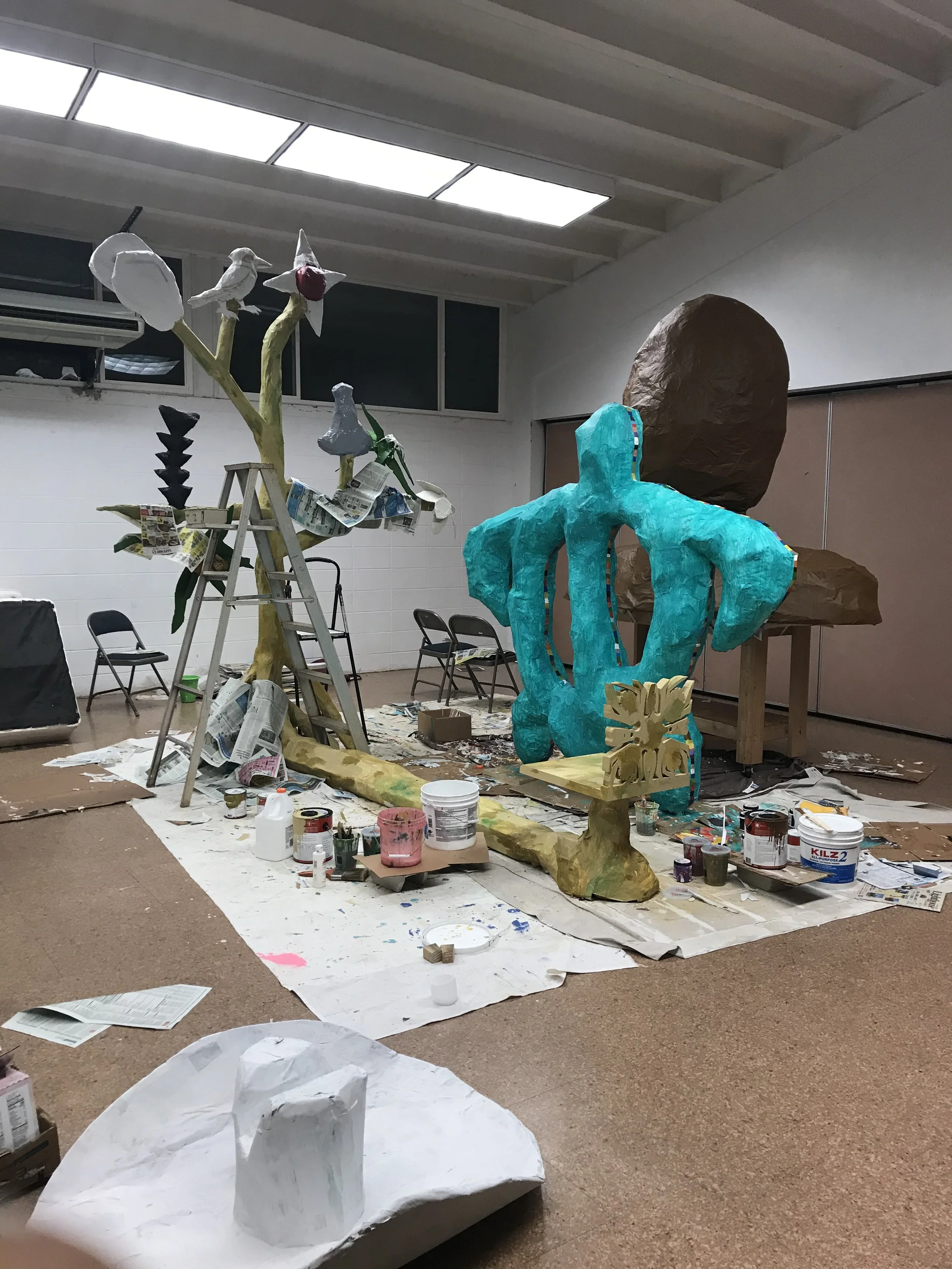
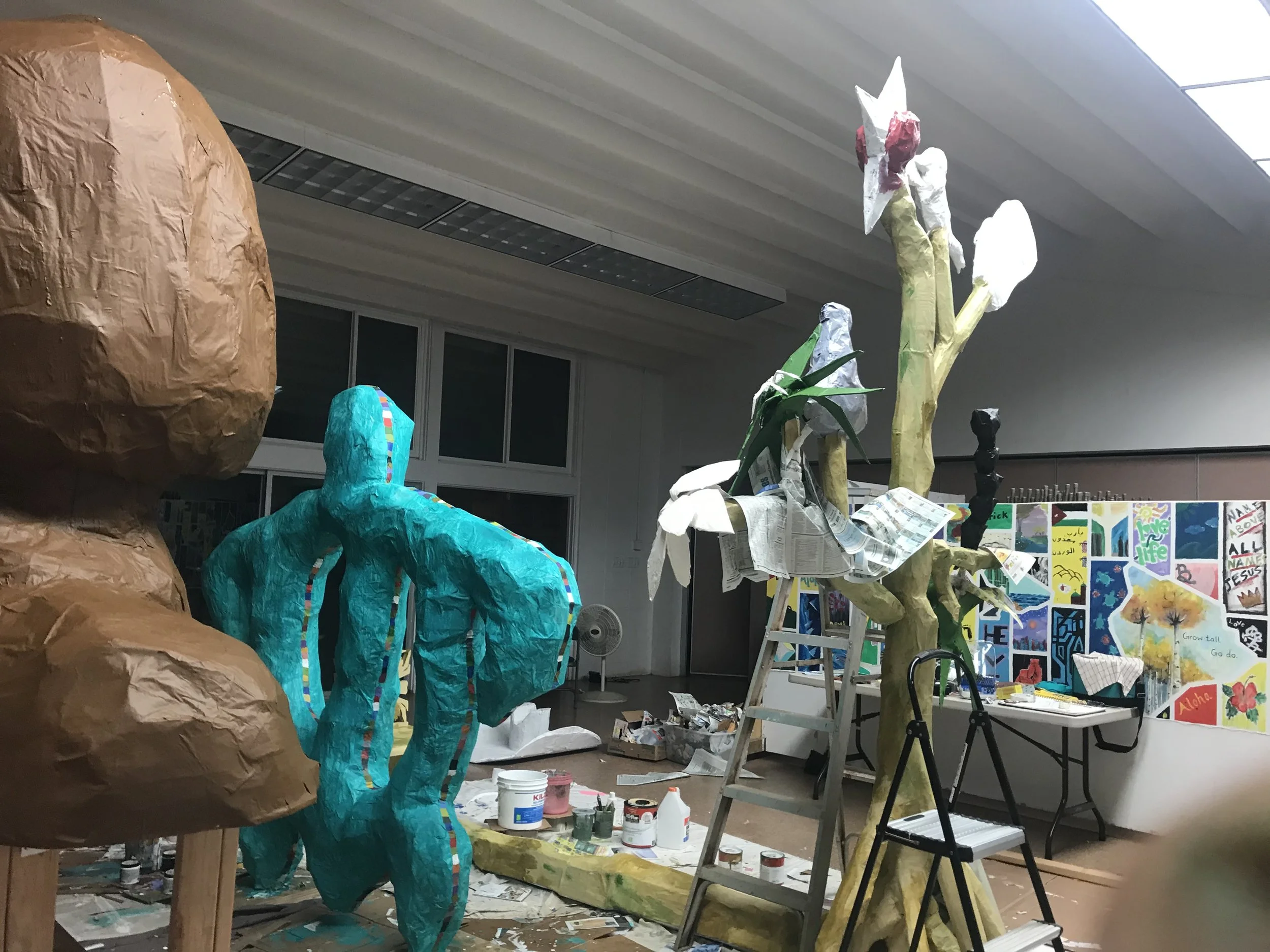
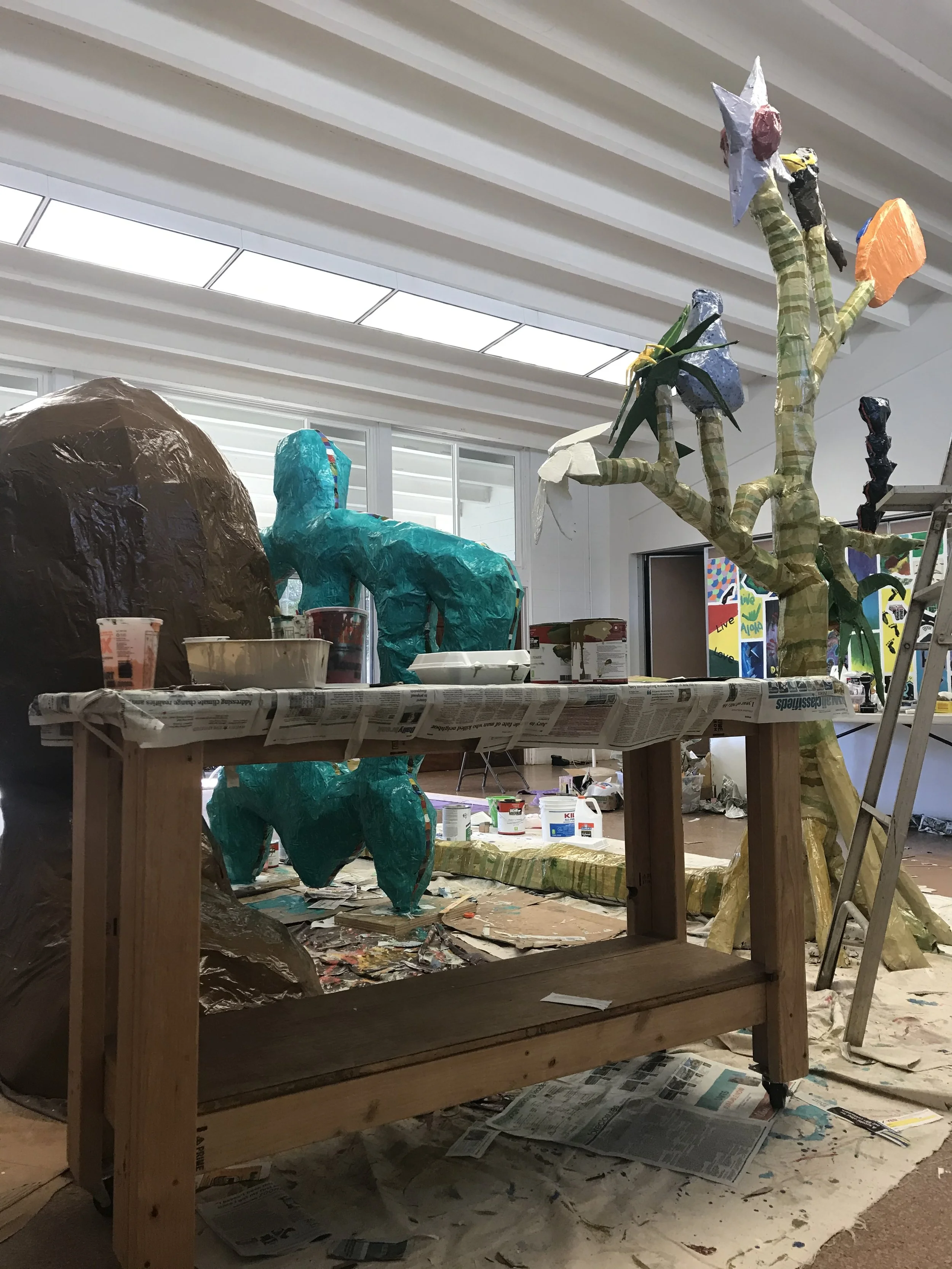
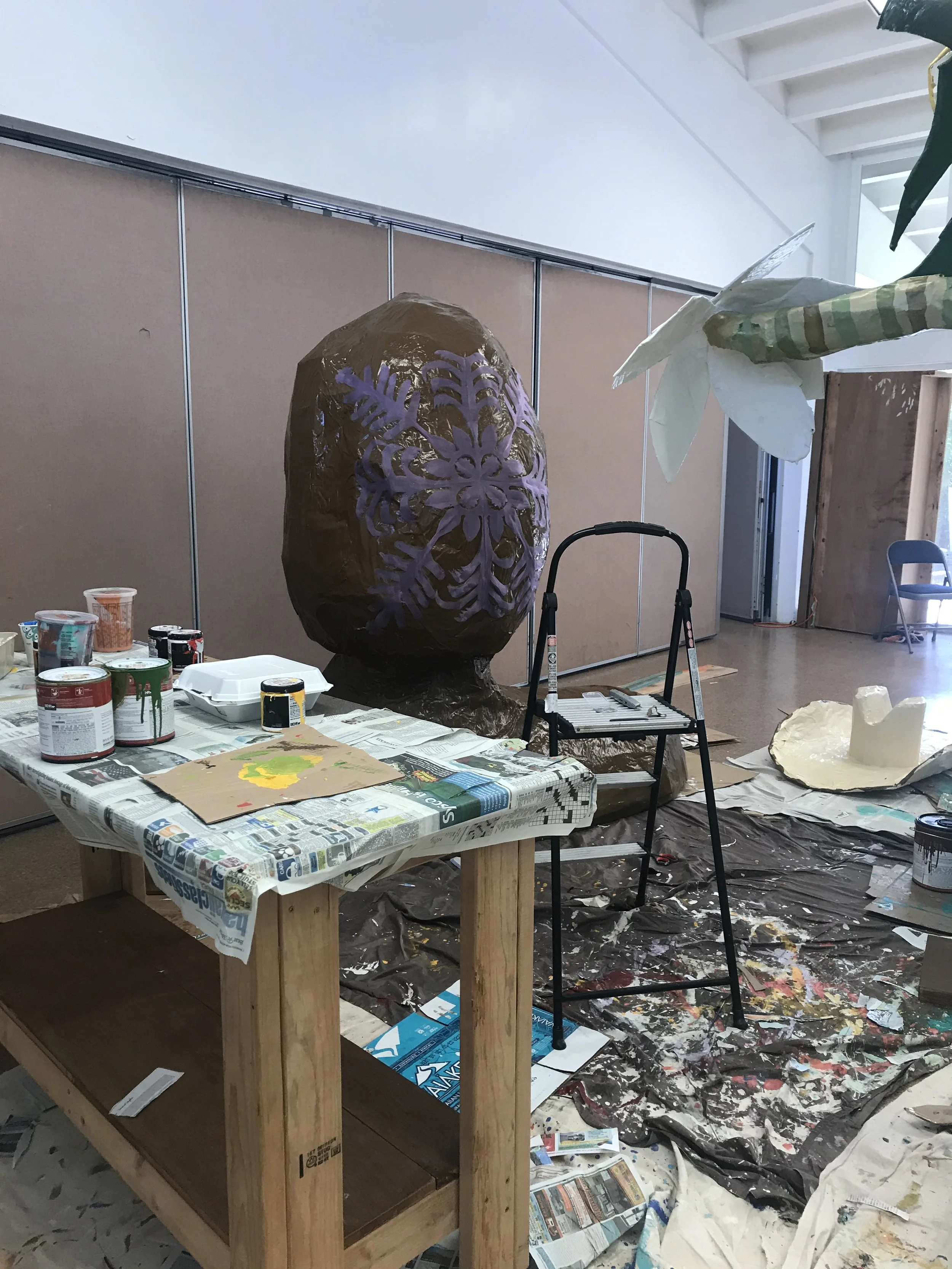
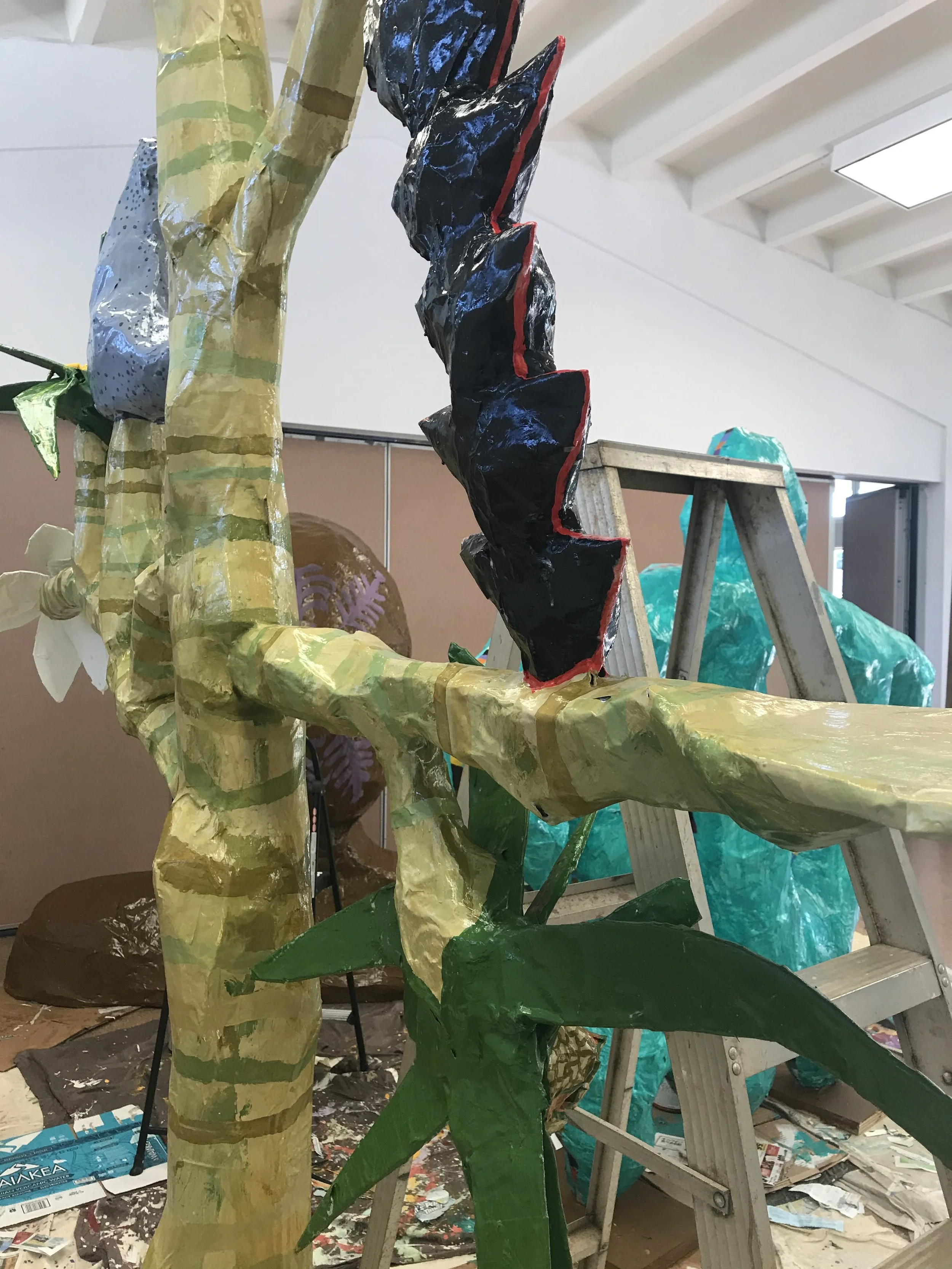
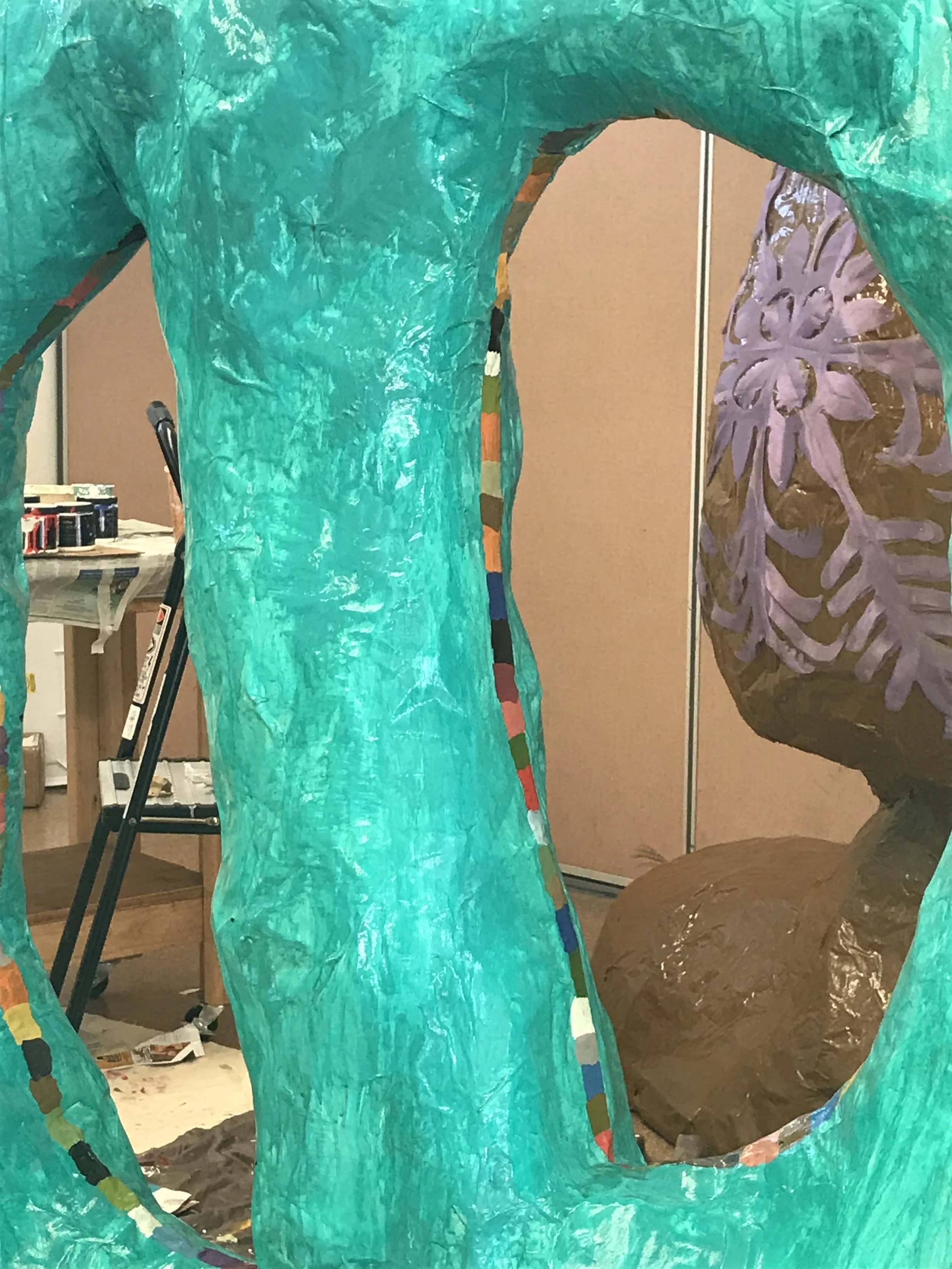
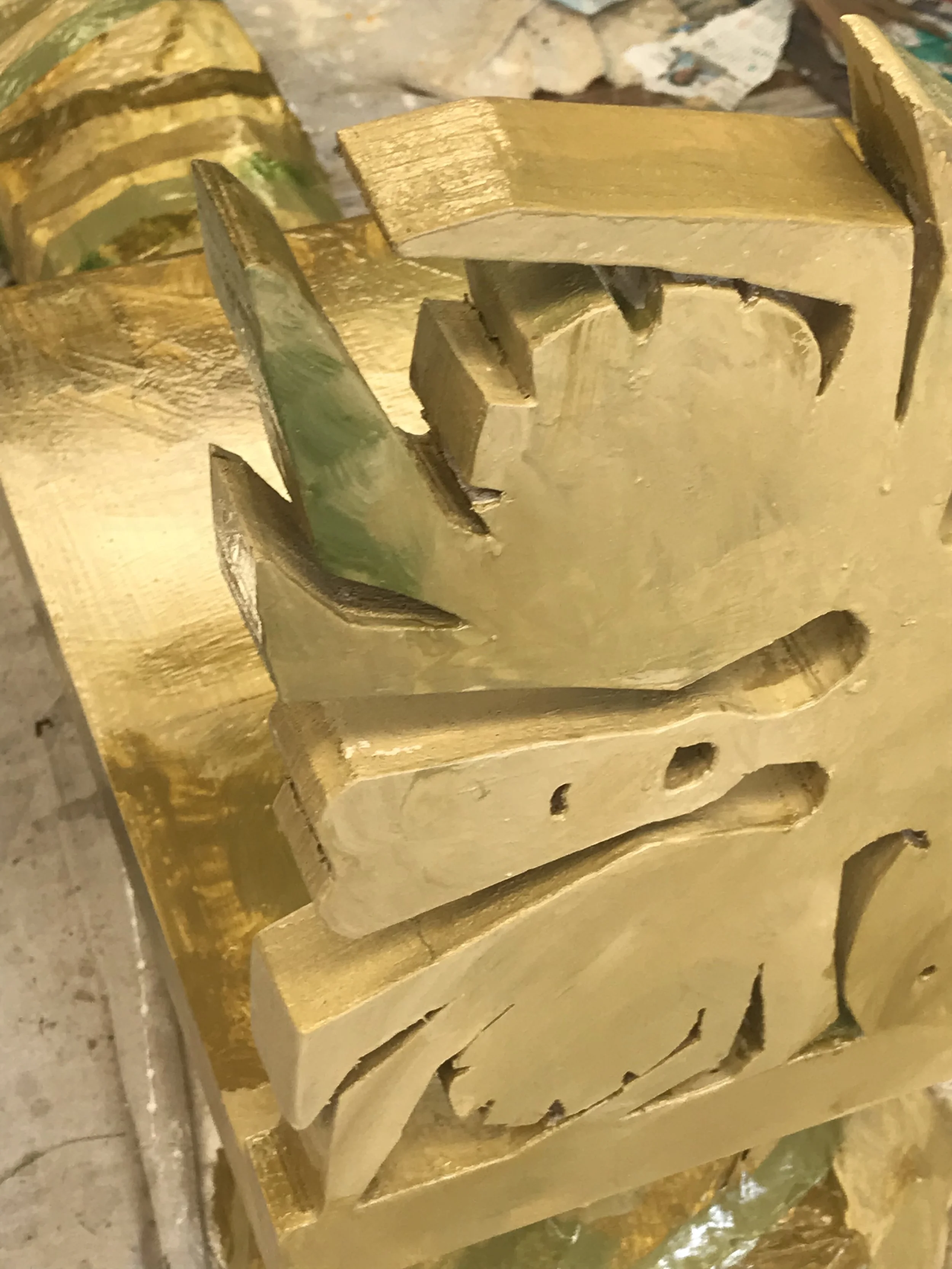
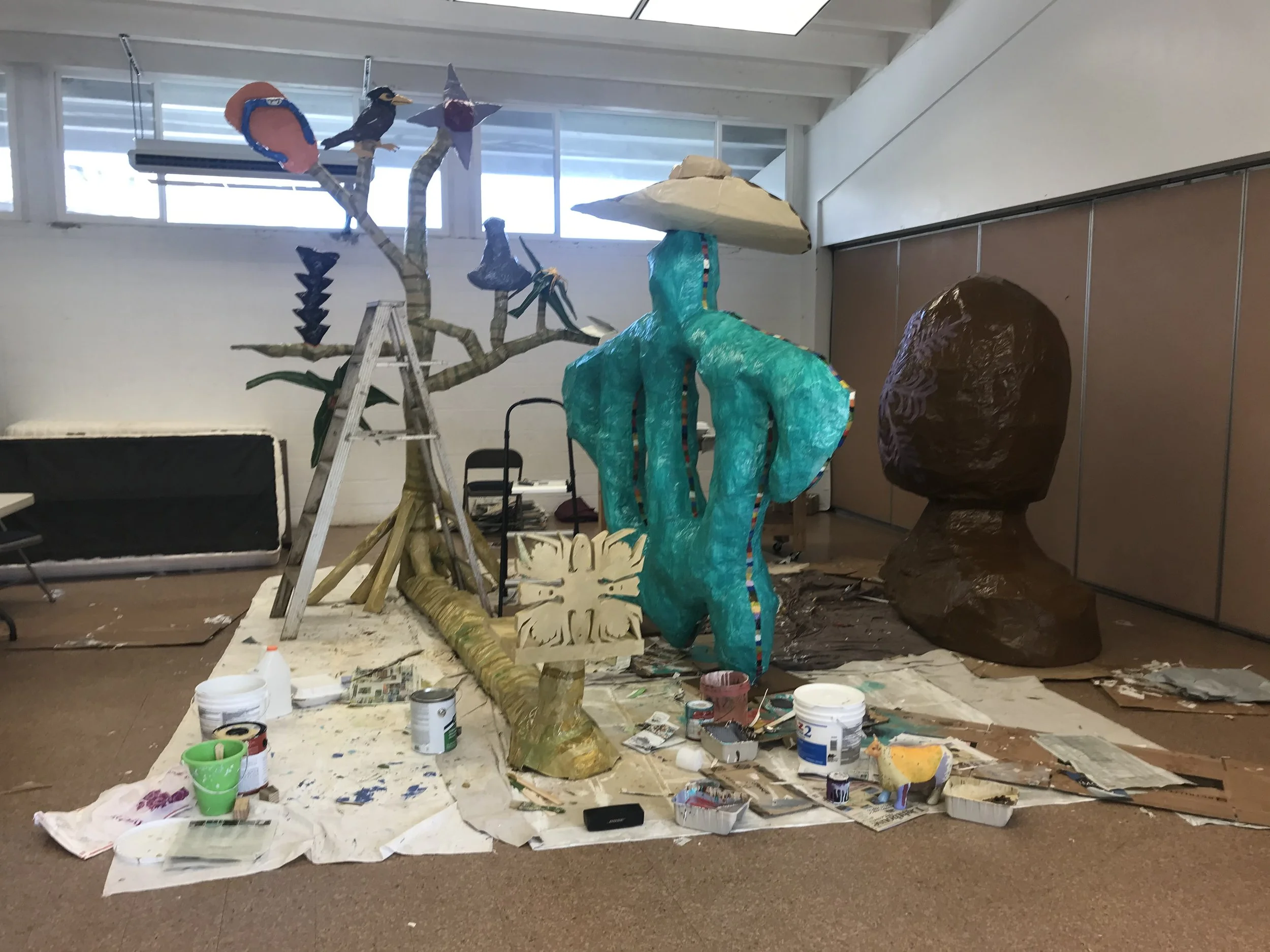
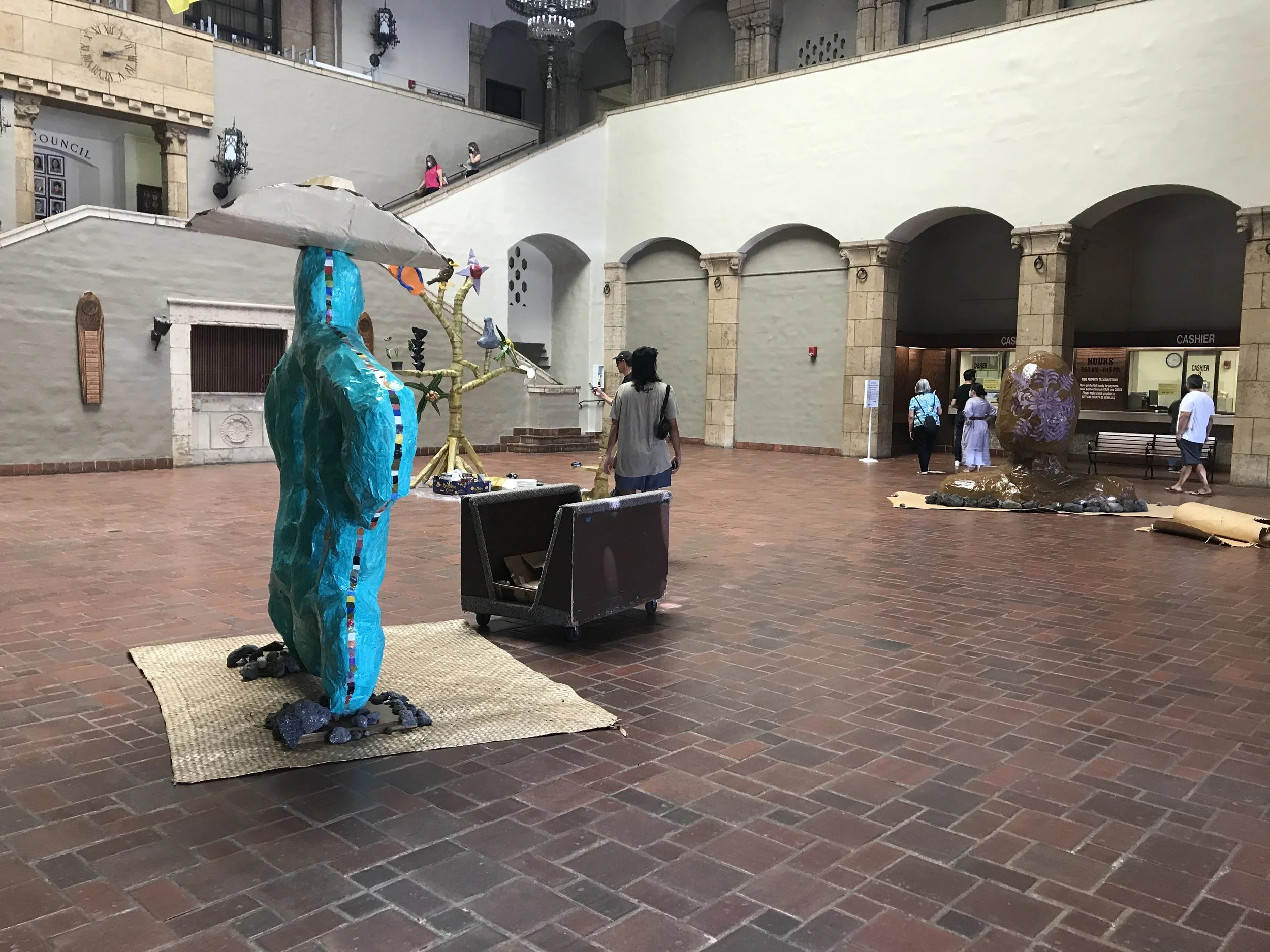
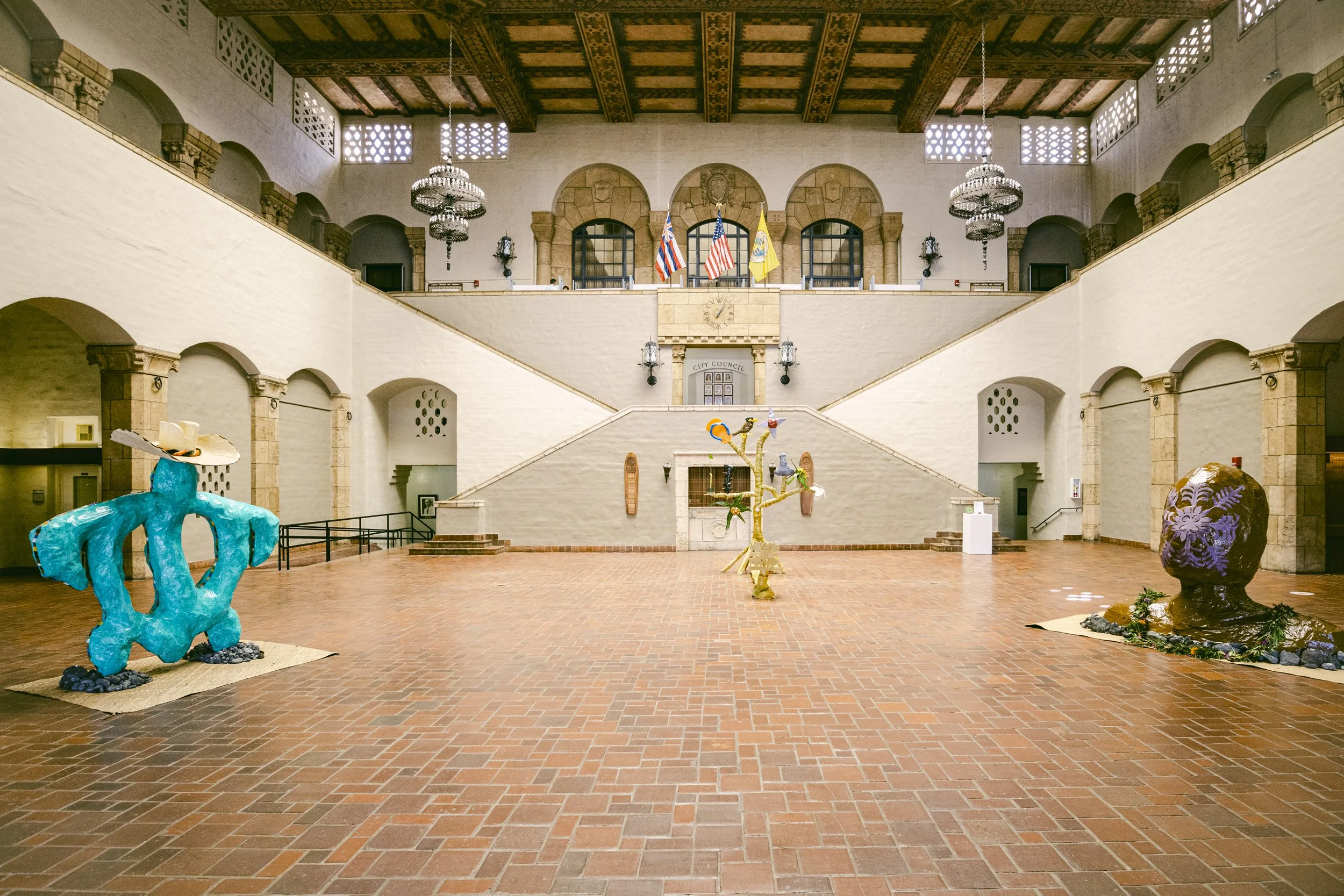
'Recollecting Poi, Pikake and Paniolos' comprises of 3 large scale sculptures highlighting facets of Hawaiʻi’s past, present and potential. Khan employs imagery from the natural world of Hawaiʻi with unique cultural references in a delightfully playful manner. She utilizes paper mâché, wood, fiber, paint and found natural objects to materialize these concepts.
This project was made possible with the generous support of Creative City @thecreativecityorg
Honolulu Hale photos by Lila Lee
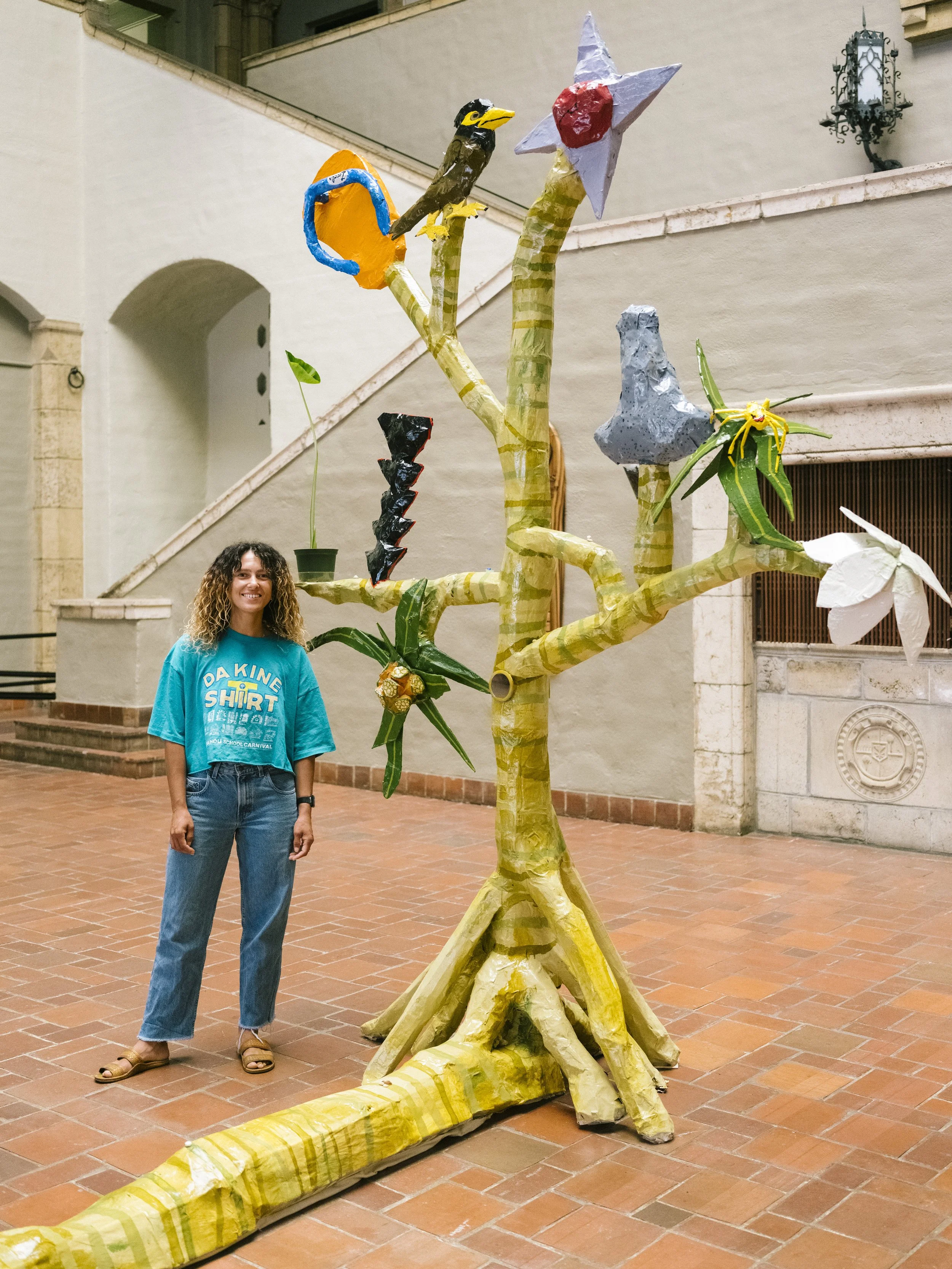
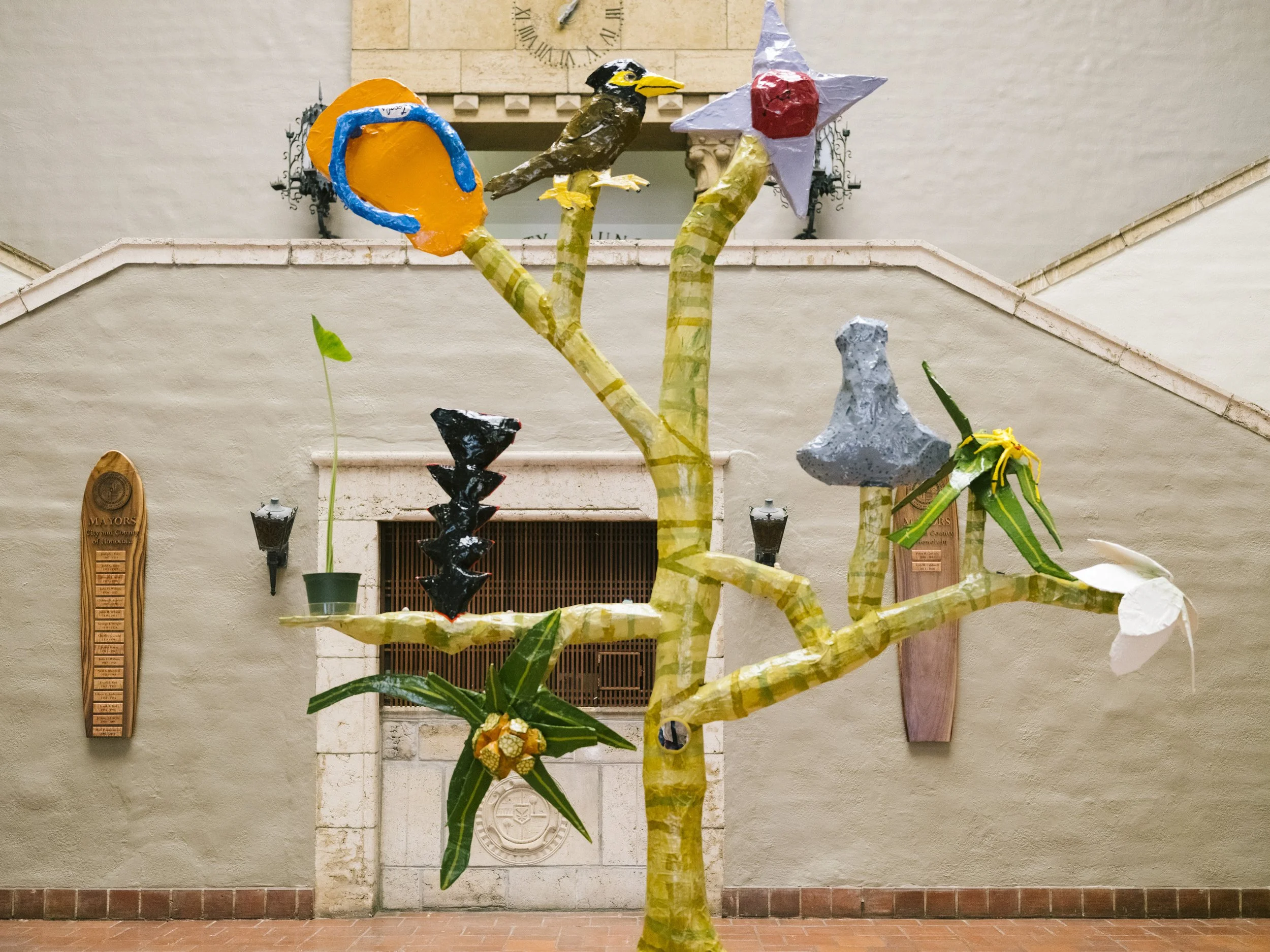
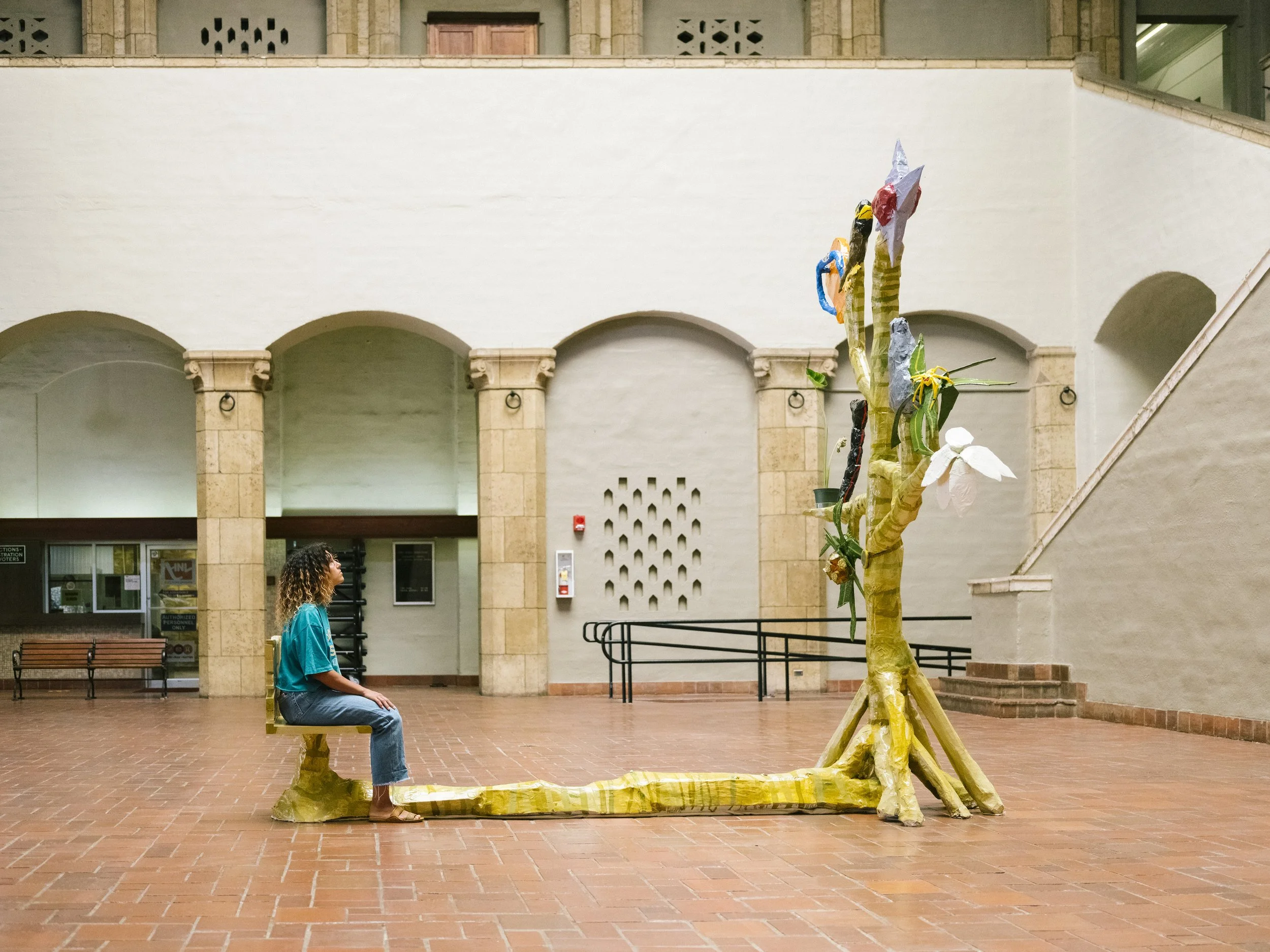
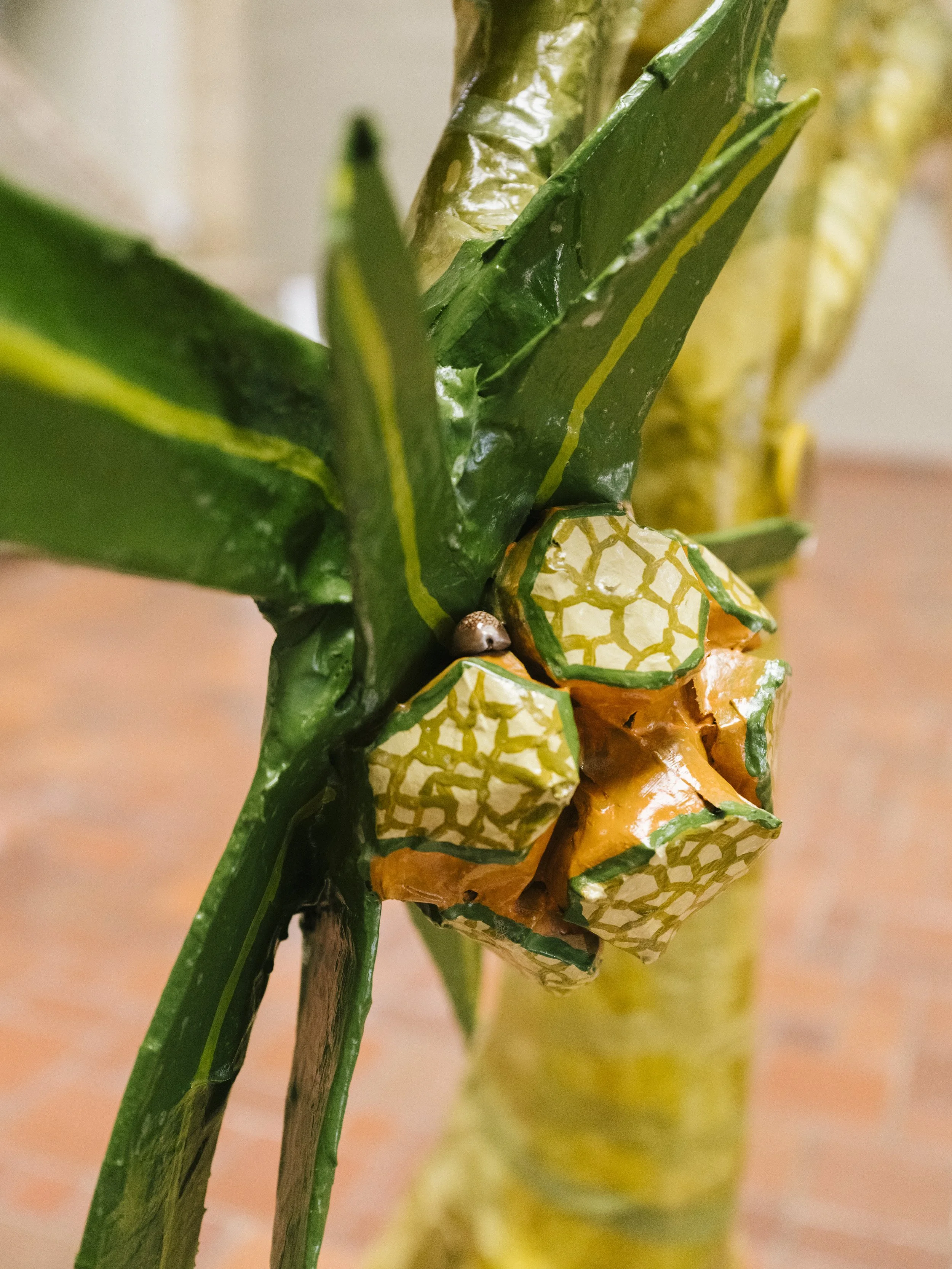
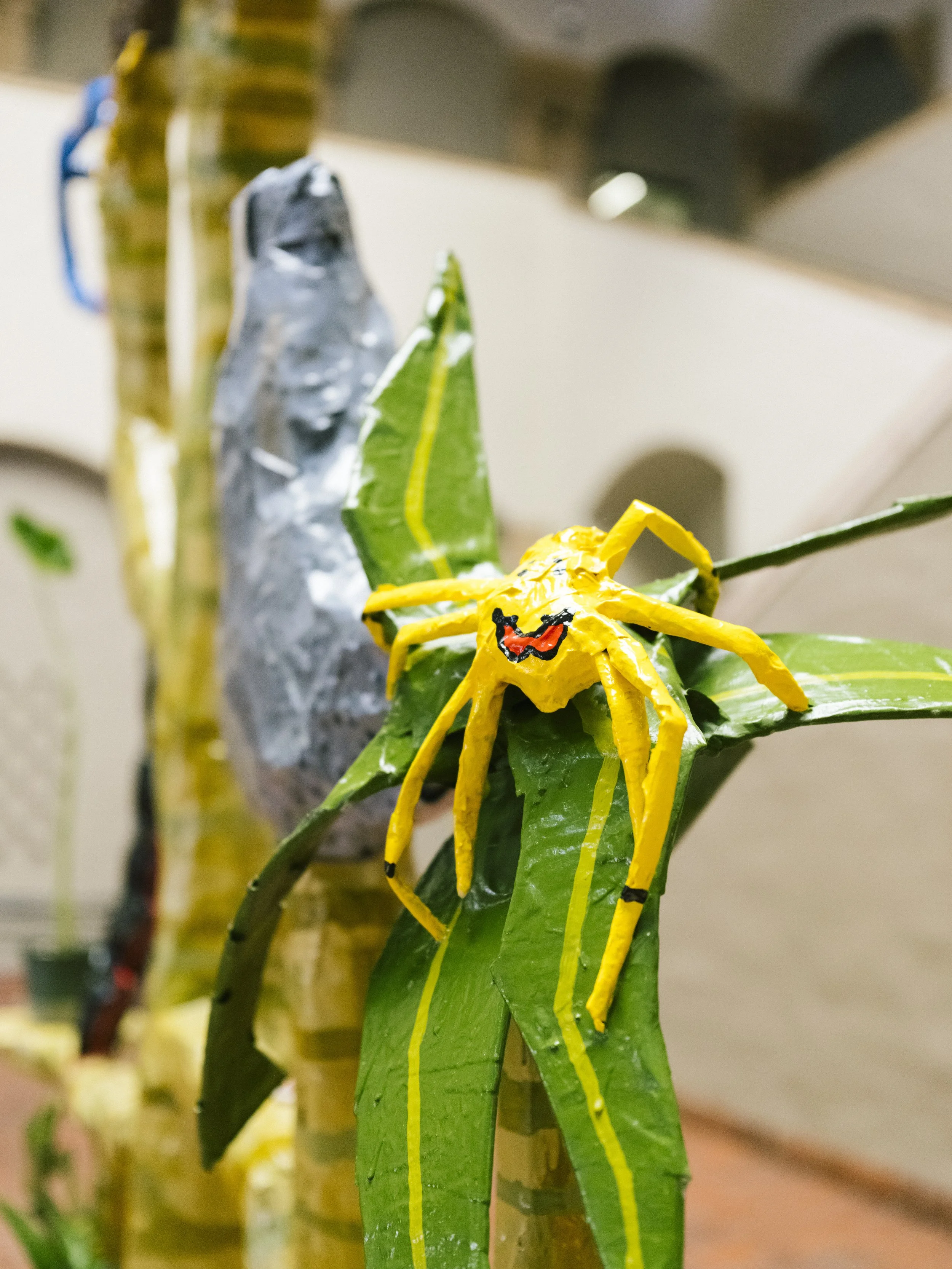
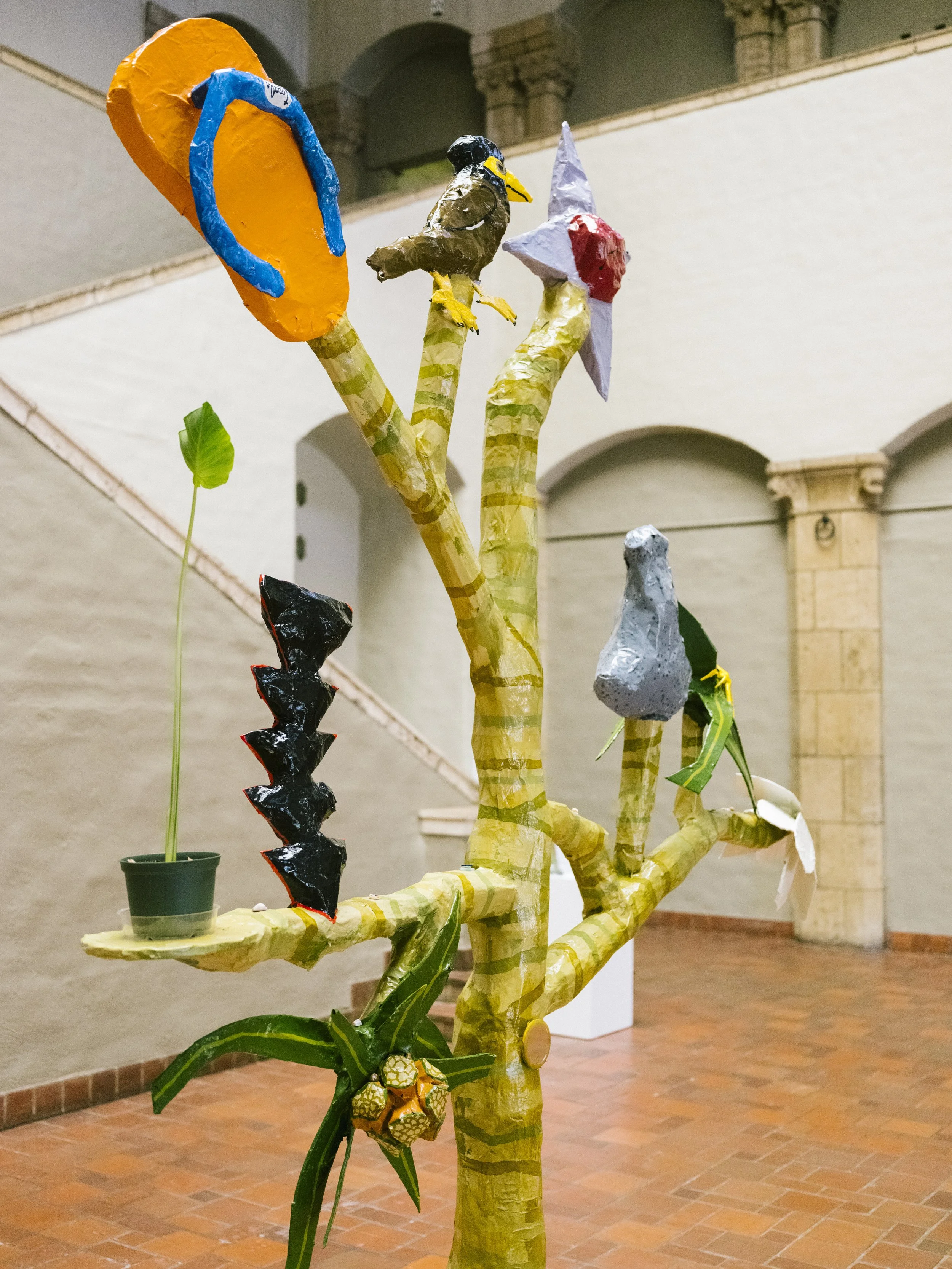
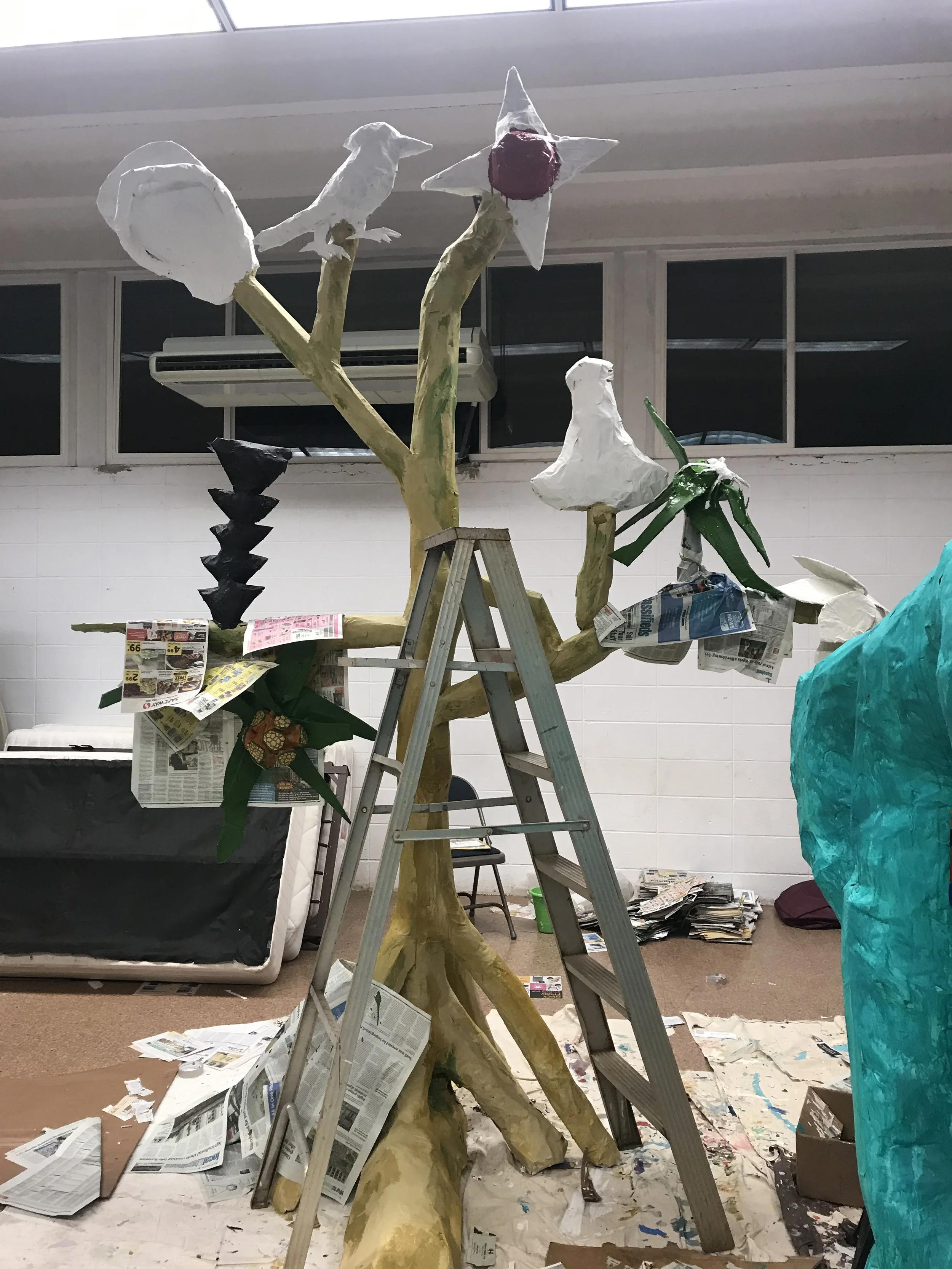
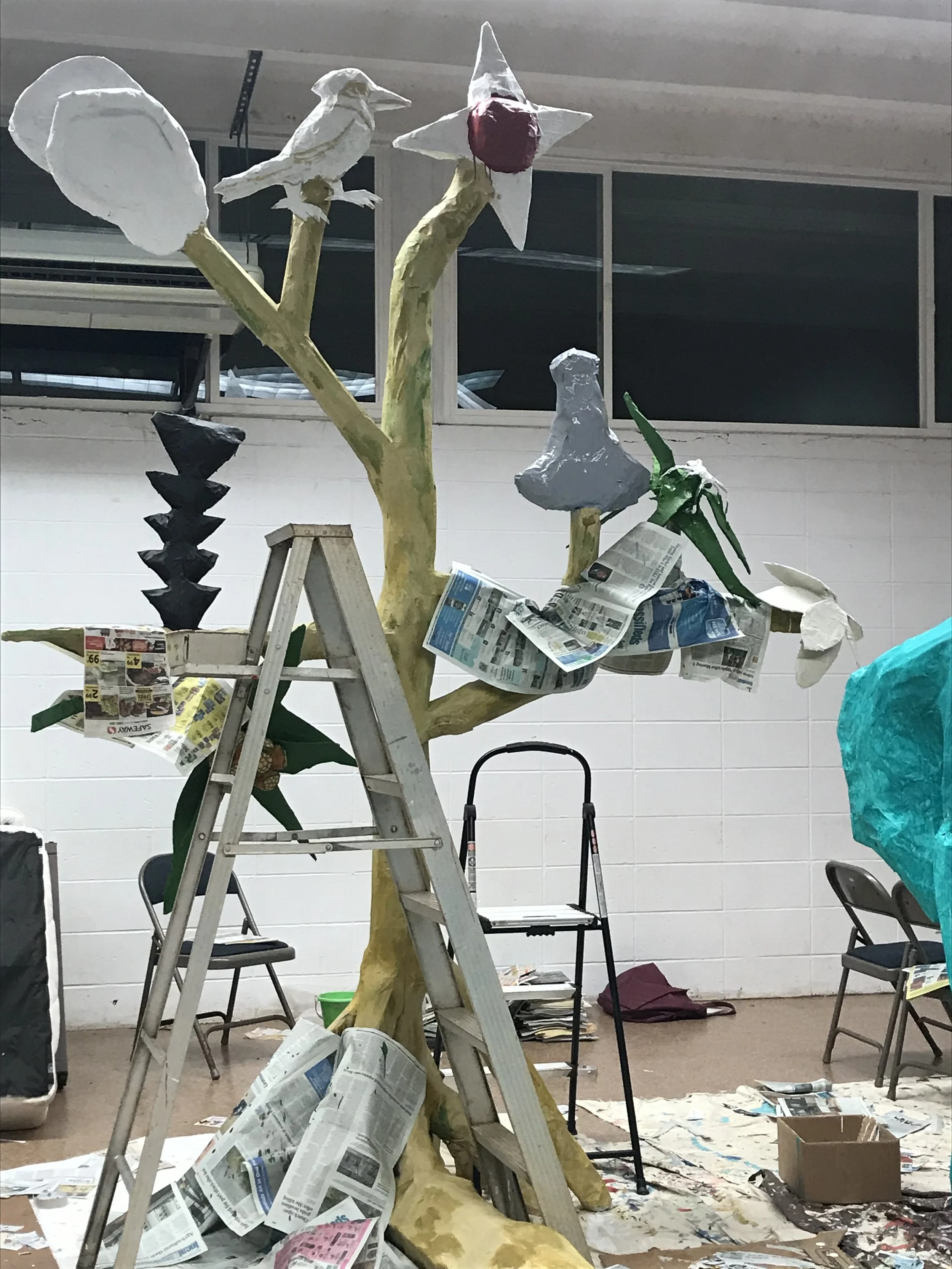
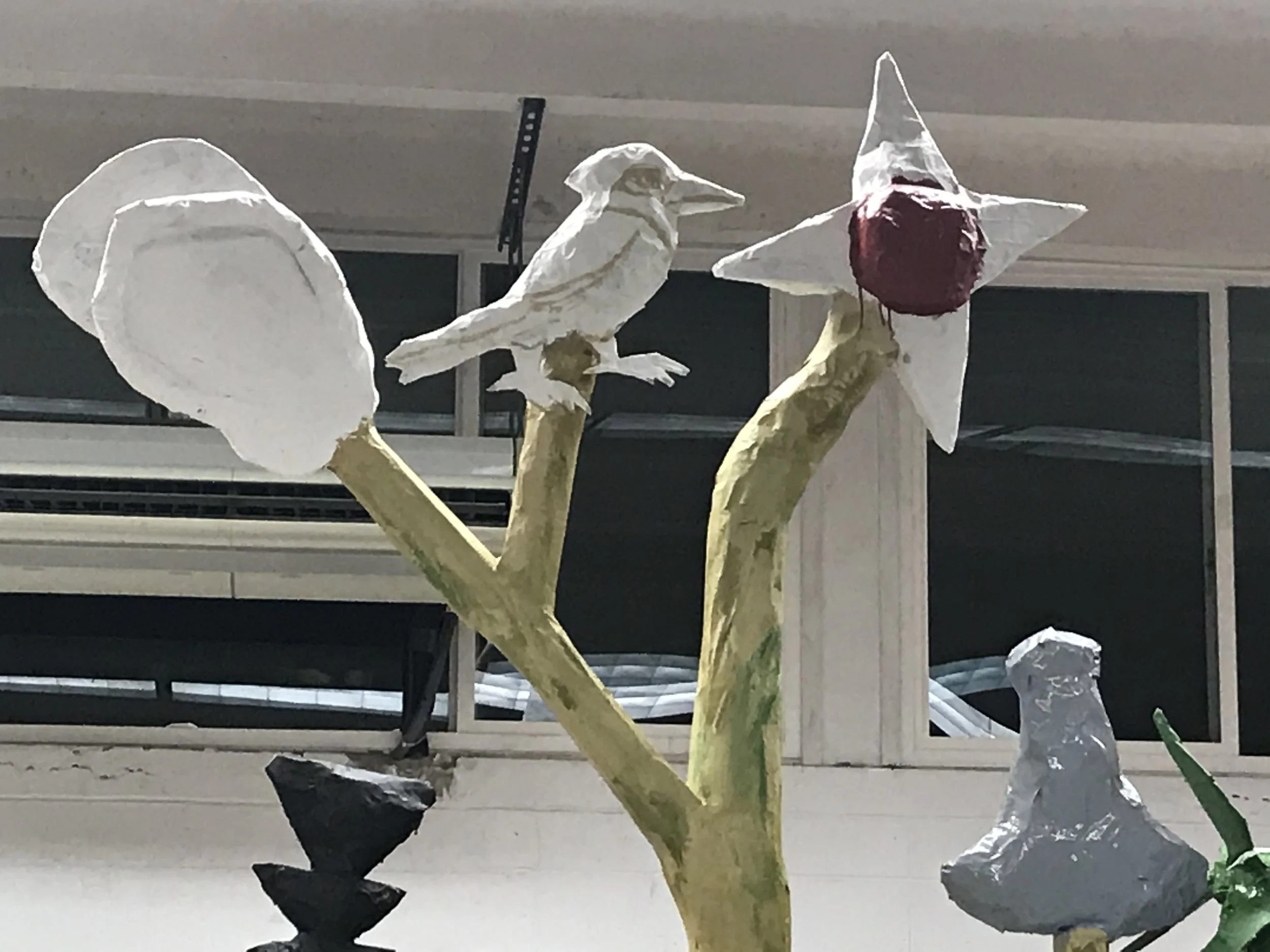
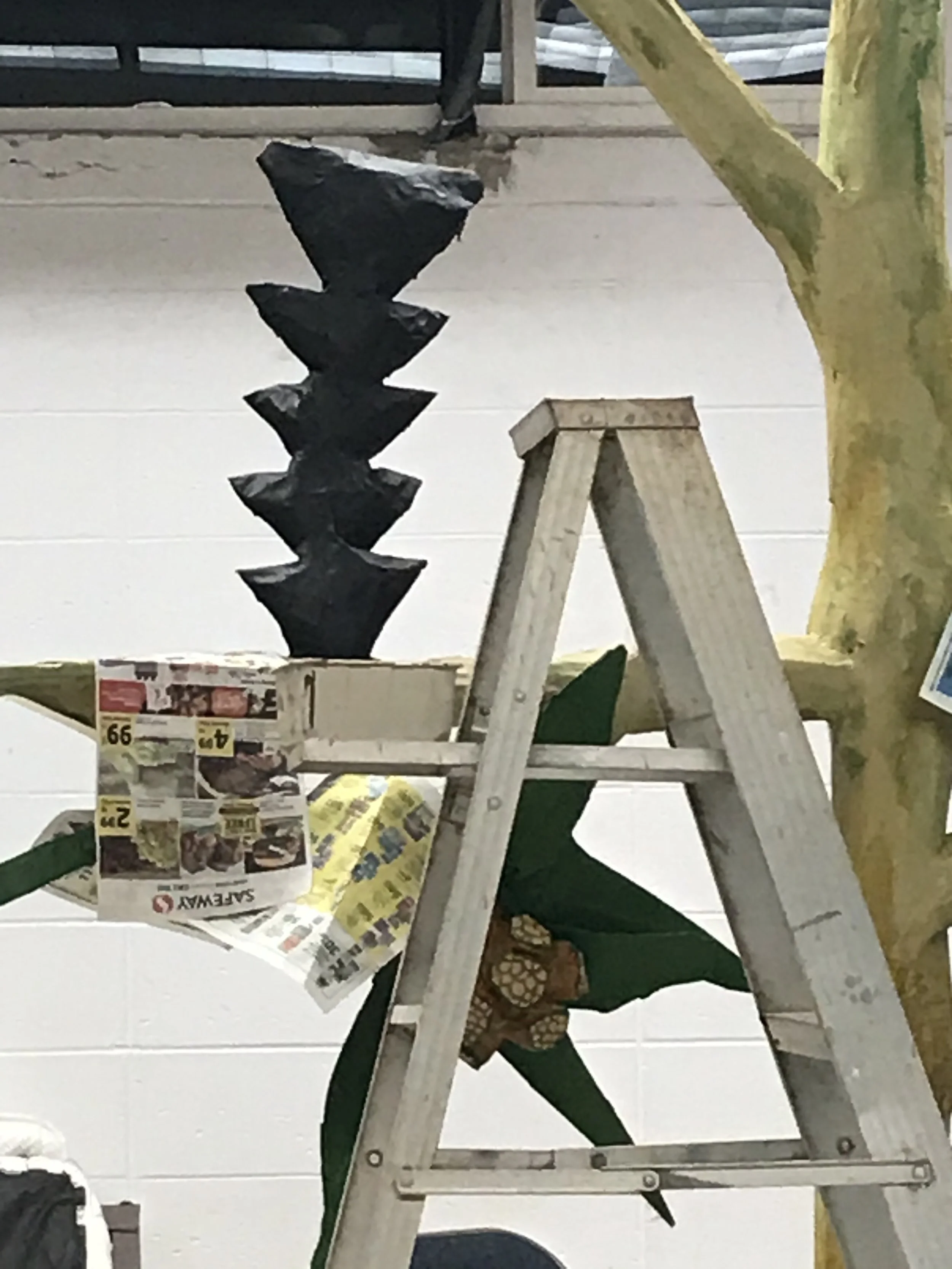
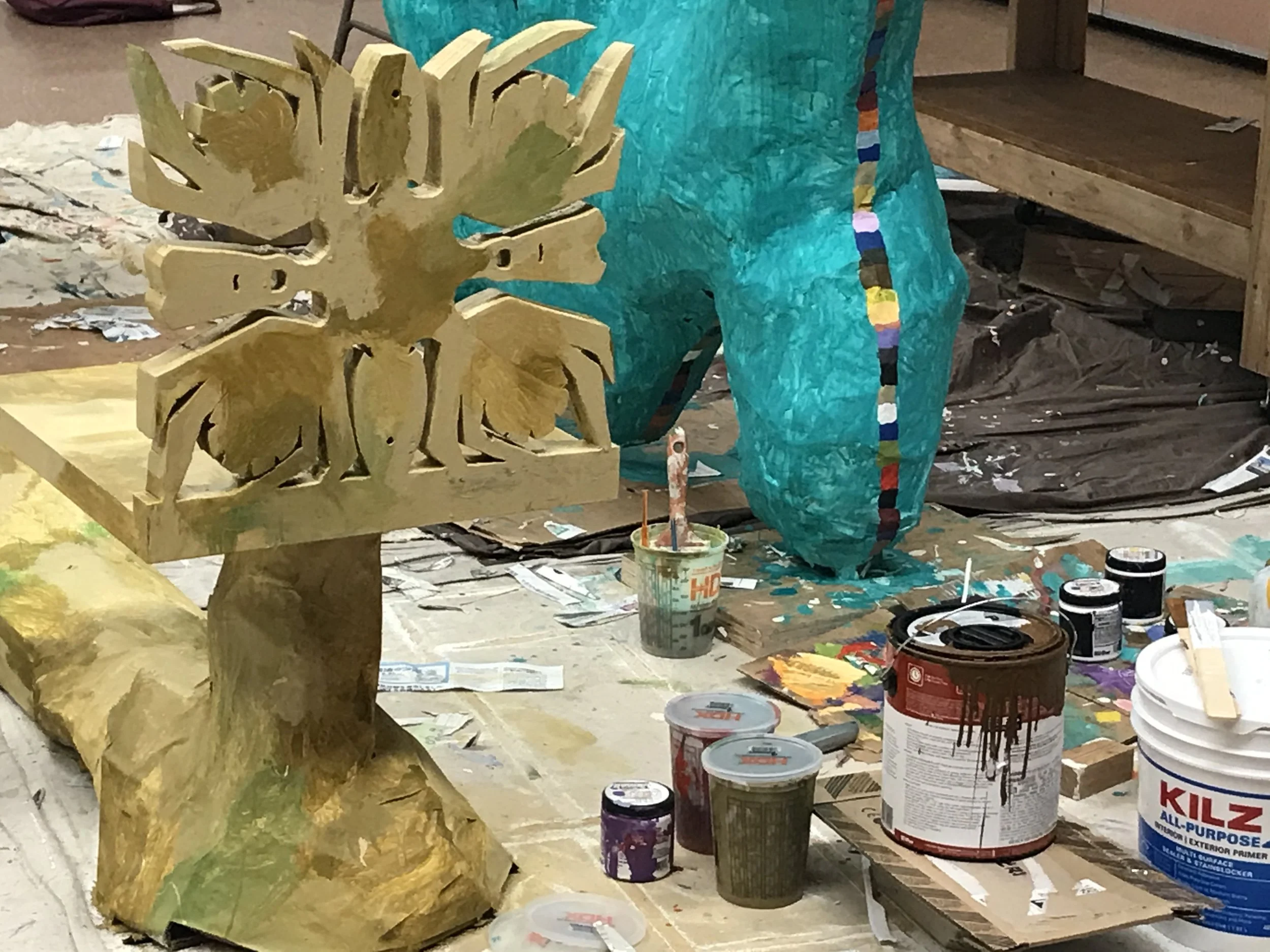
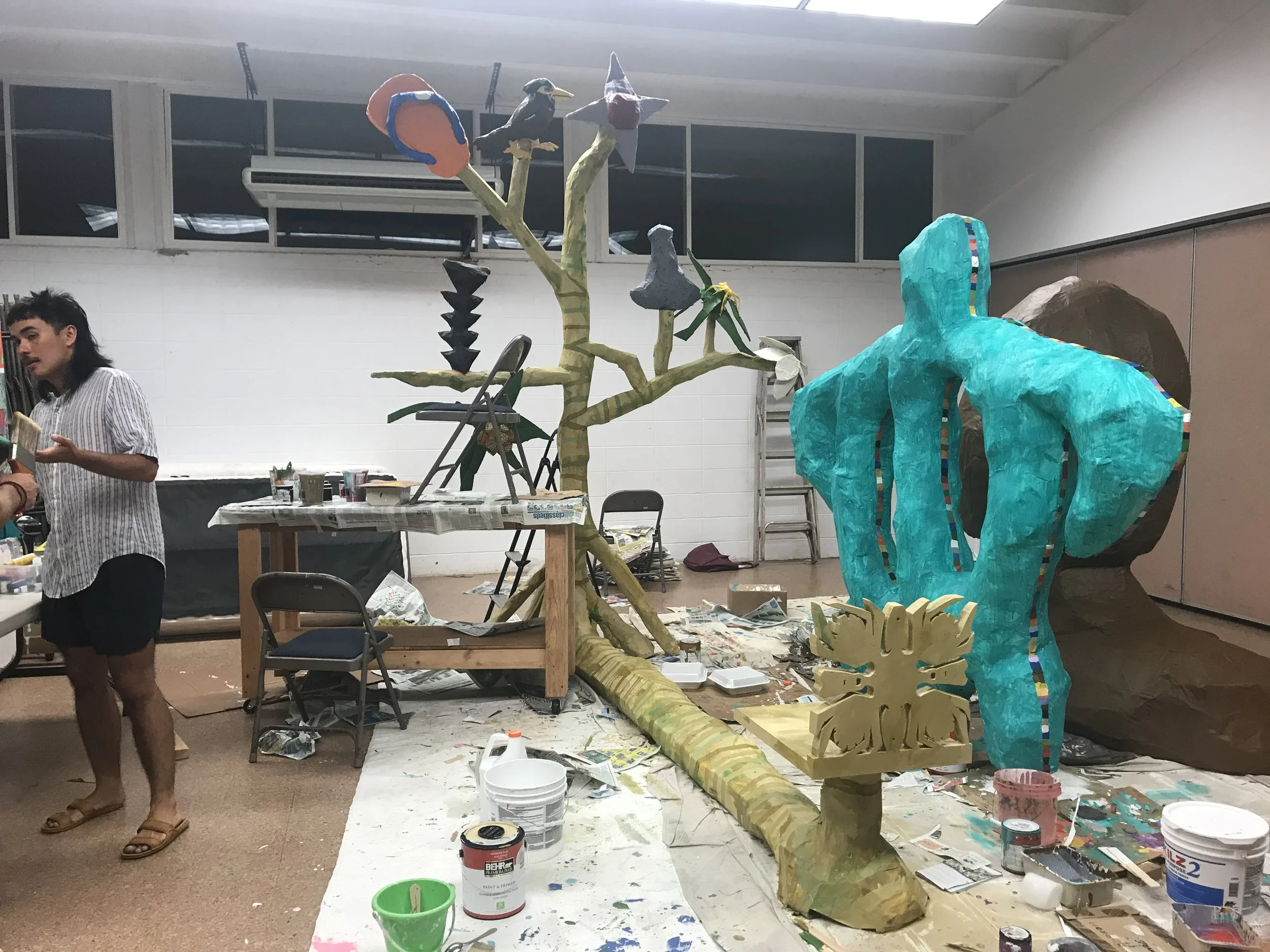
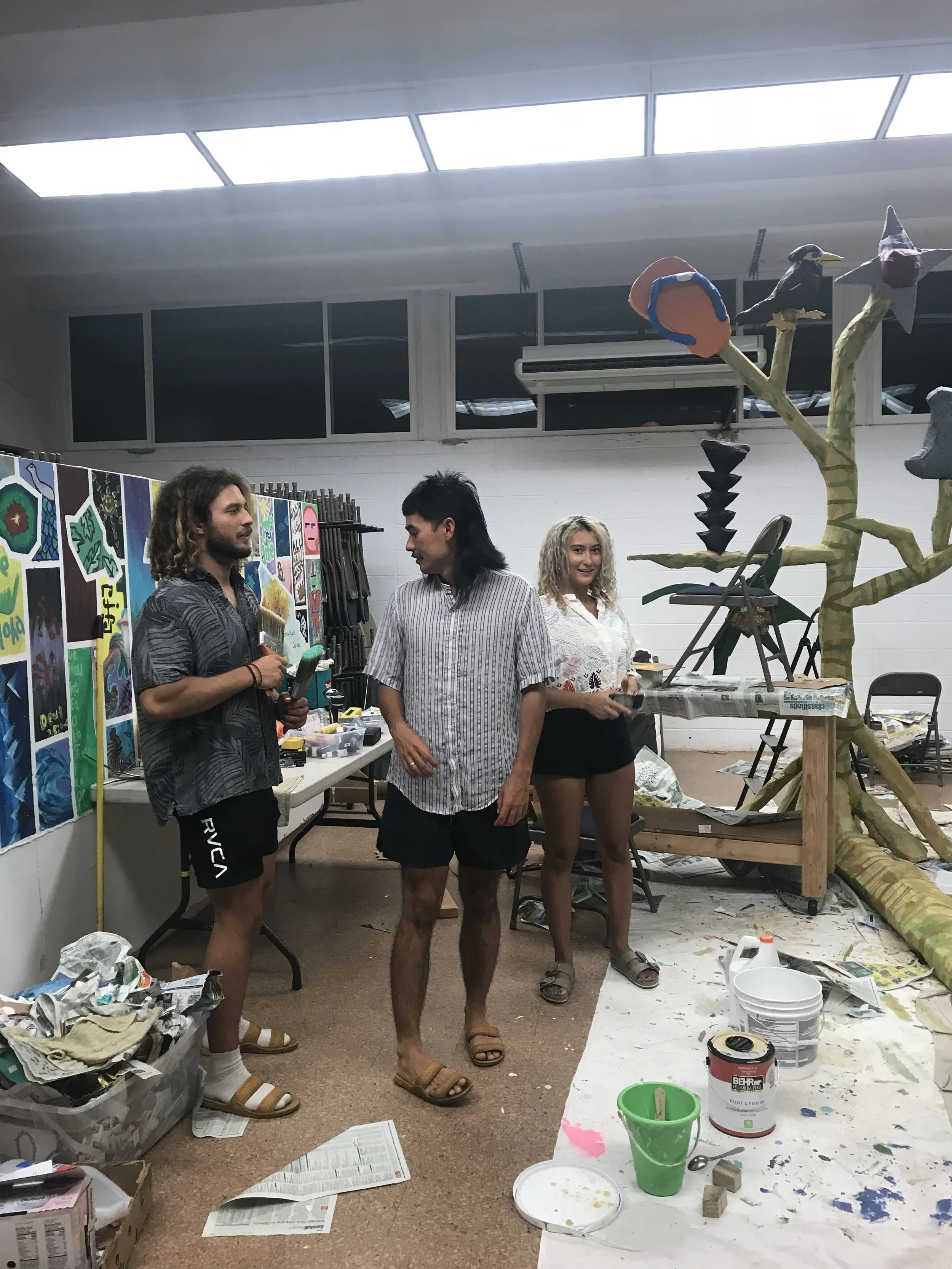
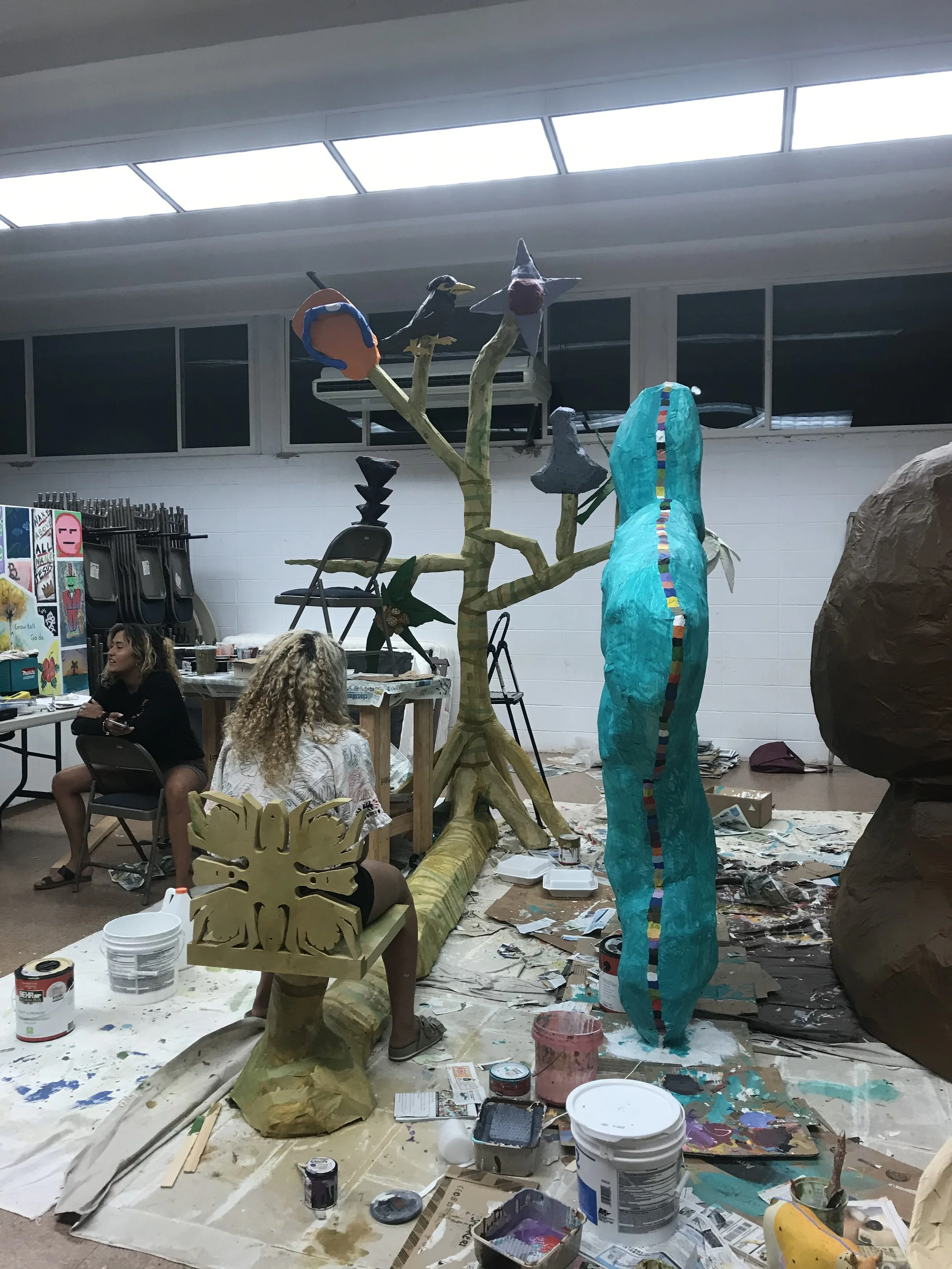
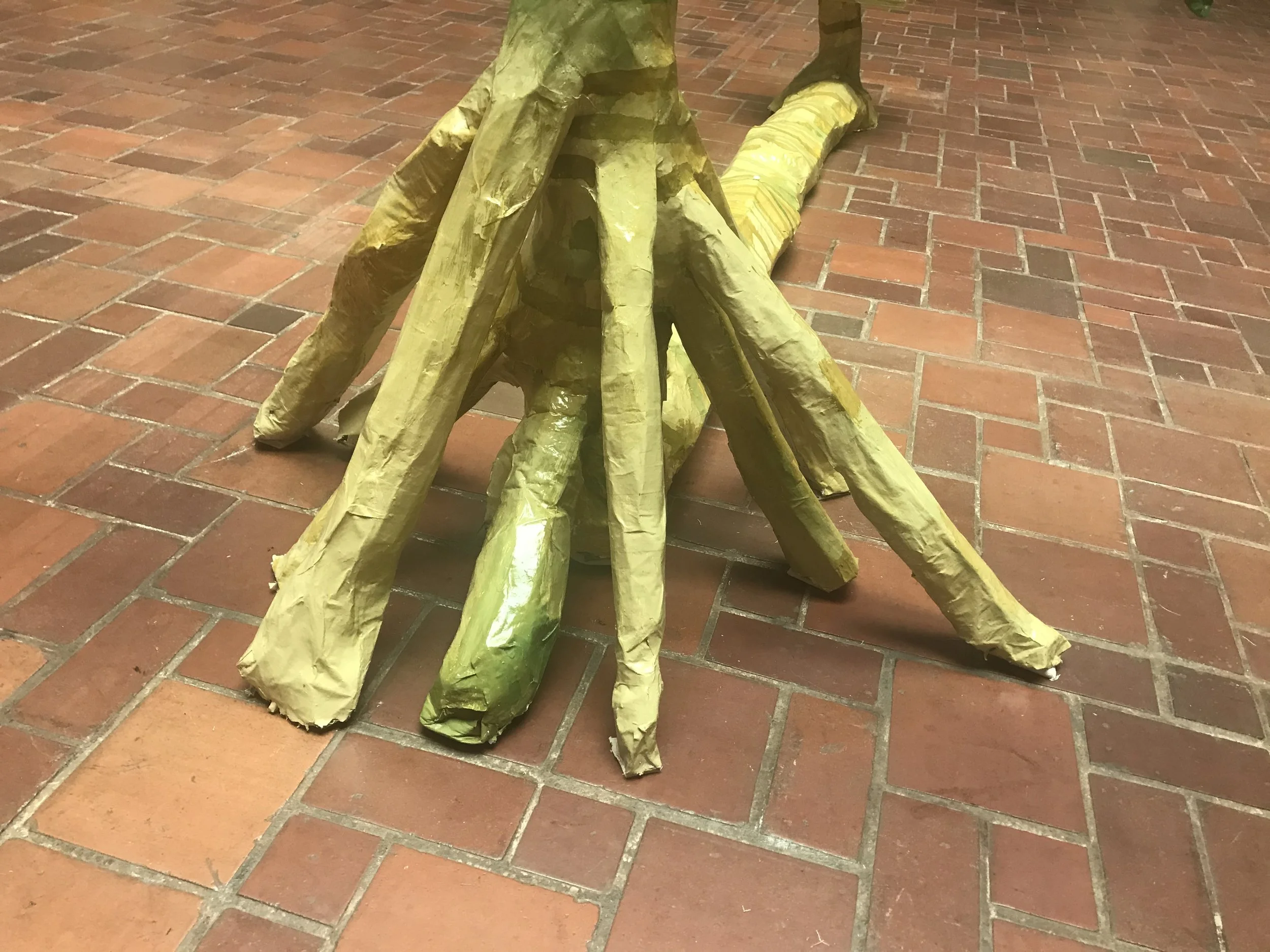
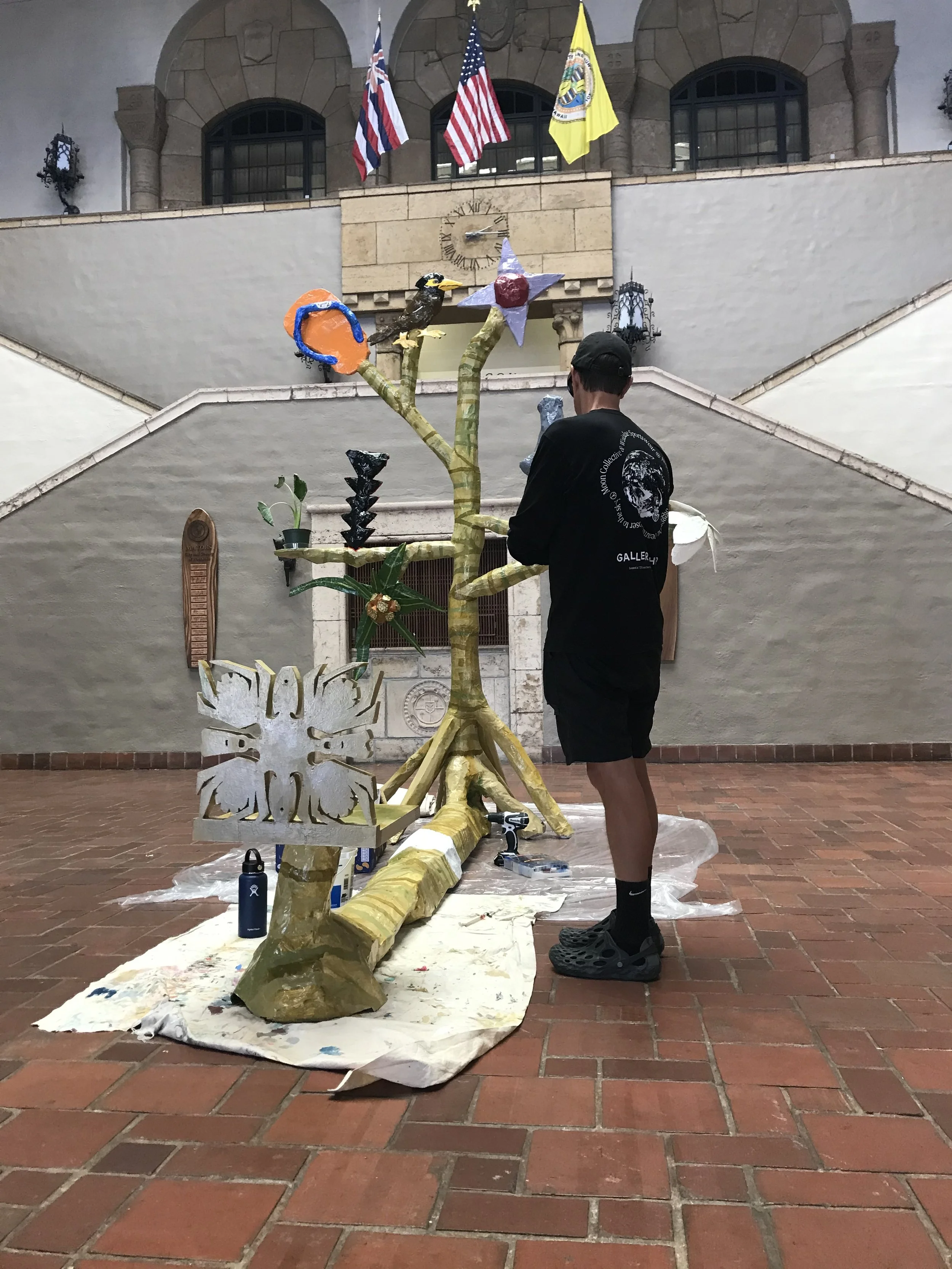
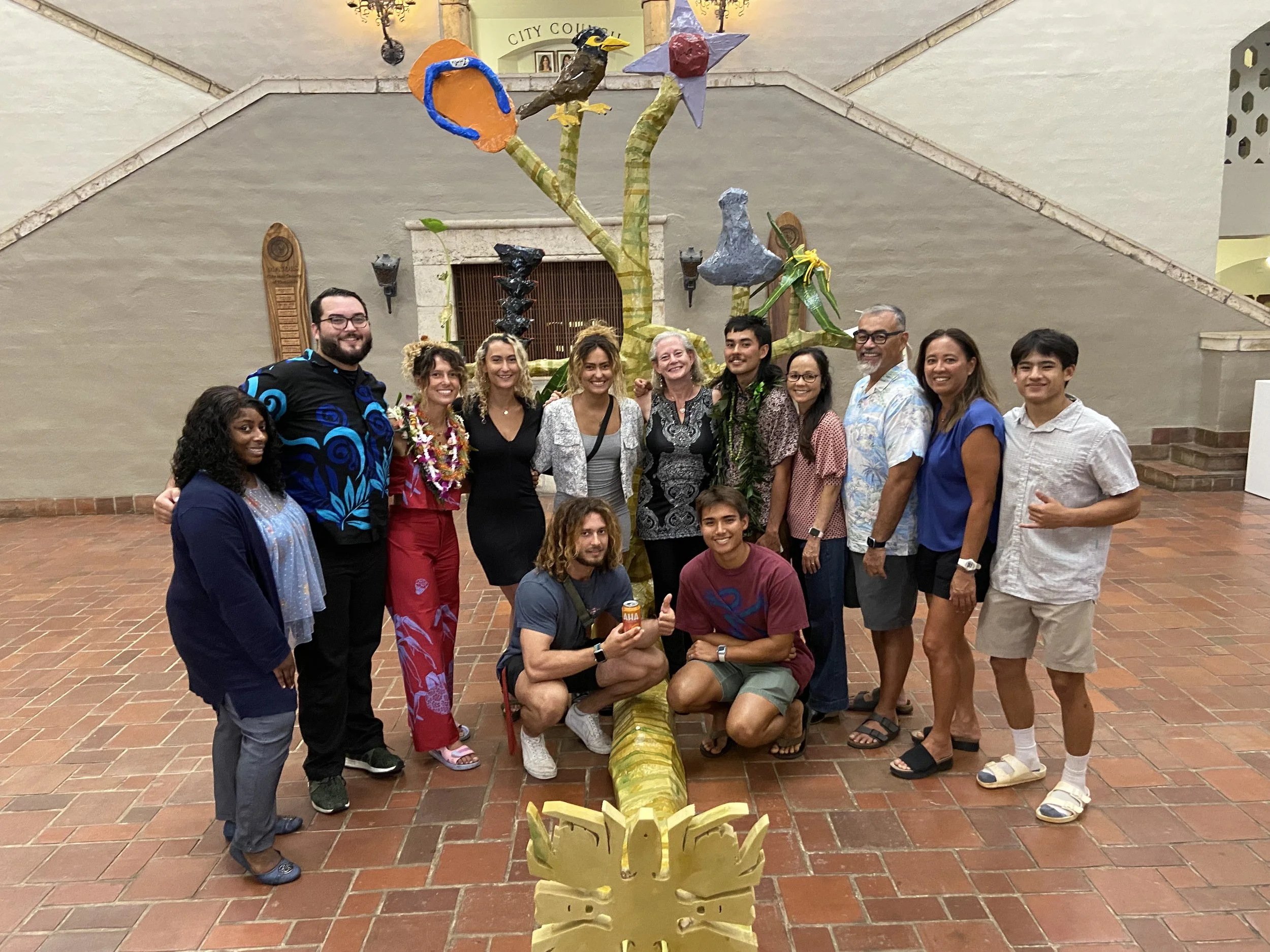
Pū Hala with Memory
Papier-mâché, found objects, wood
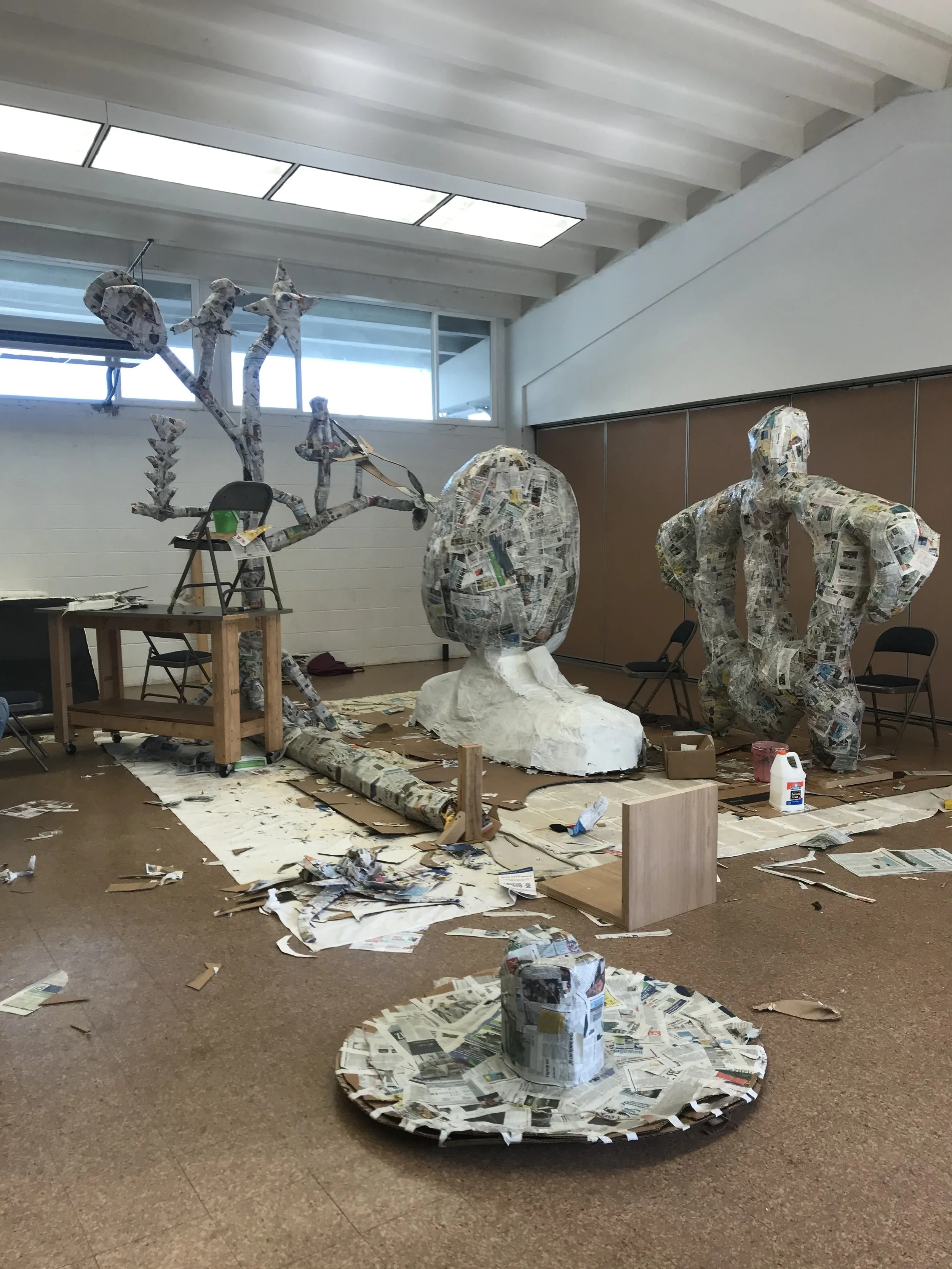
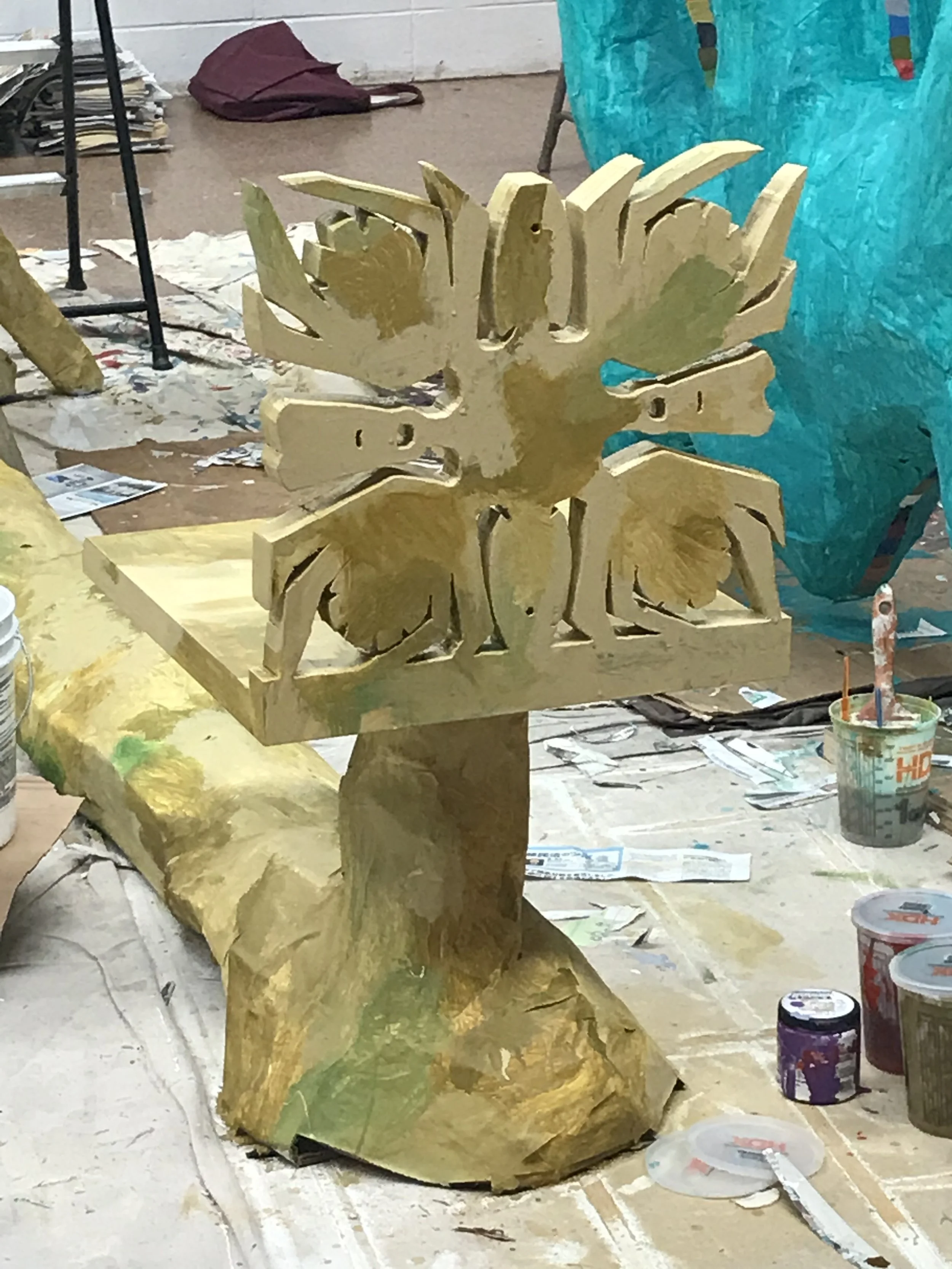
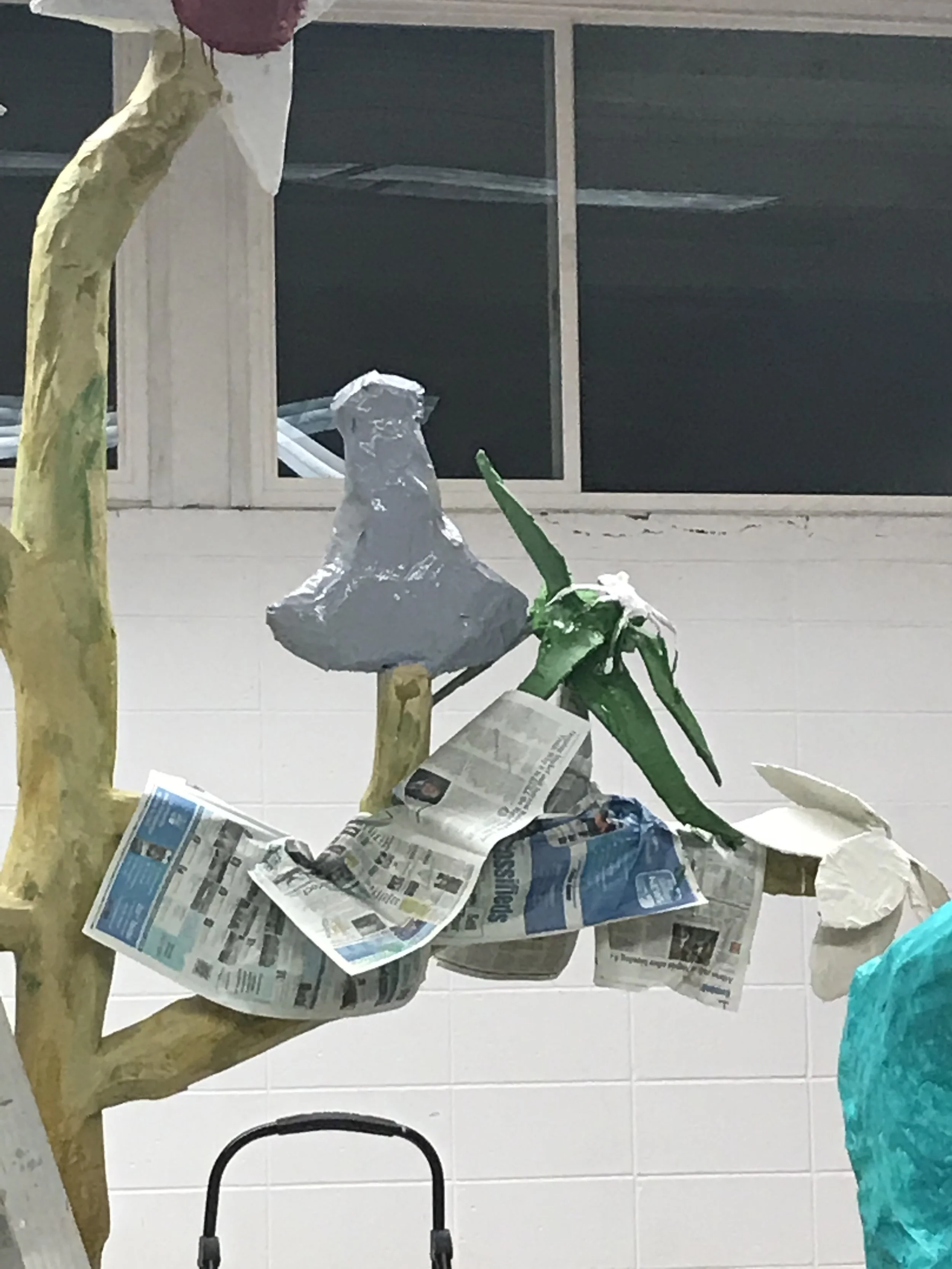
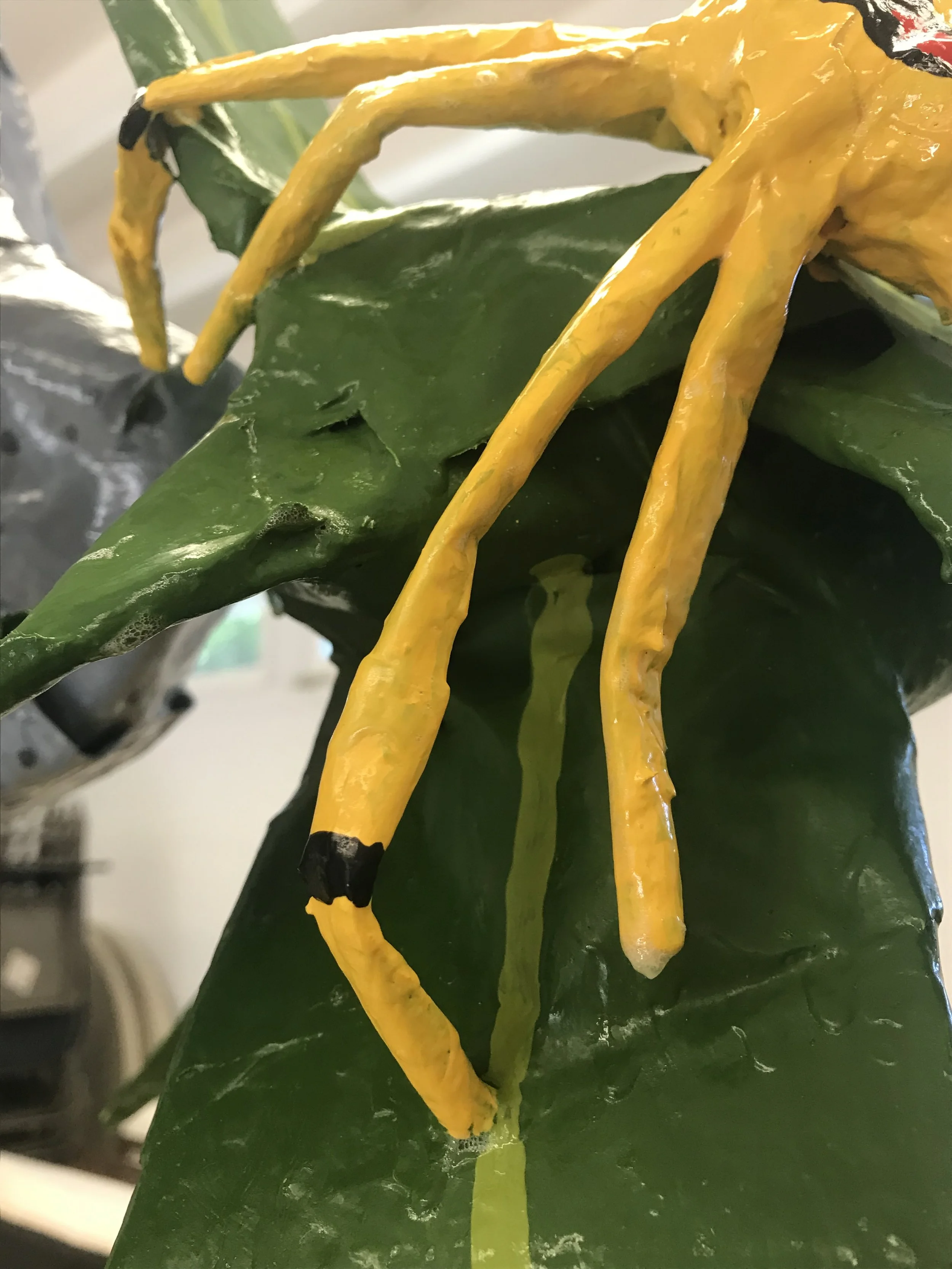
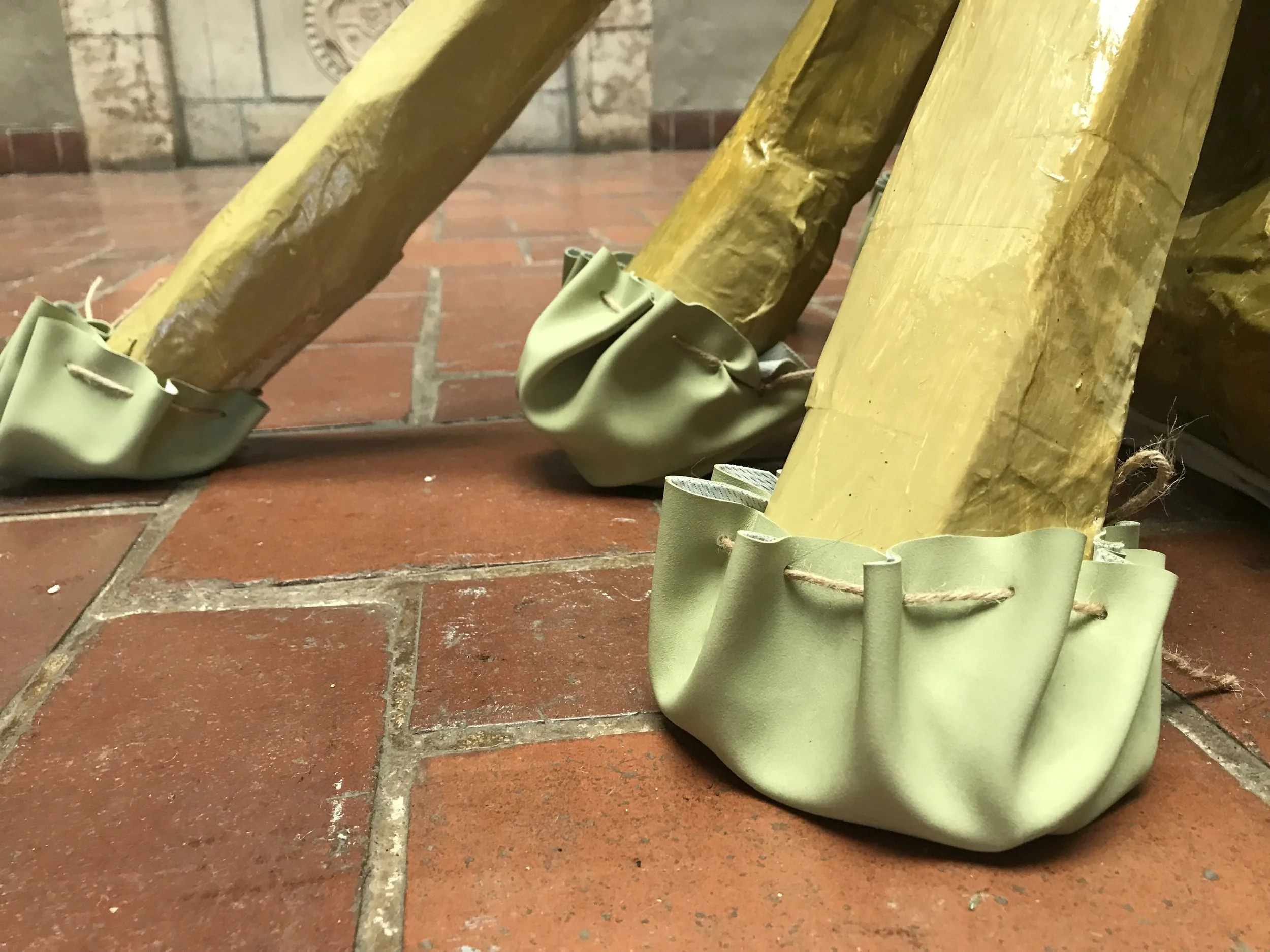
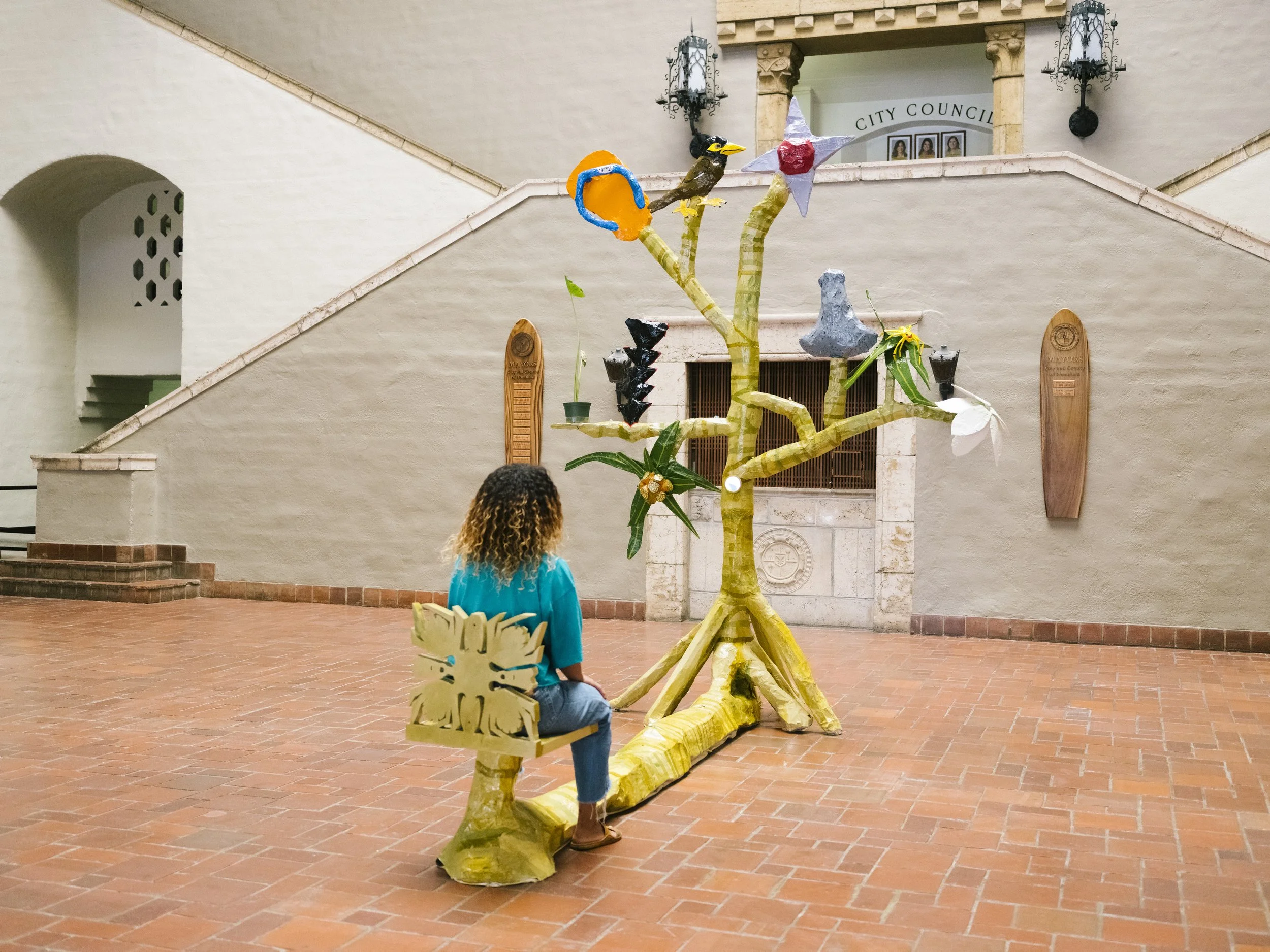
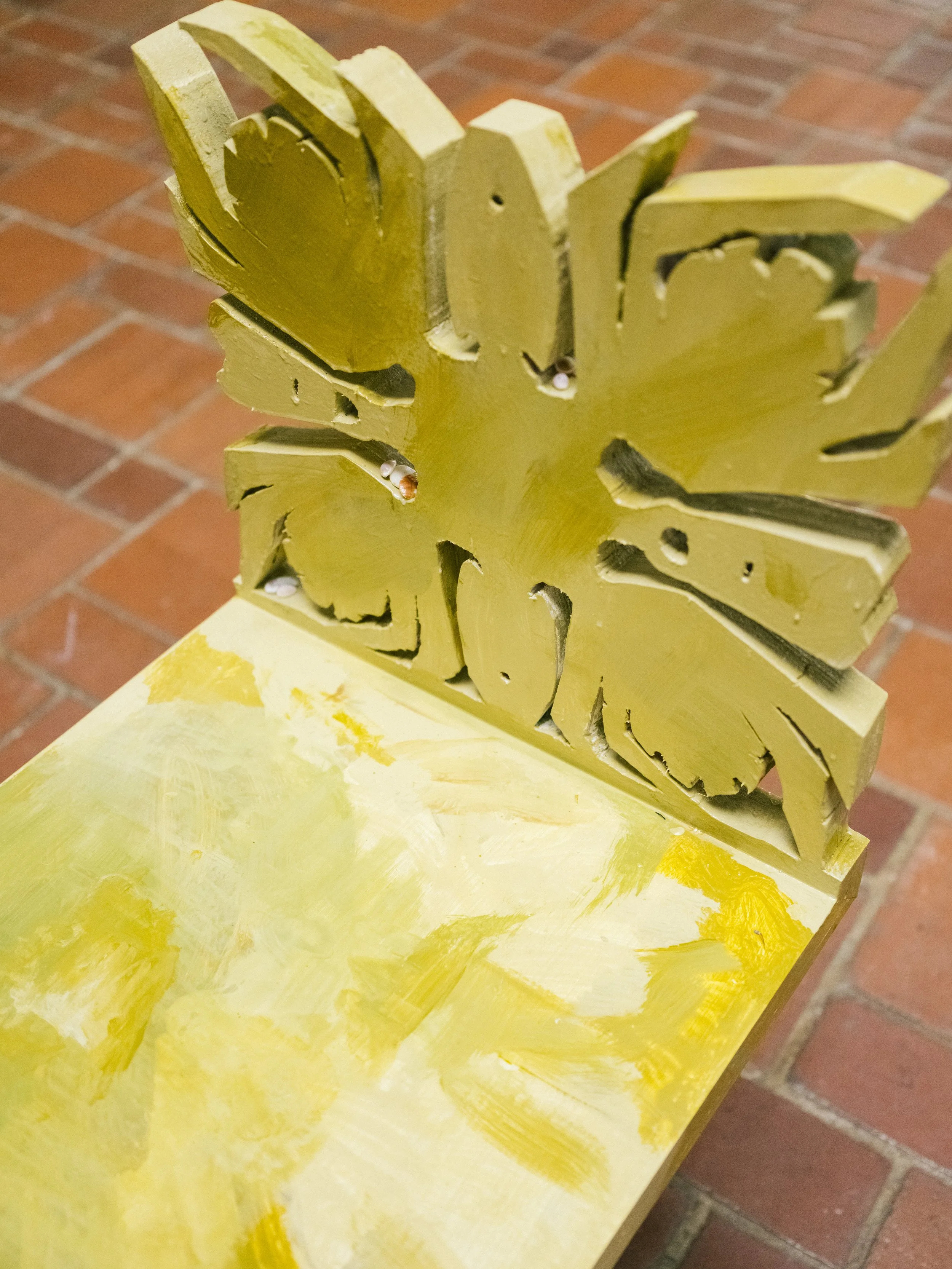
This is my sculptural representation of a Hala tree with symbols that reference my own personal connections to Hawai‘i in place of lau hala on its branches. Each branch holds a different motif. The seating platform invites the viewer to ponder the contrasts of materials in real time, activating the artwork and participating with its surroundings. The mirror informs the viewer that they are the necessary final component in the sculpture, to participate in a collective experience and to actively consider their role in engaging with art.
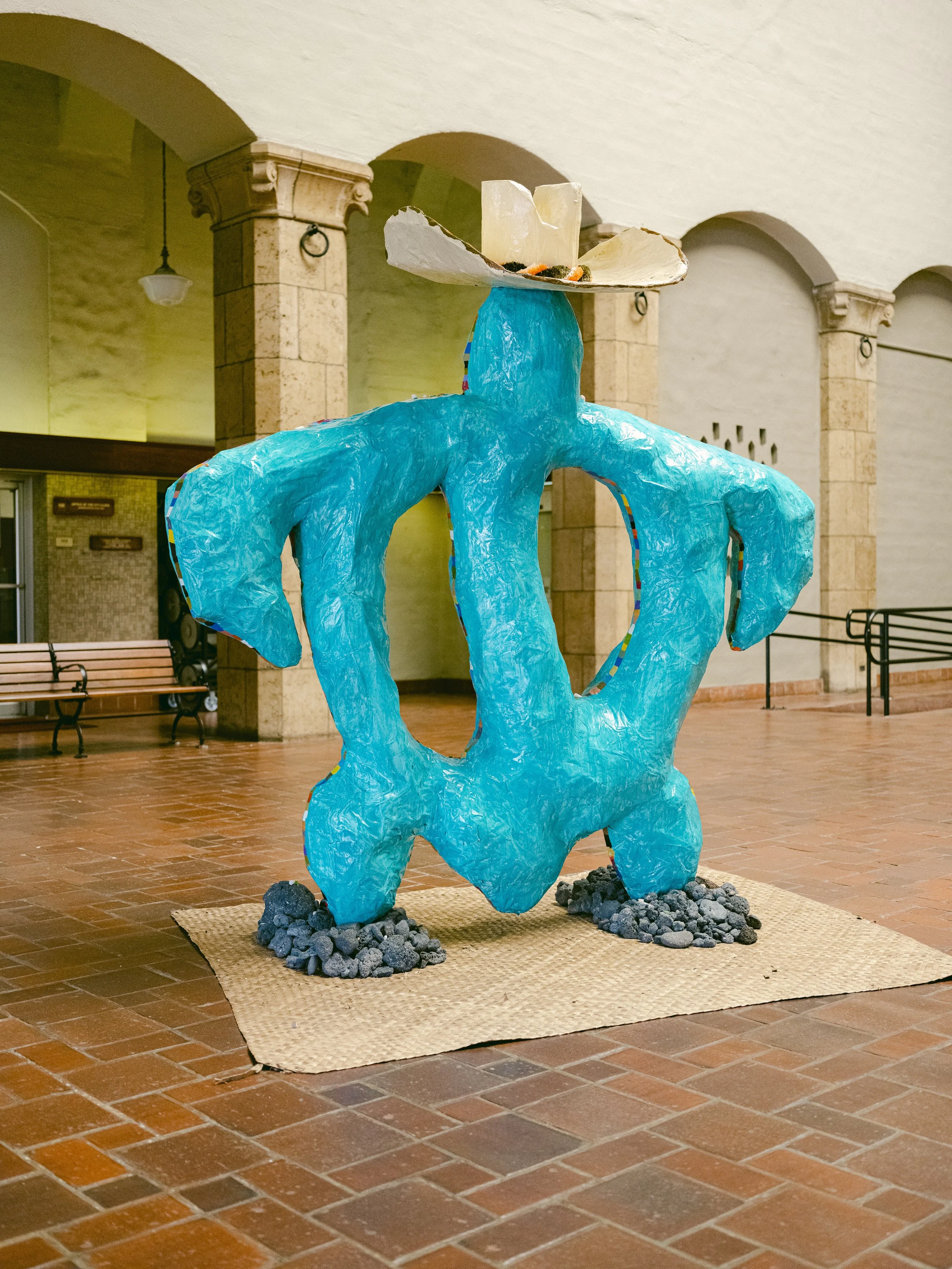
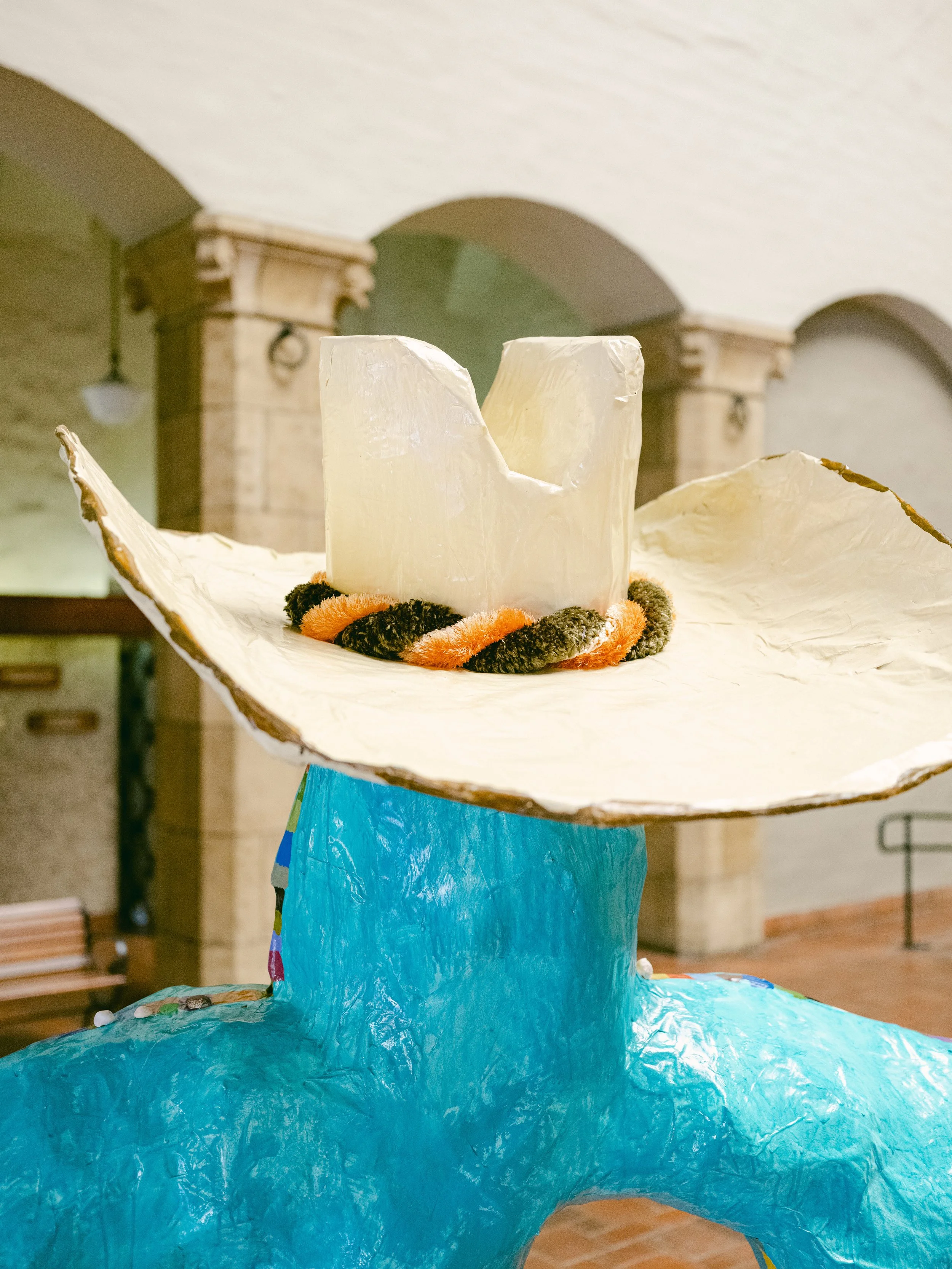
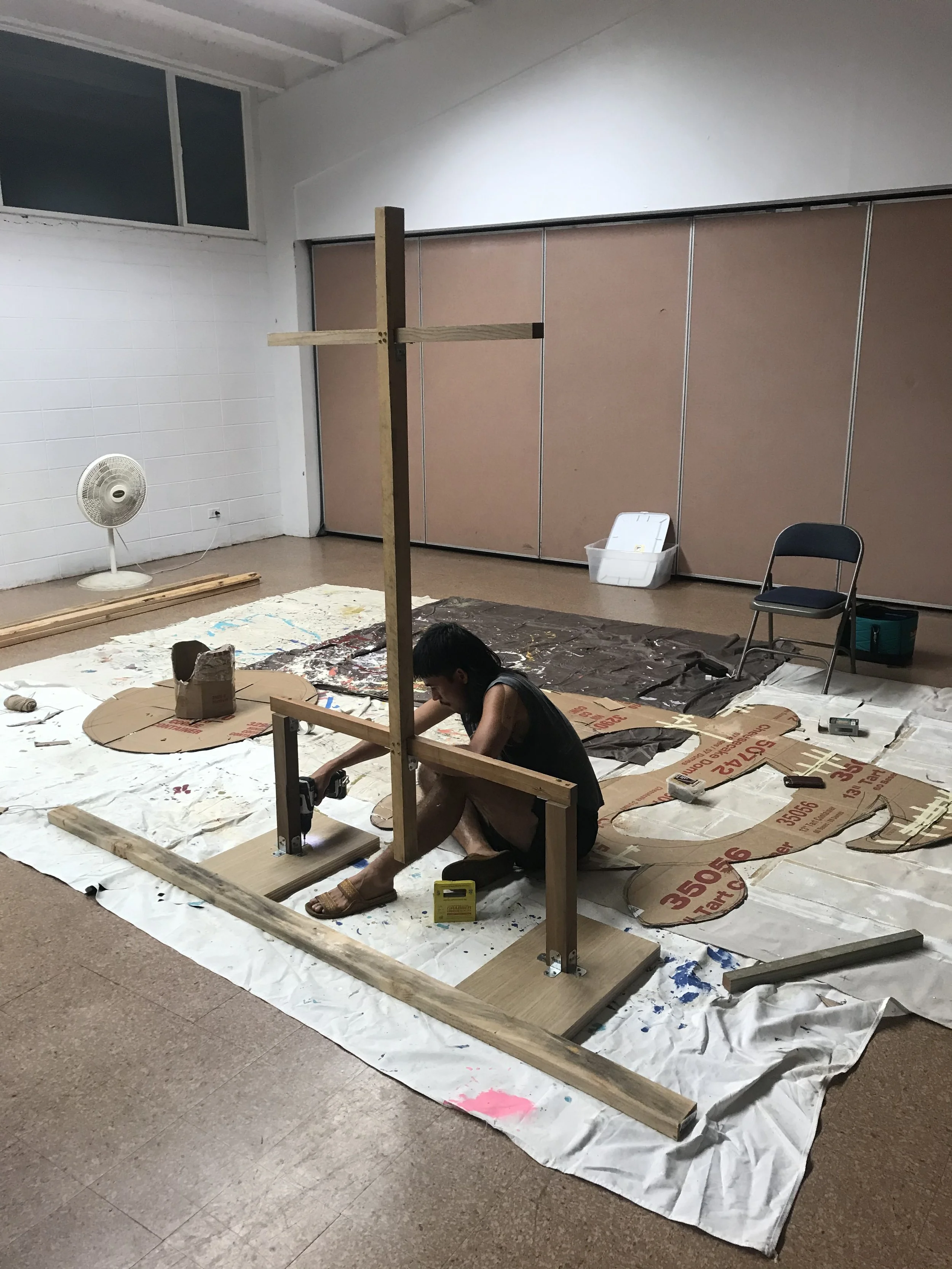
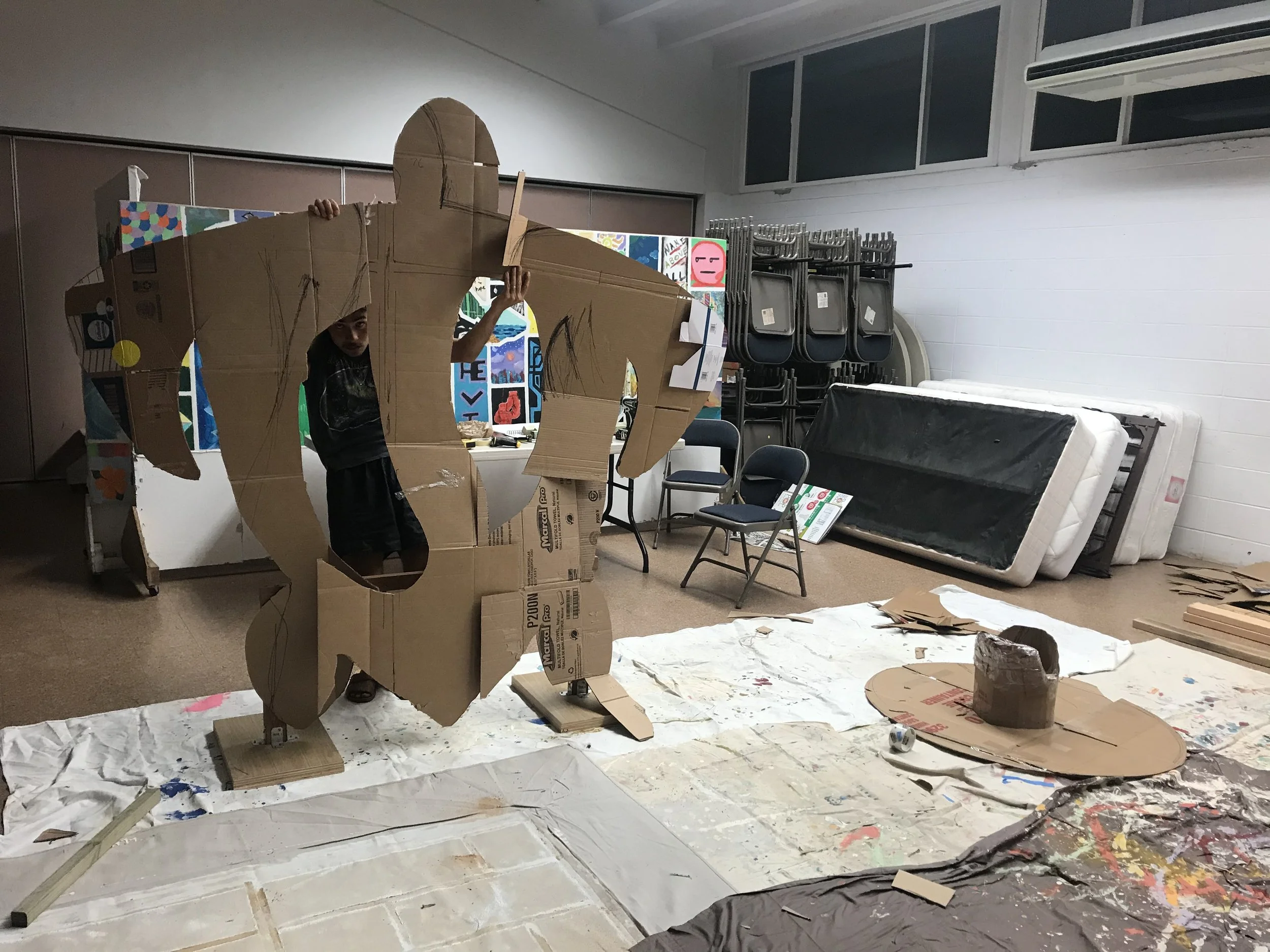
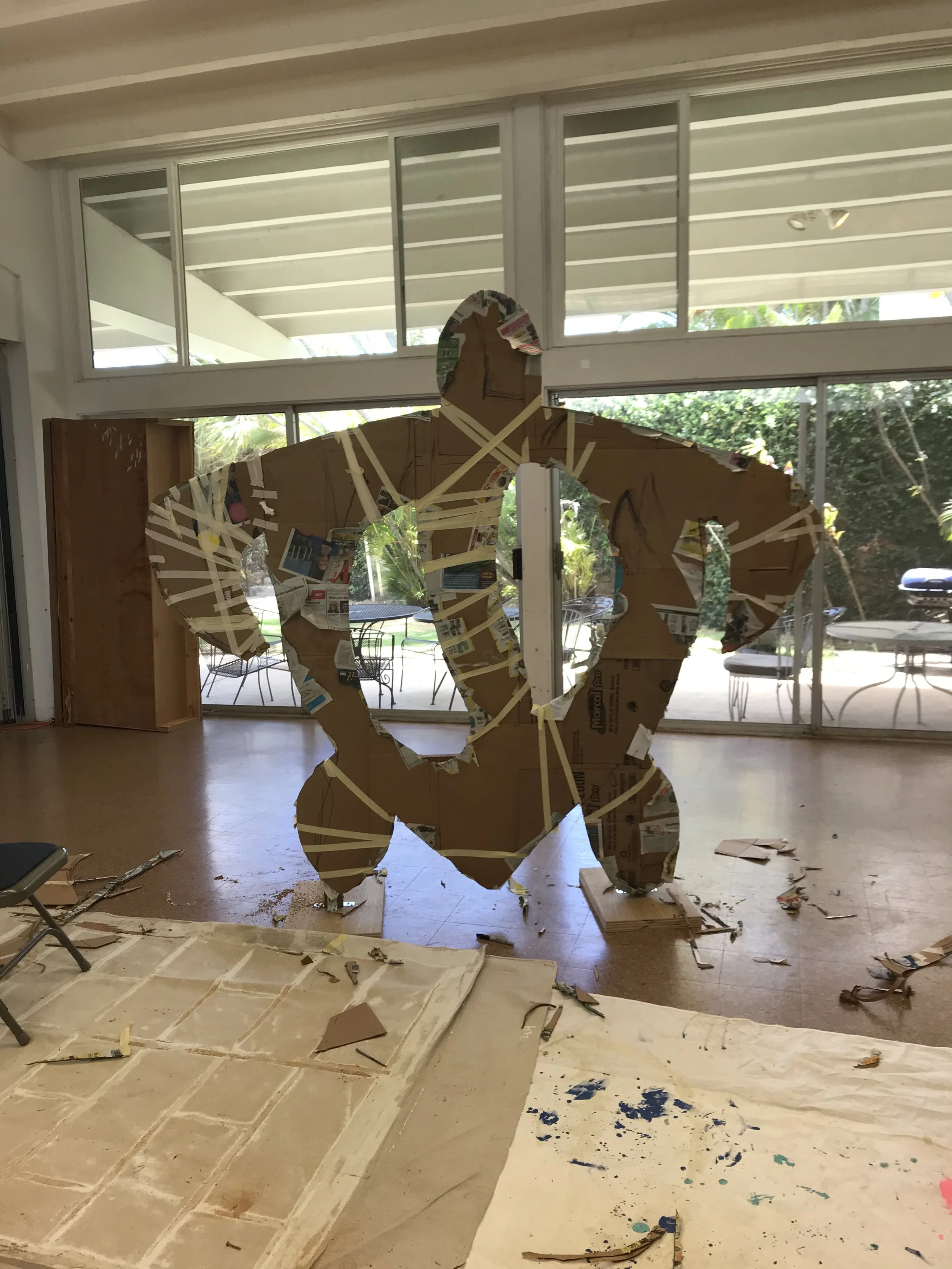
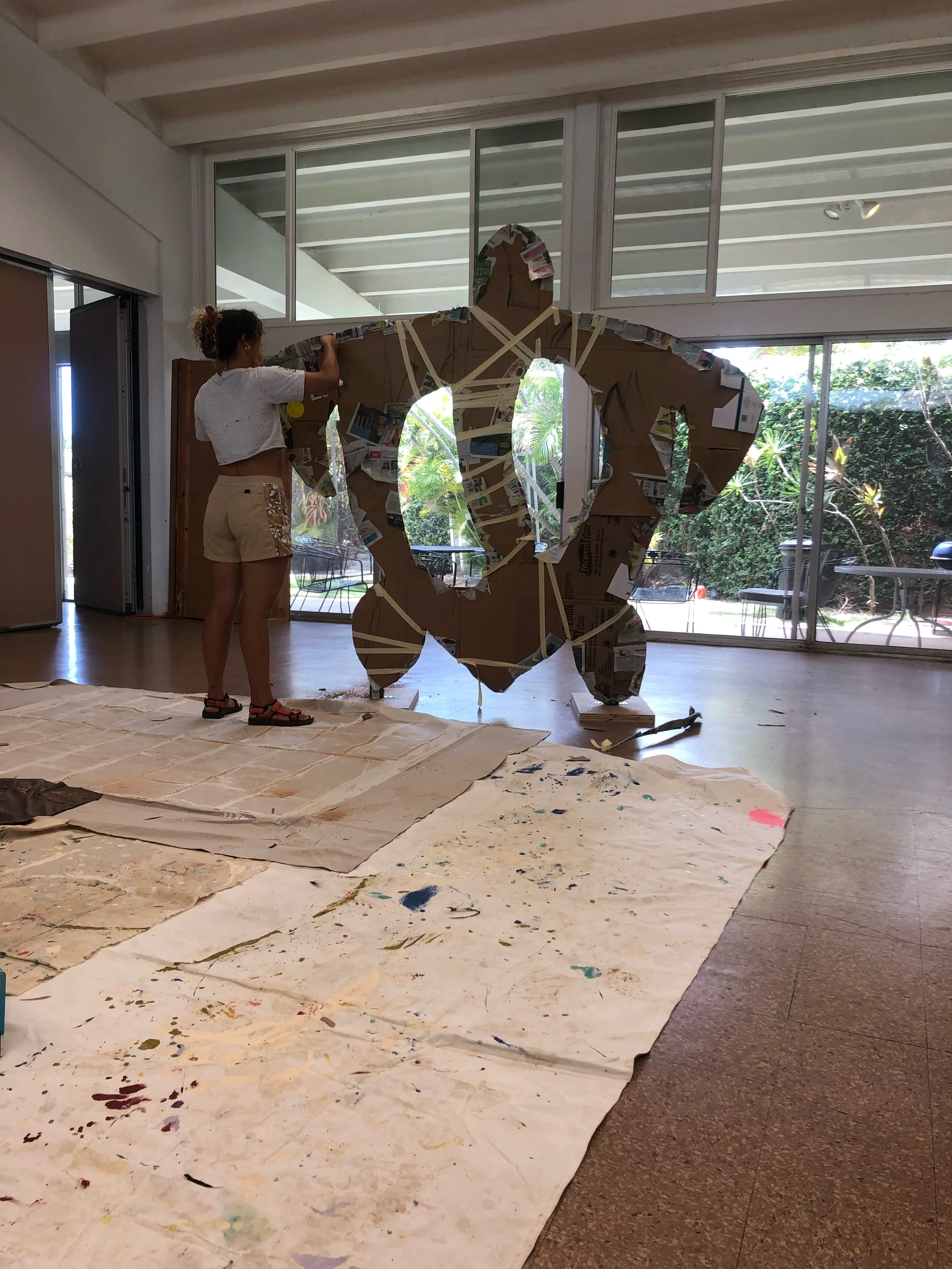
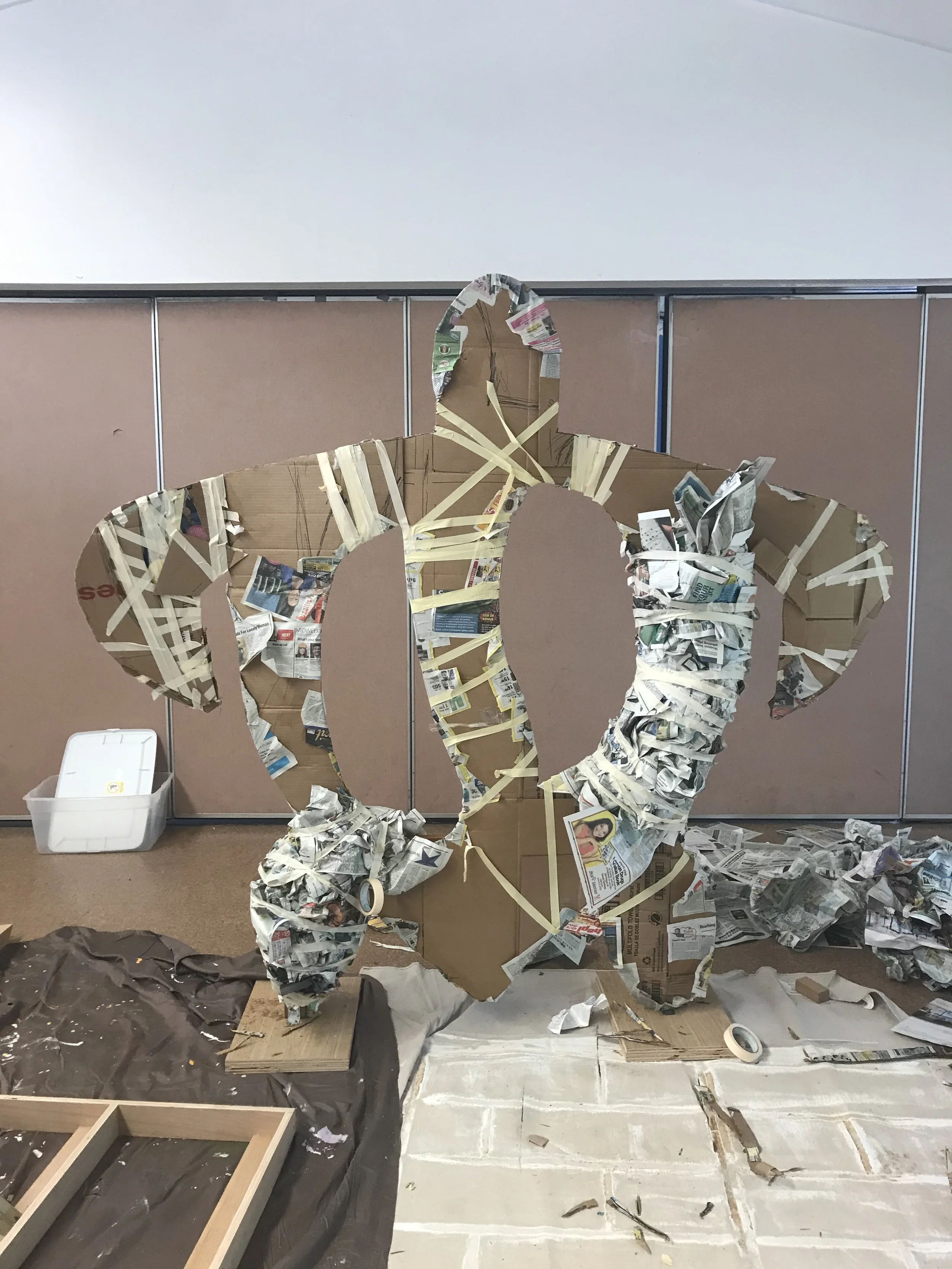
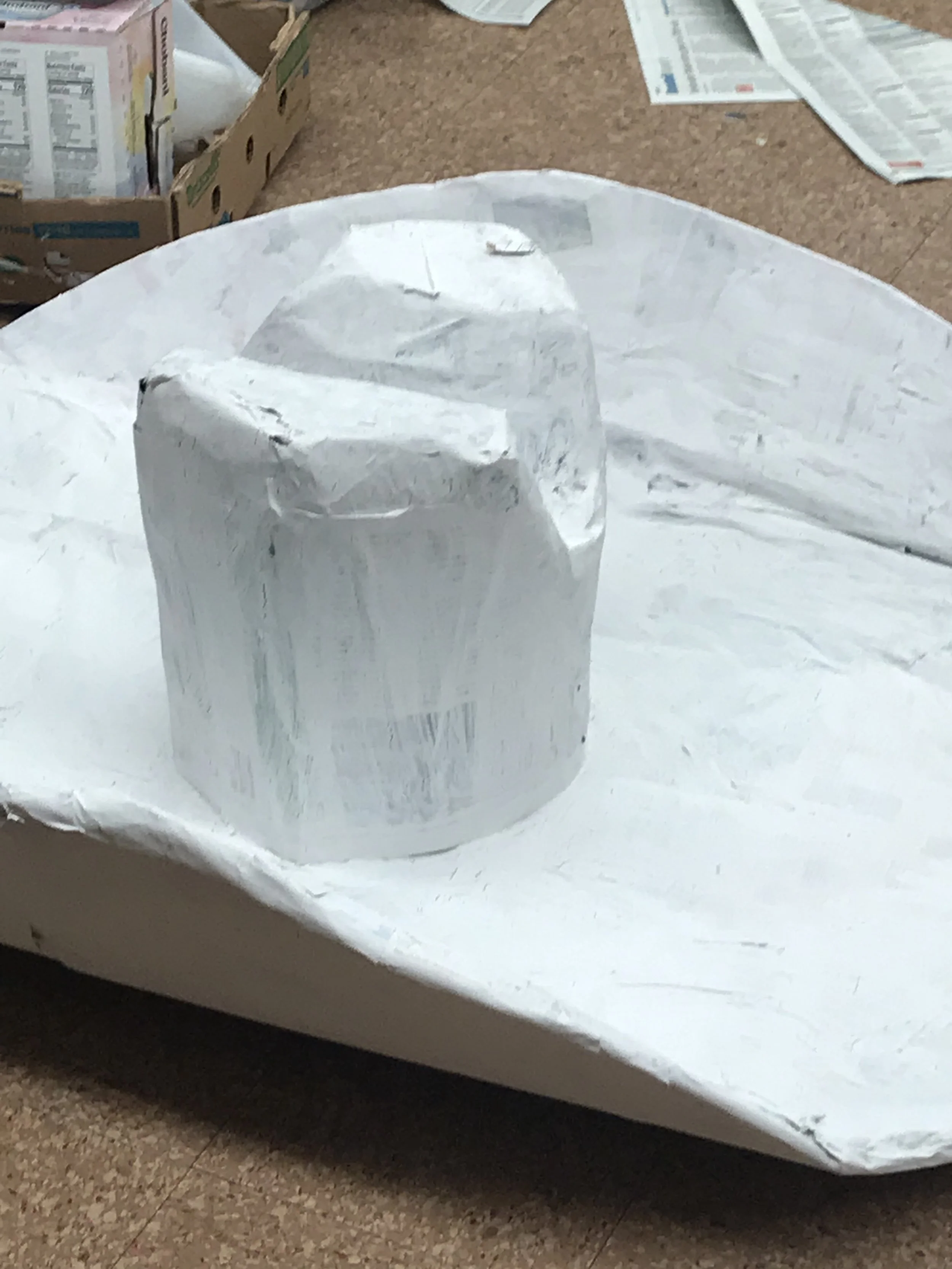
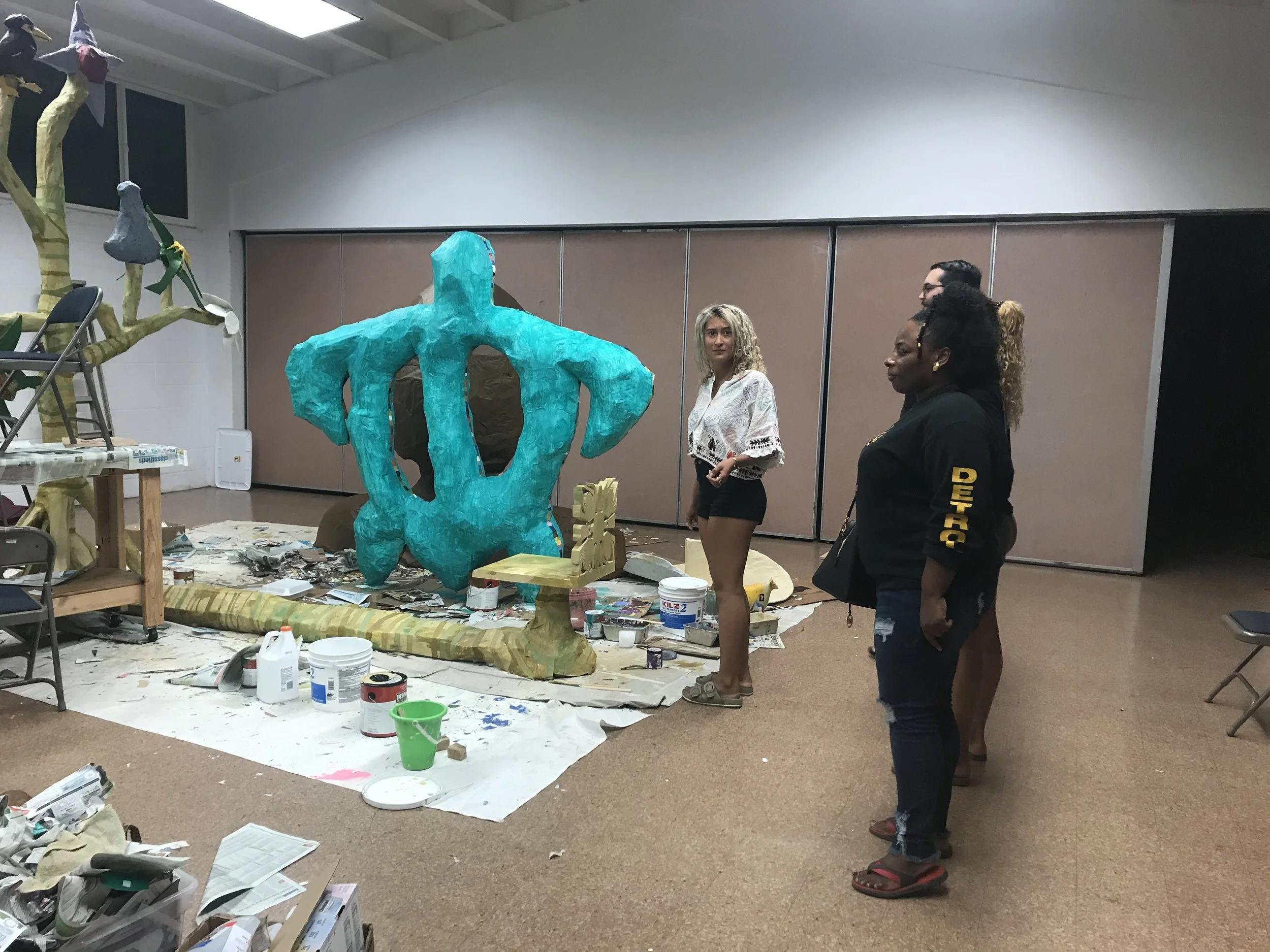
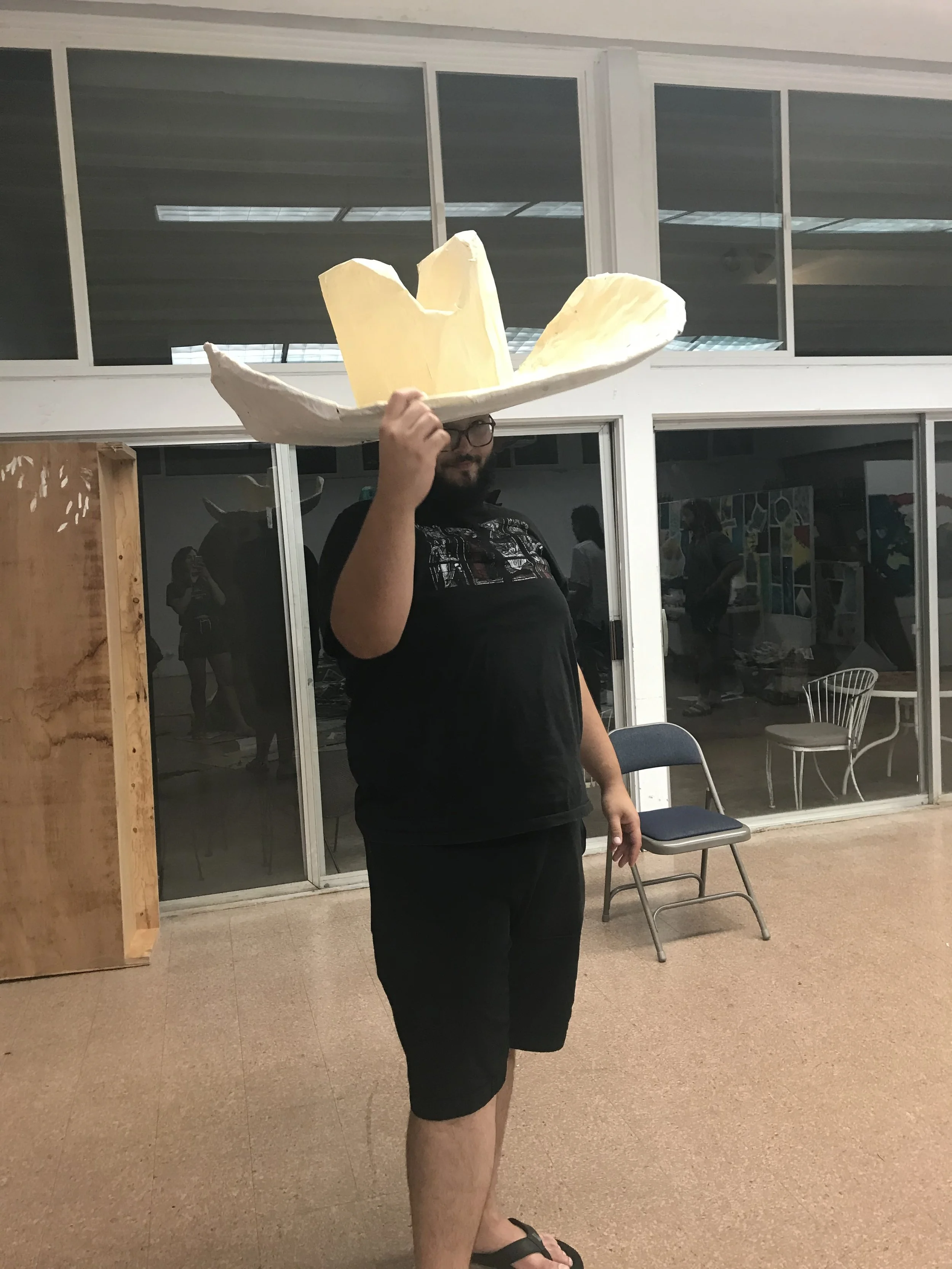
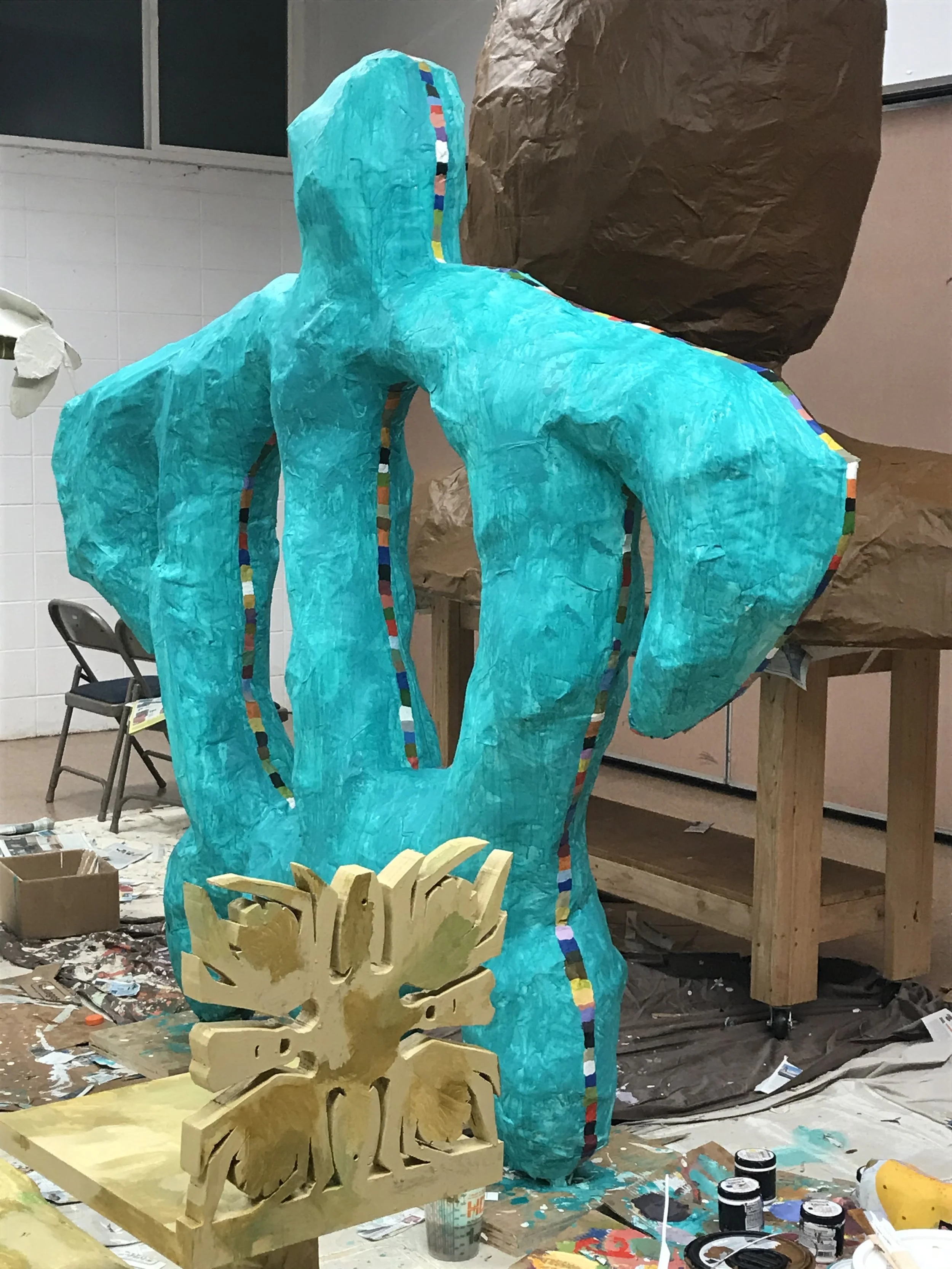
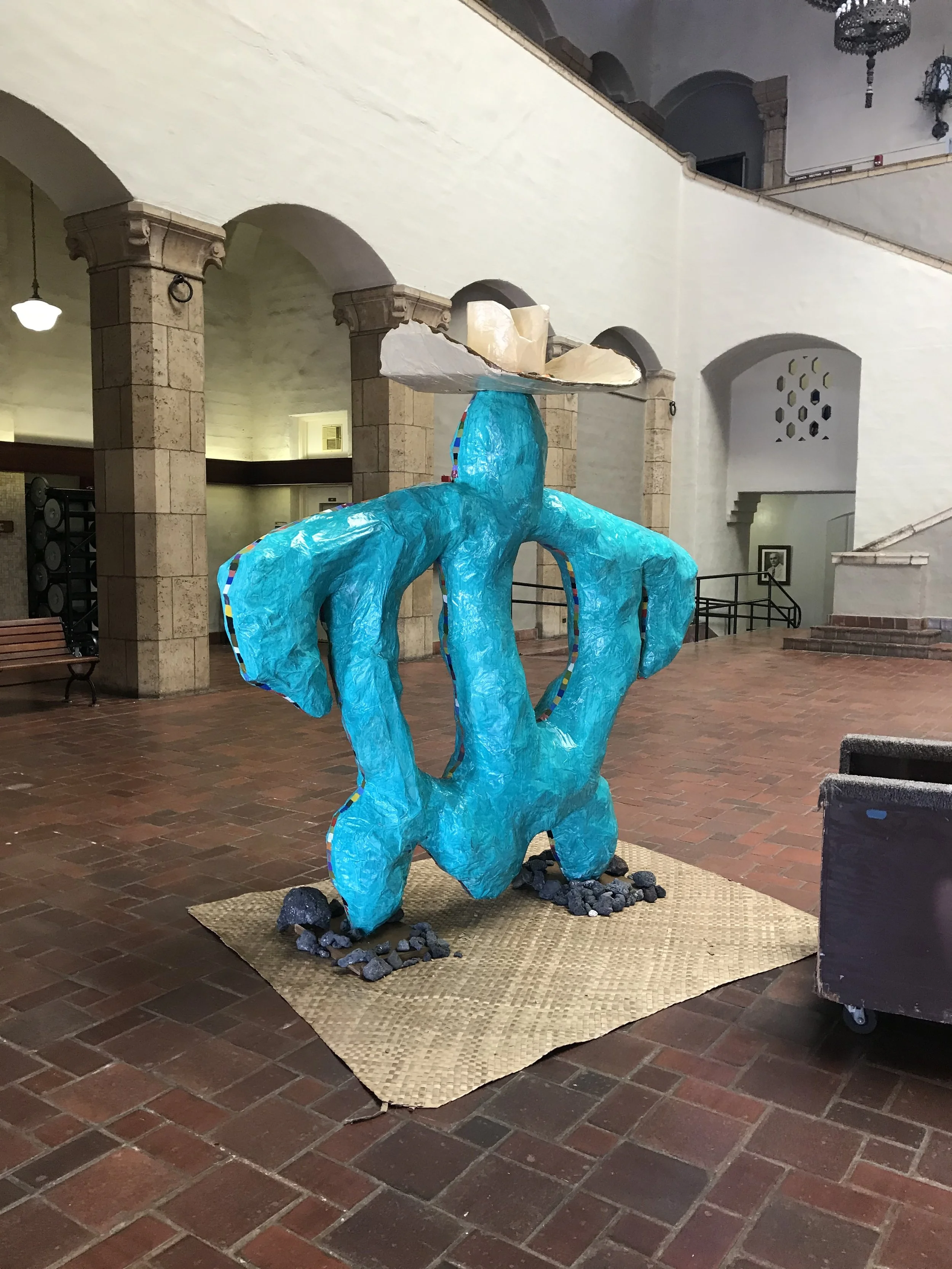
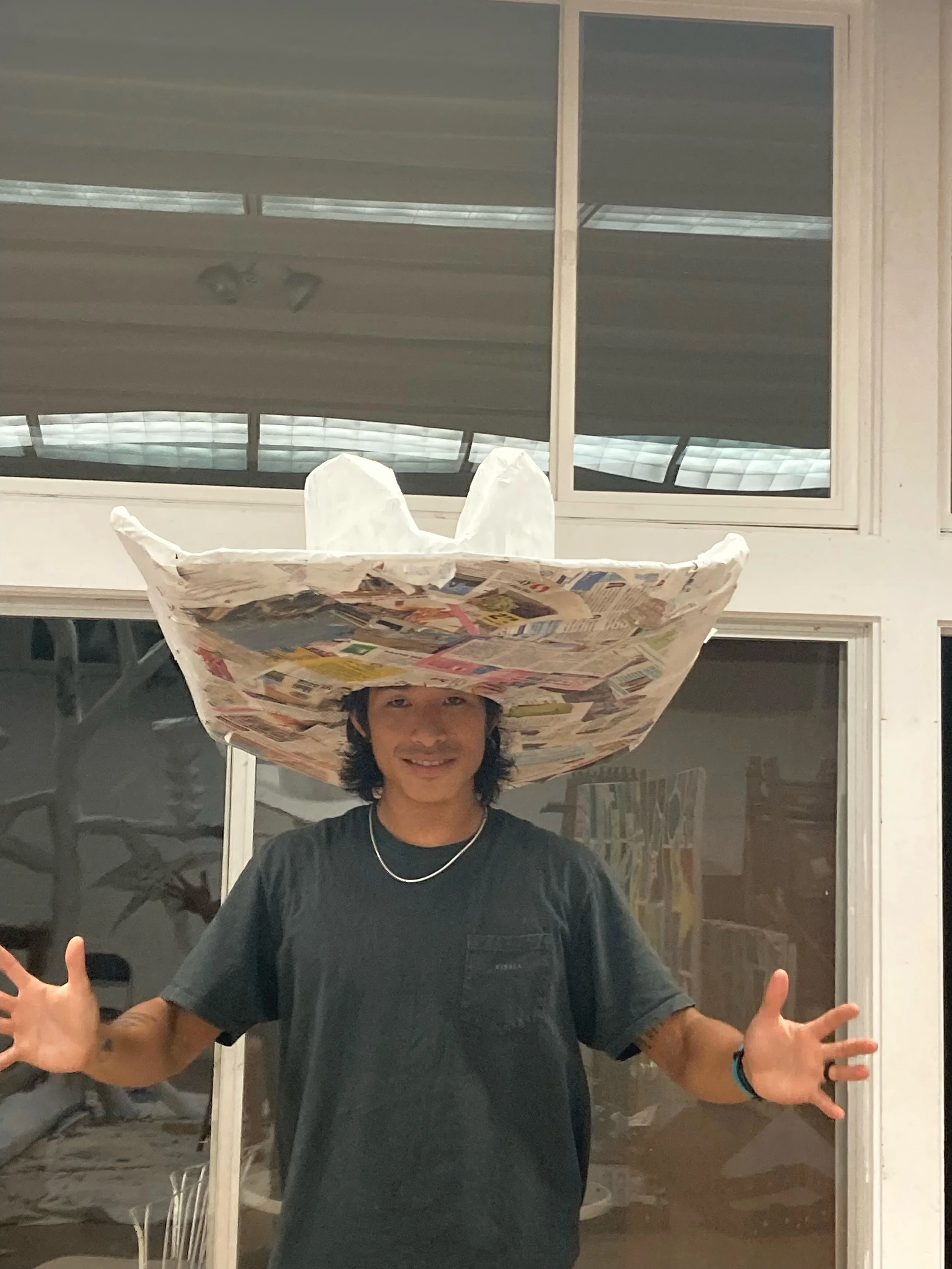
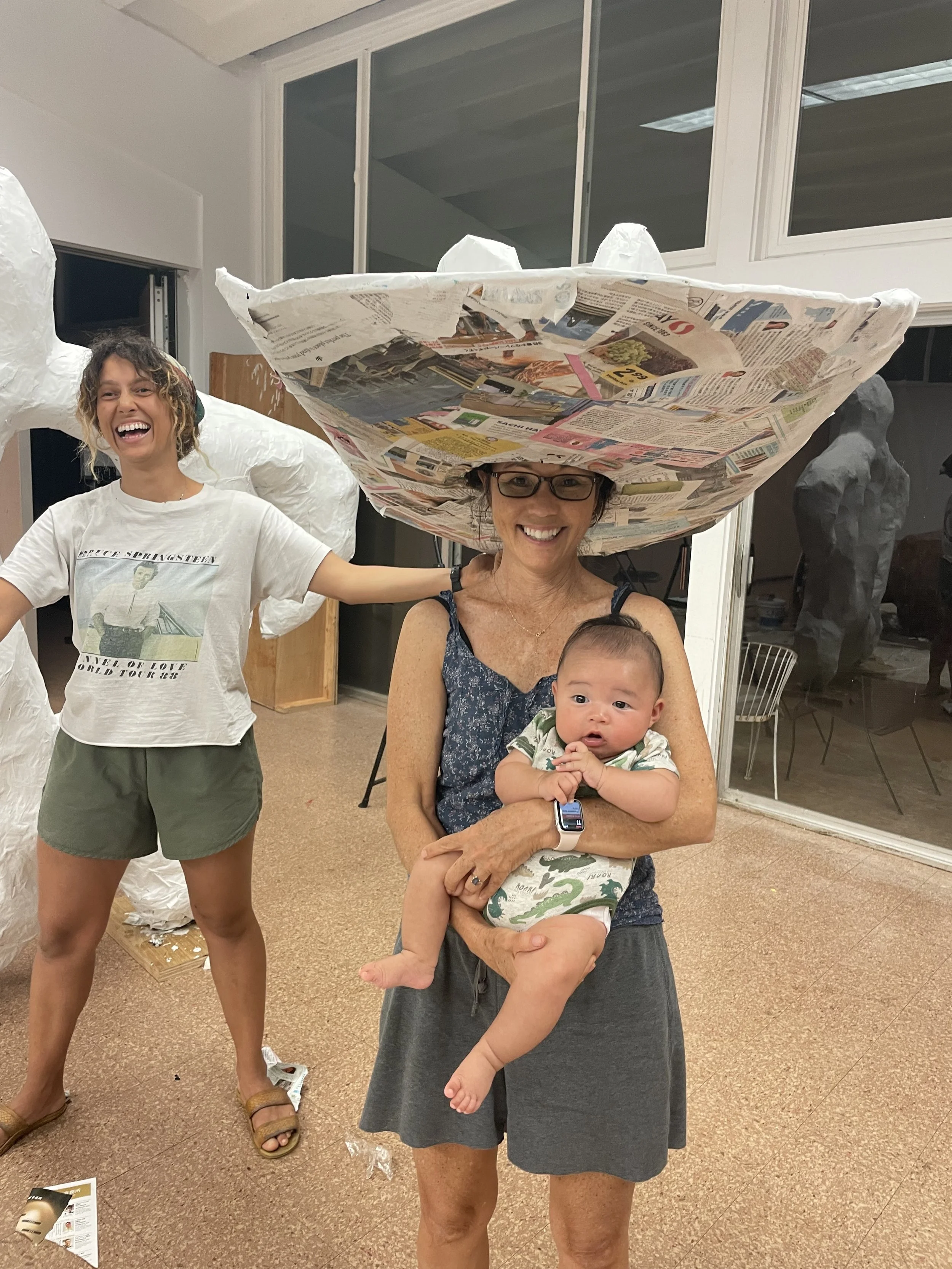
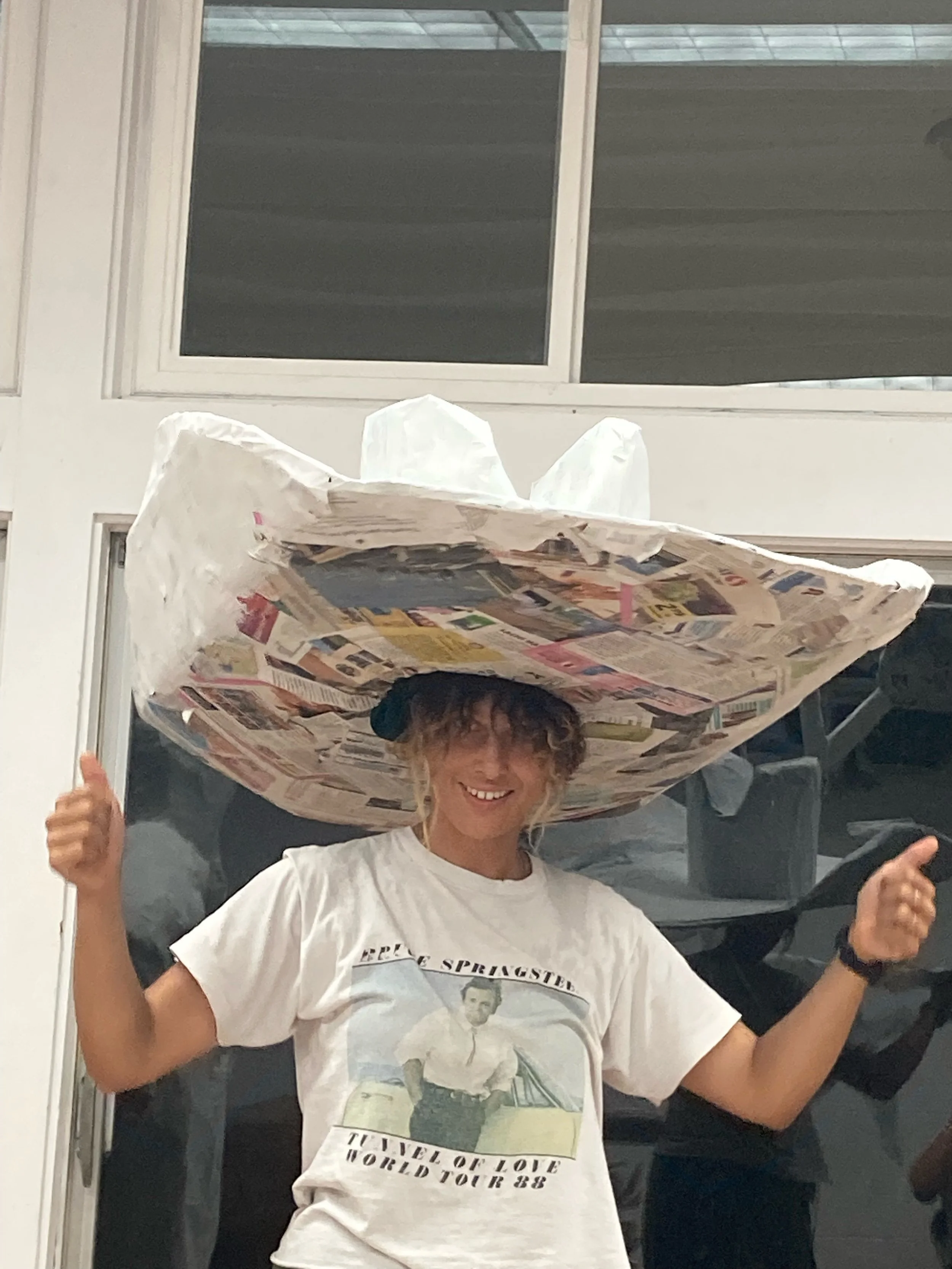
Honu Paniolo
Papier-mâché, found objects, wood
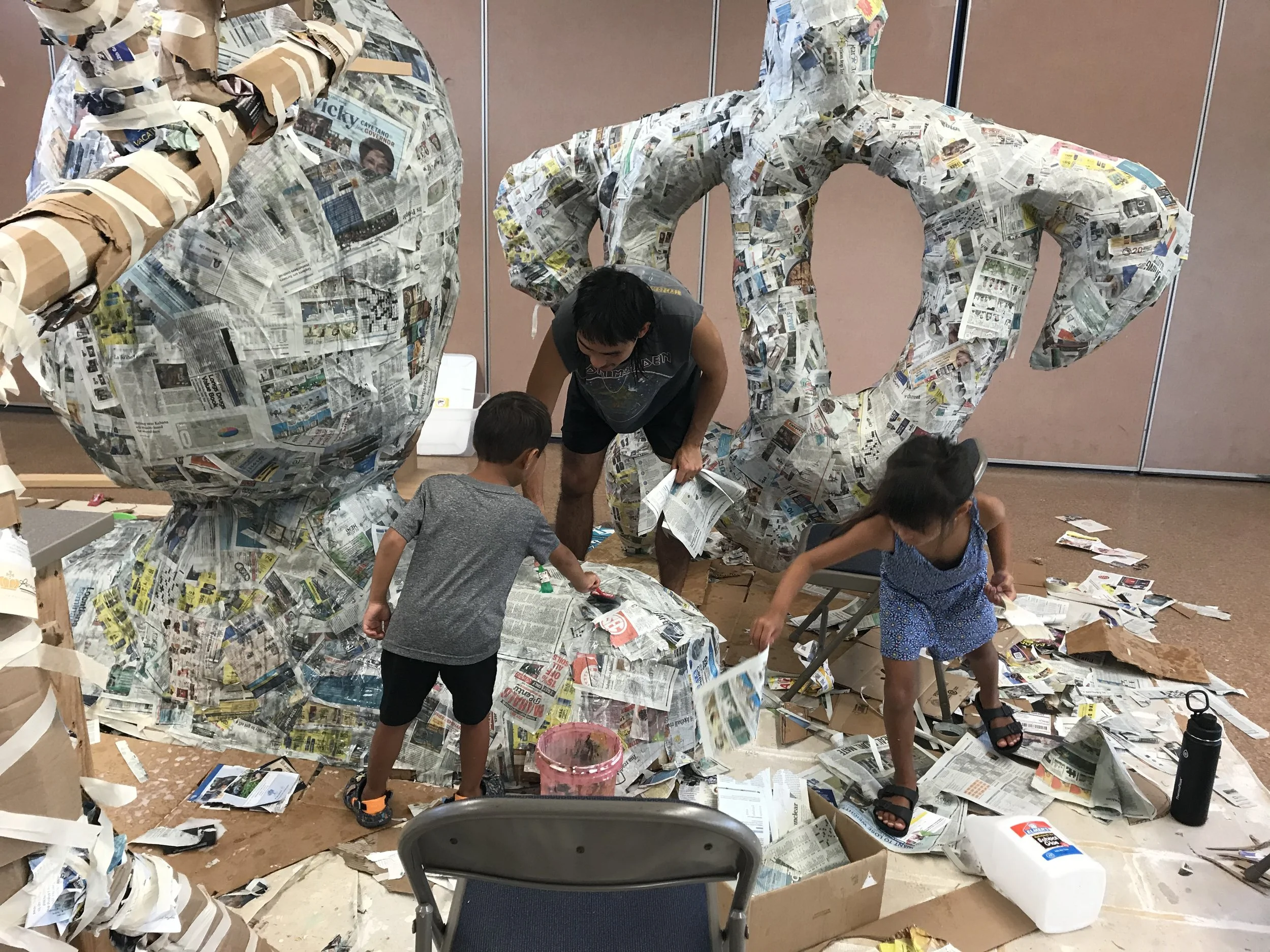
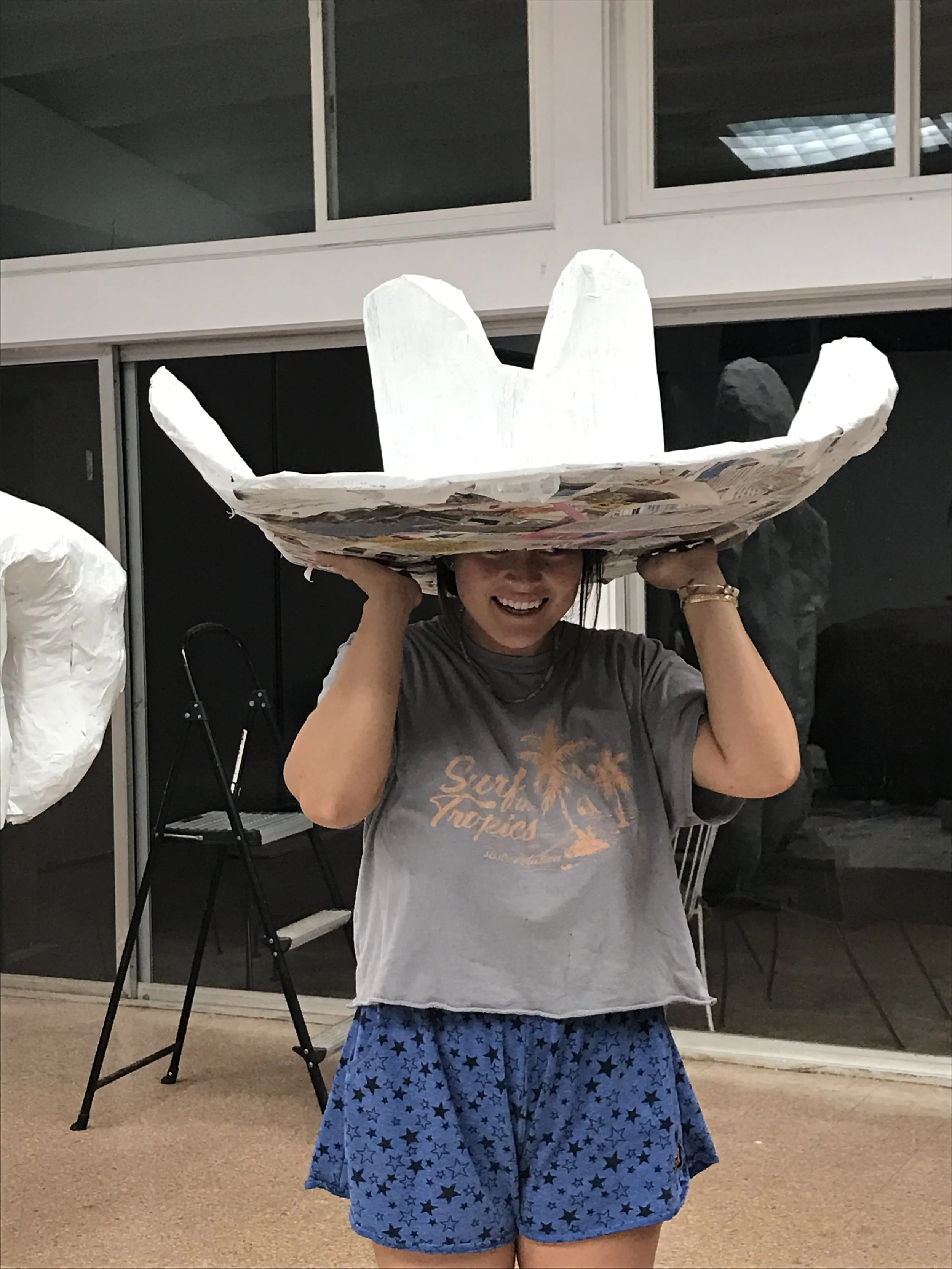
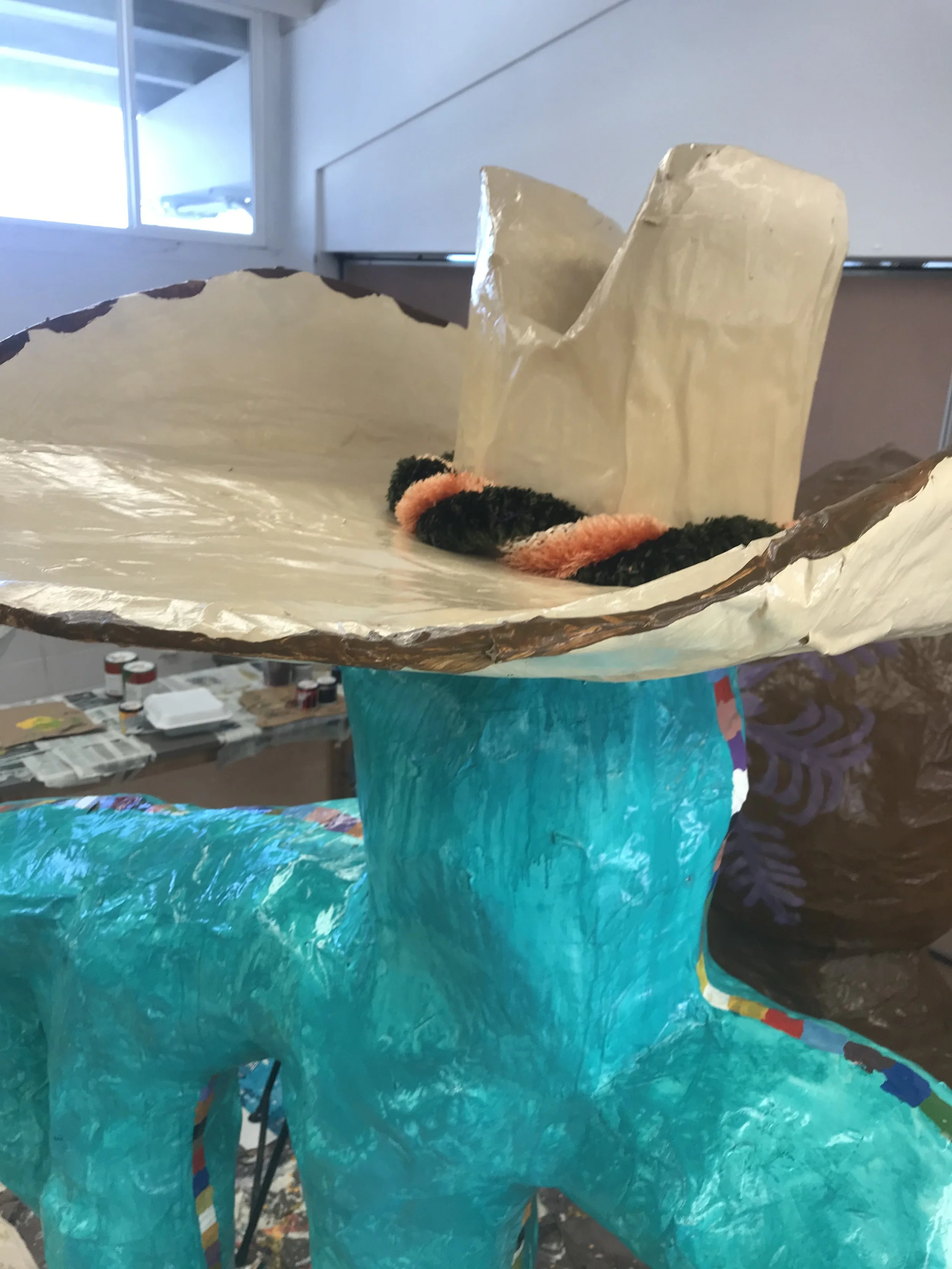
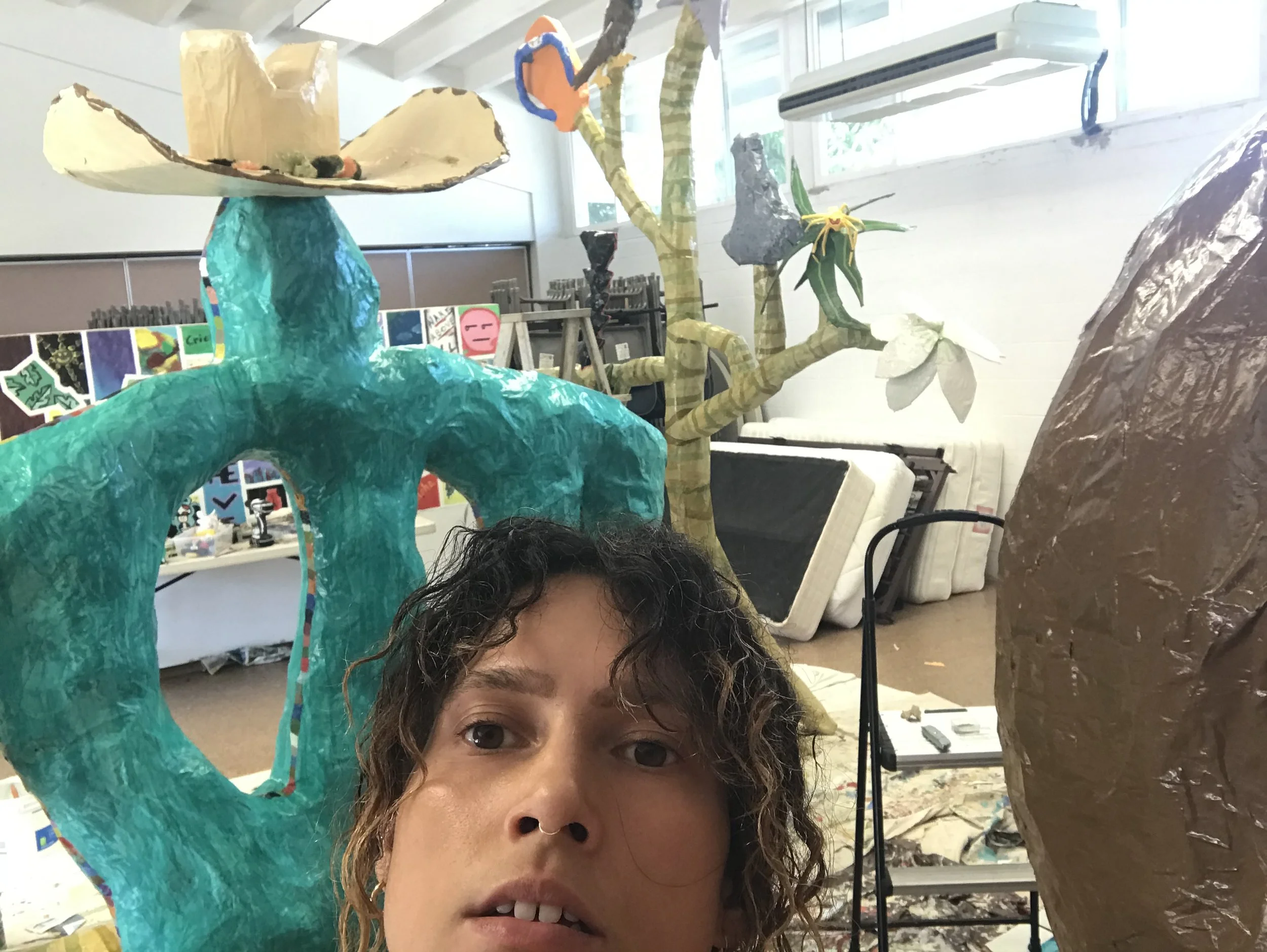
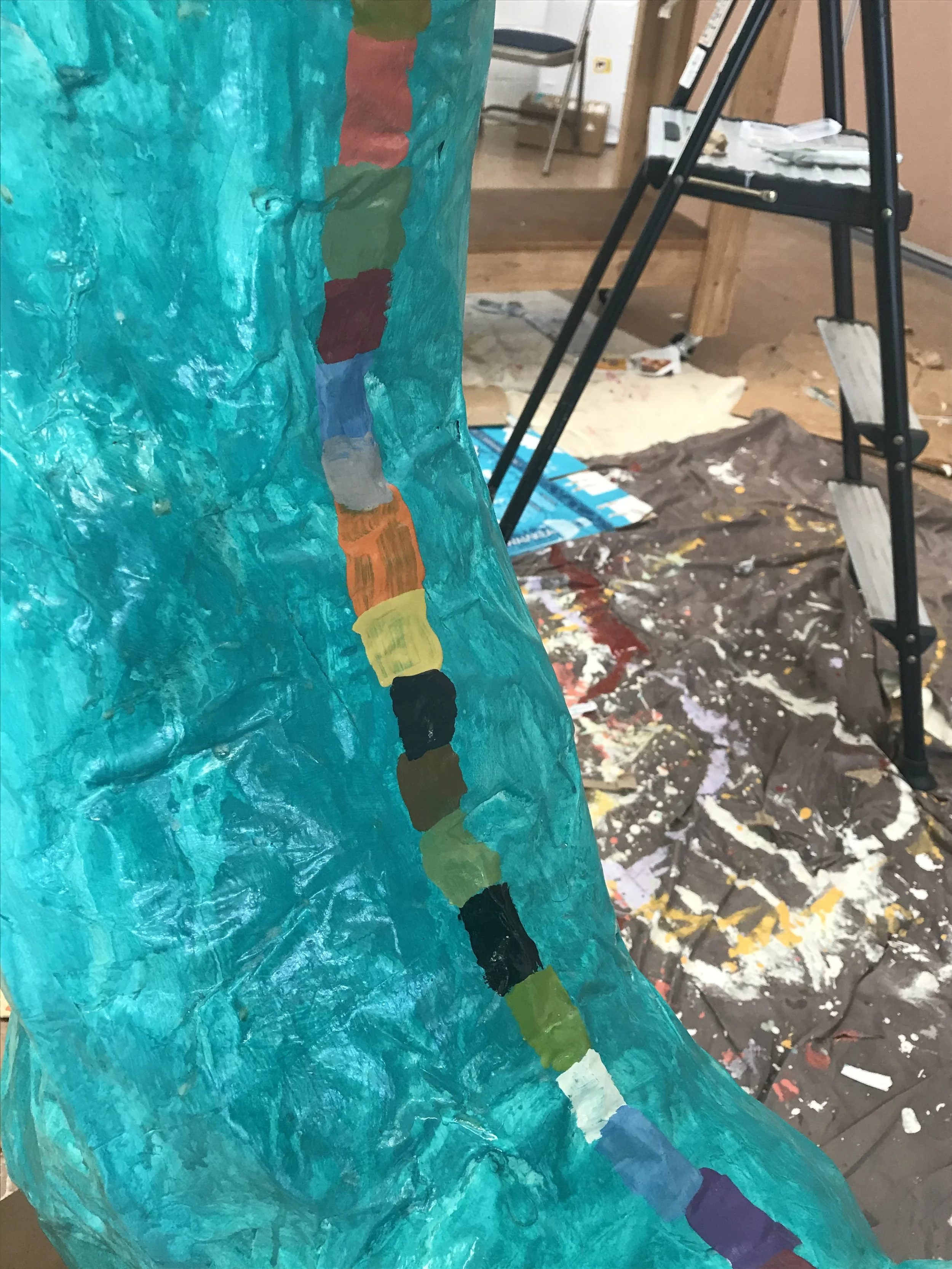
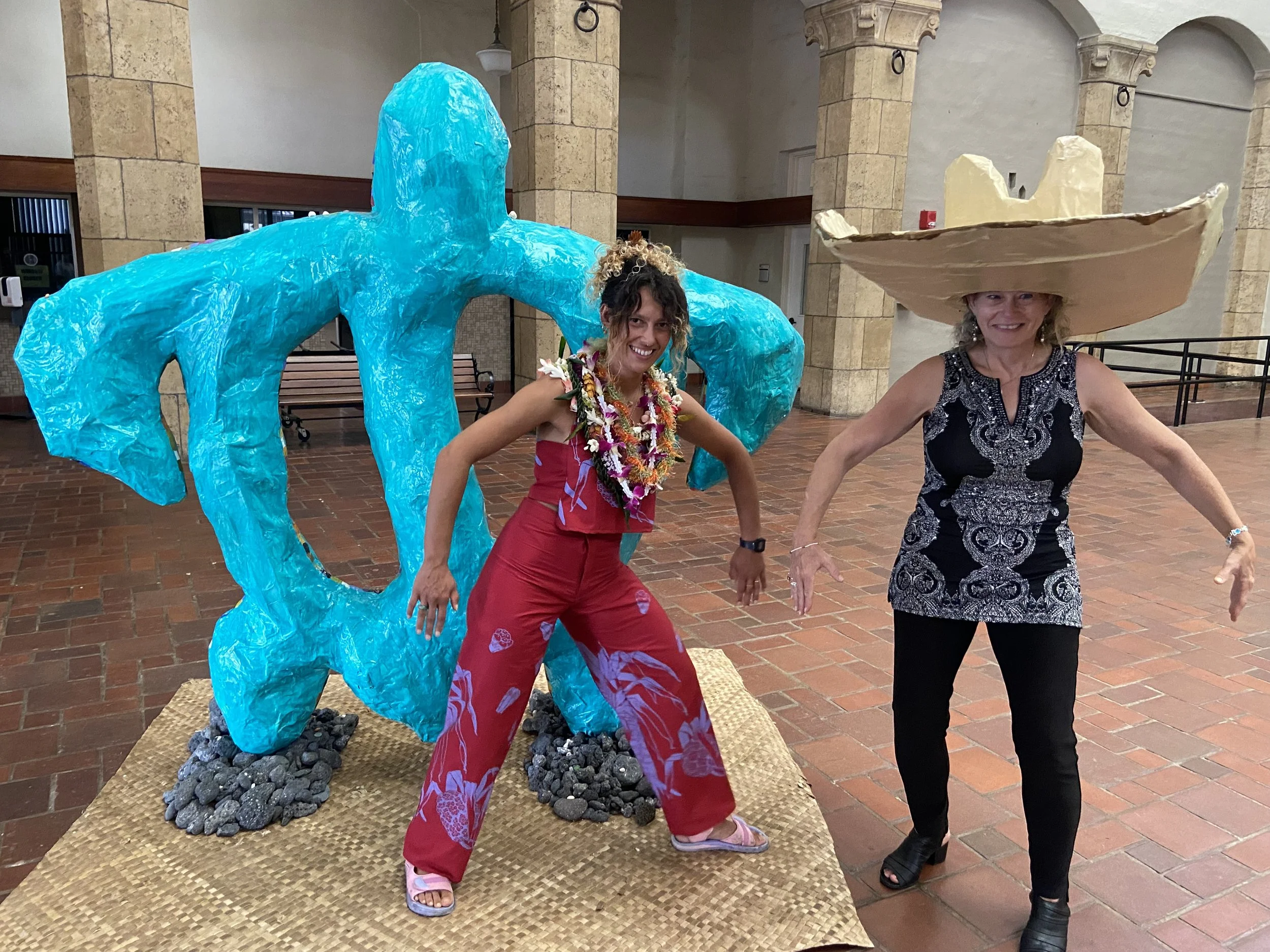
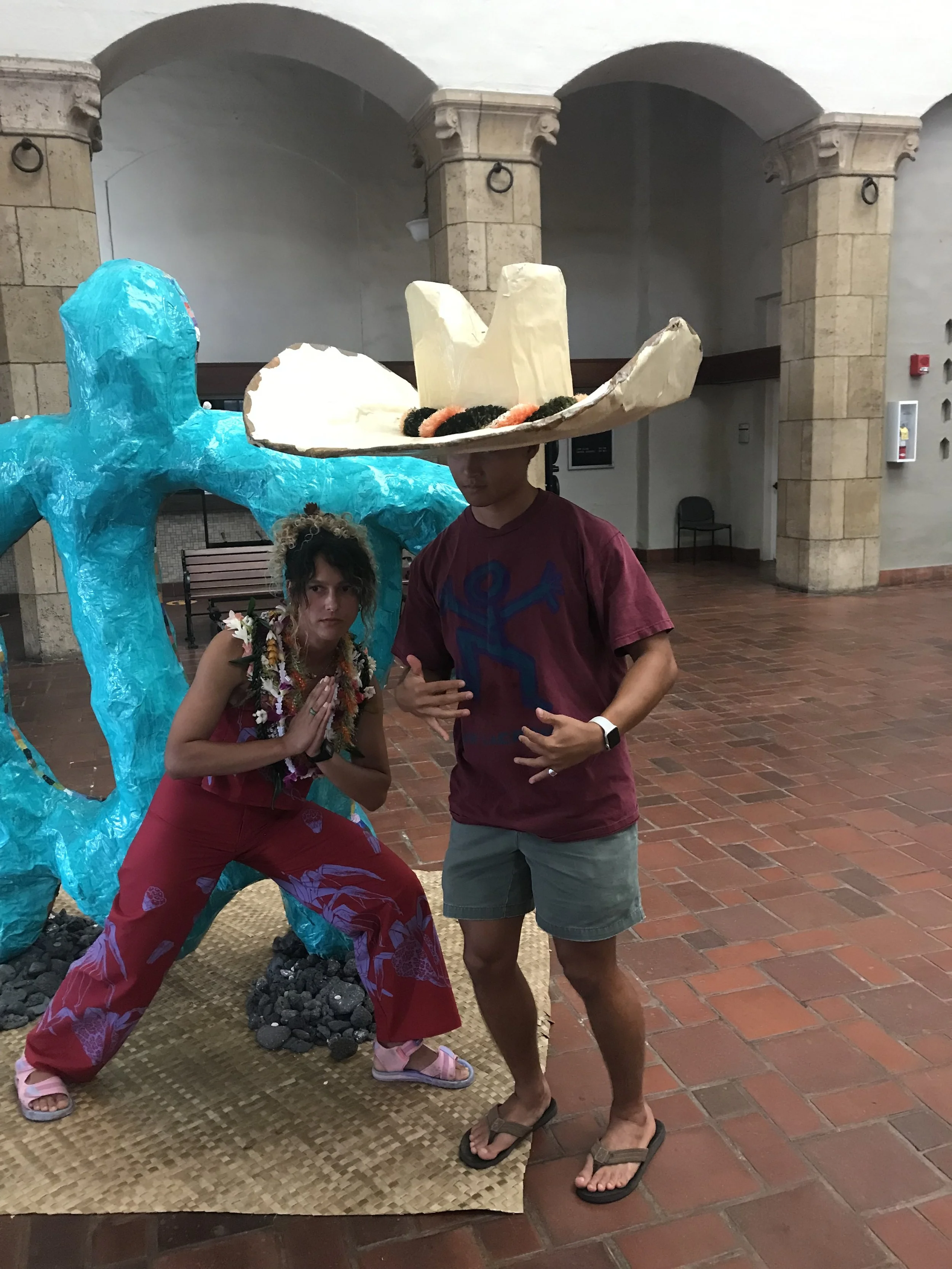
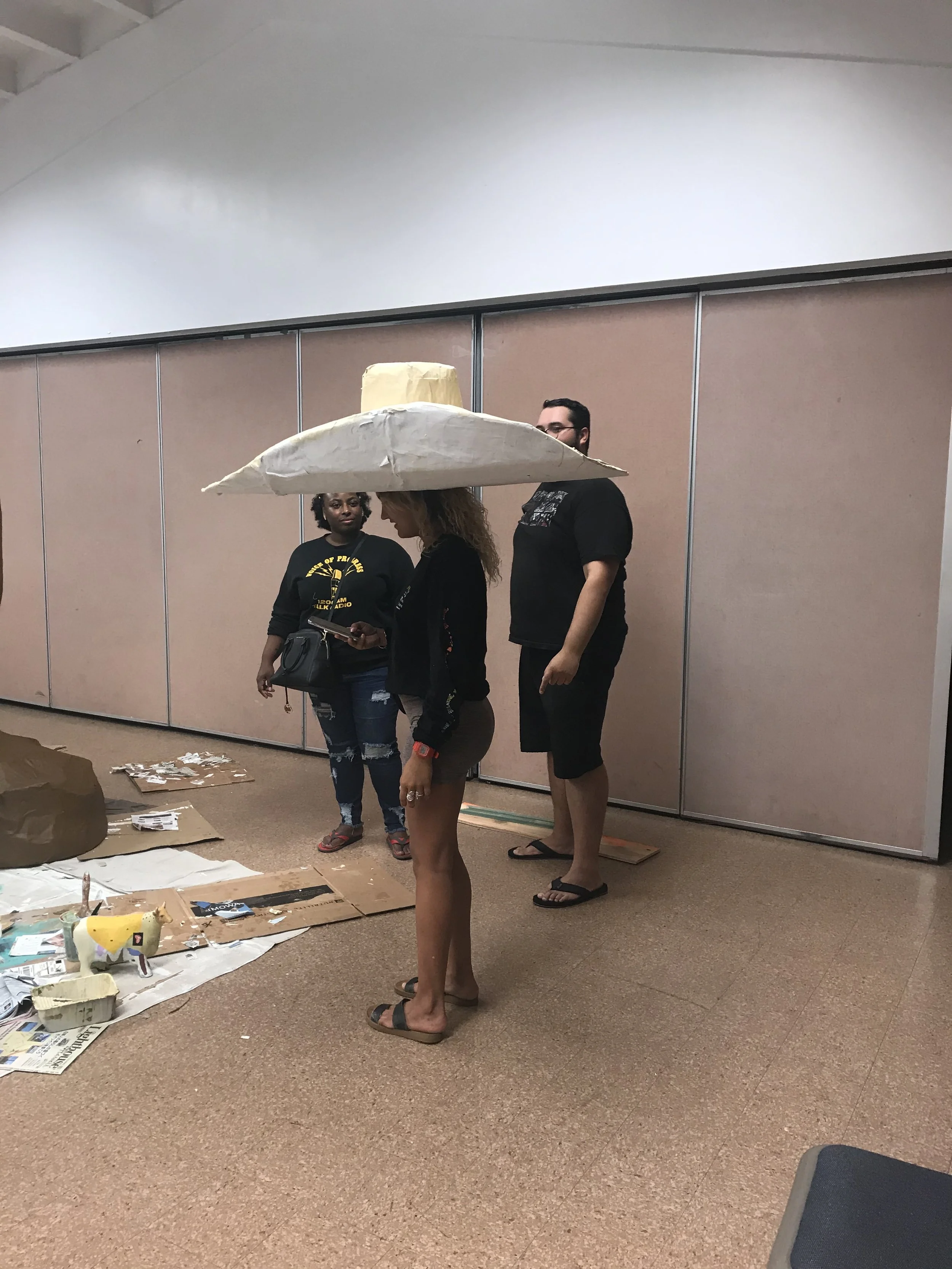
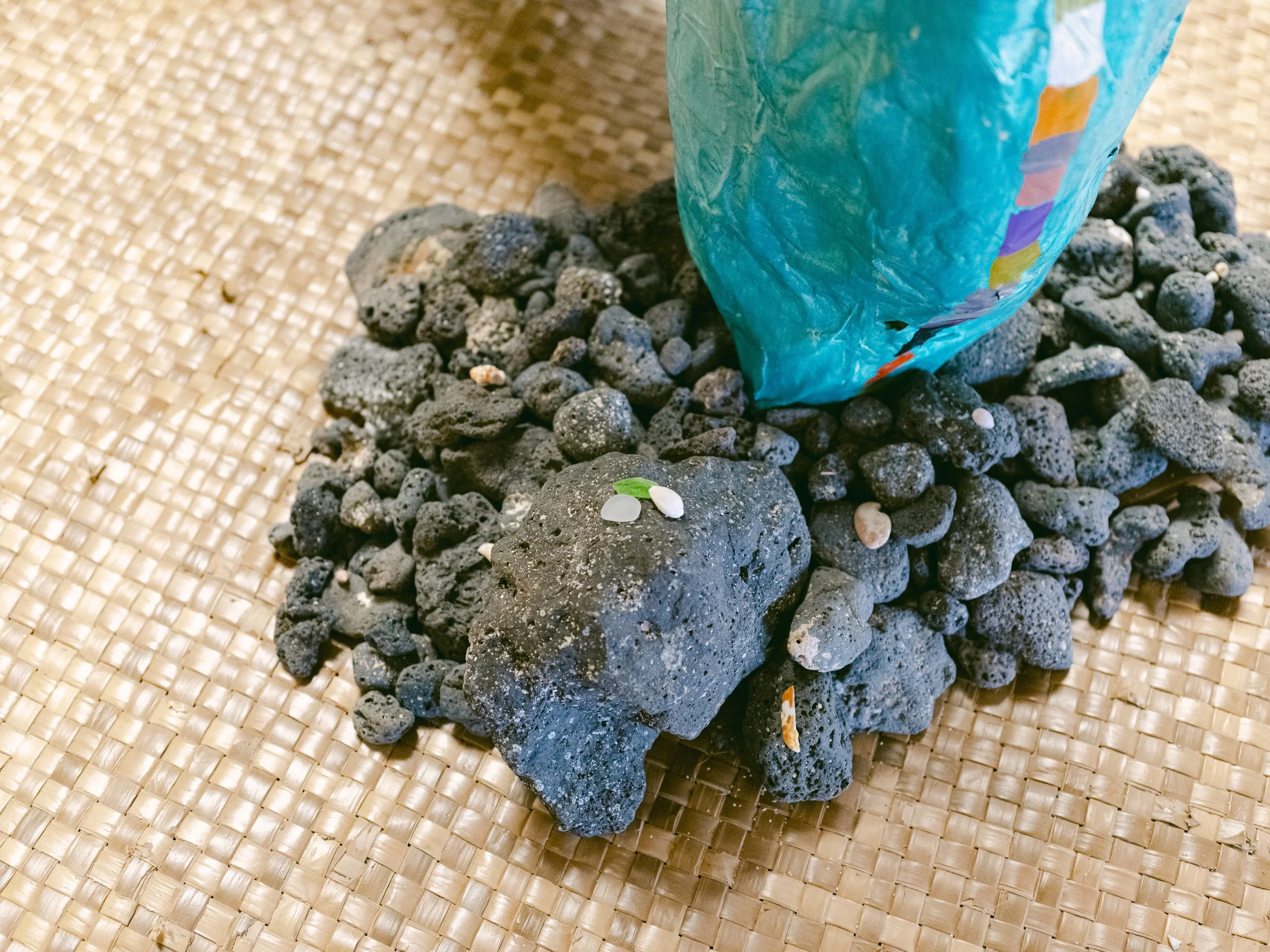
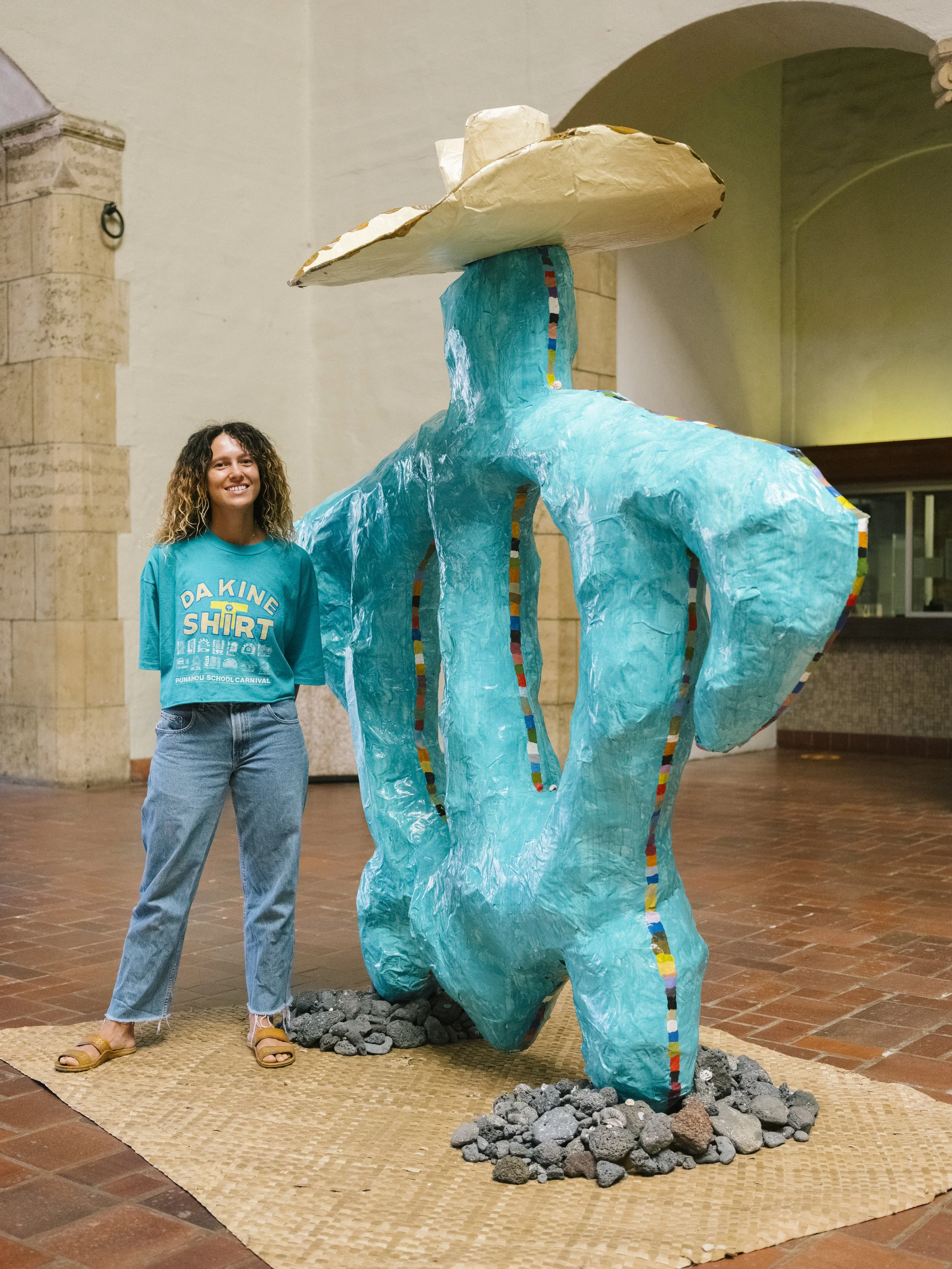
This work uses the familiar symbol of the honu as represented by Hawaiian kiʻi pohaku (petroglyphs) and presents it as a Paniolo or Hawaiian cowboy. The removable cowboy hat invites the viewer into active participation. Paniolo can trace their roots to Mexican vaqueros who came to Hawai‘i in the 1830ʻs to share their expertise in cattle ranching. Honu Paniolo points to the deep process of overlap and hybridity has become manifested in aspects of Hawaiʻi’s cultural, historical, socio, political, economic and ecological impacts. The inclusion of the honu suggests another kind of interaction with nature–through commercial agriculture and/or honu as a protected species–the Paniolo encapsulates the contested history of immigrant arrival to Hawai‘i and a particular relationship to land productivity, while the Honu represents the need for environmental stewardship and cultural preservation.
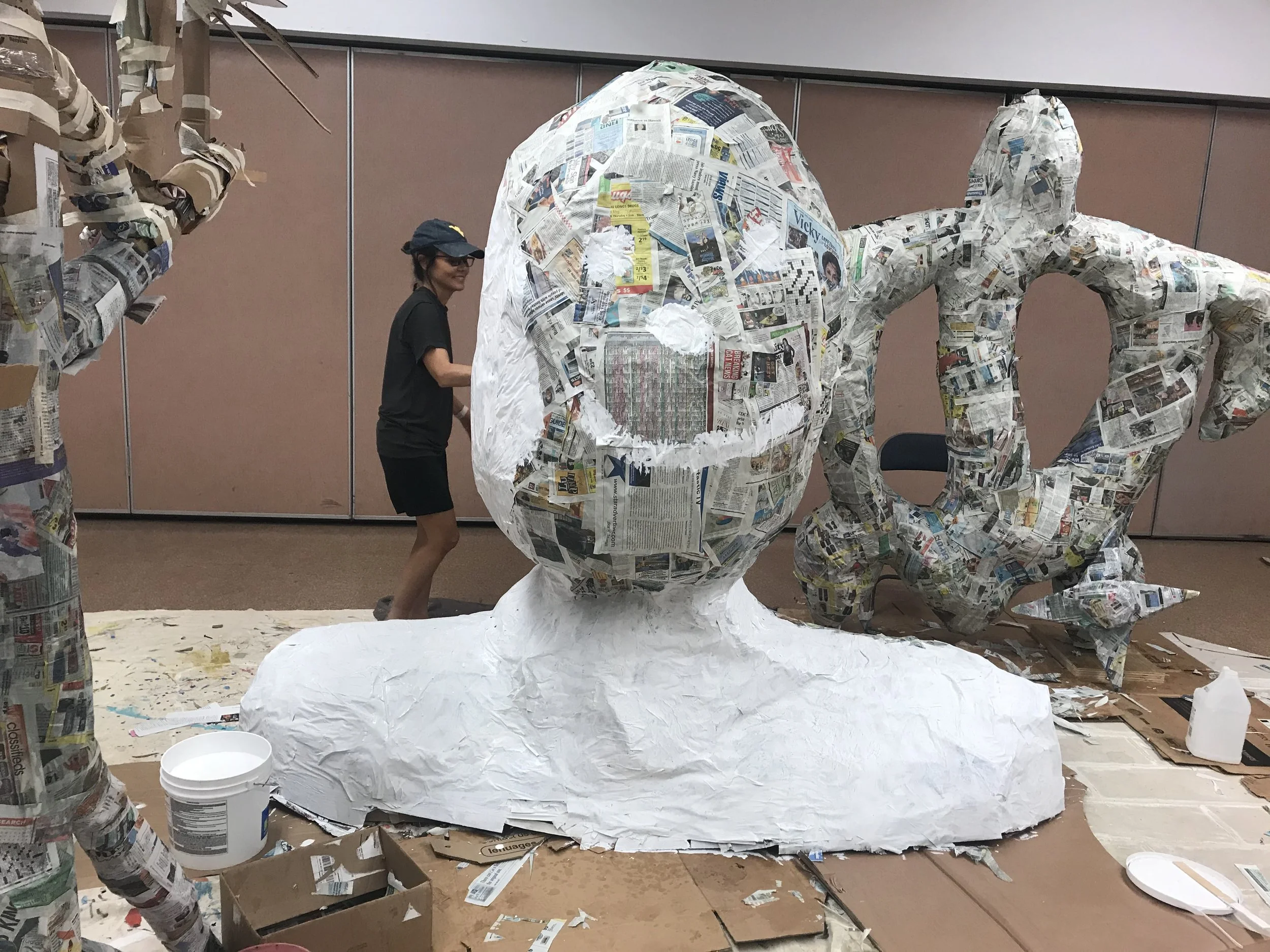
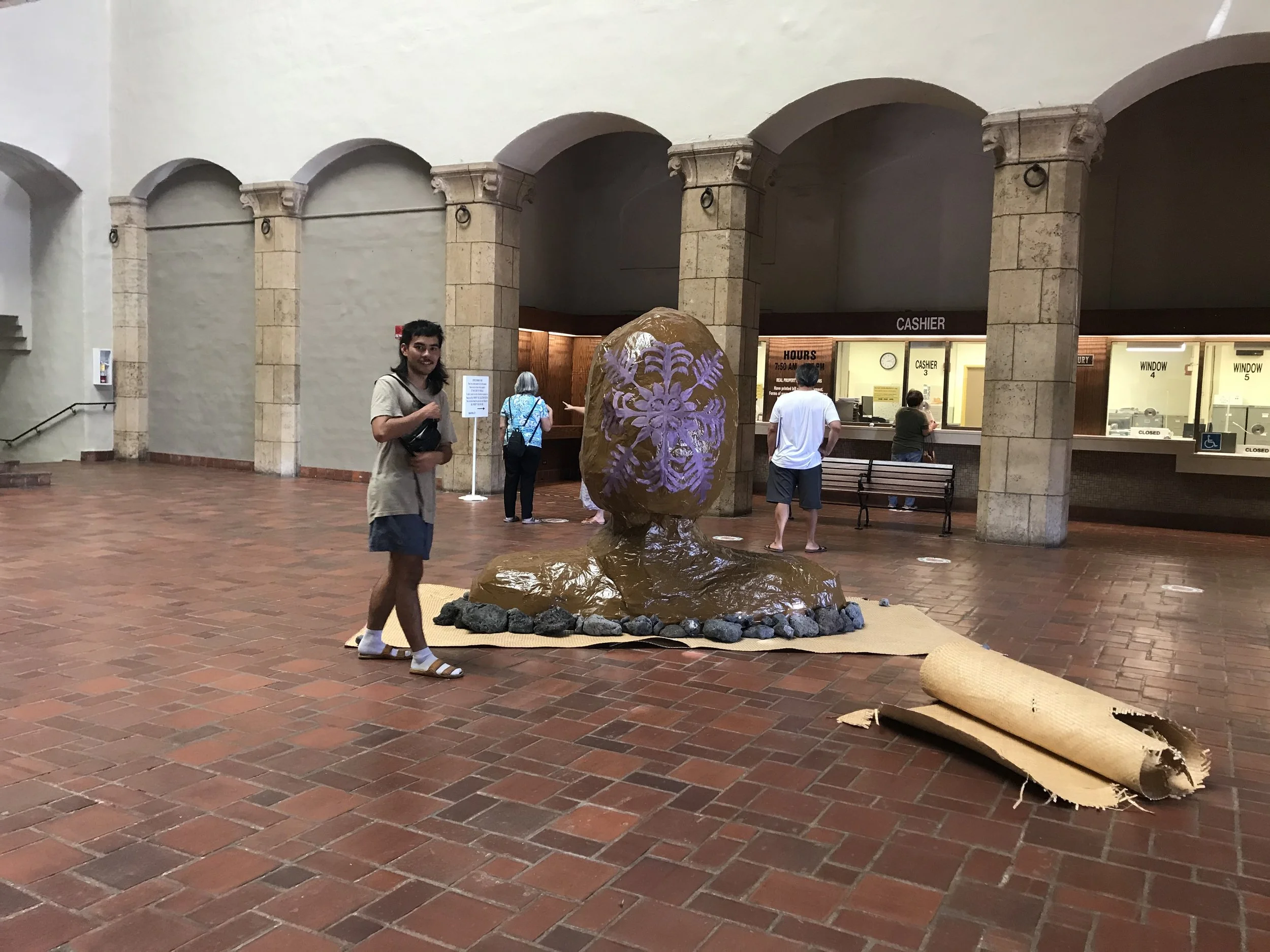
Honolulu Weeds and Lei
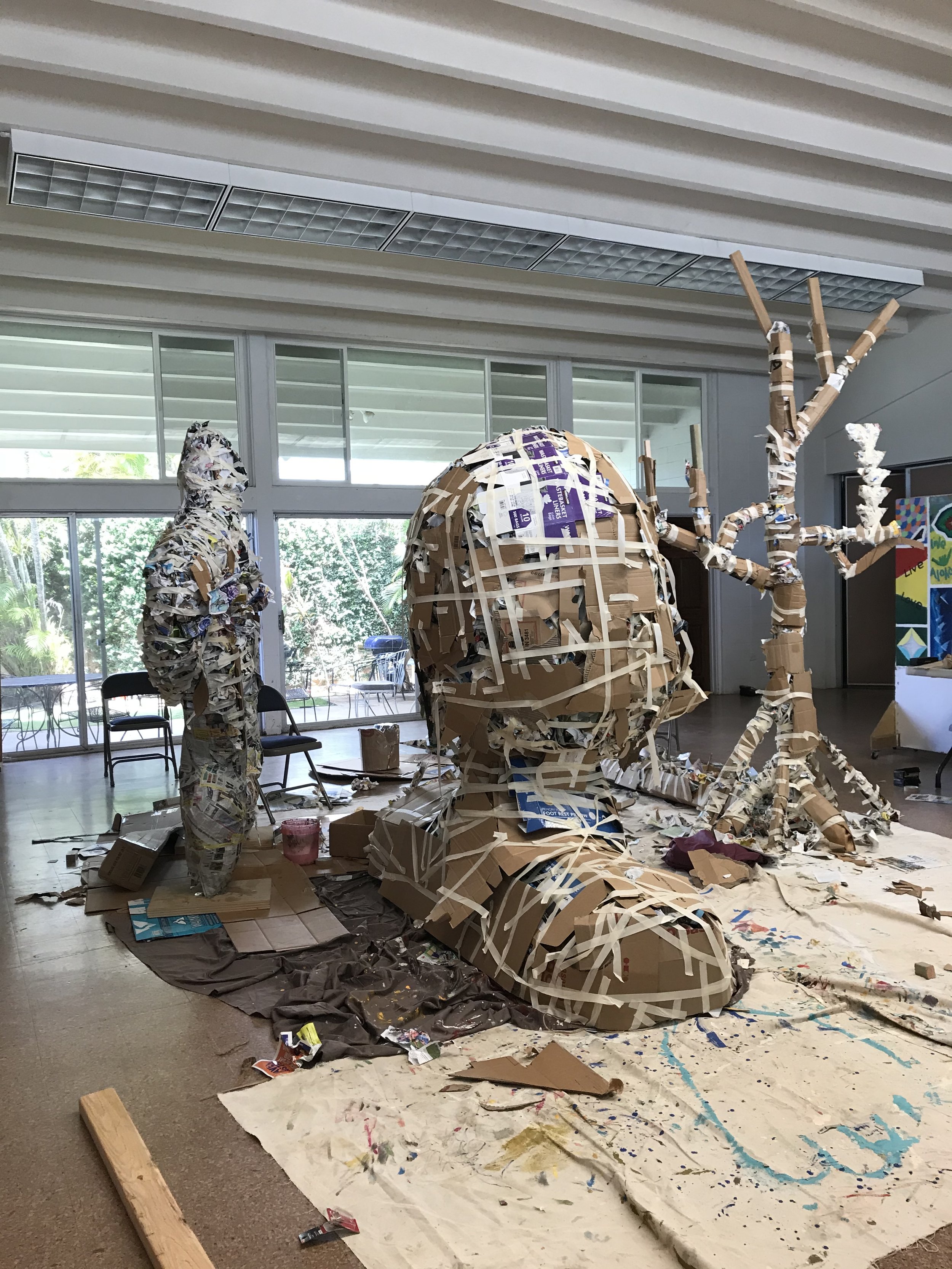
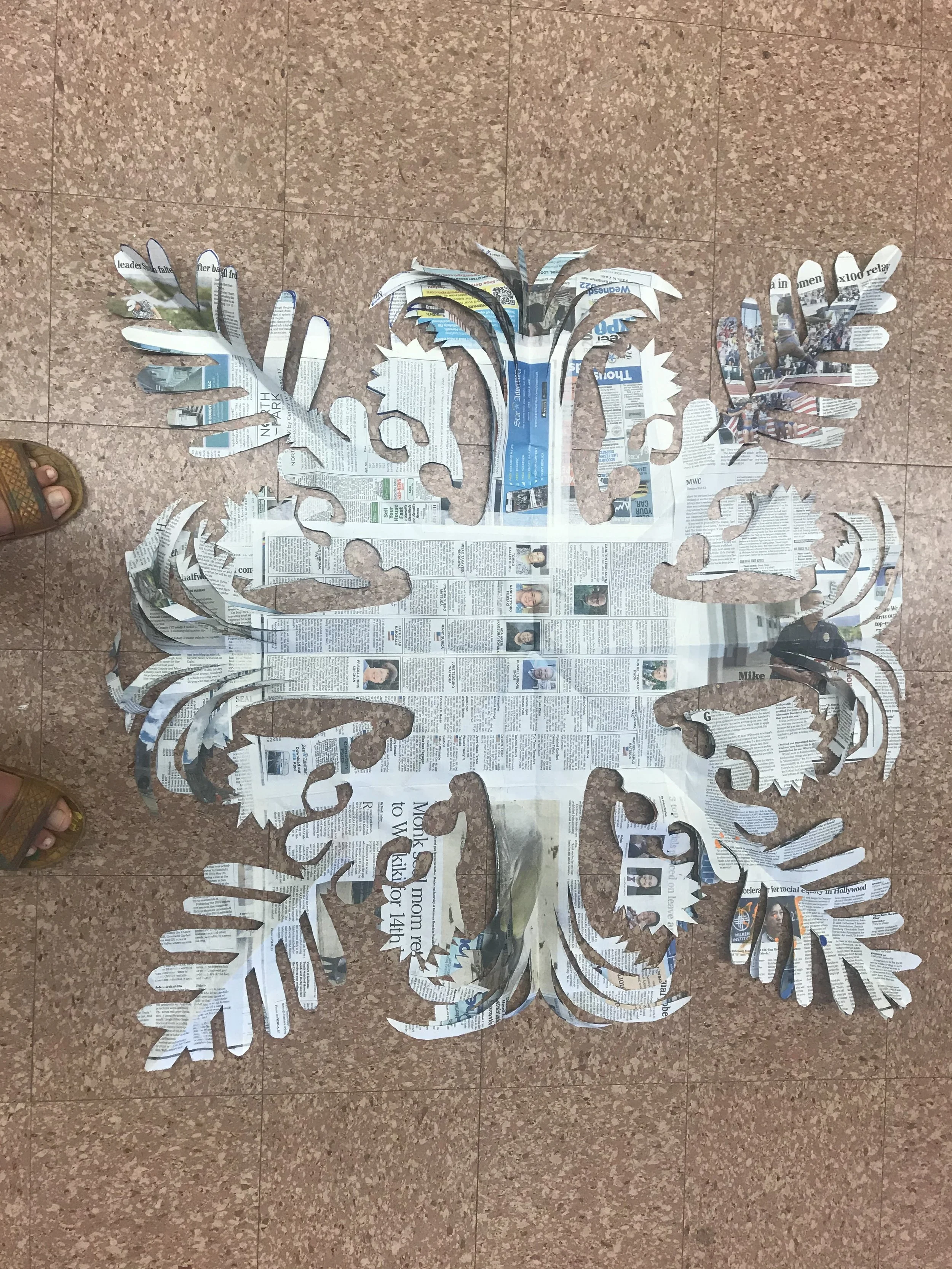
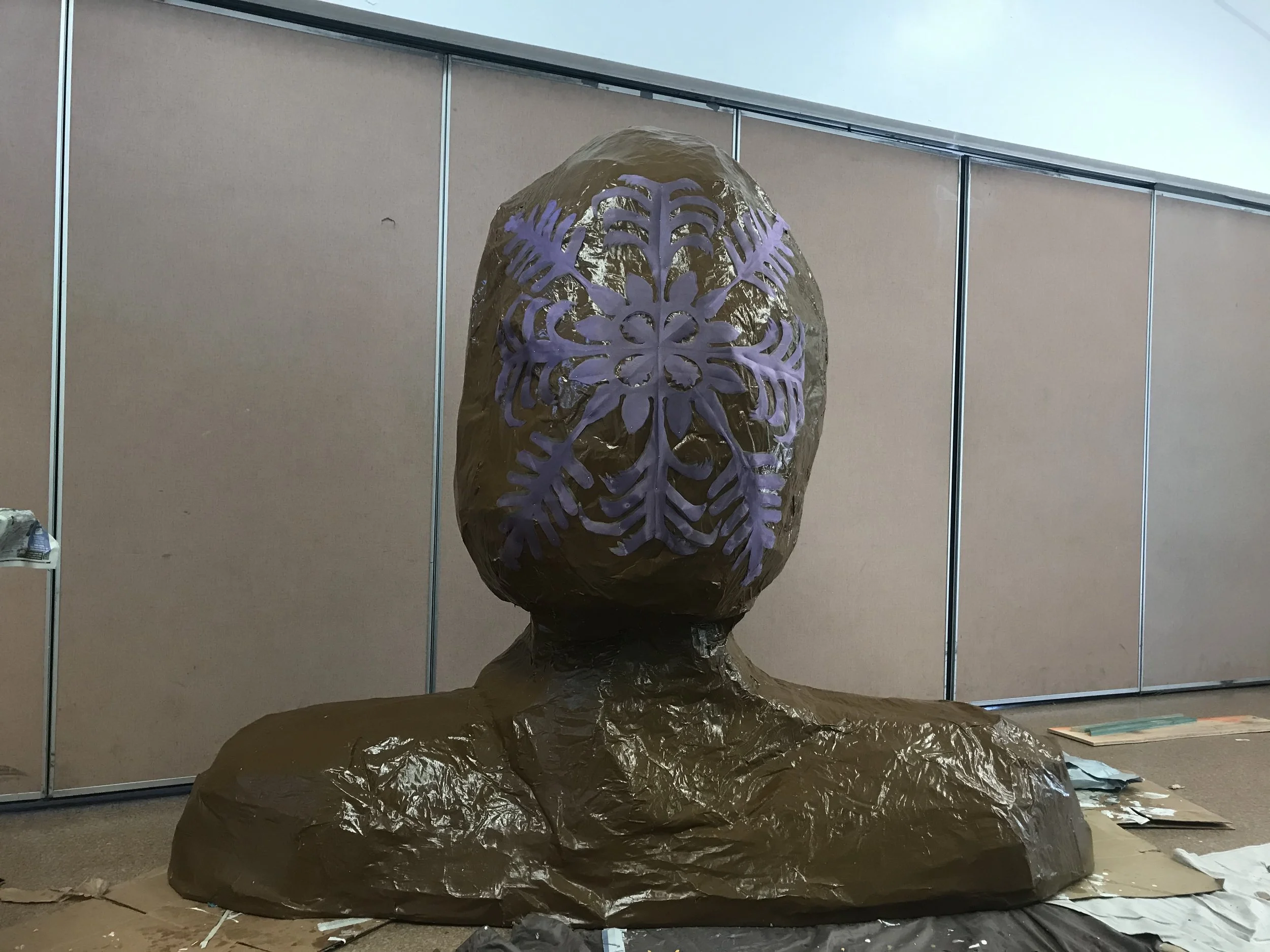
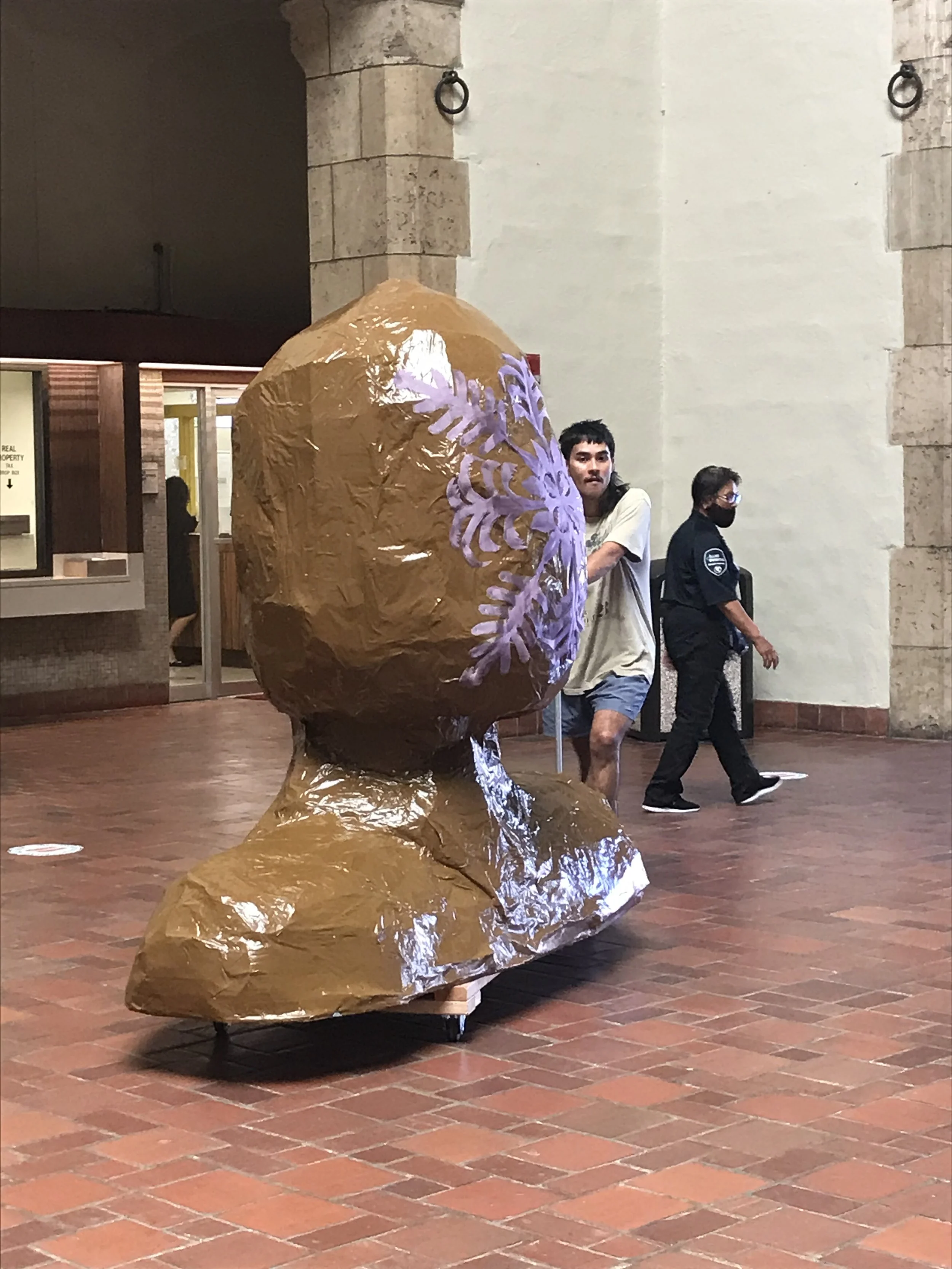
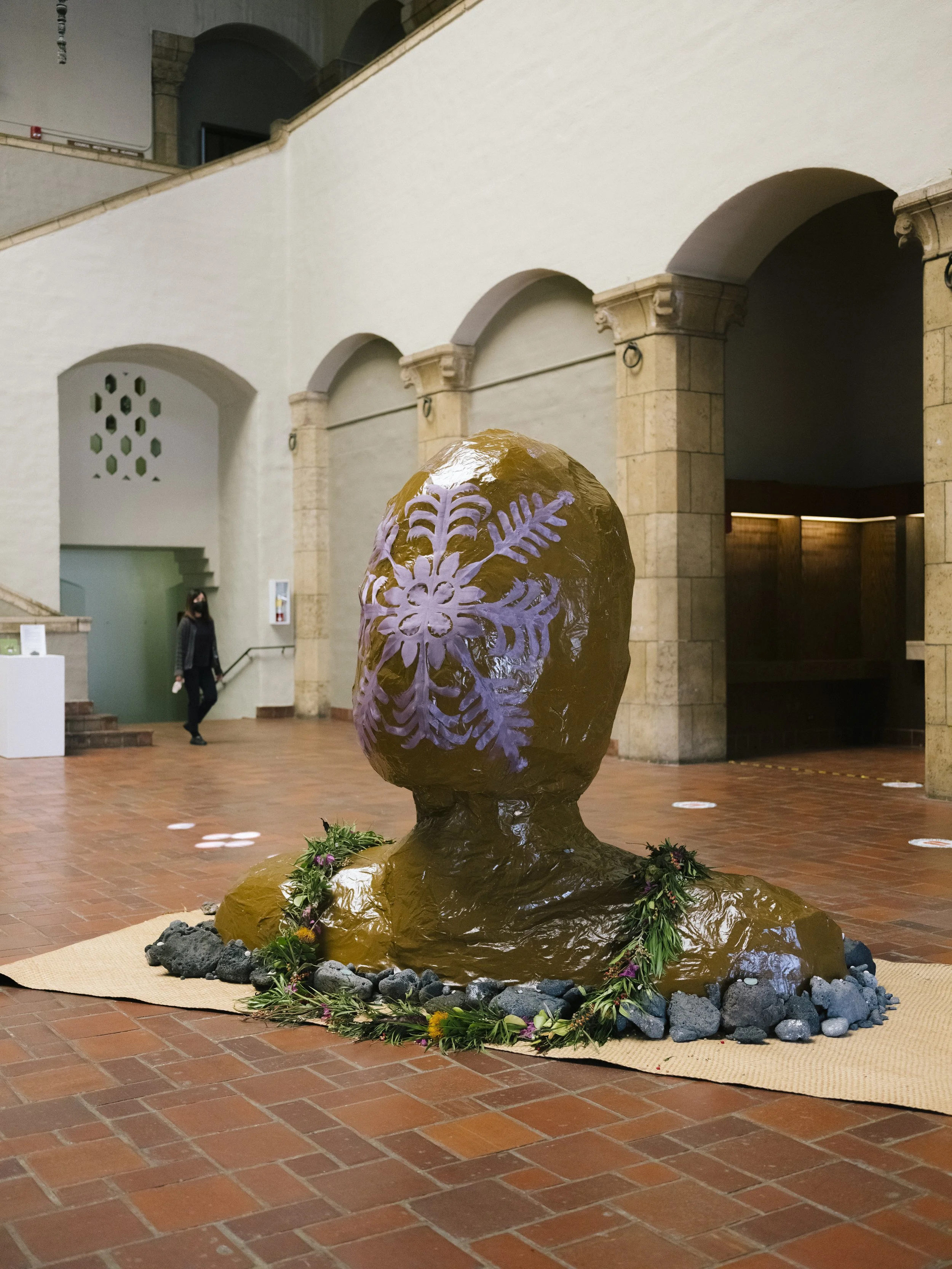
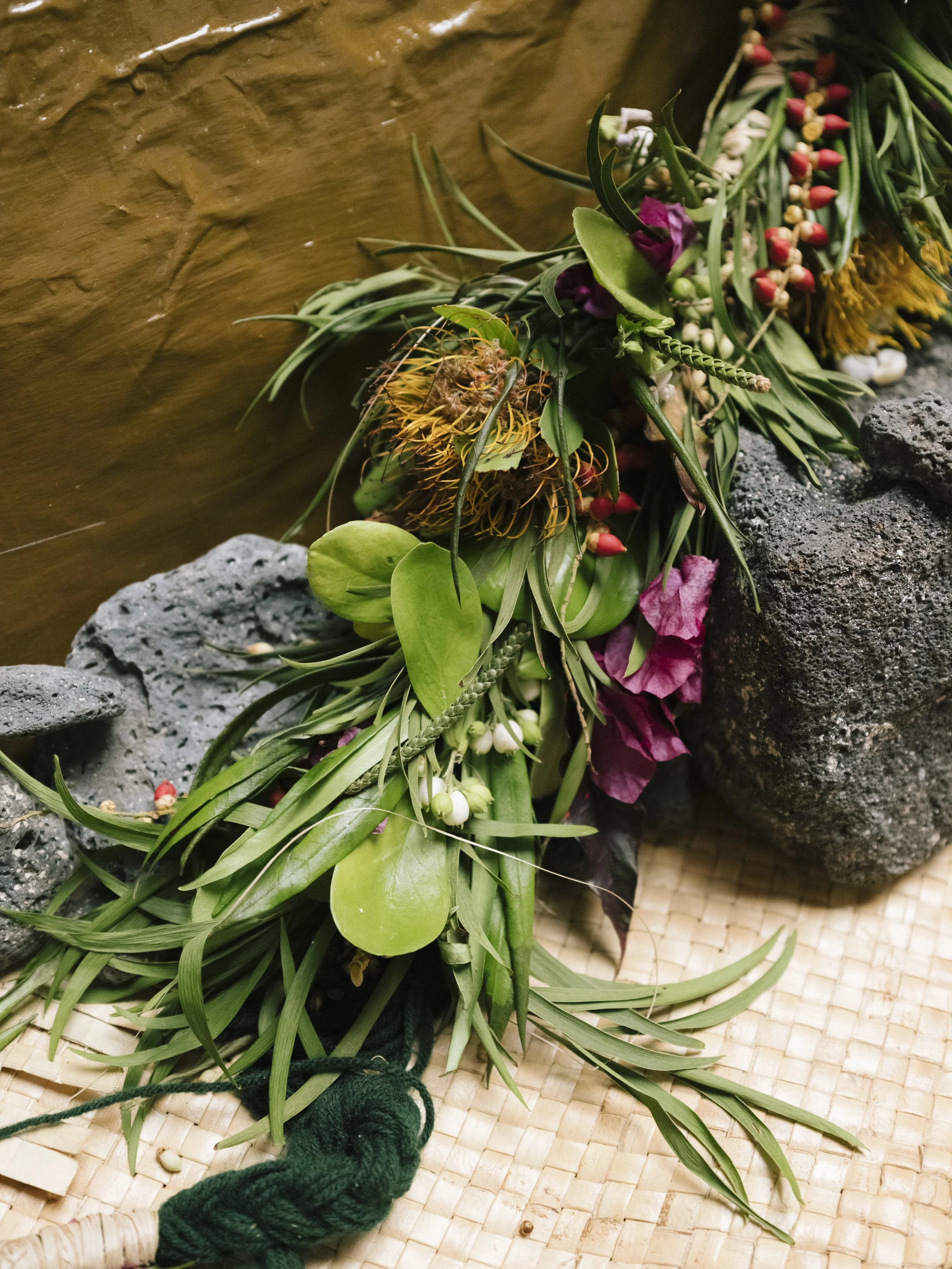
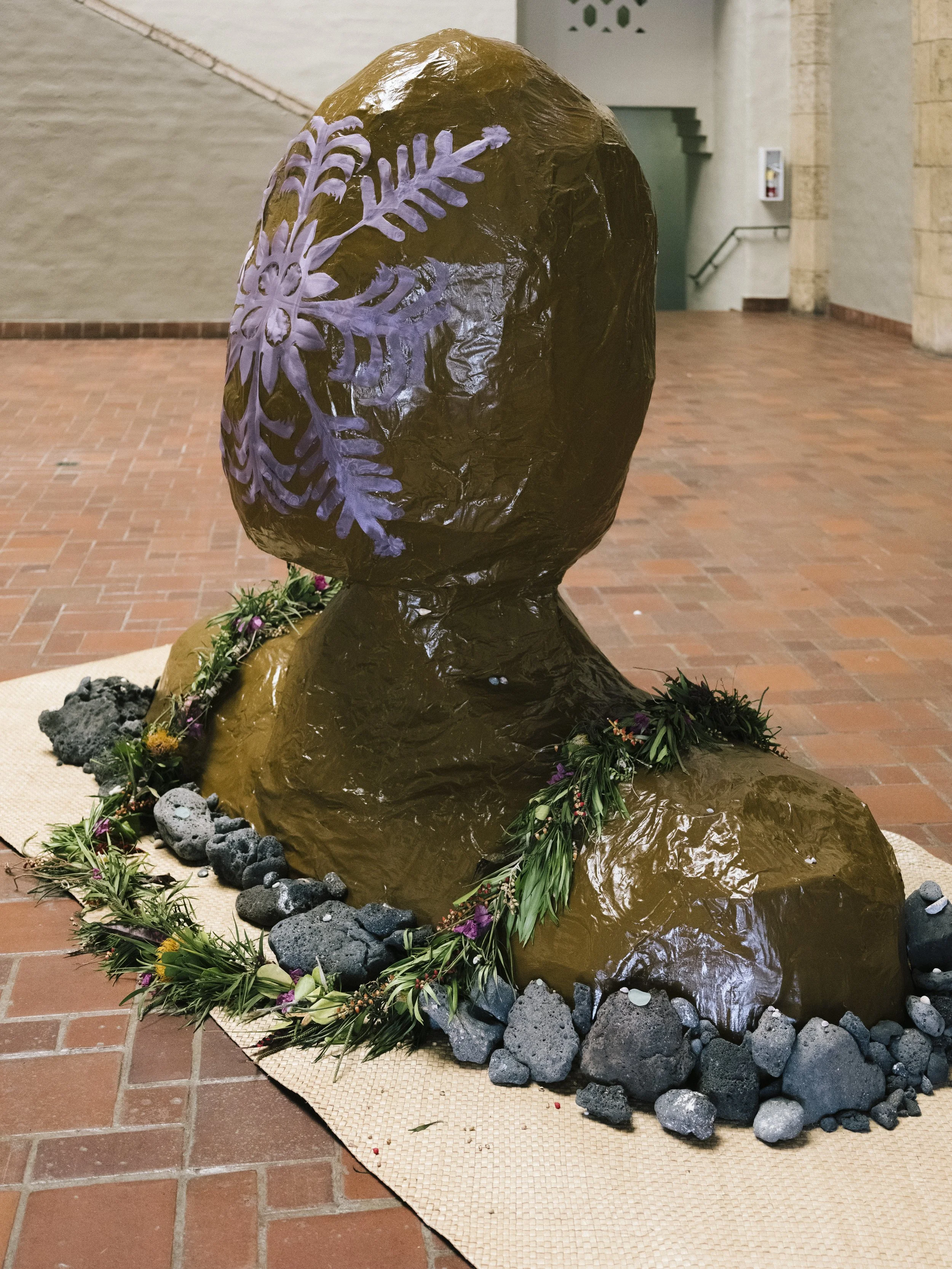
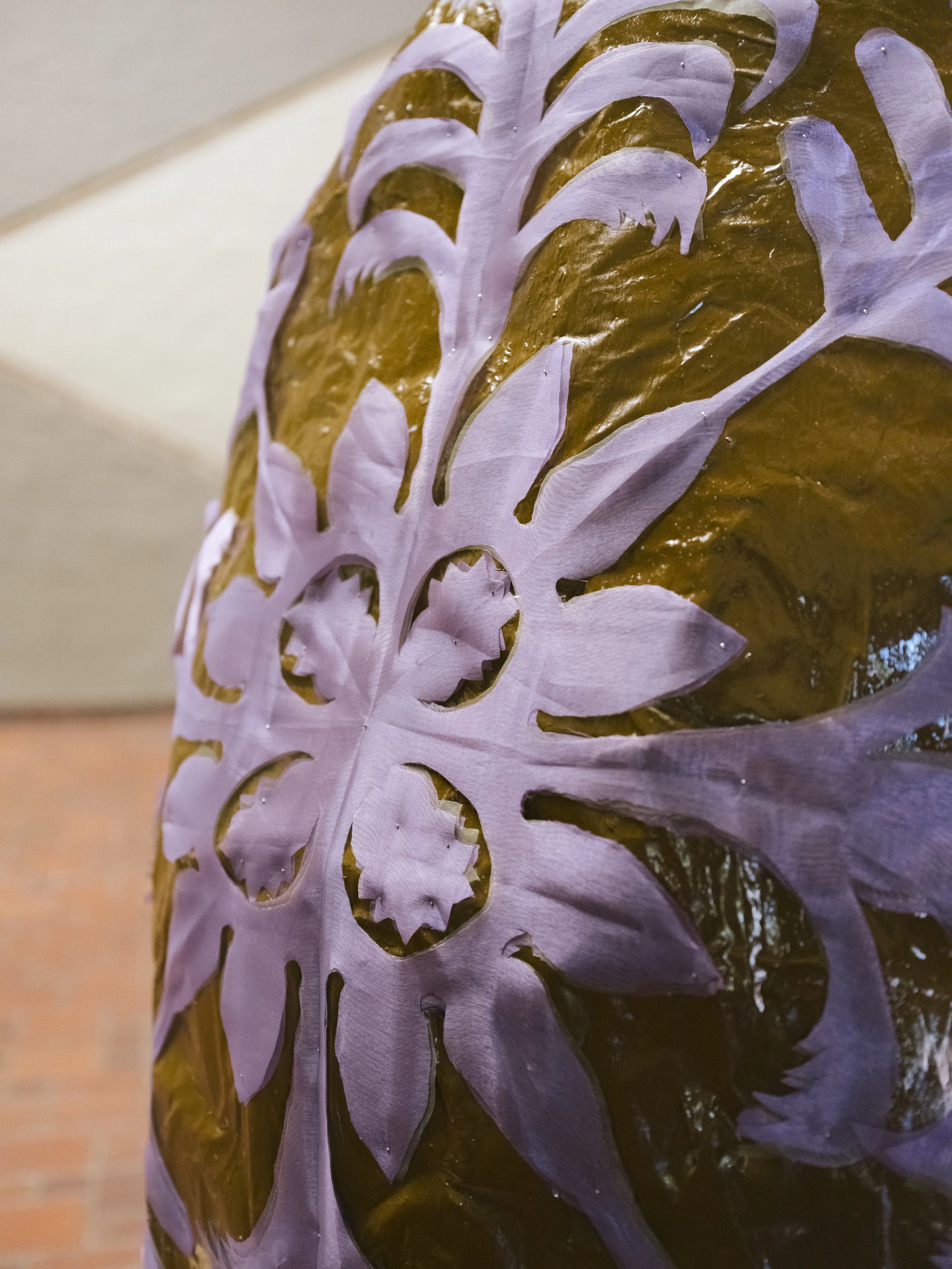
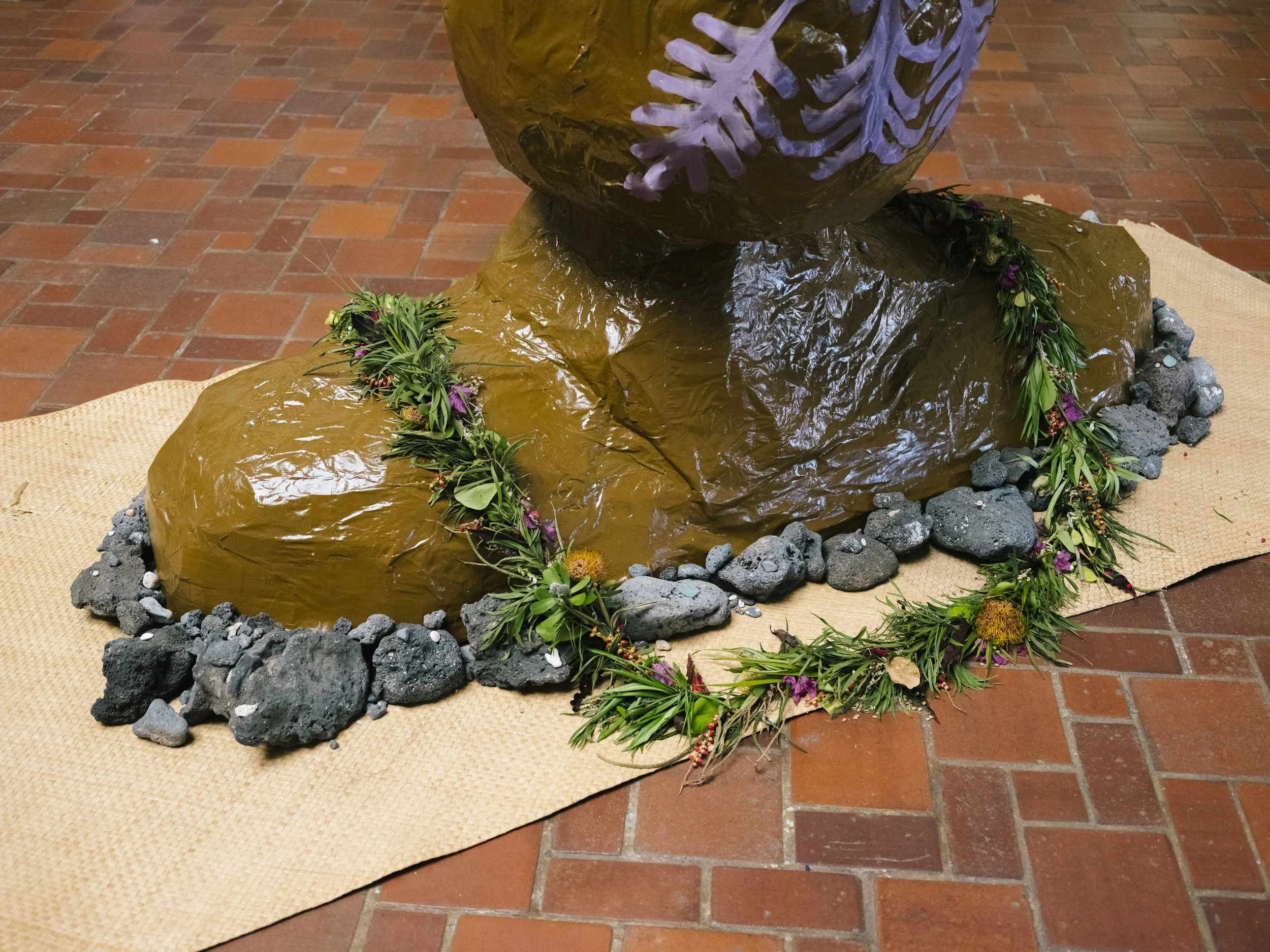
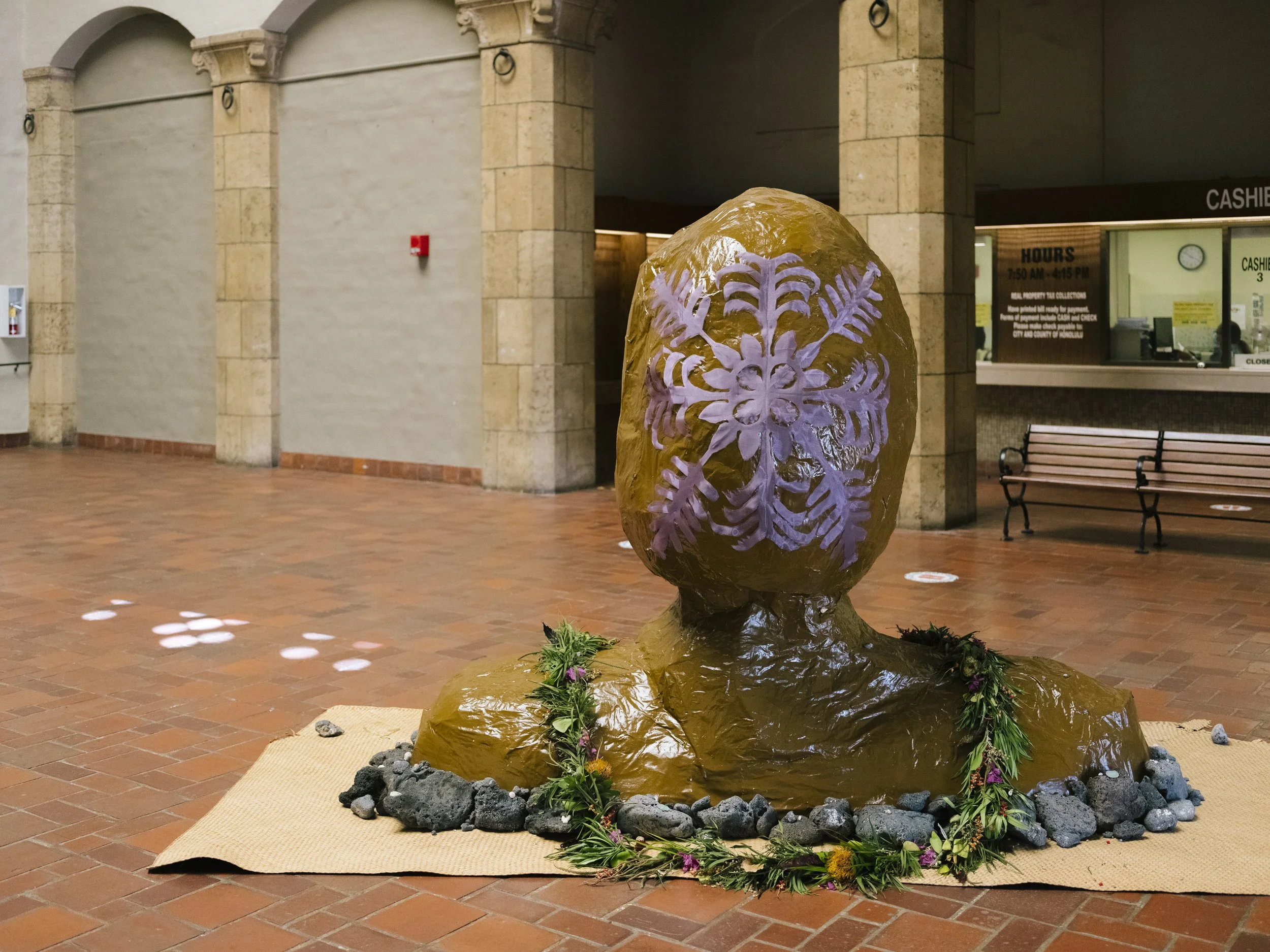
A large bust with a quilt pattern designed to reflect my childhood experiences growing up in Kalihi. The bust represents an active embodiment of consciousness within time and space. The lei draped around its neck and shoulders is made of collected foliage; flowers, leaves and weeds from the bushes and trees I encountered while walking through Mānoa, where lived for many years. The ephemeral quality of organic material that make up the lei is meant to represent, embody and reframe time. The sculpture is presented fresh and alive, it changes and evolves over the period of exhibition and the piece becomes a time capsule.