Wahi Pana: Laniwahine
In collaboration with artist Jordan Souza, advisor Paige Okamura, the City and County of Honolulu, Puʻuhonua Society, and Bloomberg Philanthropies.
More information click here.
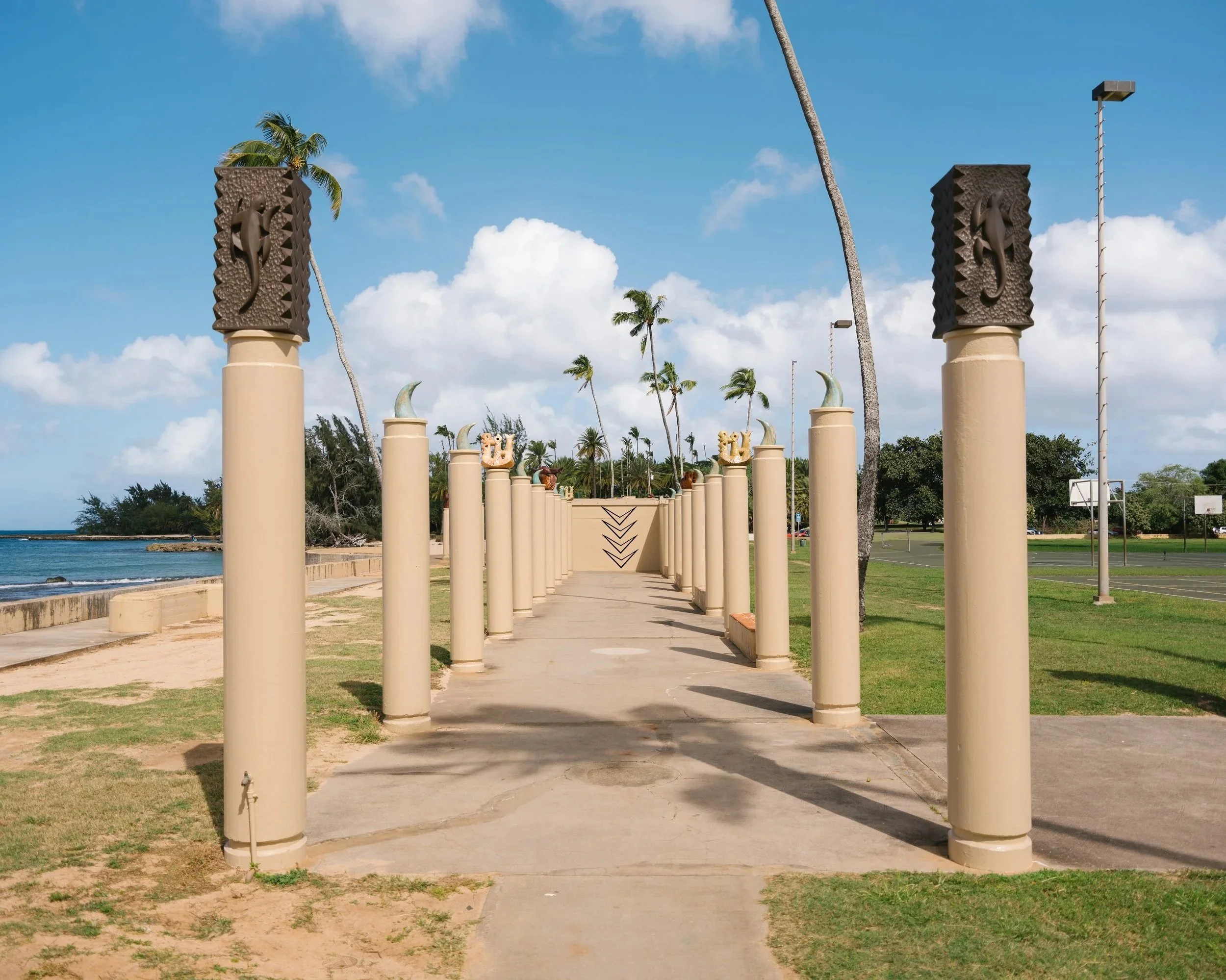
Photo by Lila Lee
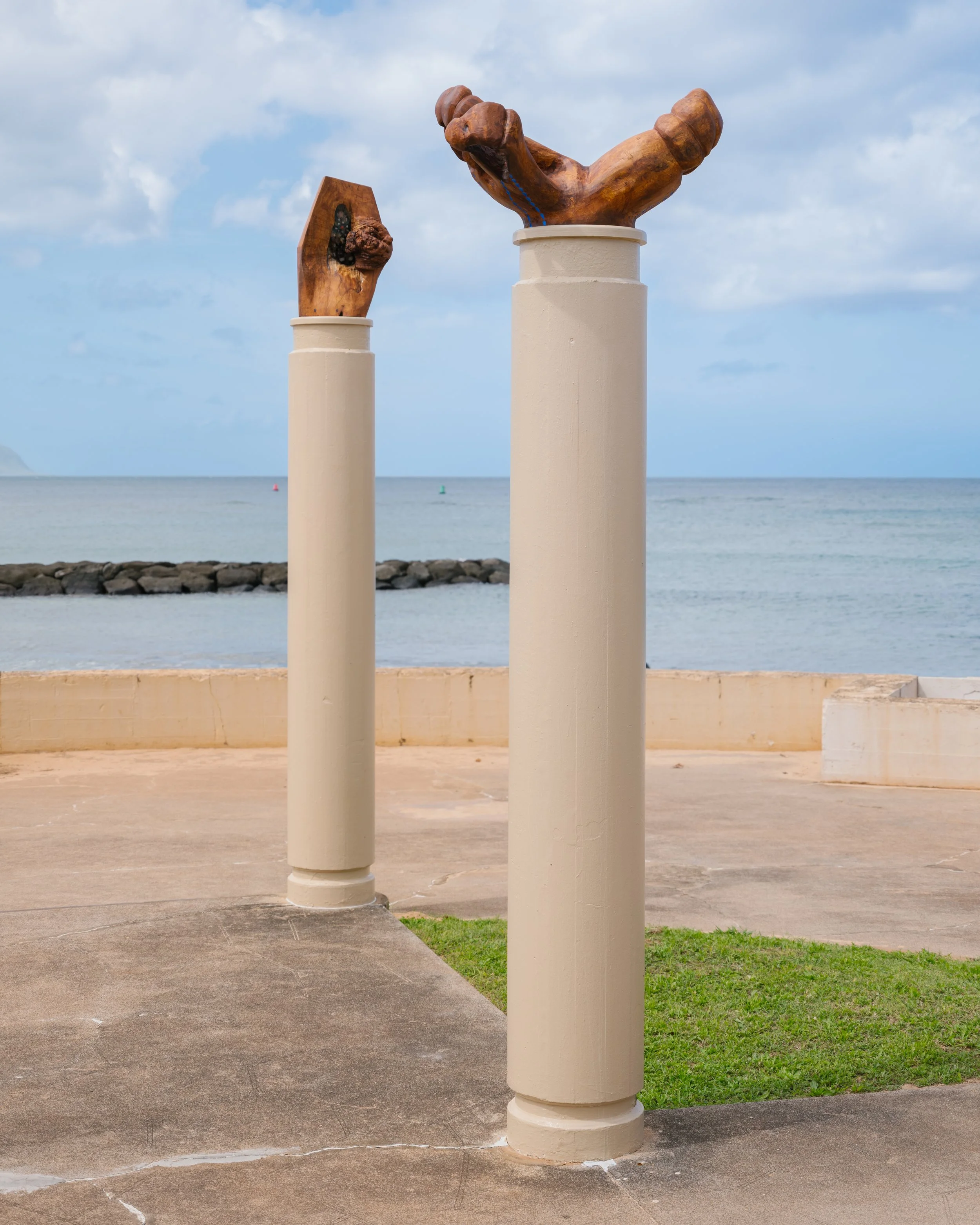
Hale‘iwa Beach Park
Laniwahine
2026
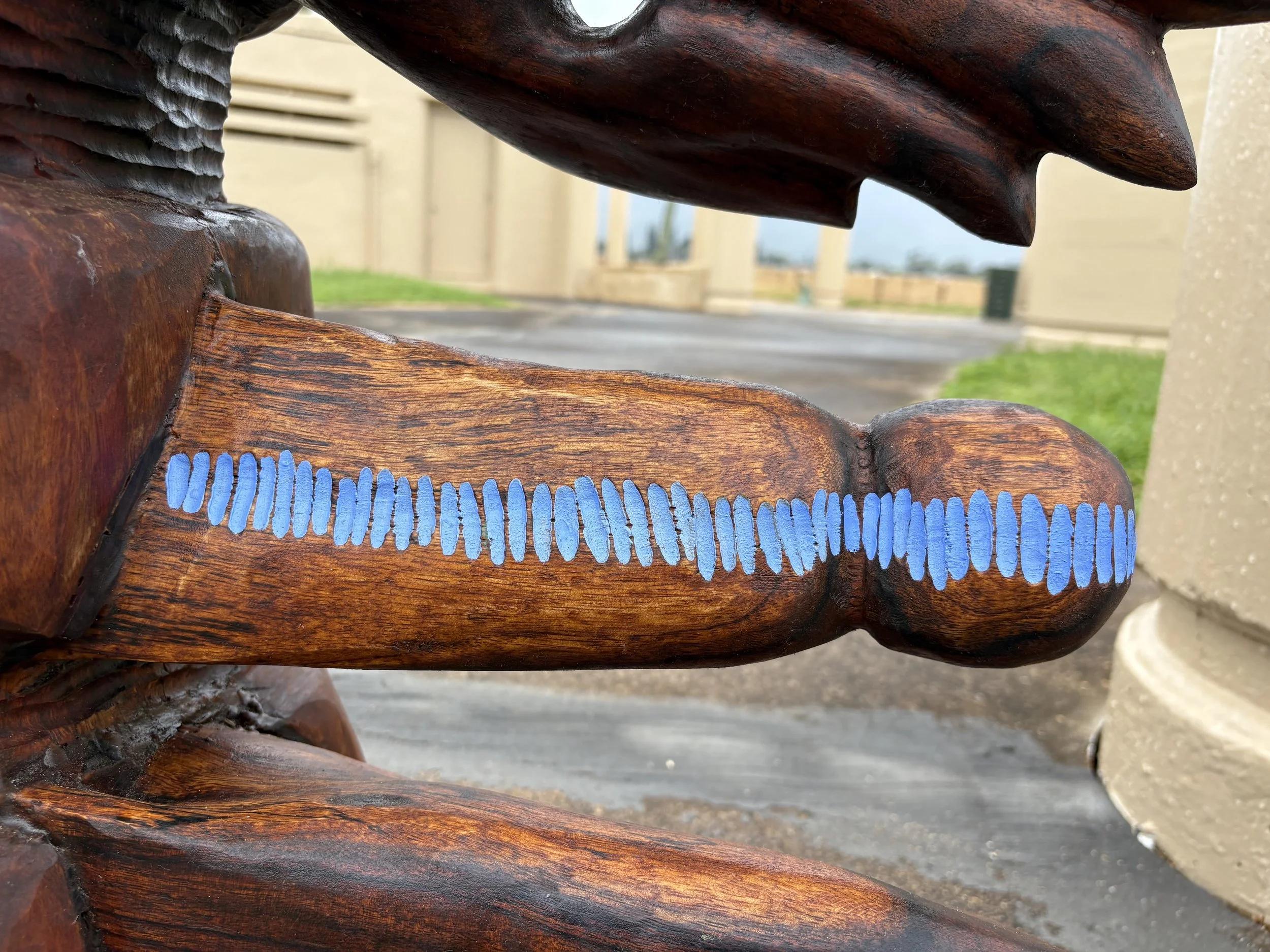
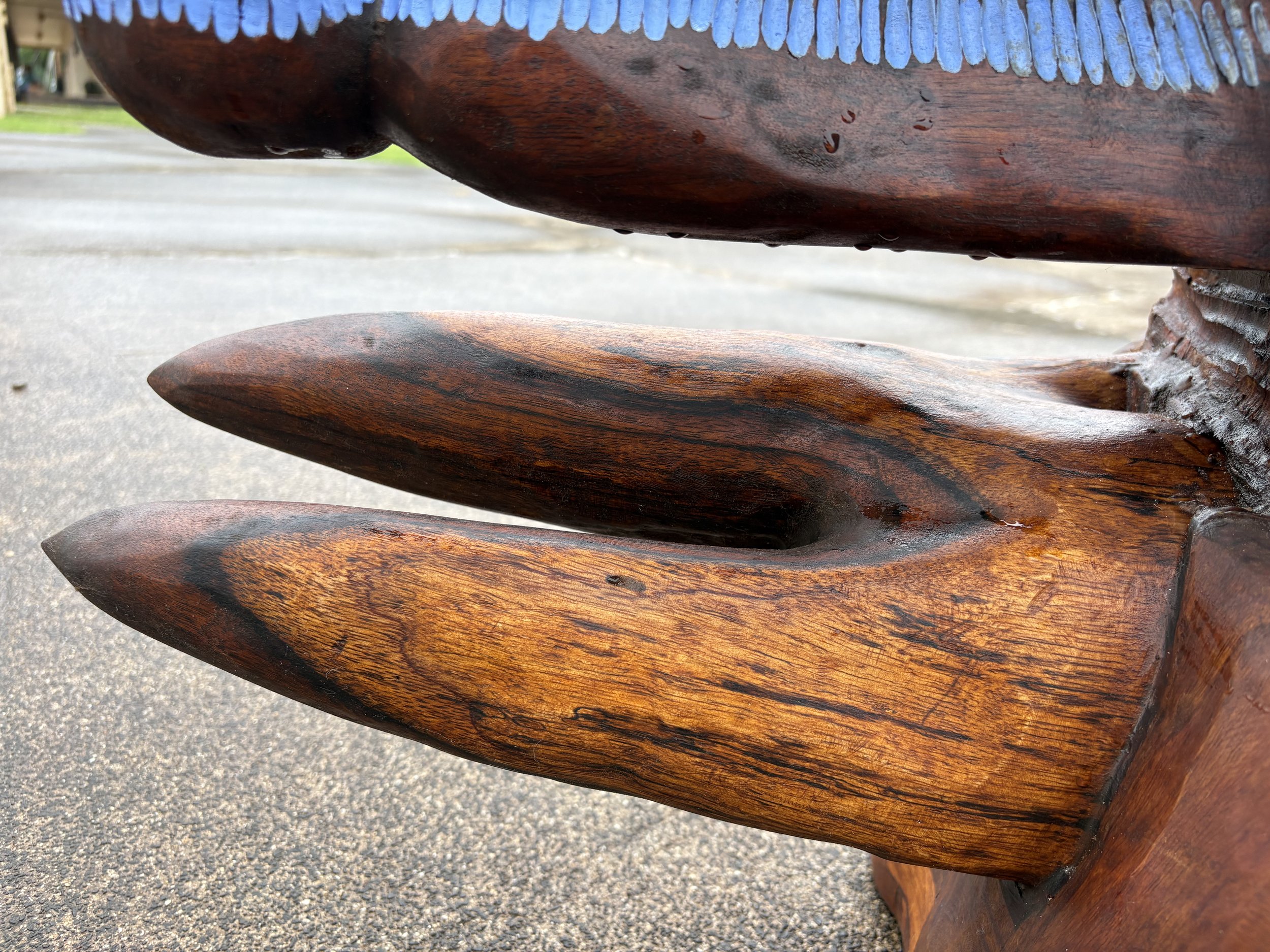
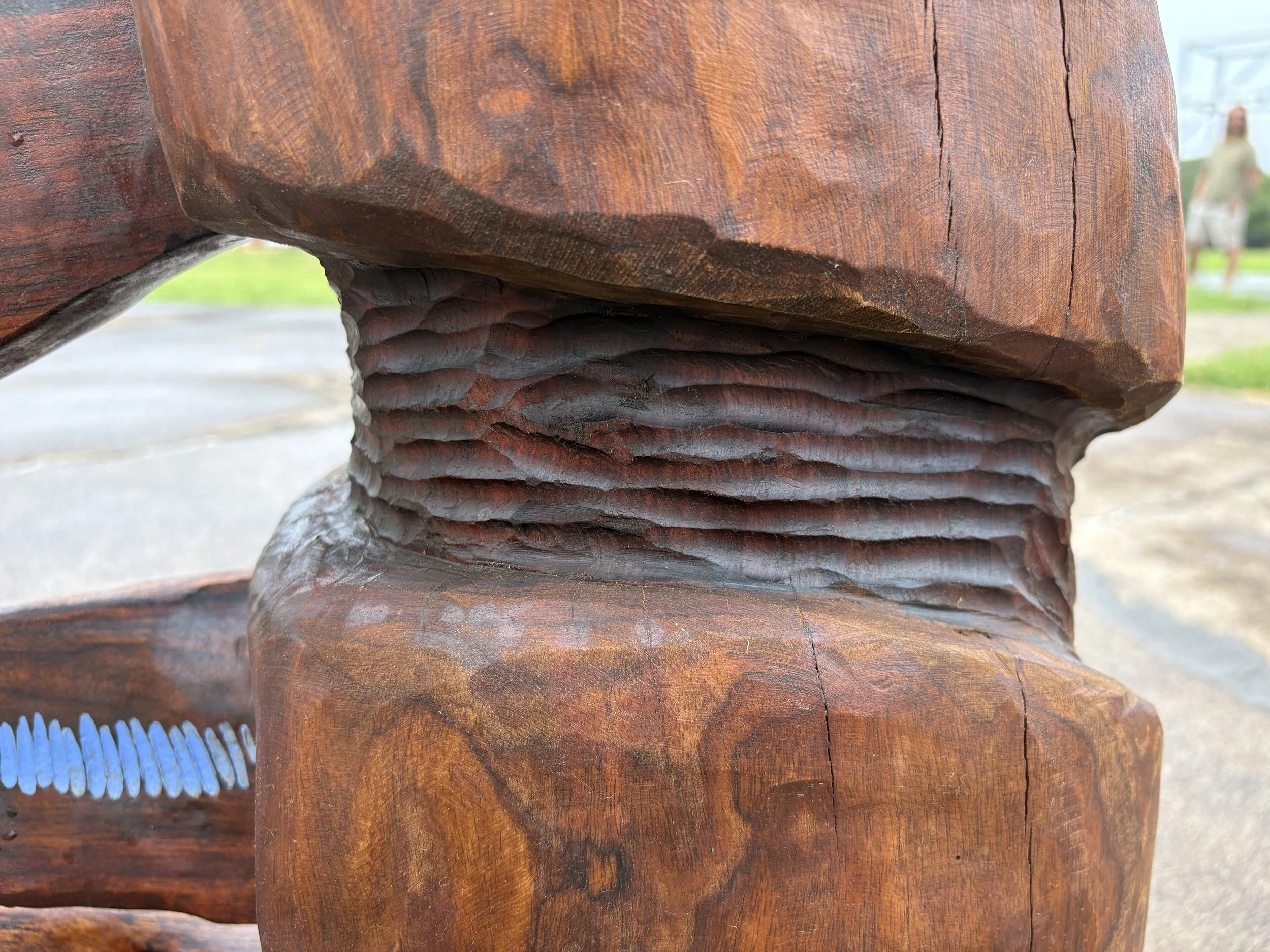
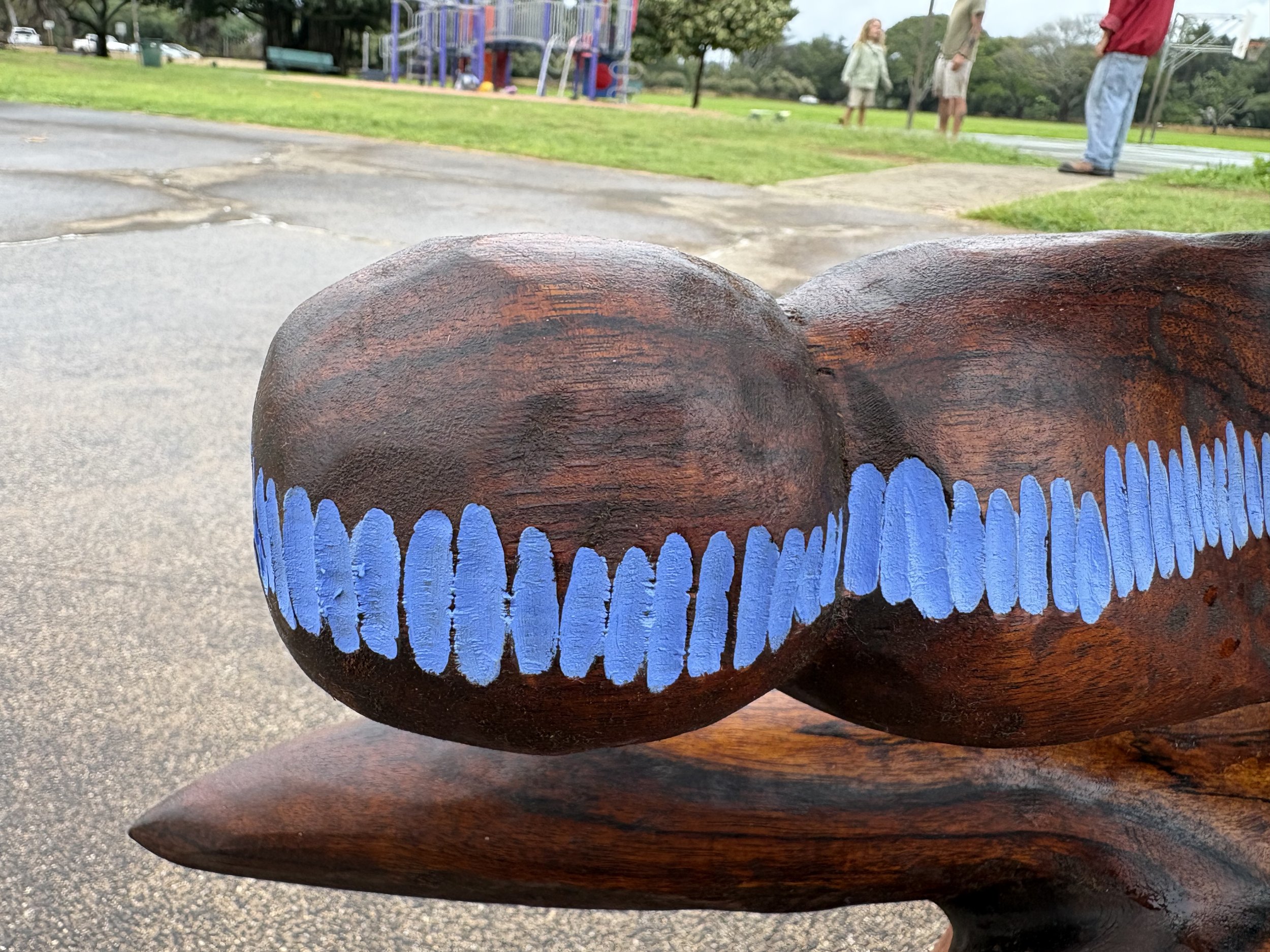
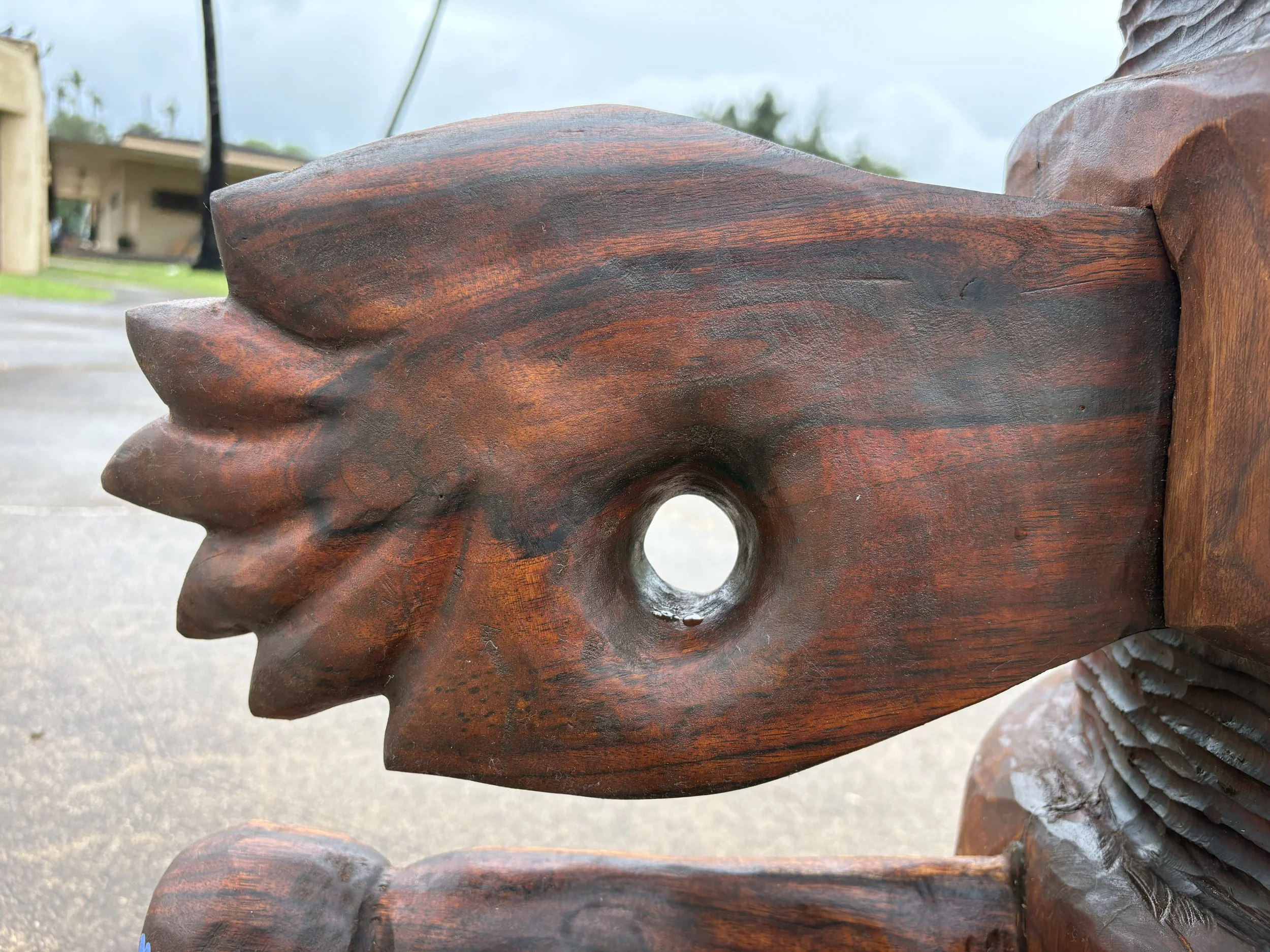
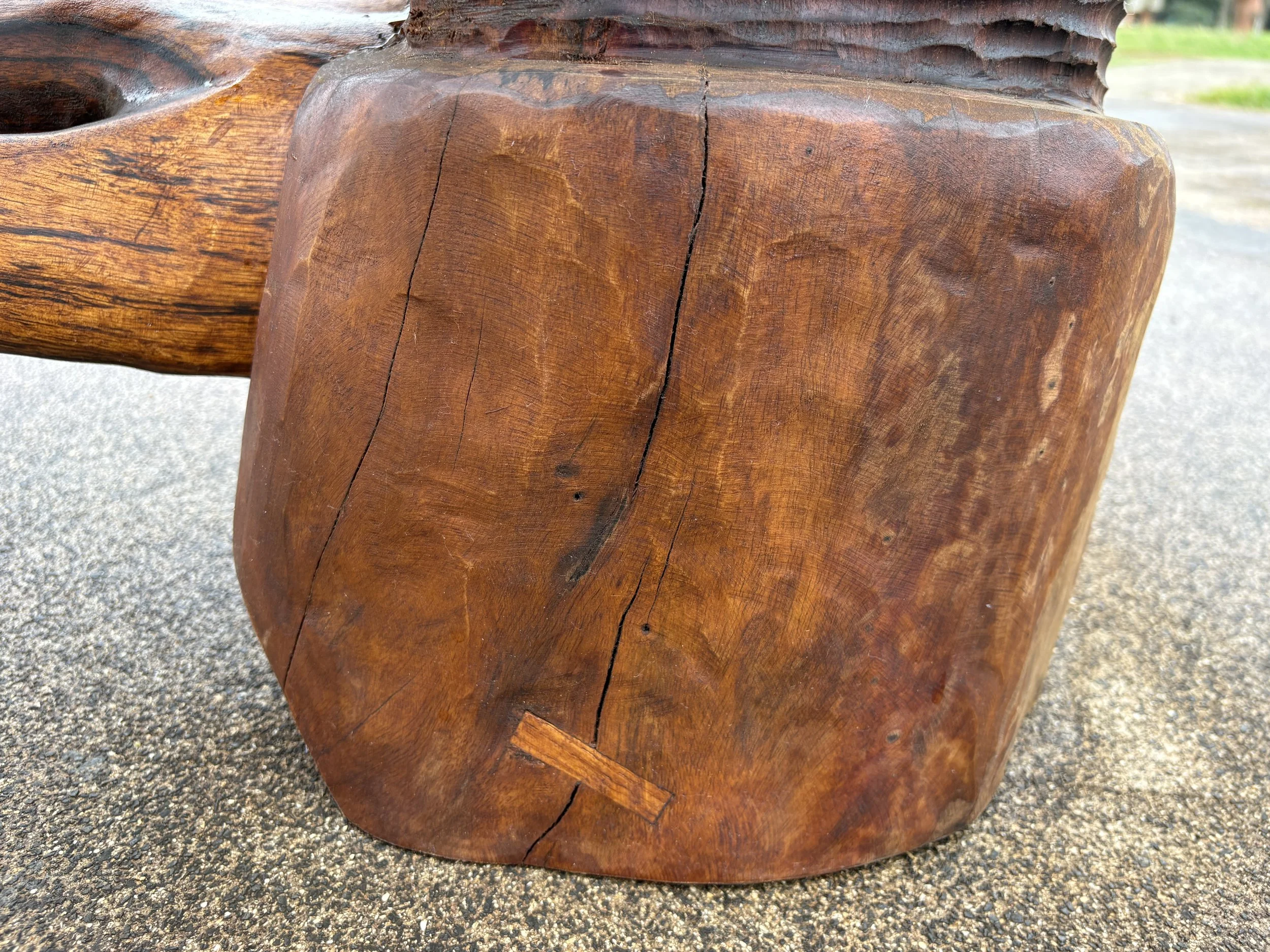
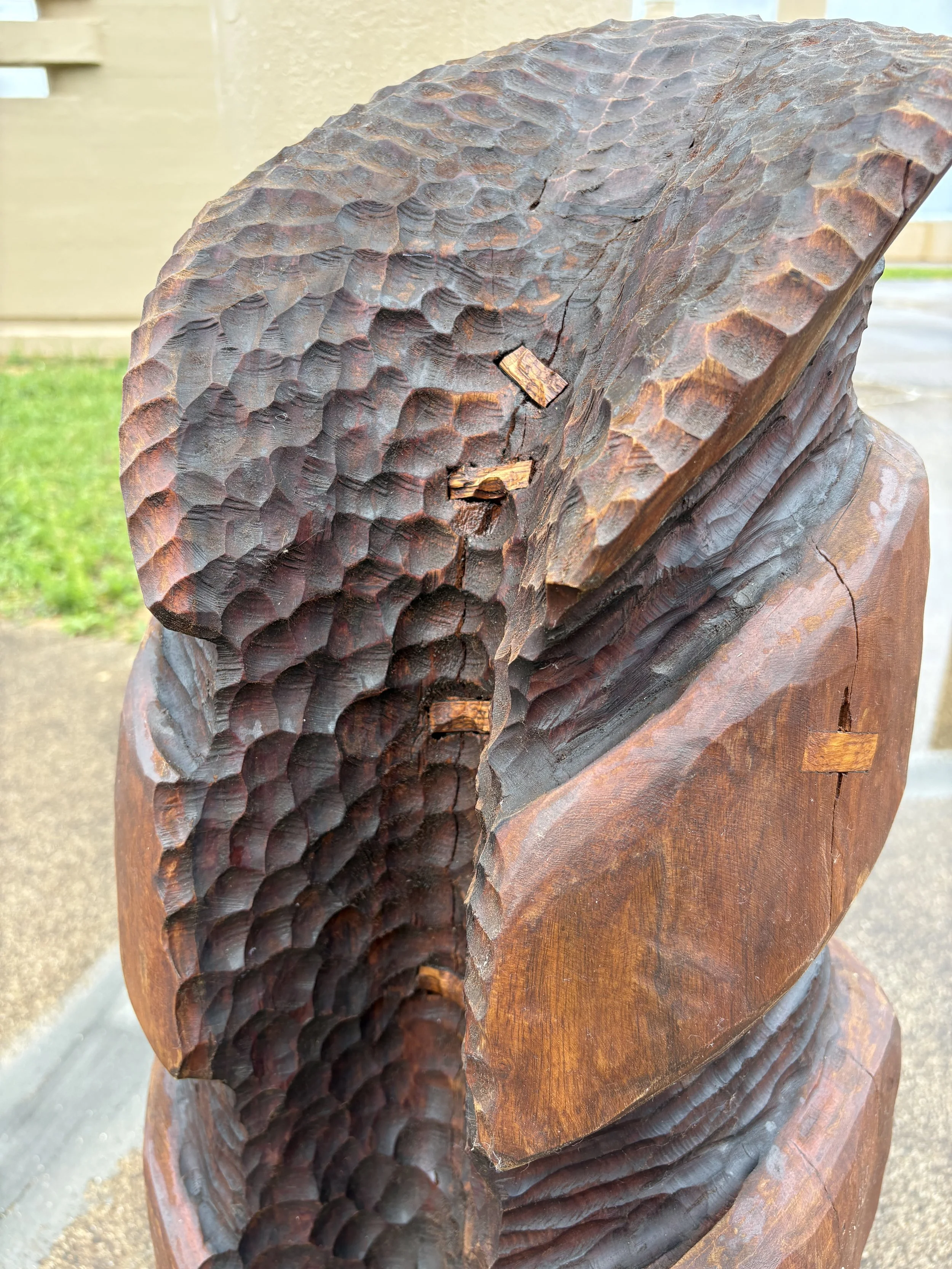
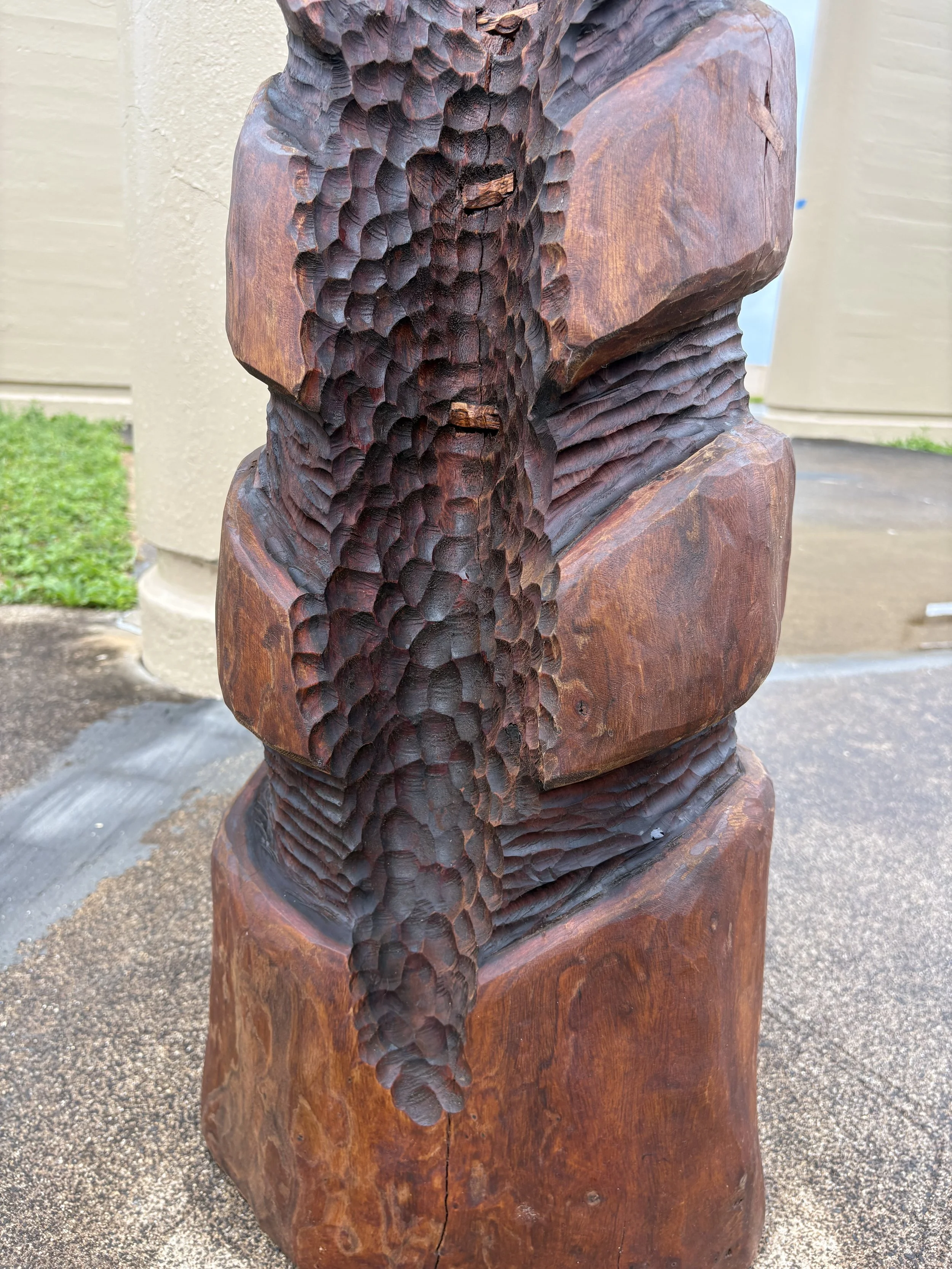
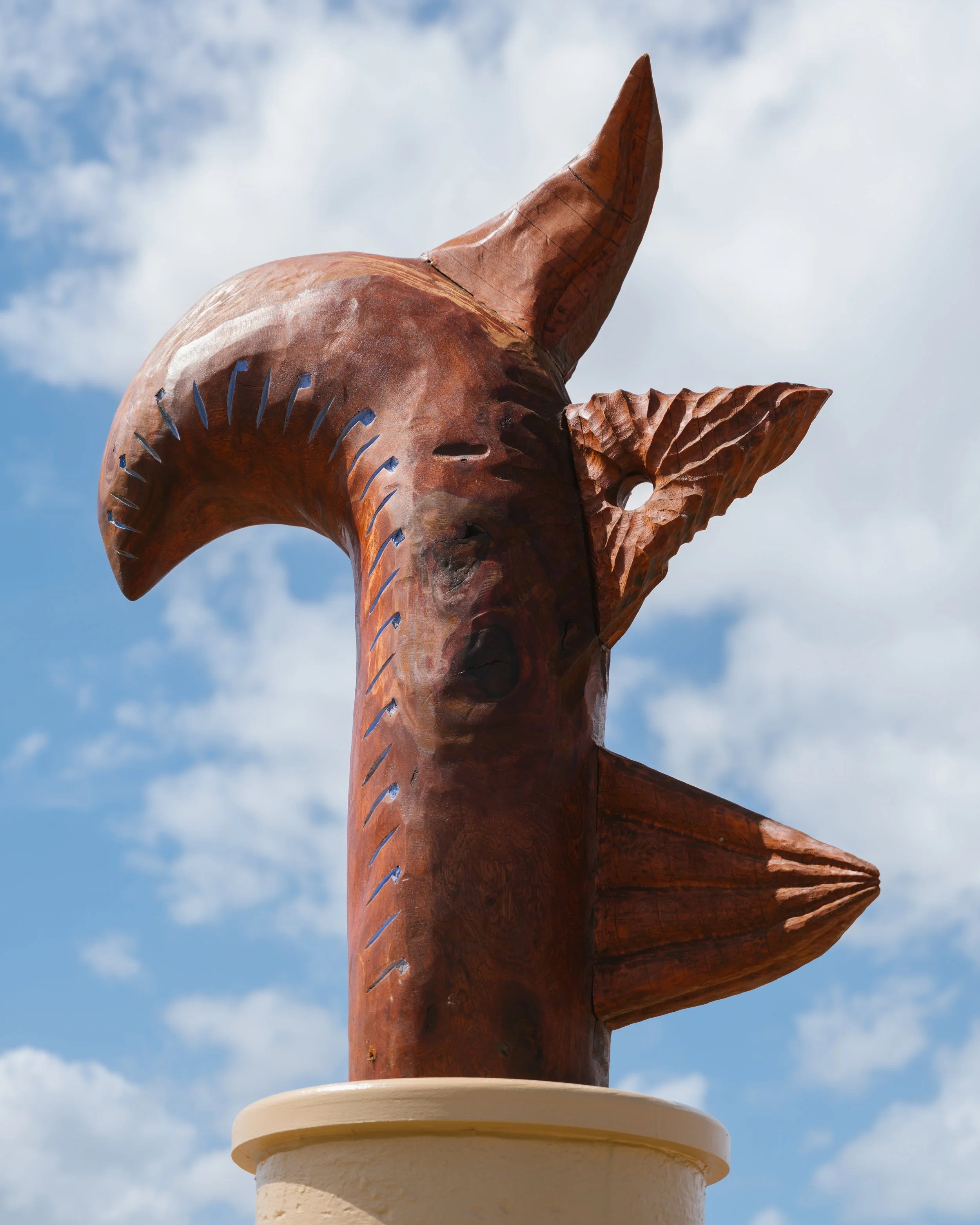
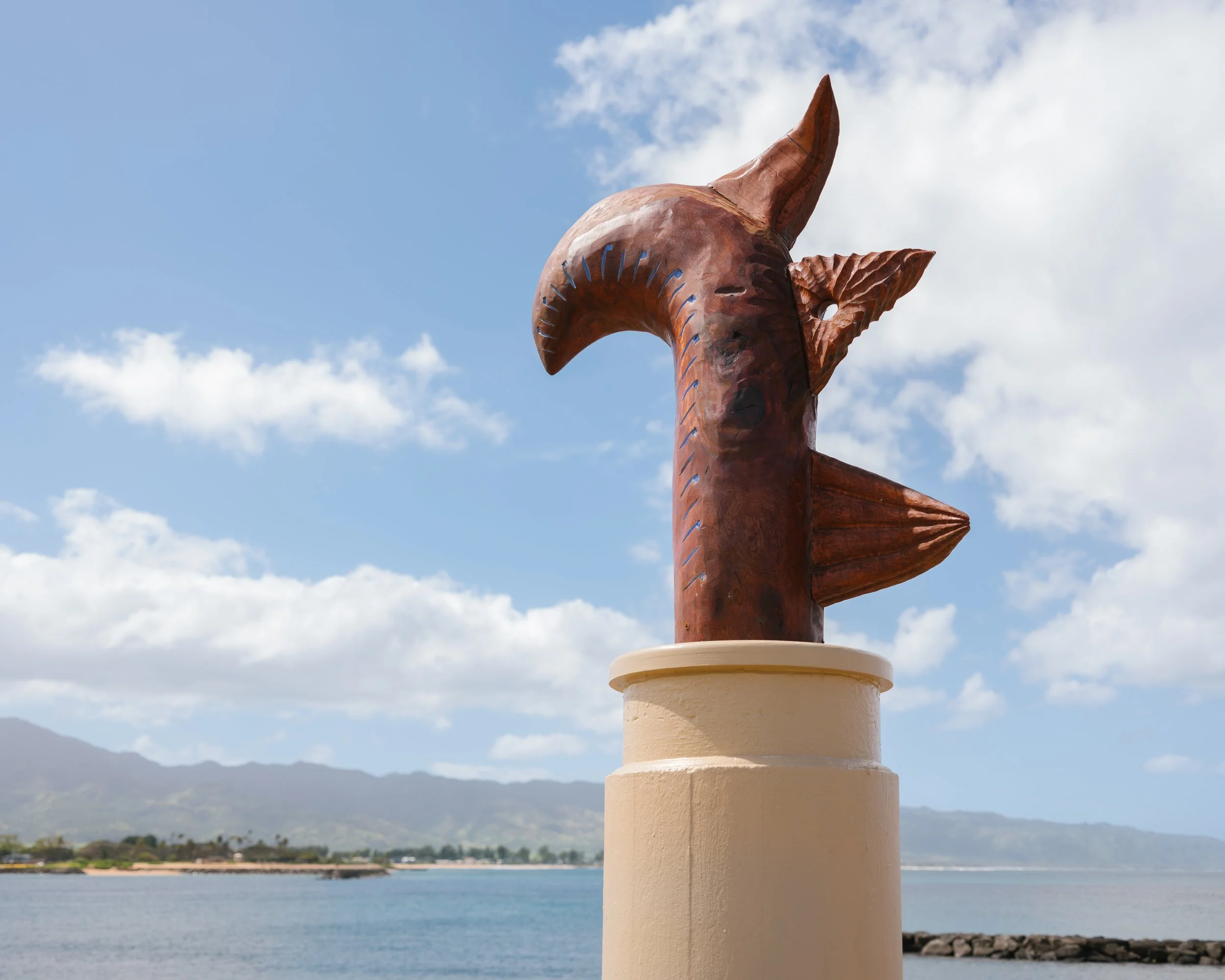
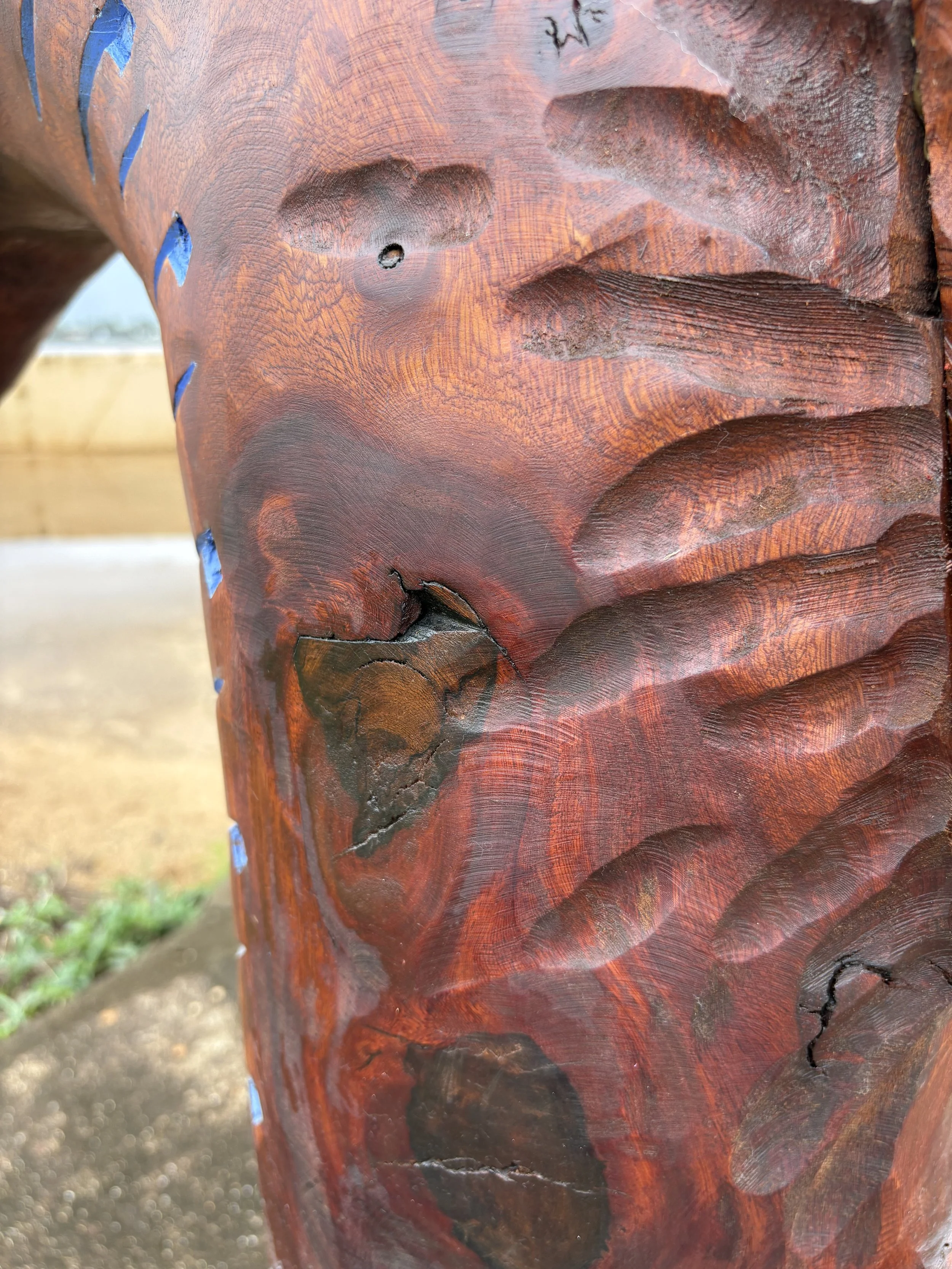
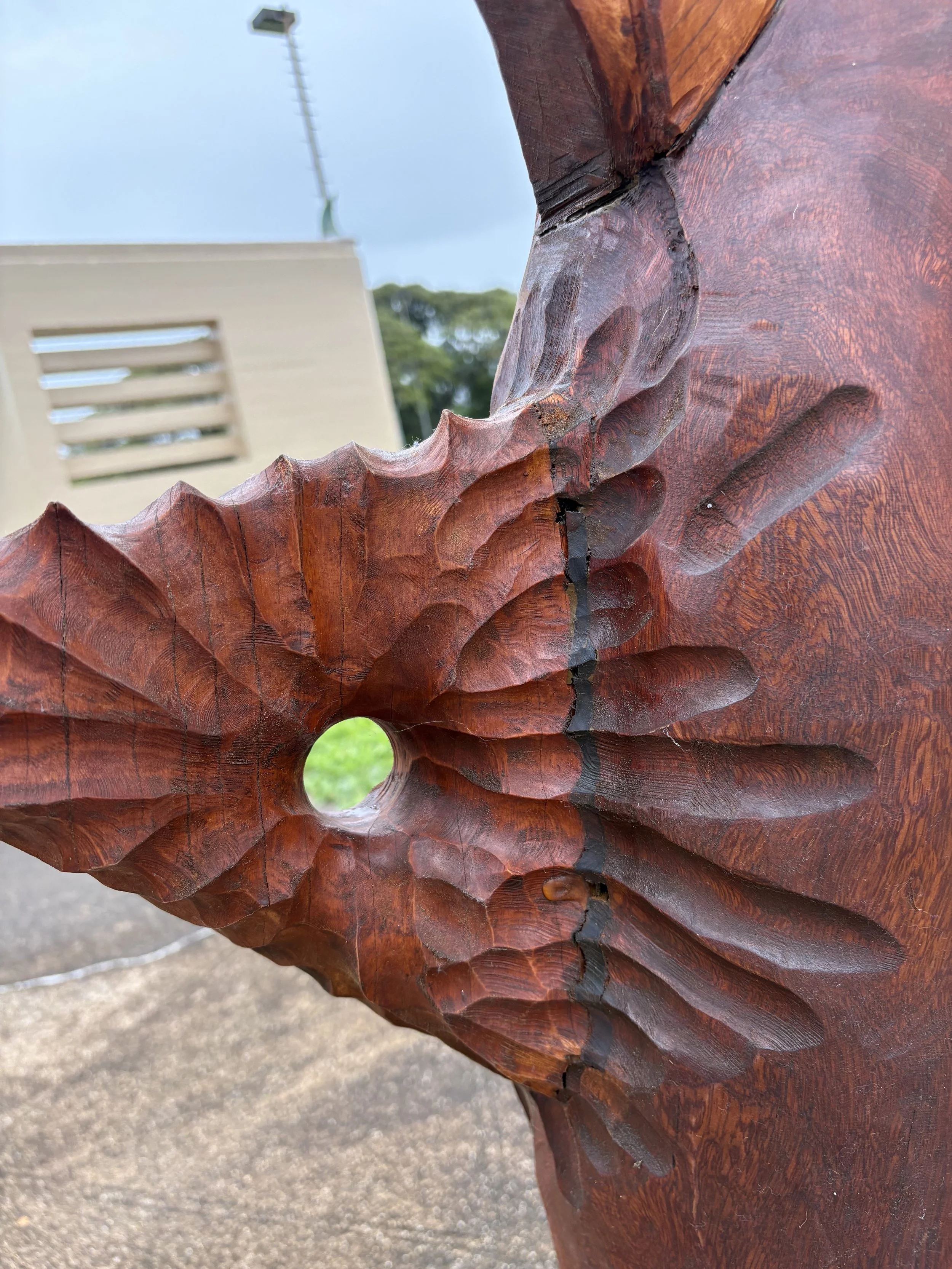
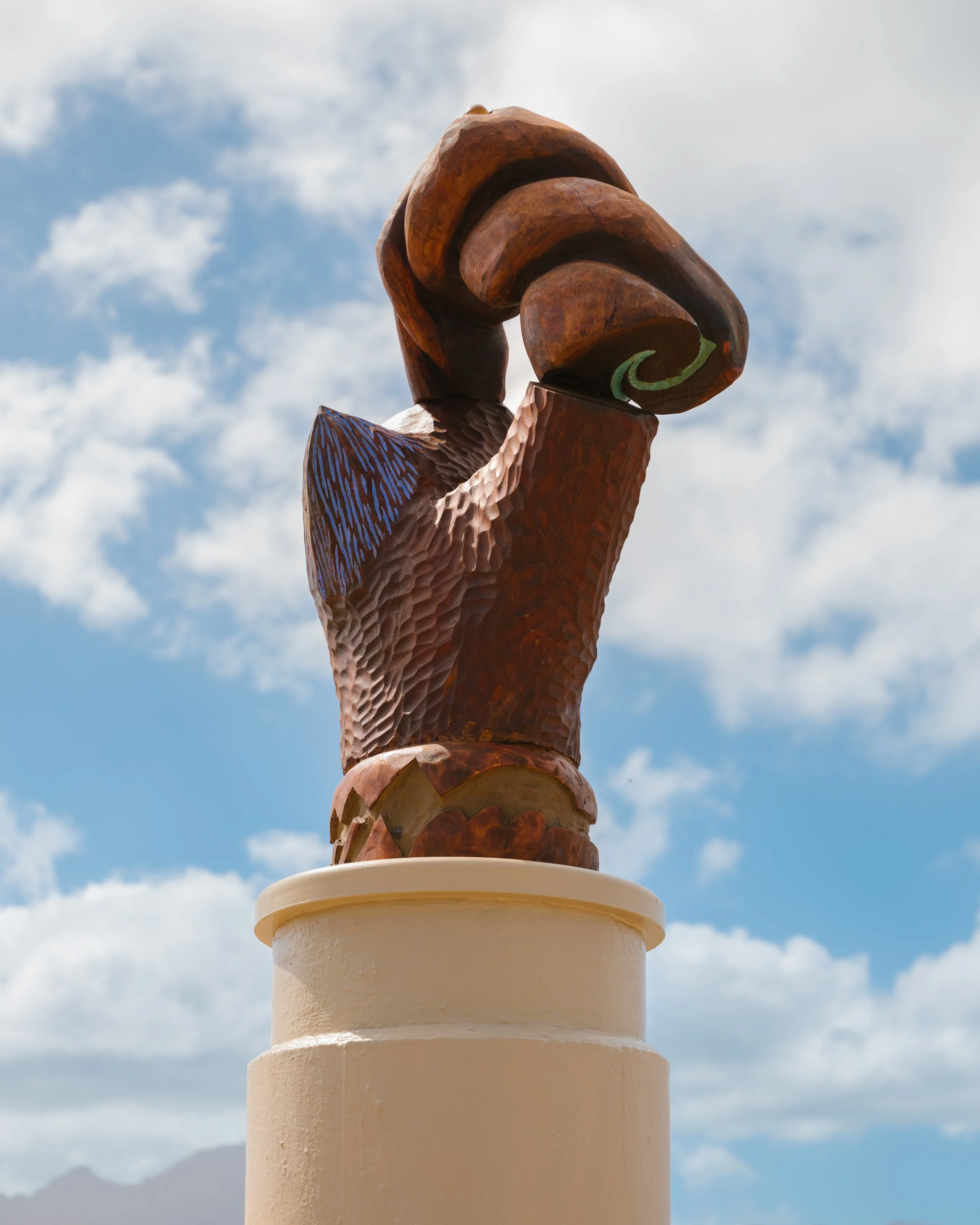
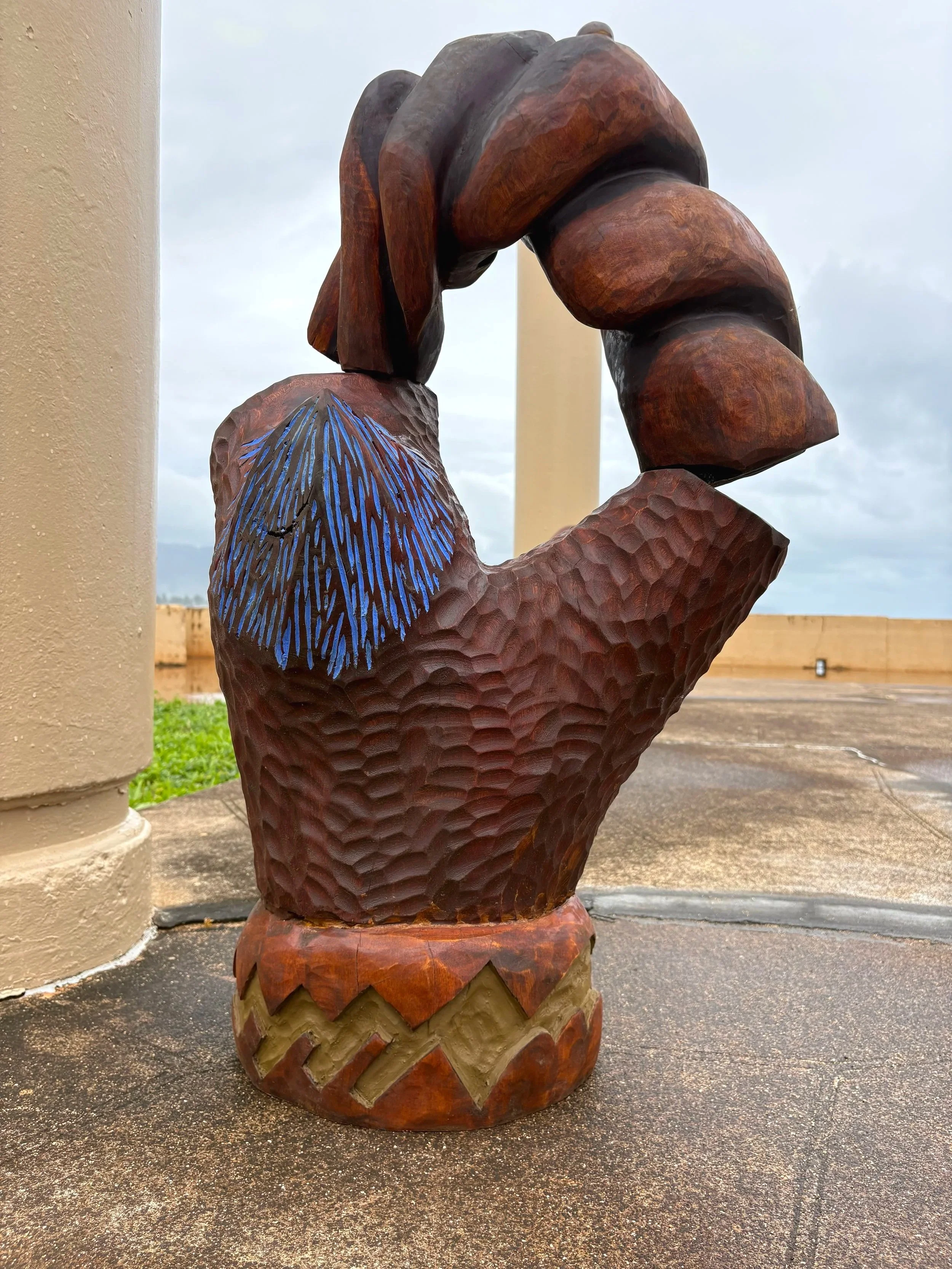
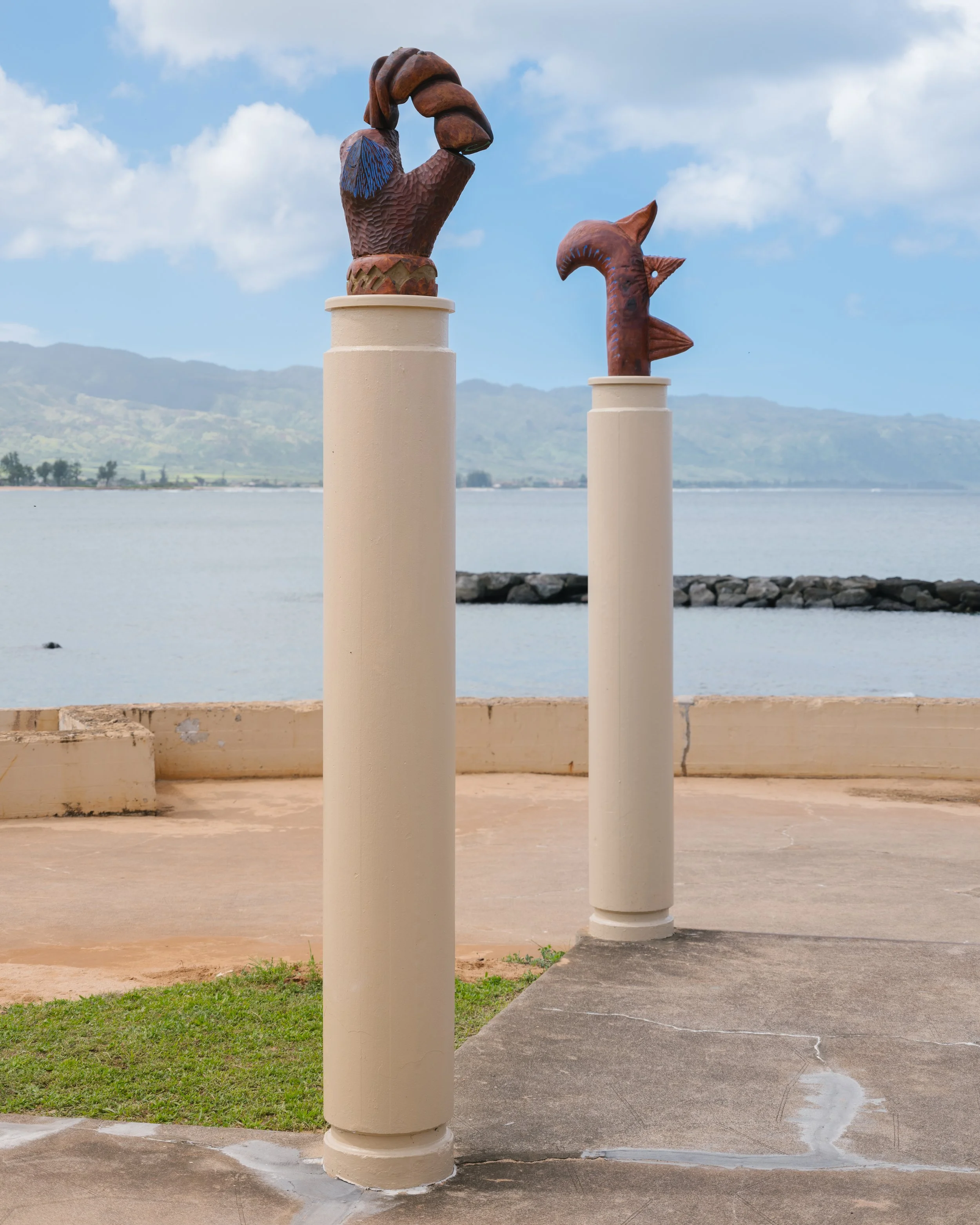
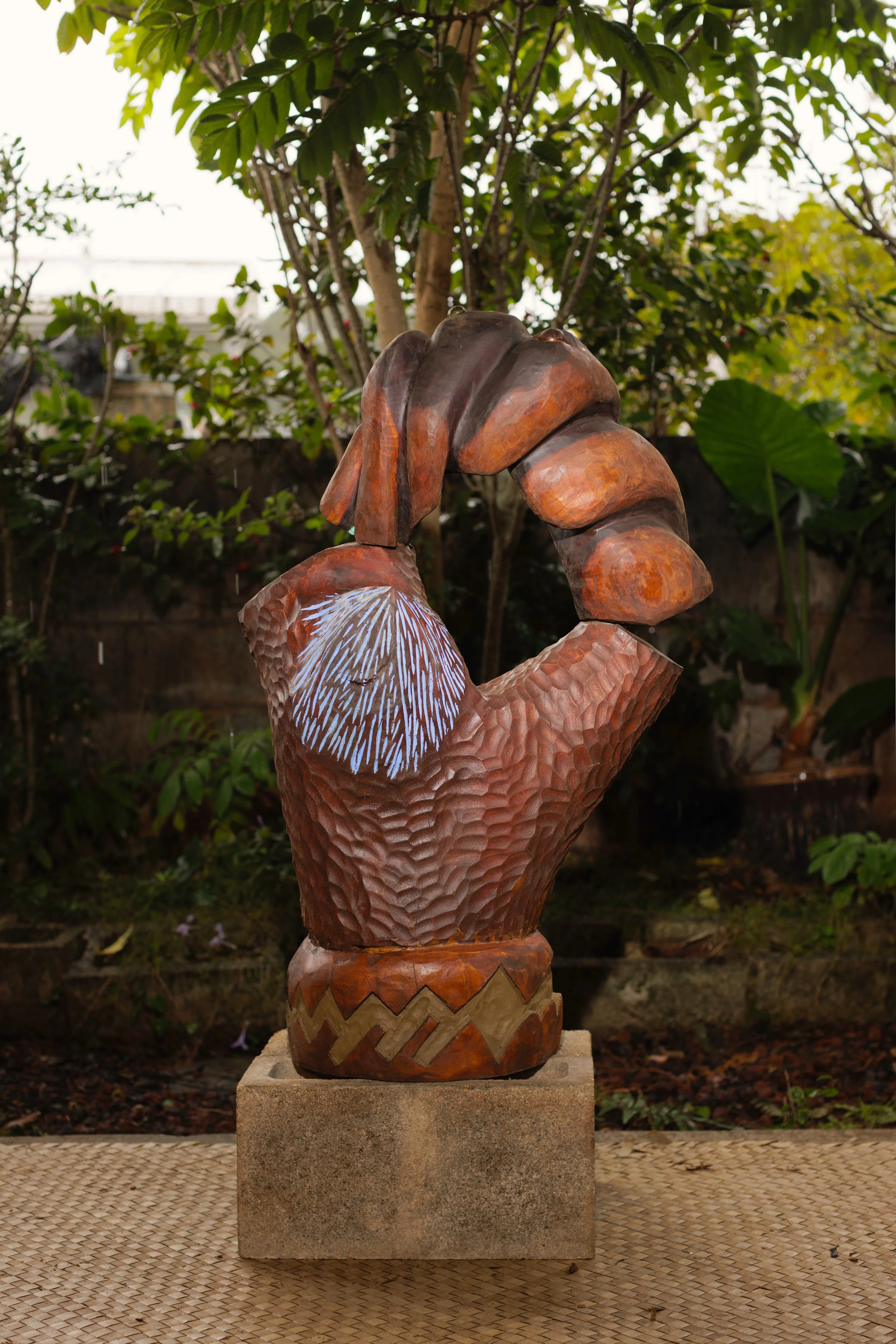
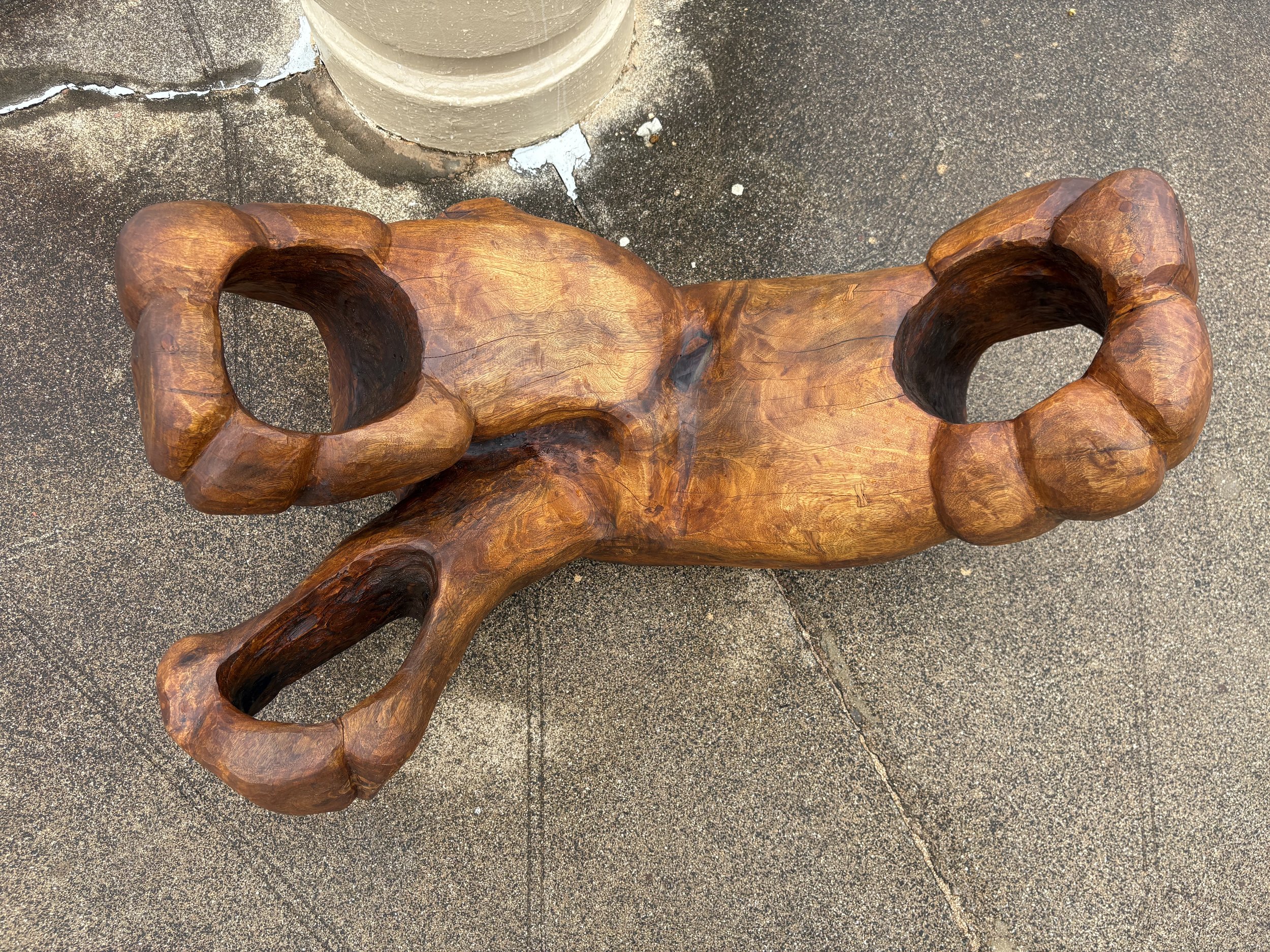
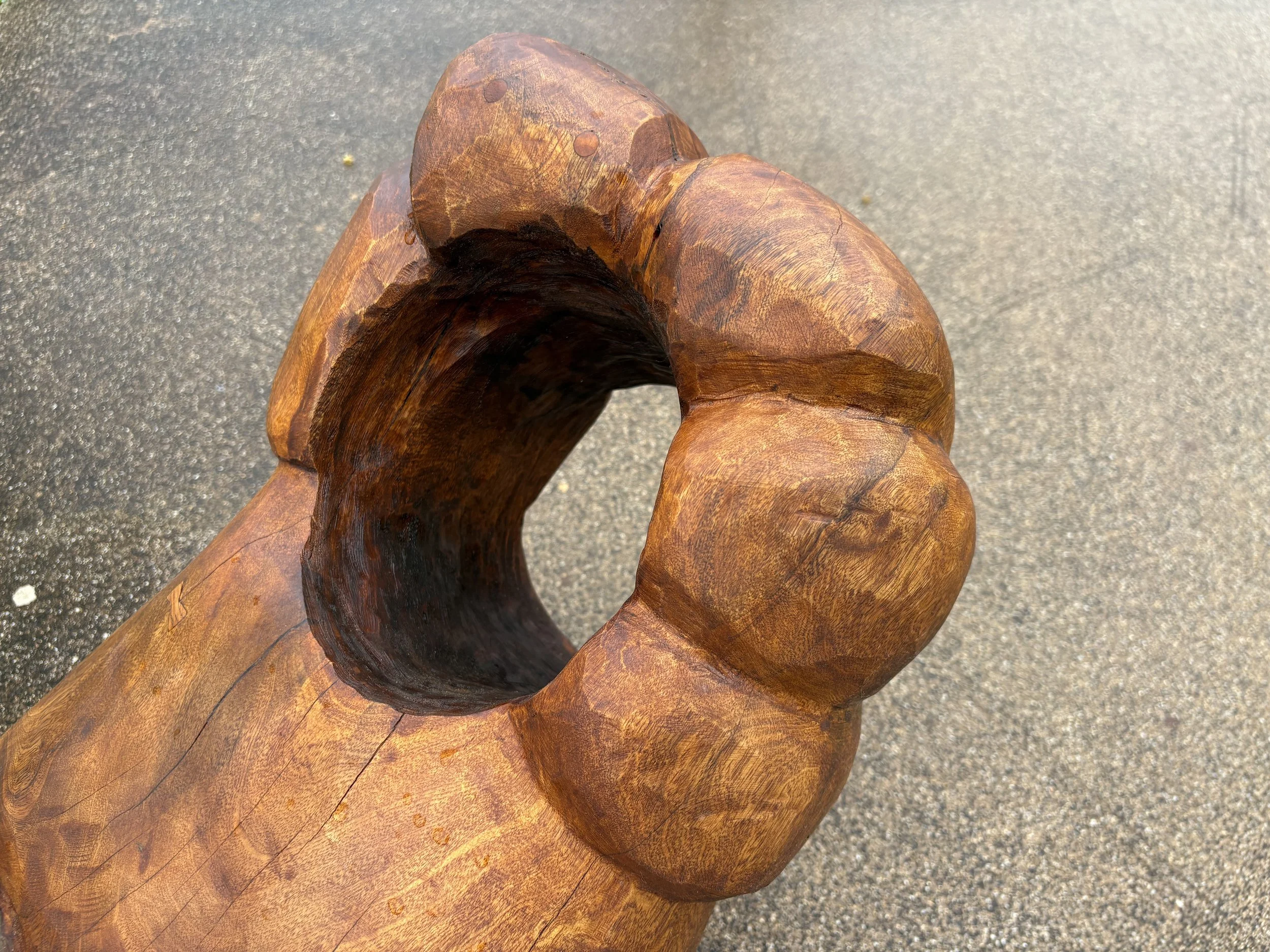
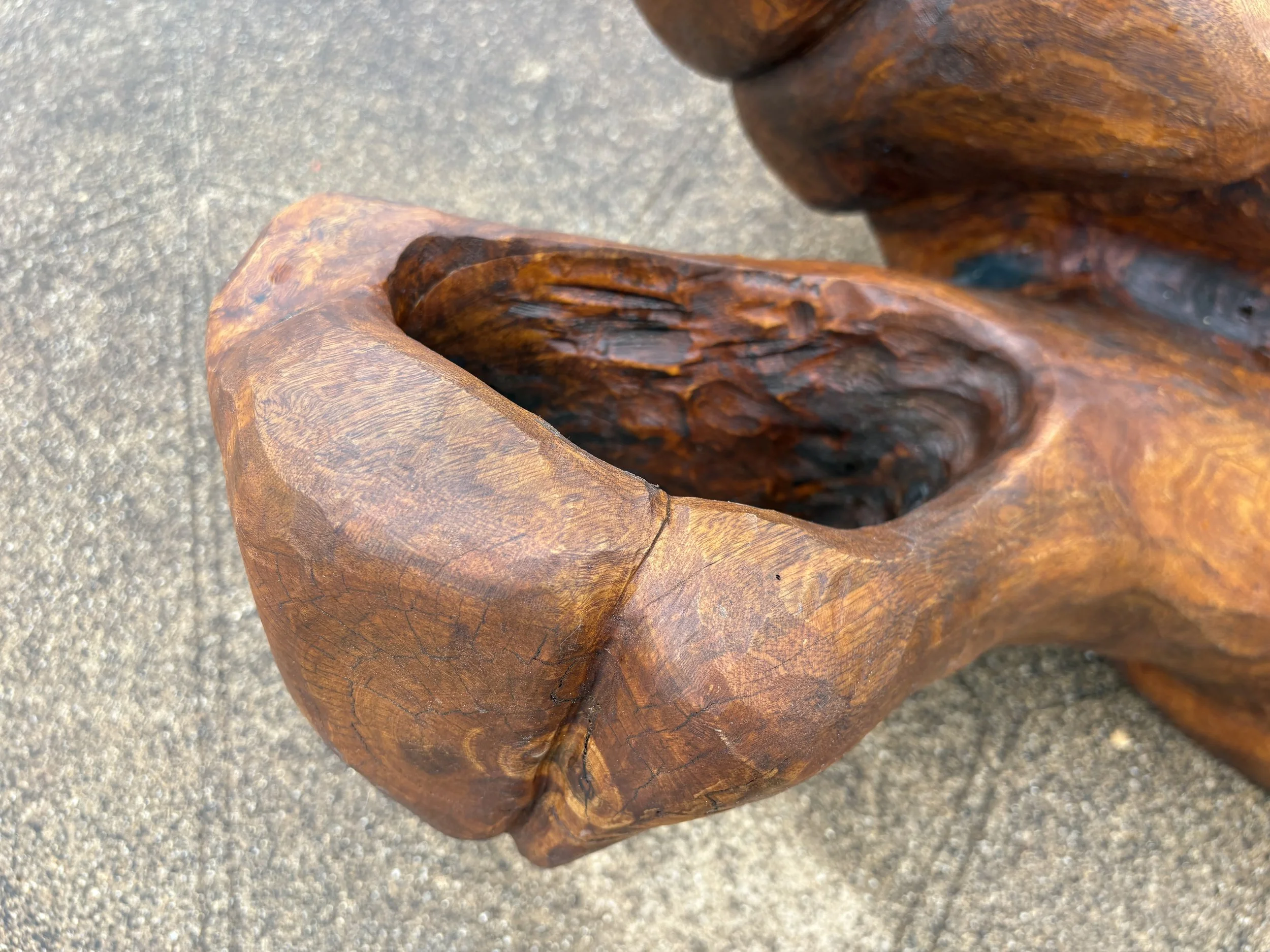
Set within the remains of a 1930s pavilion, this installation features 48 sculptural works by Amber Khan and Jordan Souza that unfold the story of Laniwahine, an ali‘i mo‘o (a shape-shifting water guardian), and her three servants. The sculptures visually integrate archival records from nūpepa (1870–1885), translated by Paige Okamura, with the living memory shared through talk-story with Waialua community members.
According to the mo‘olelo of Keaomelemele, this area Pua‘ena, Waialua, was the first landing site of the mo‘o clan in the Hawaiian archipelago. A procession of mo‘o was brought here by Kamo‘oinanea (the matriarch mo‘o) from Nu‘umealani (an ancestral land), where they gathered in pairs before traveling across O‘ahu spreading throughout the archipelago.
Among them was Laniwahine, who resides and sustains the sacred ‘Uko‘a and Loko Ea fishponds of Waialua. The sculptures depict Laniwahine’s benevolent presence in the Loko Ea as she appears in various forms—sometimes fearsome, sometimes human—caring for the i‘a (fish) associated with her.
While the area is known for tourism, surfing, and plantation history, this installation reminds us of the importance of stories that sustain care and respect for the land, its resources, and its people. When the fishponds and their mo‘o guardians are neglected, it is said that the fish grow thin or disappear. When they are cared for and remembered, abundance returns, bringing plentiful fish and good health.
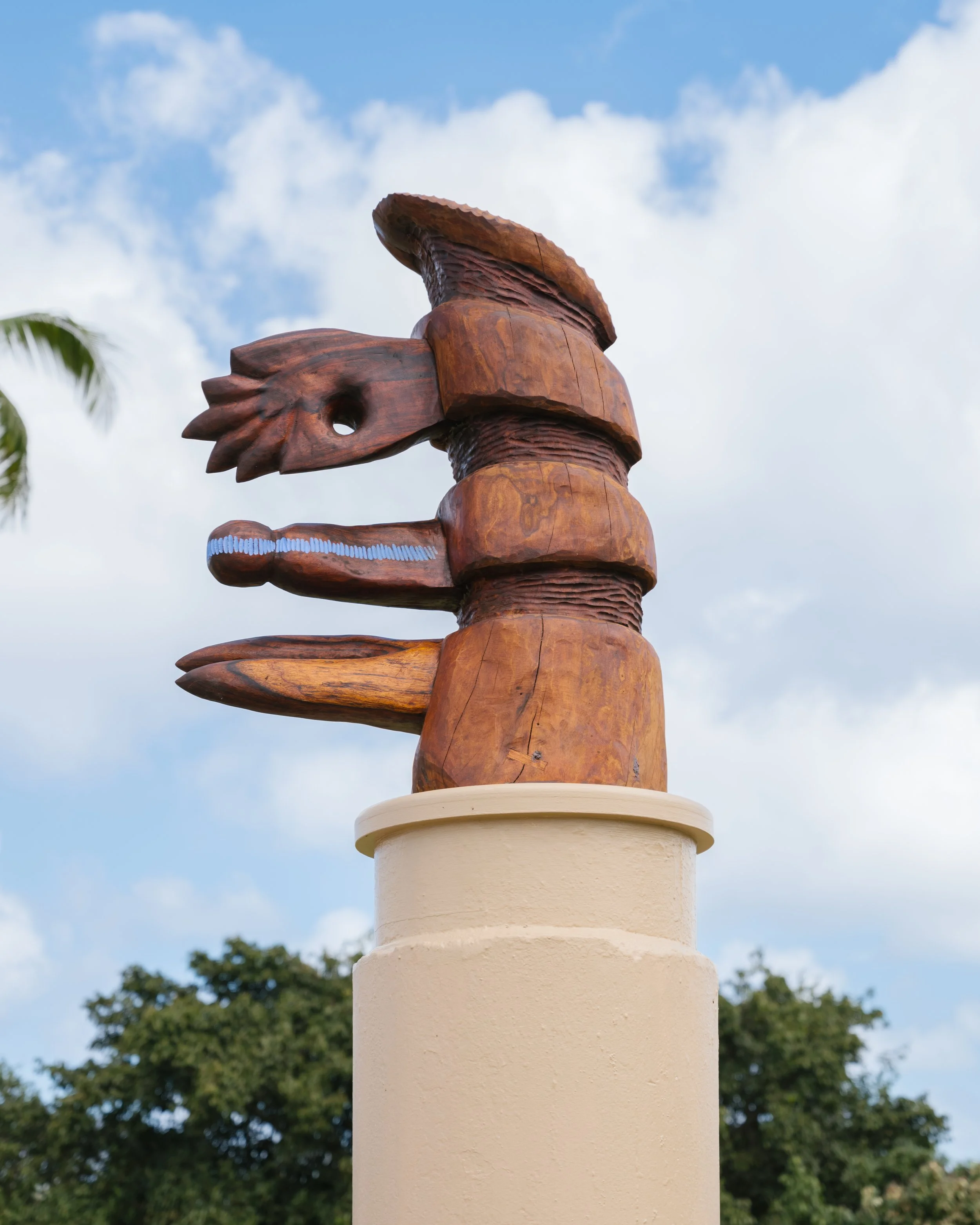
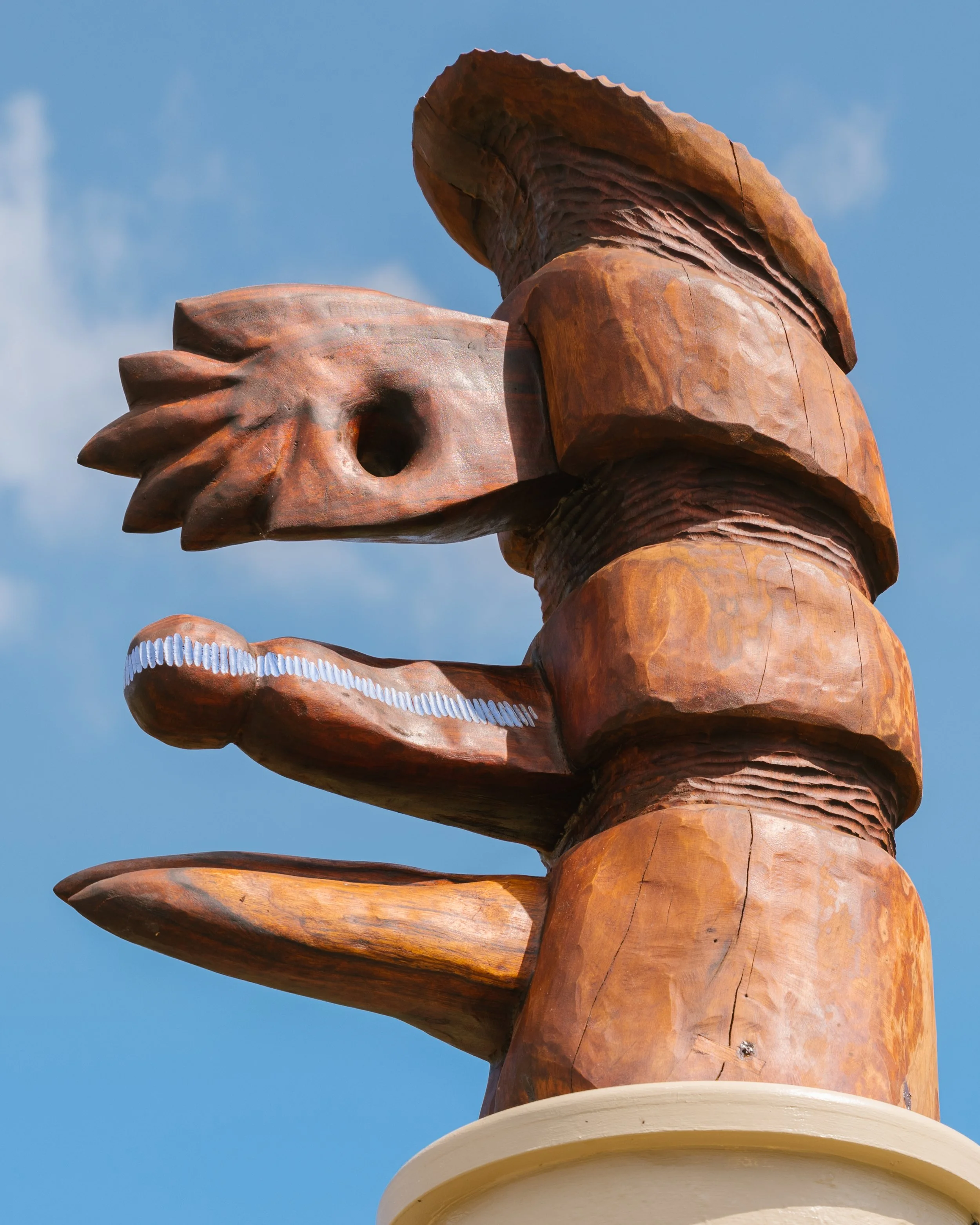
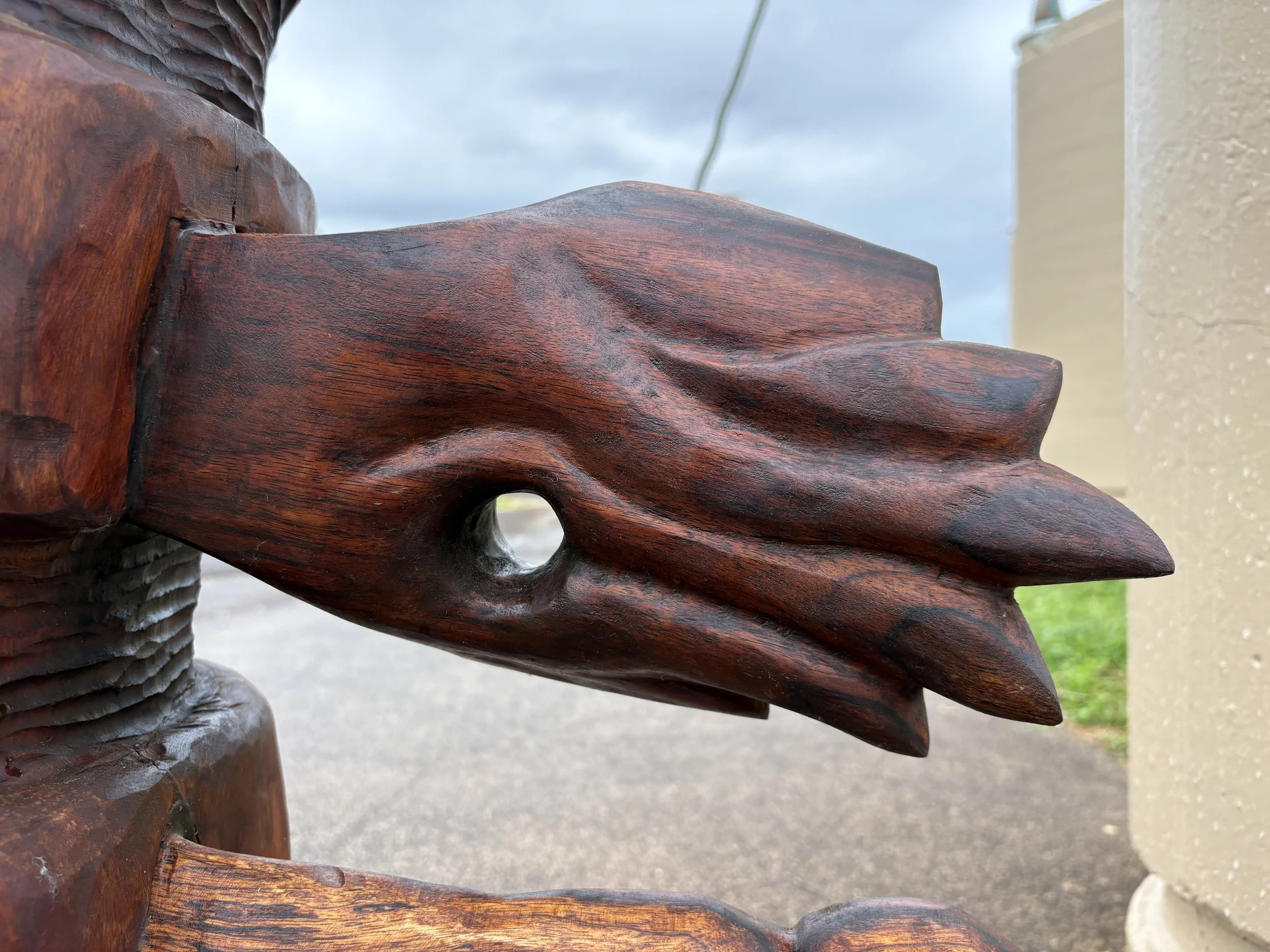
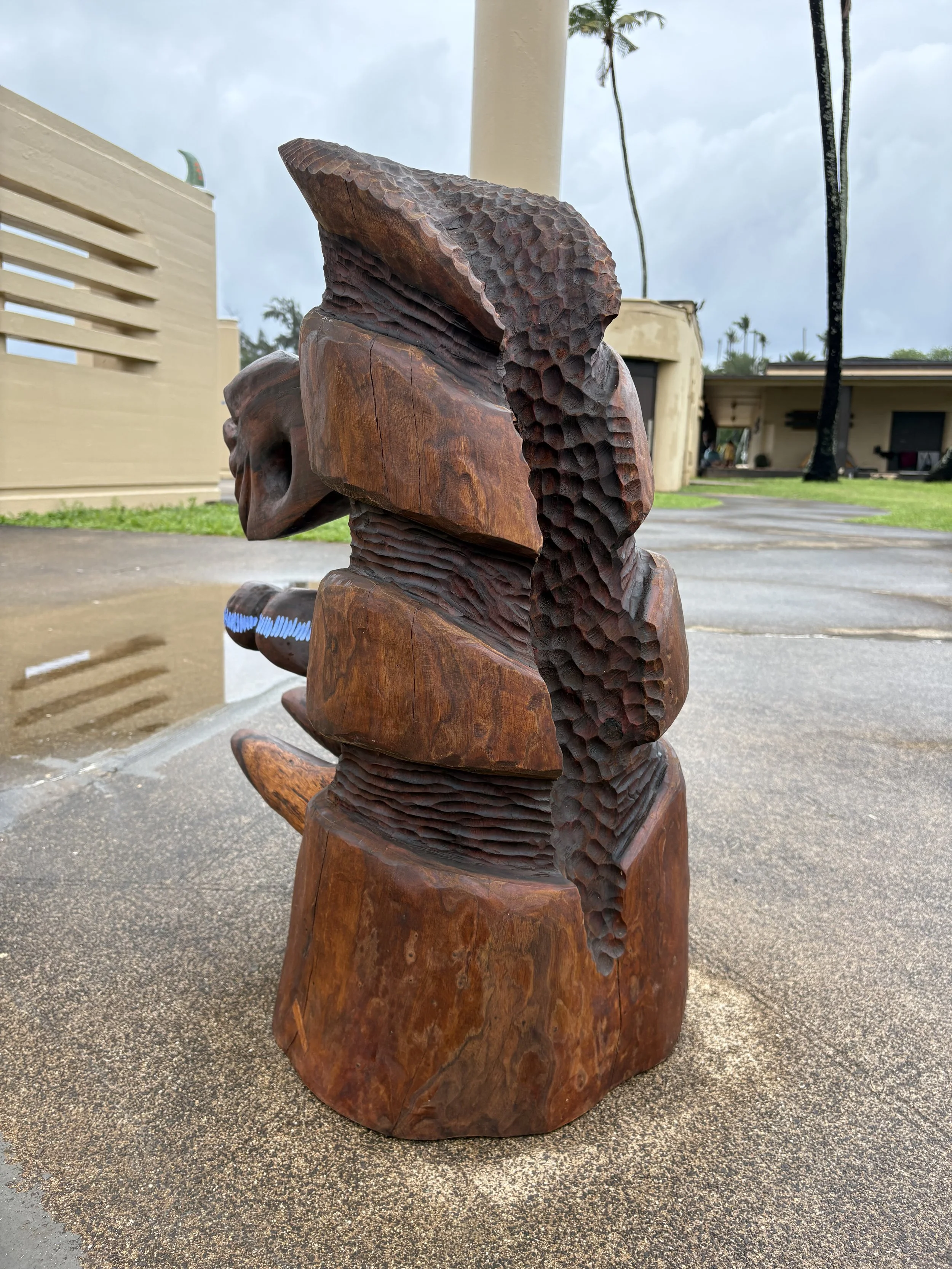
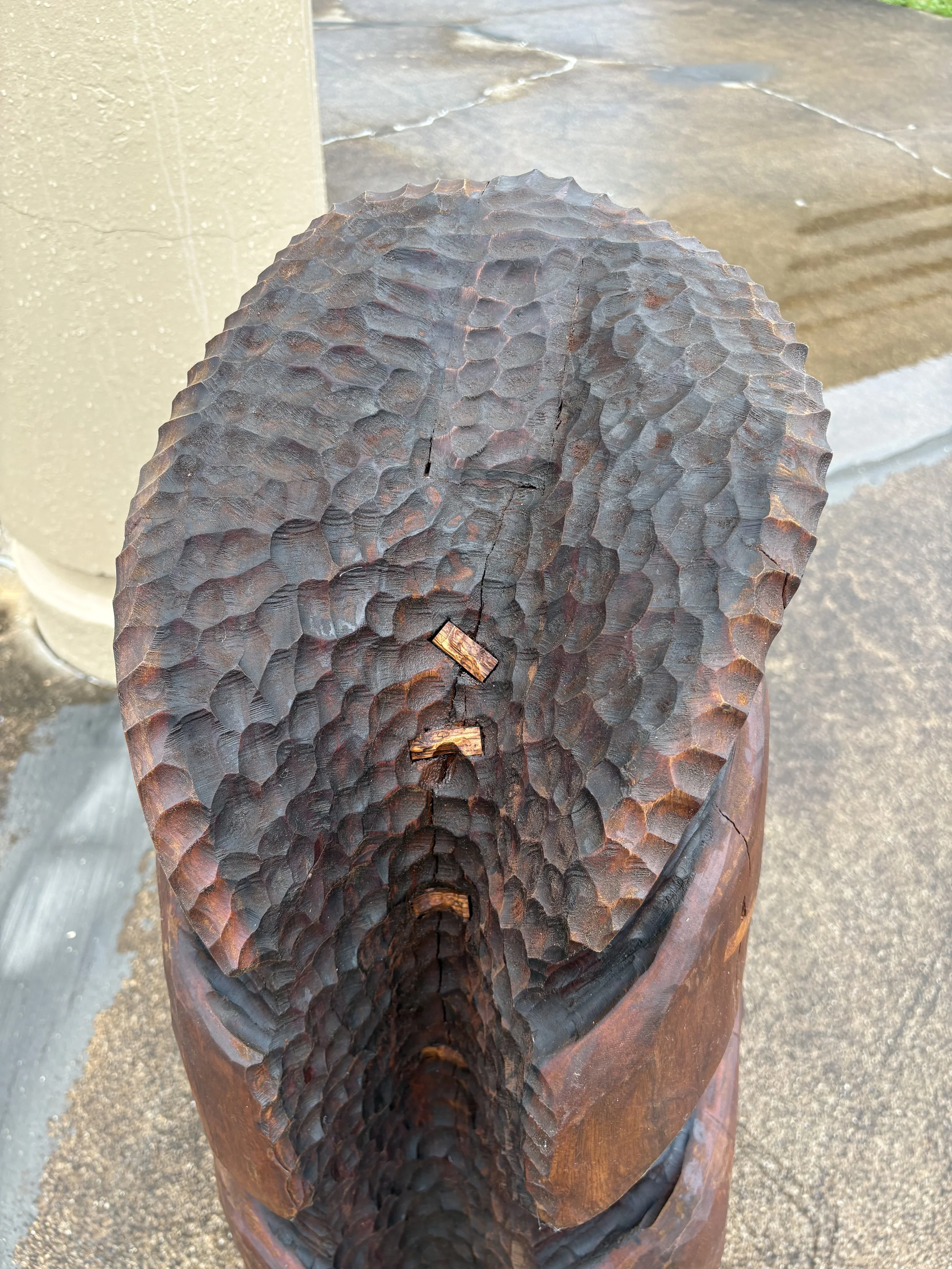
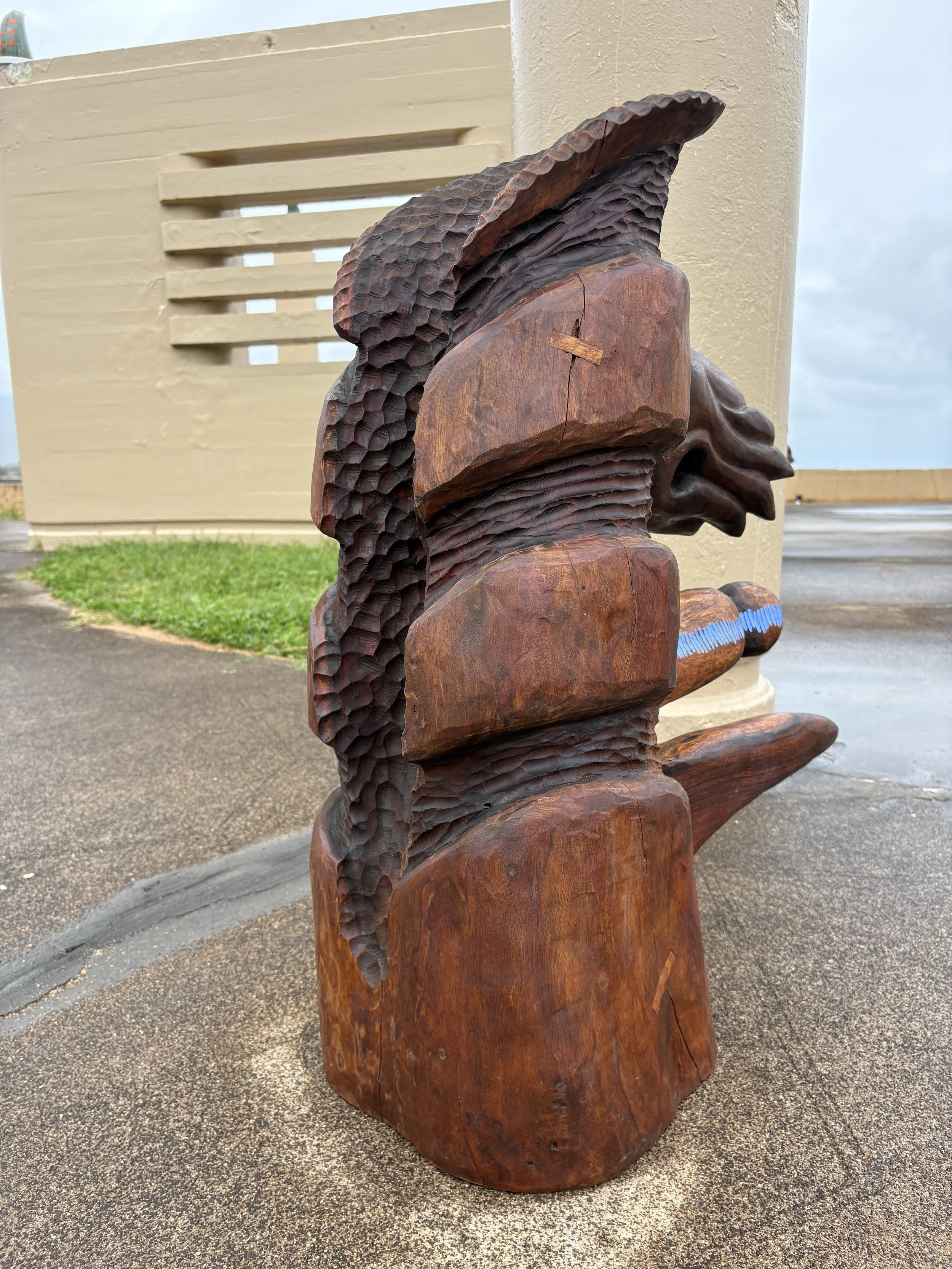
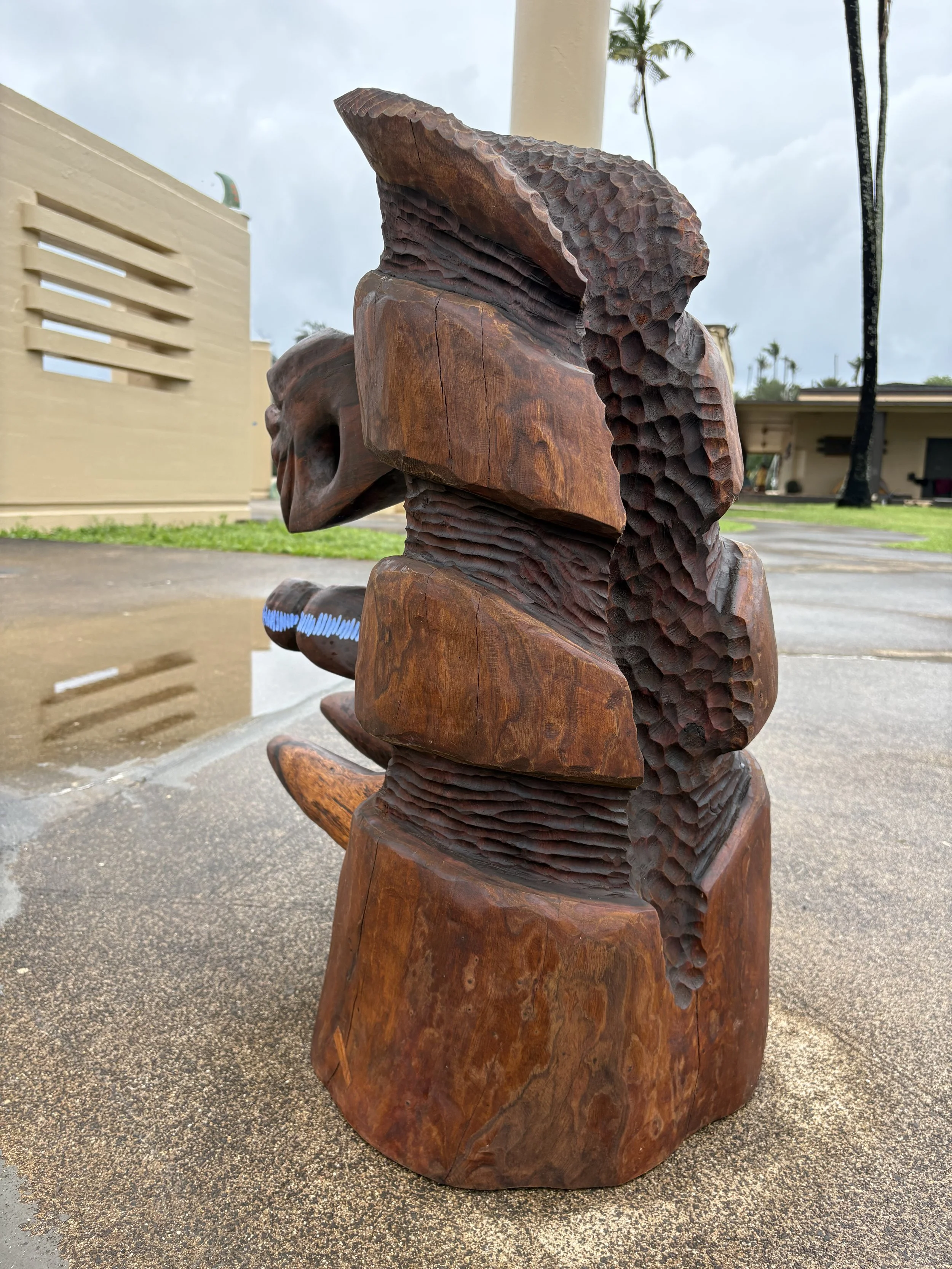
Procession to muliwai
Kamani, Koa wood
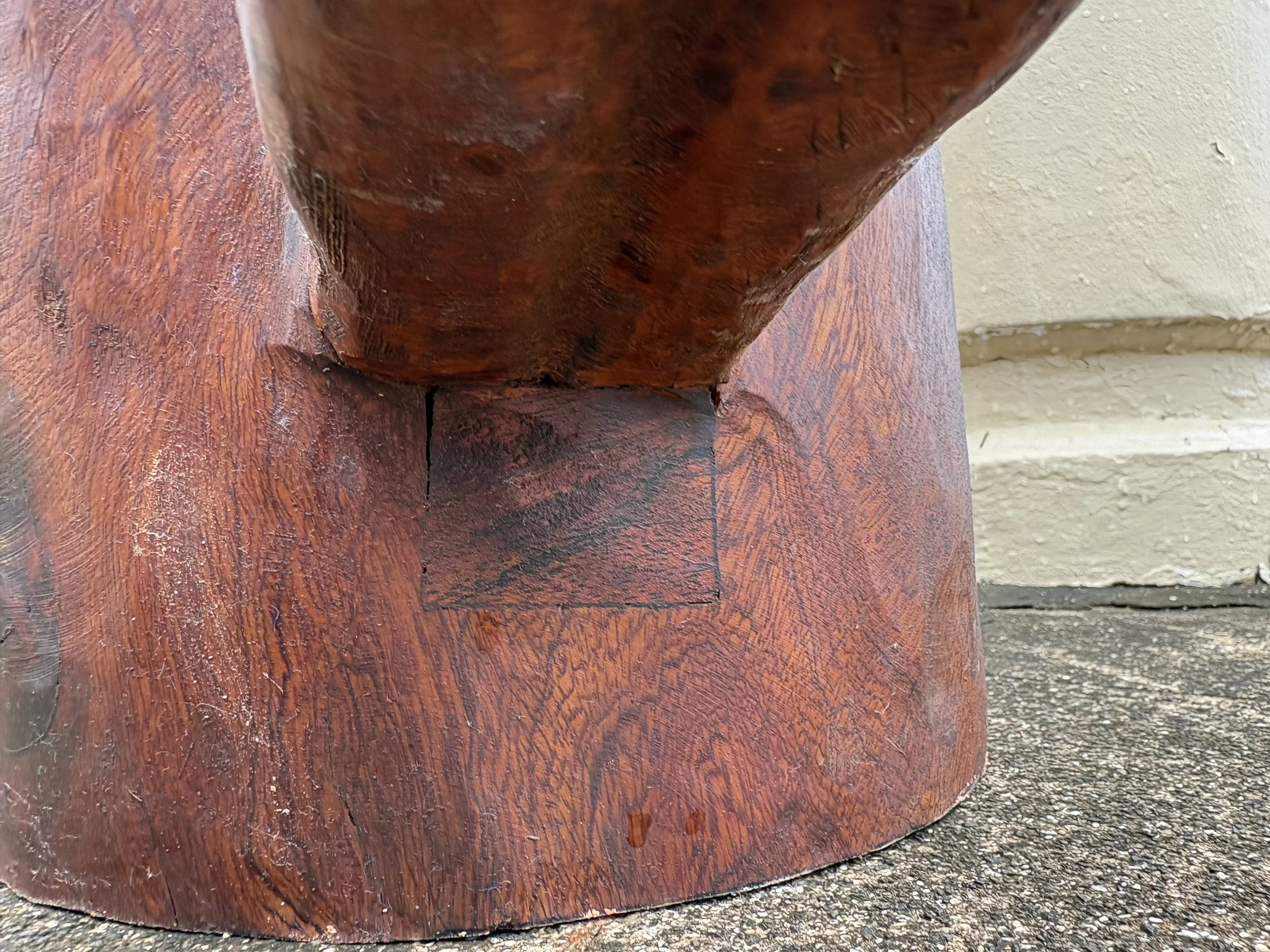
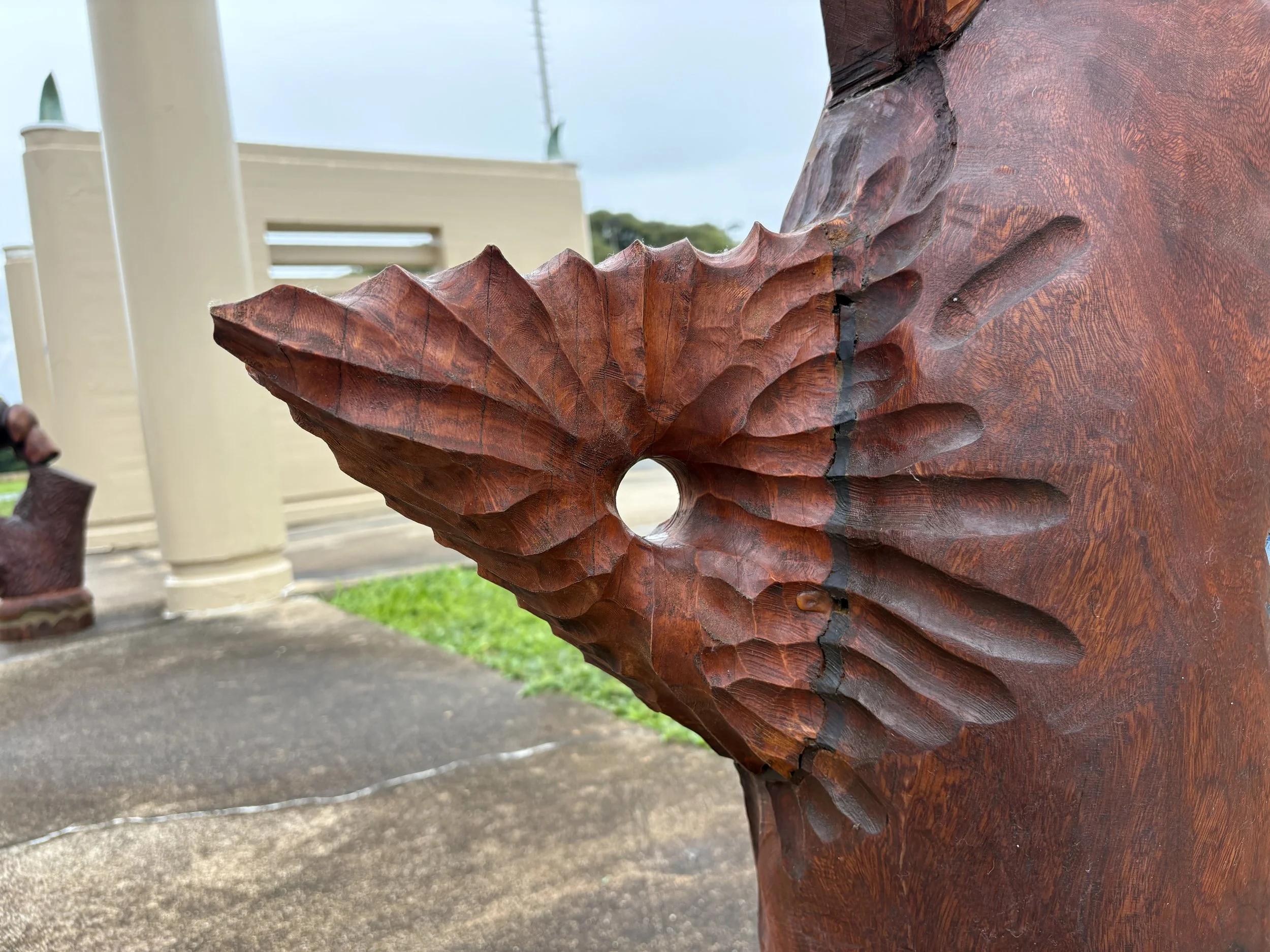
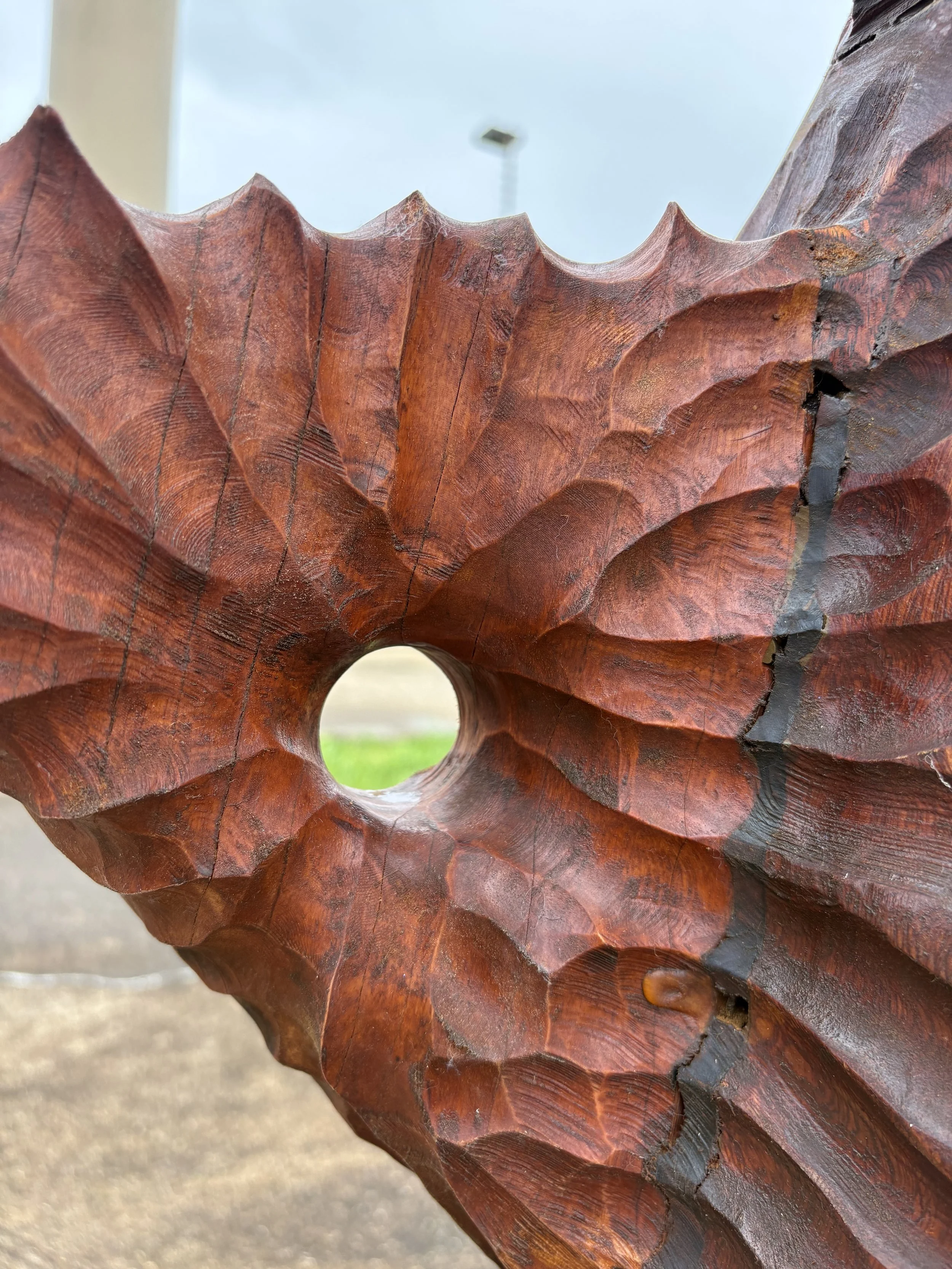
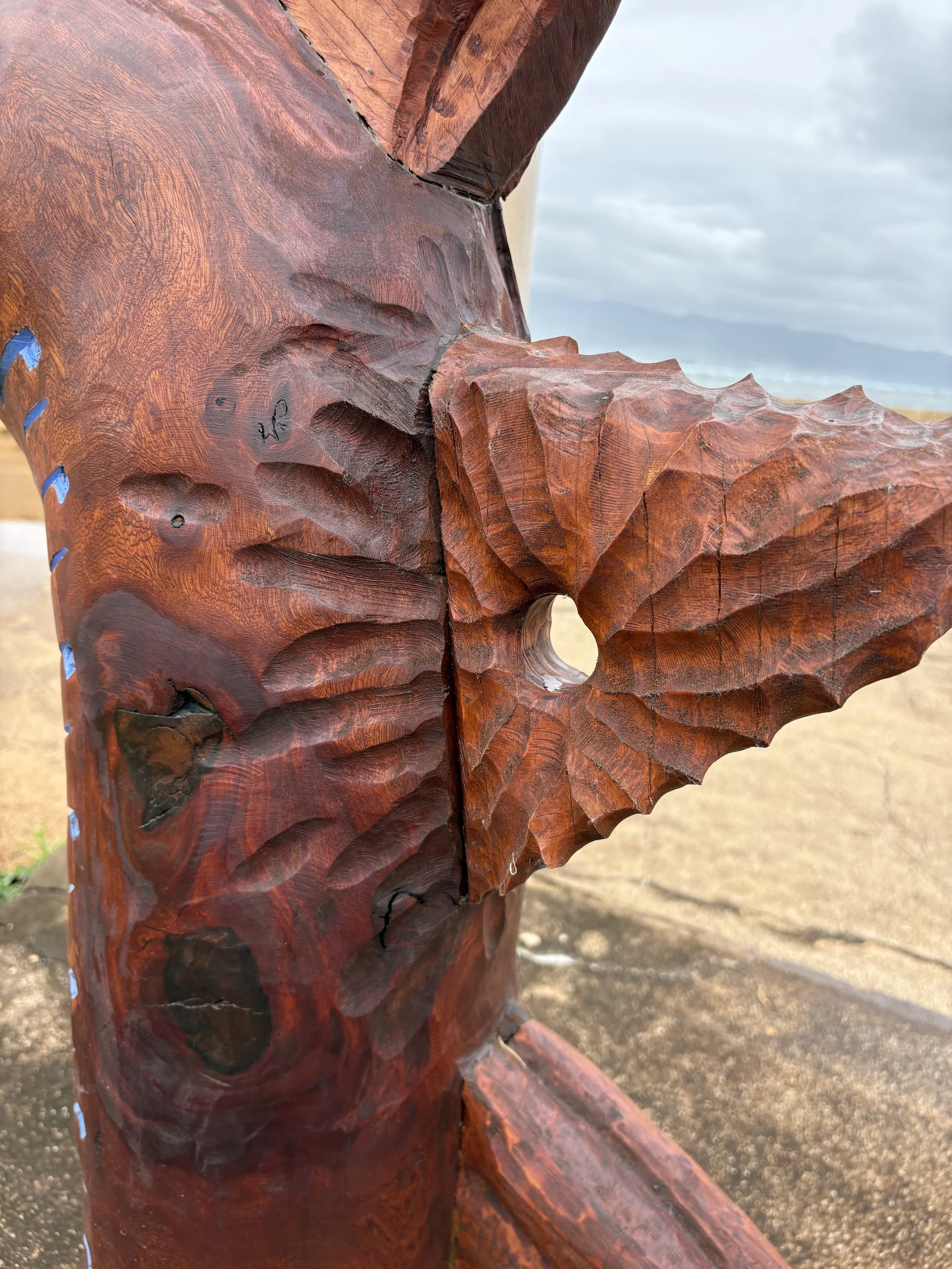
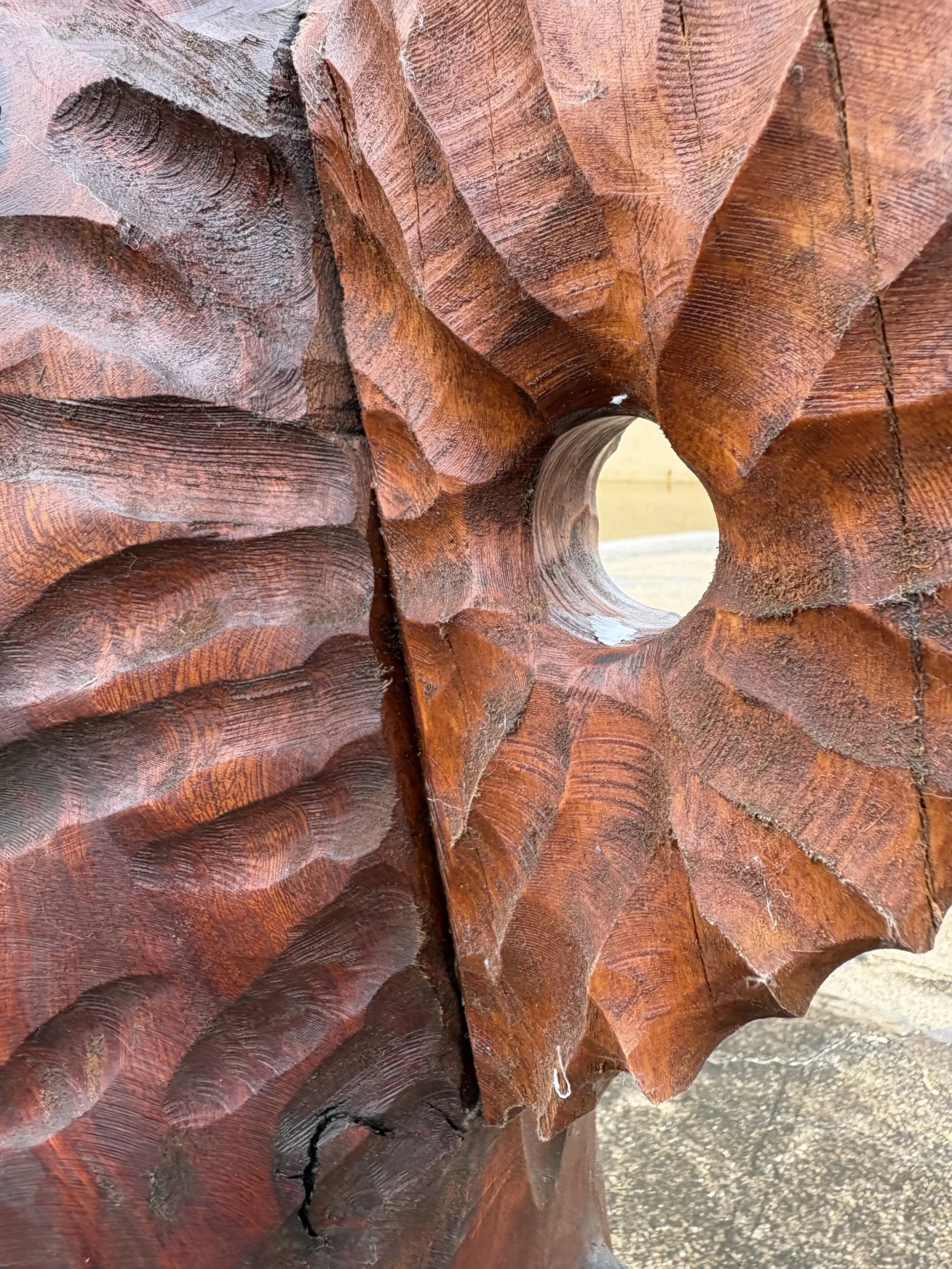
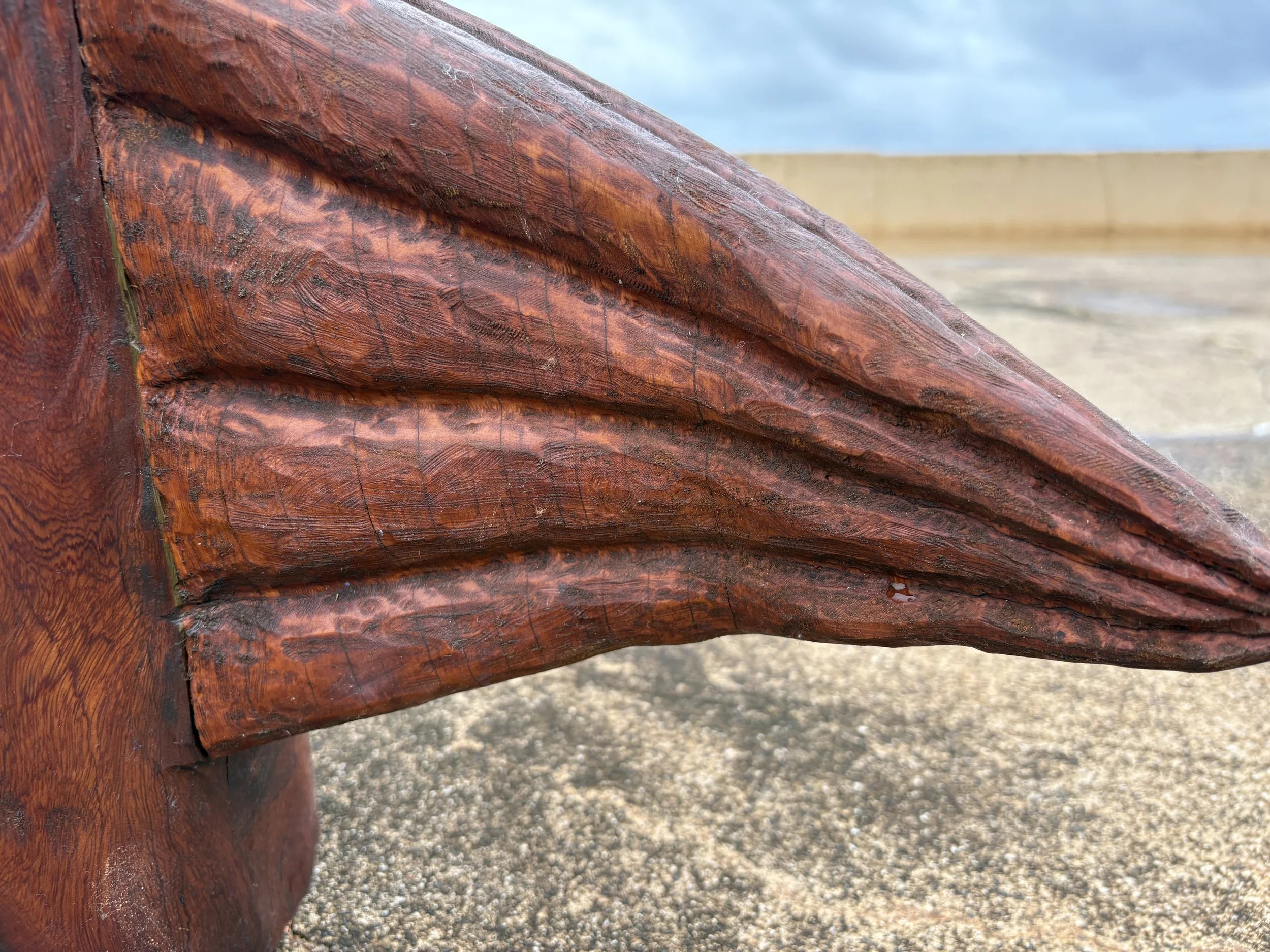
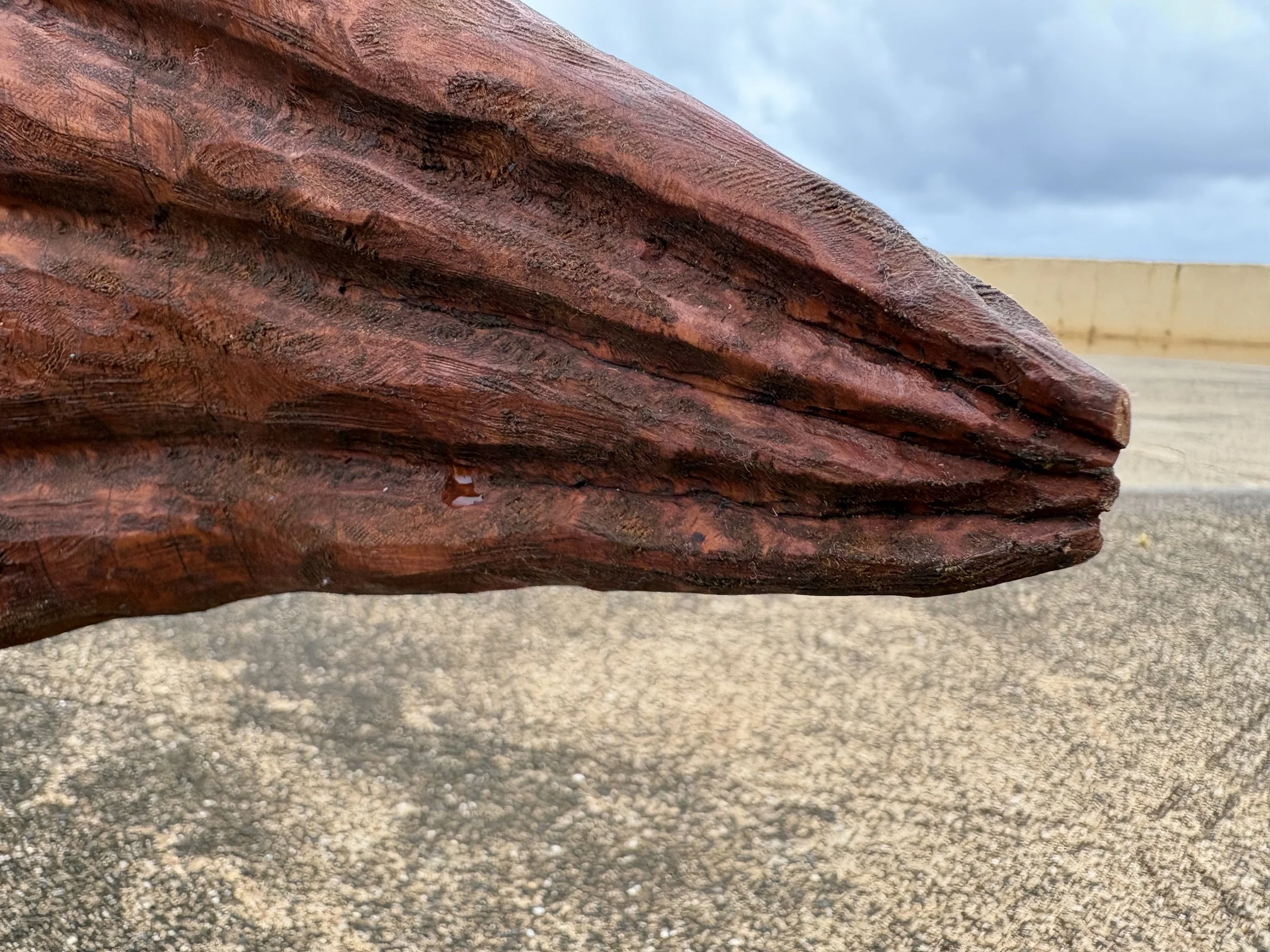
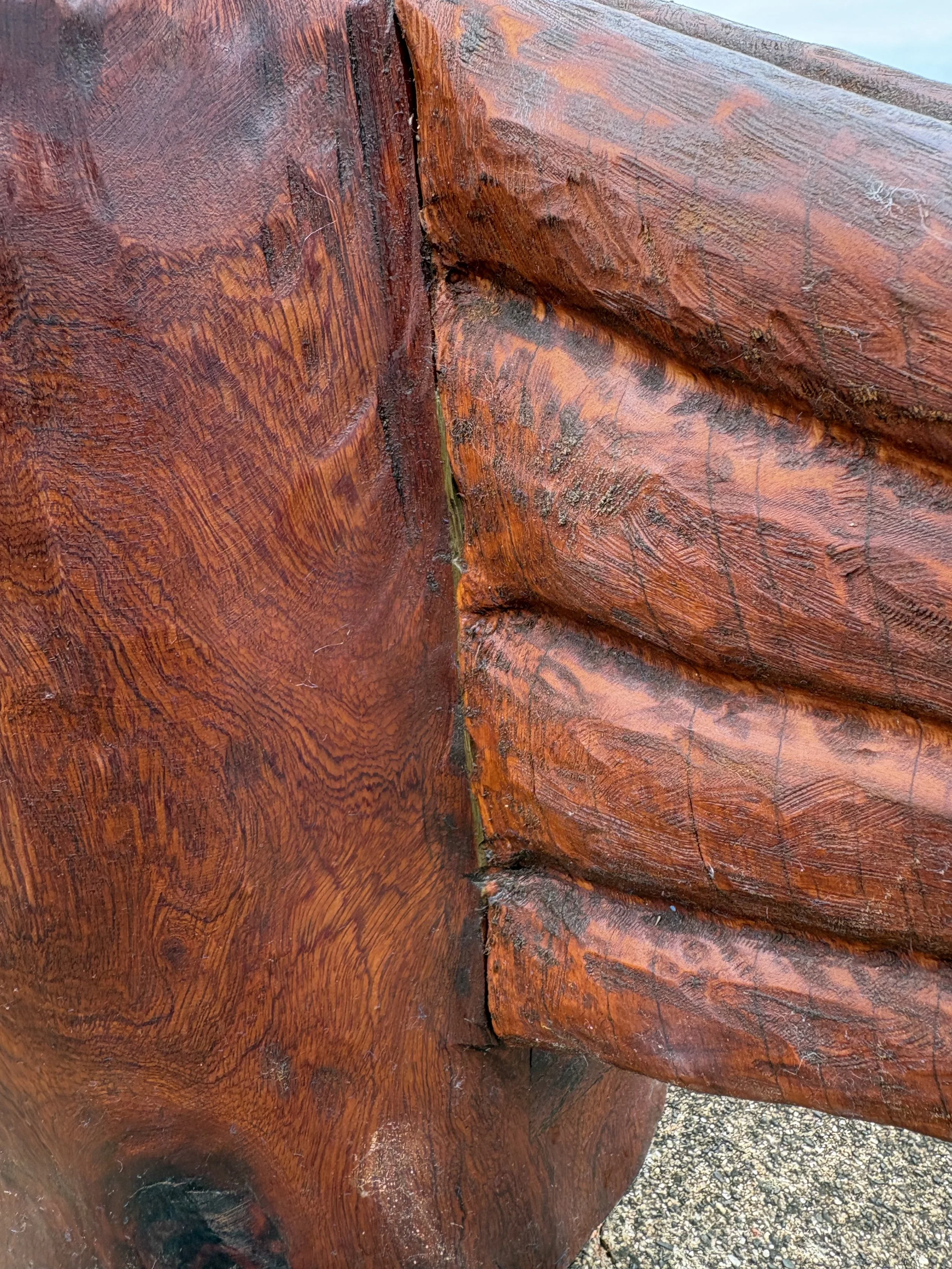
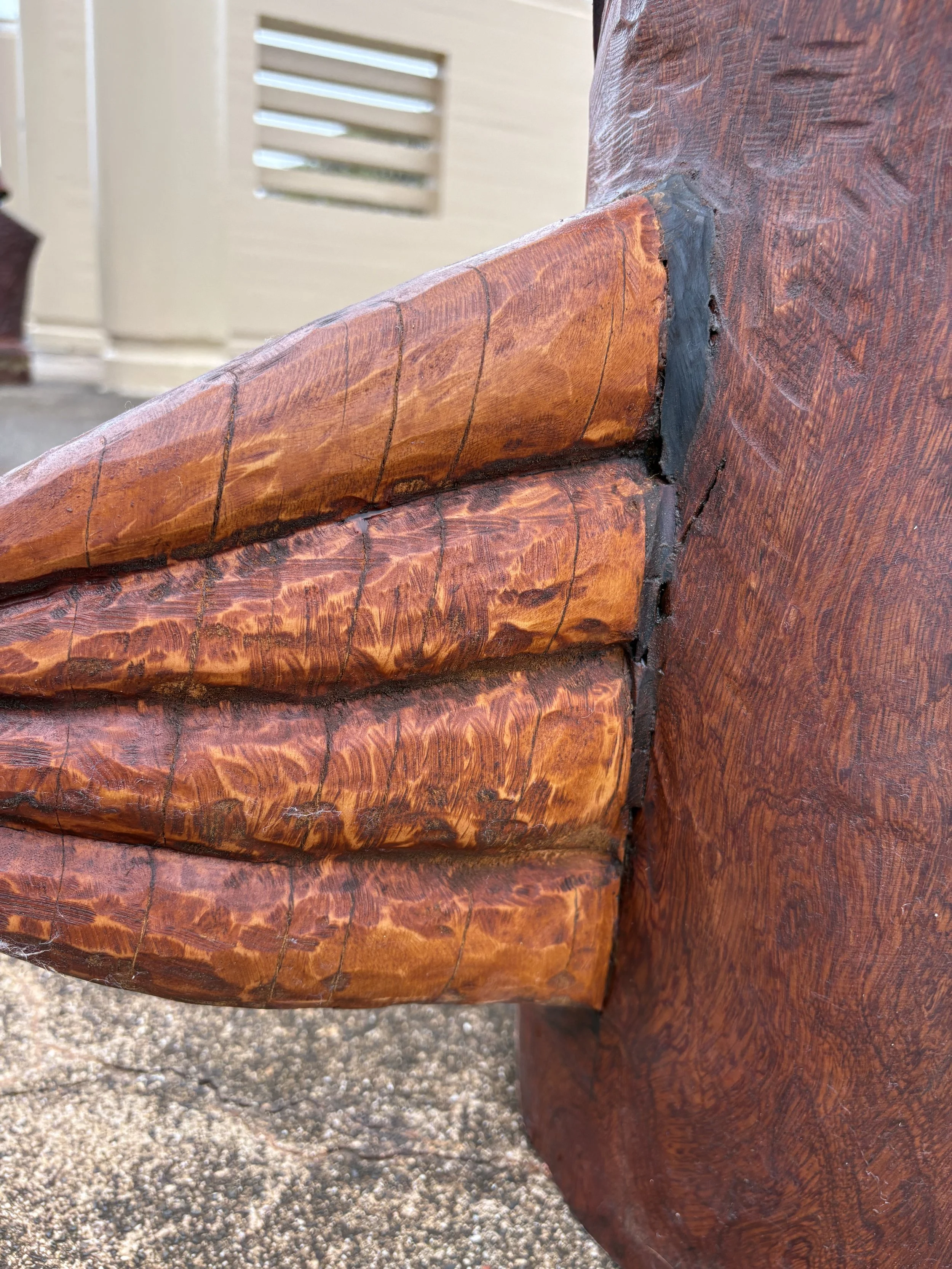
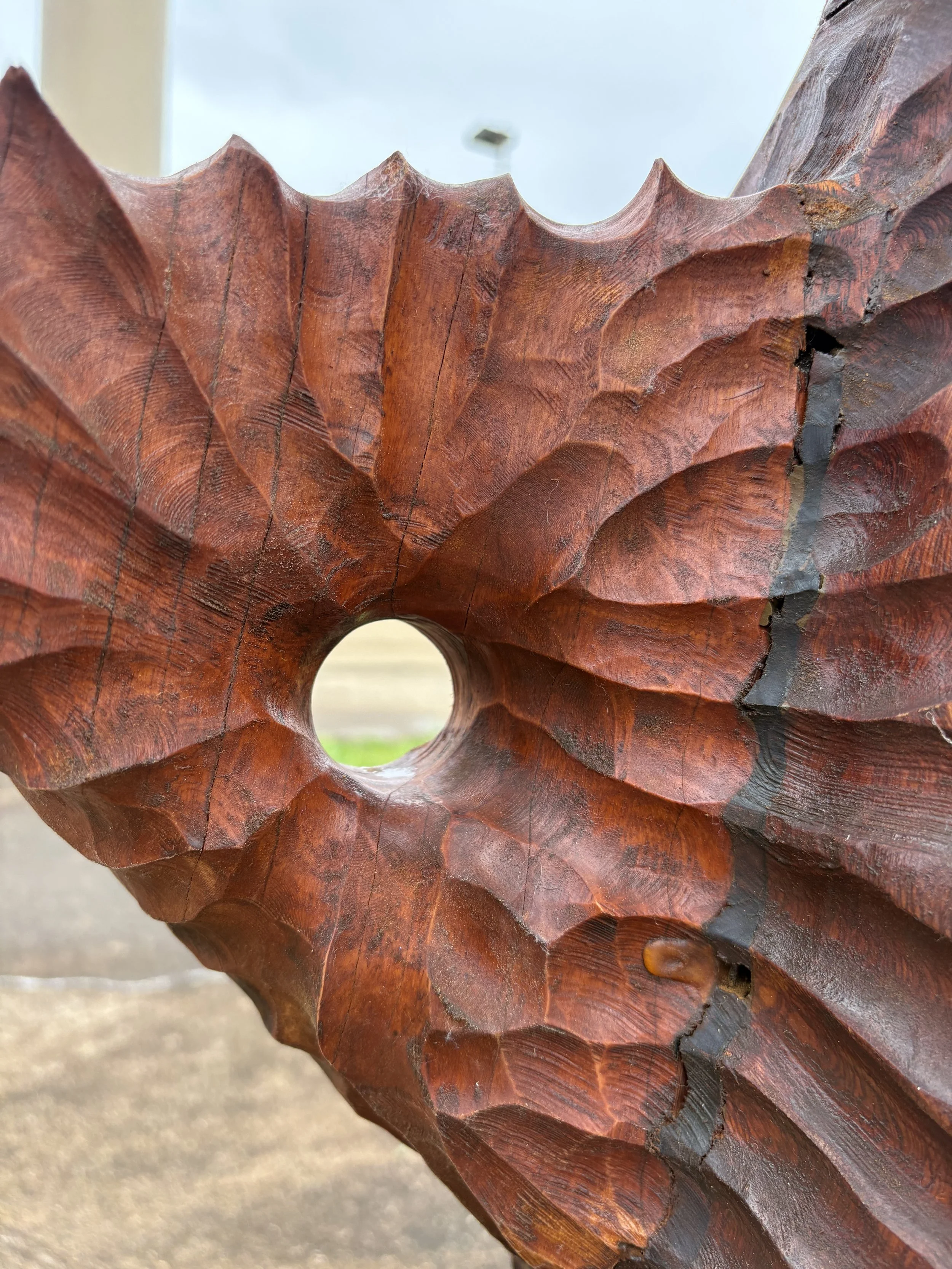
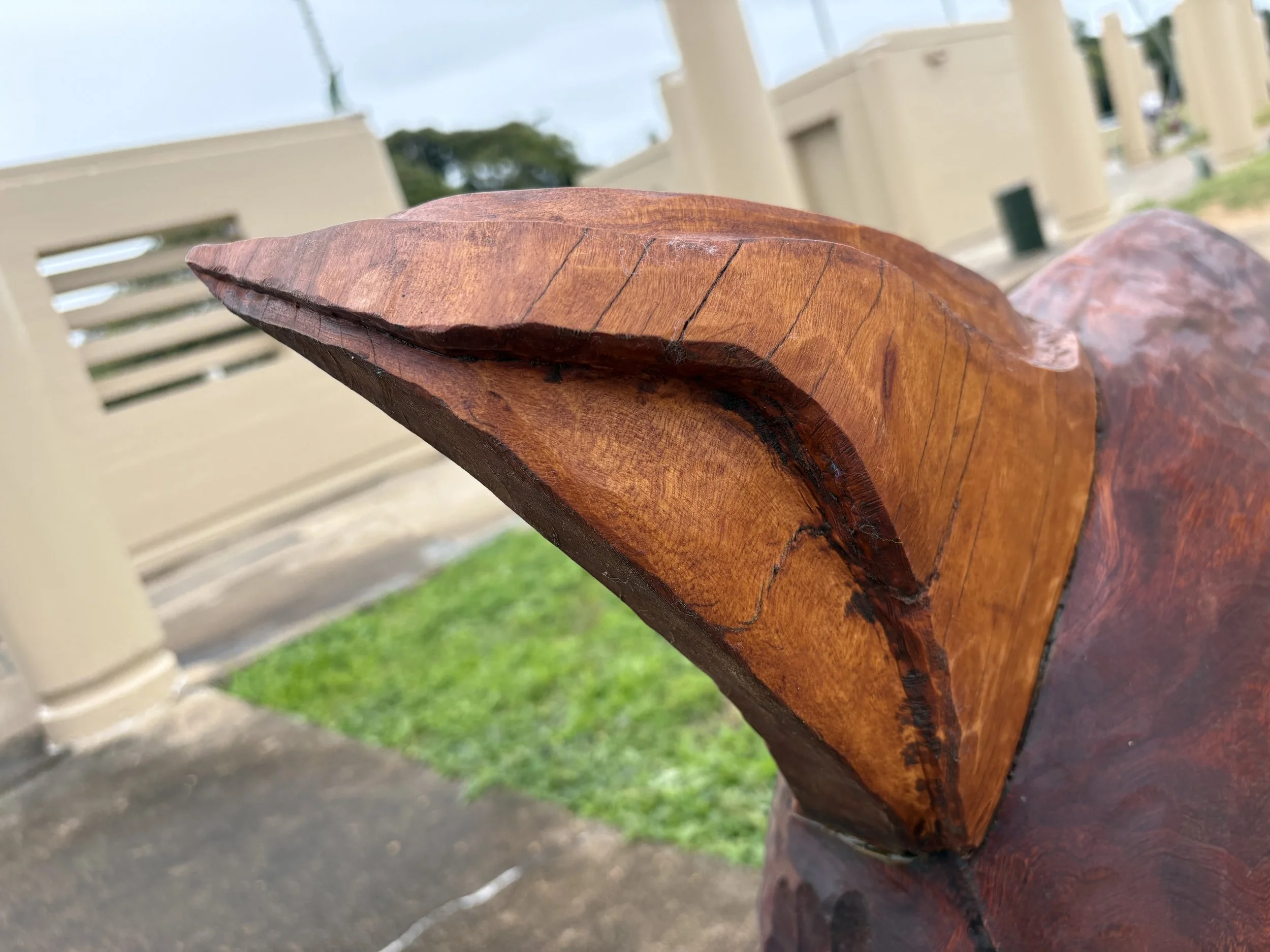
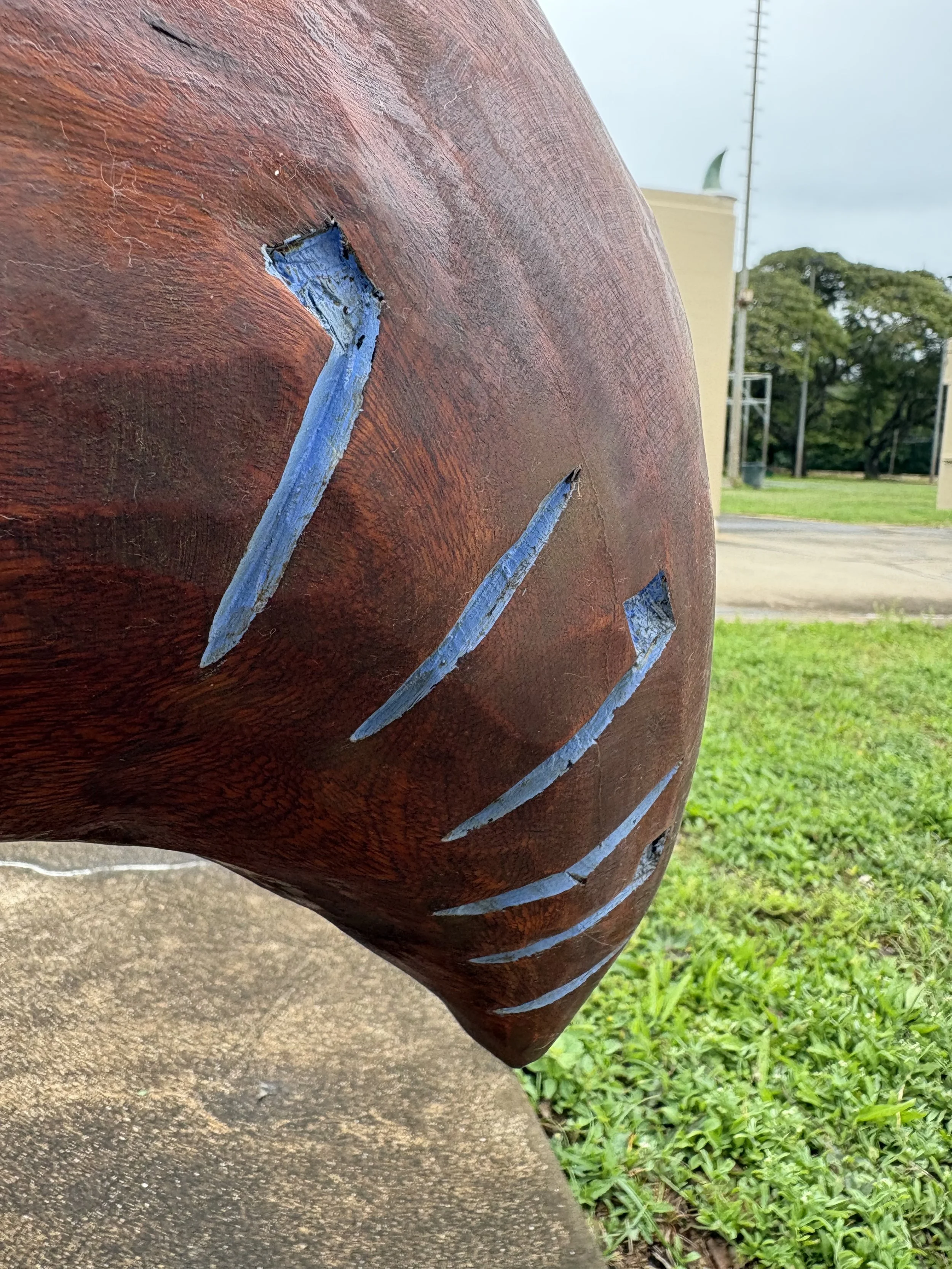
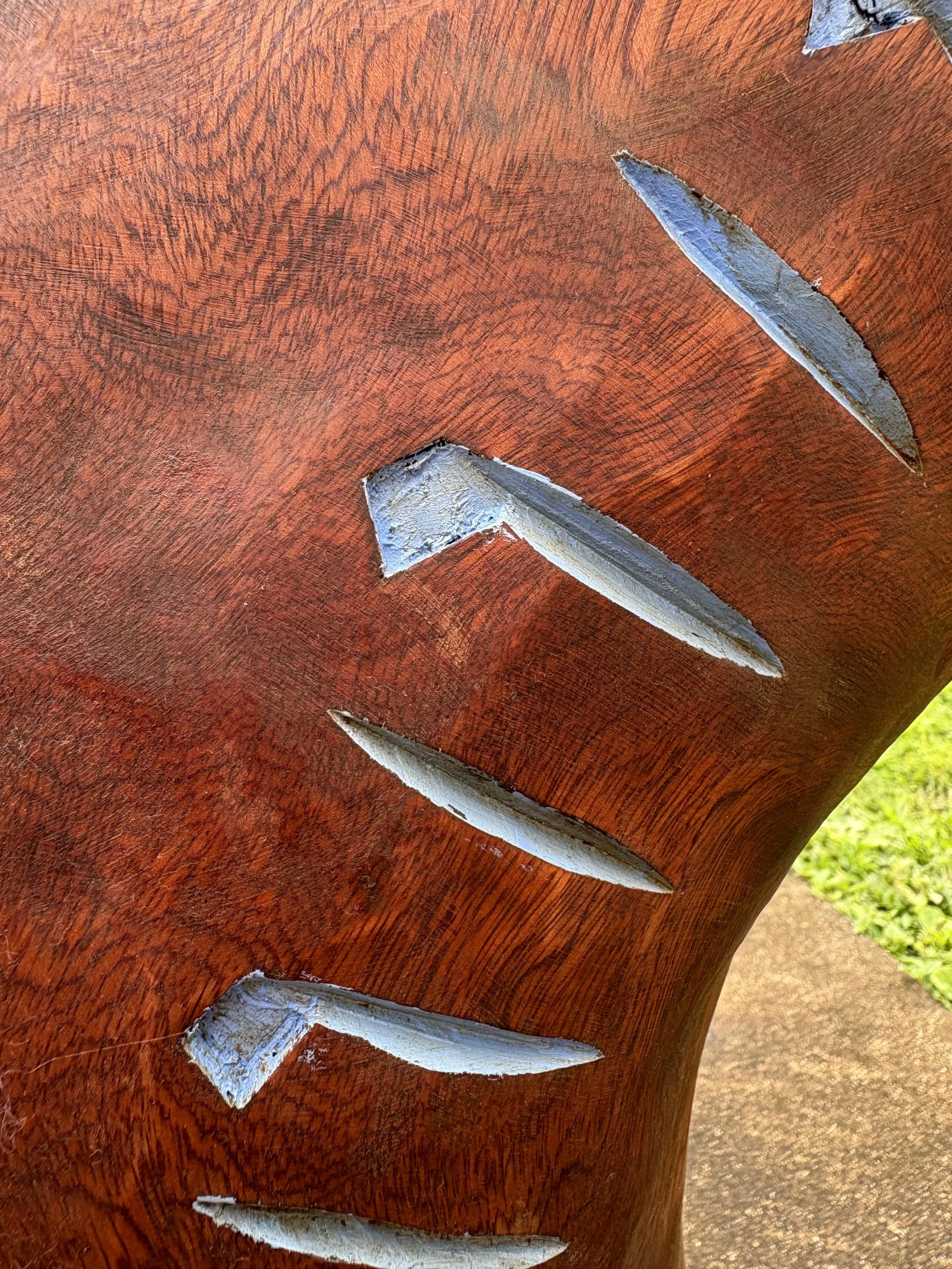
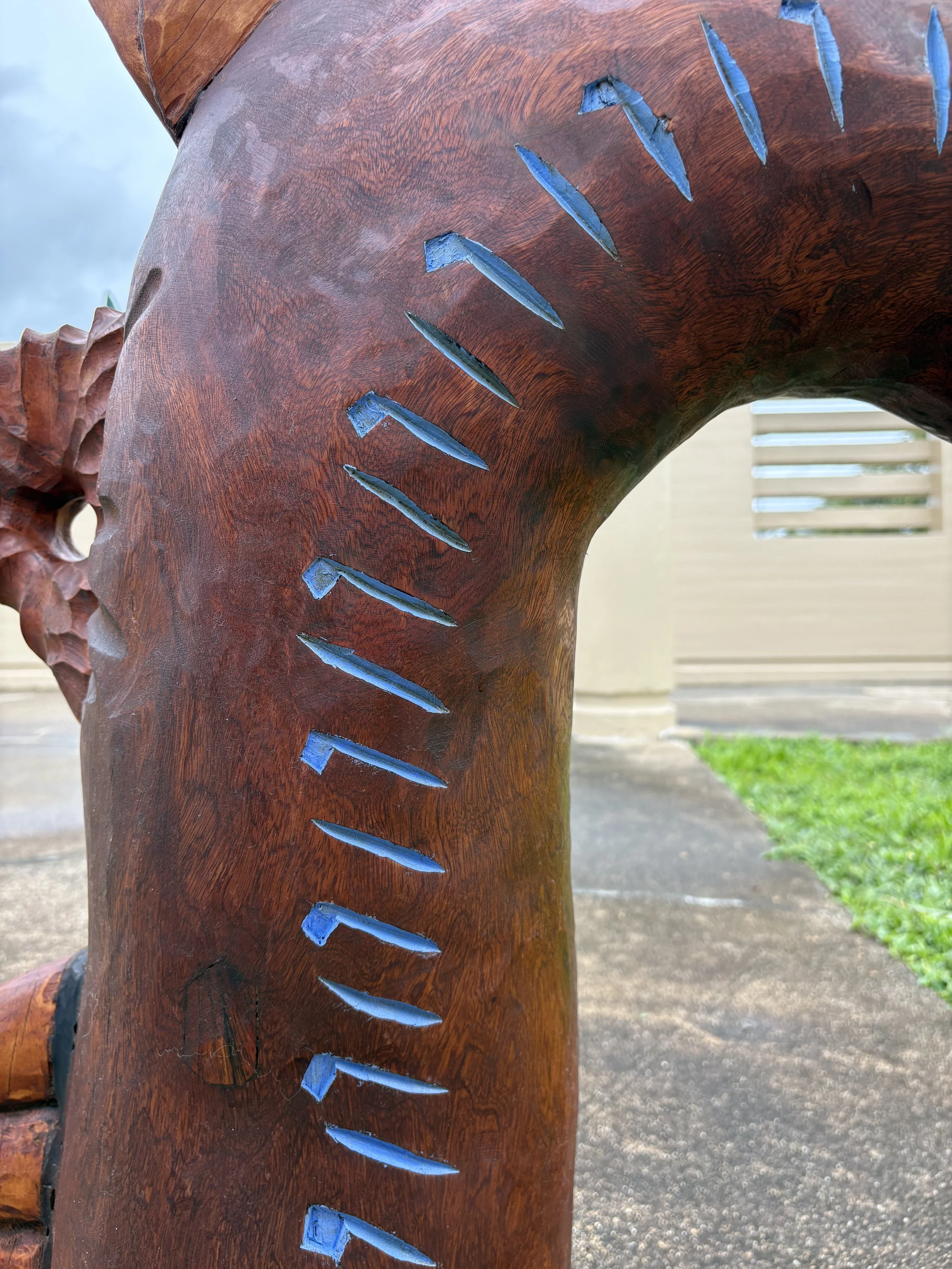
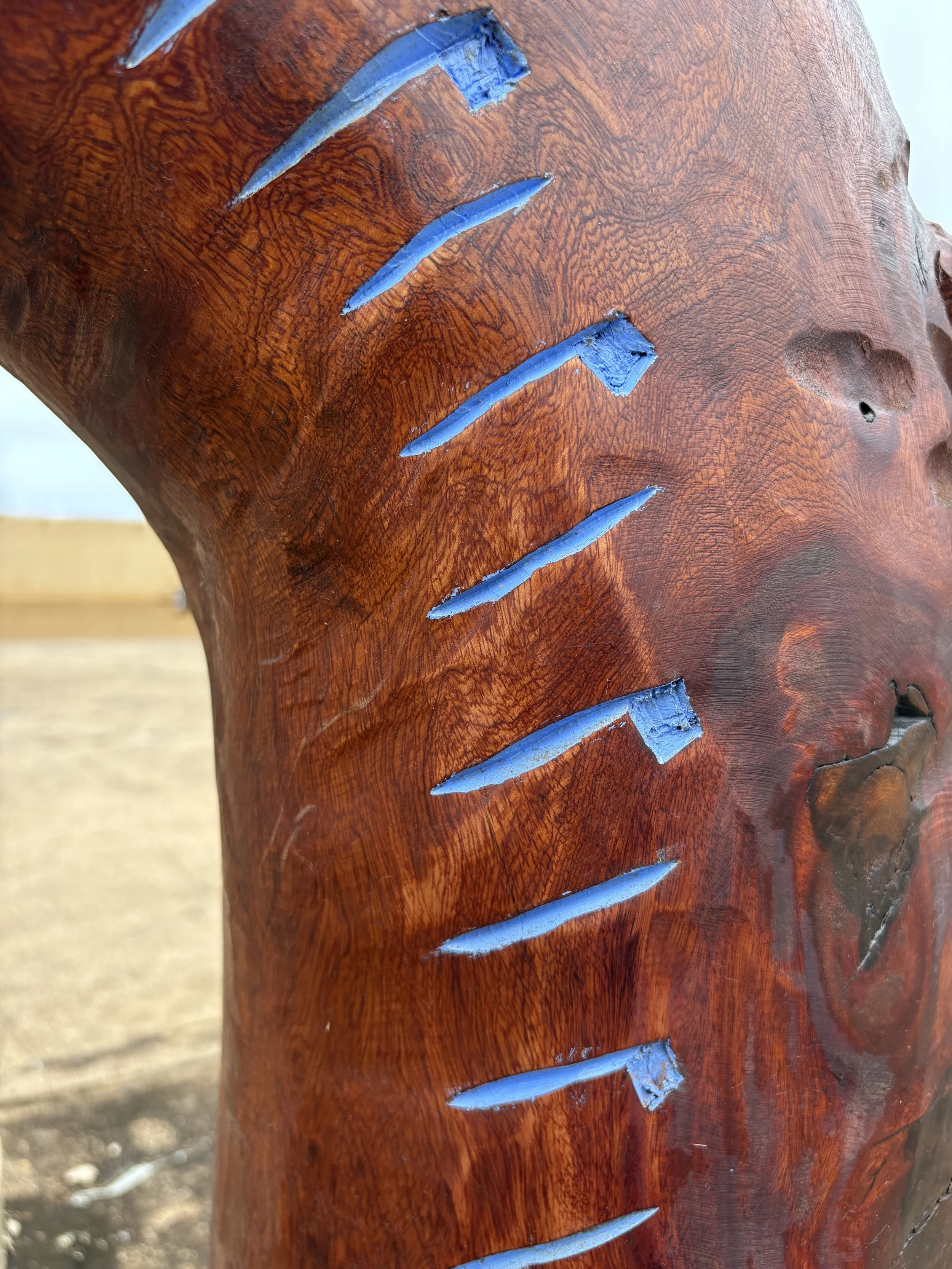
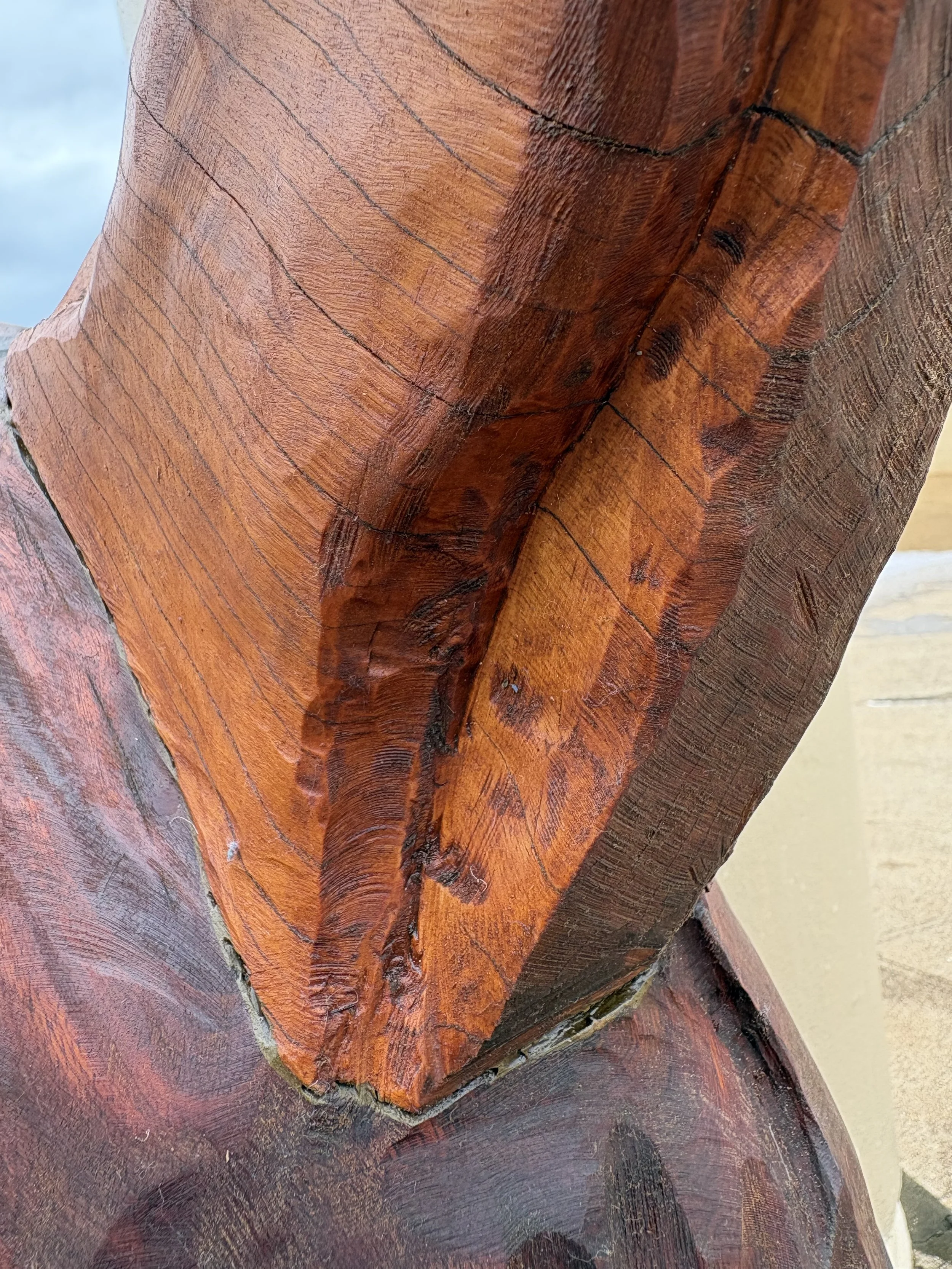
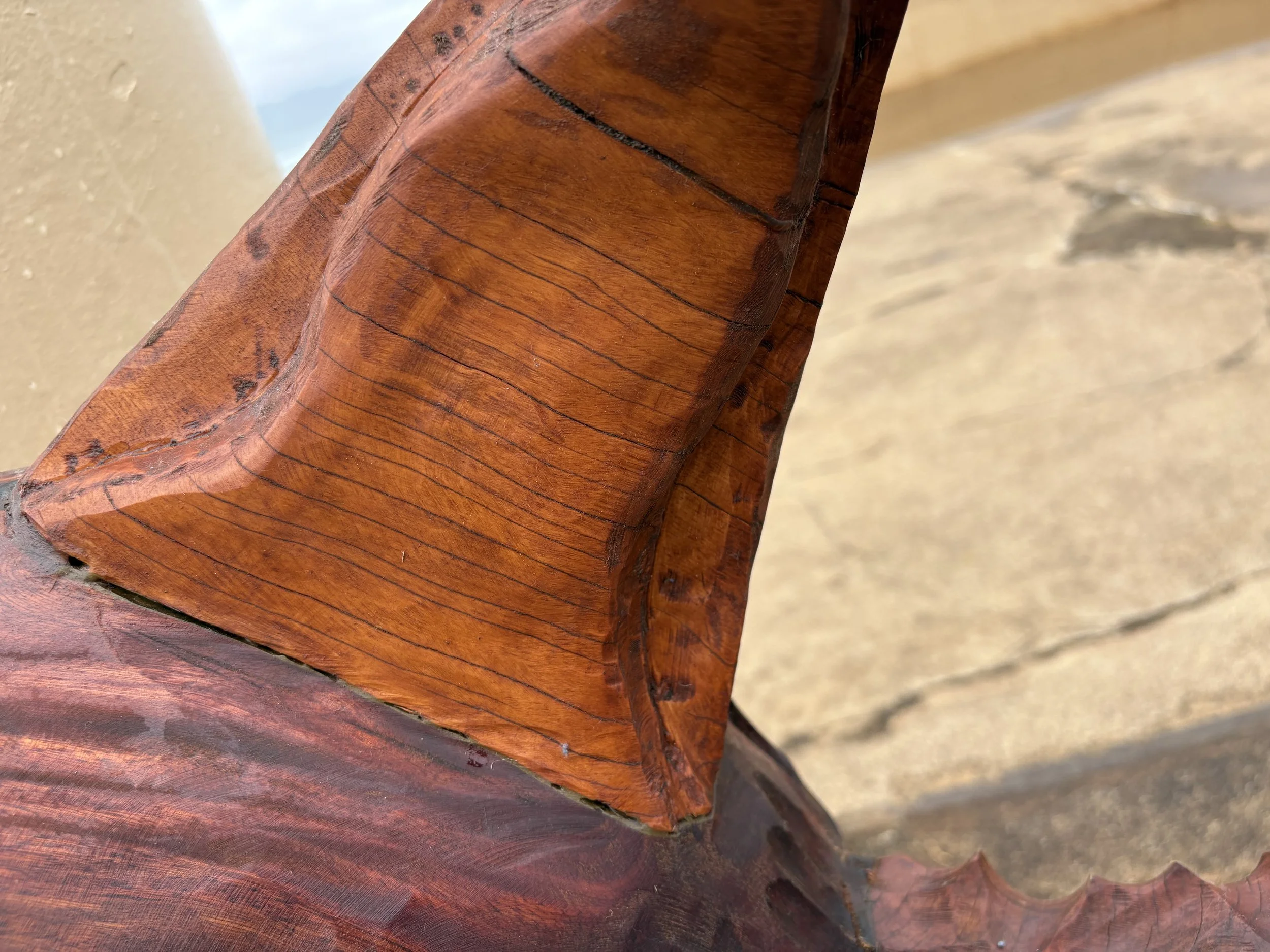
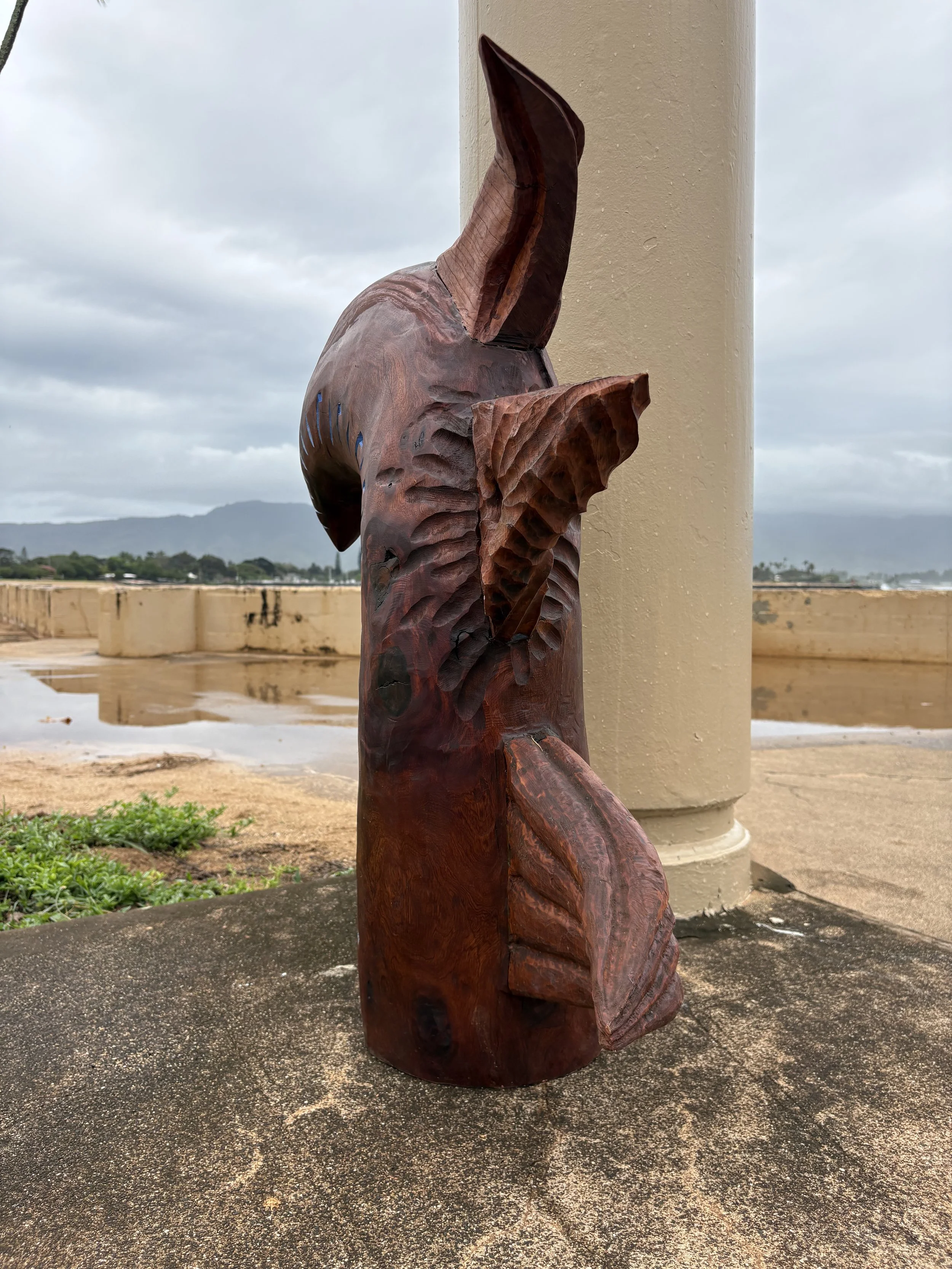
Those attune to service in time space
Kamani, Ironwood
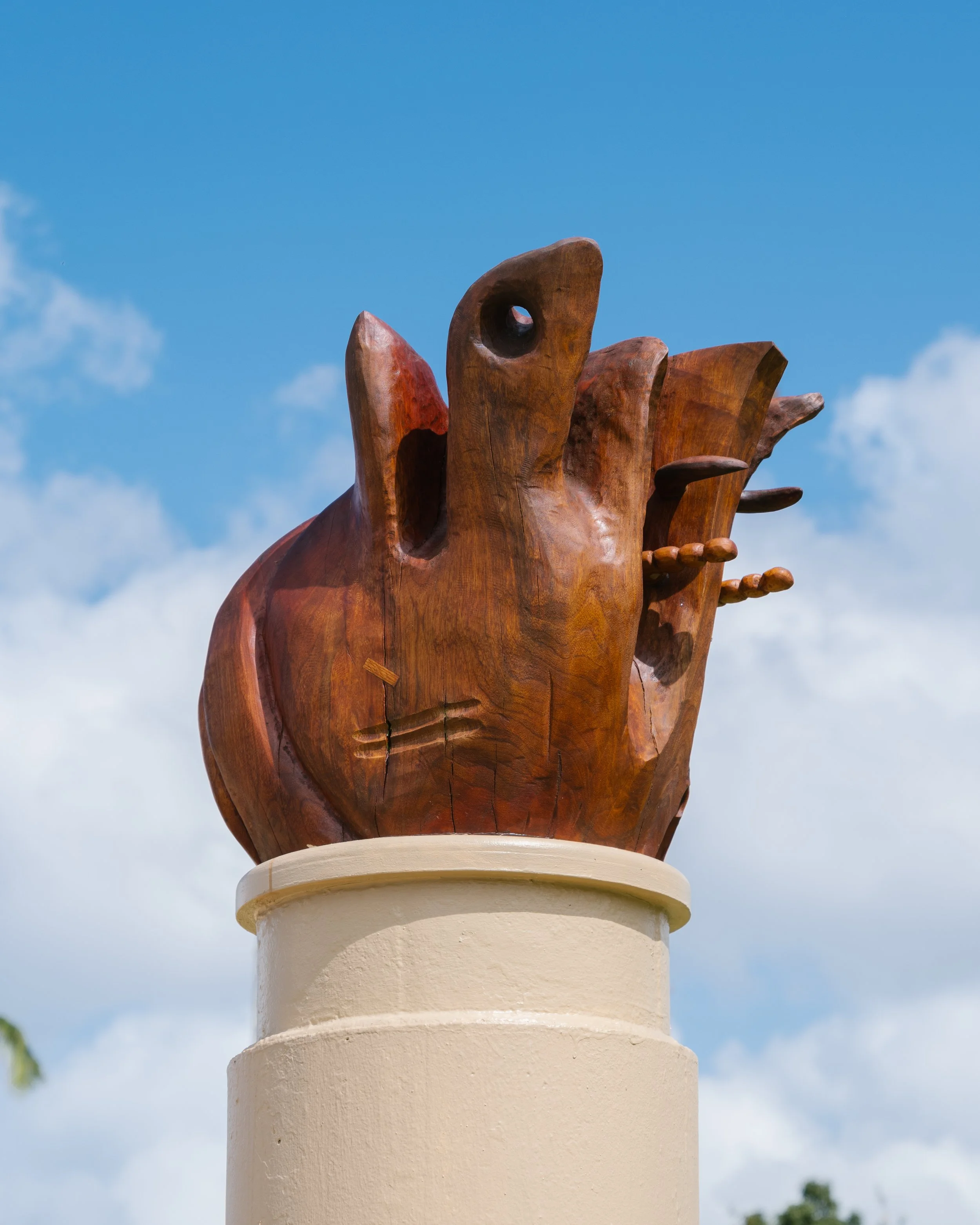
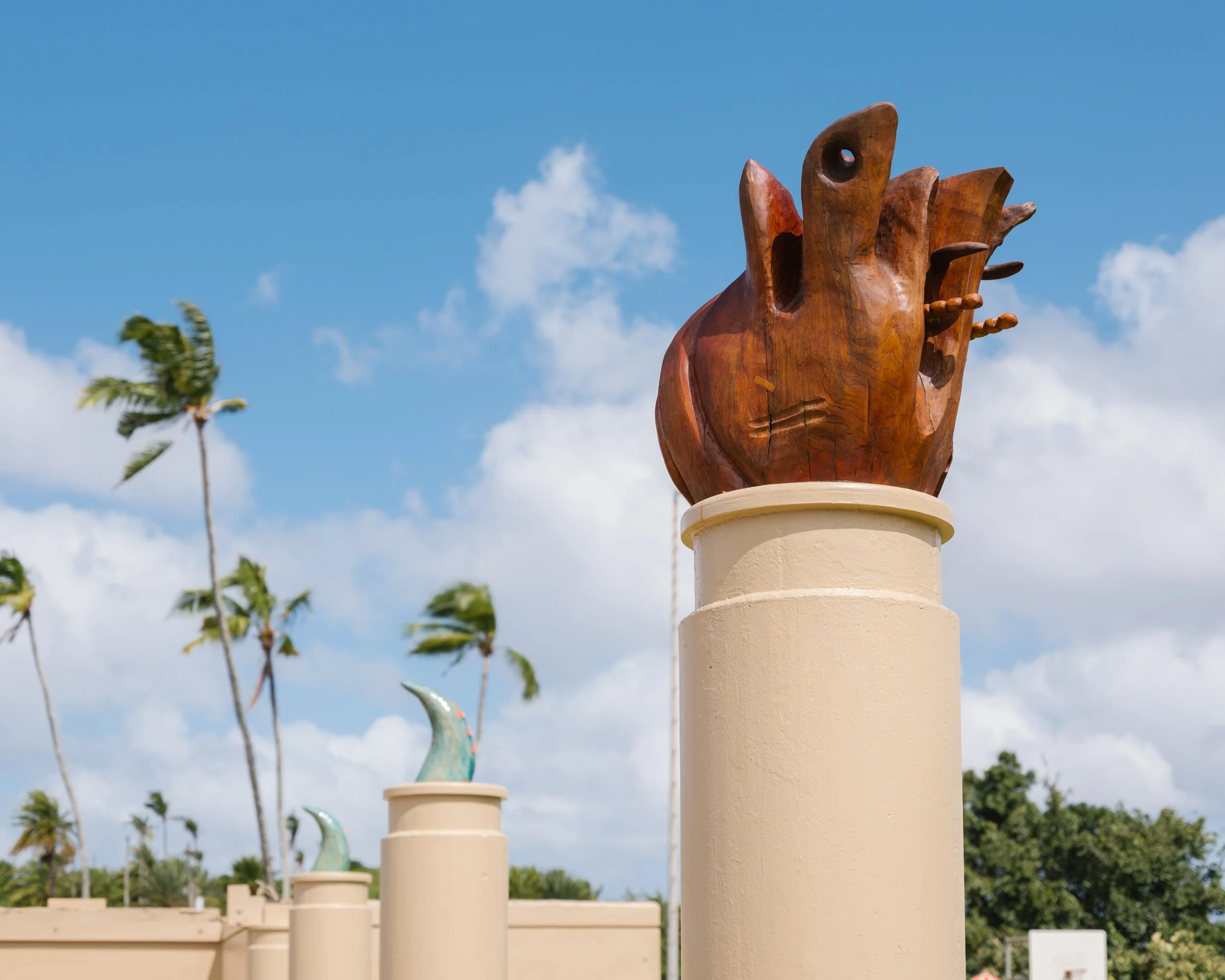
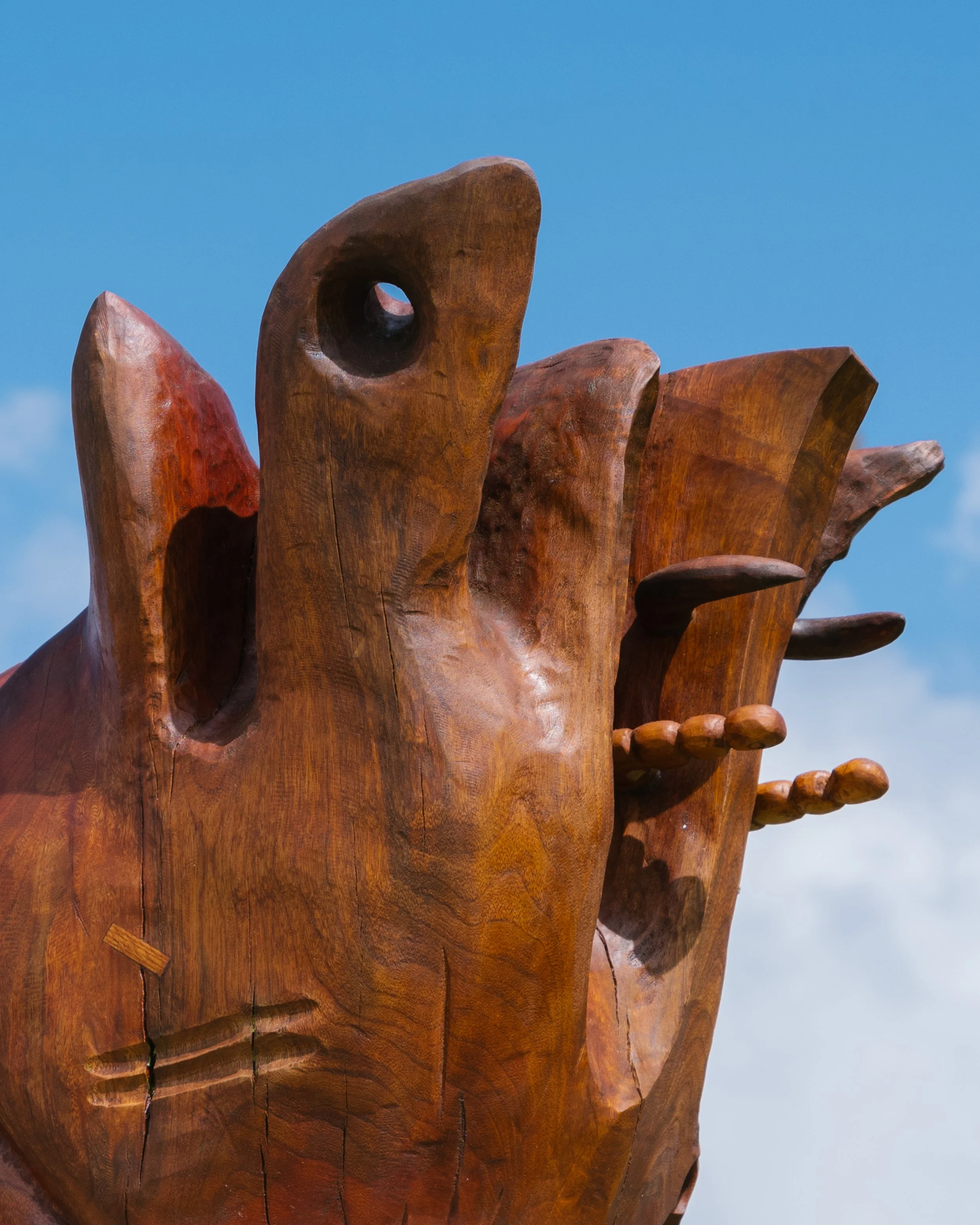
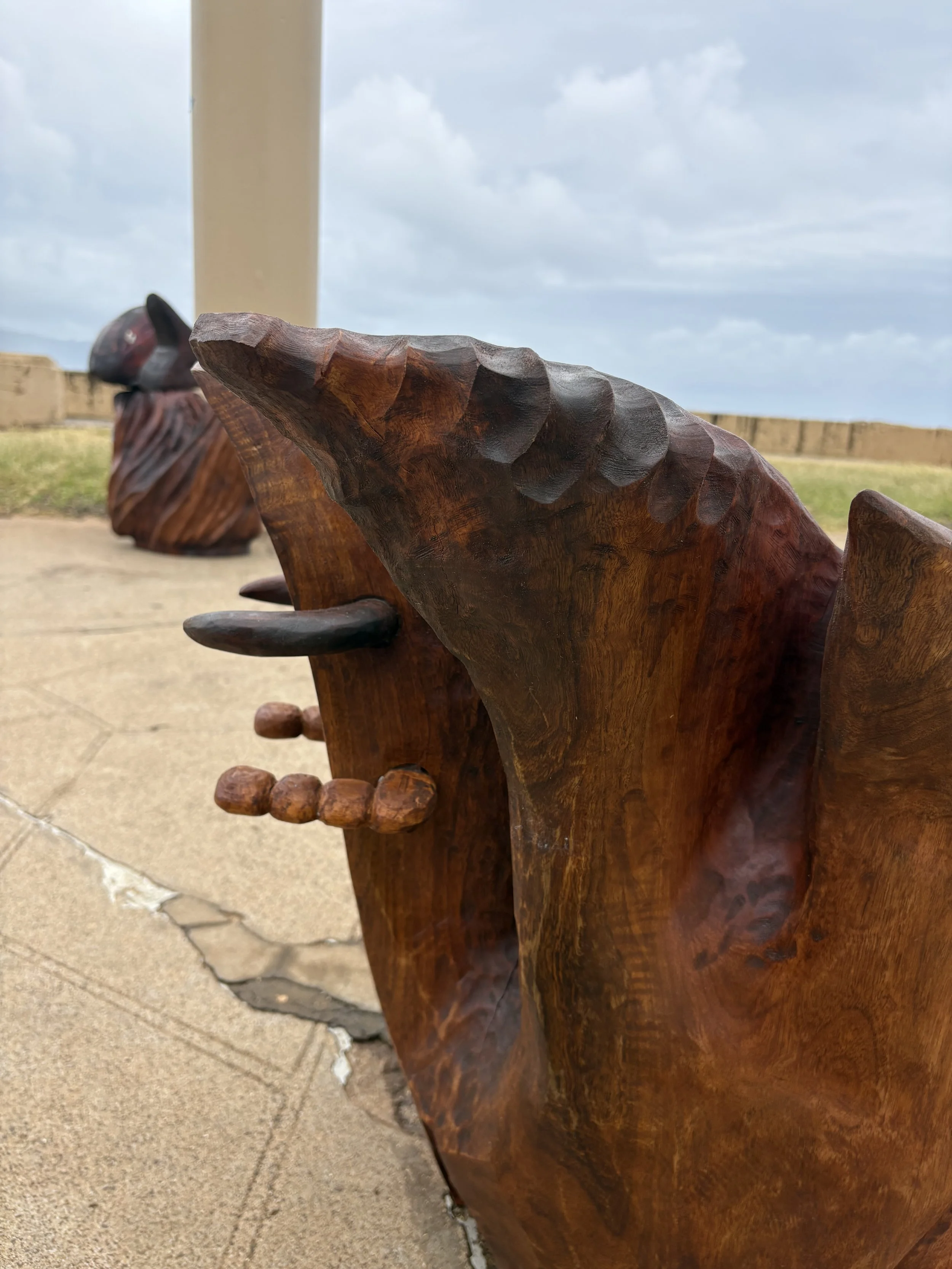
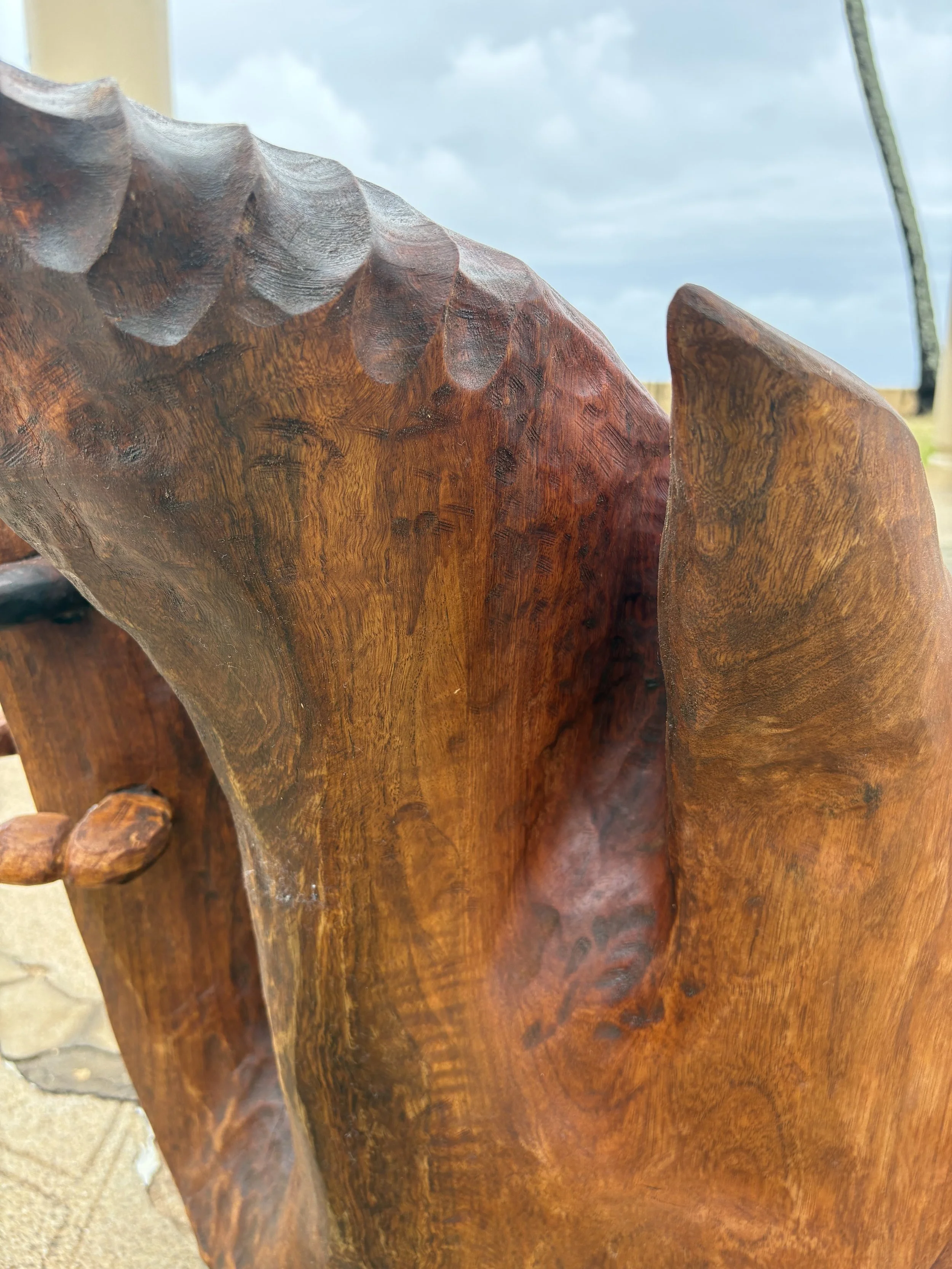
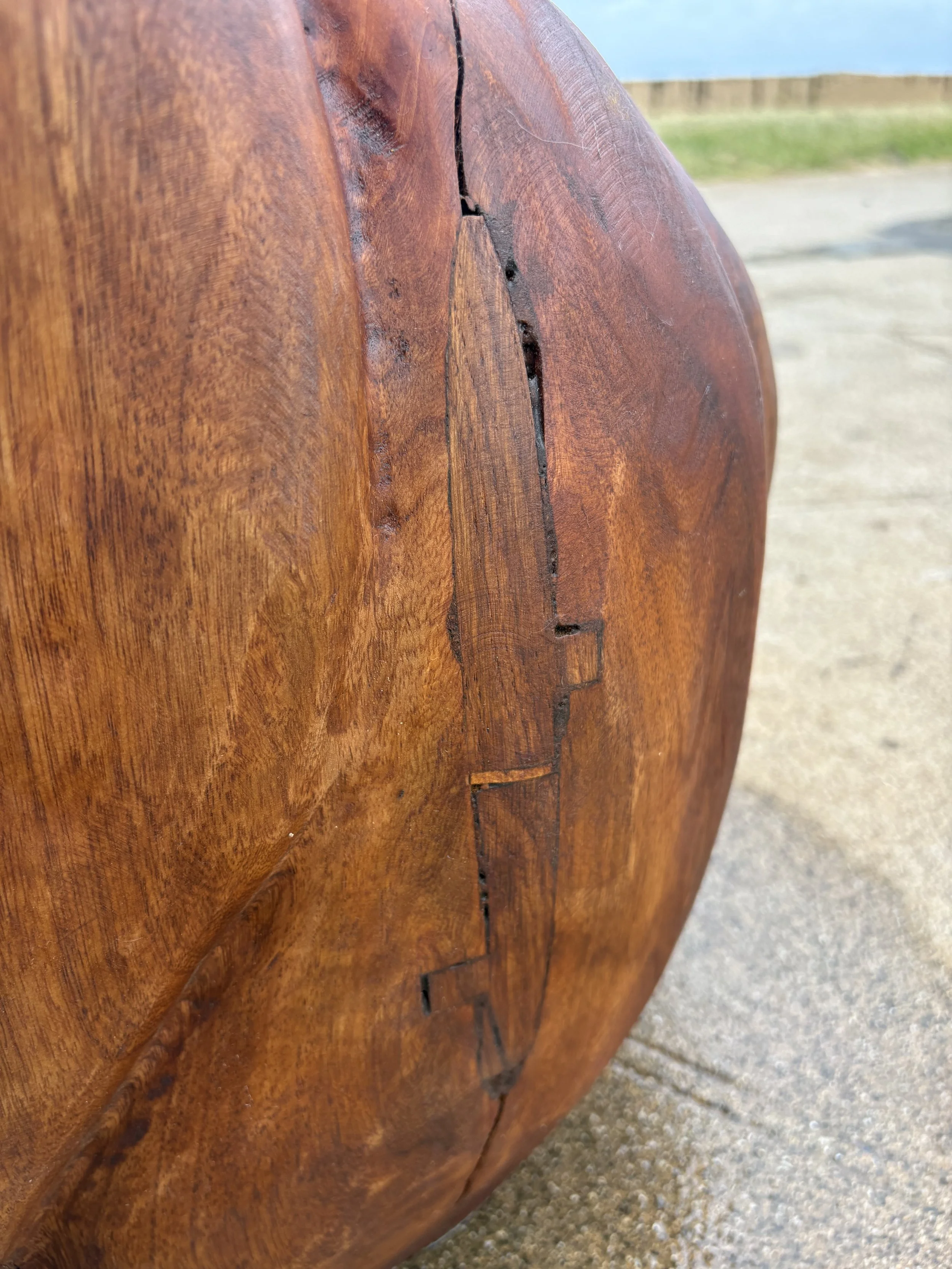
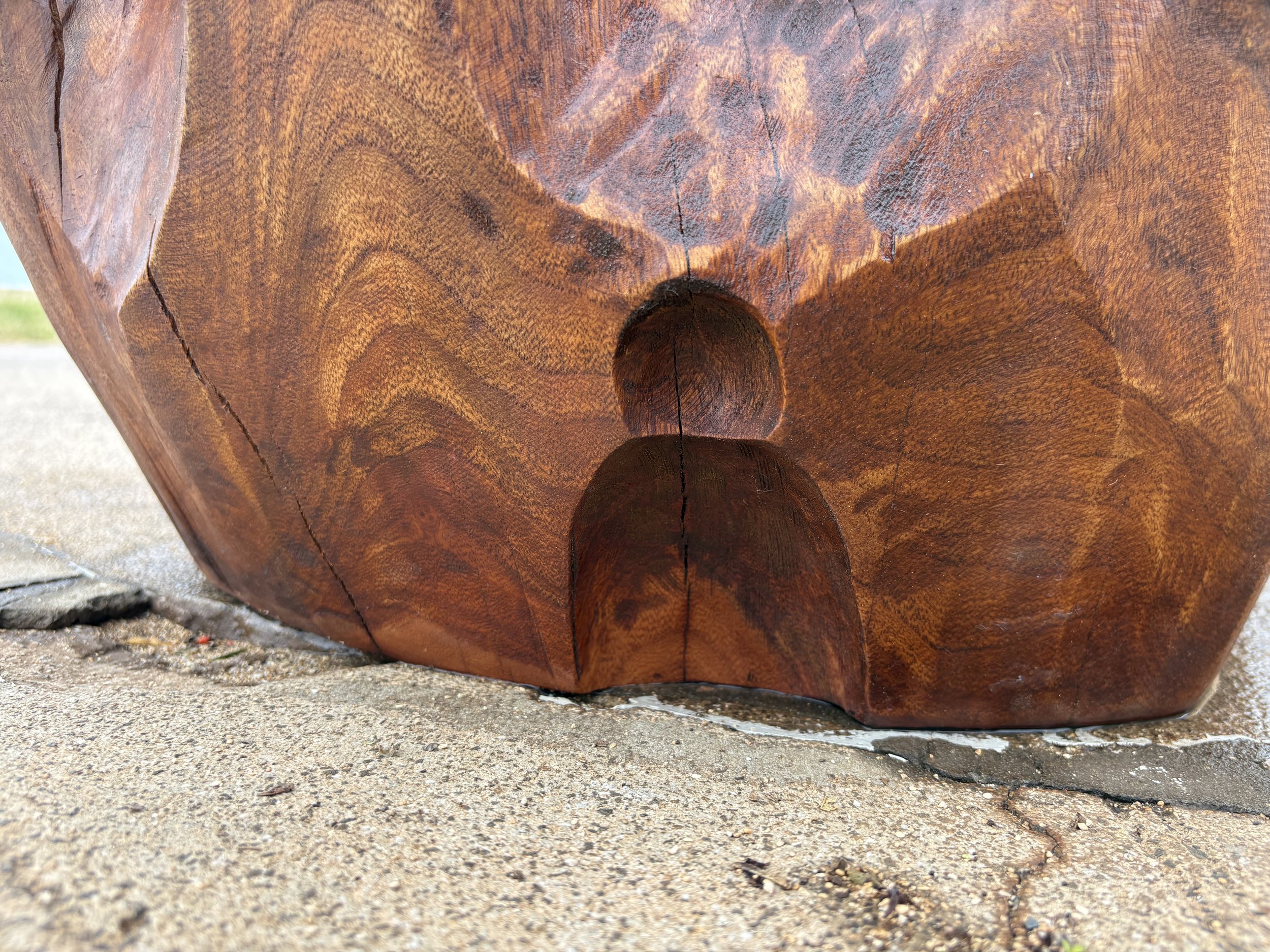
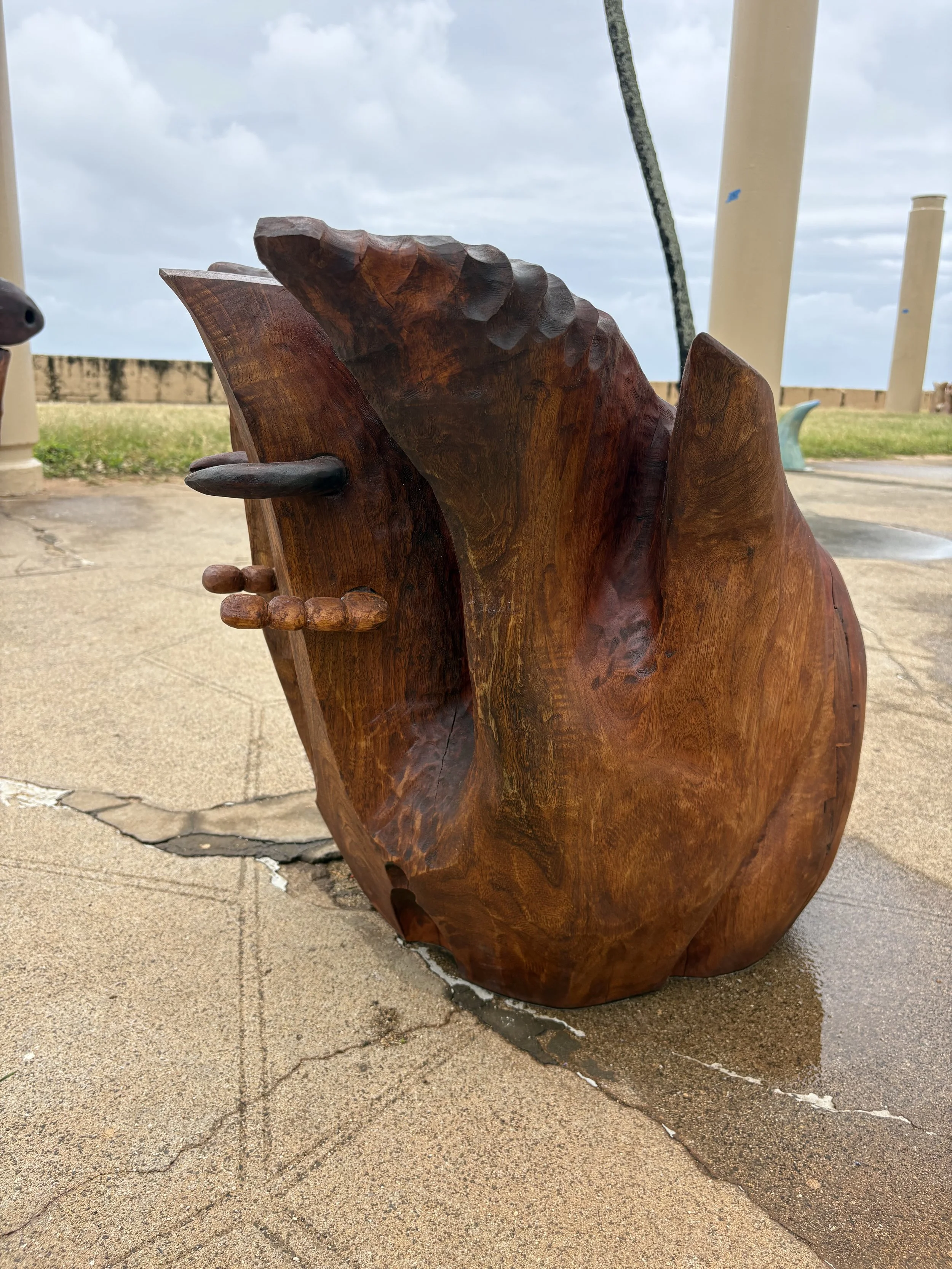
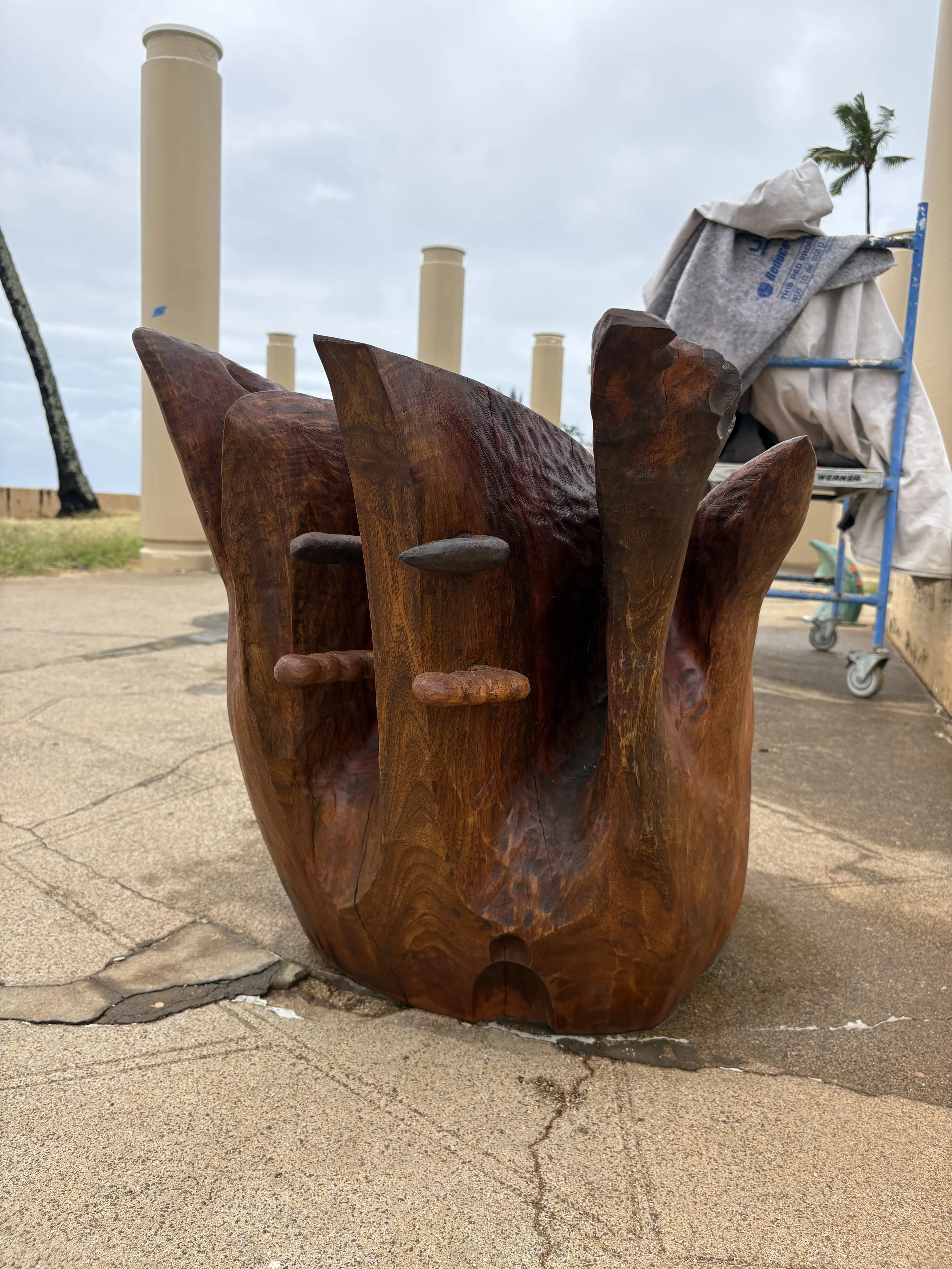
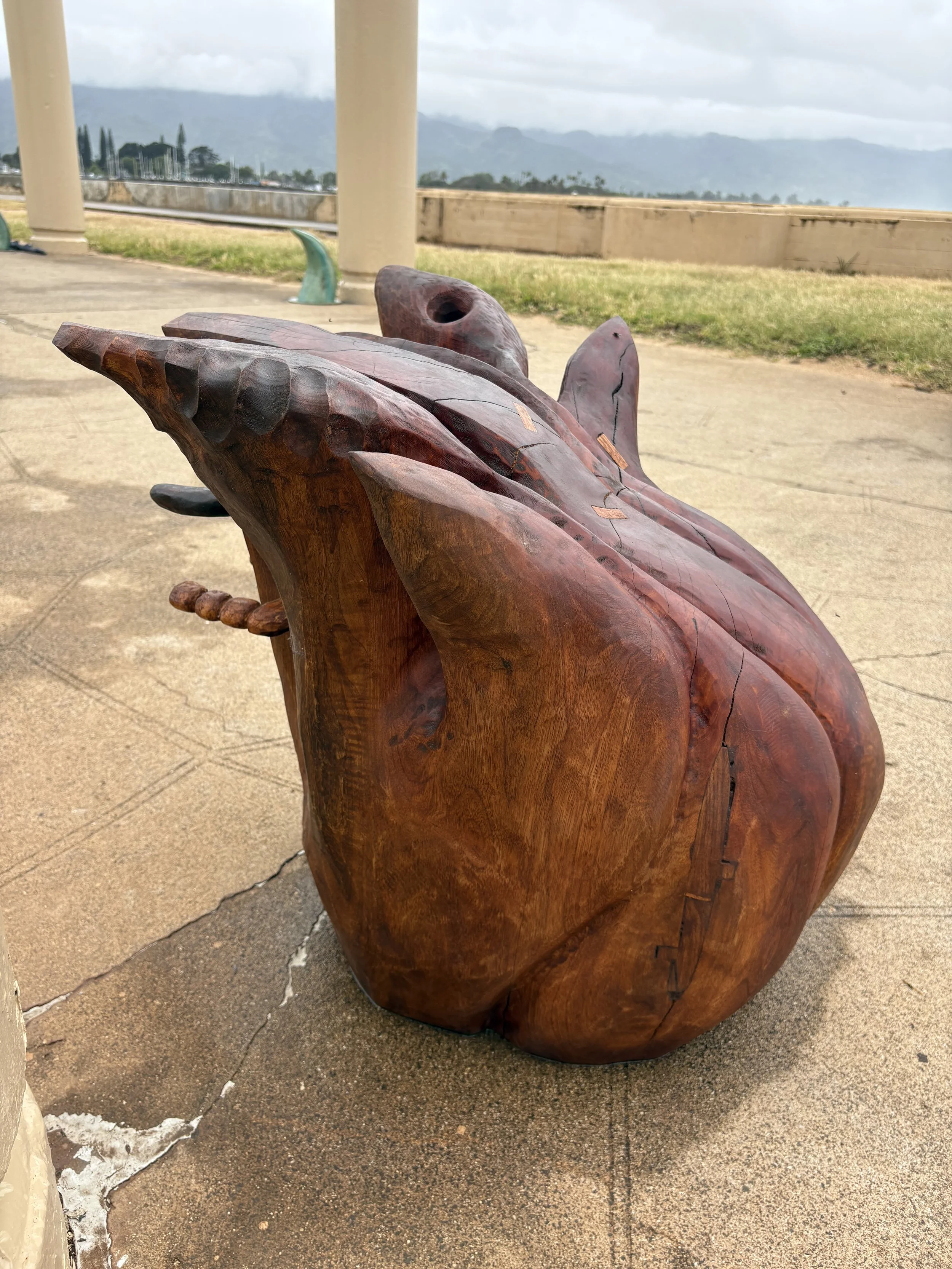
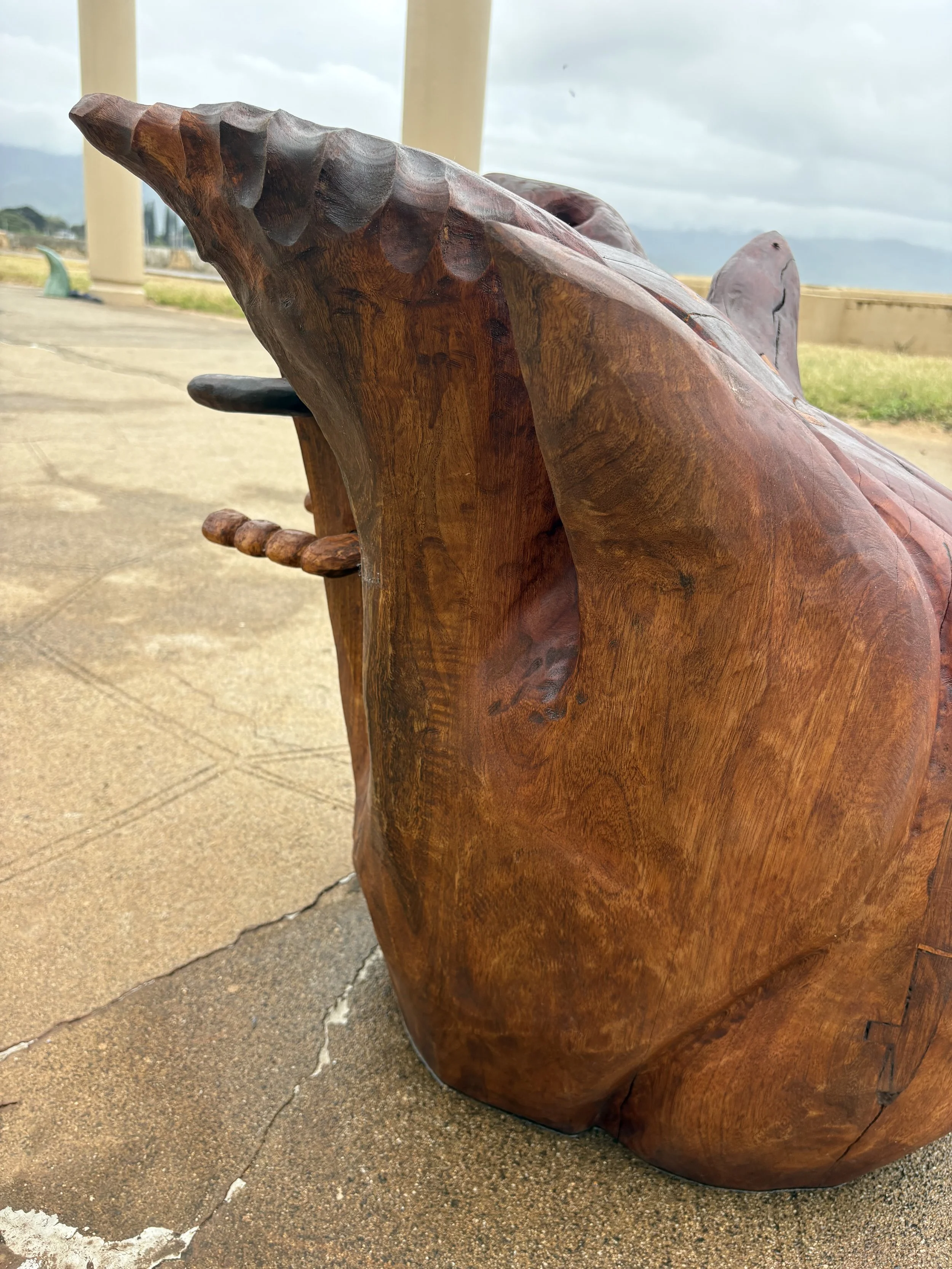
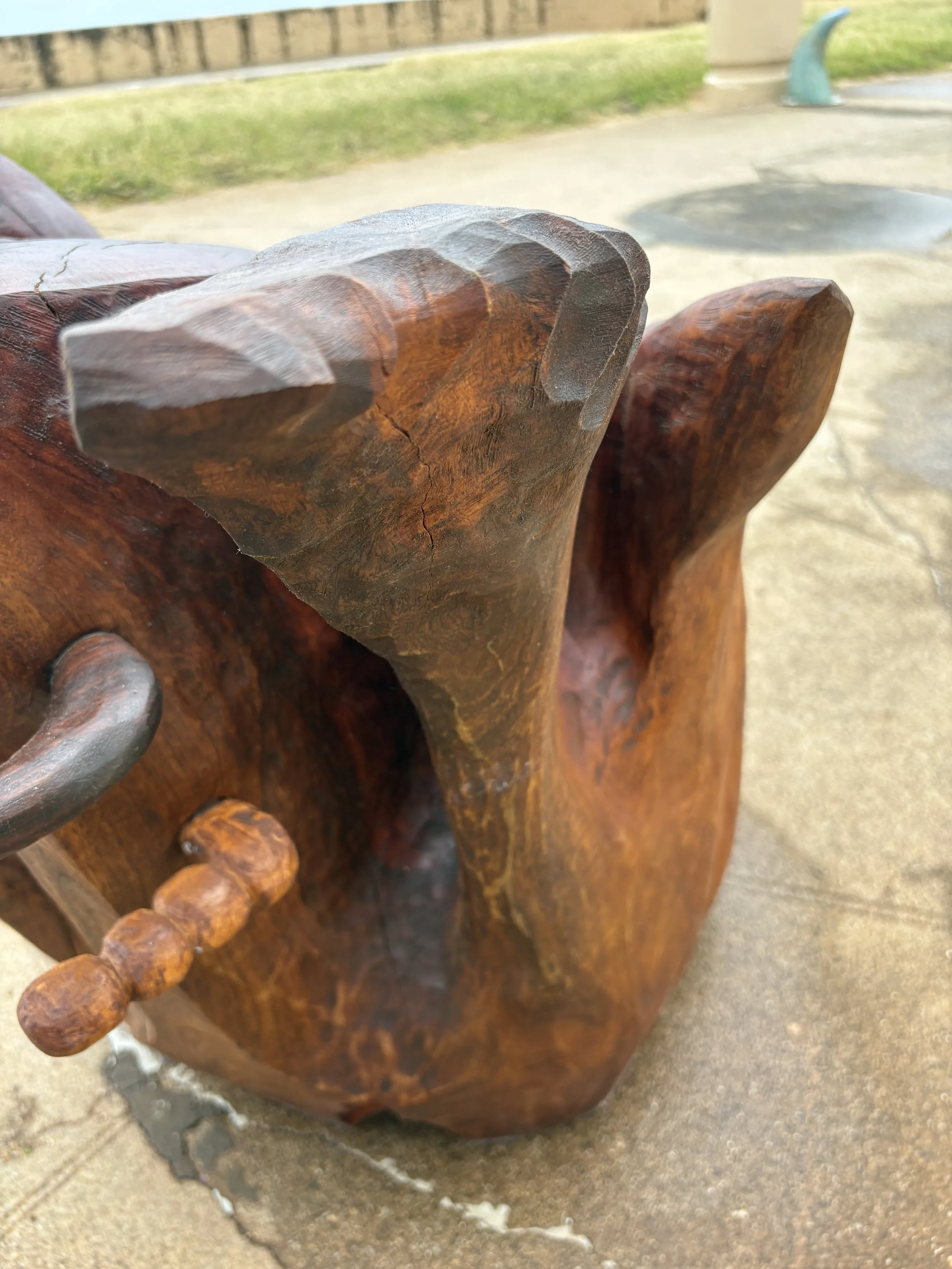
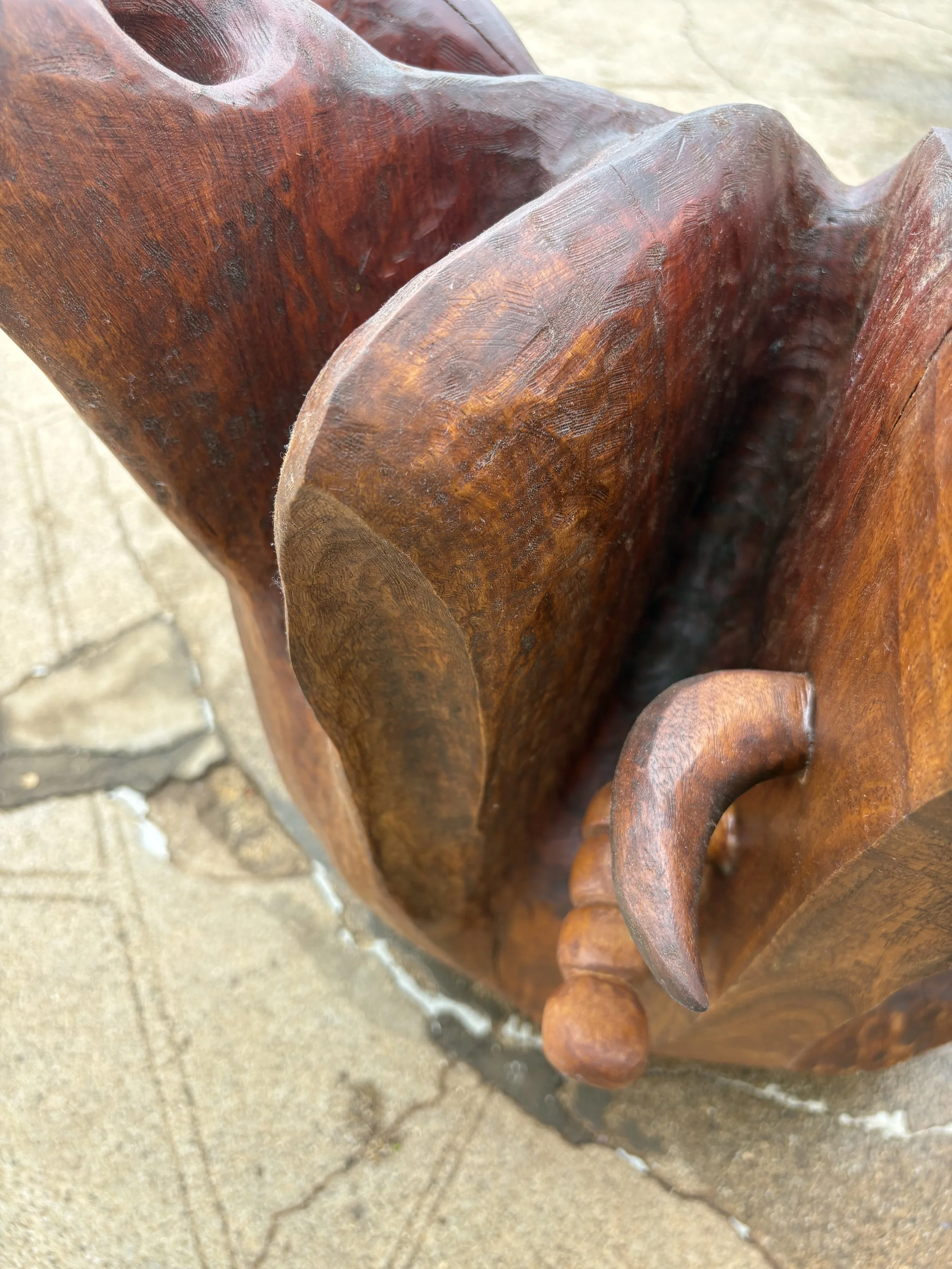
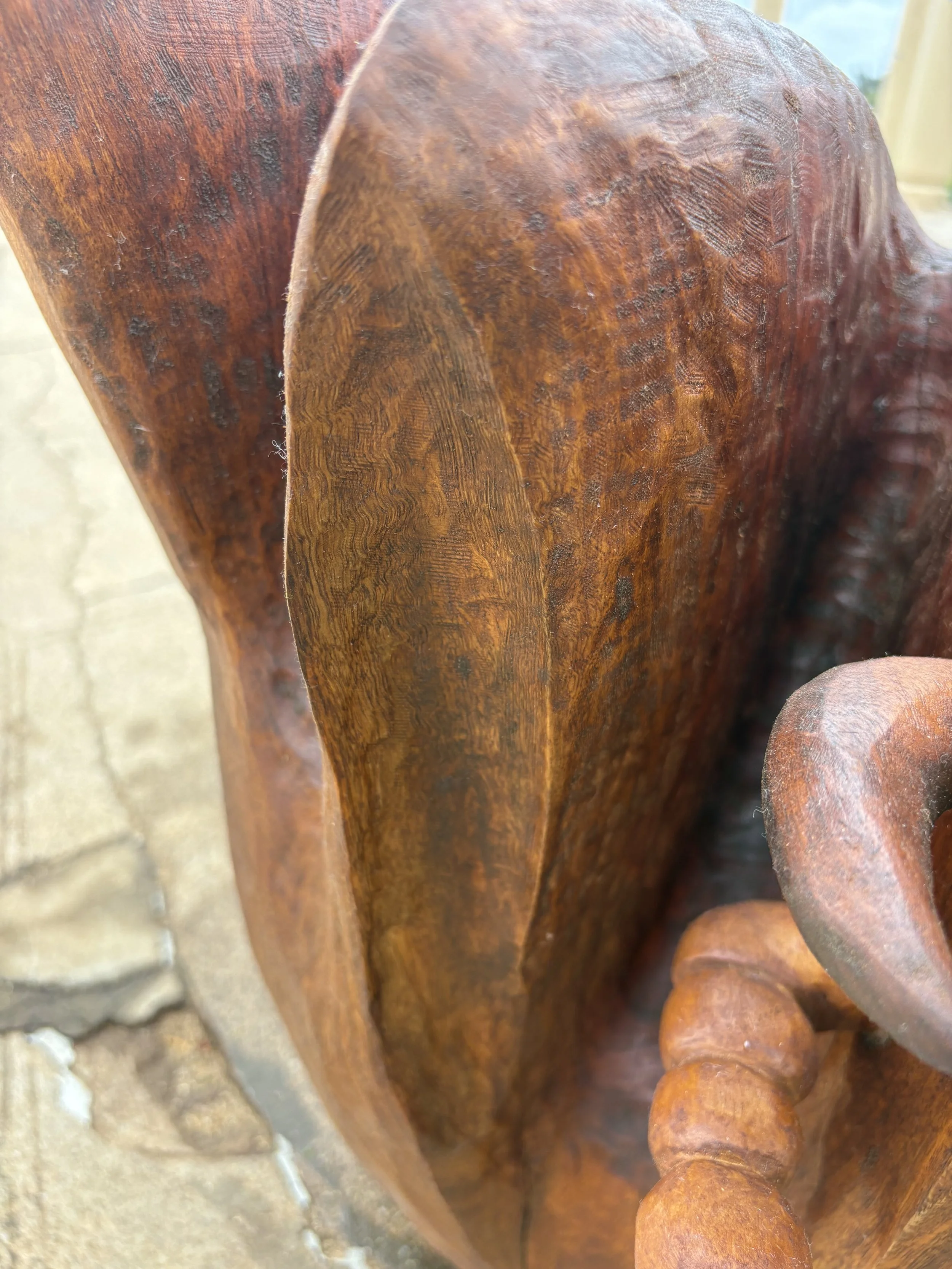
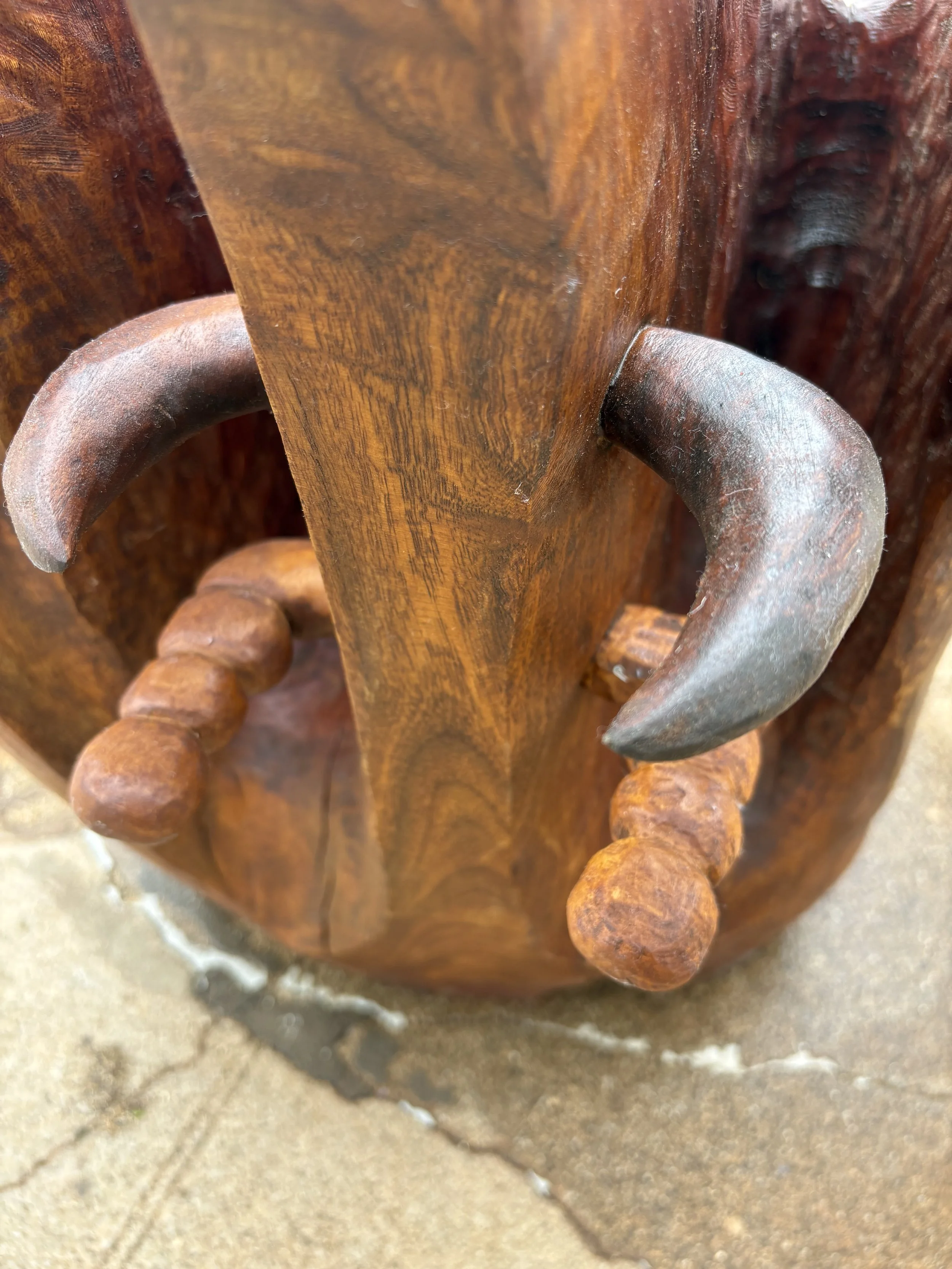
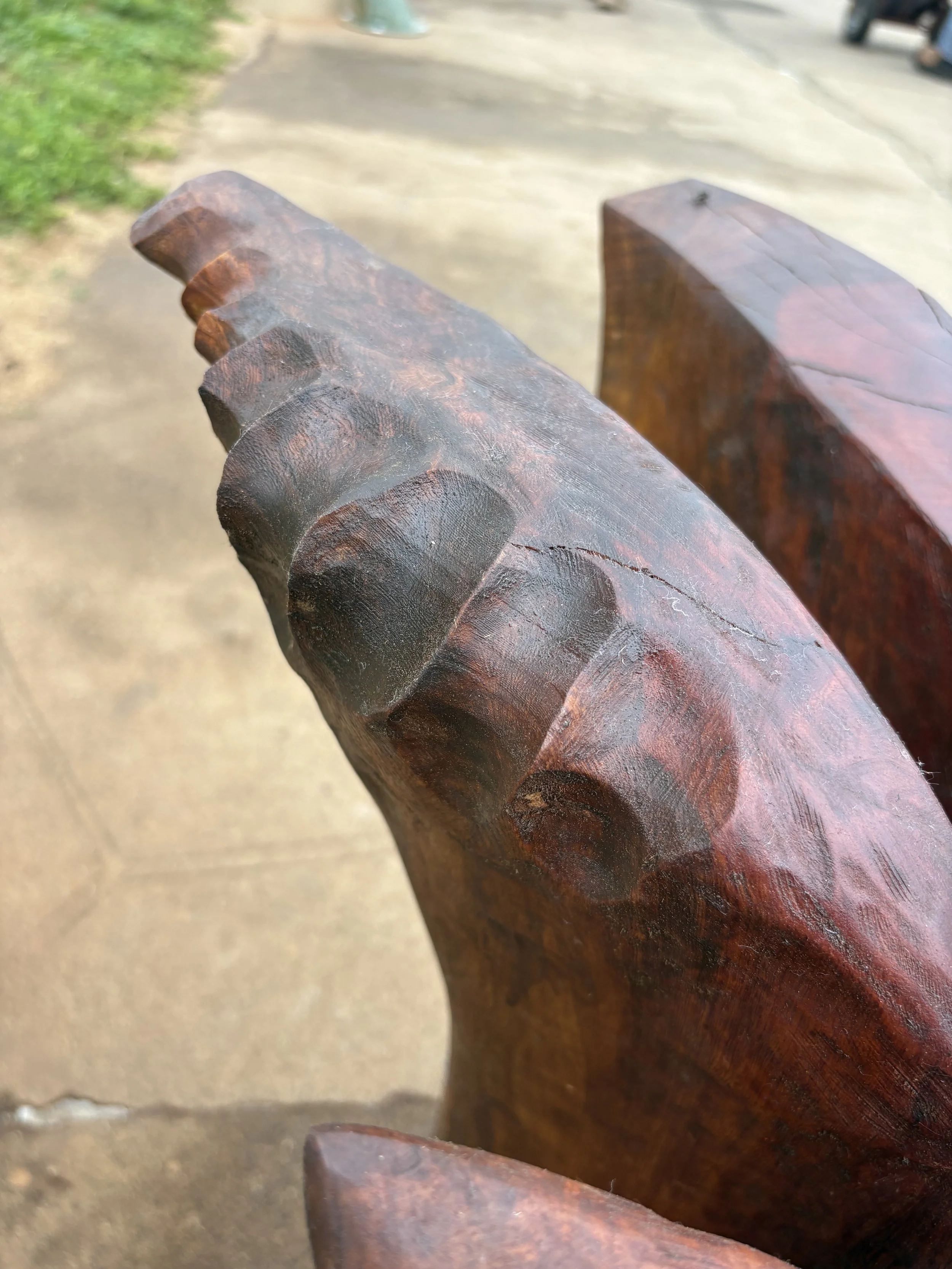
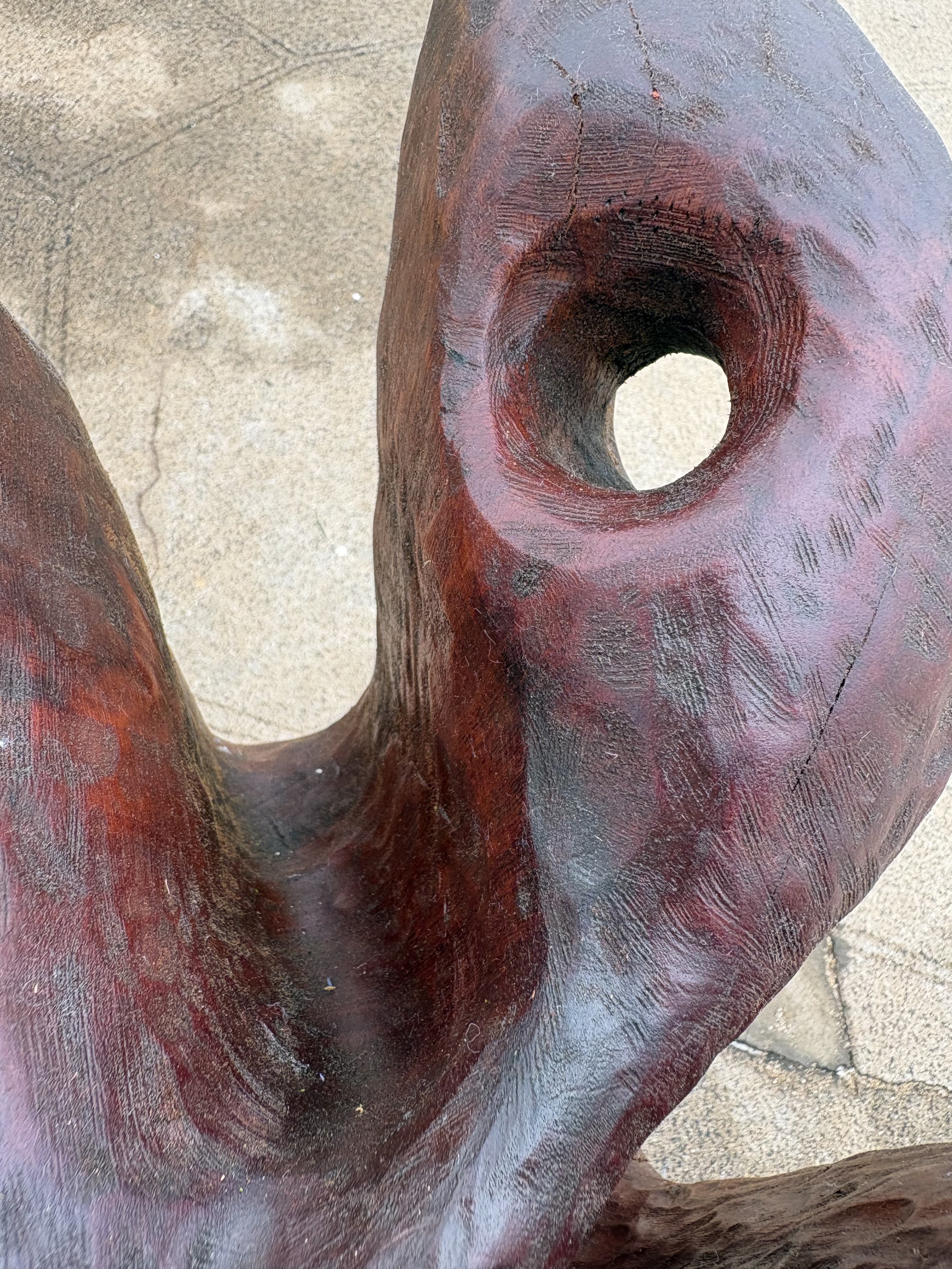
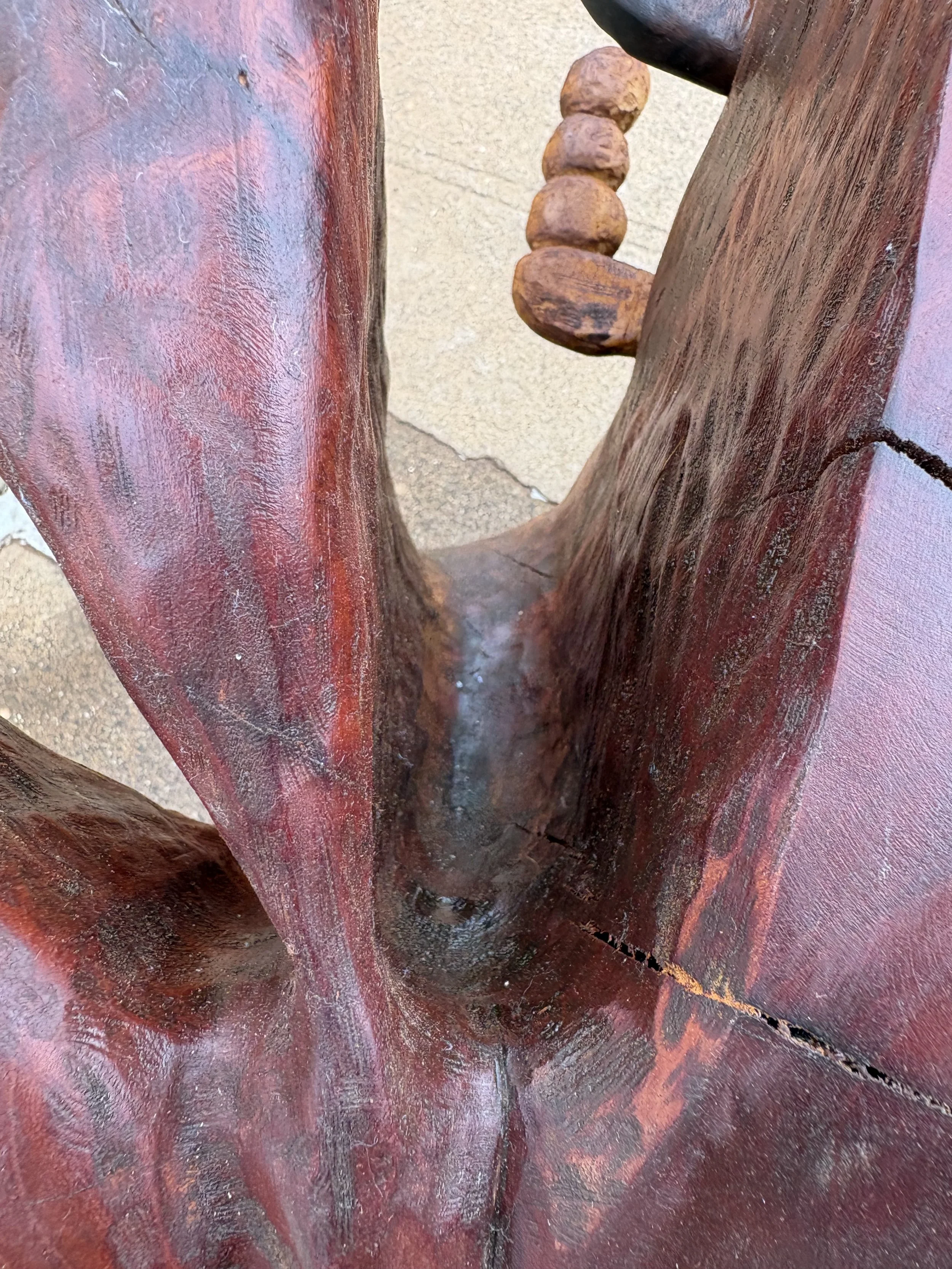
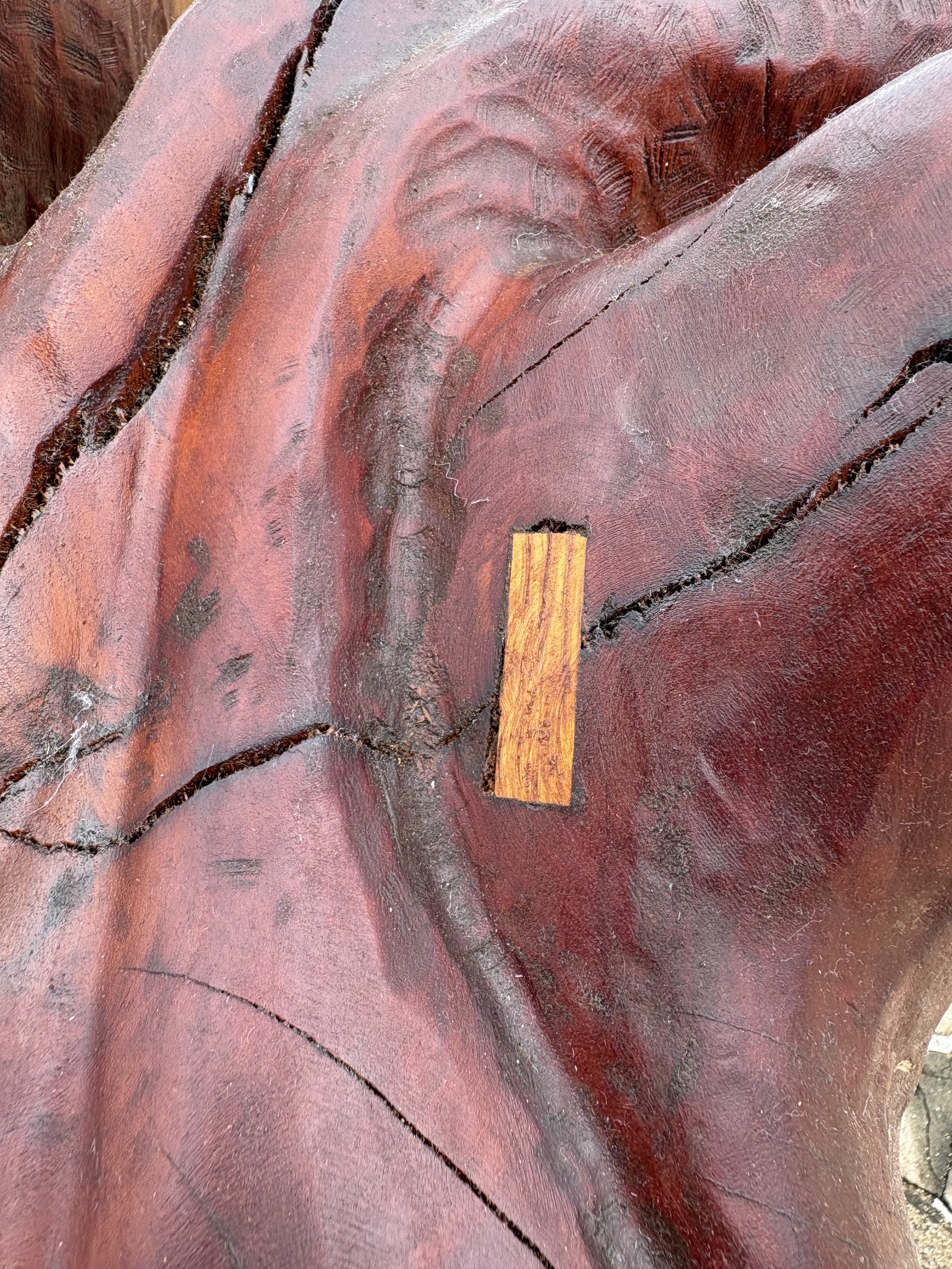
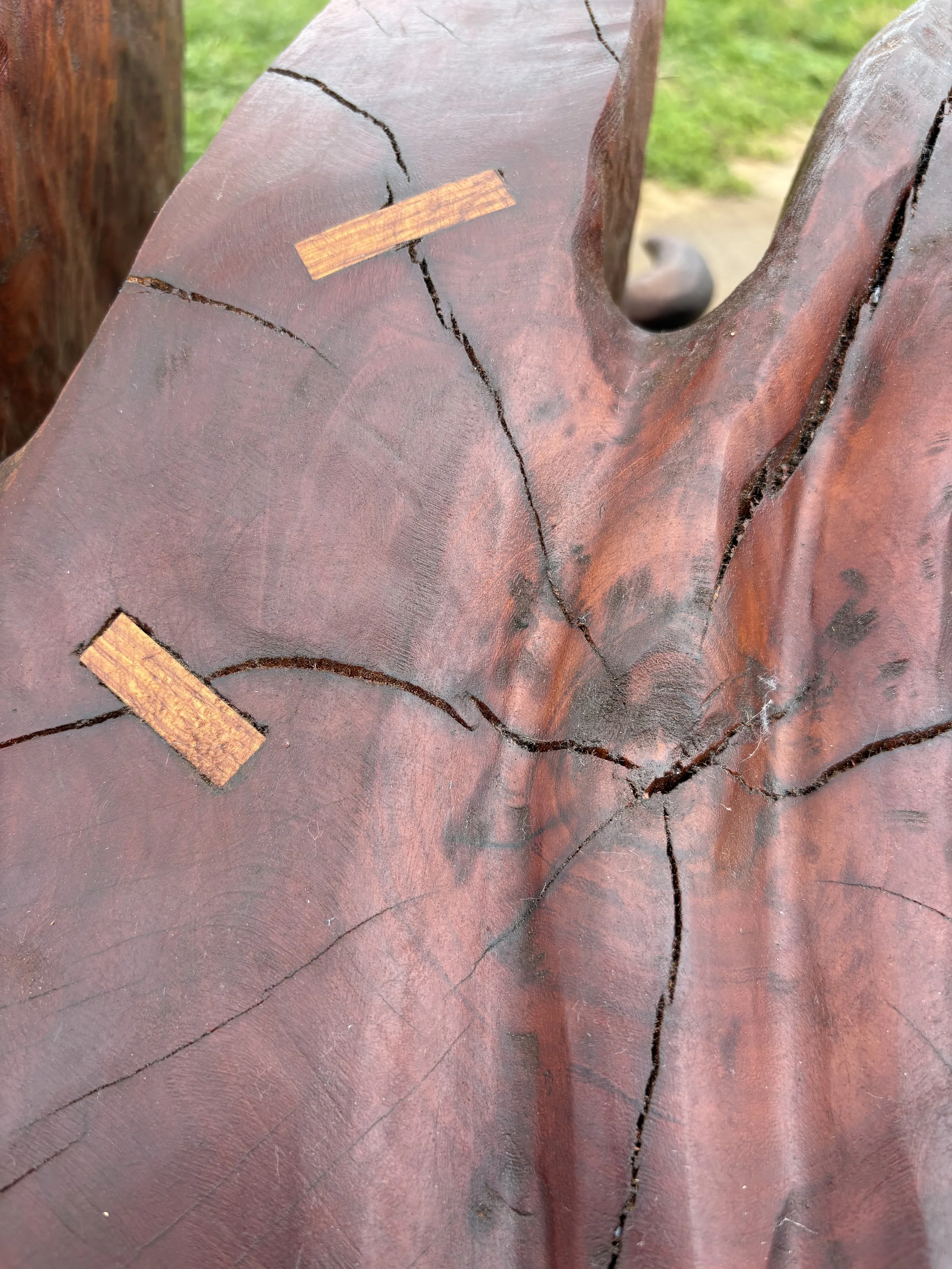
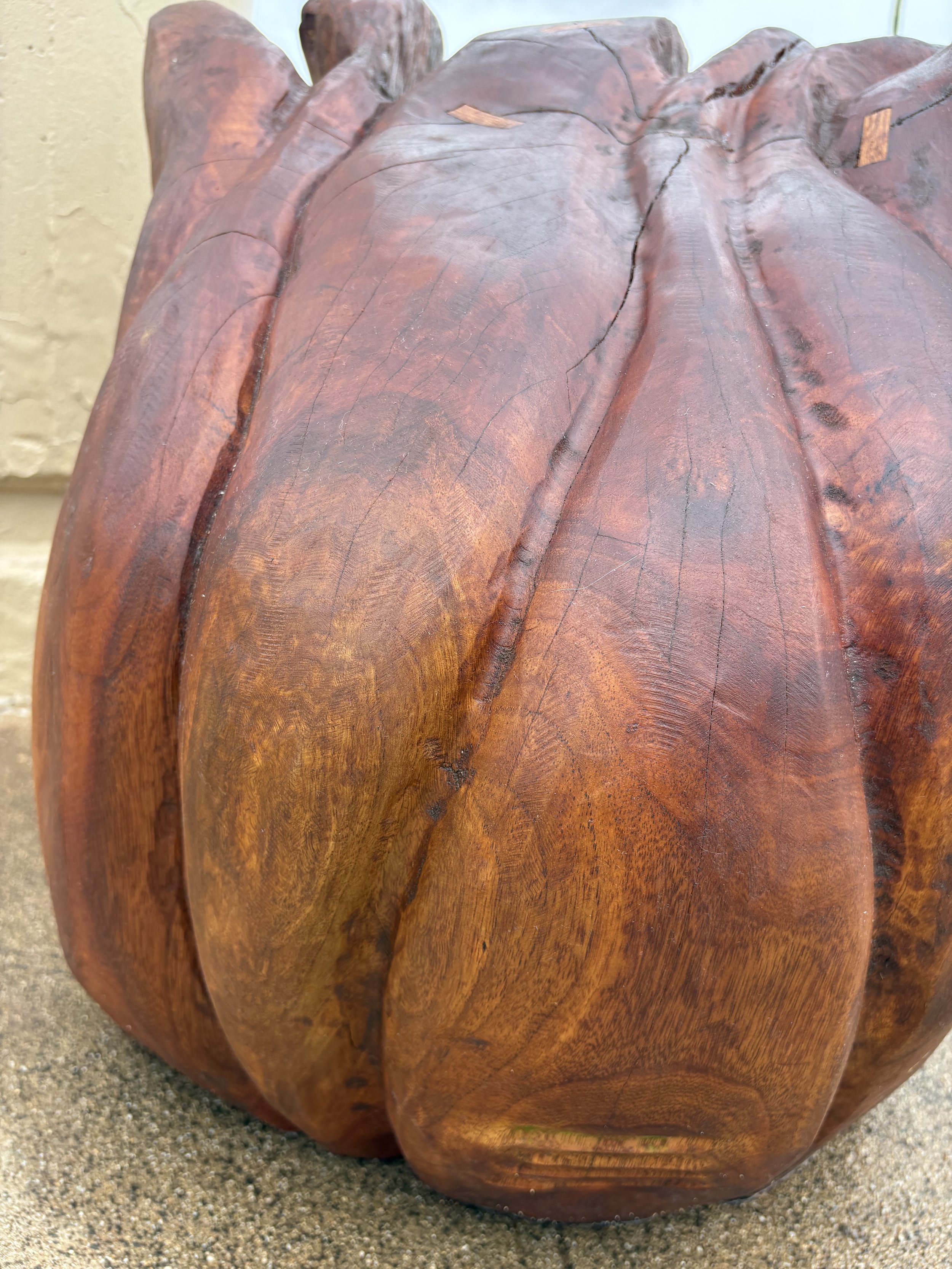
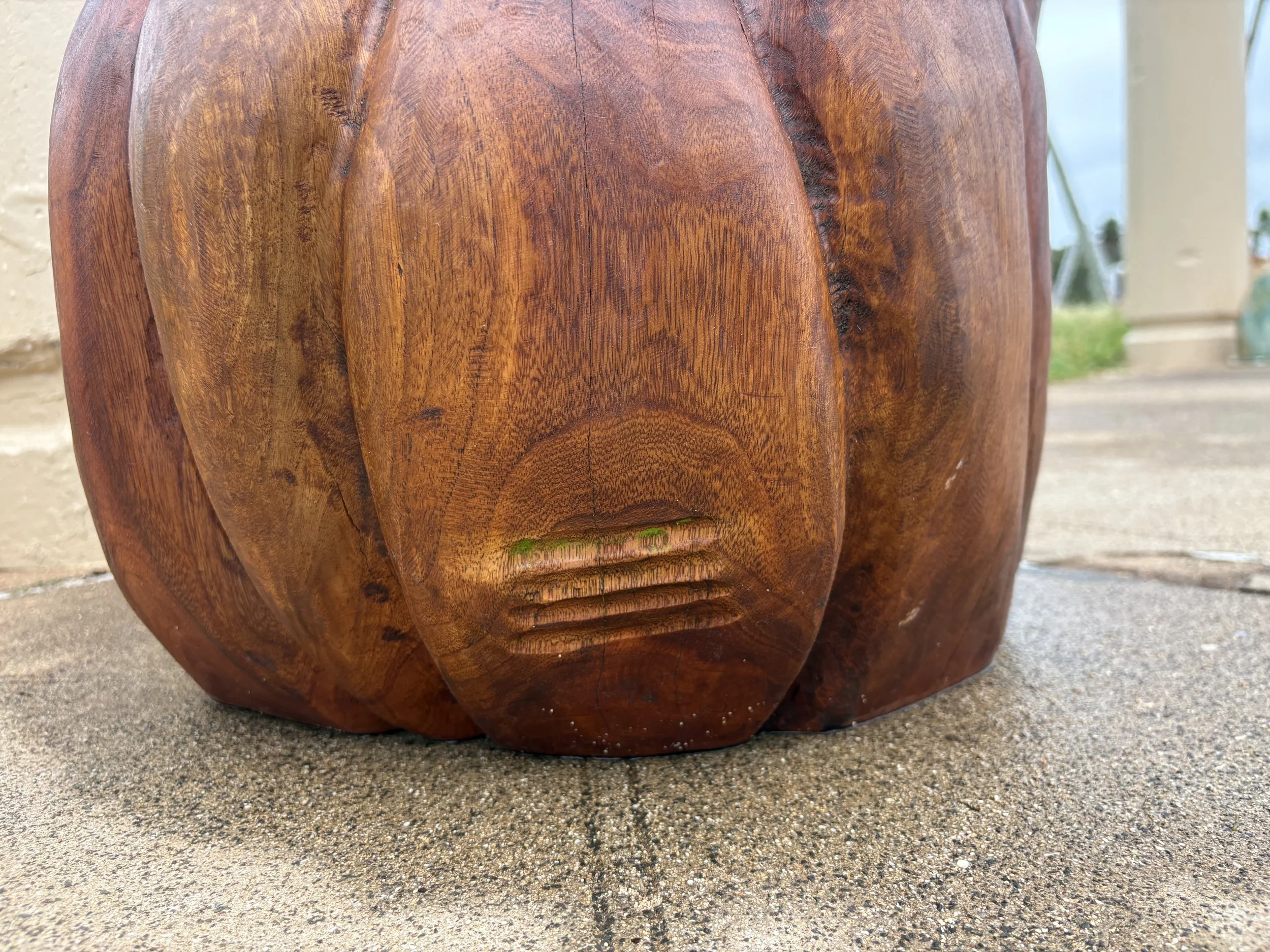
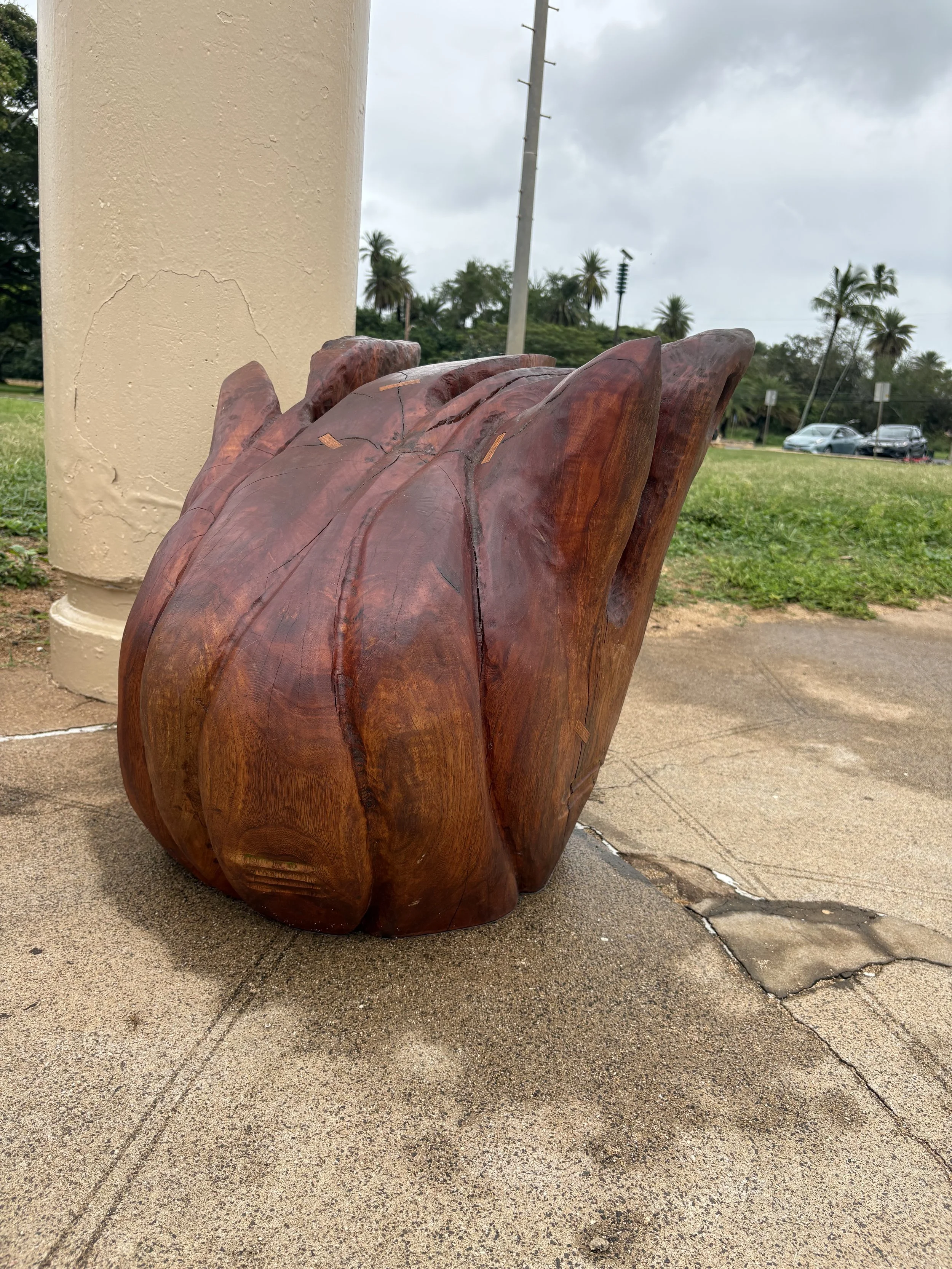
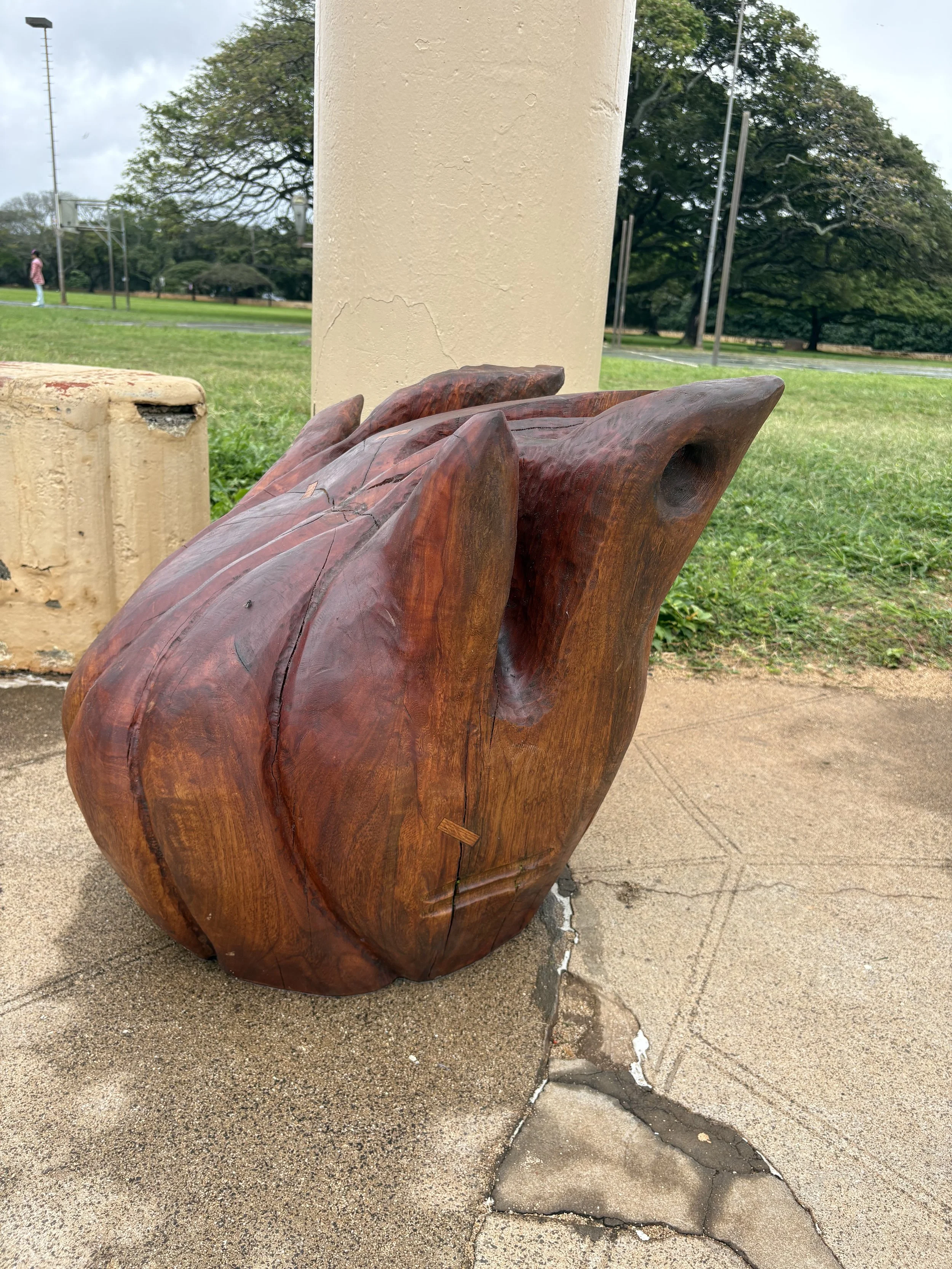
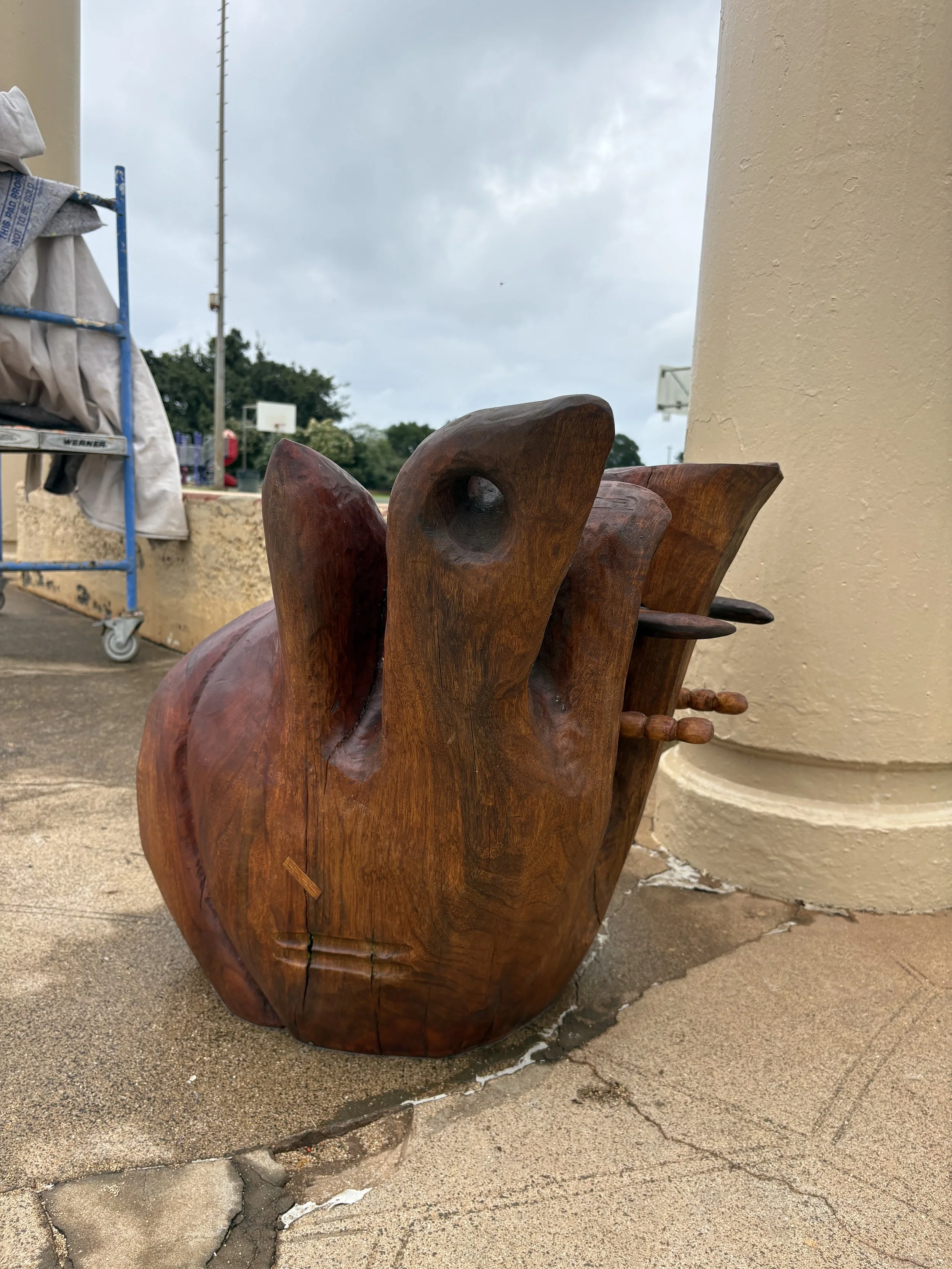
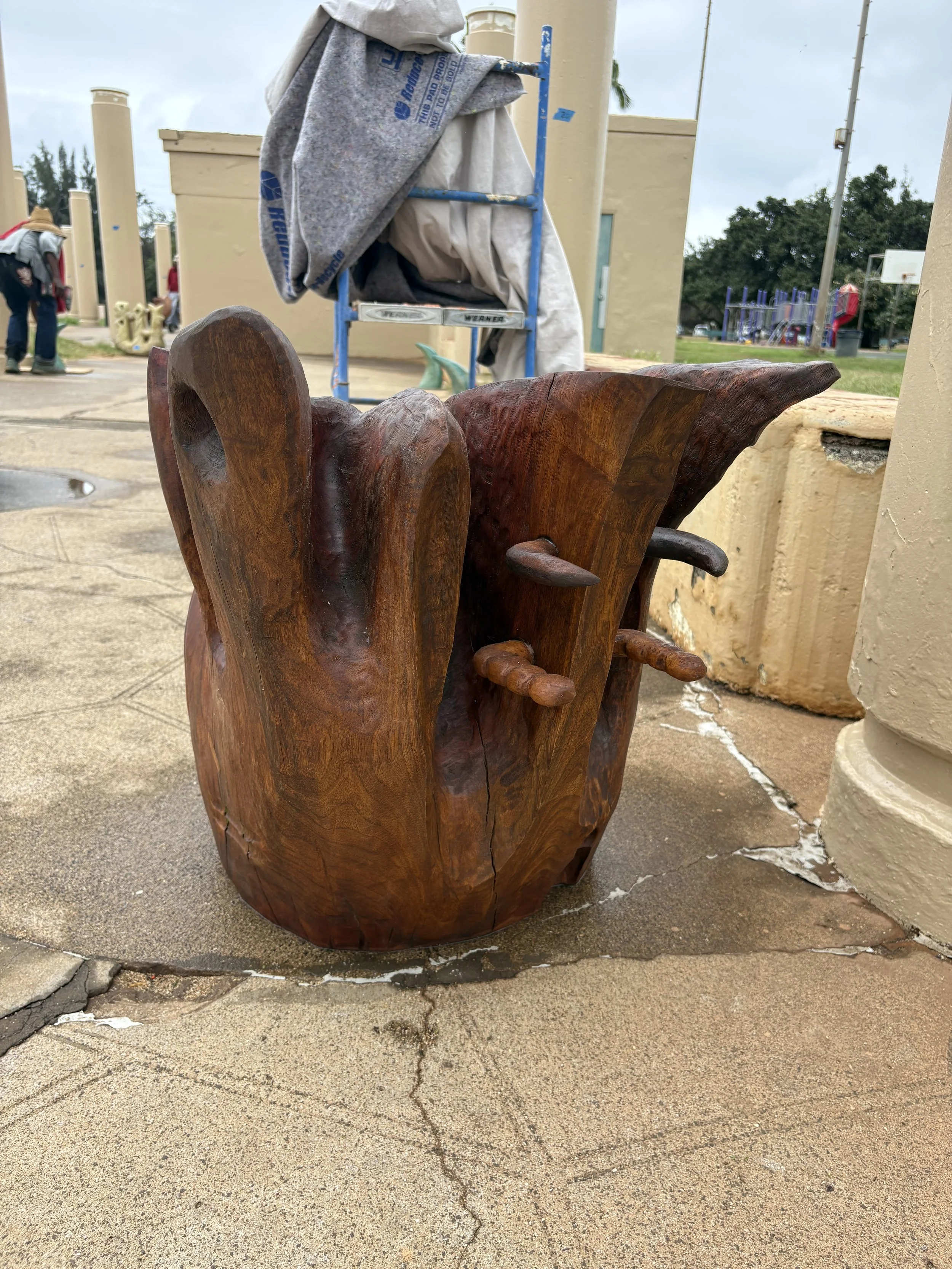
The seed (becoming as her works benefit us)
Mango, Koa, Poplar wood
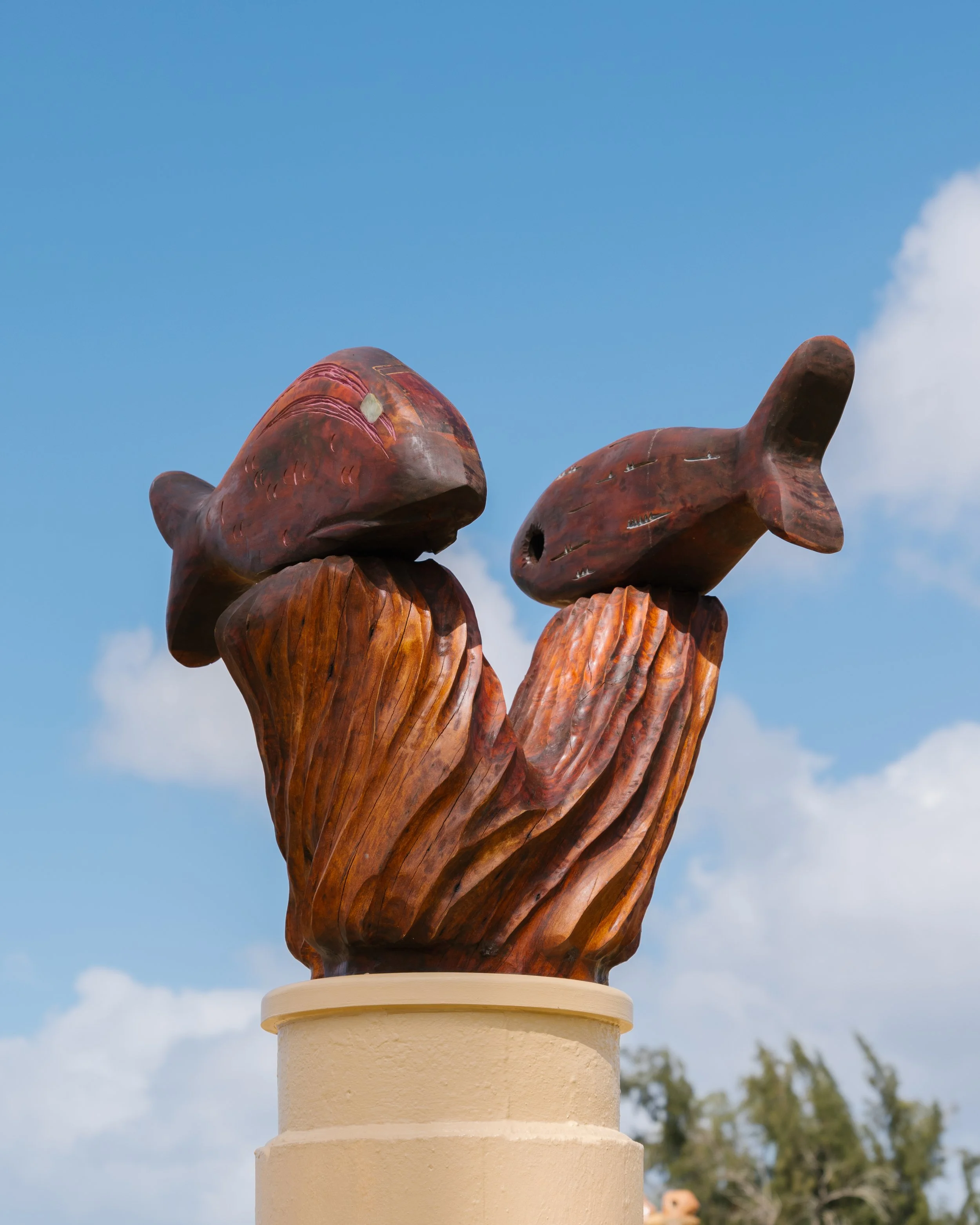
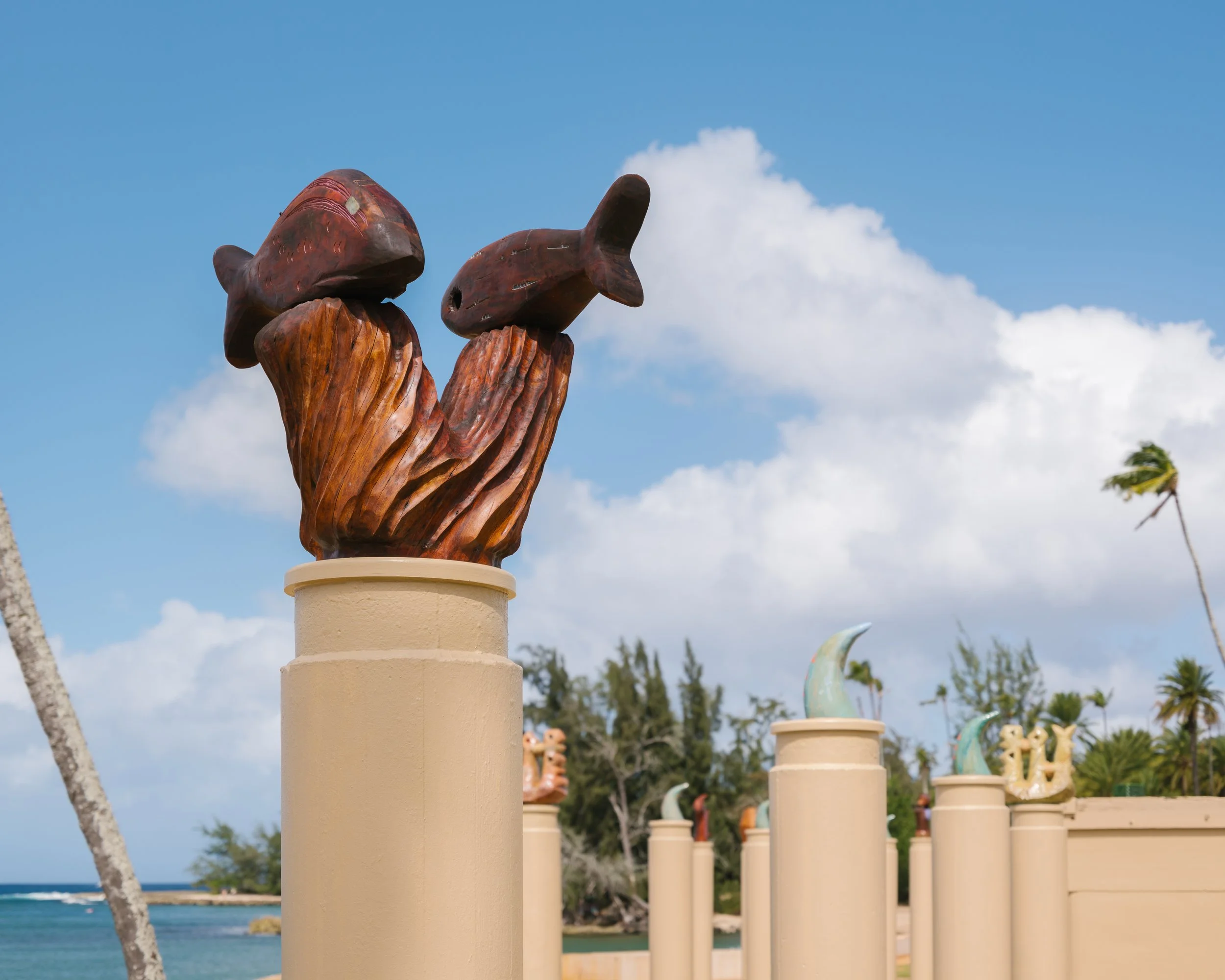
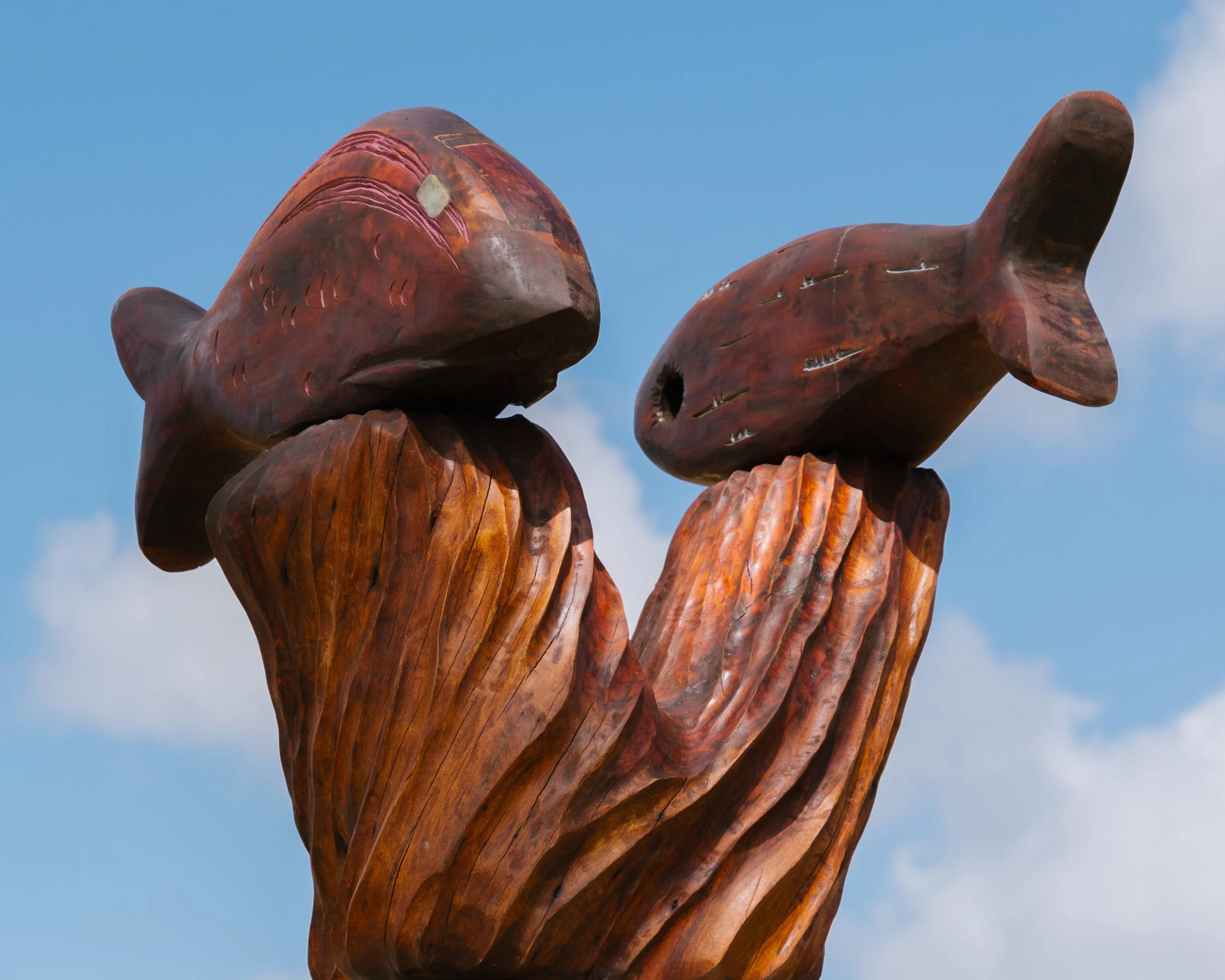
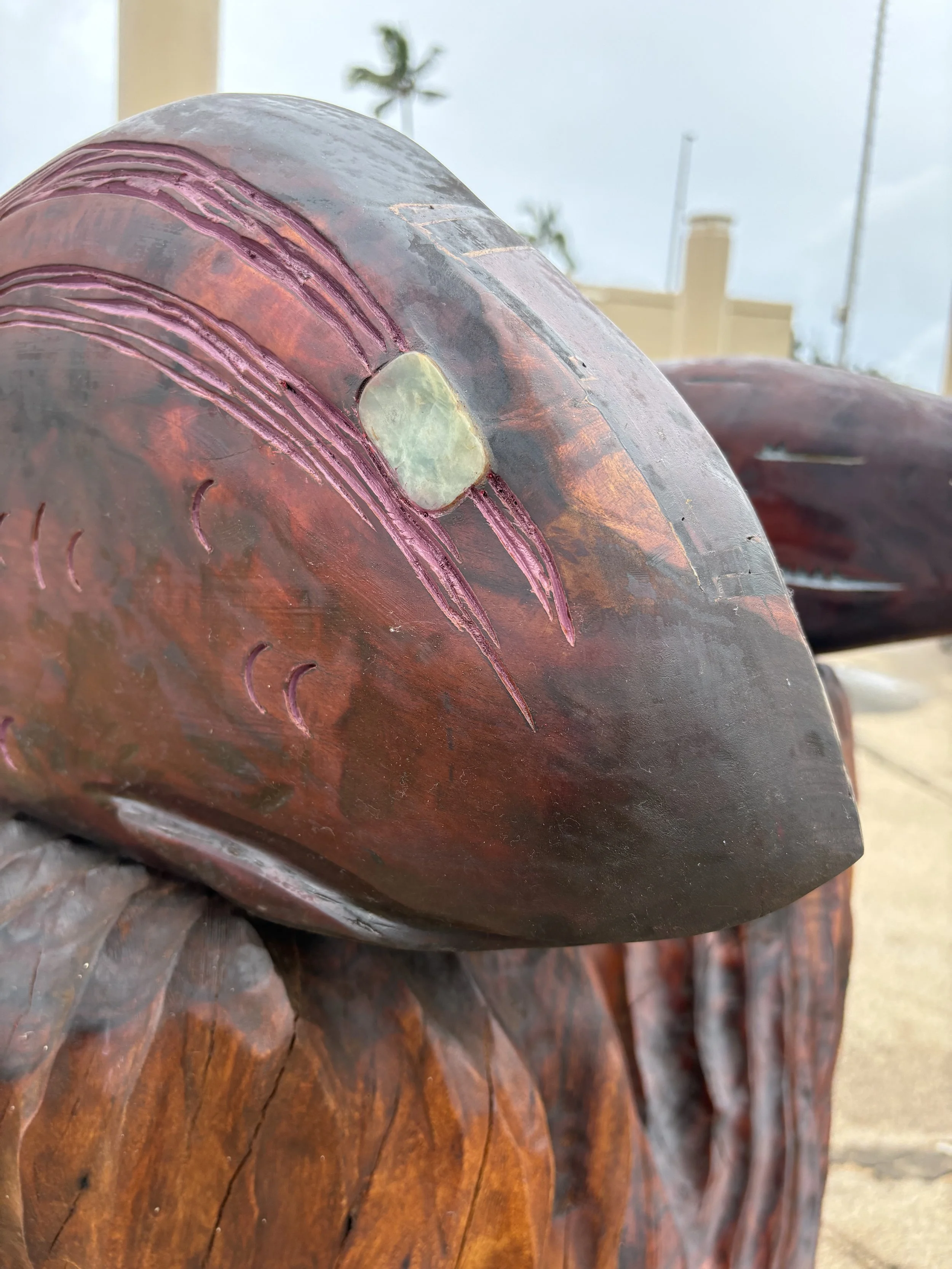
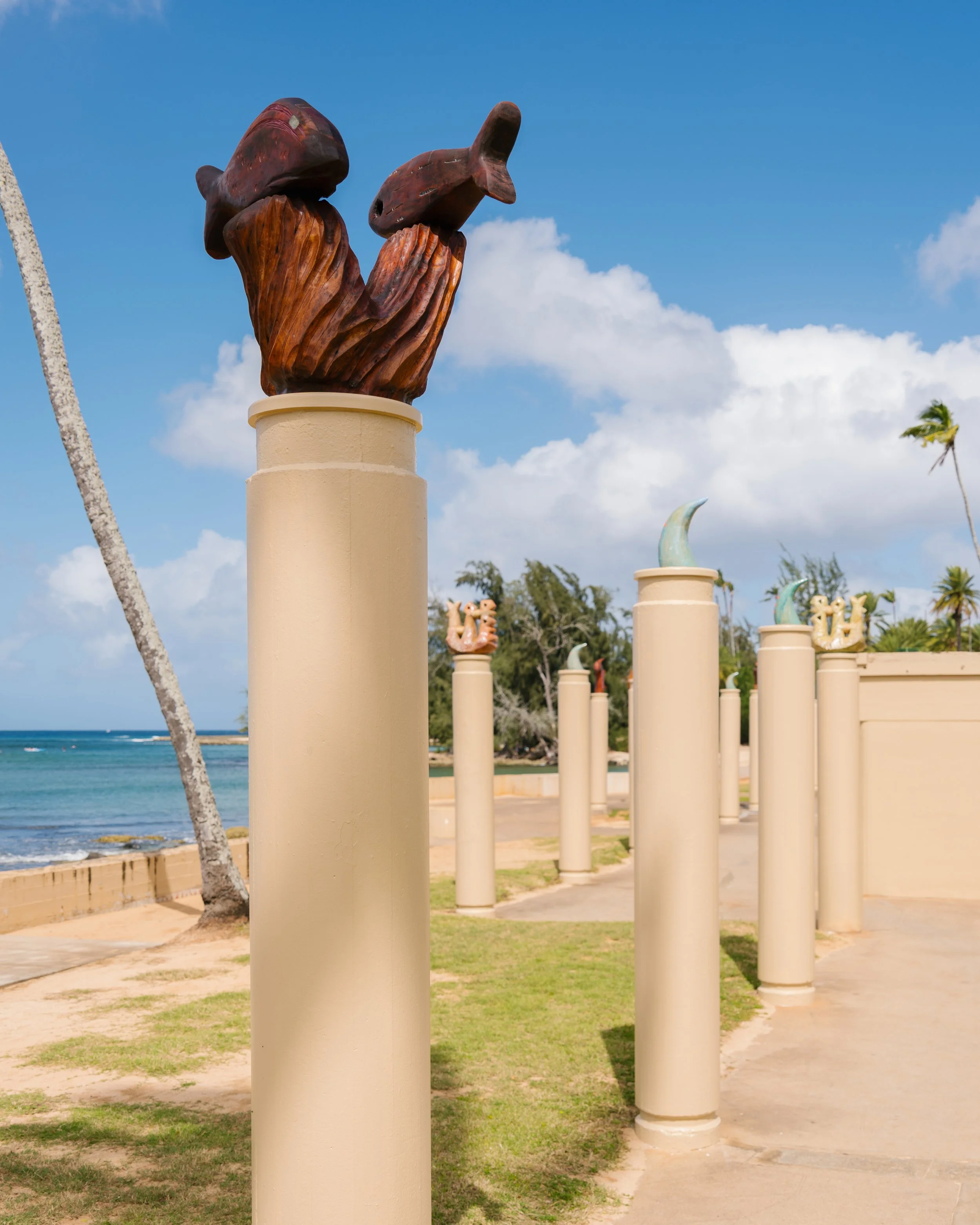
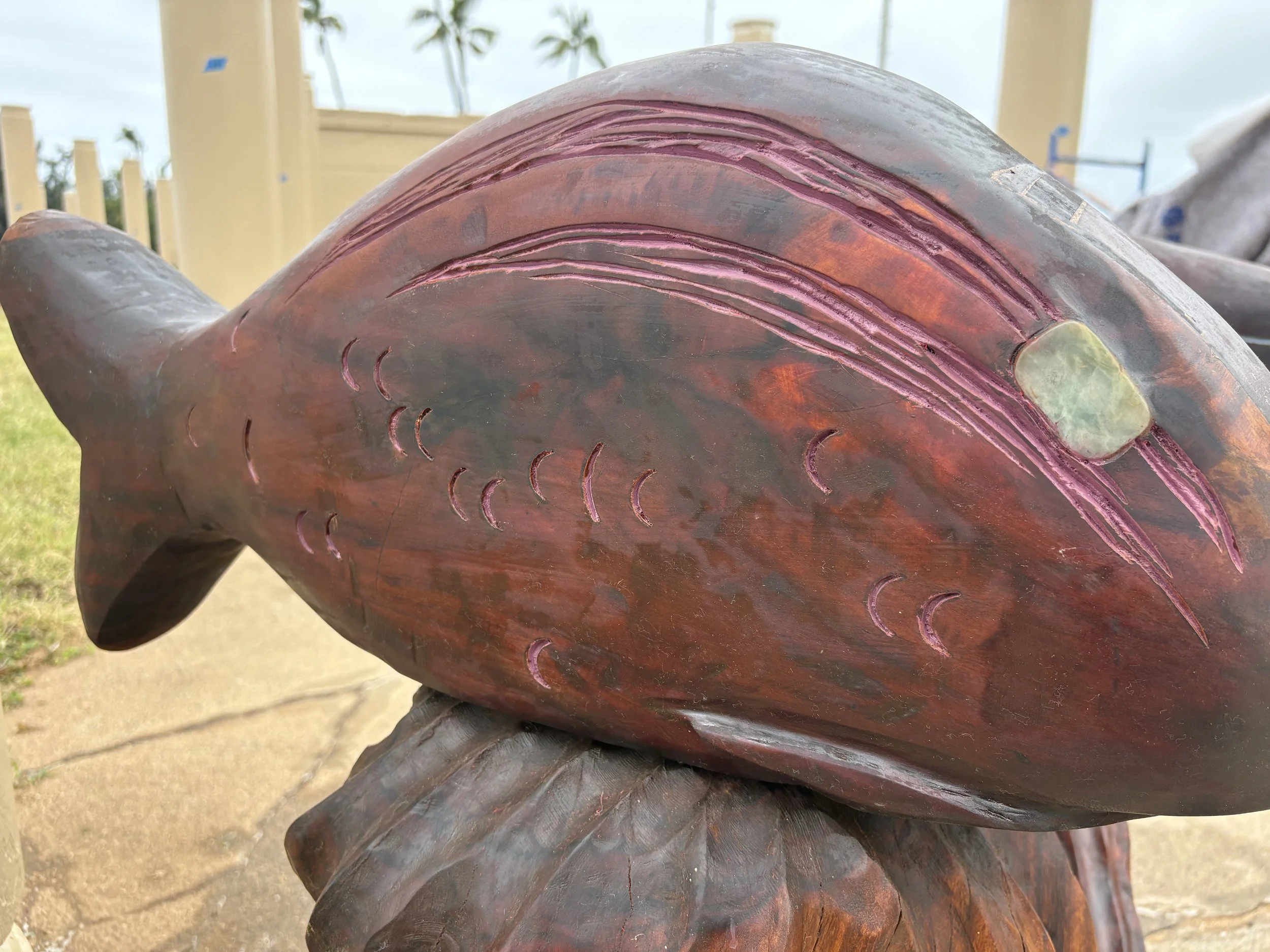
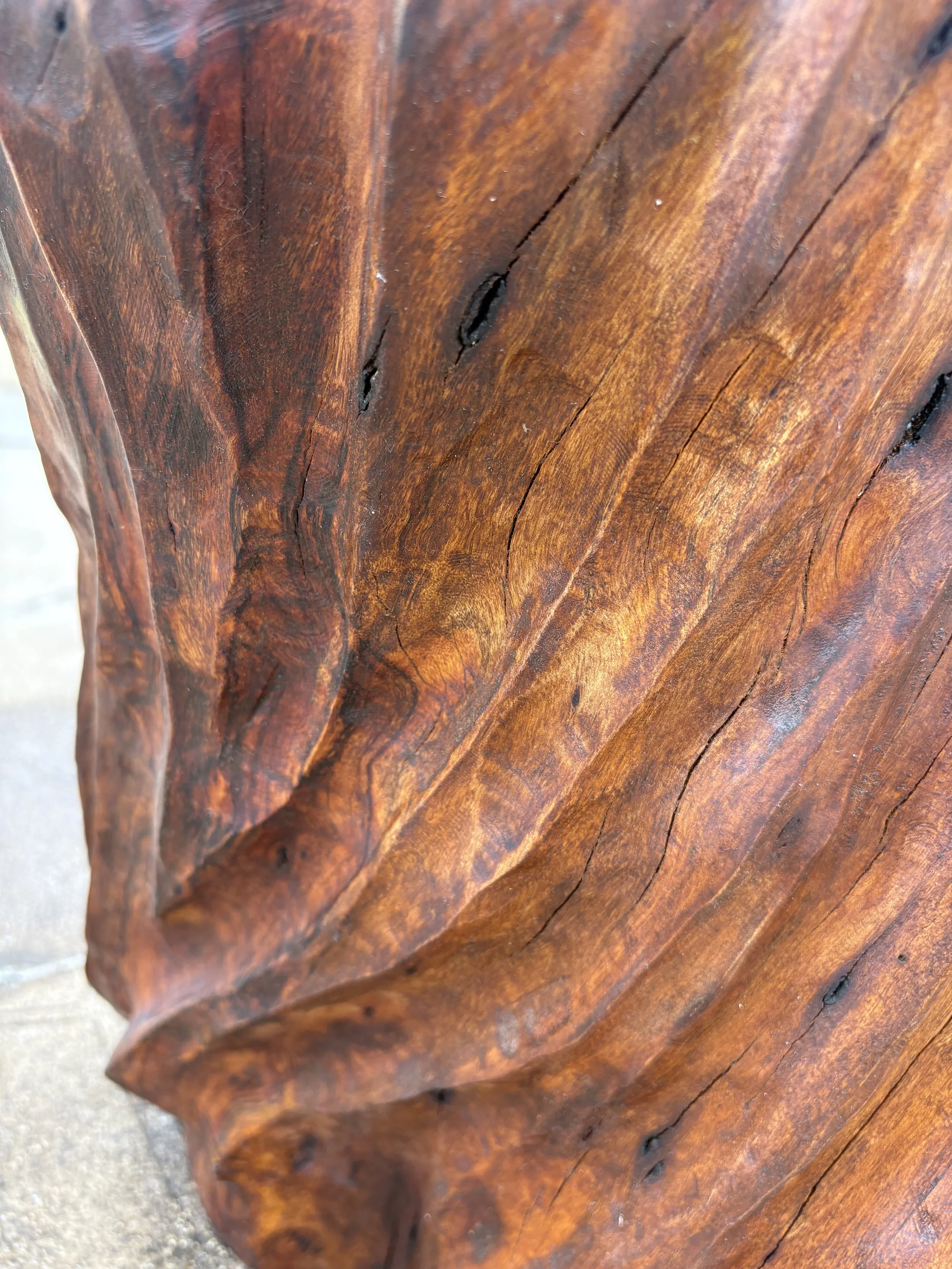
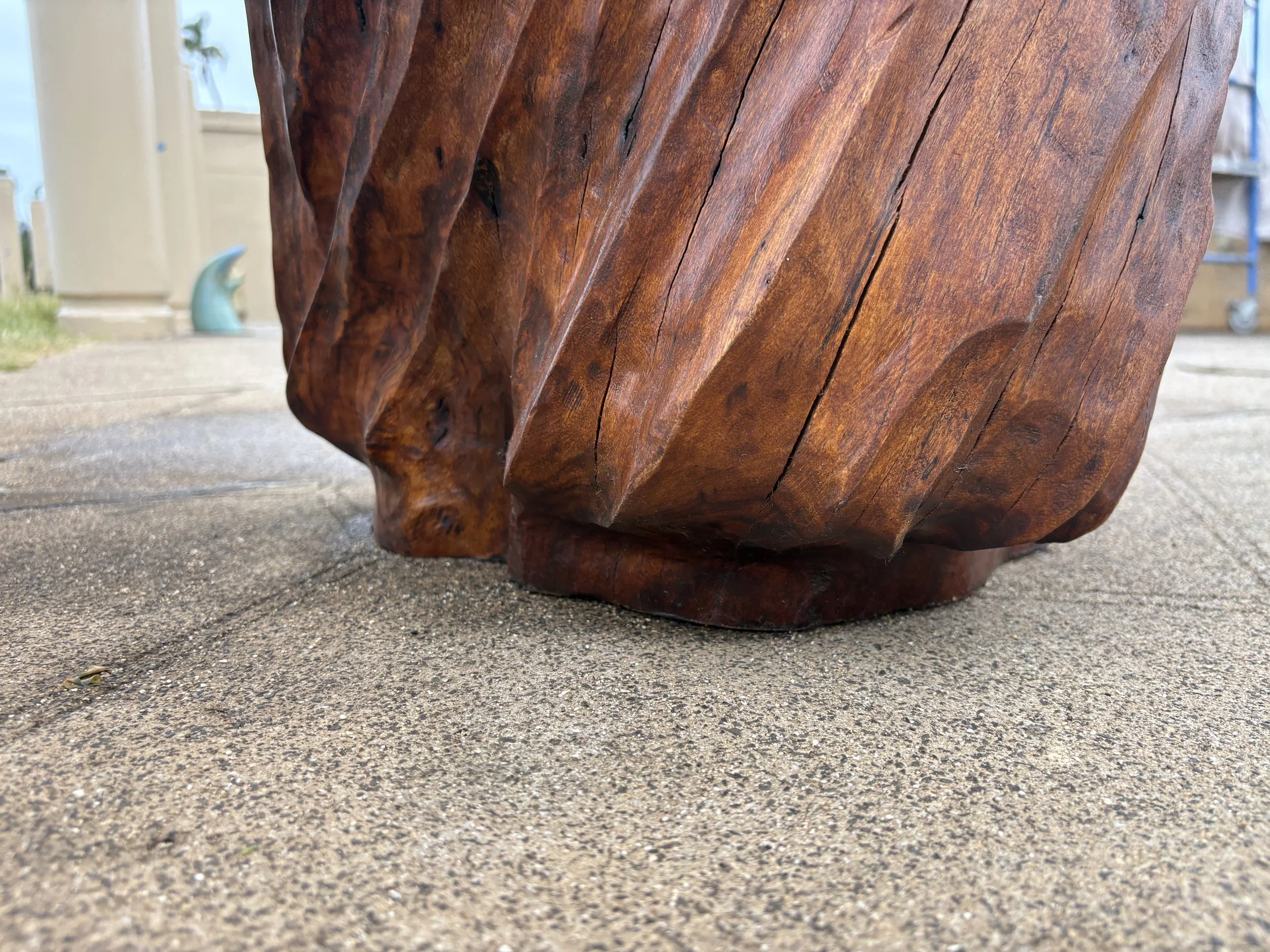
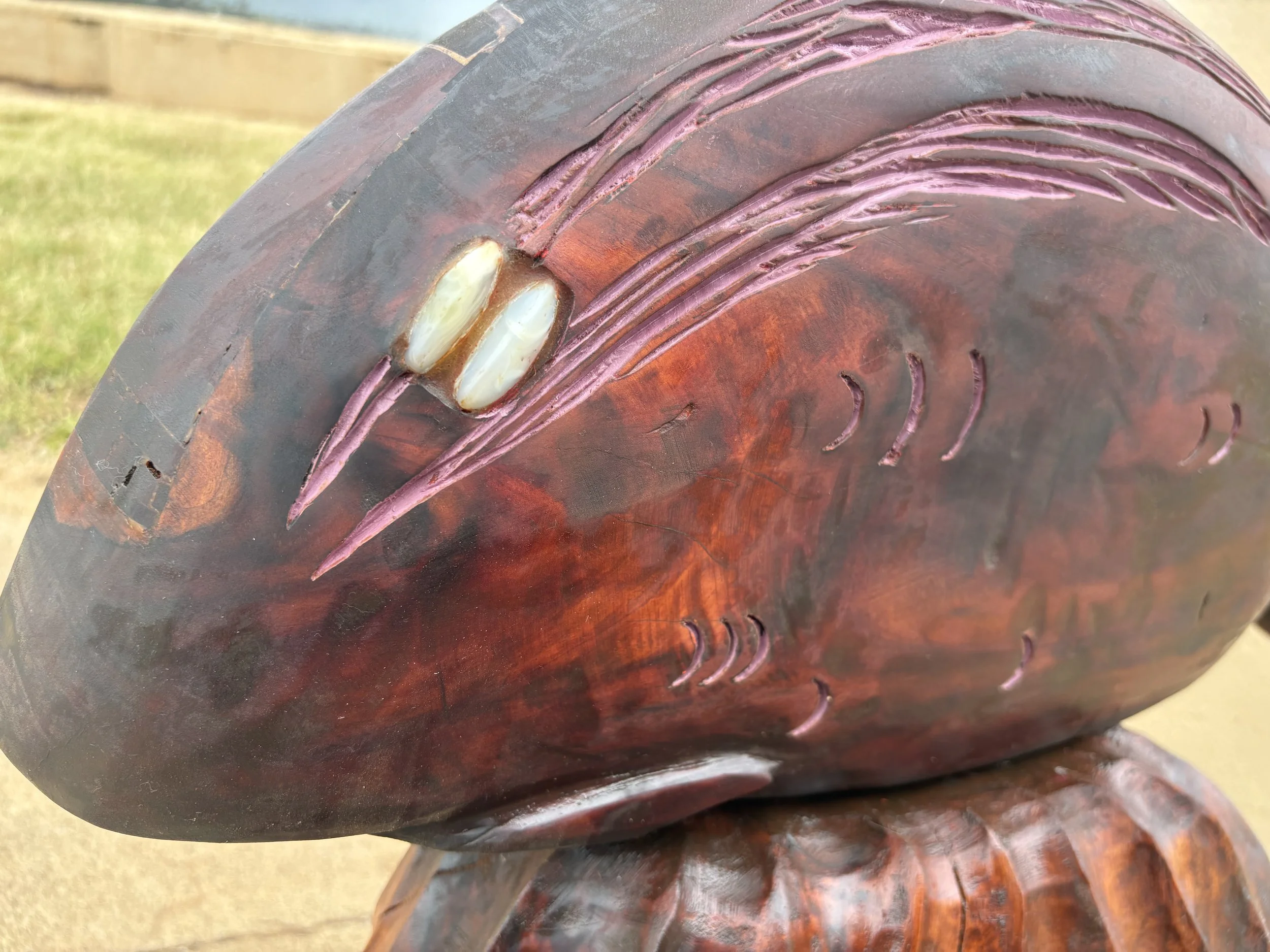
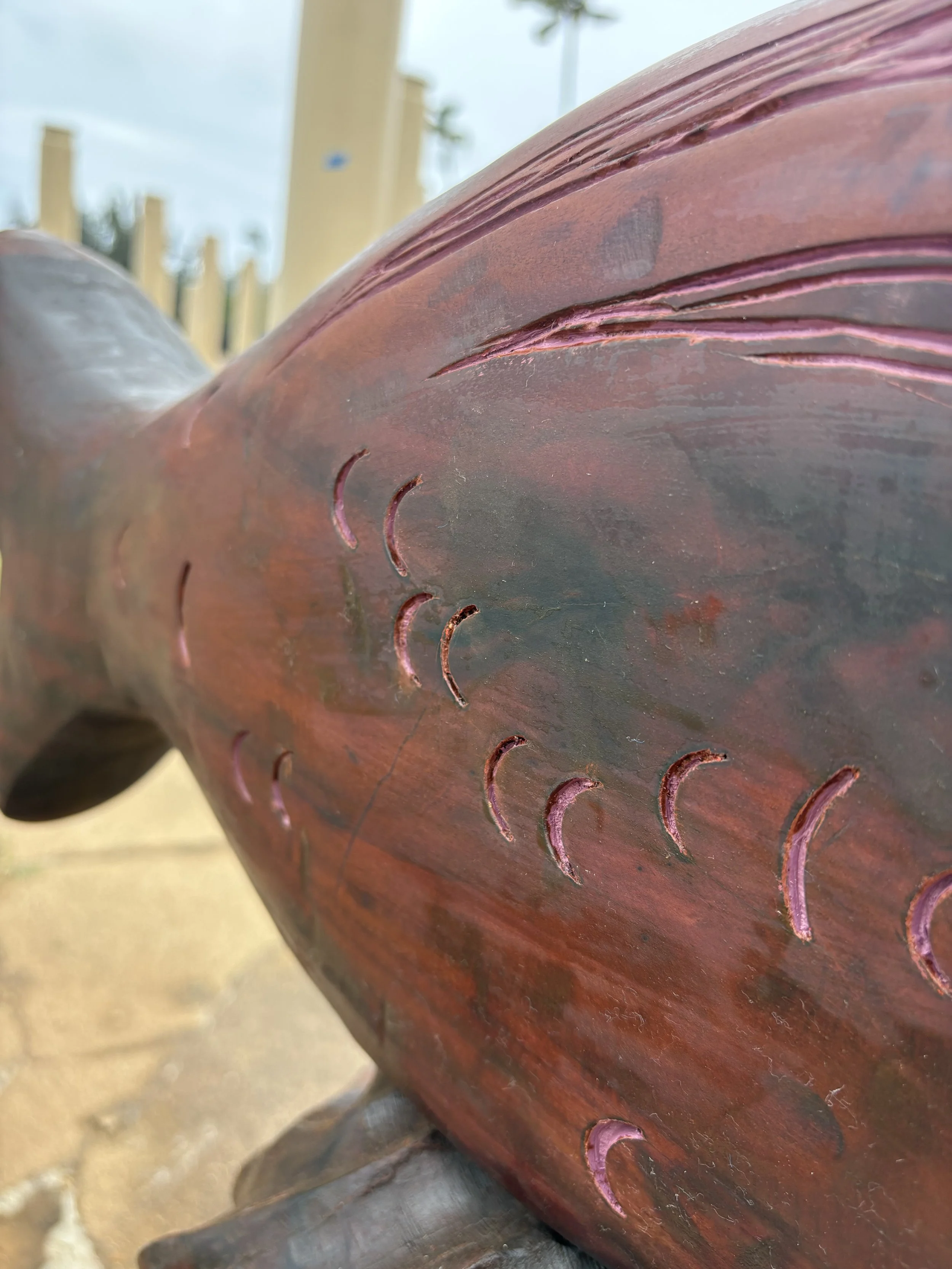
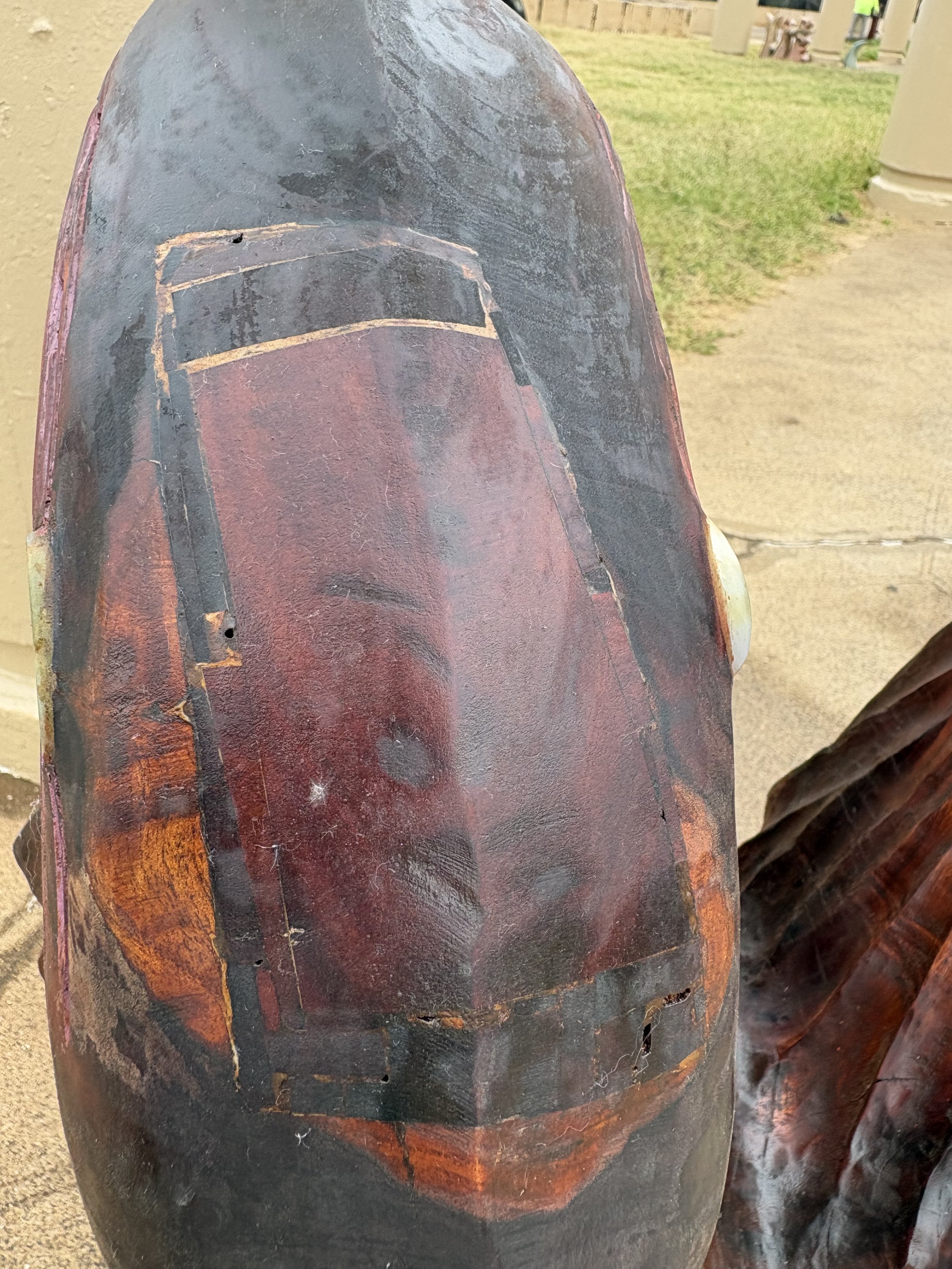
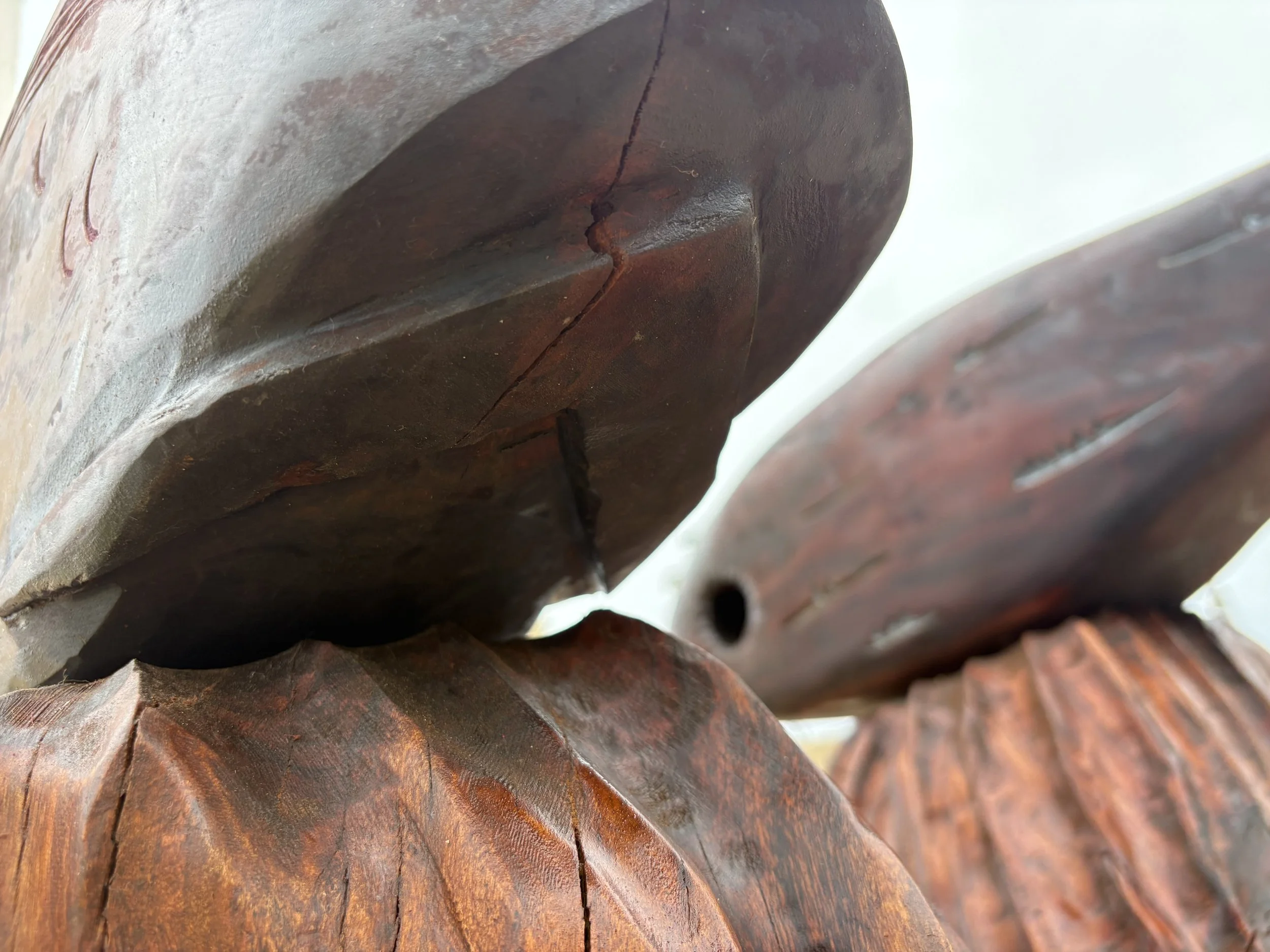
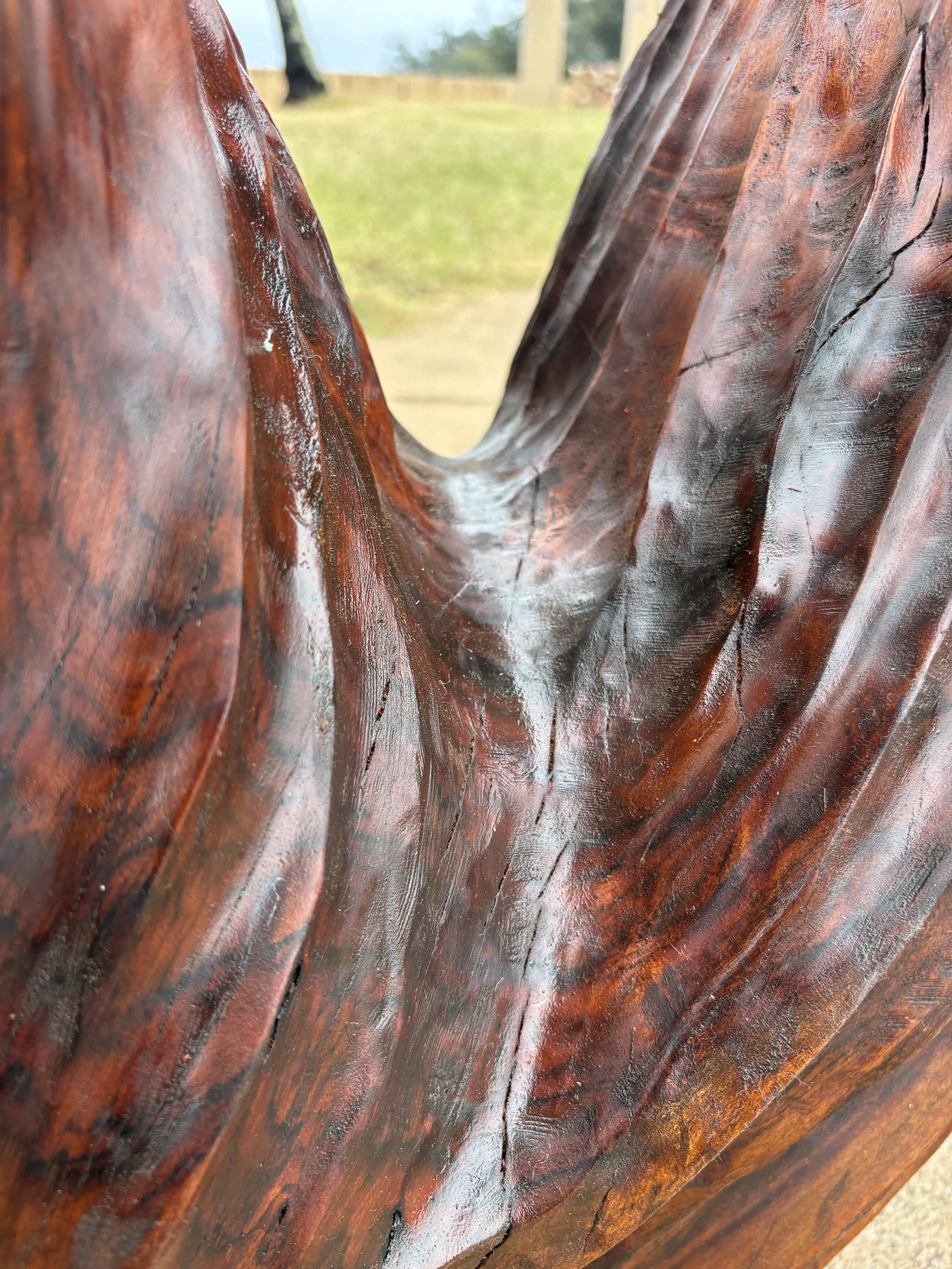
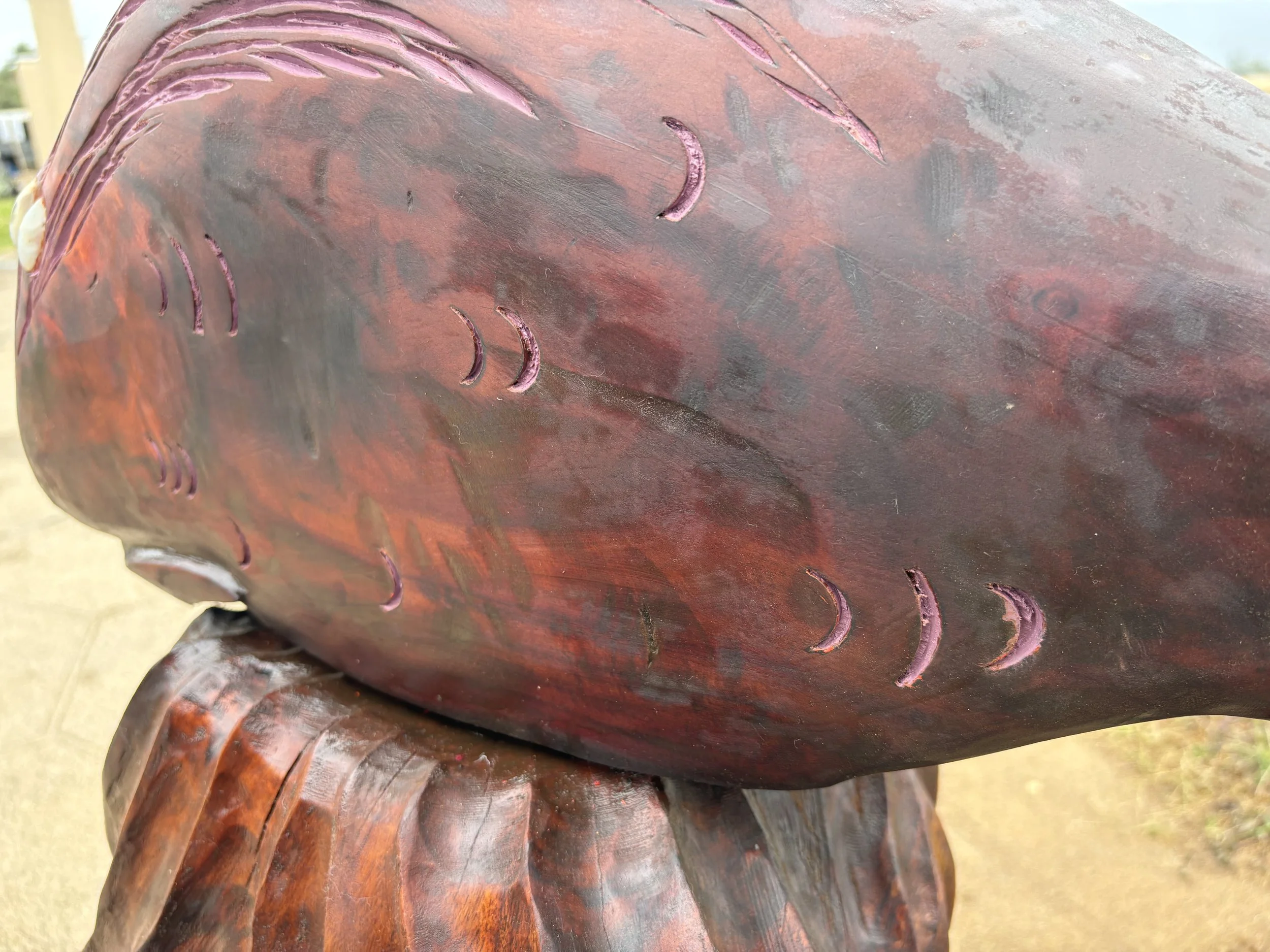
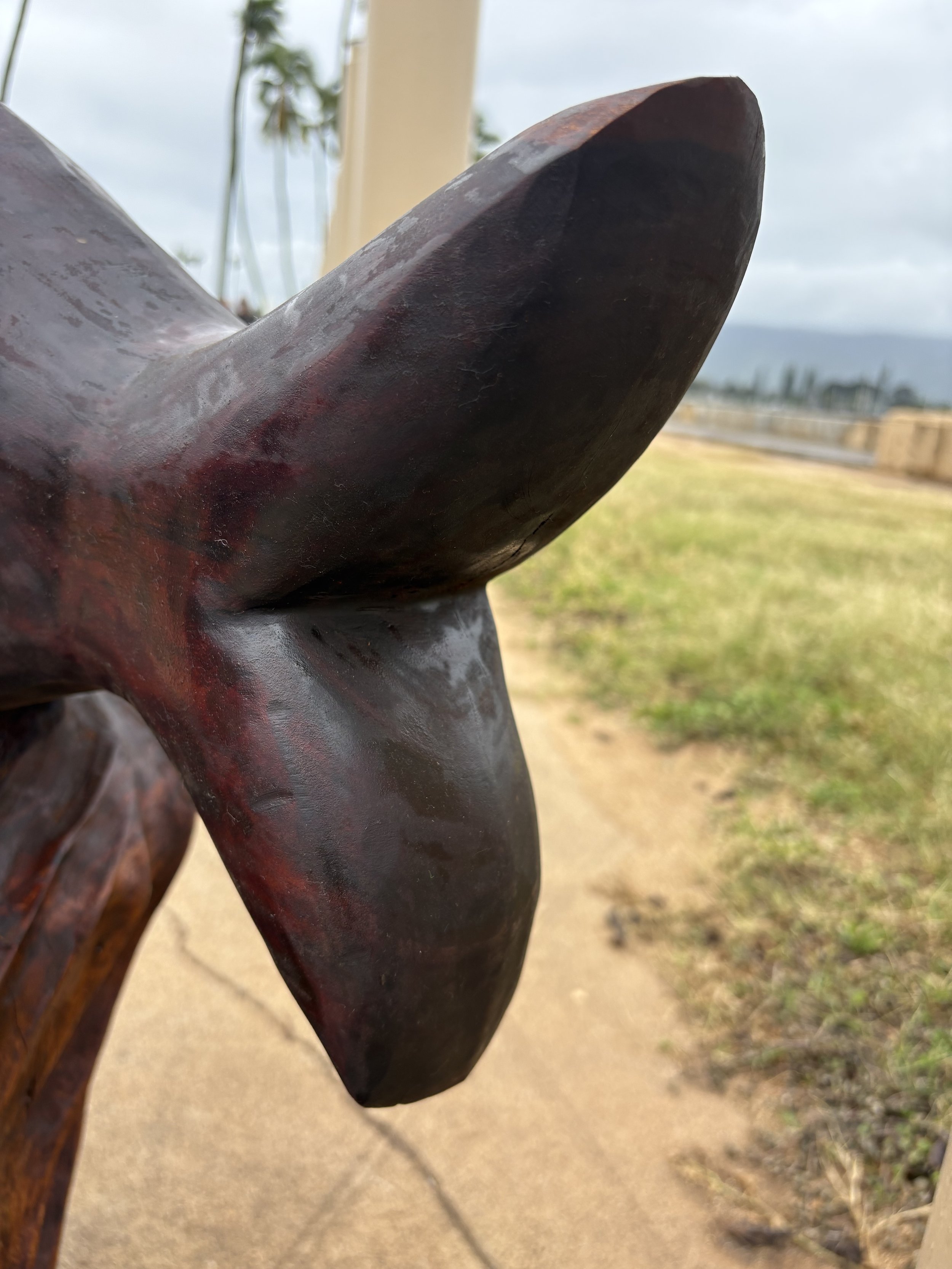
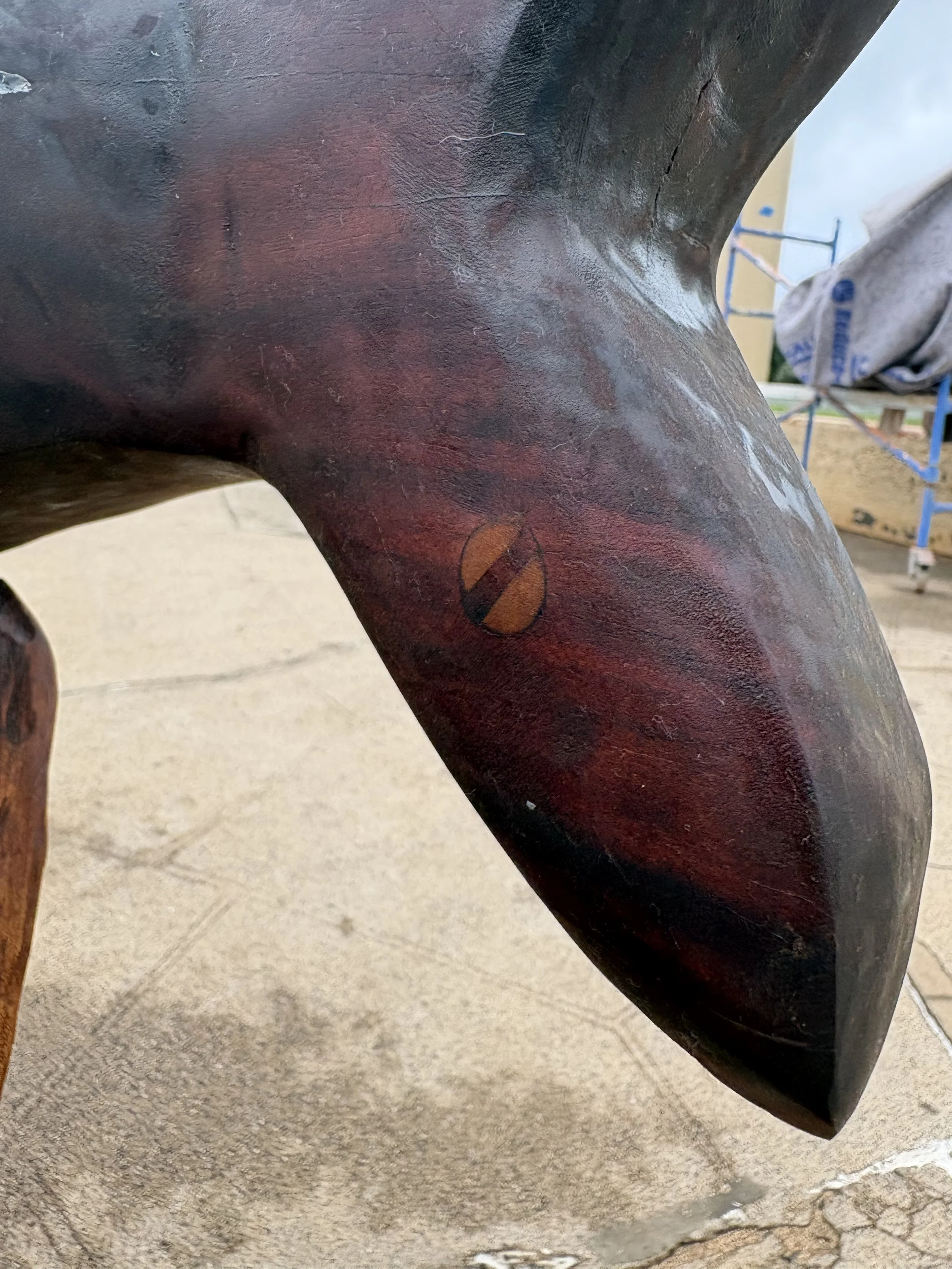
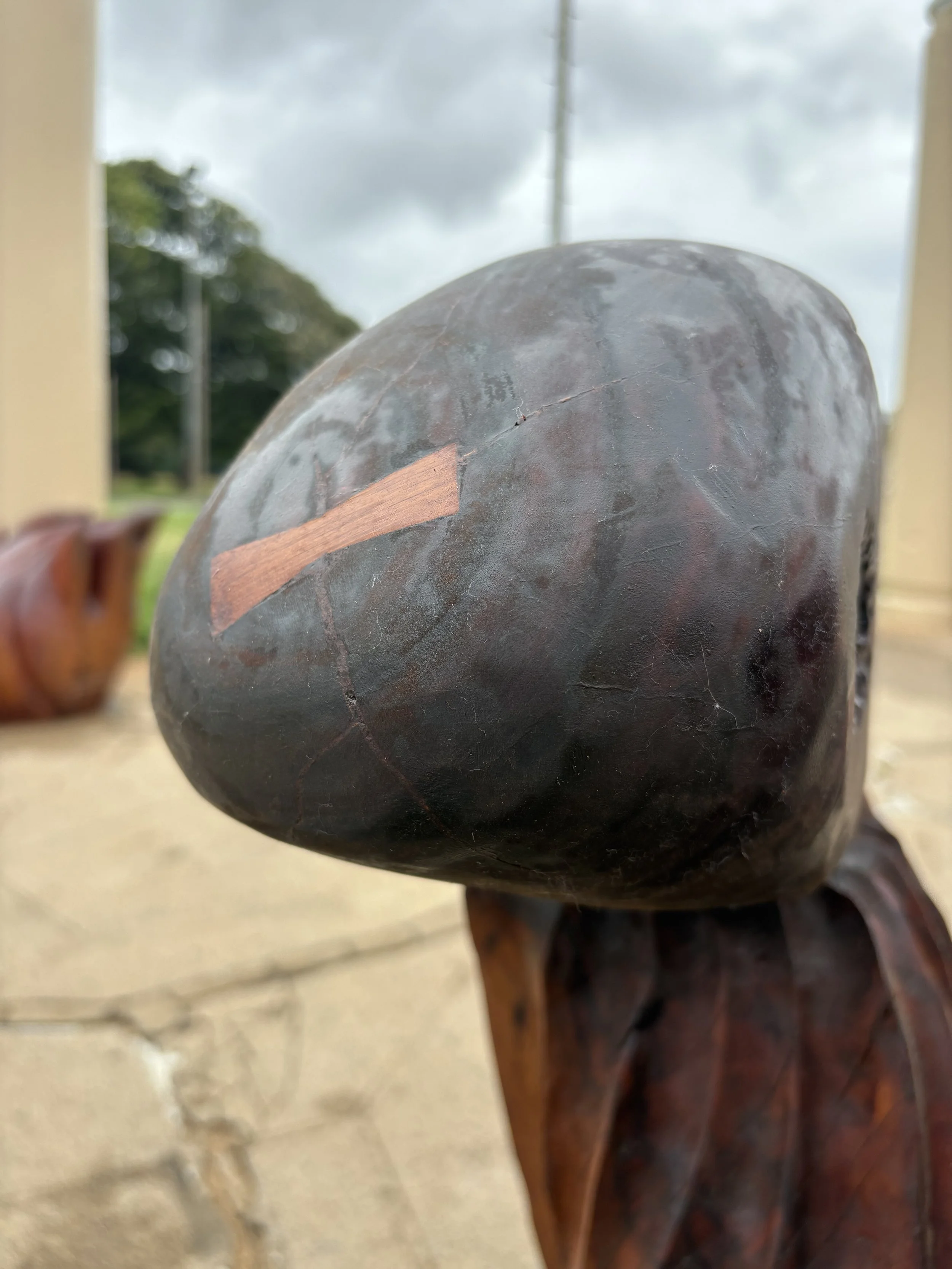
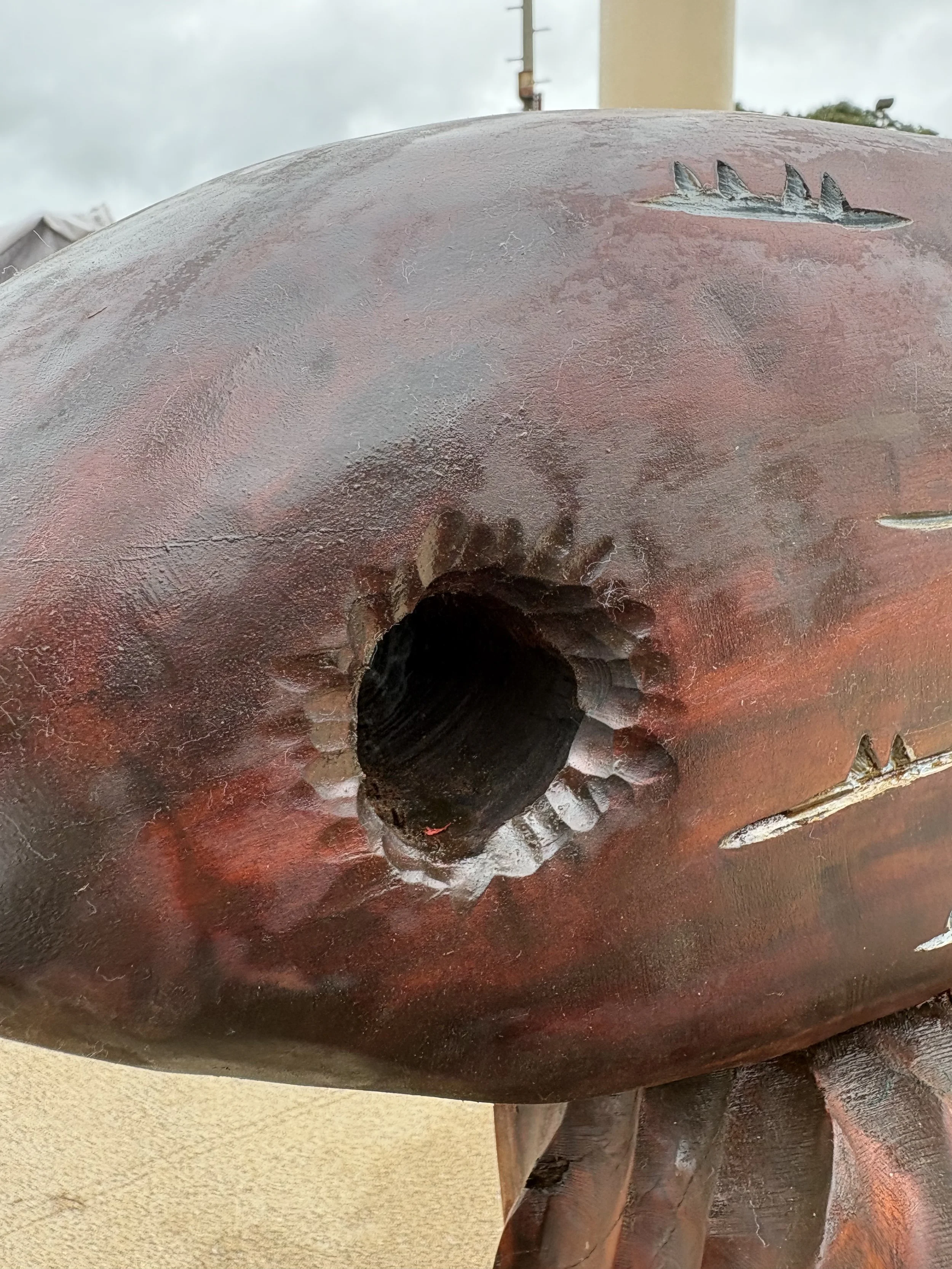
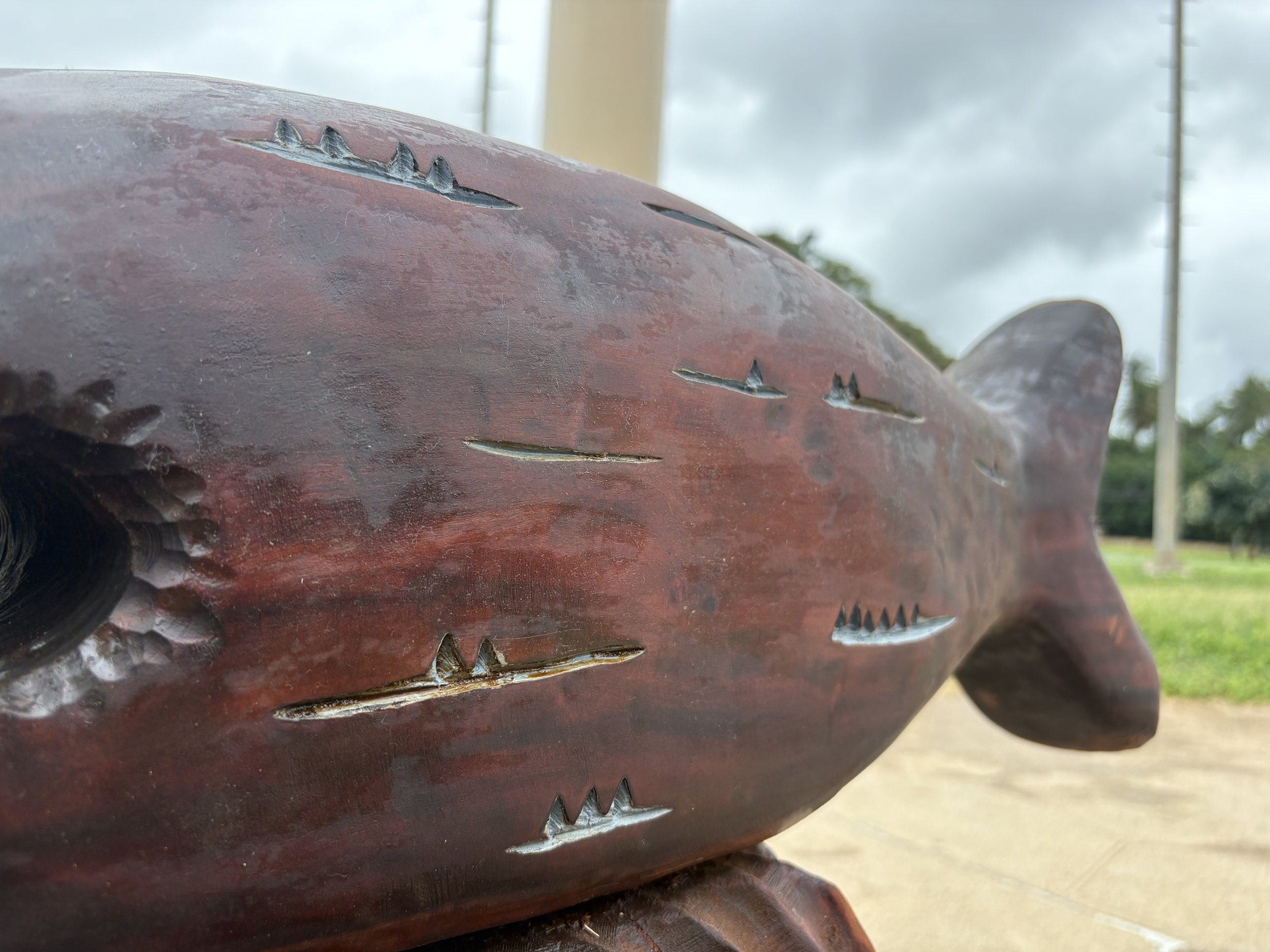
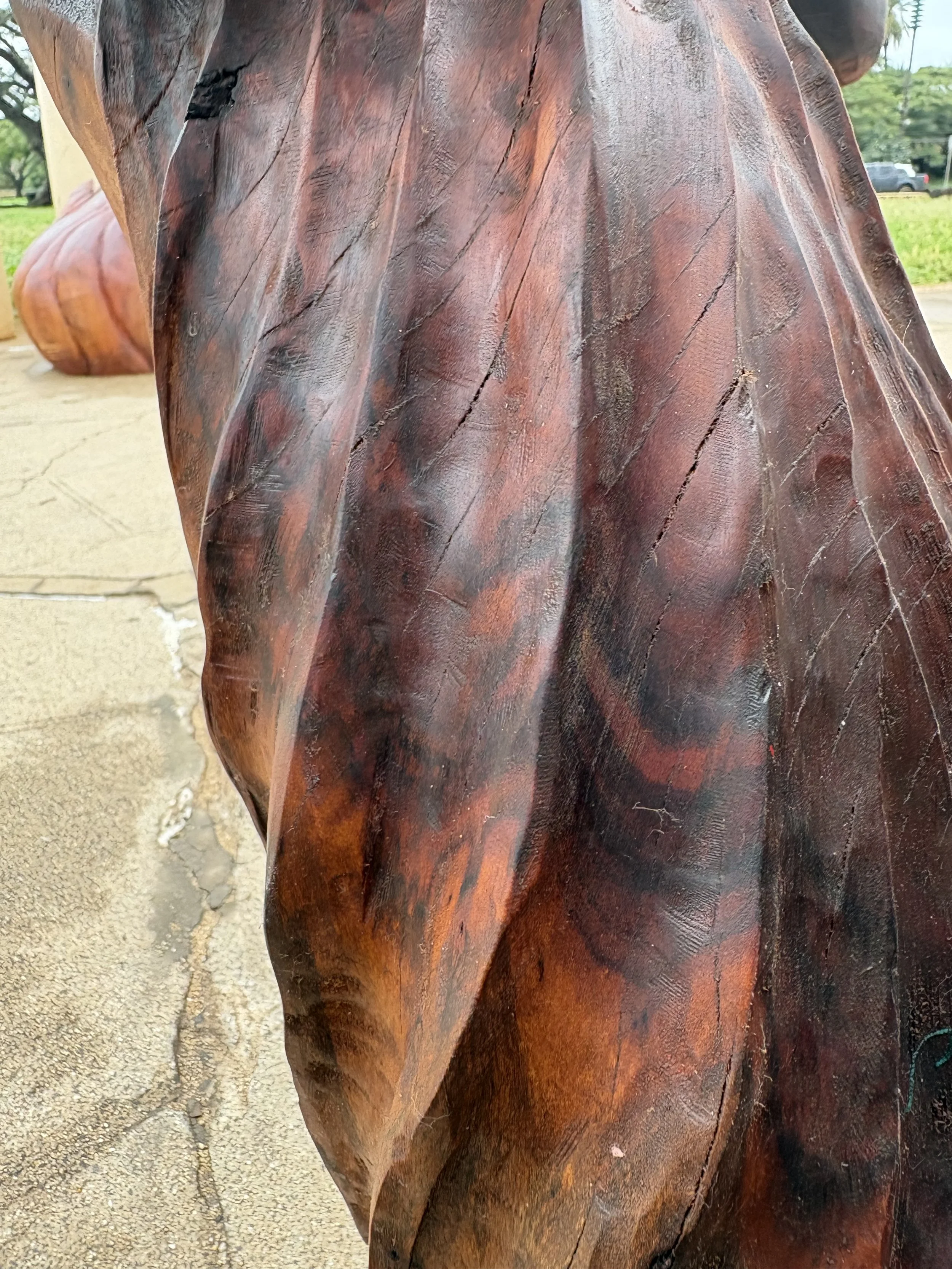
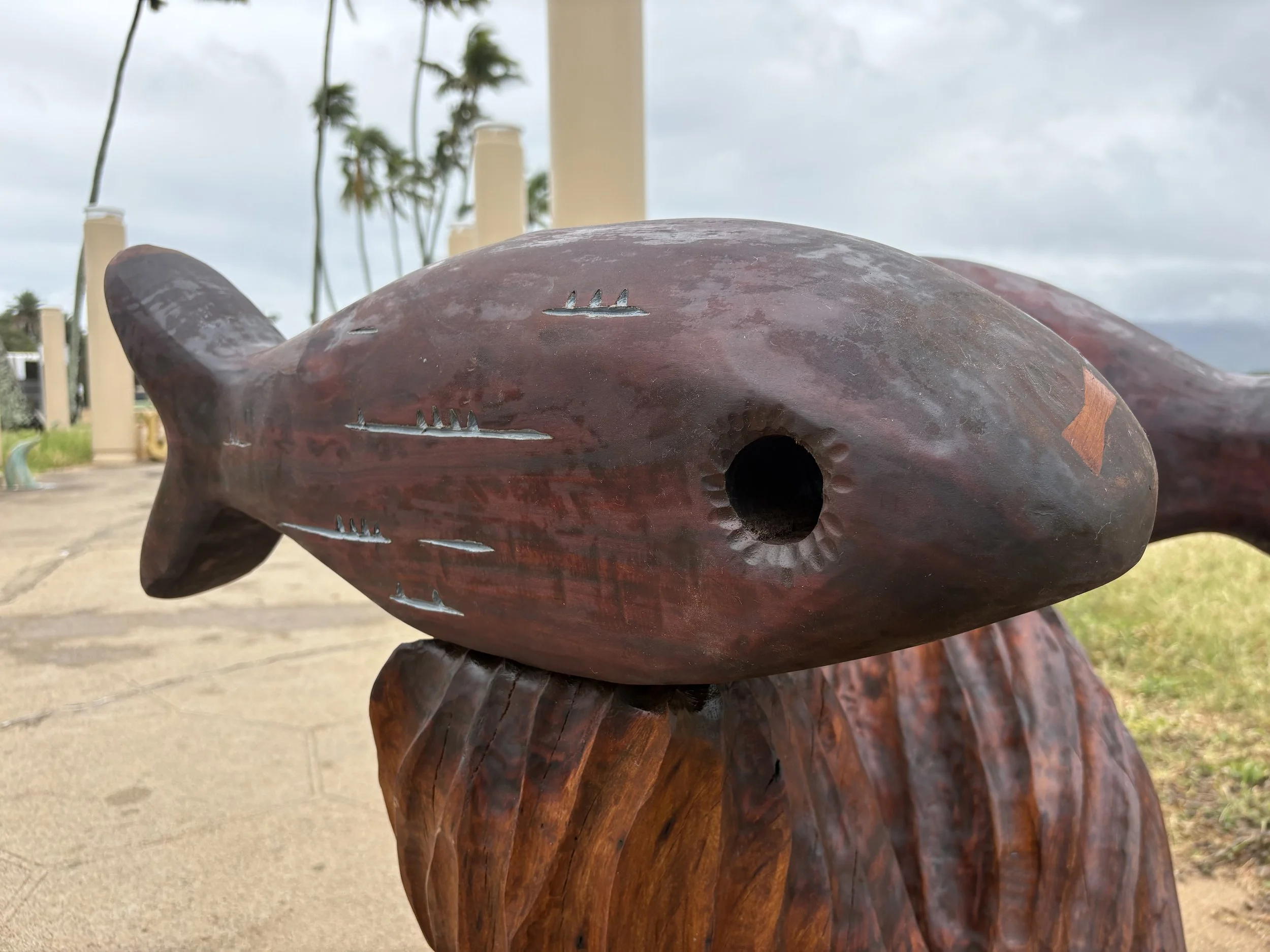
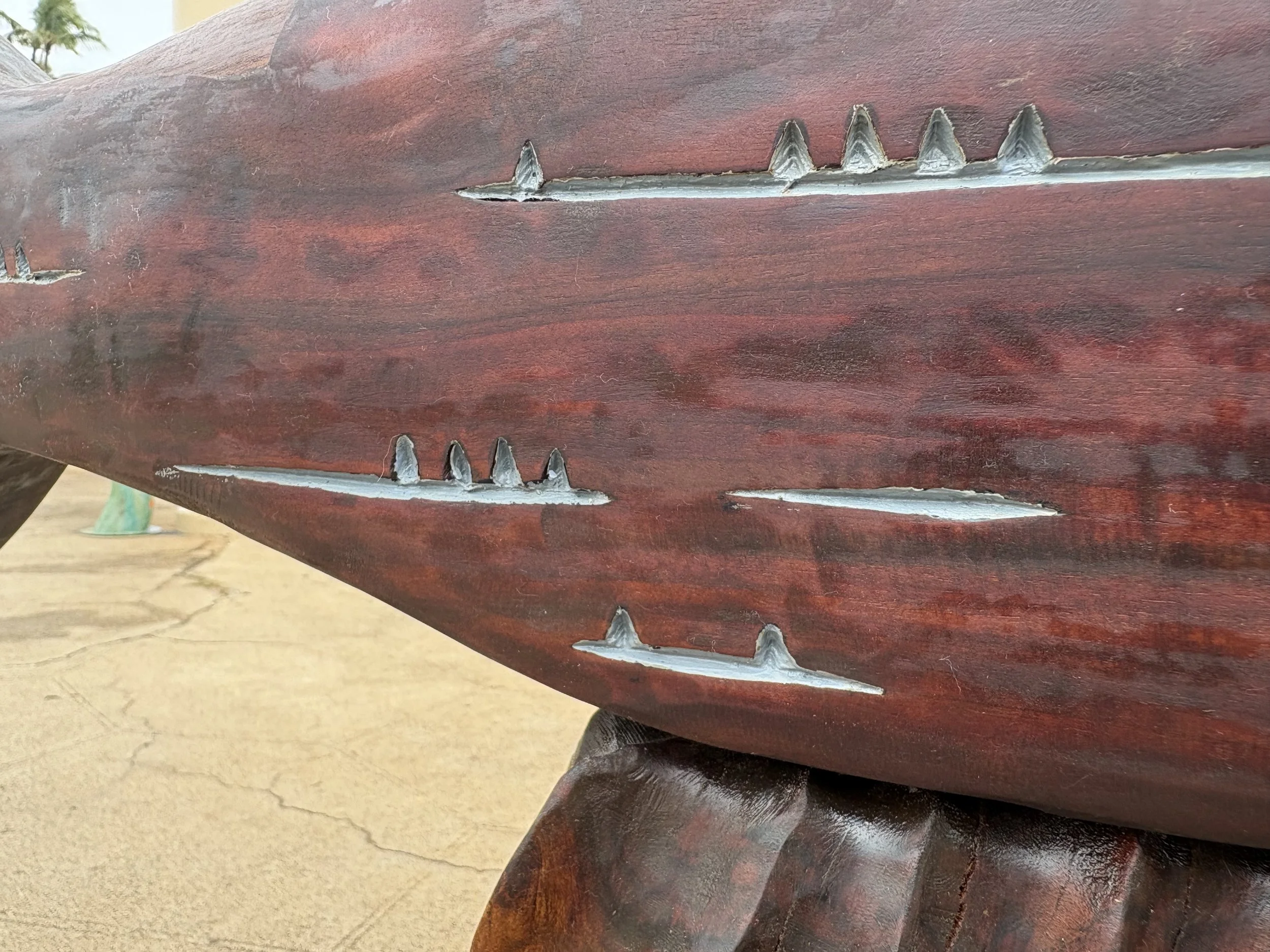
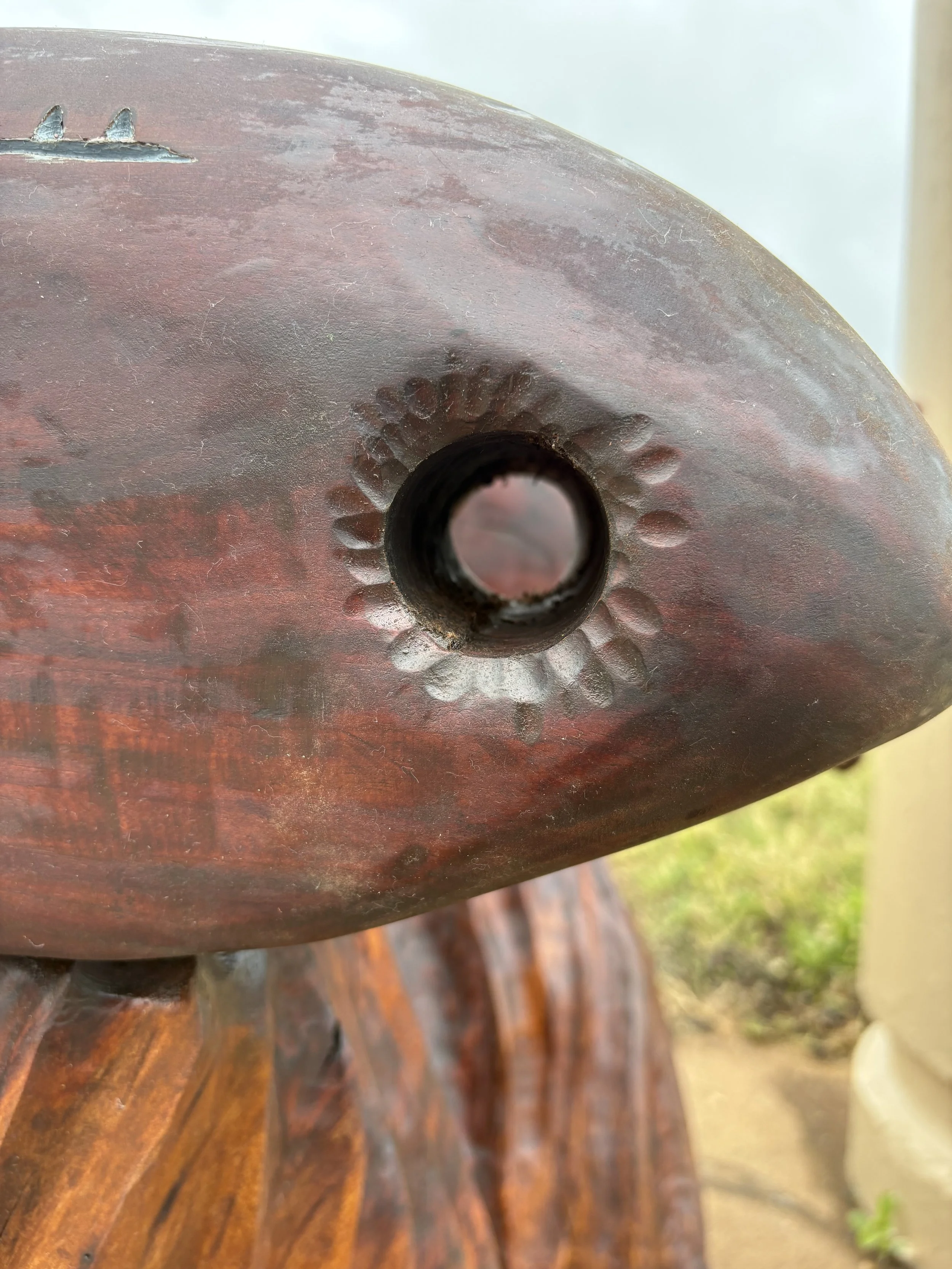
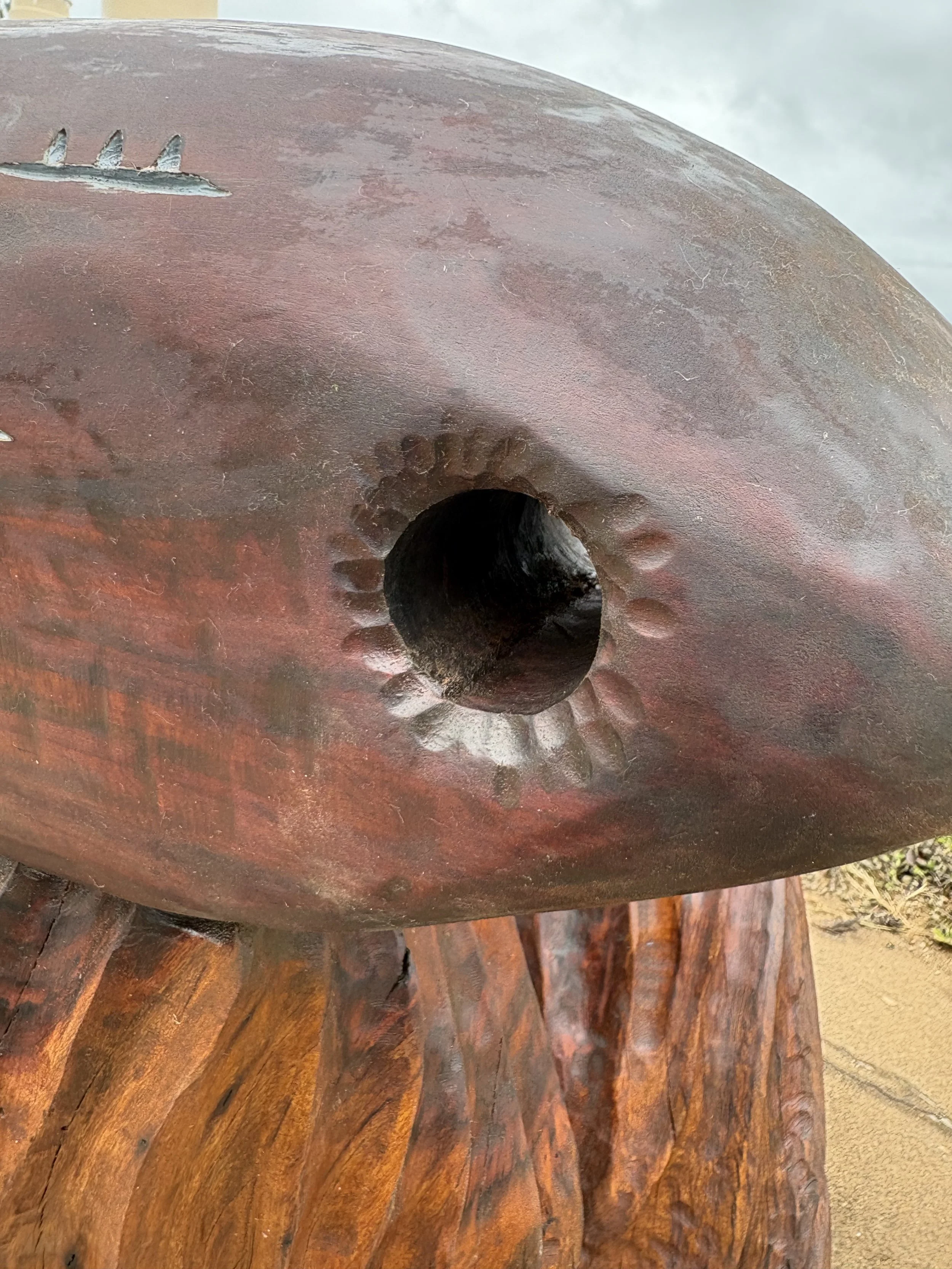
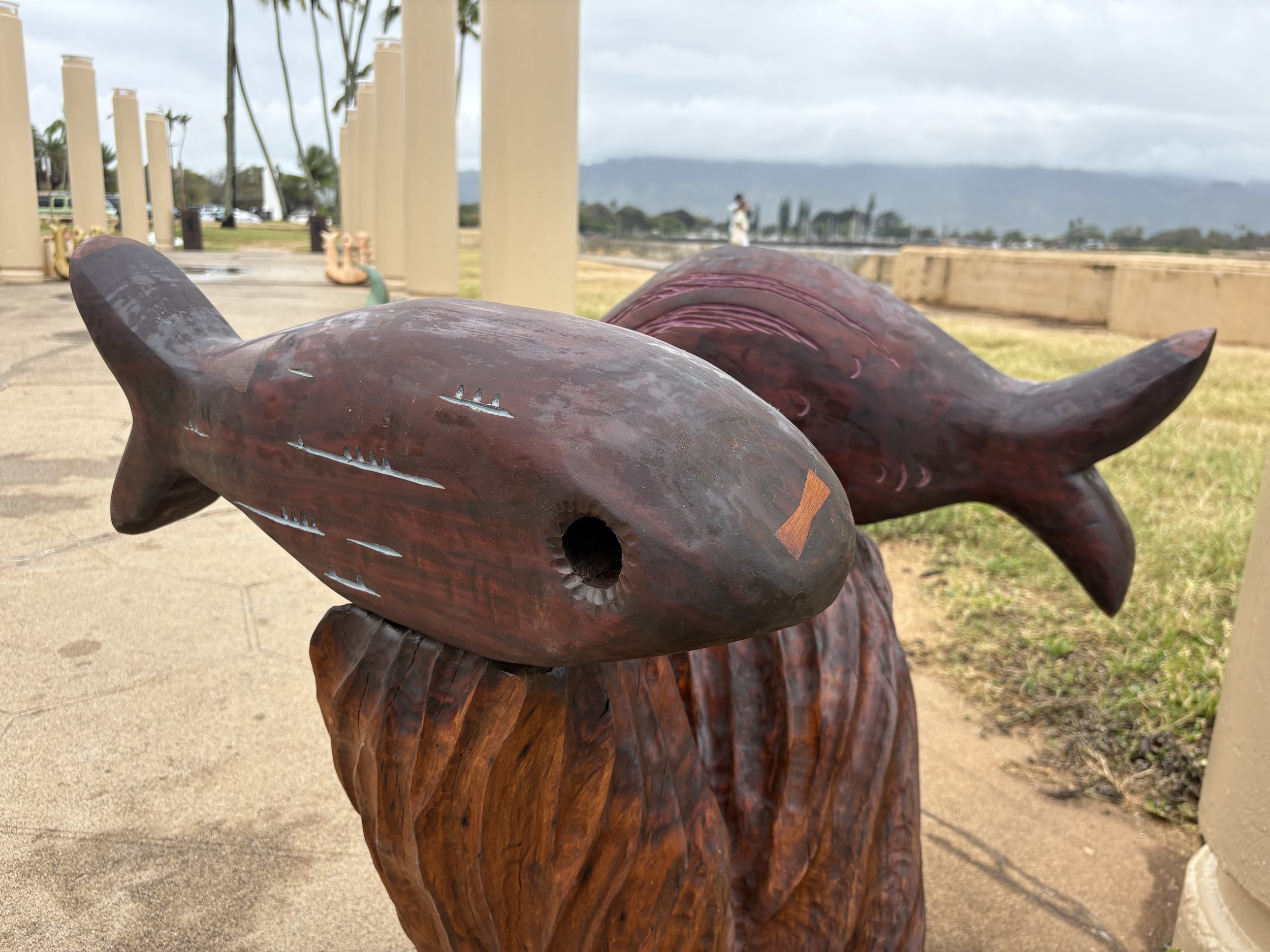
Laniwahine’s strange i'a of Uko’a
Kamani, Monkey Pod wood
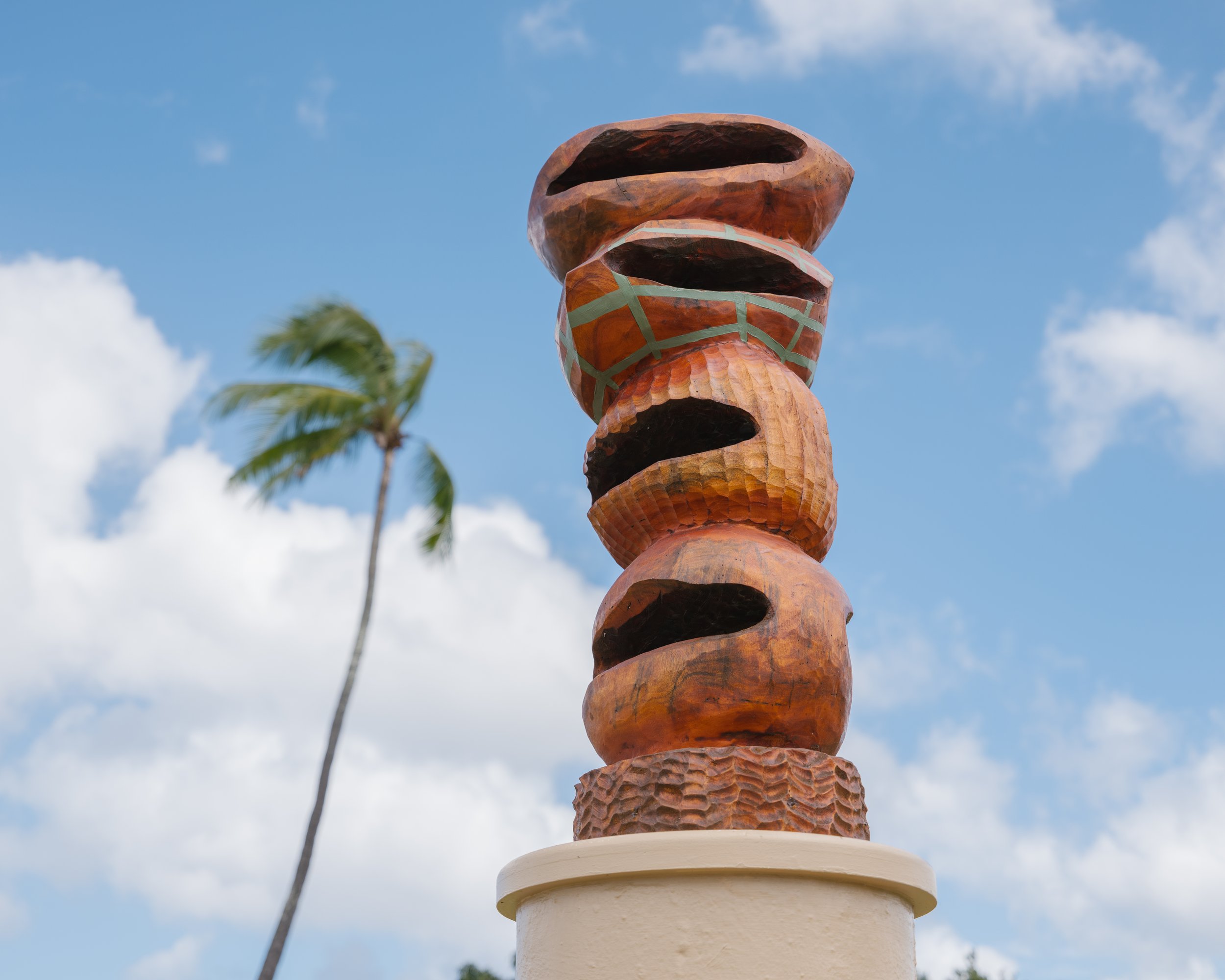
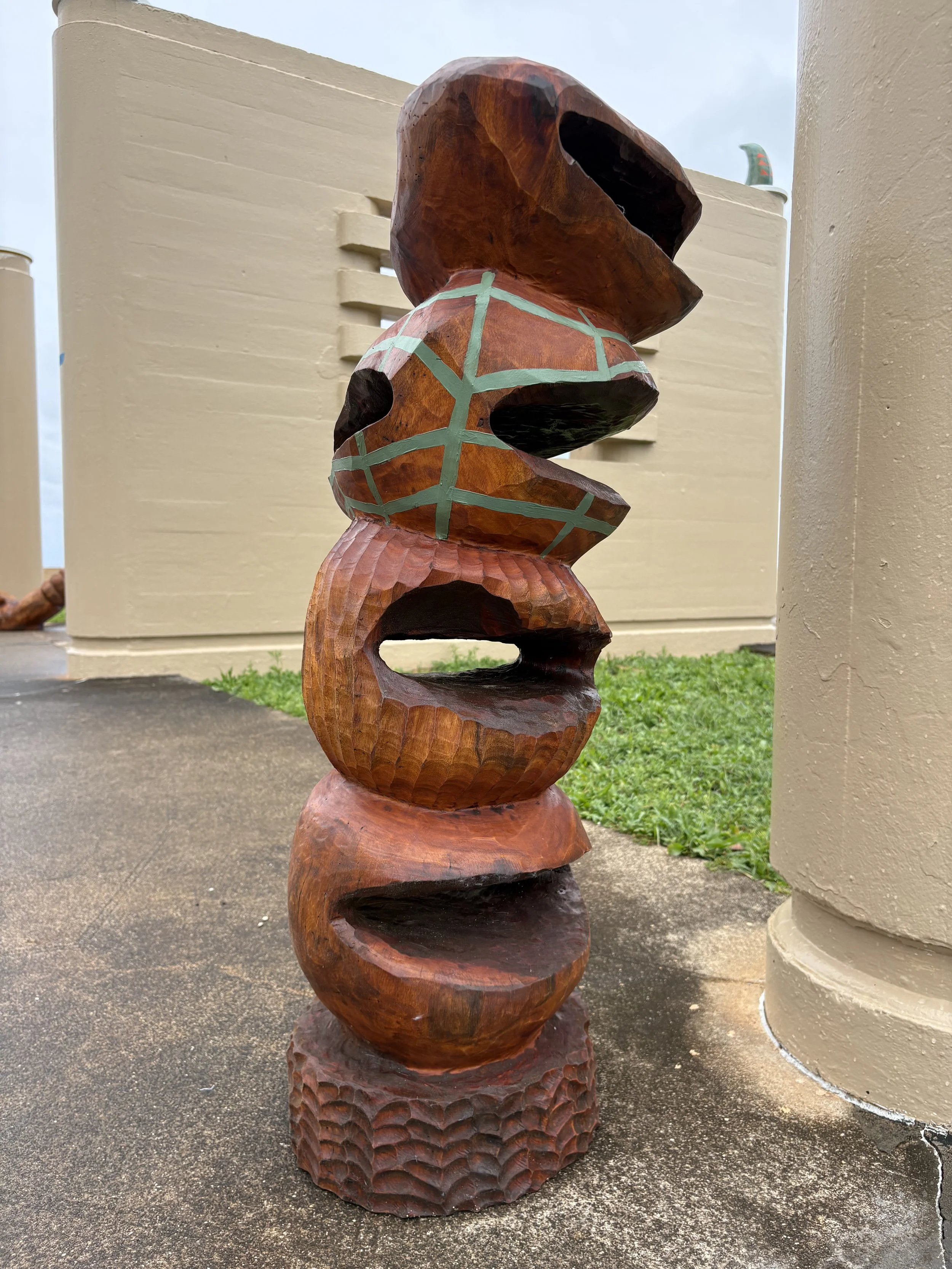
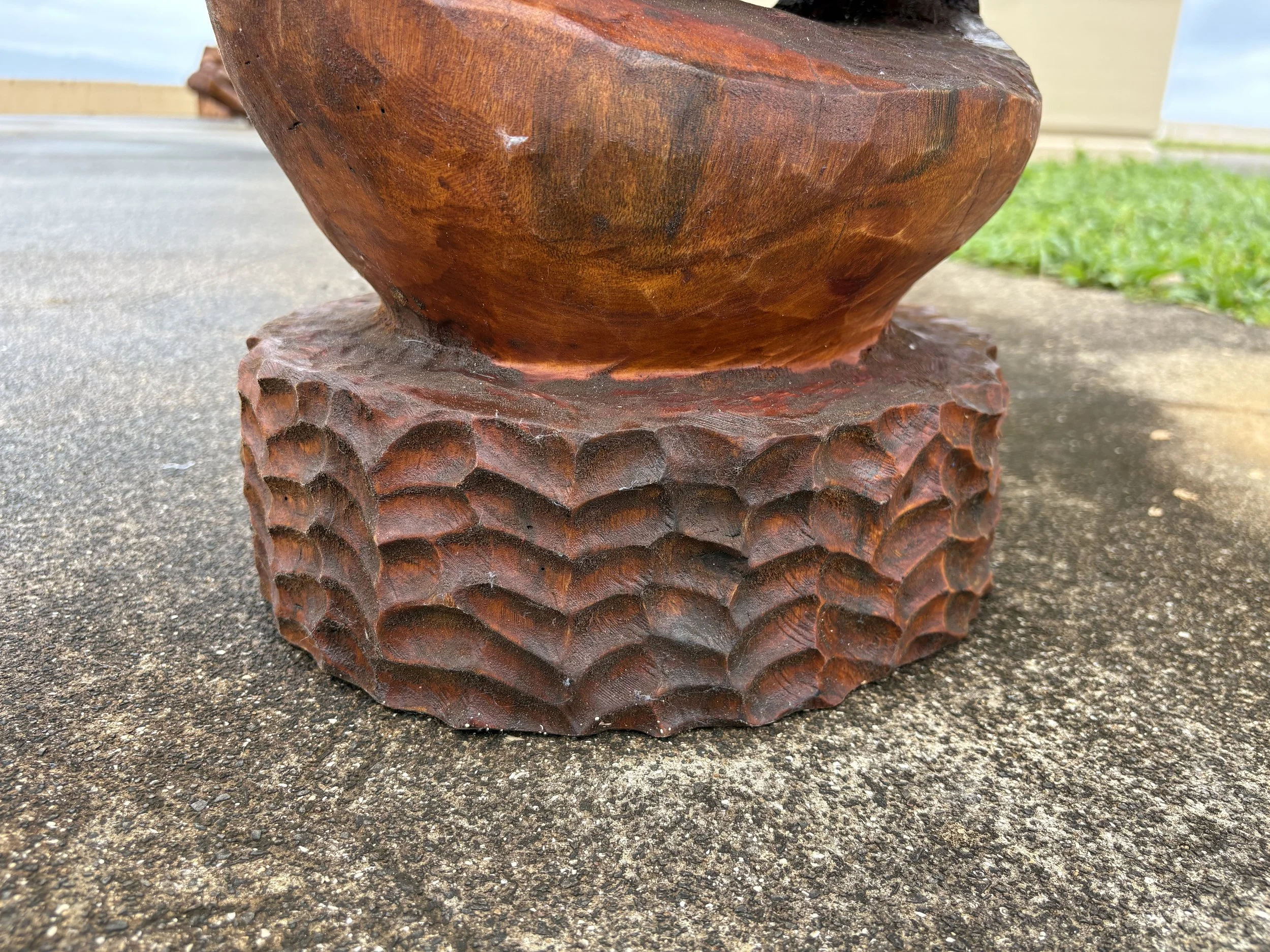
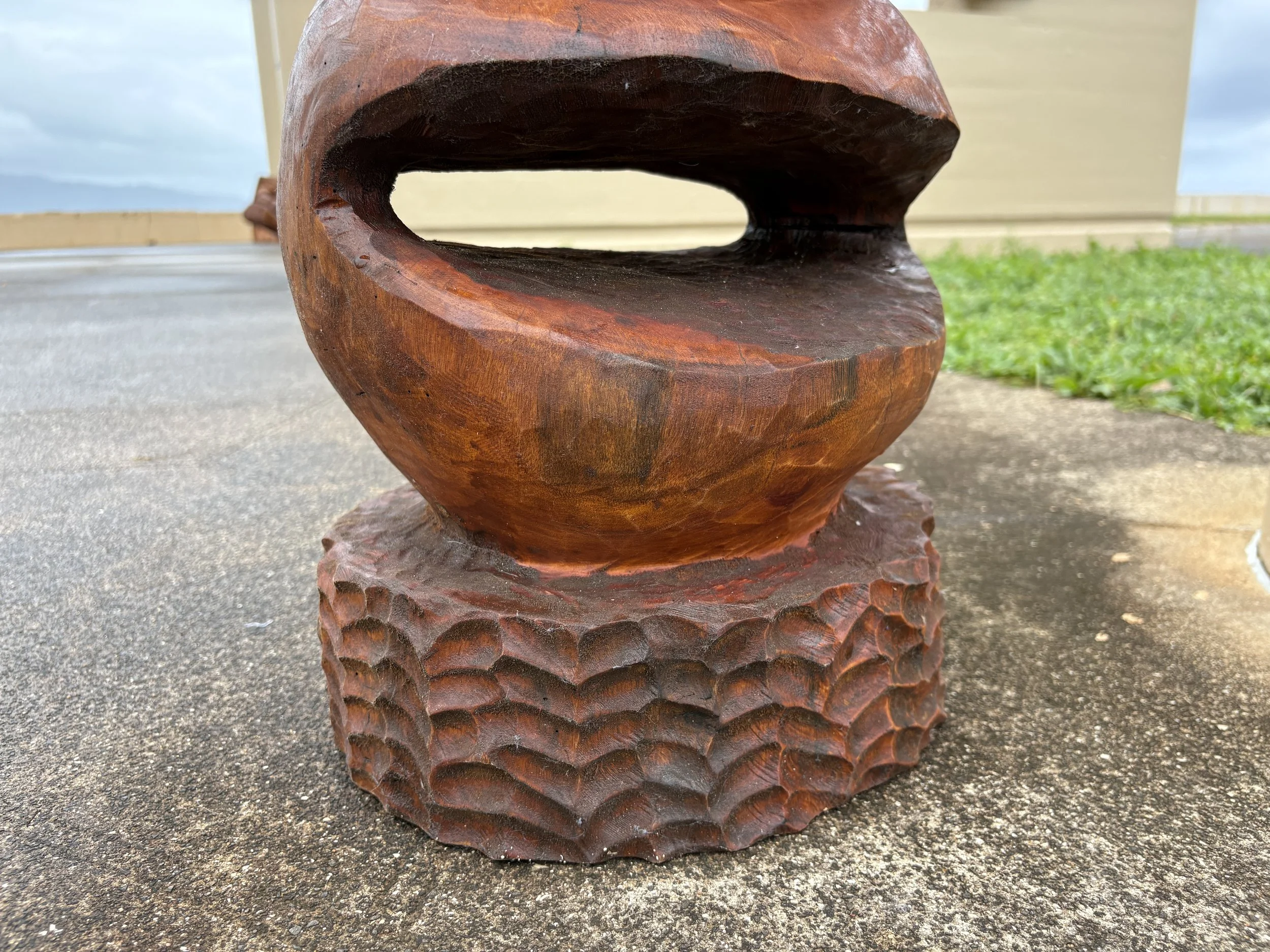
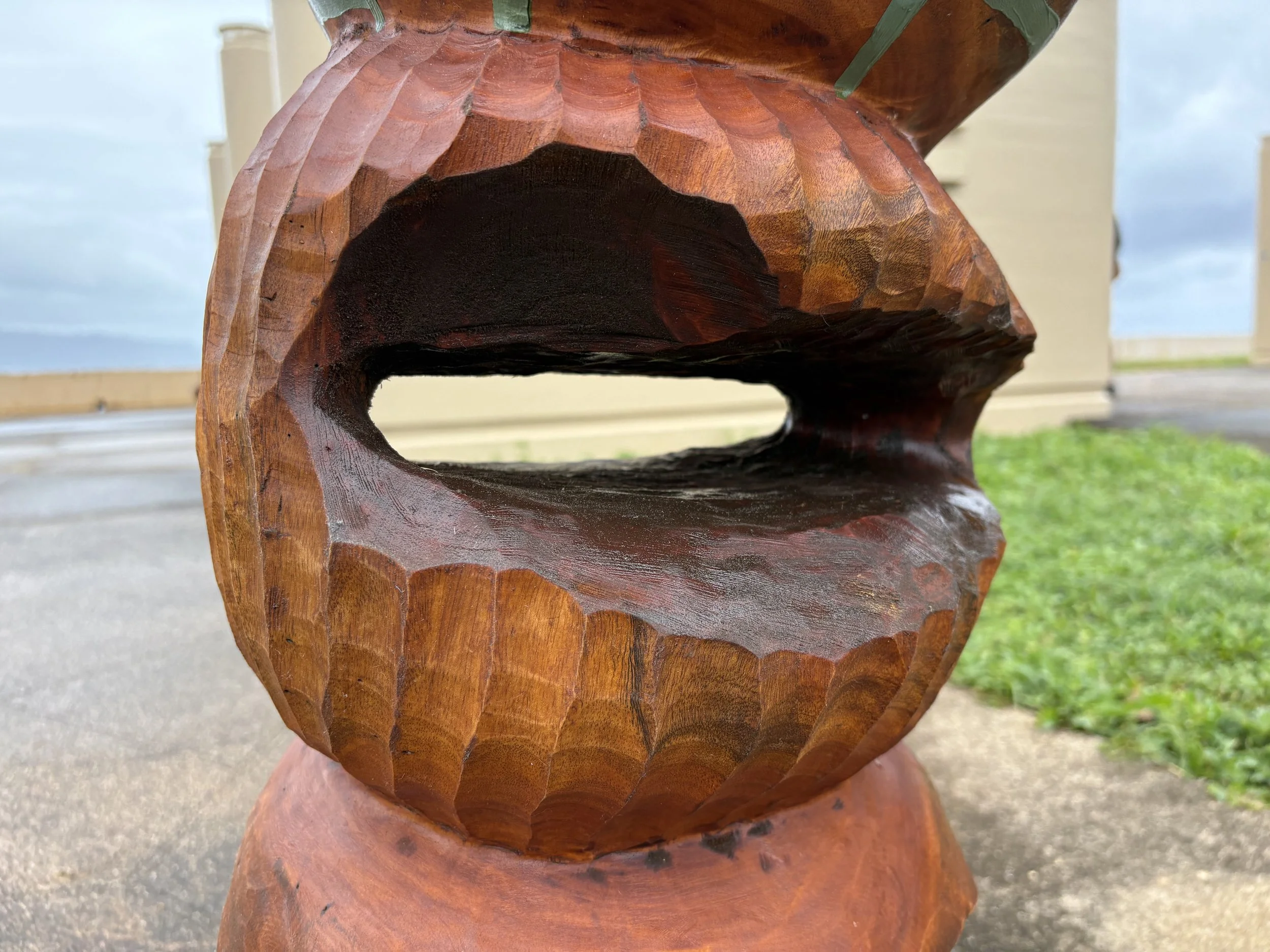
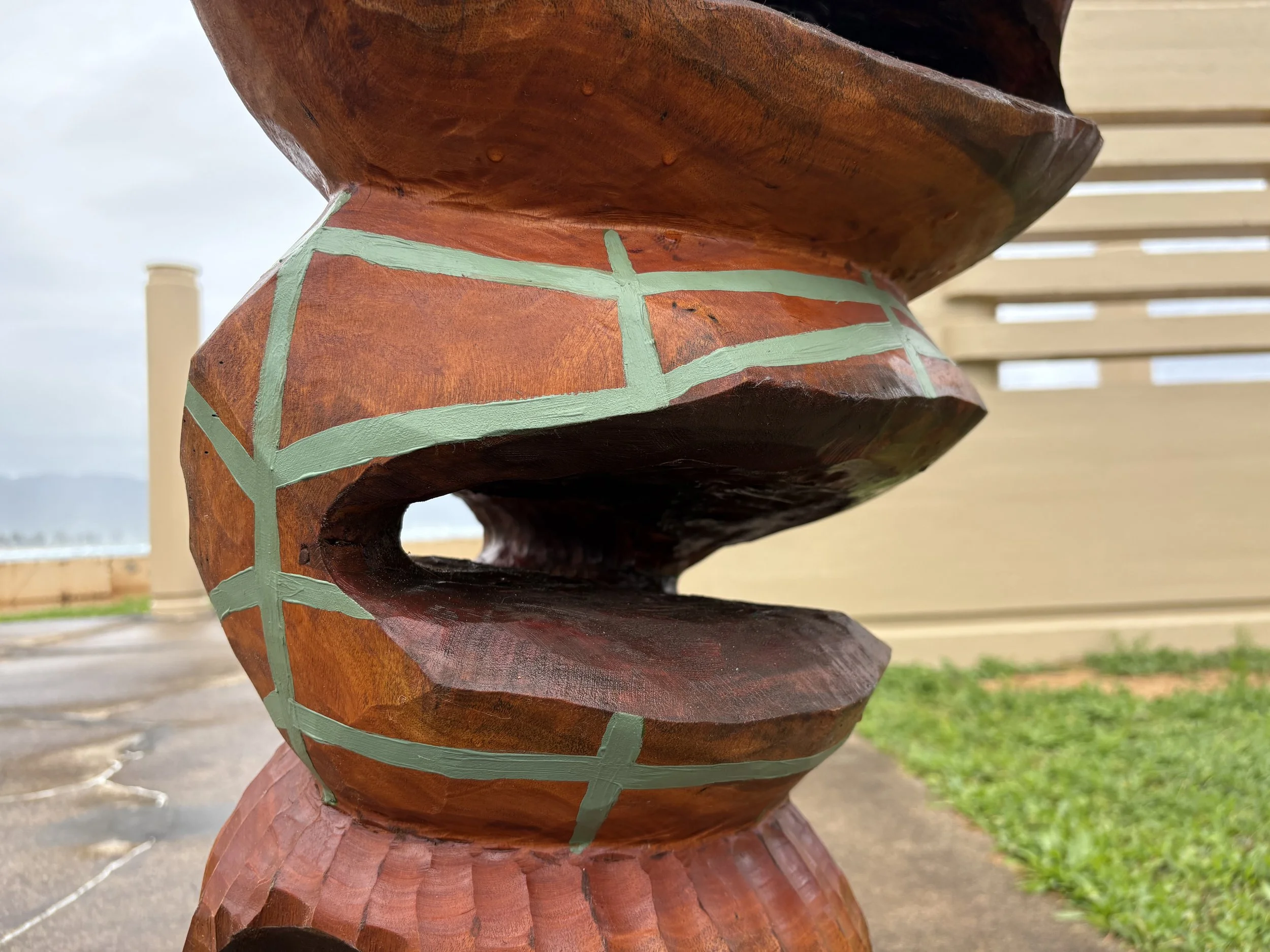
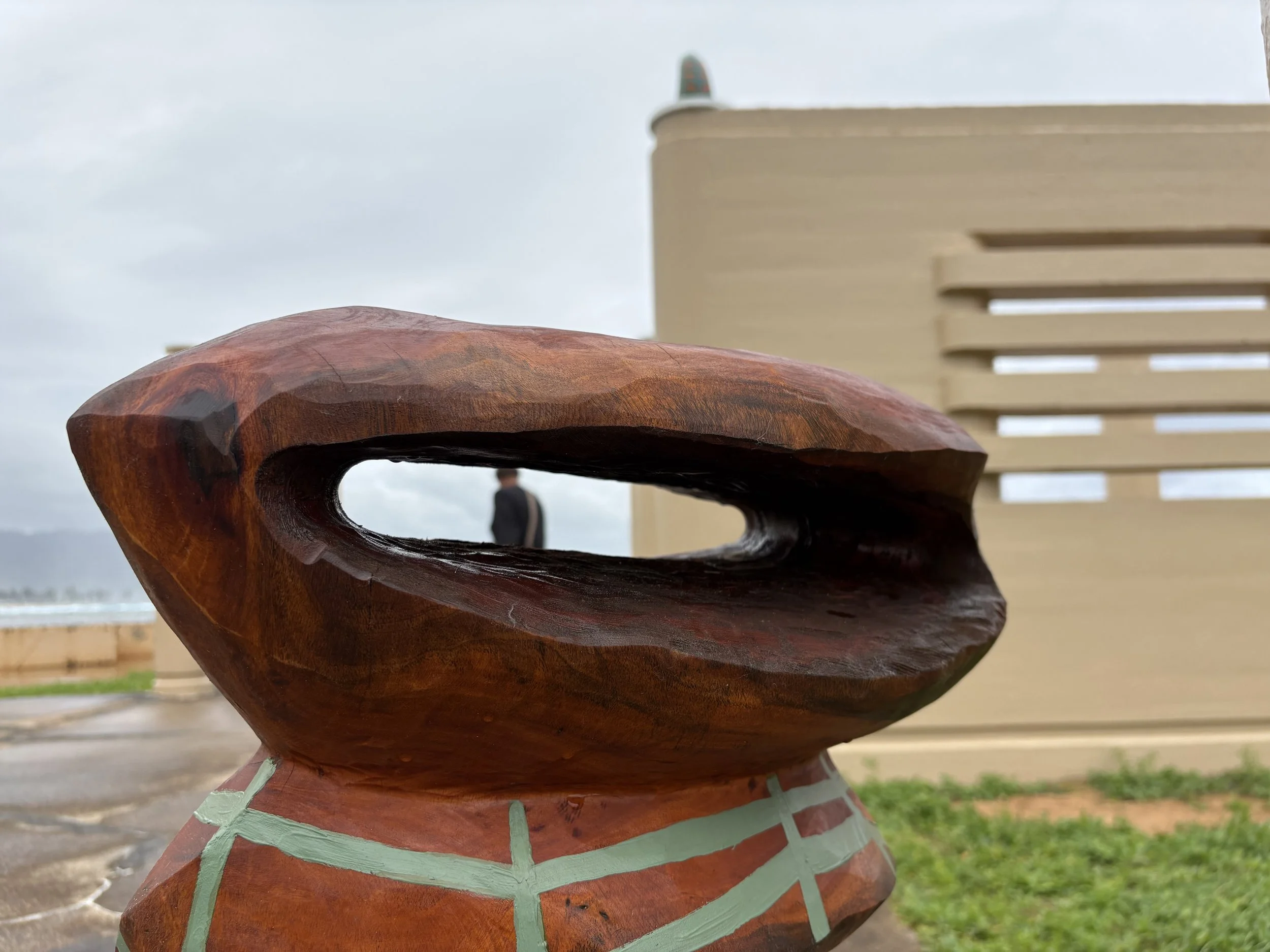
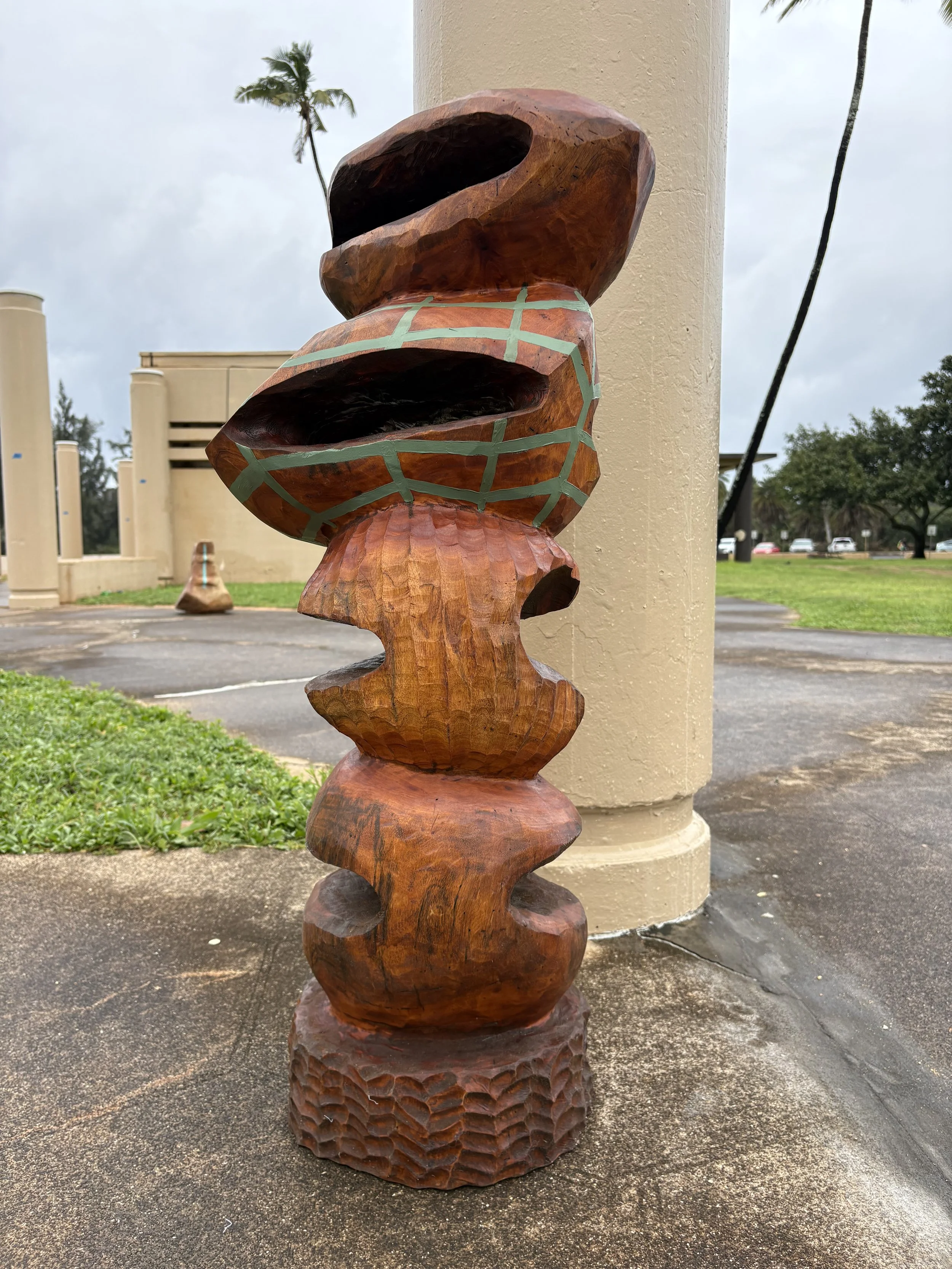
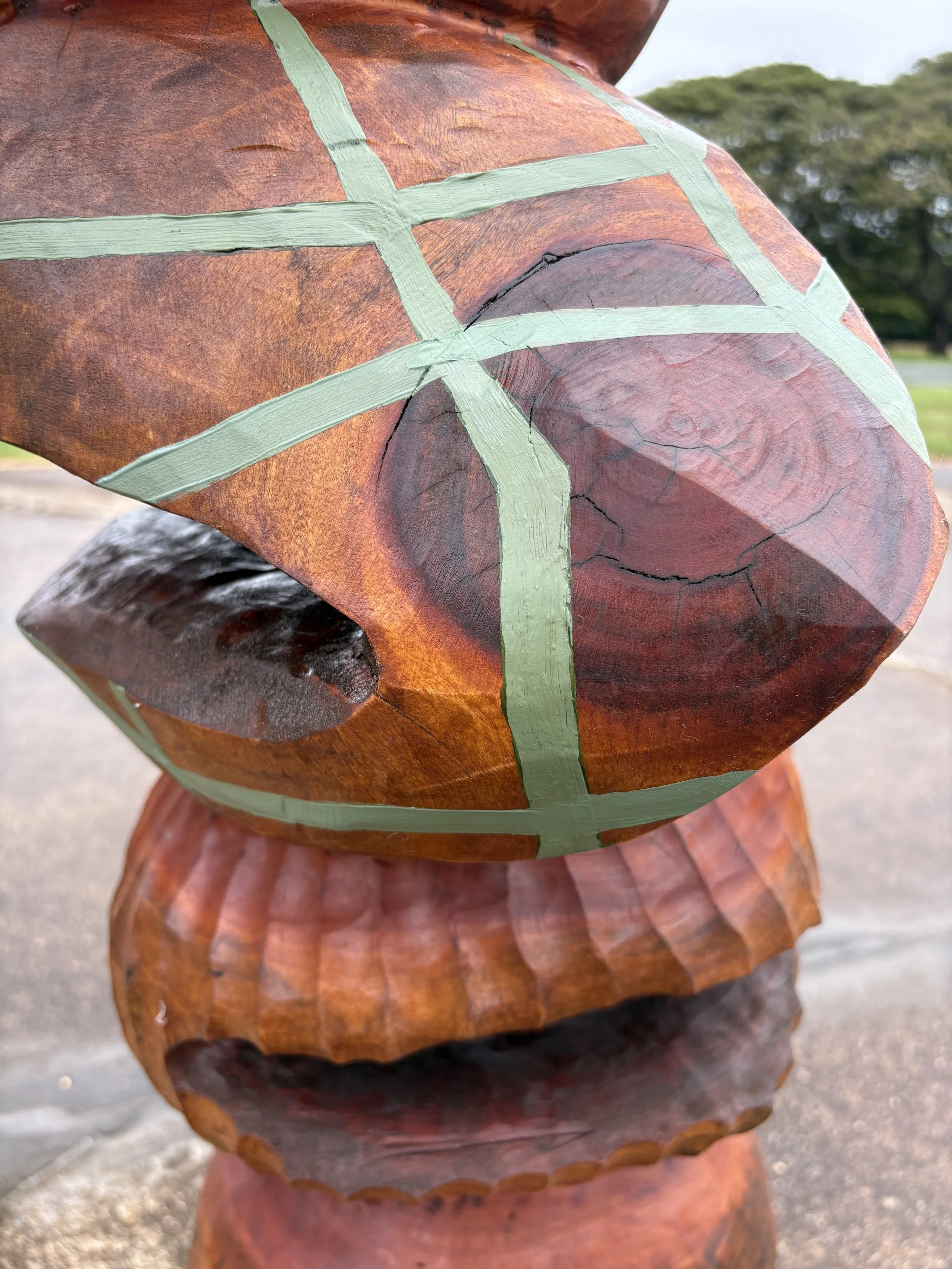
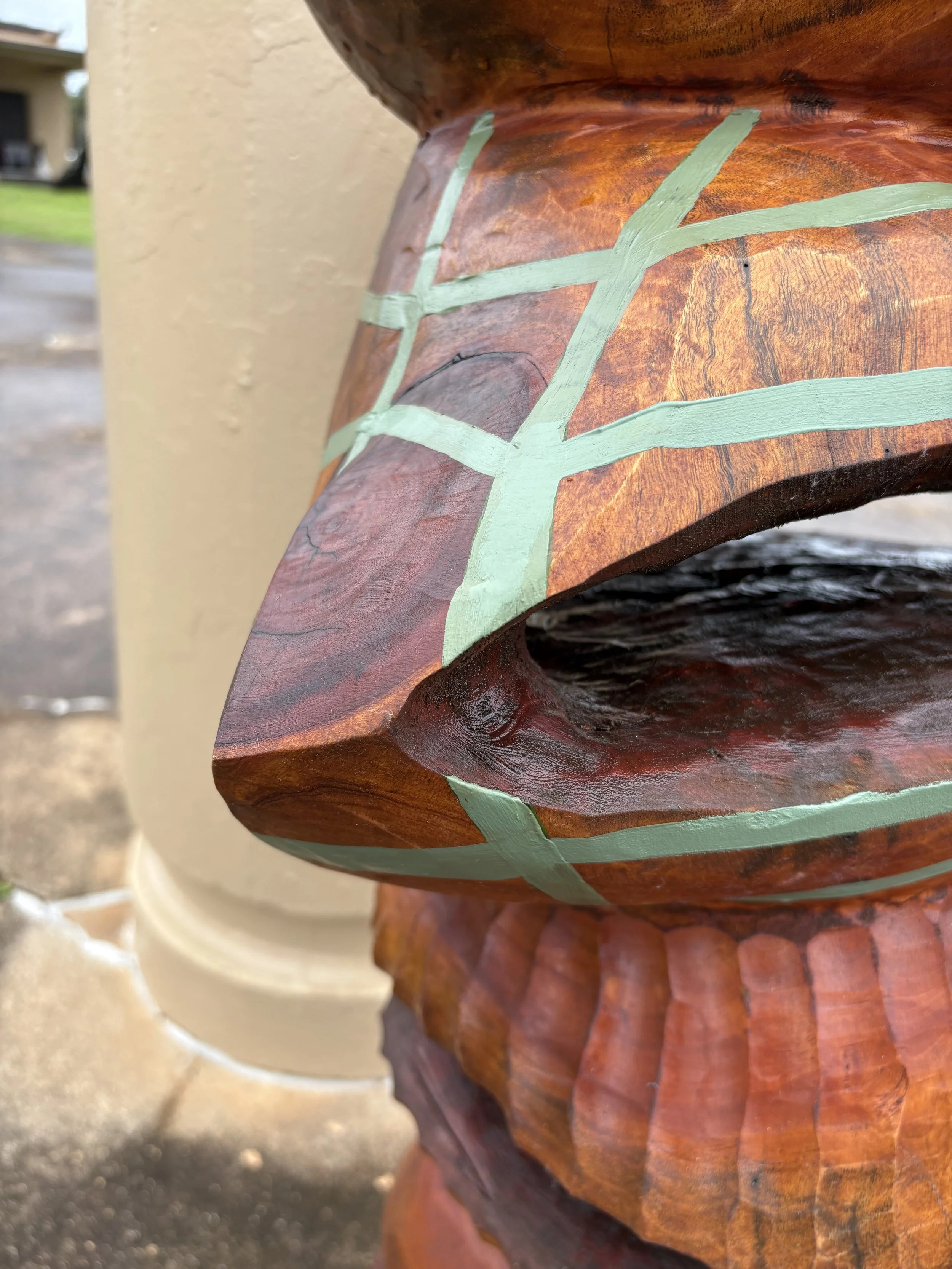
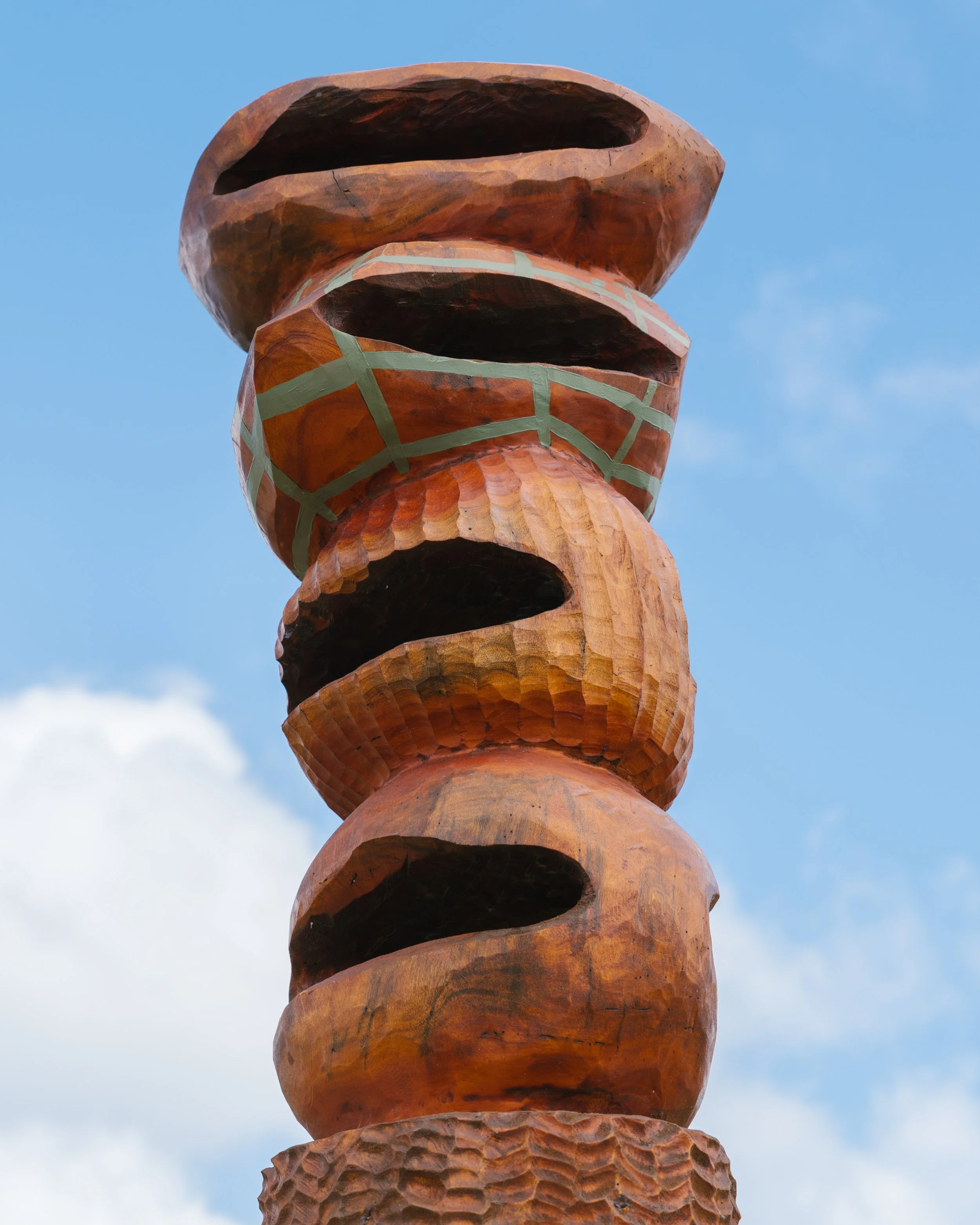
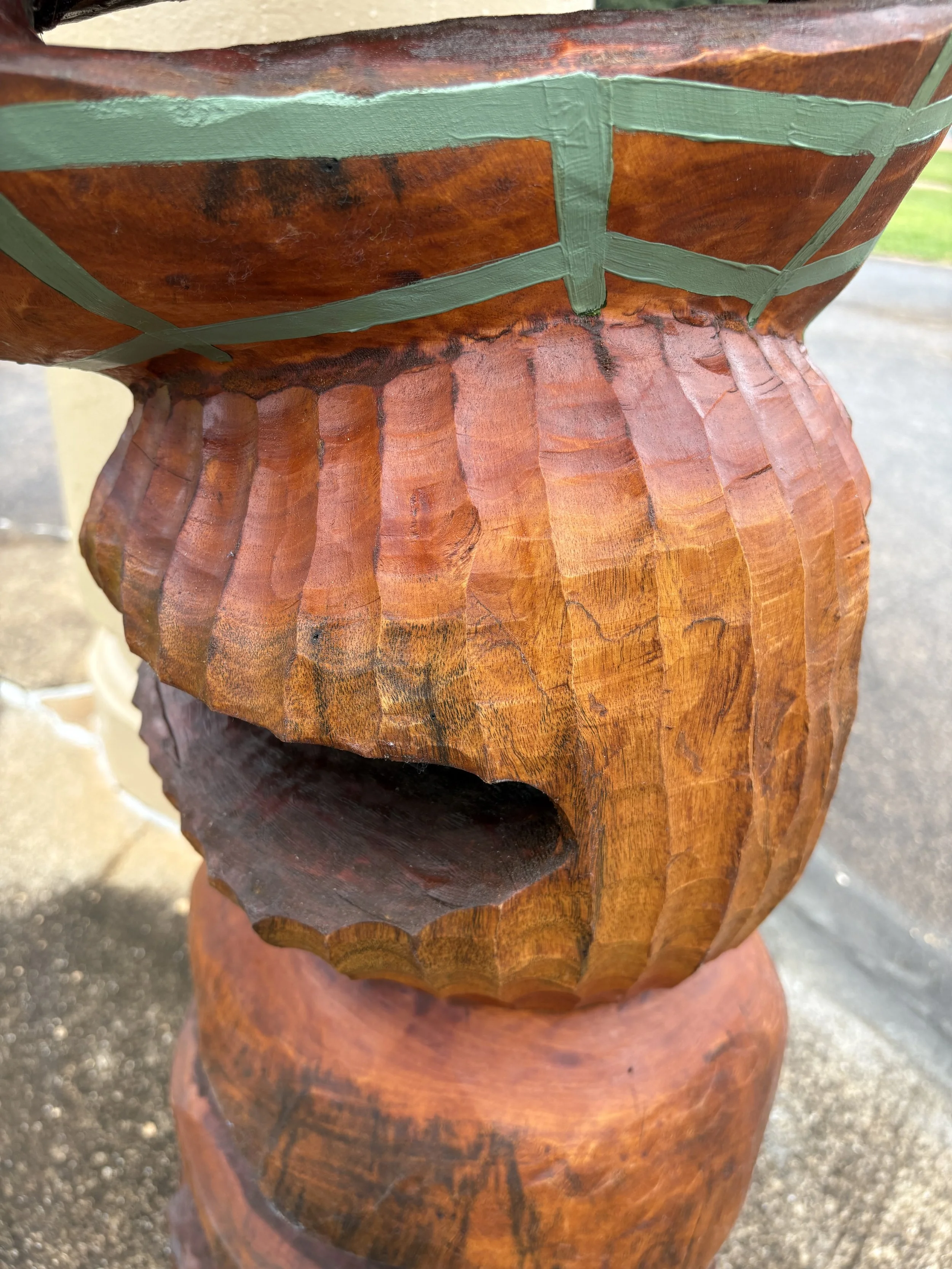
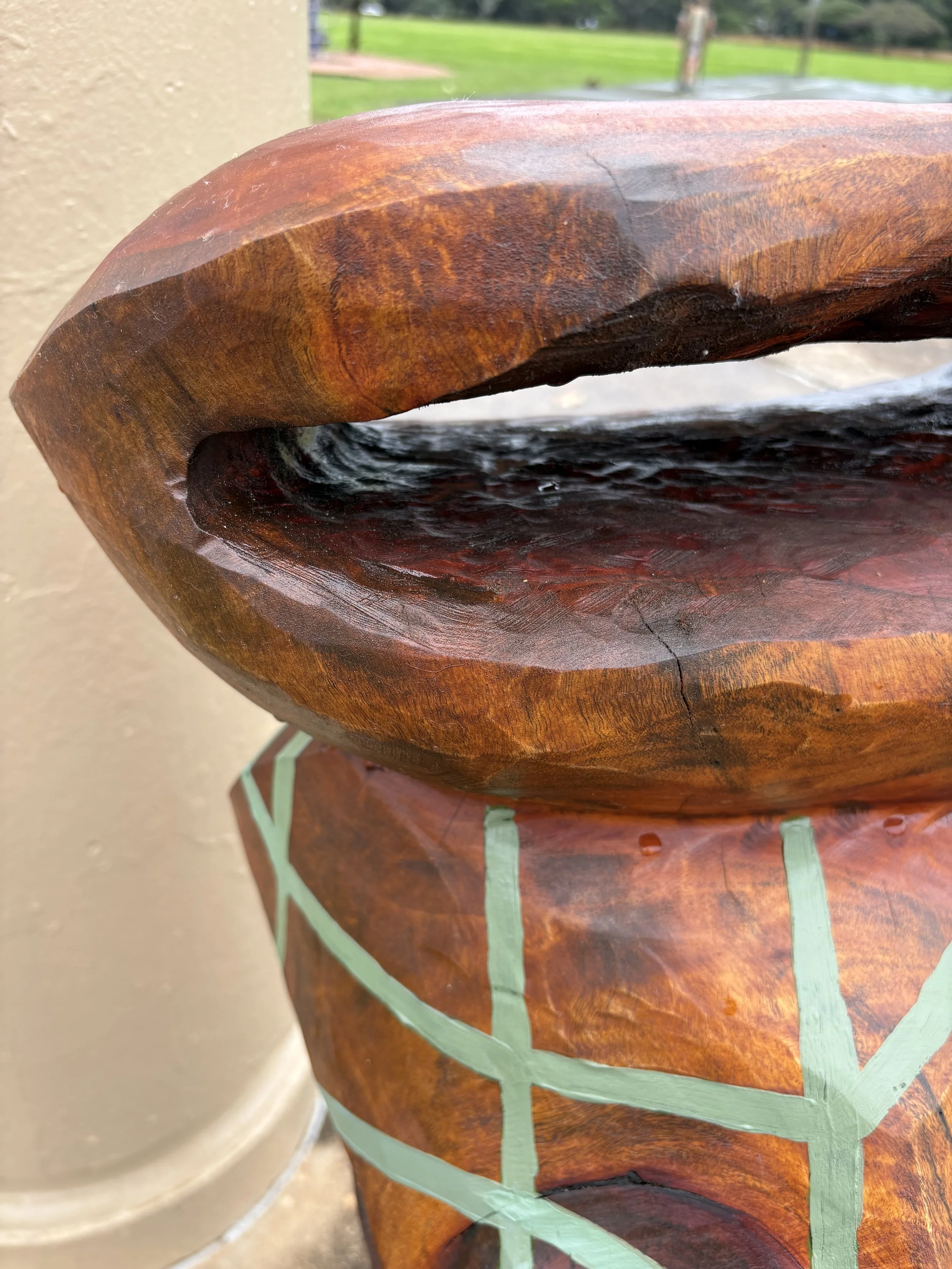
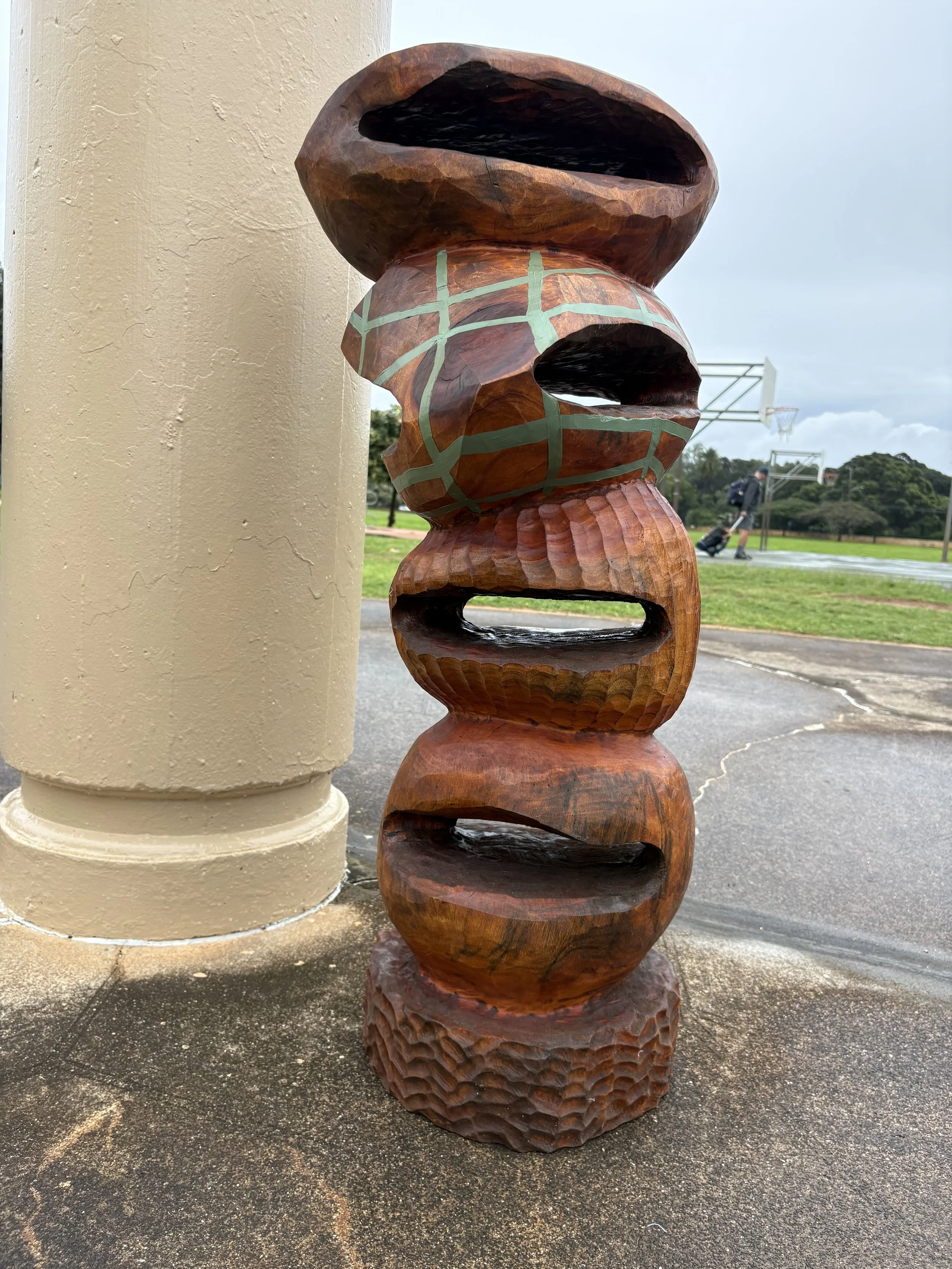
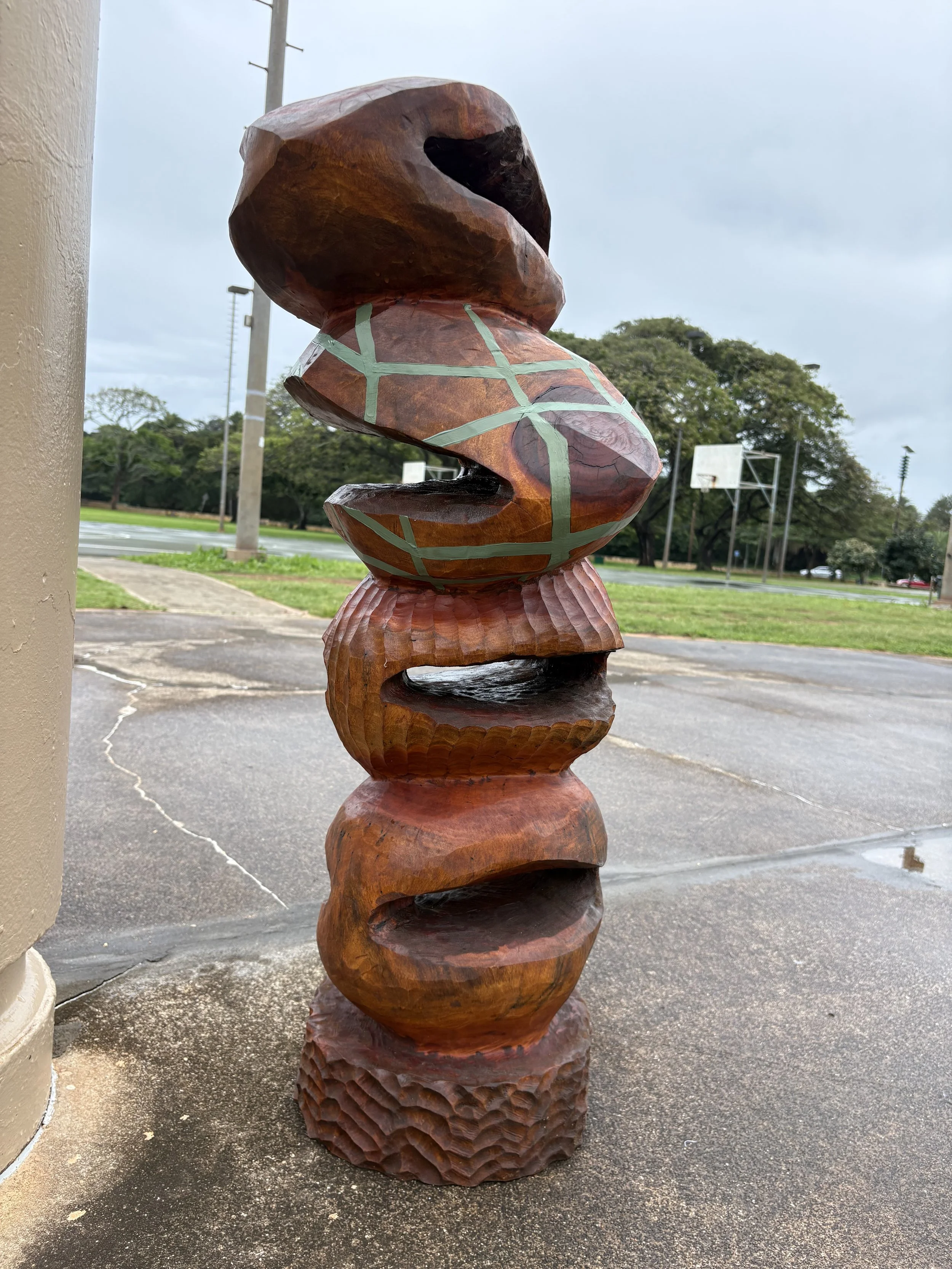
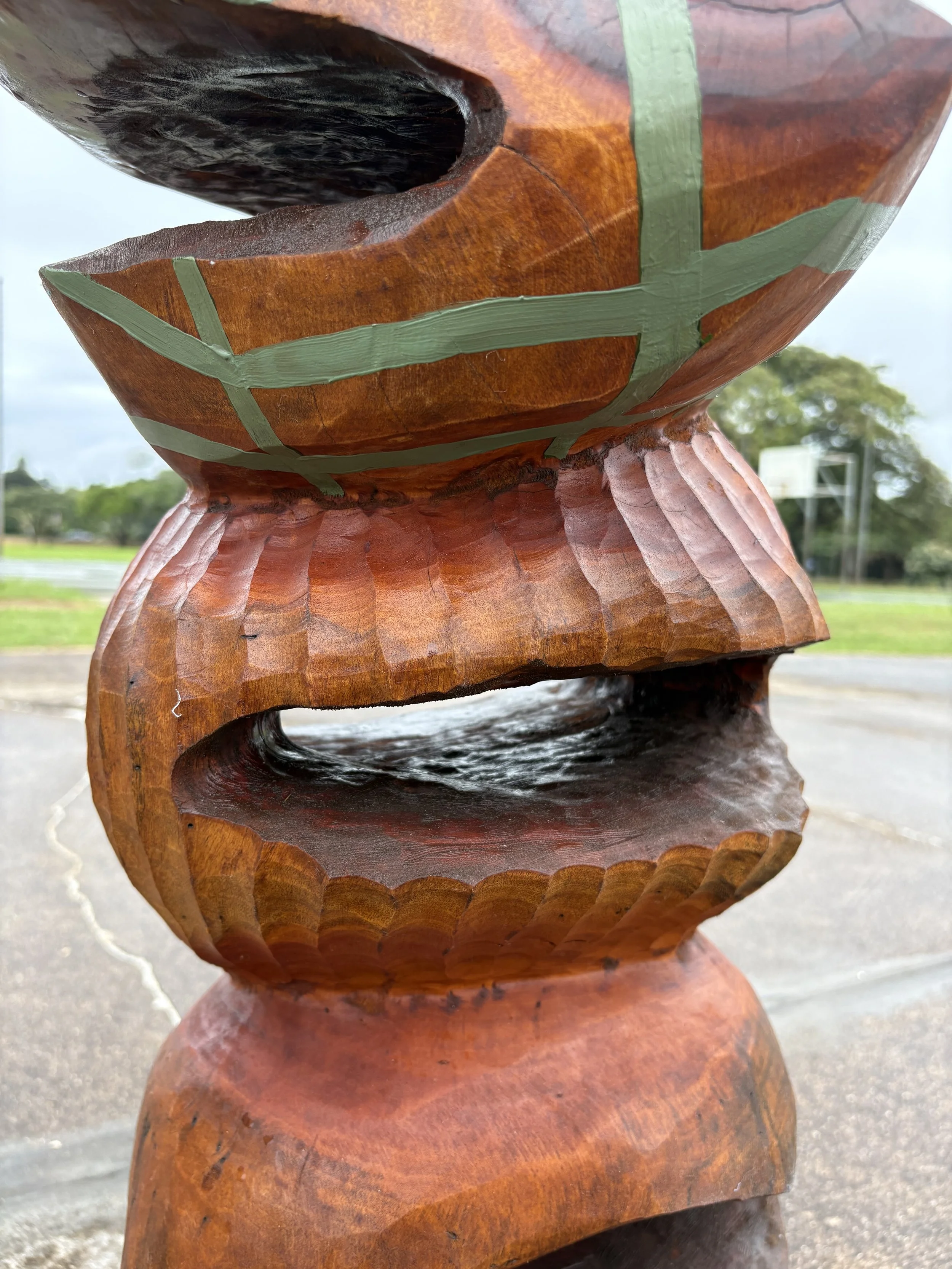
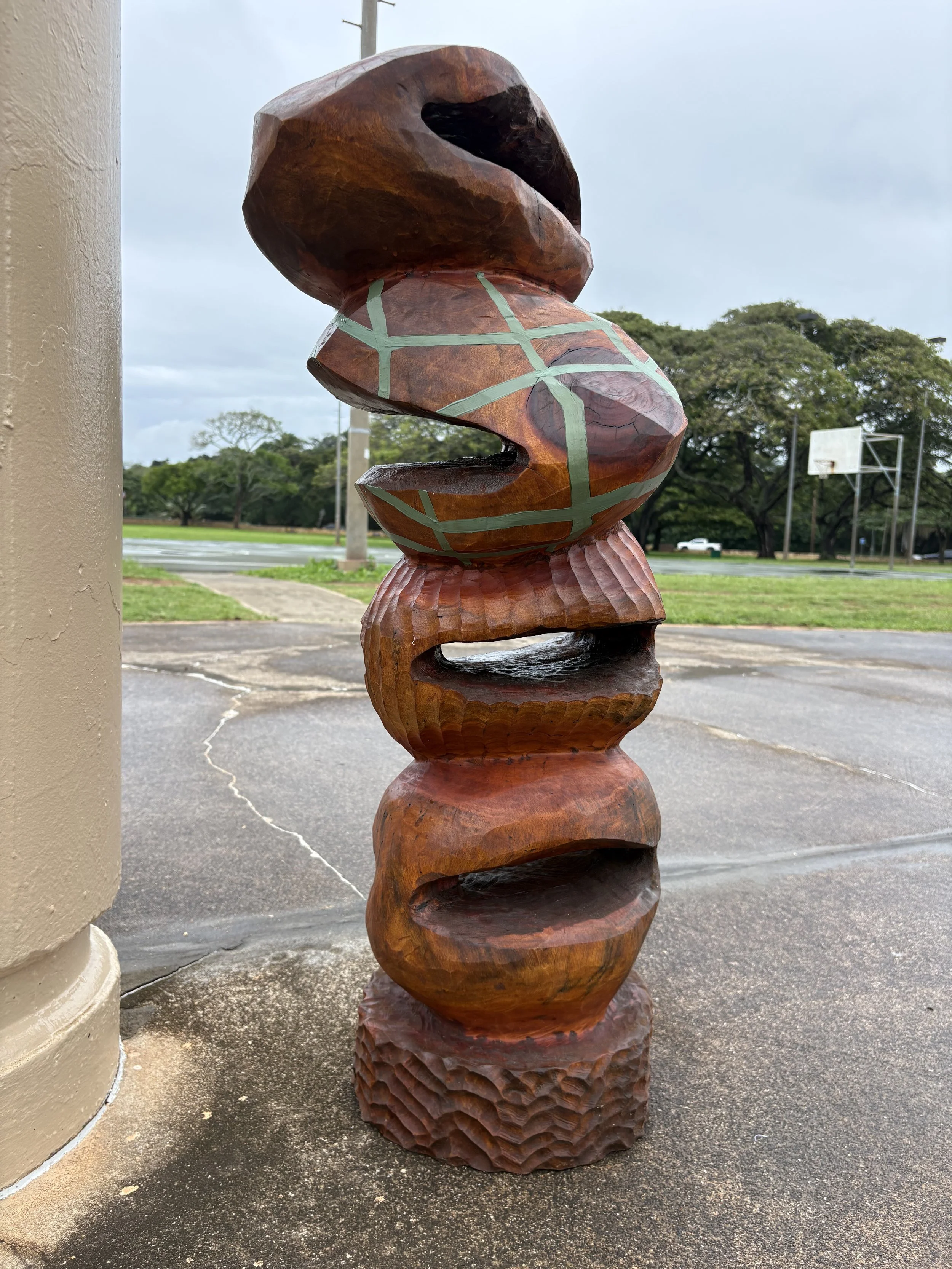
Elemental arrival: ‘āina, wai, lani, ‘ike
Monkey Pod wood
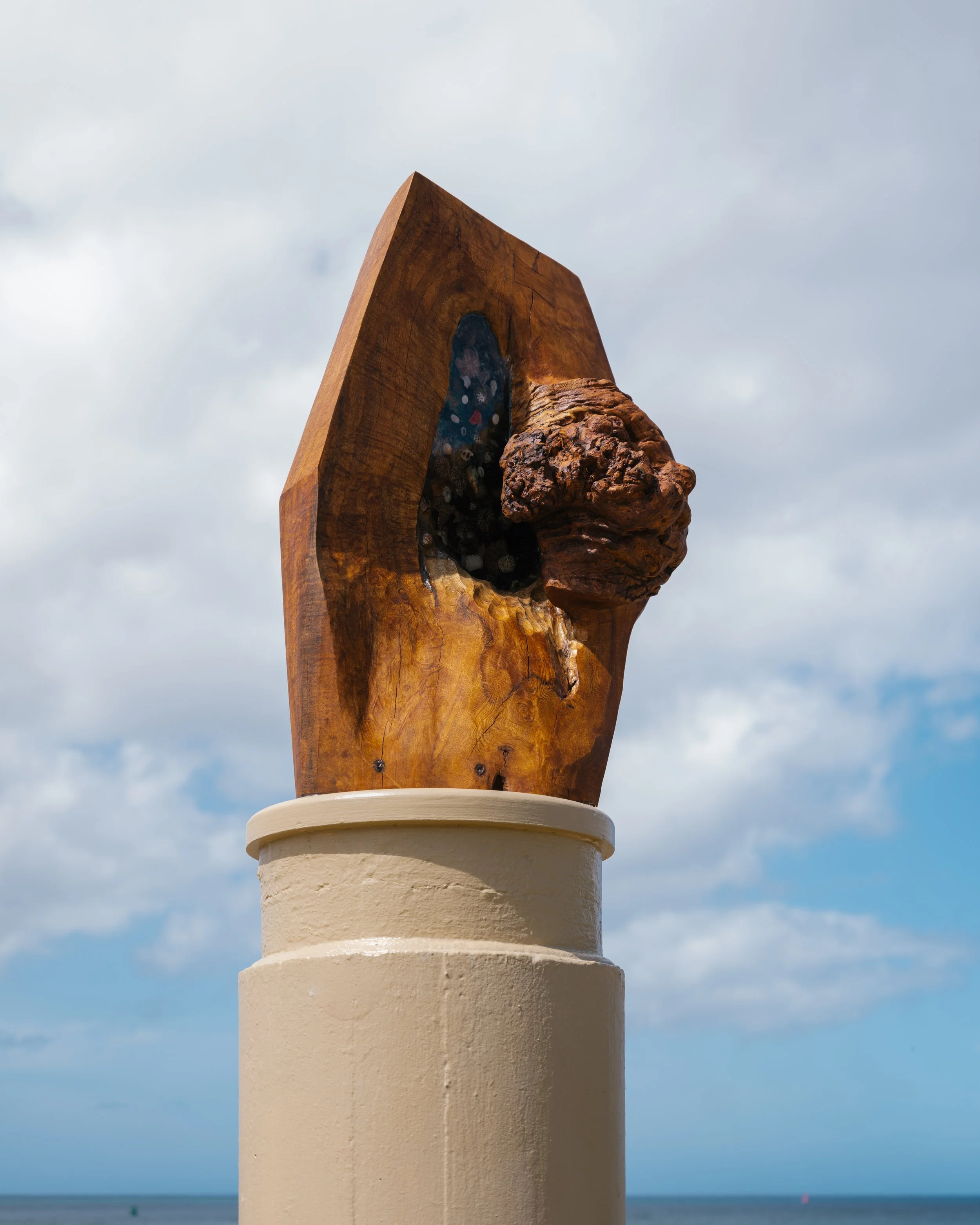
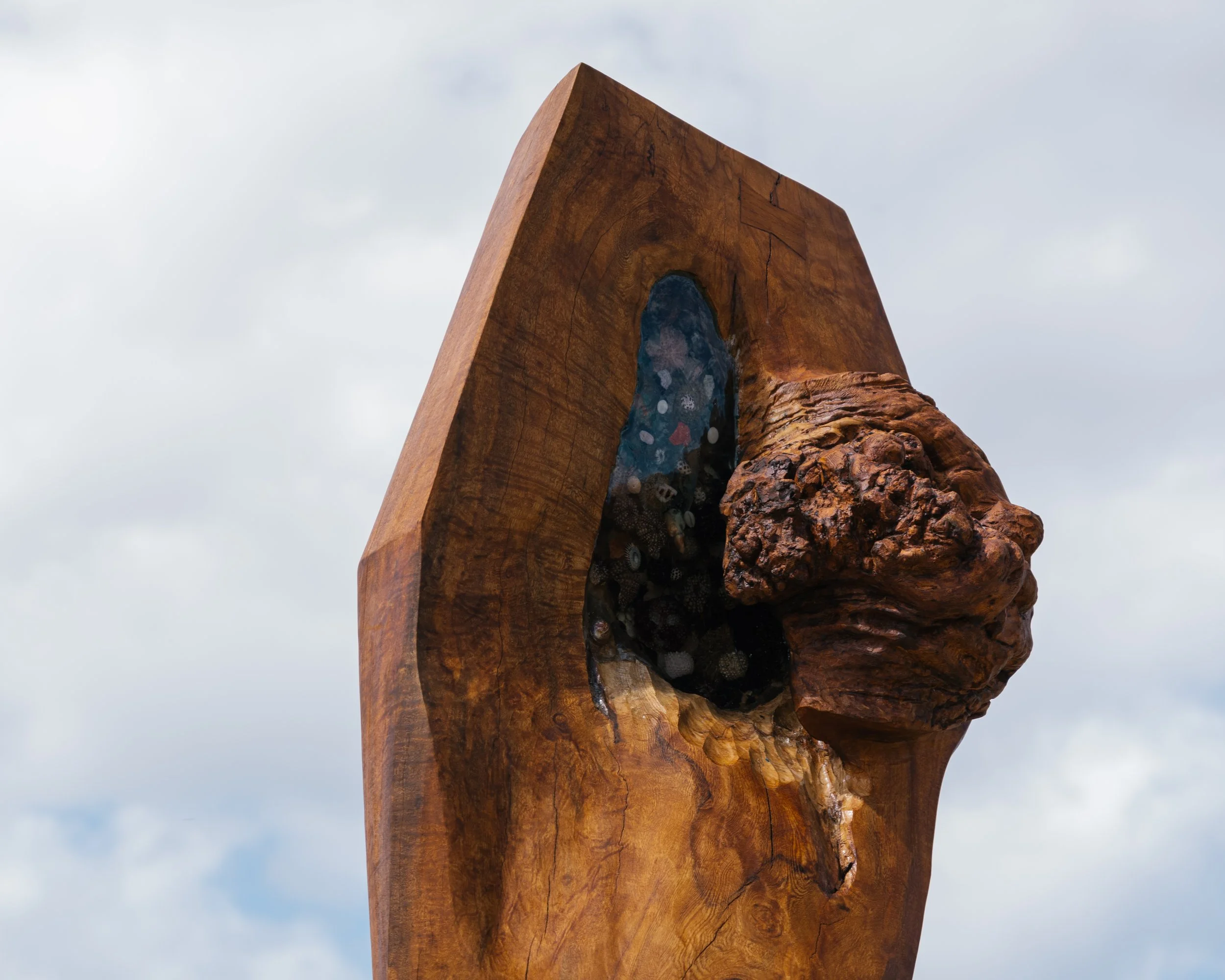
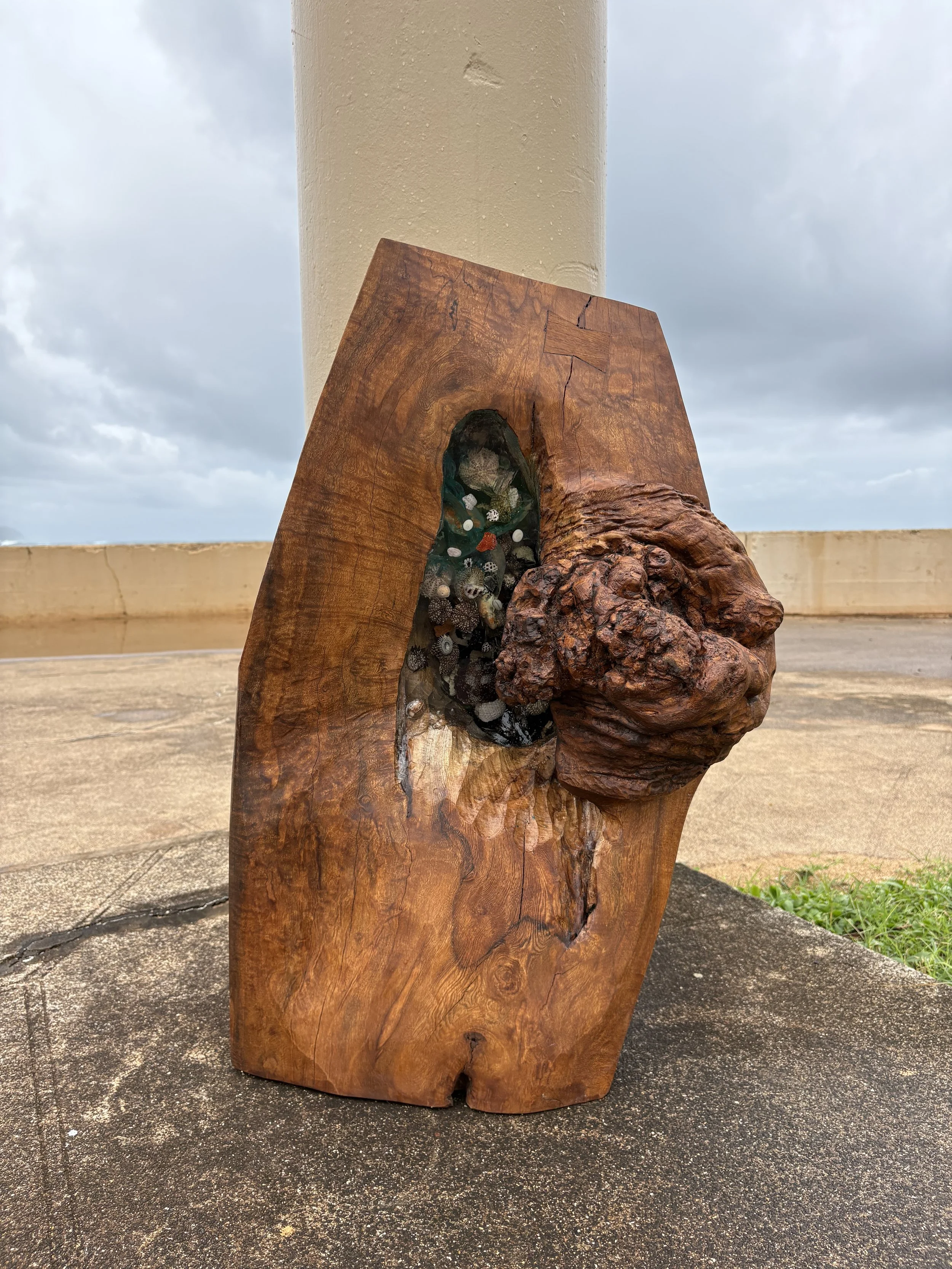
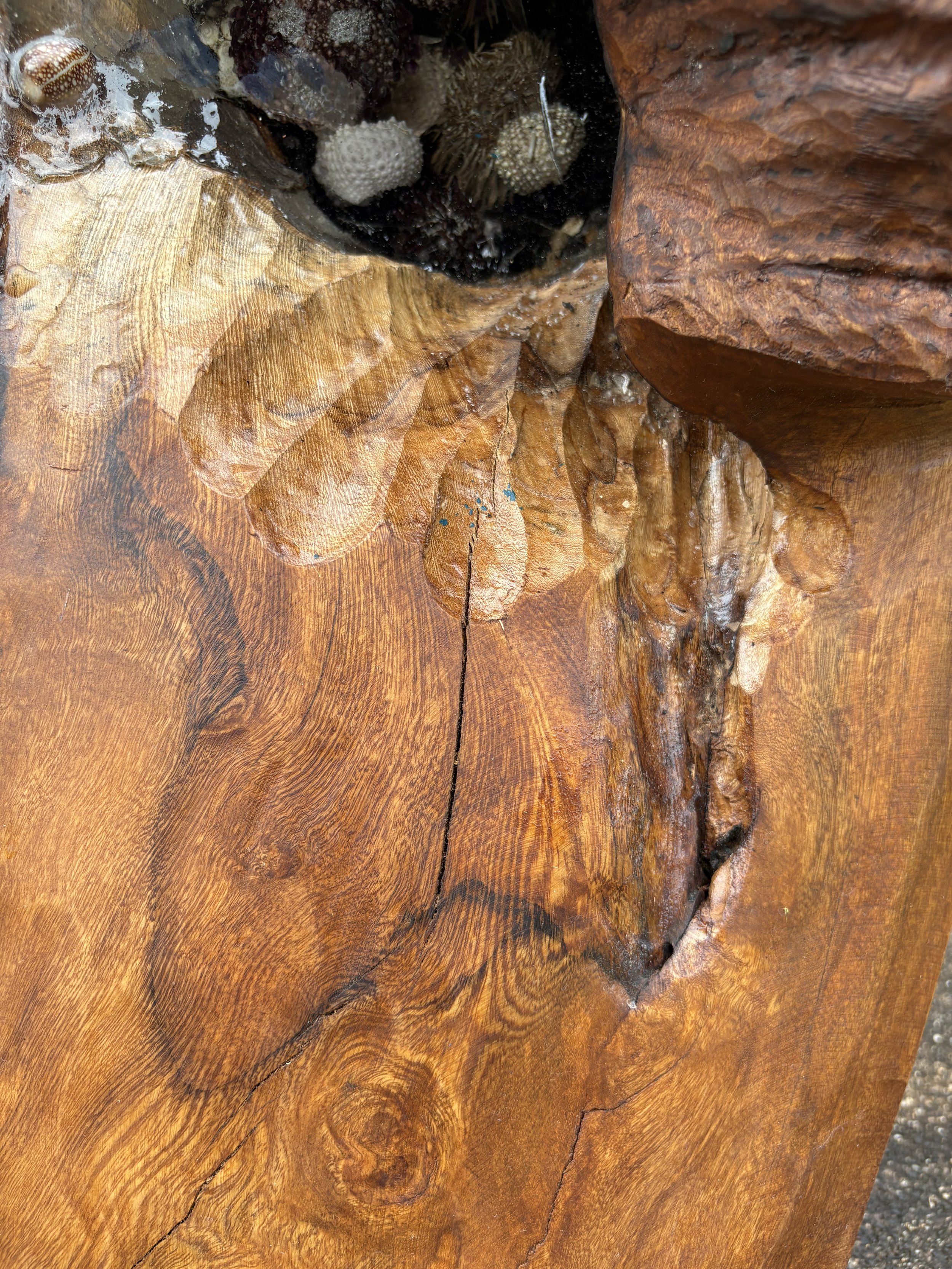
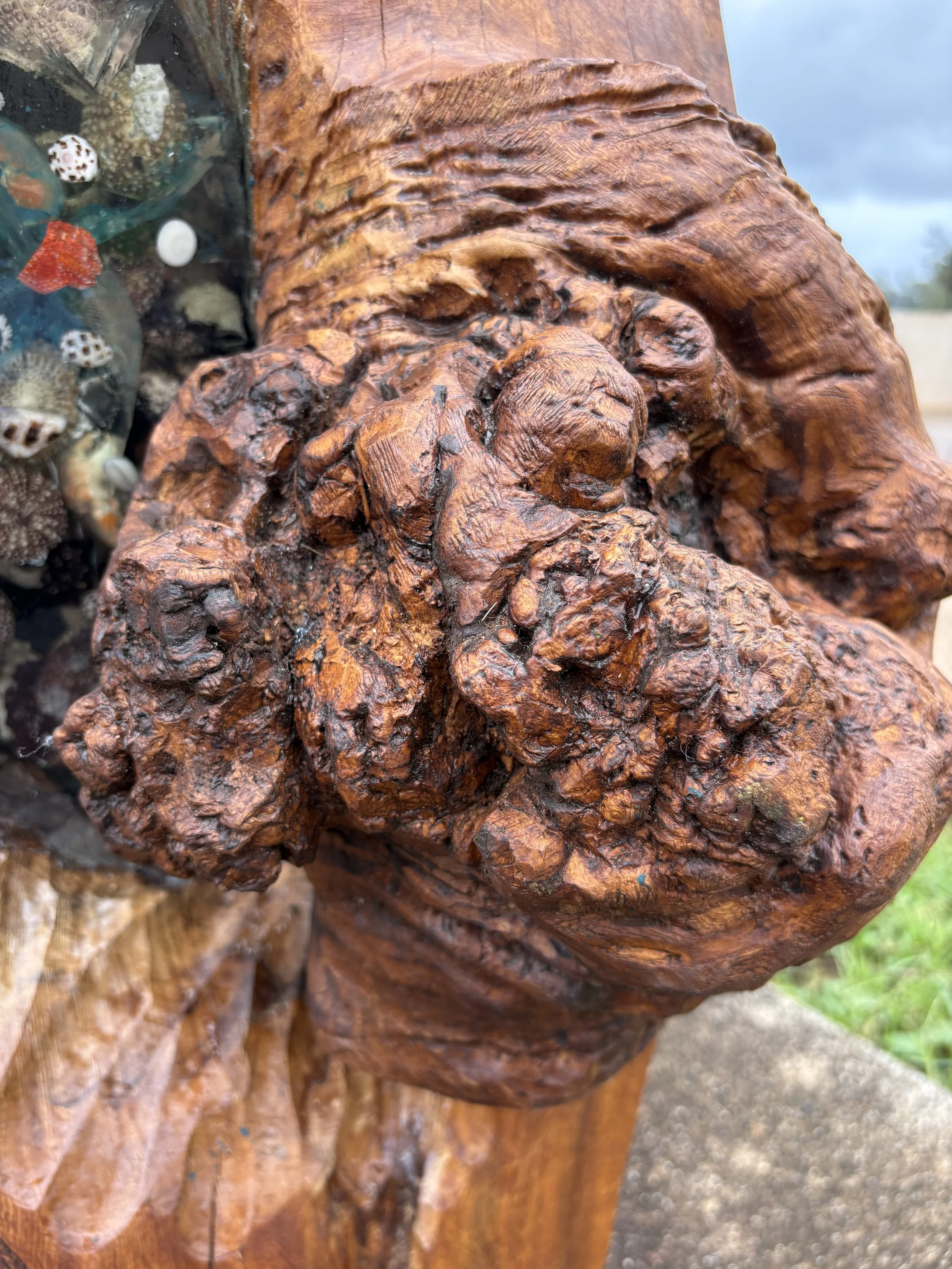
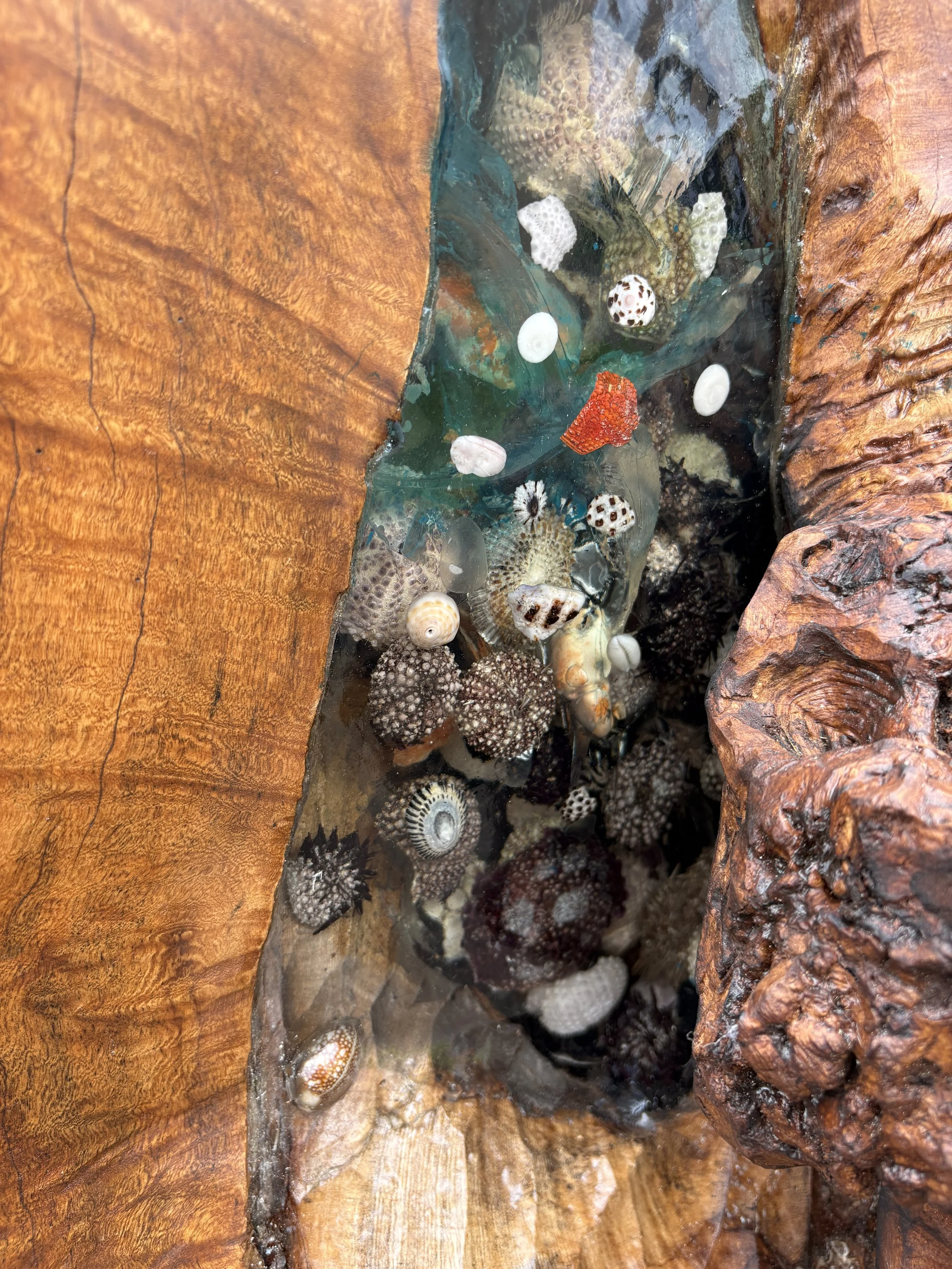
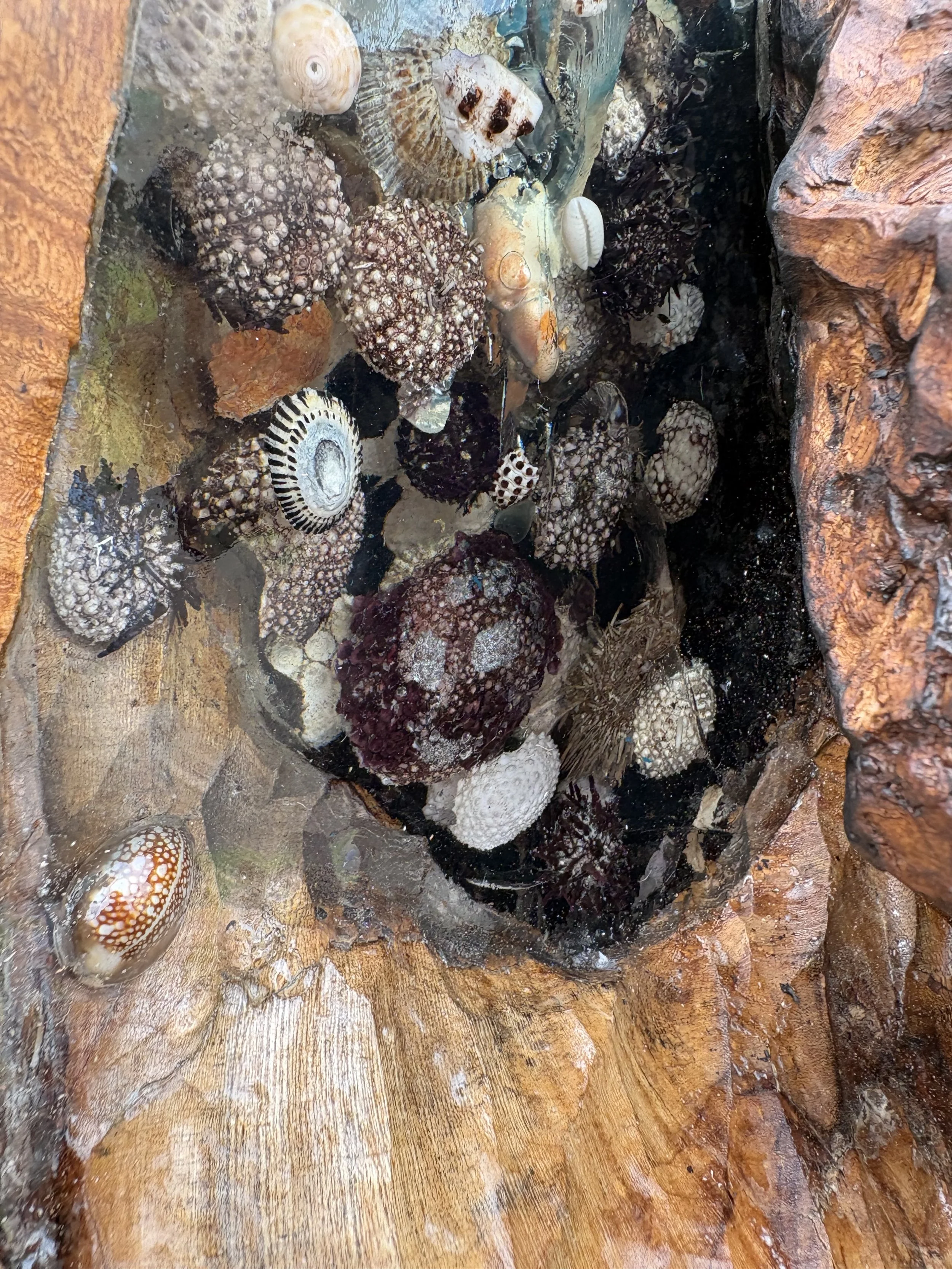
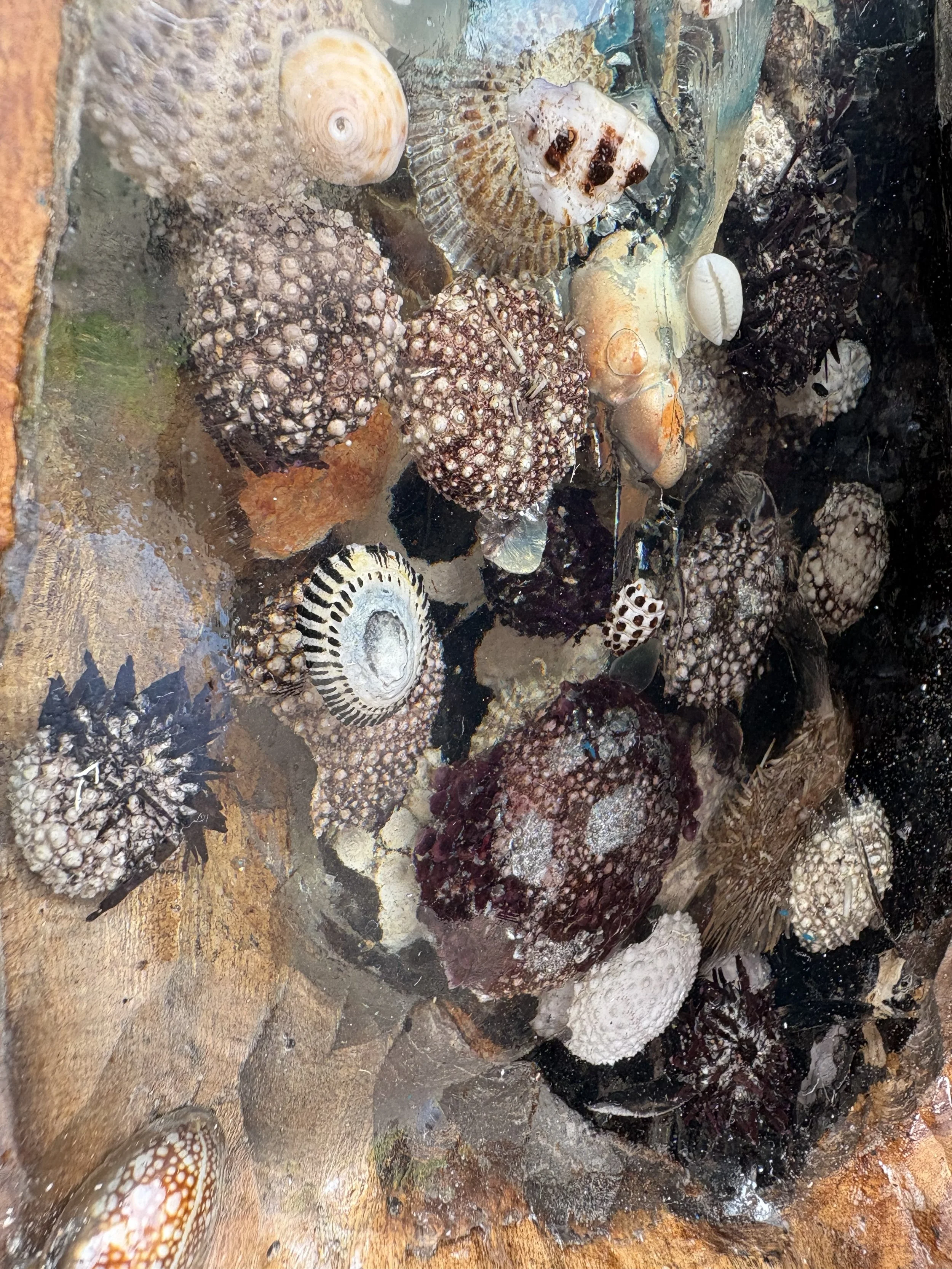
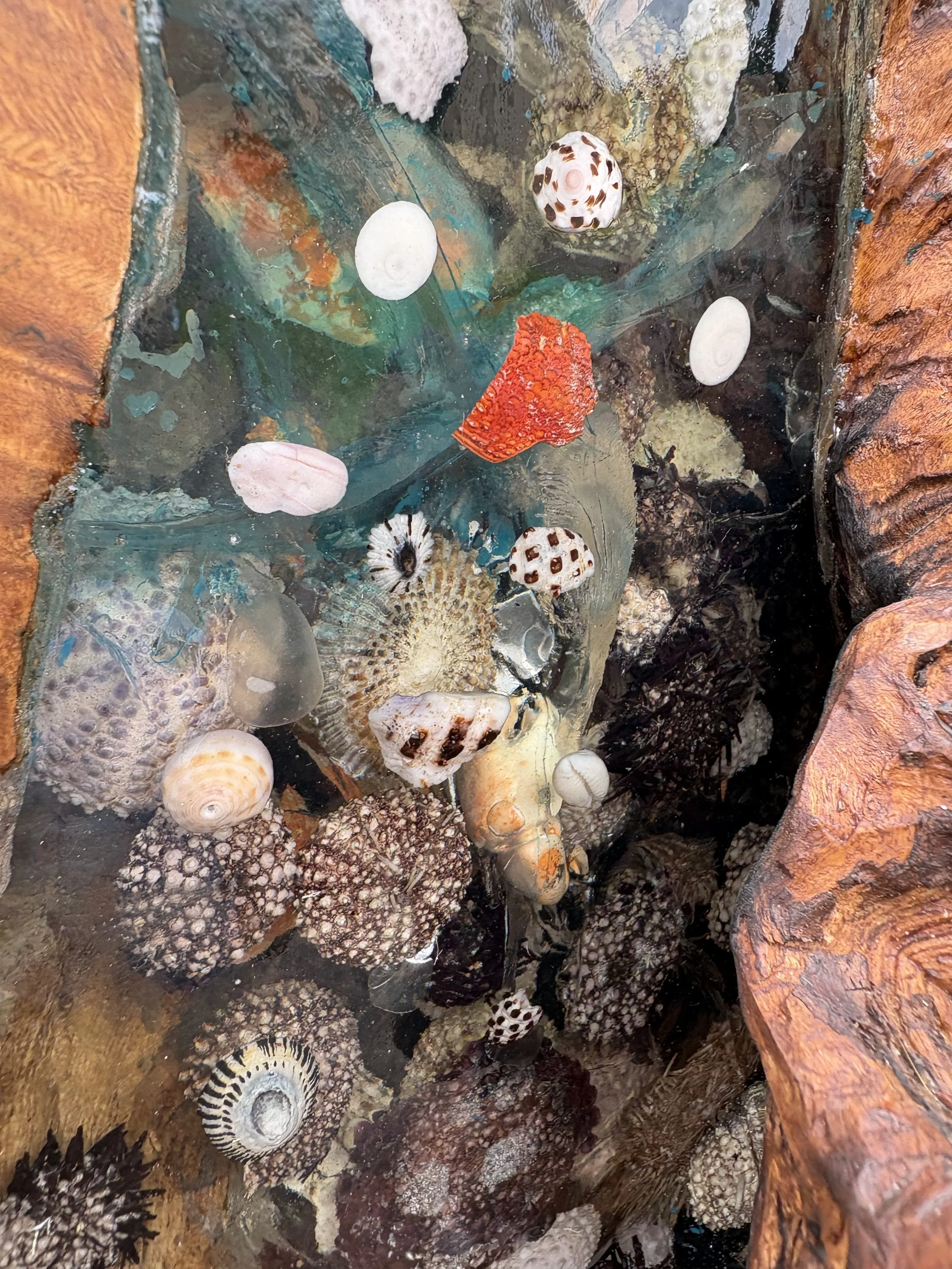
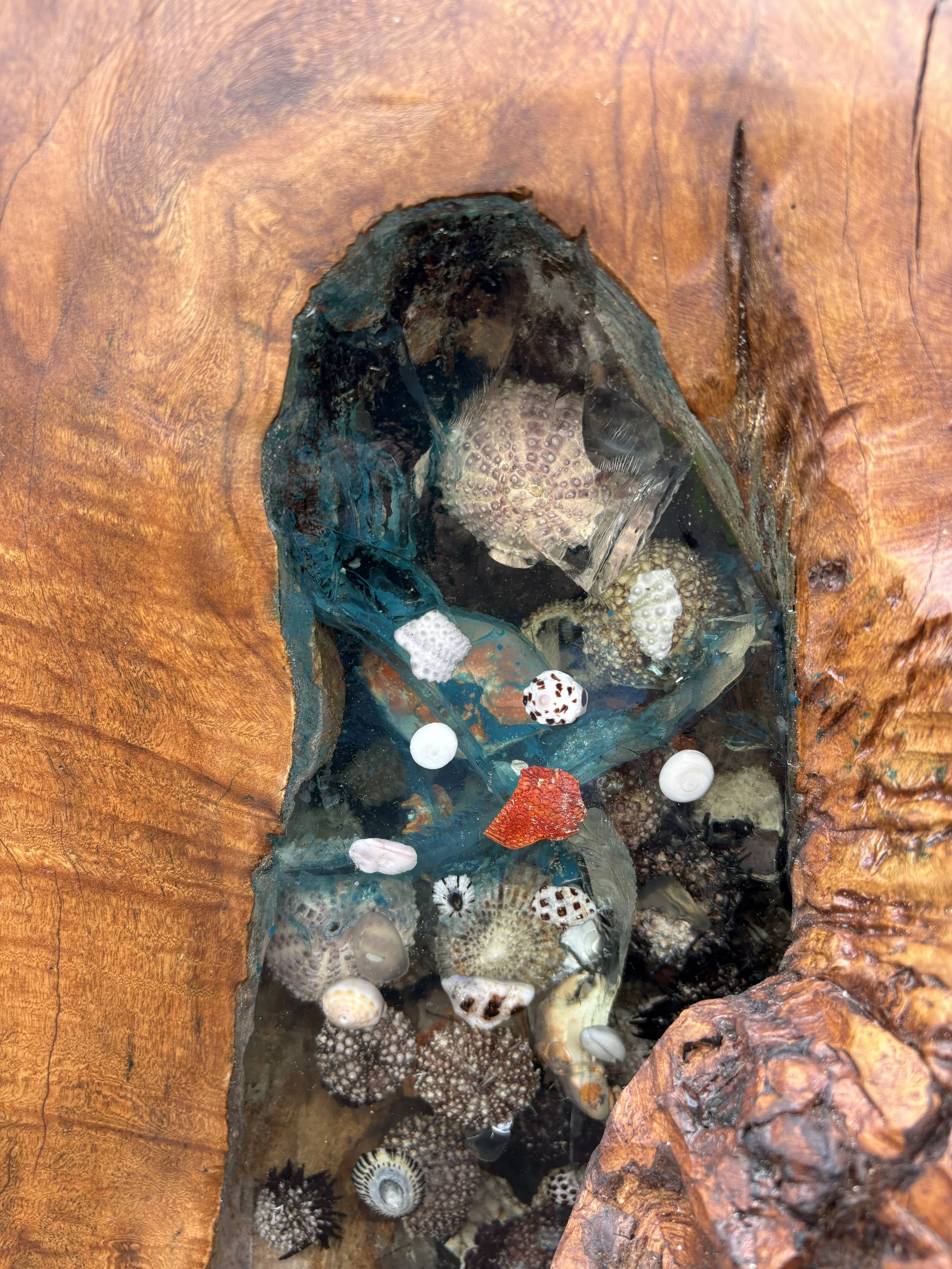
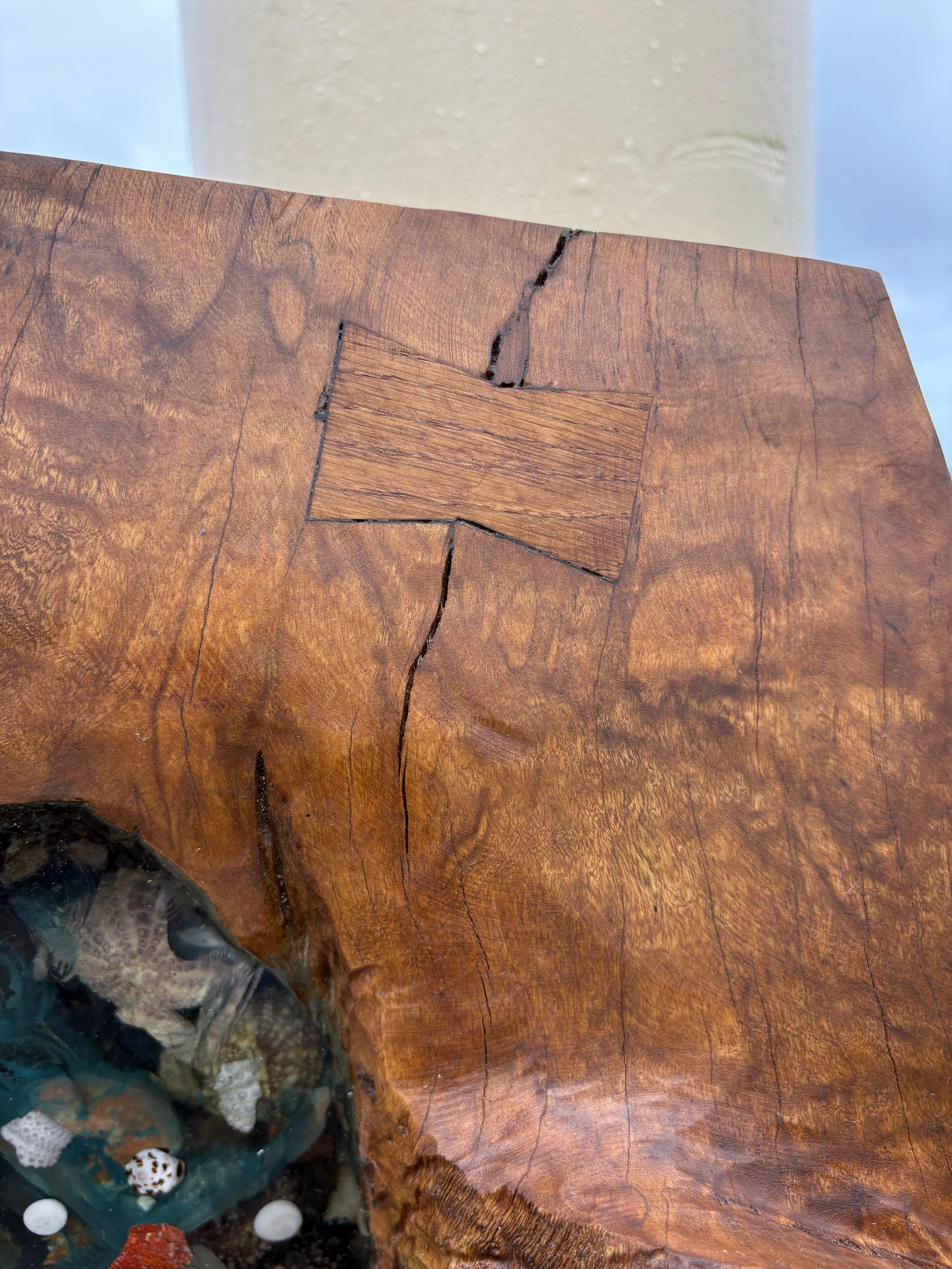
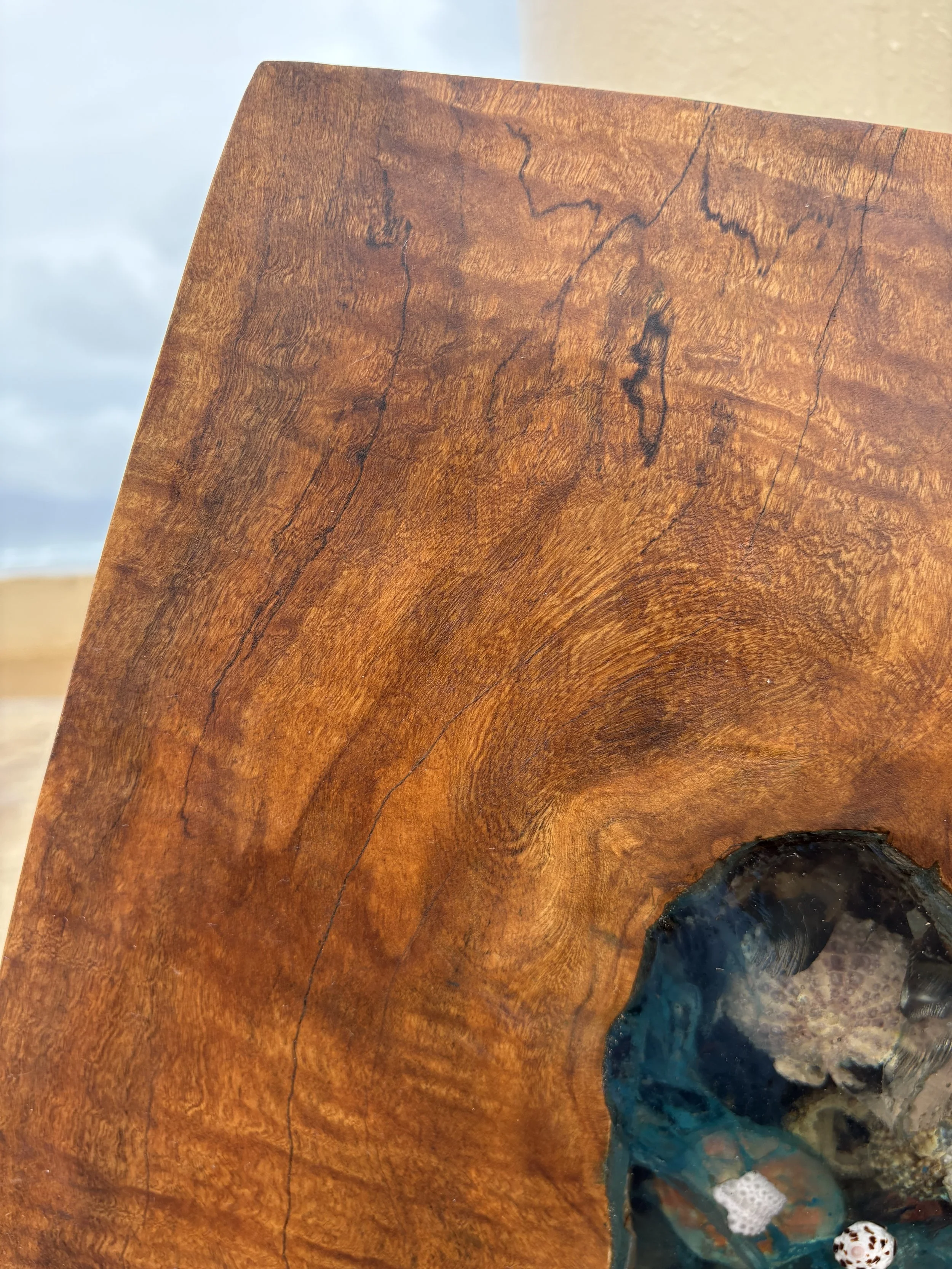
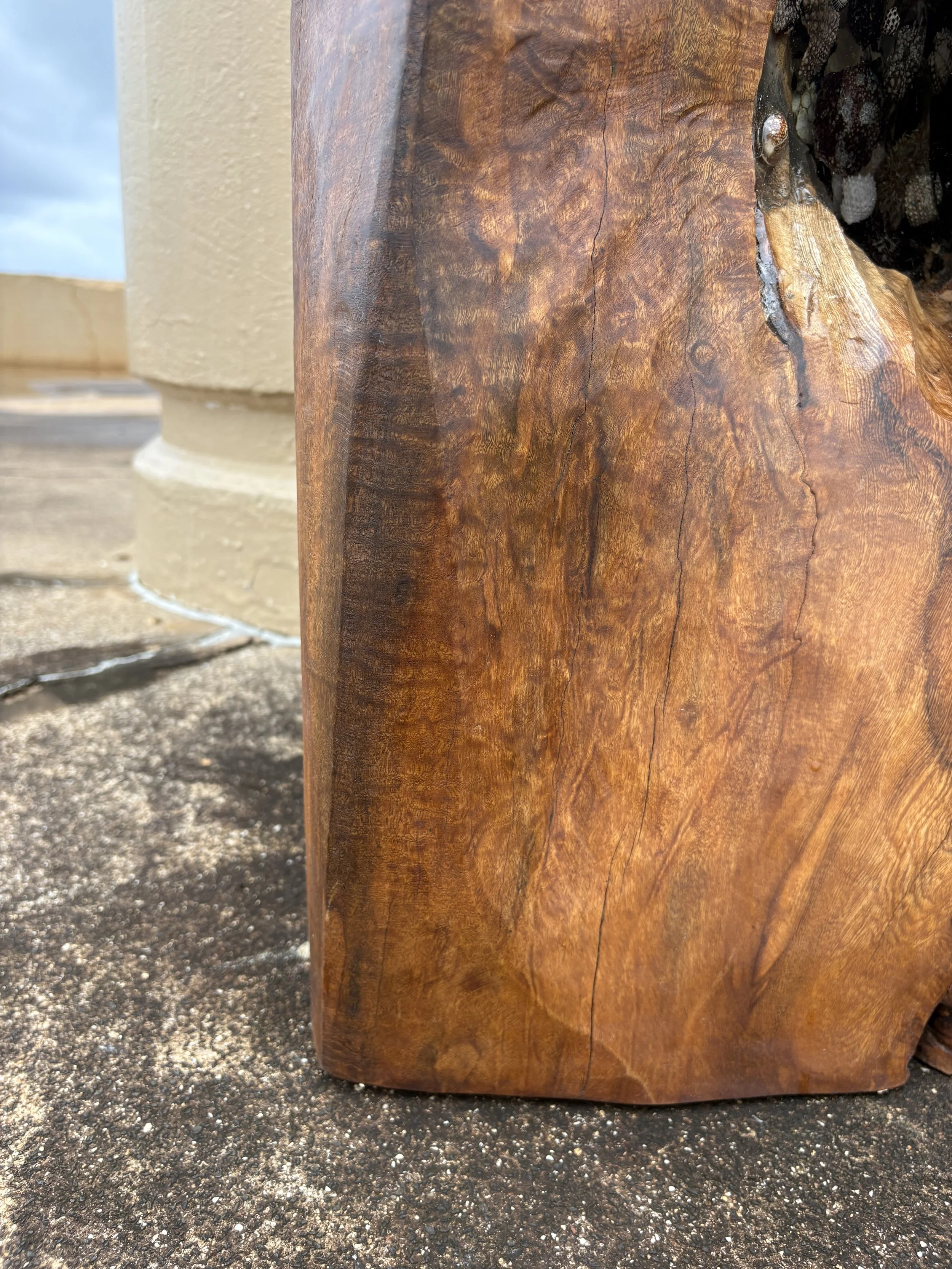
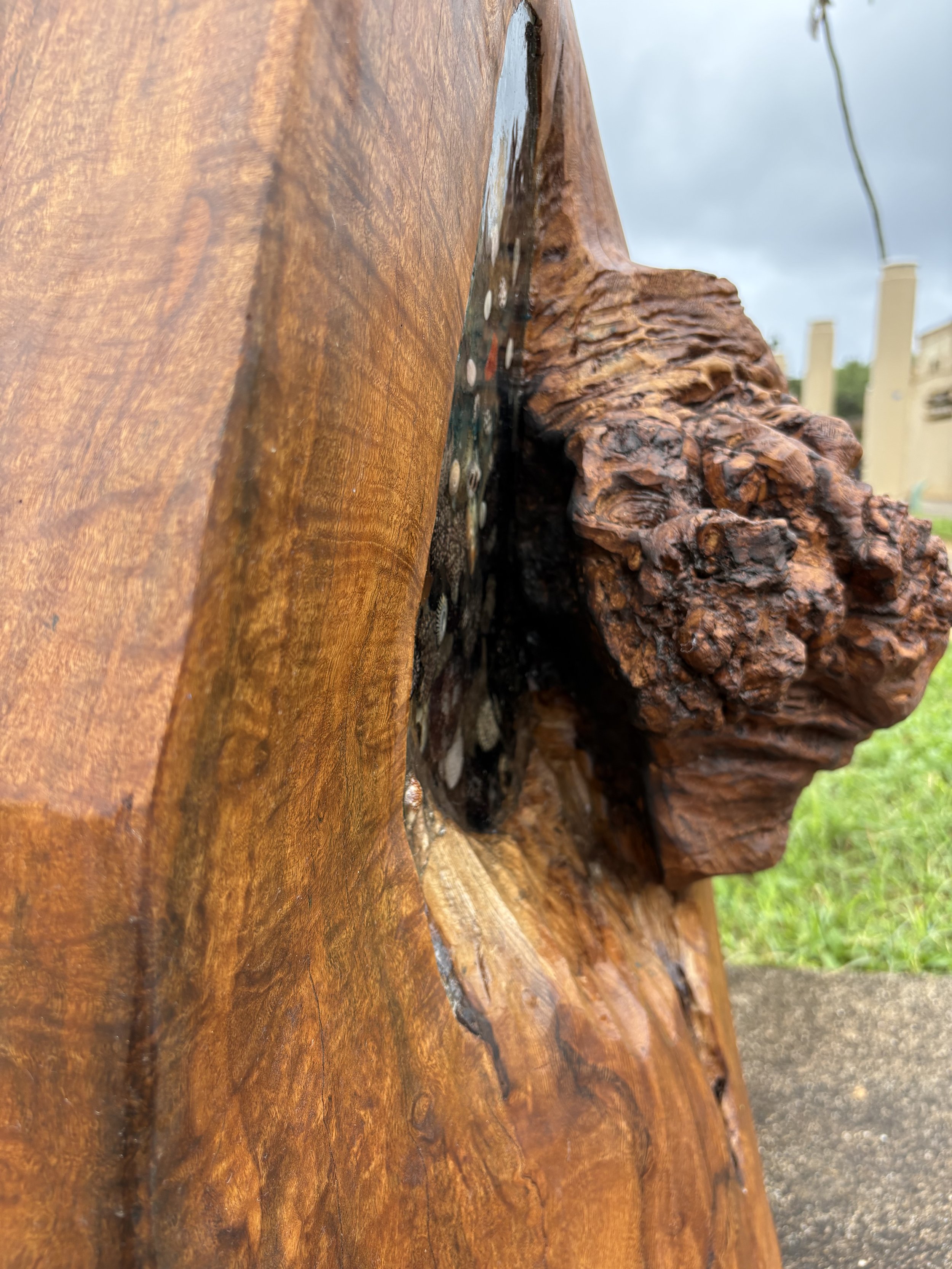
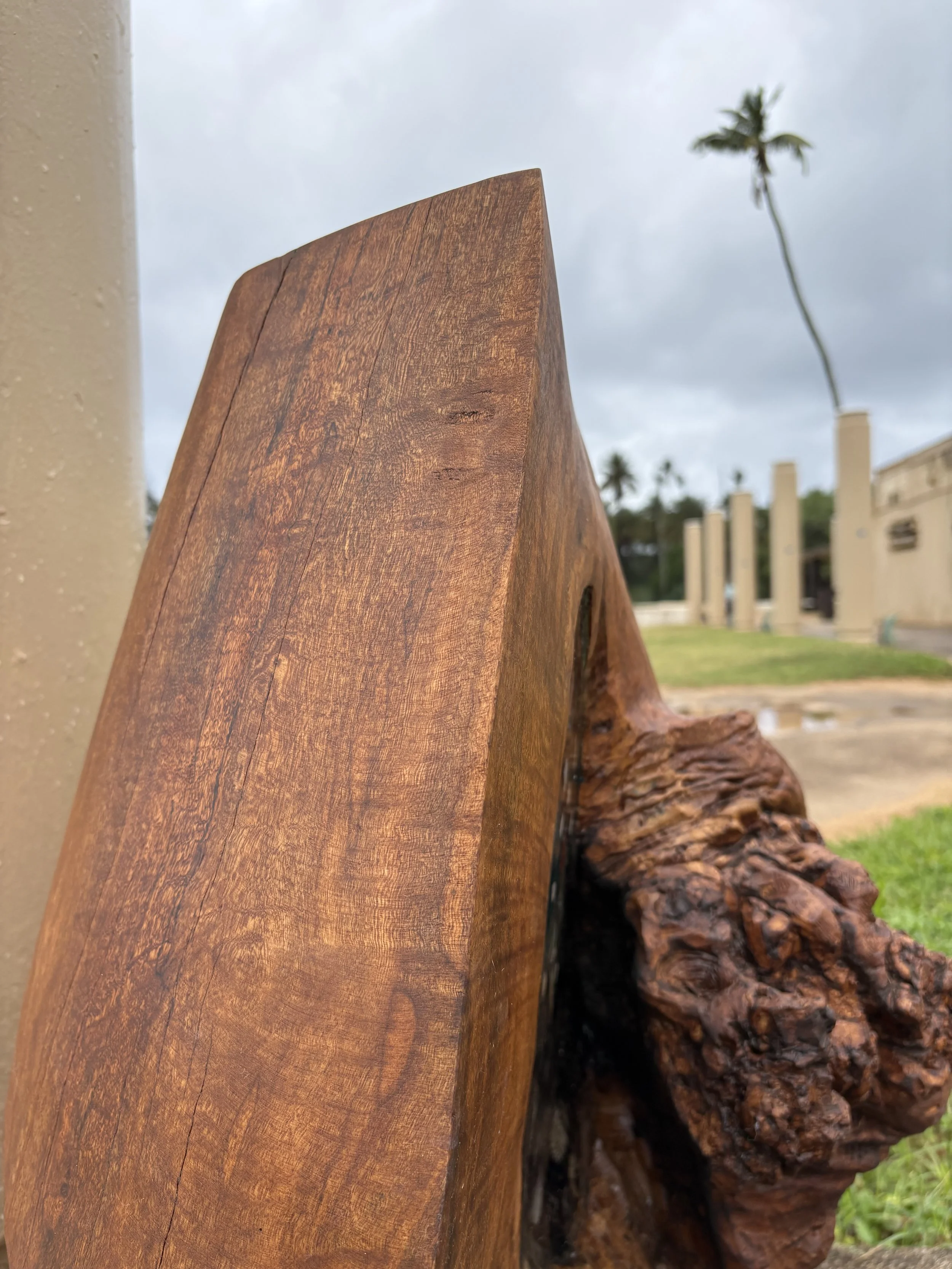
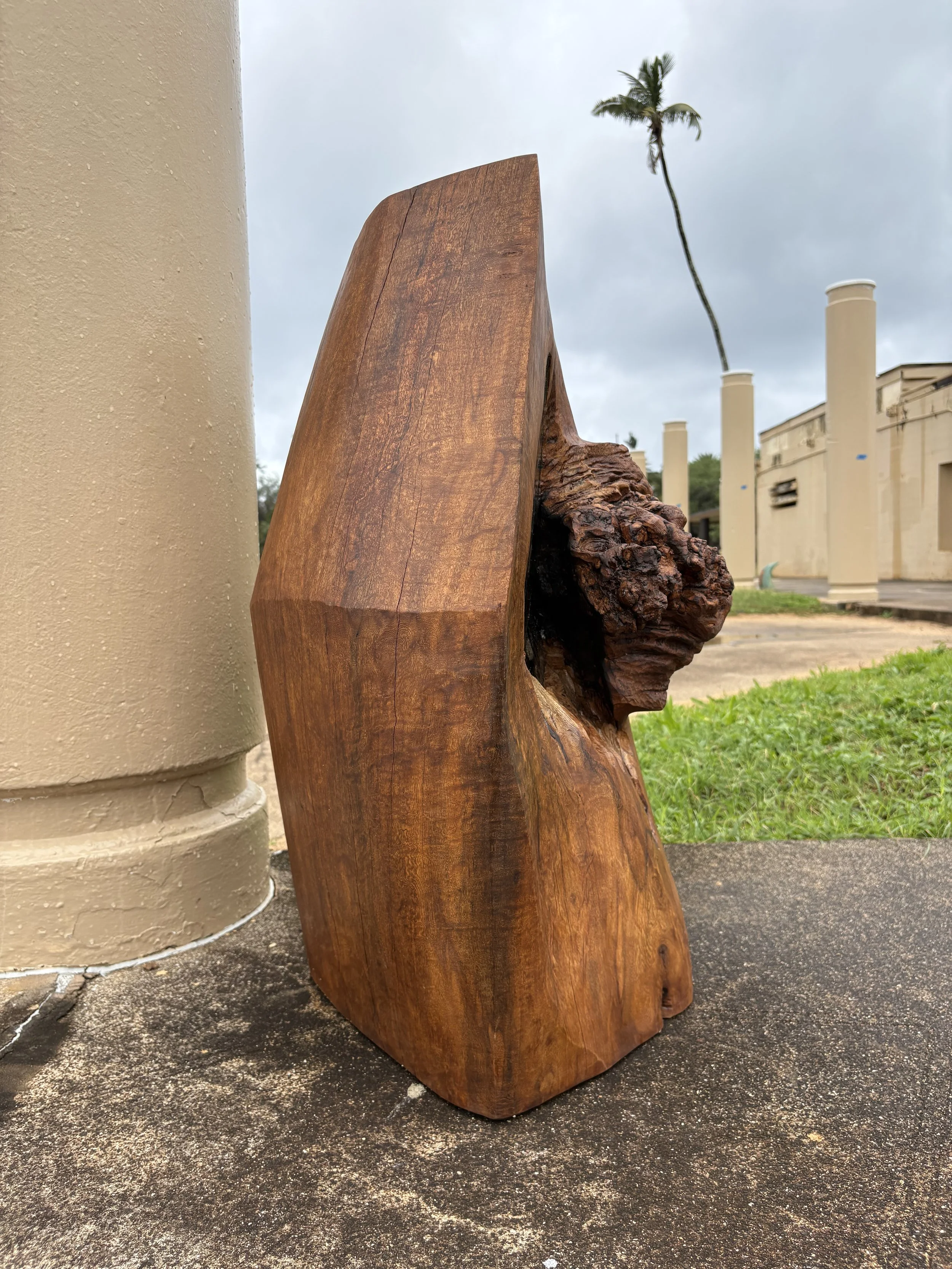
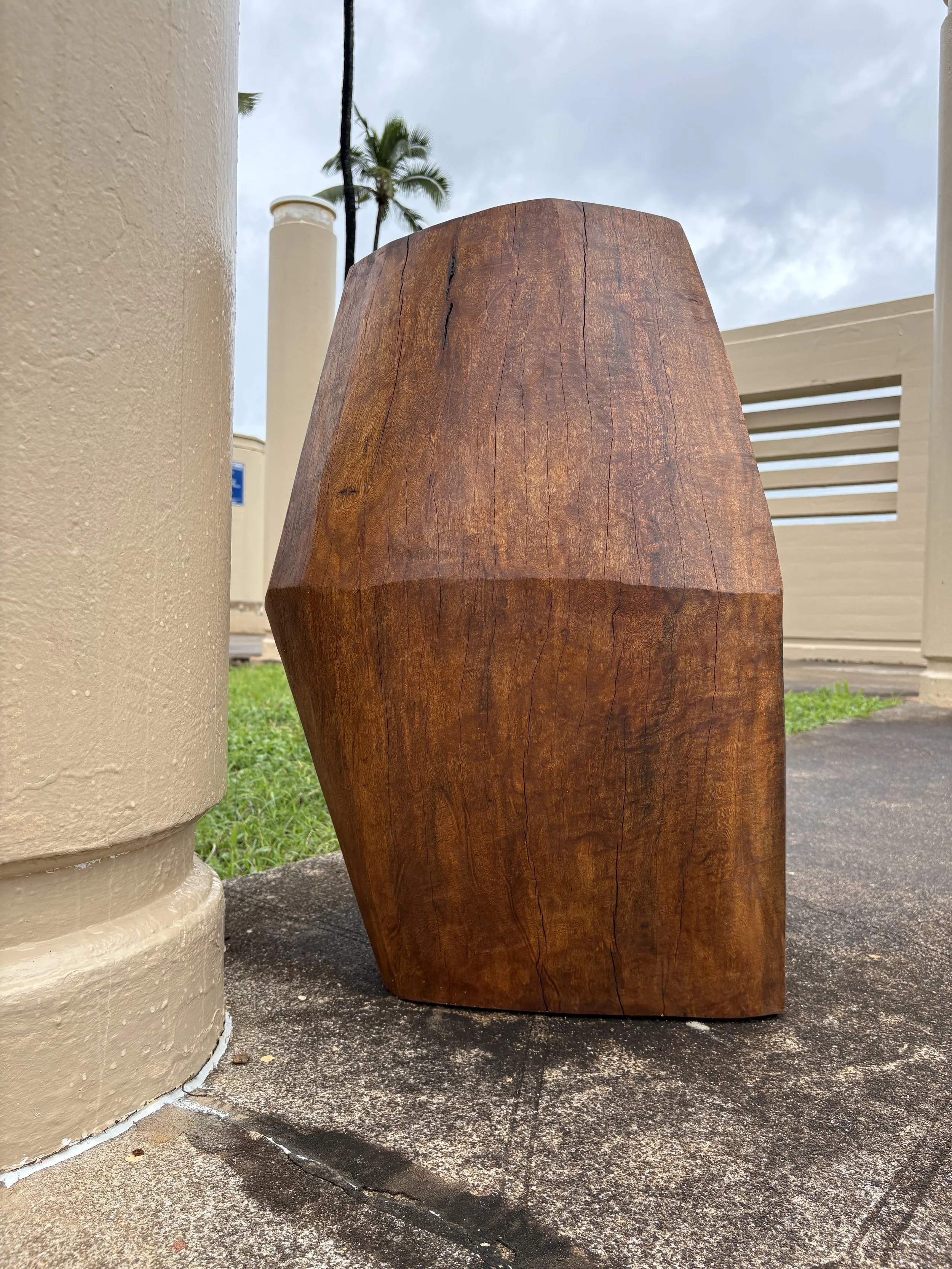
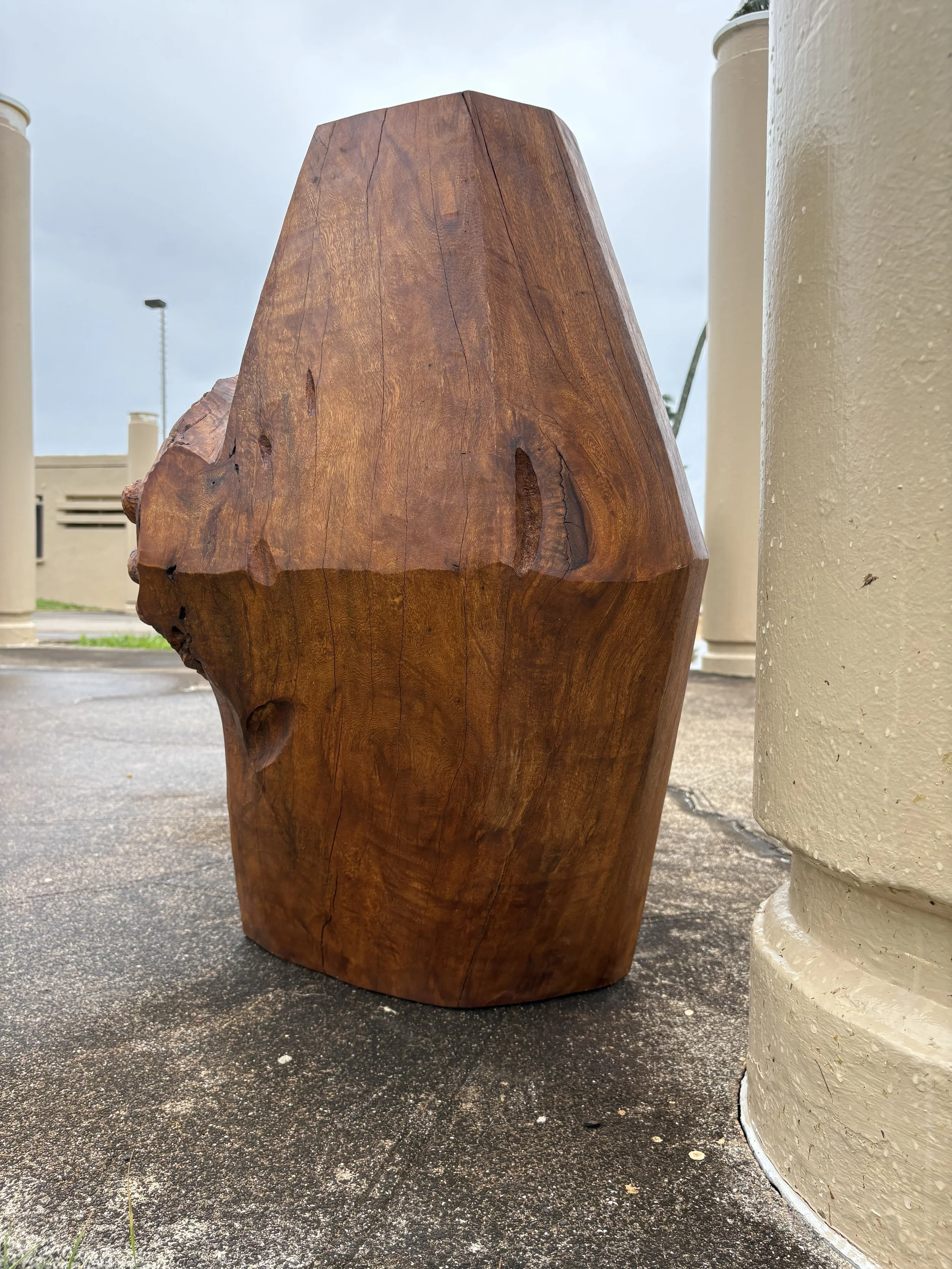
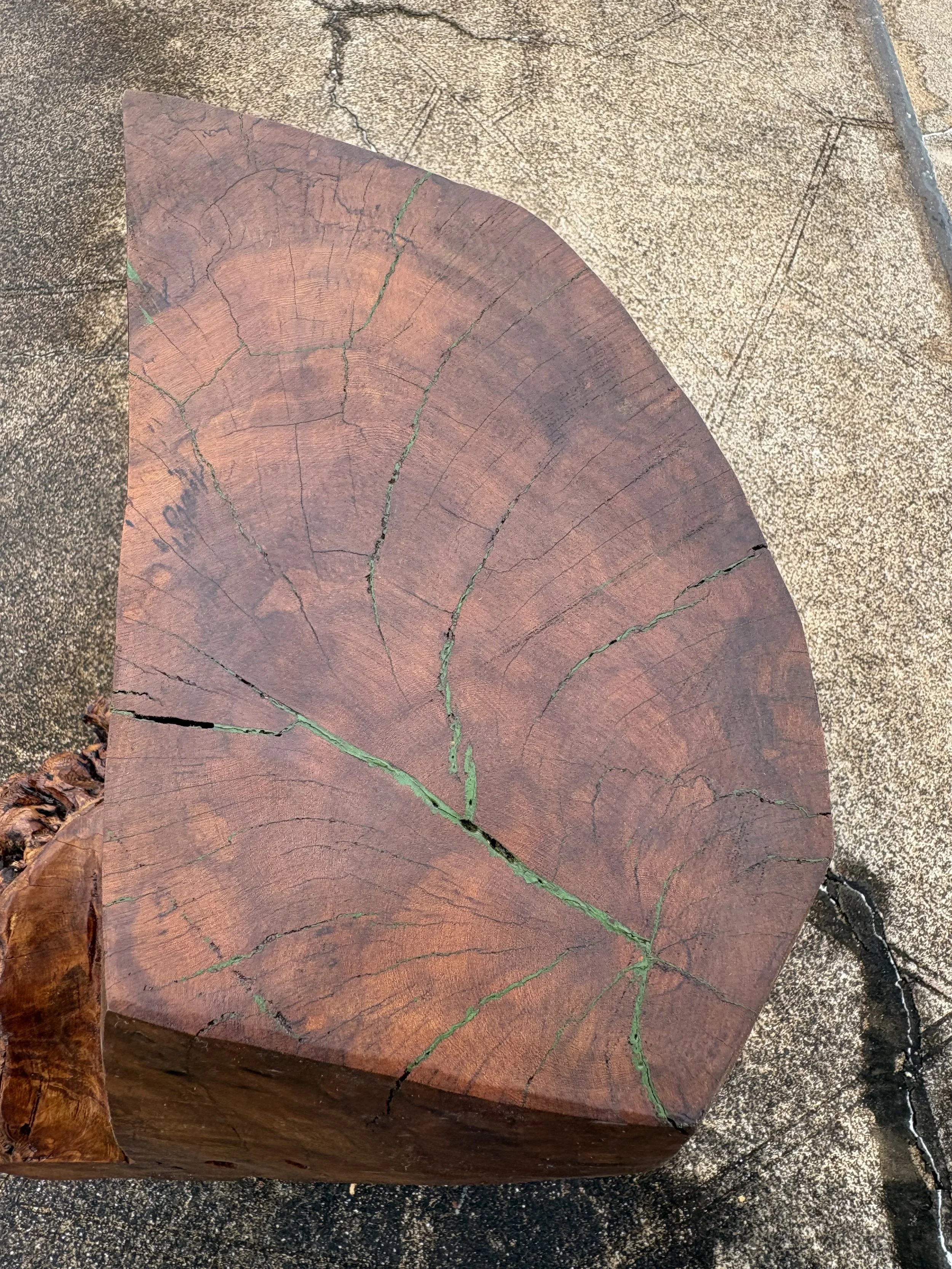
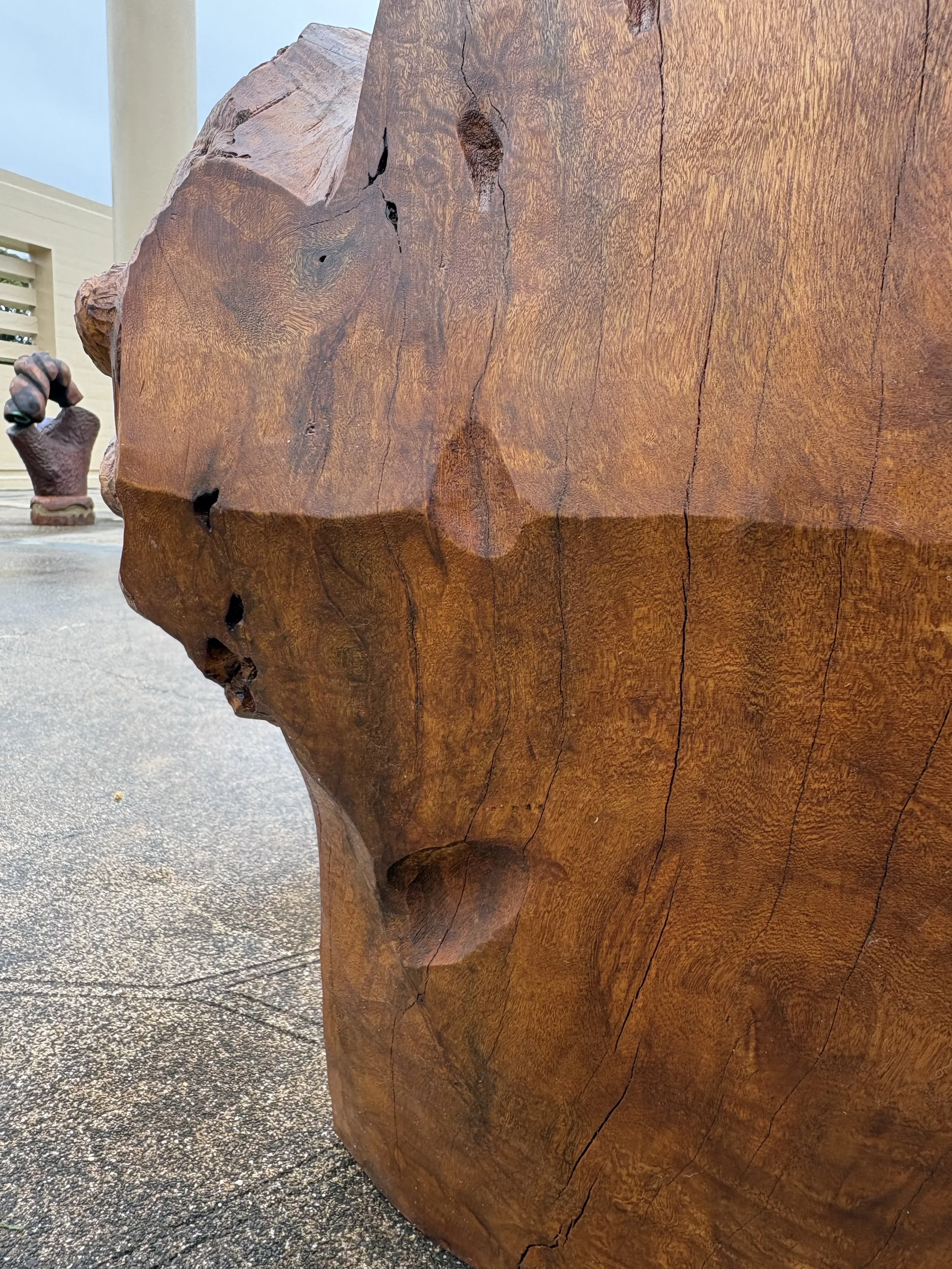
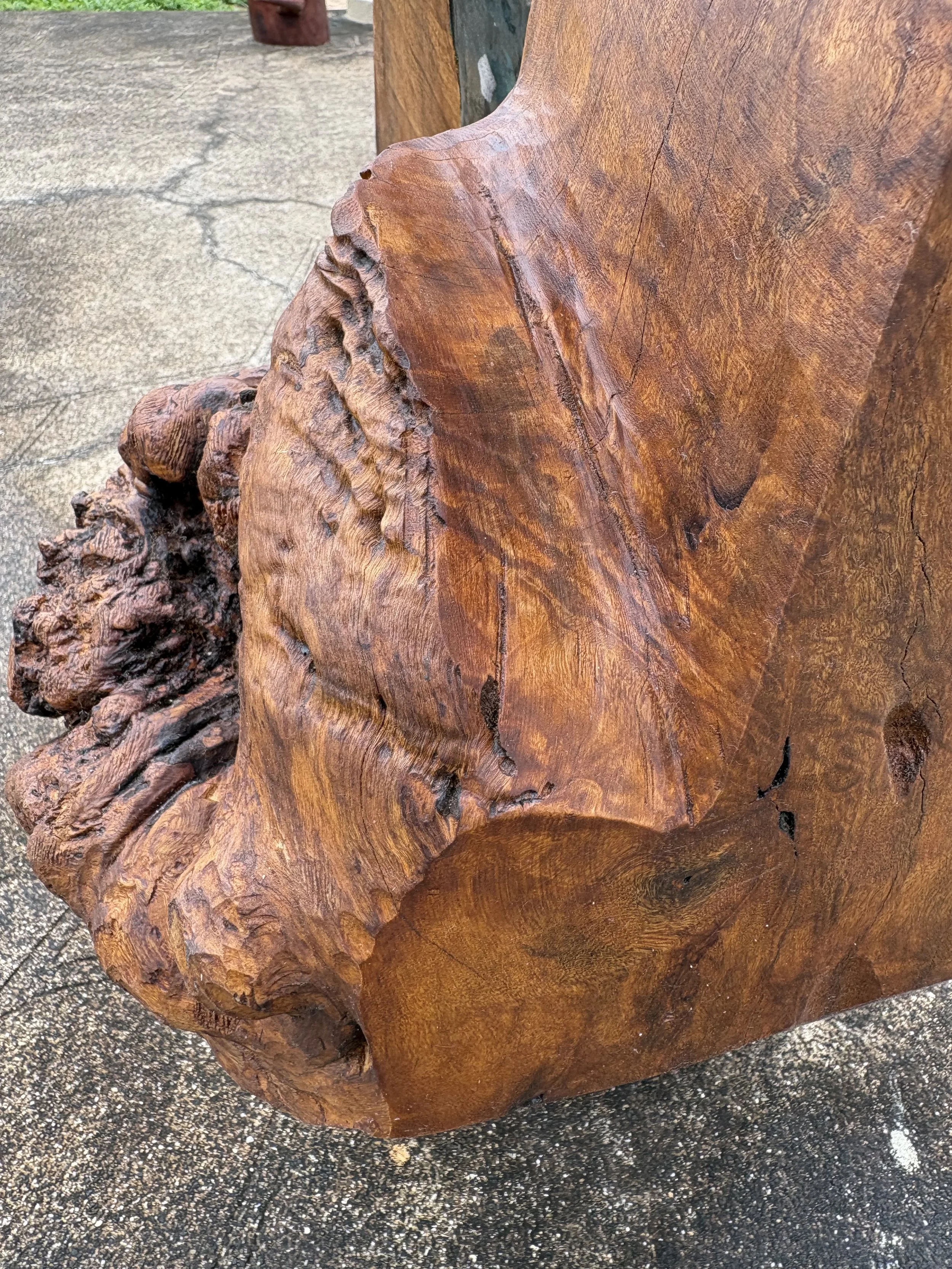
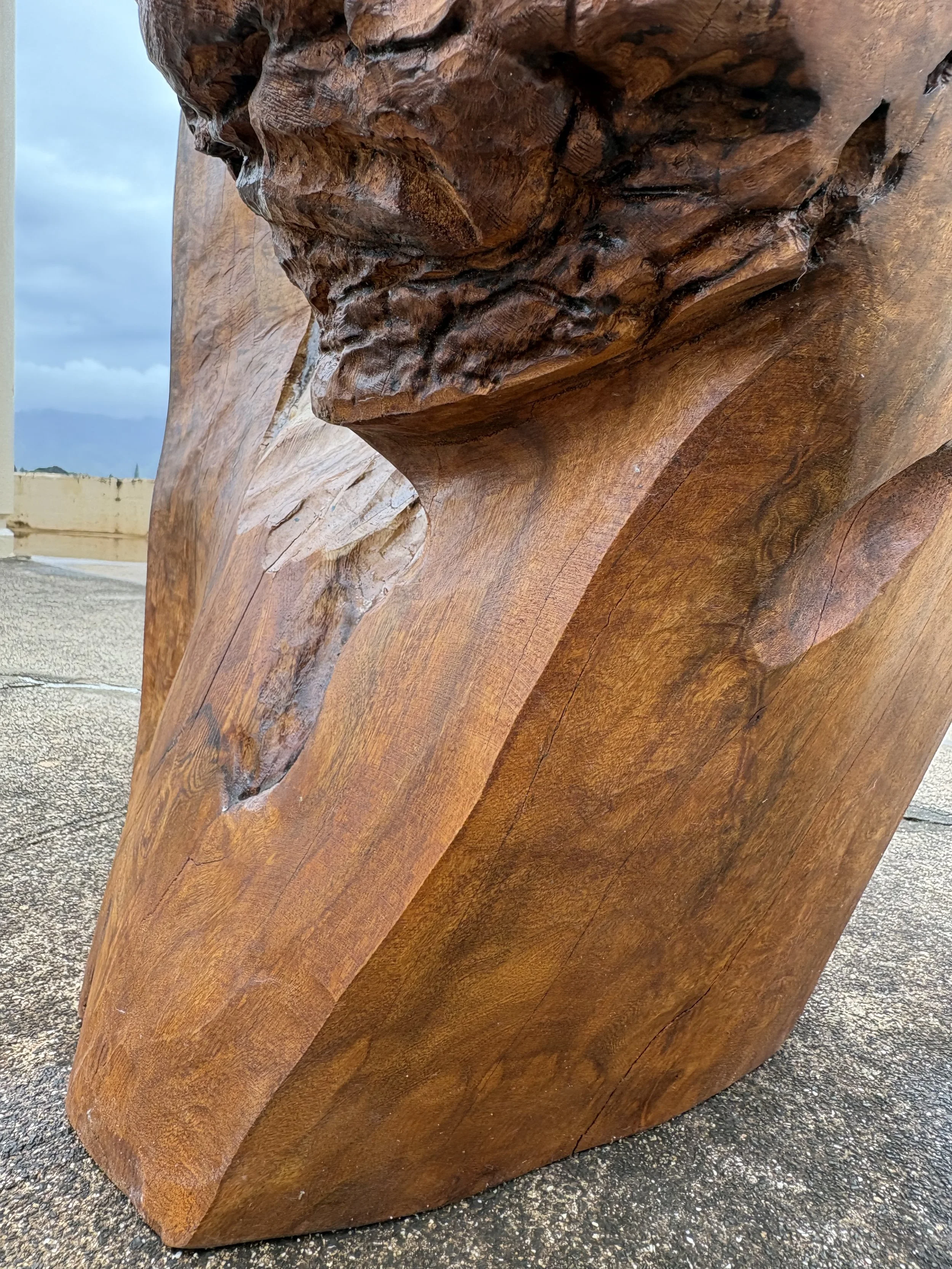
Impregnated monolith, chronic and diseased
Mango wood
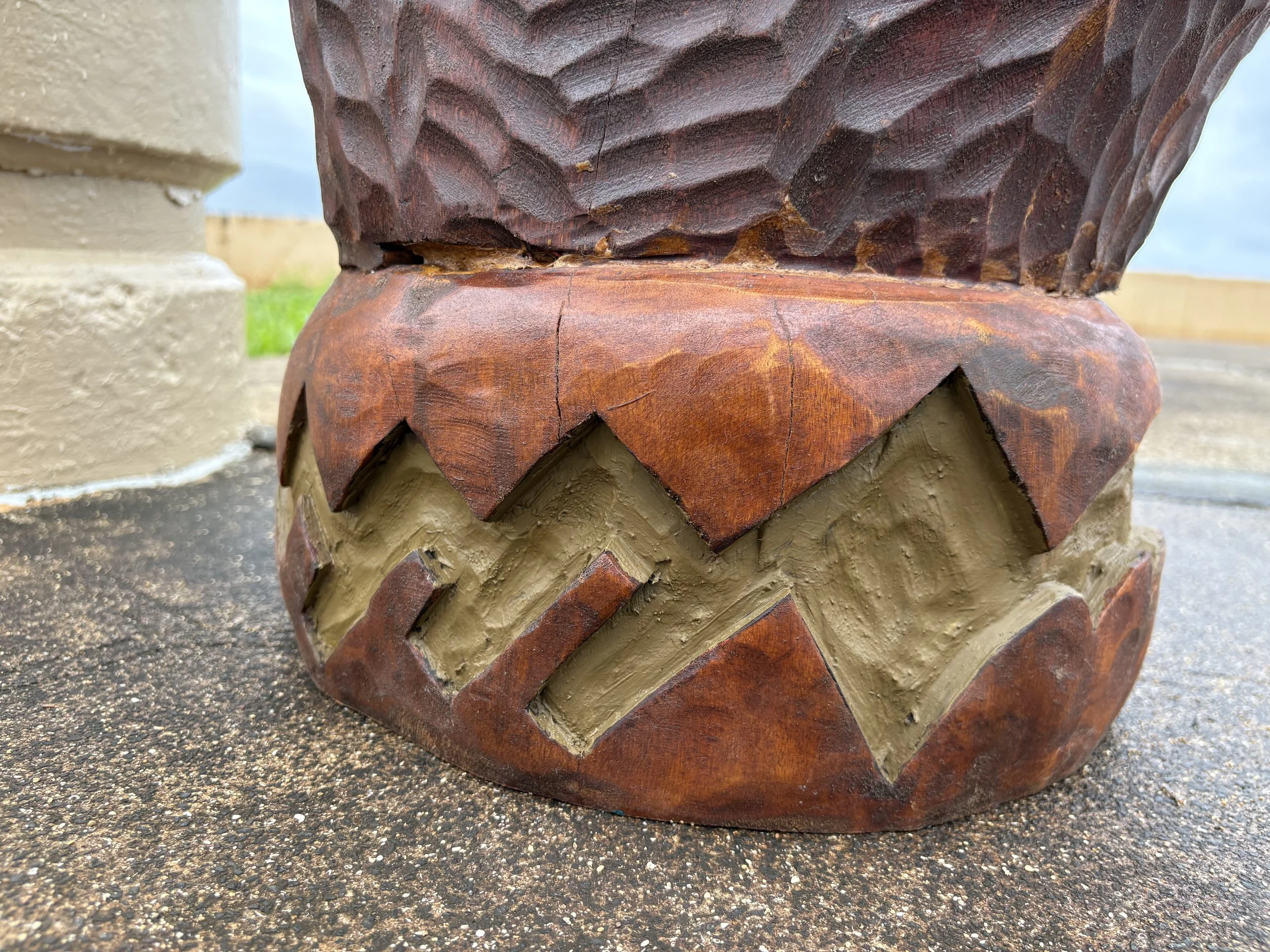
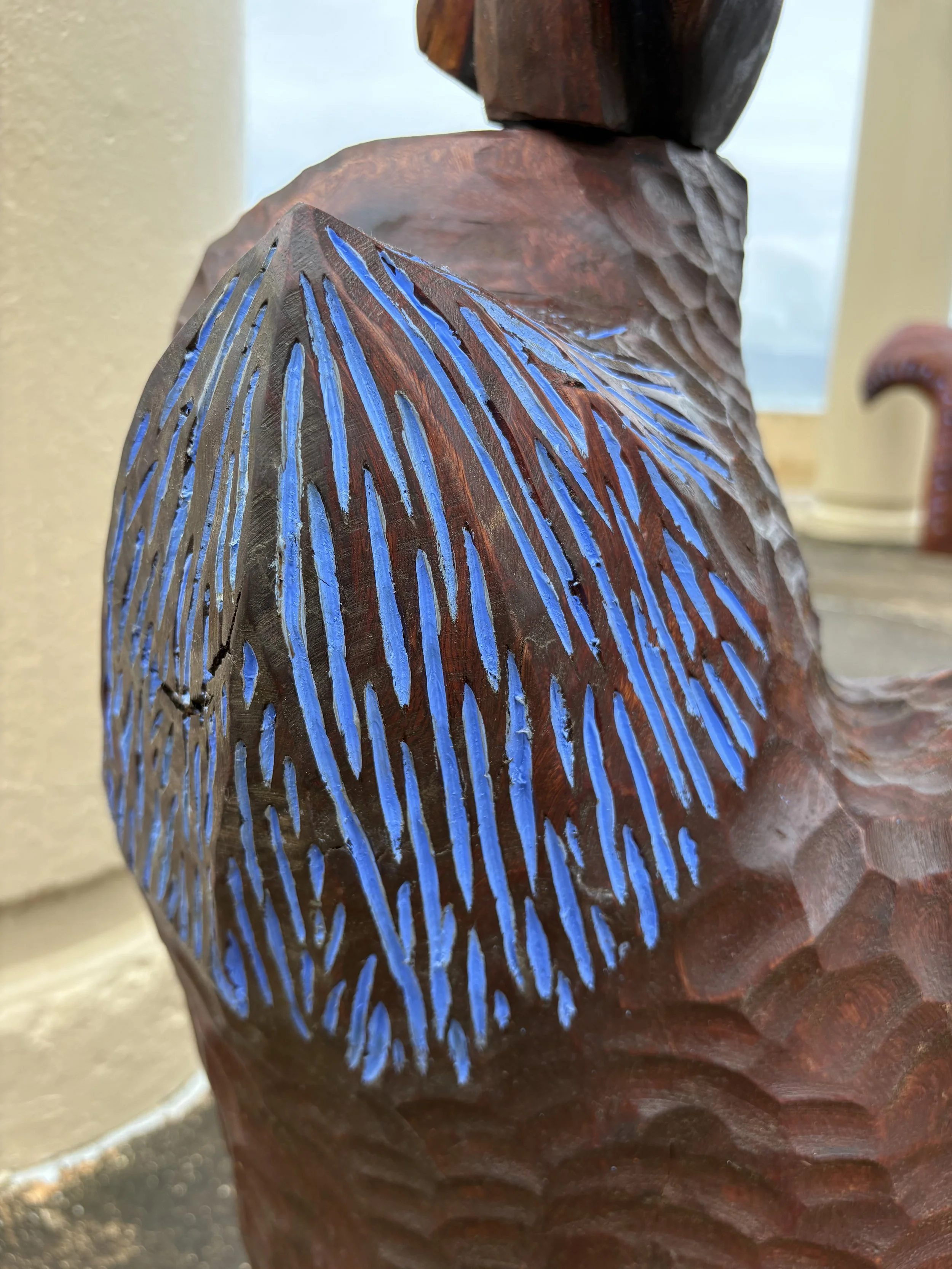
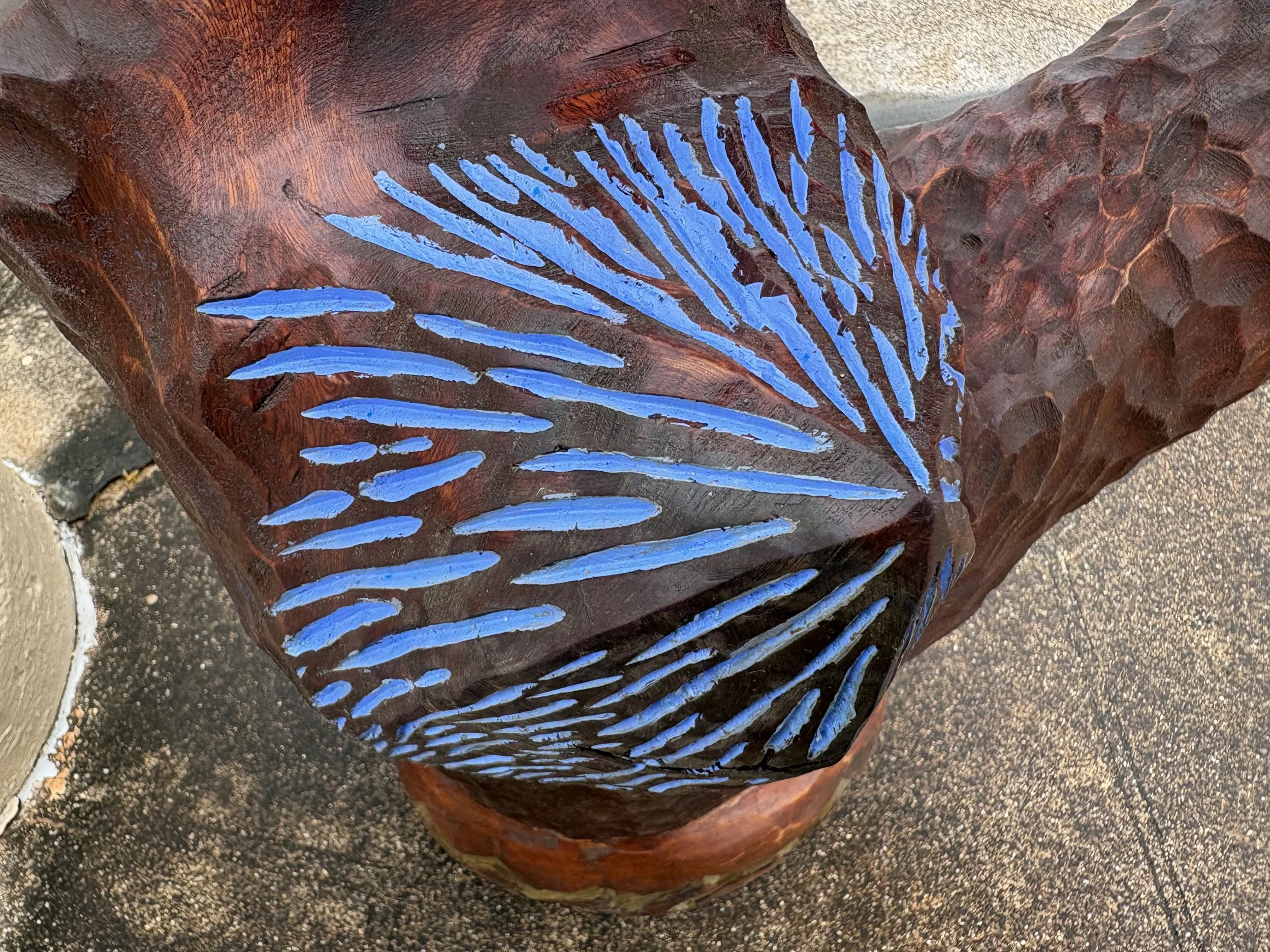
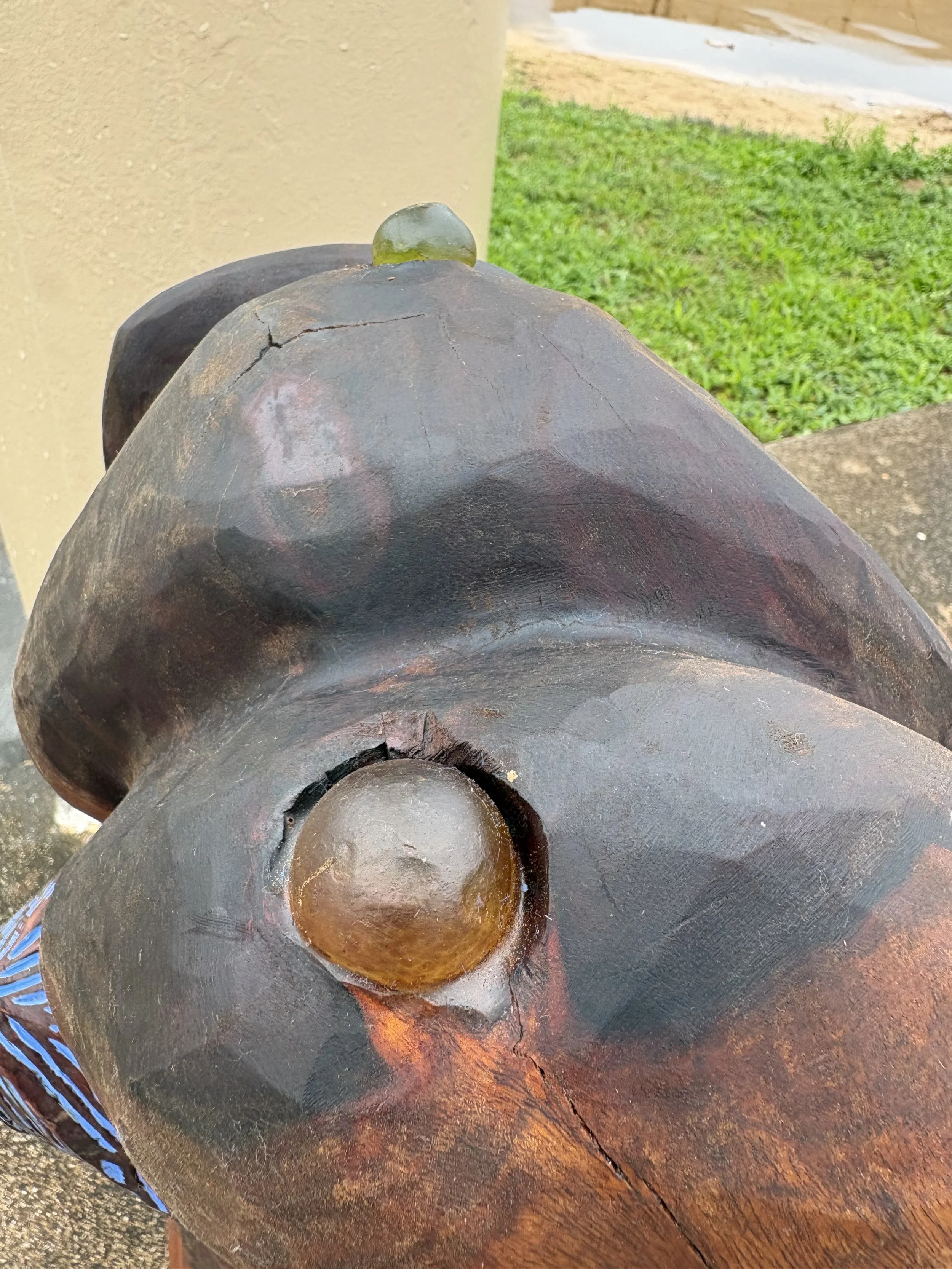
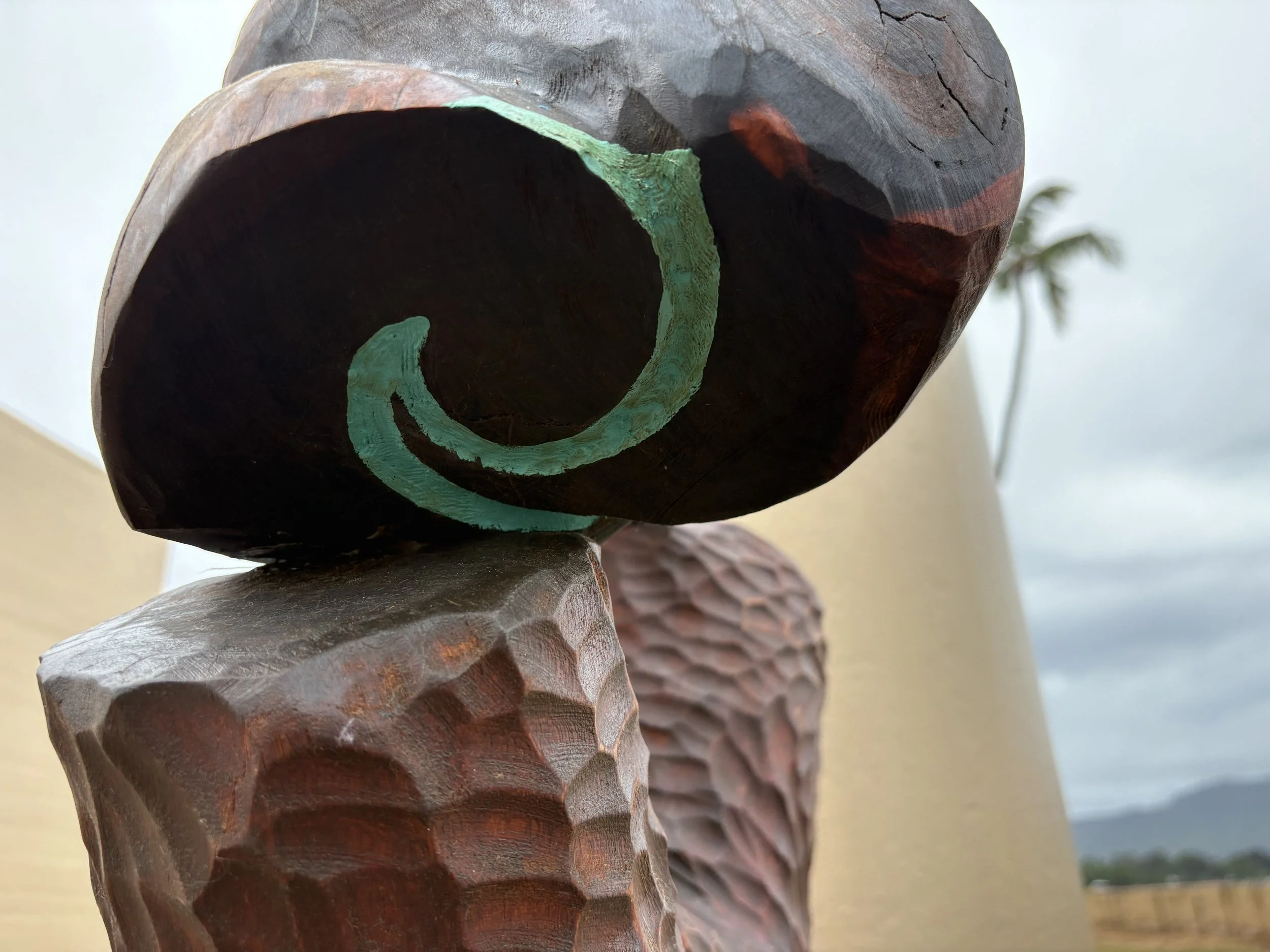
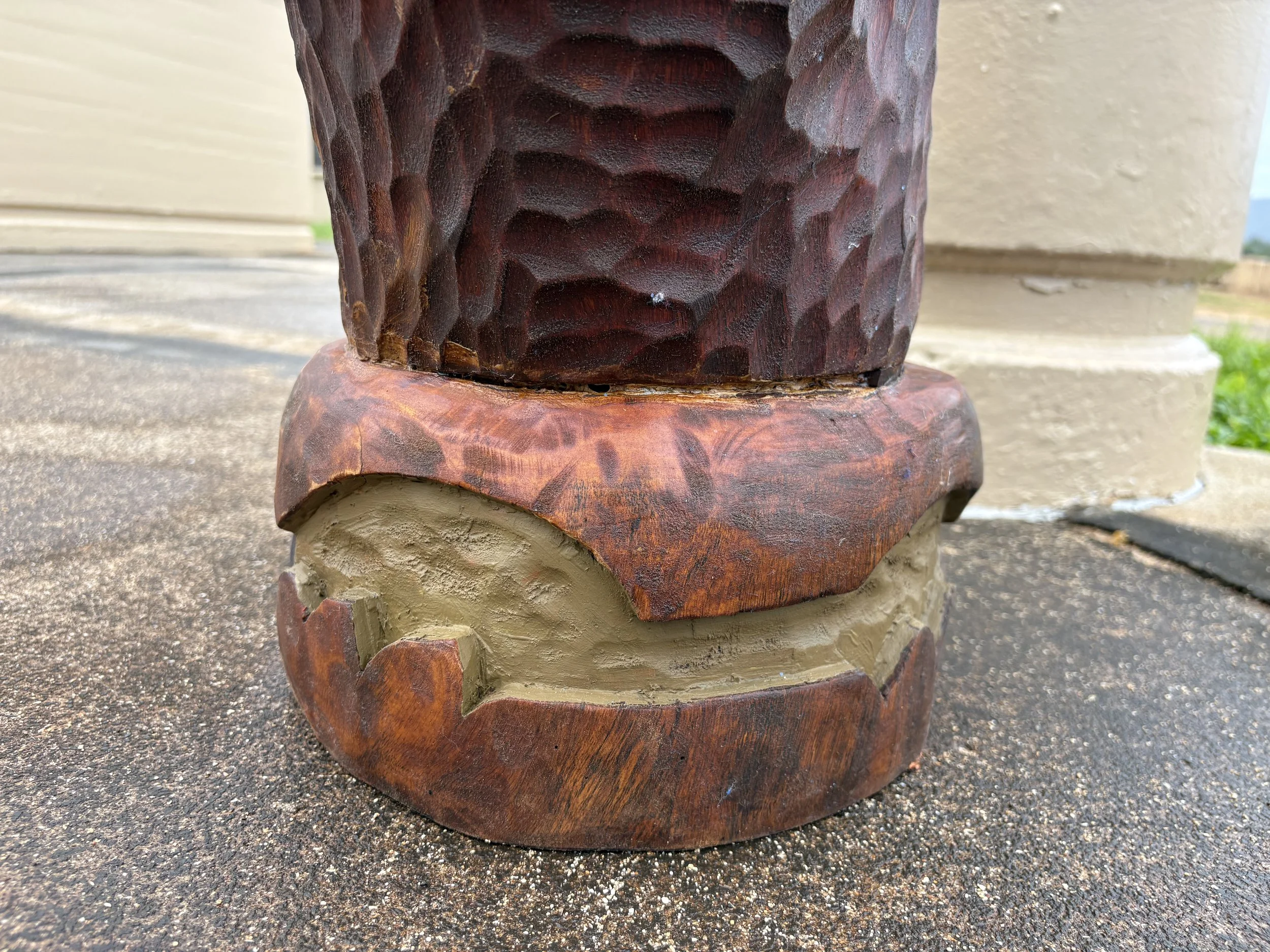
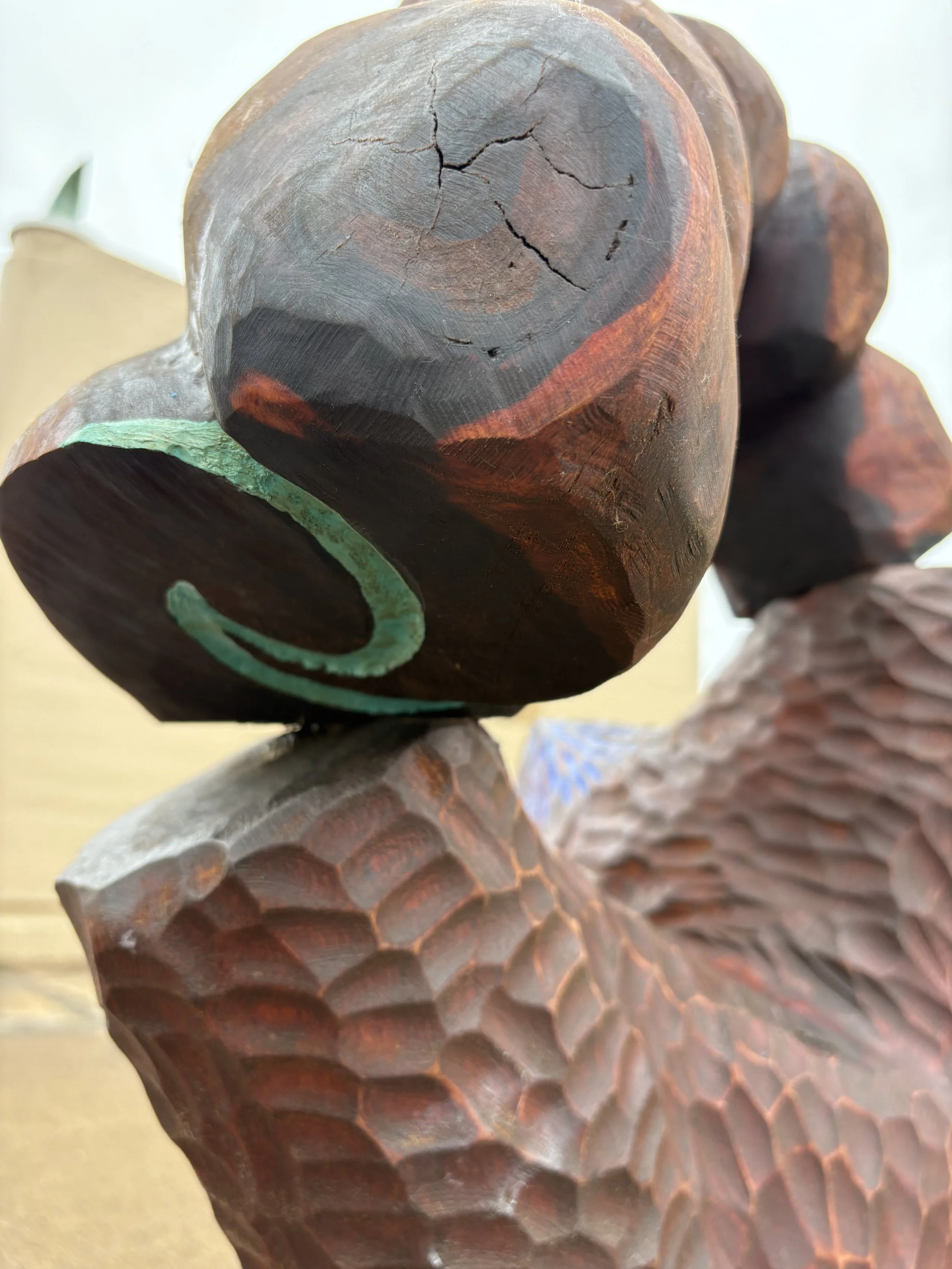
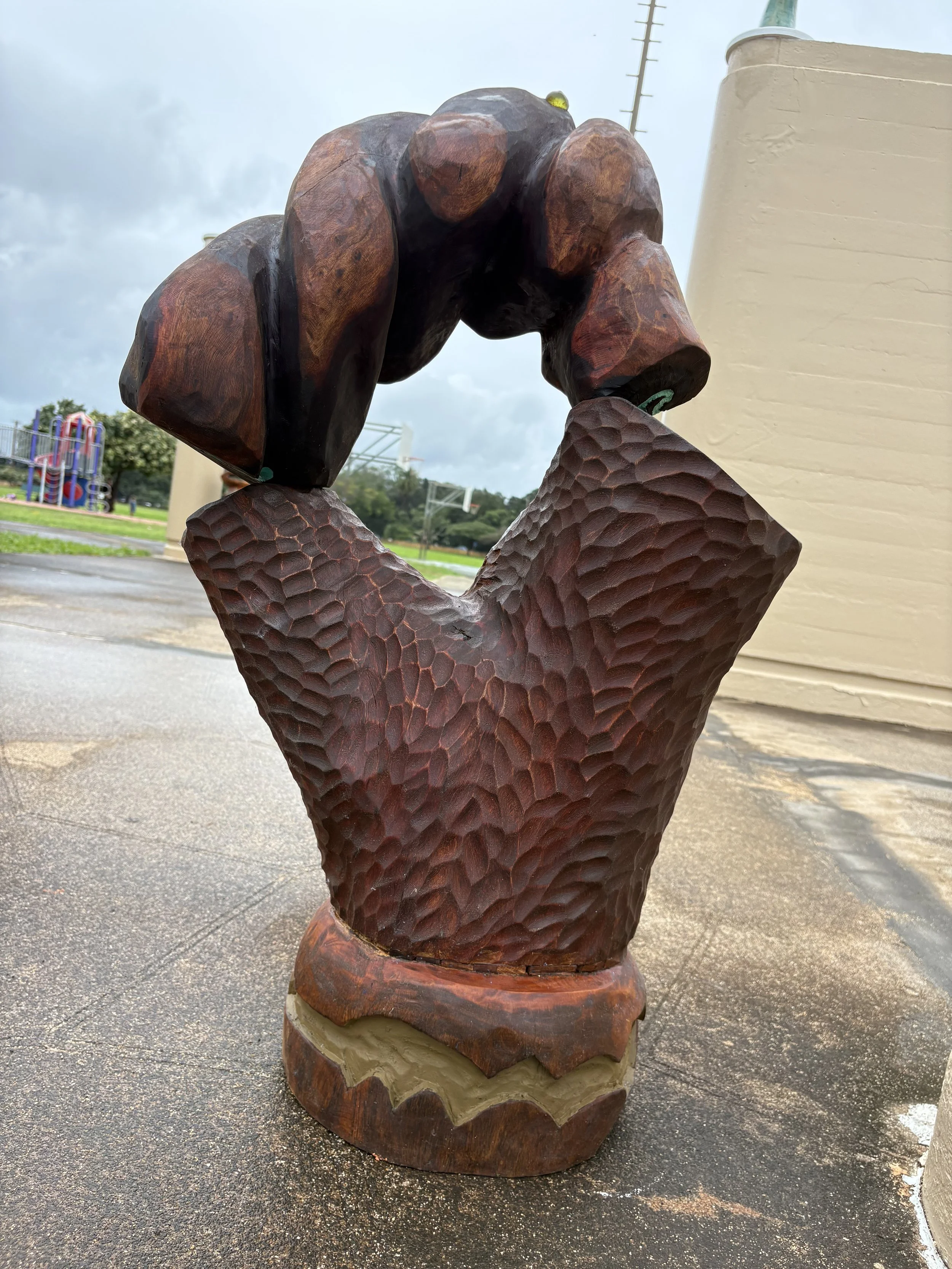
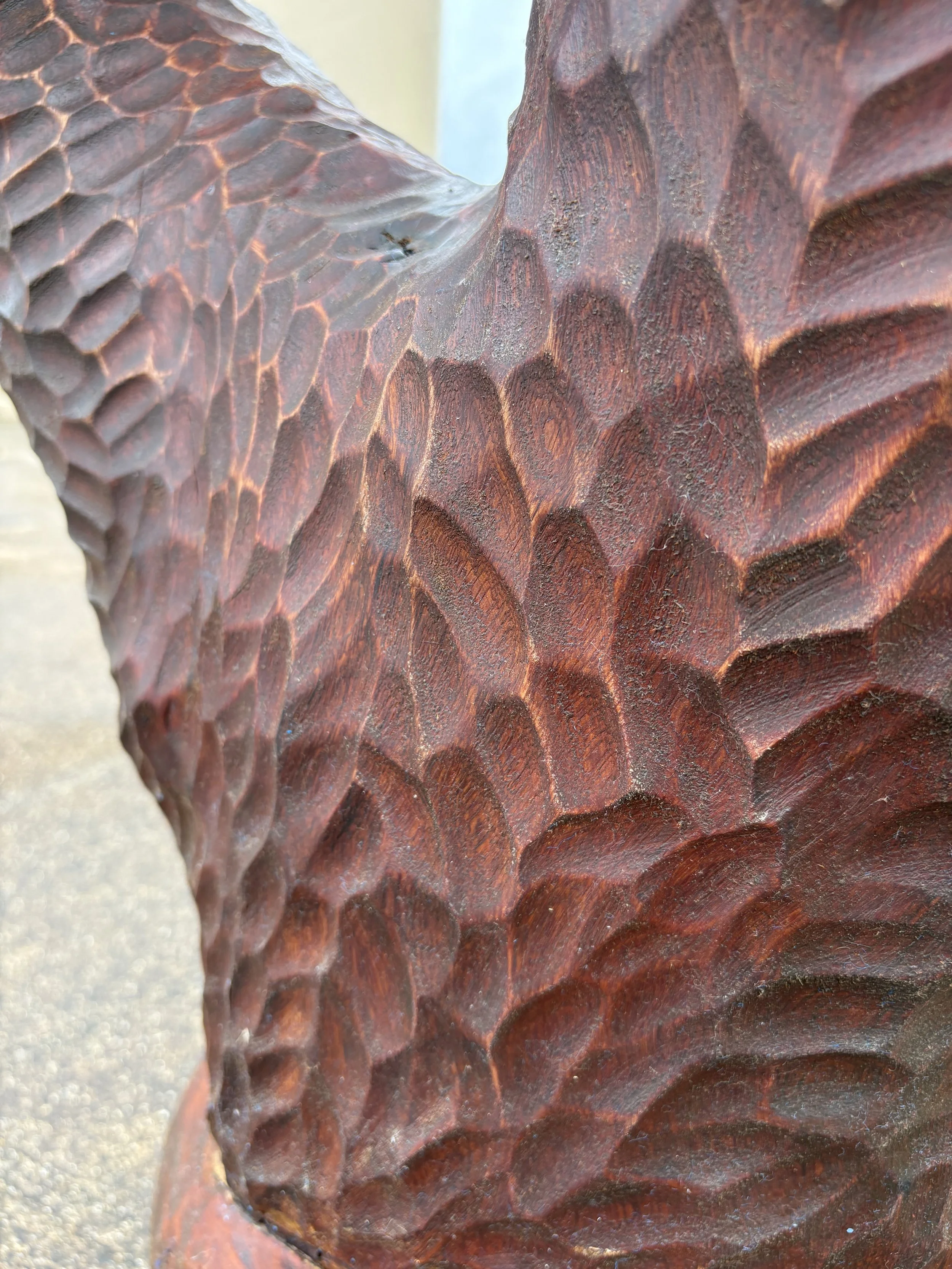
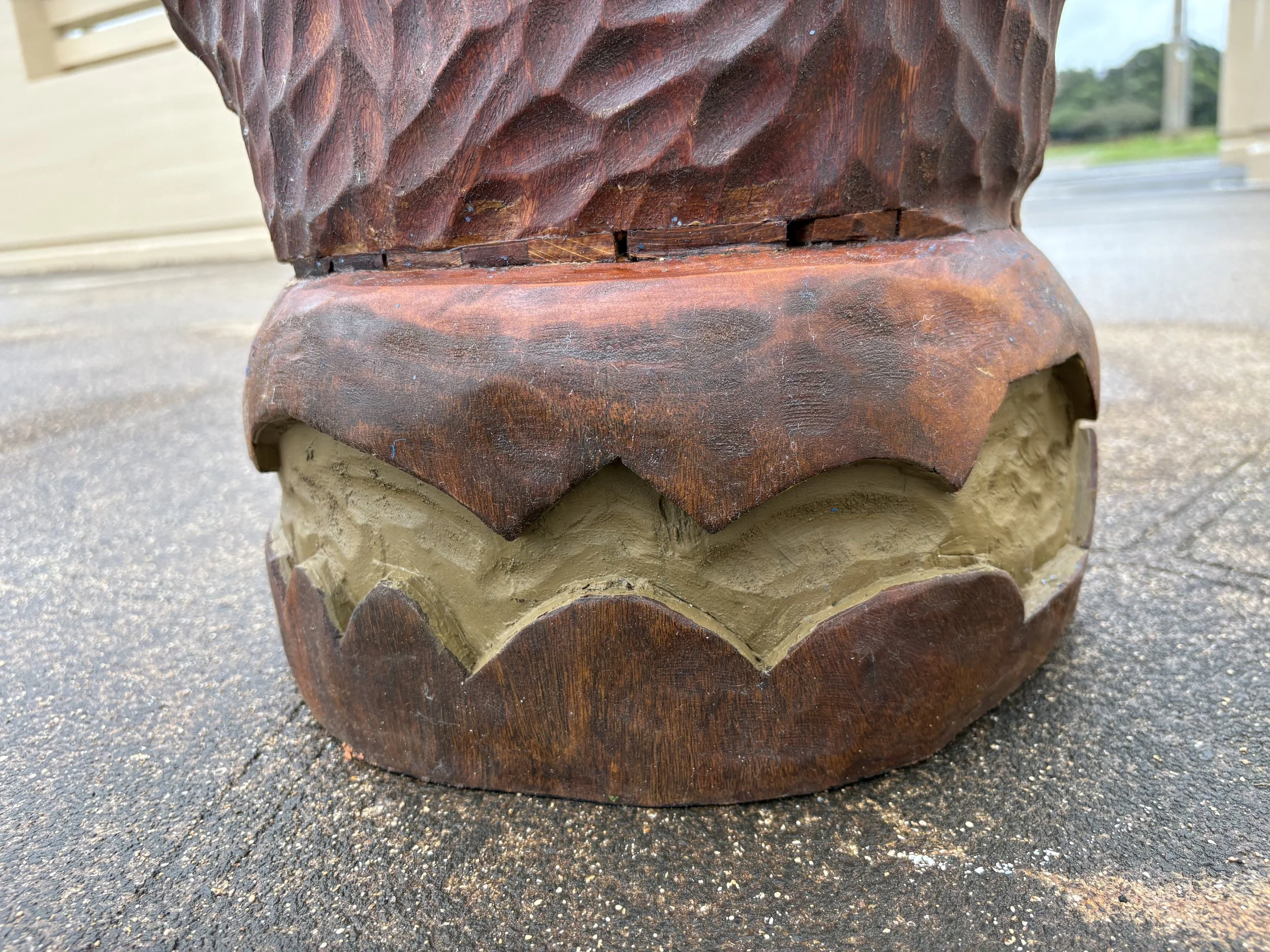
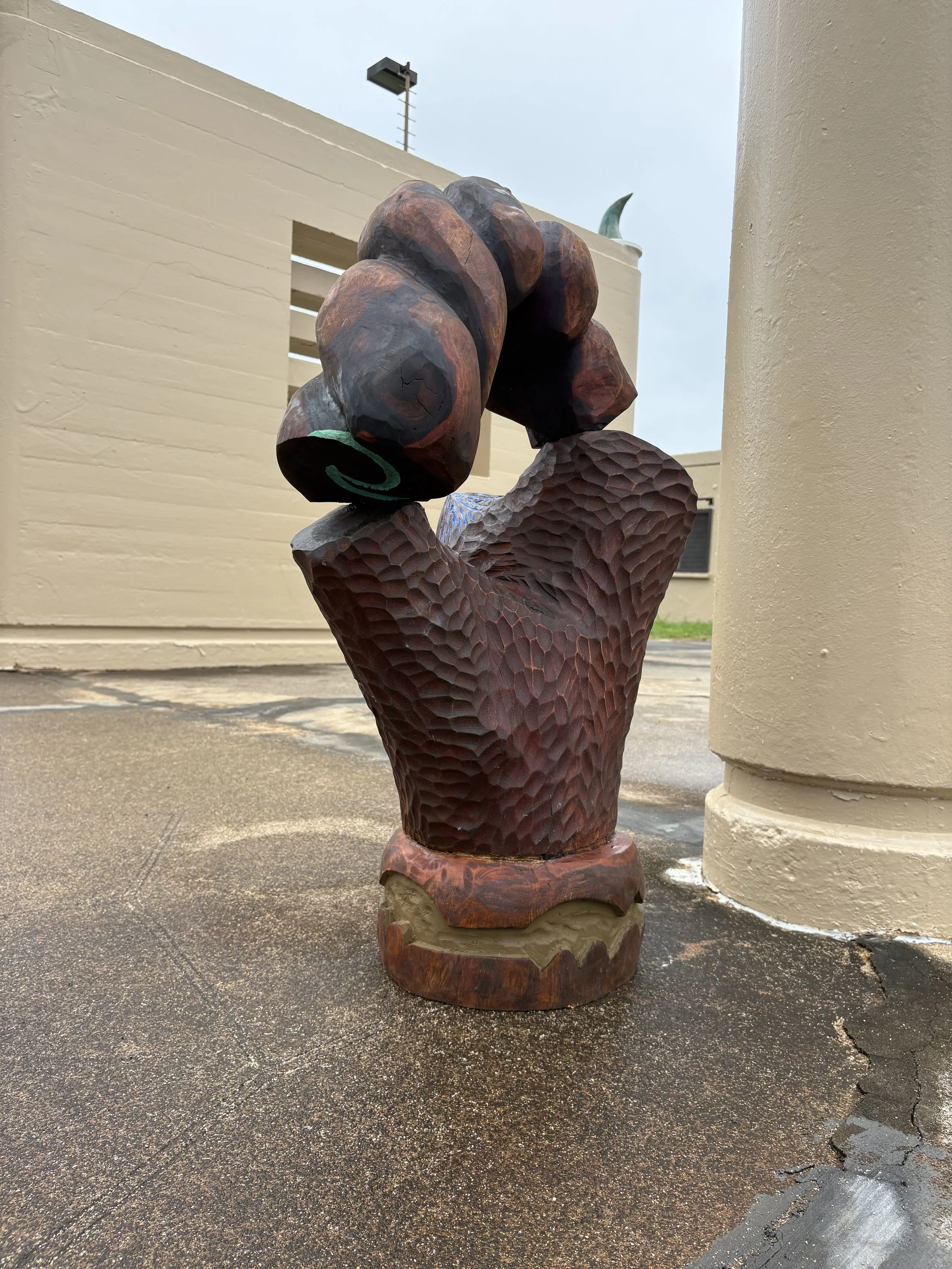
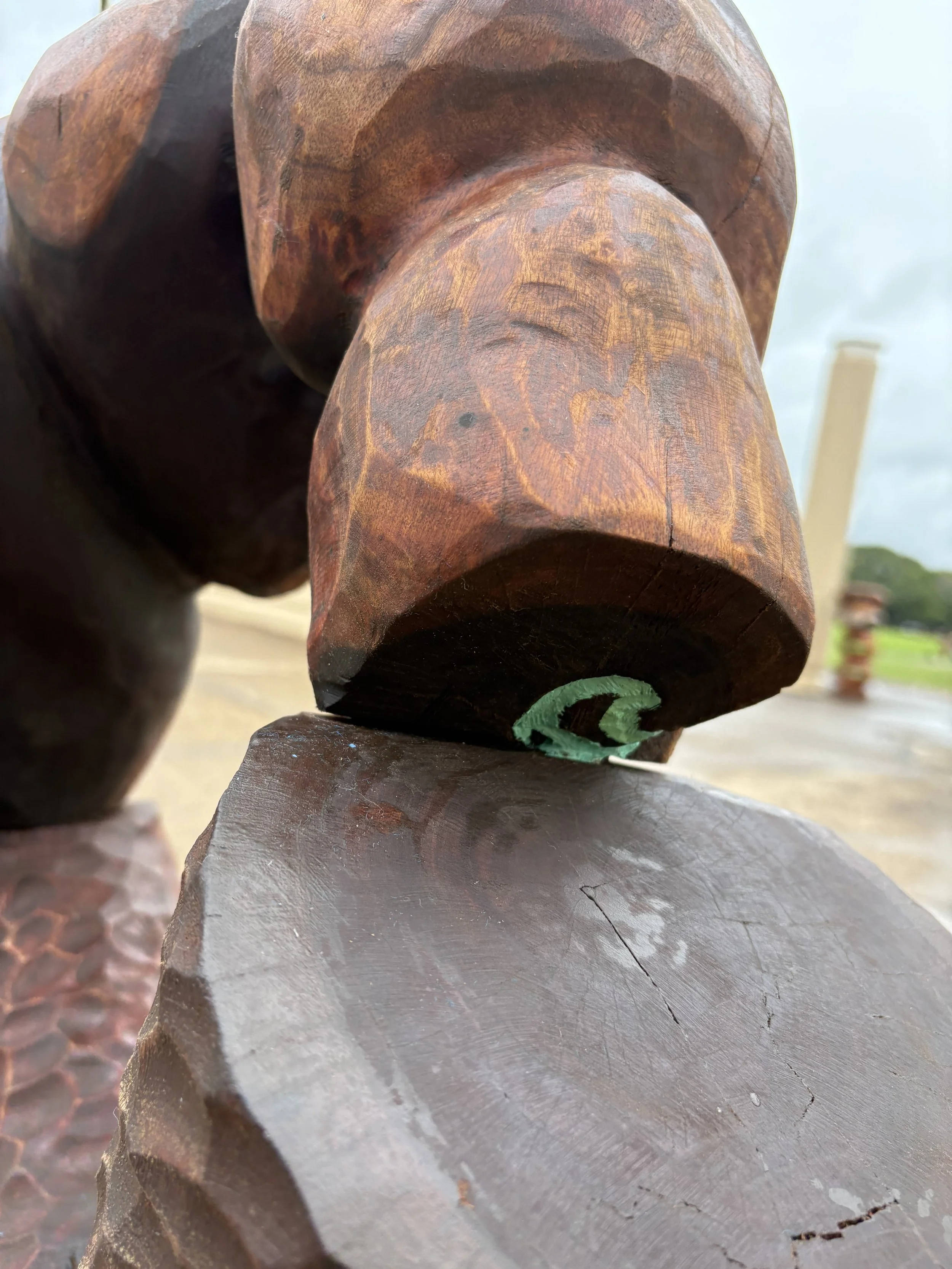
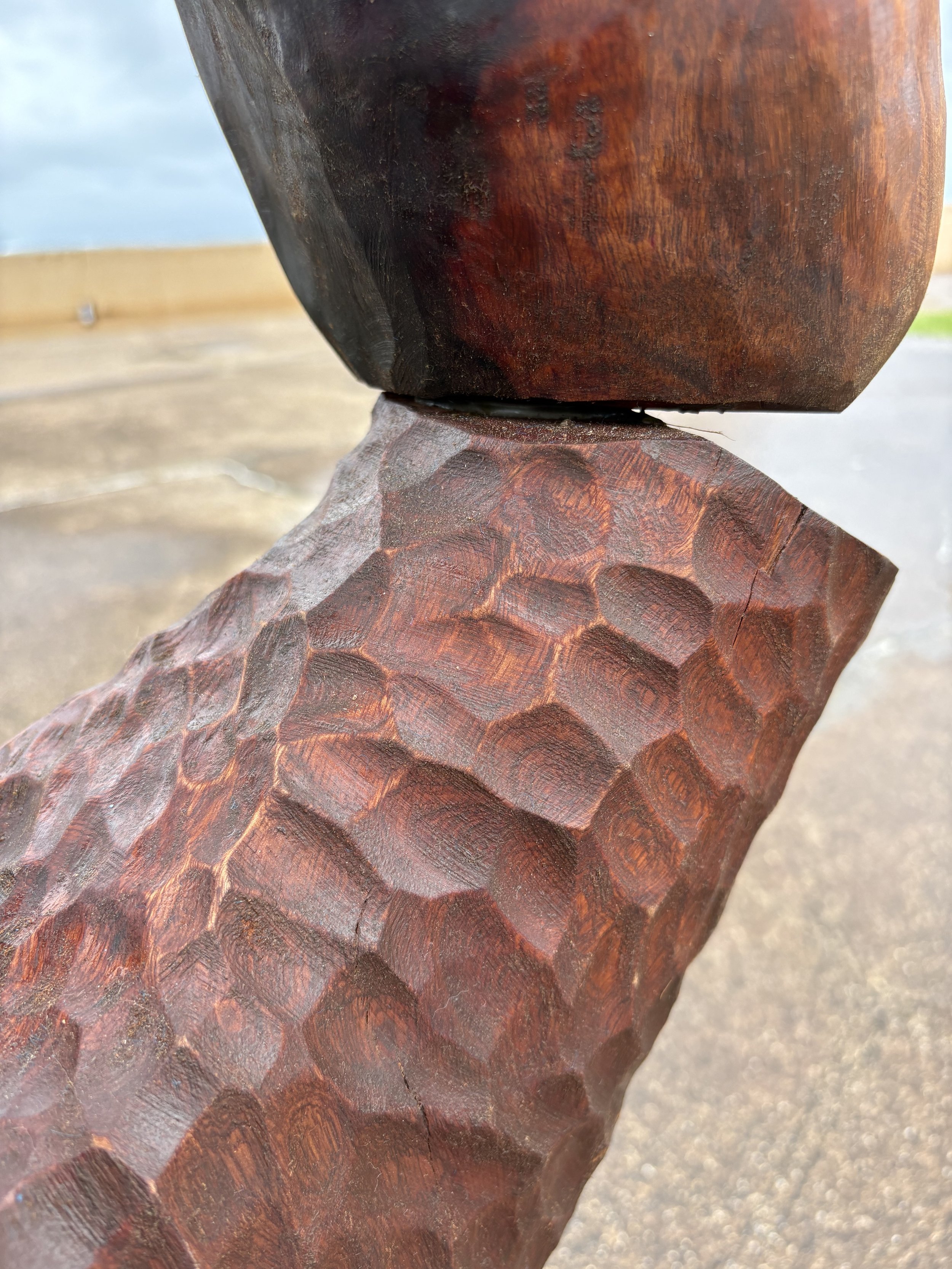
Cyclical gratitude in ritual
Kamani wood
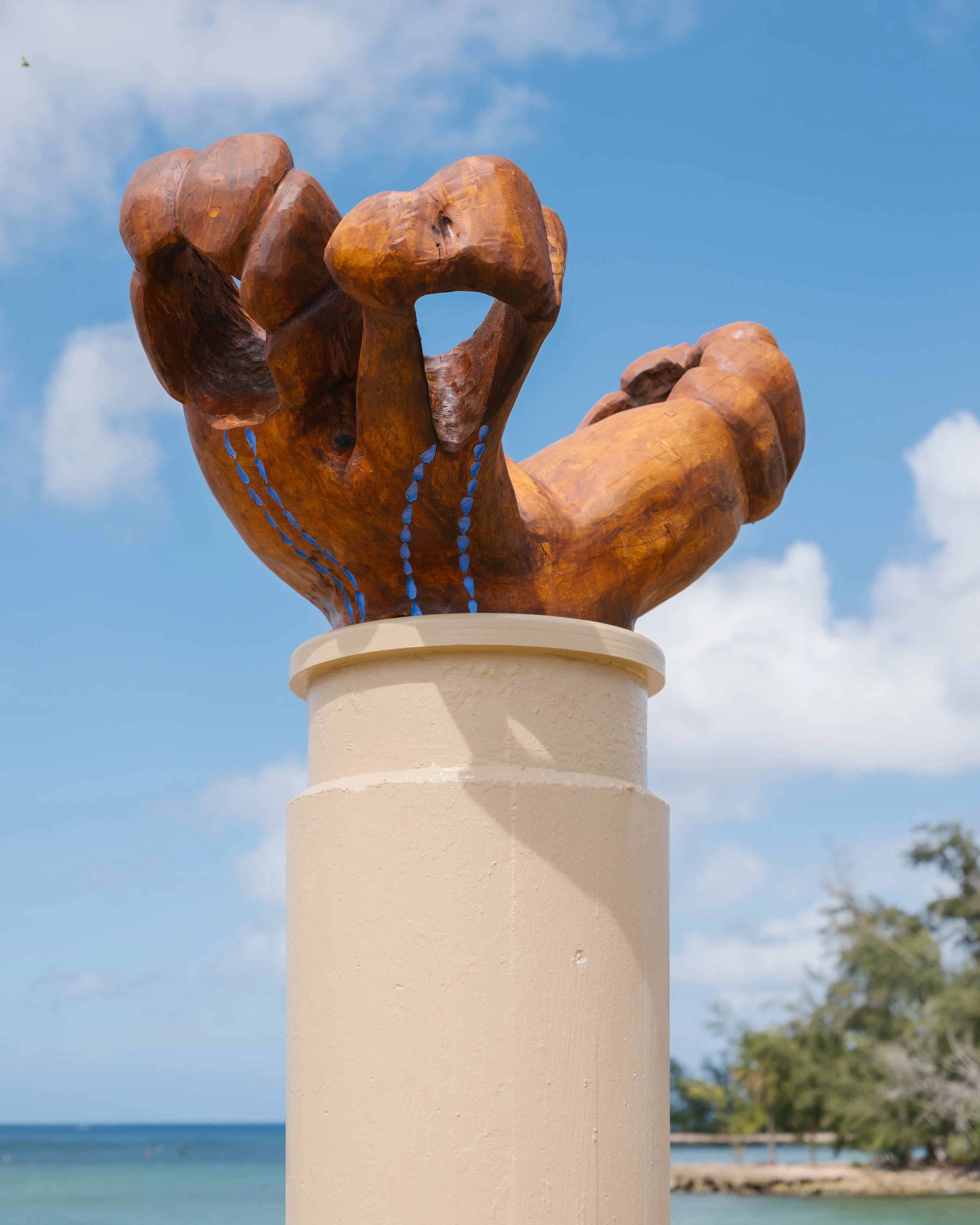
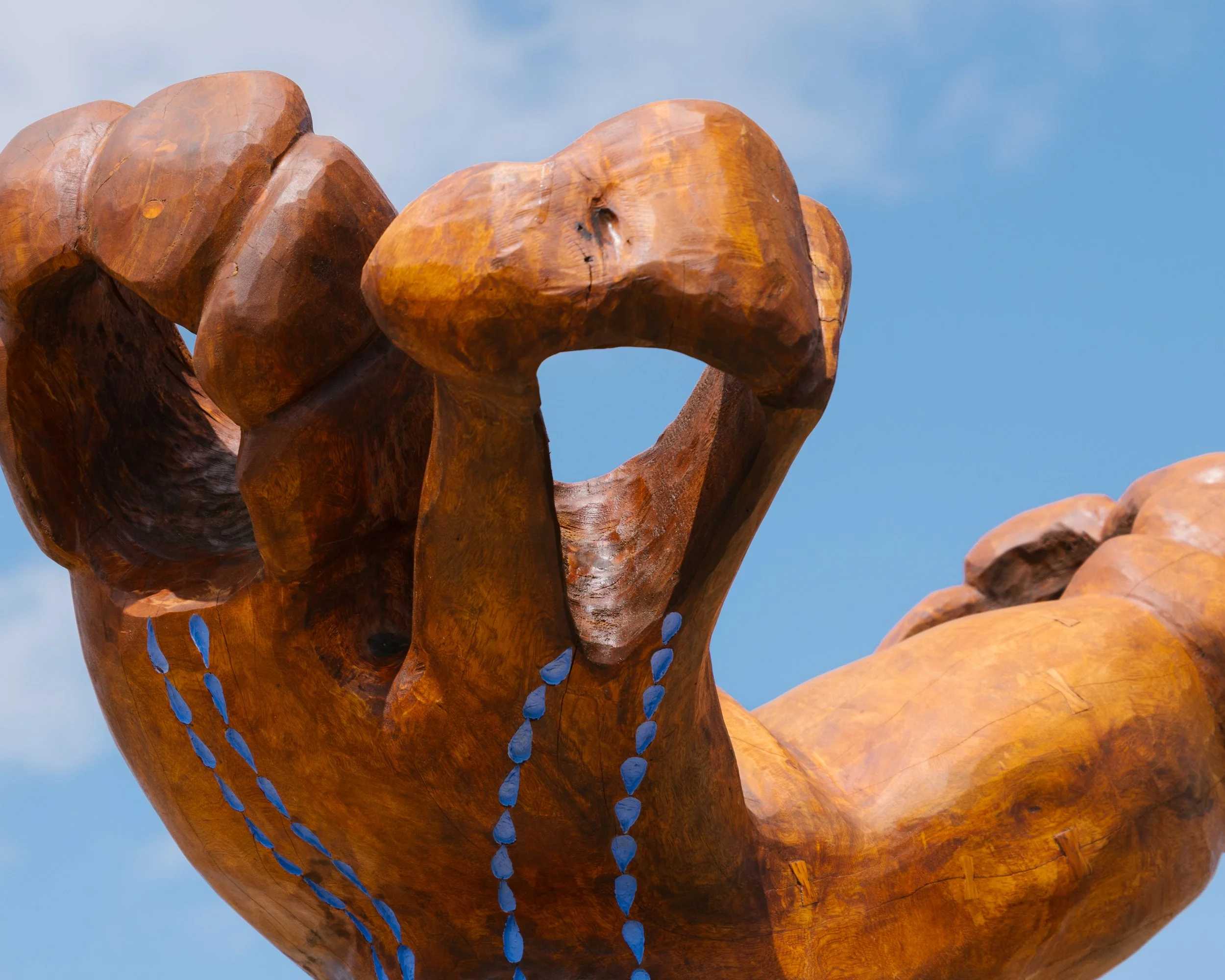
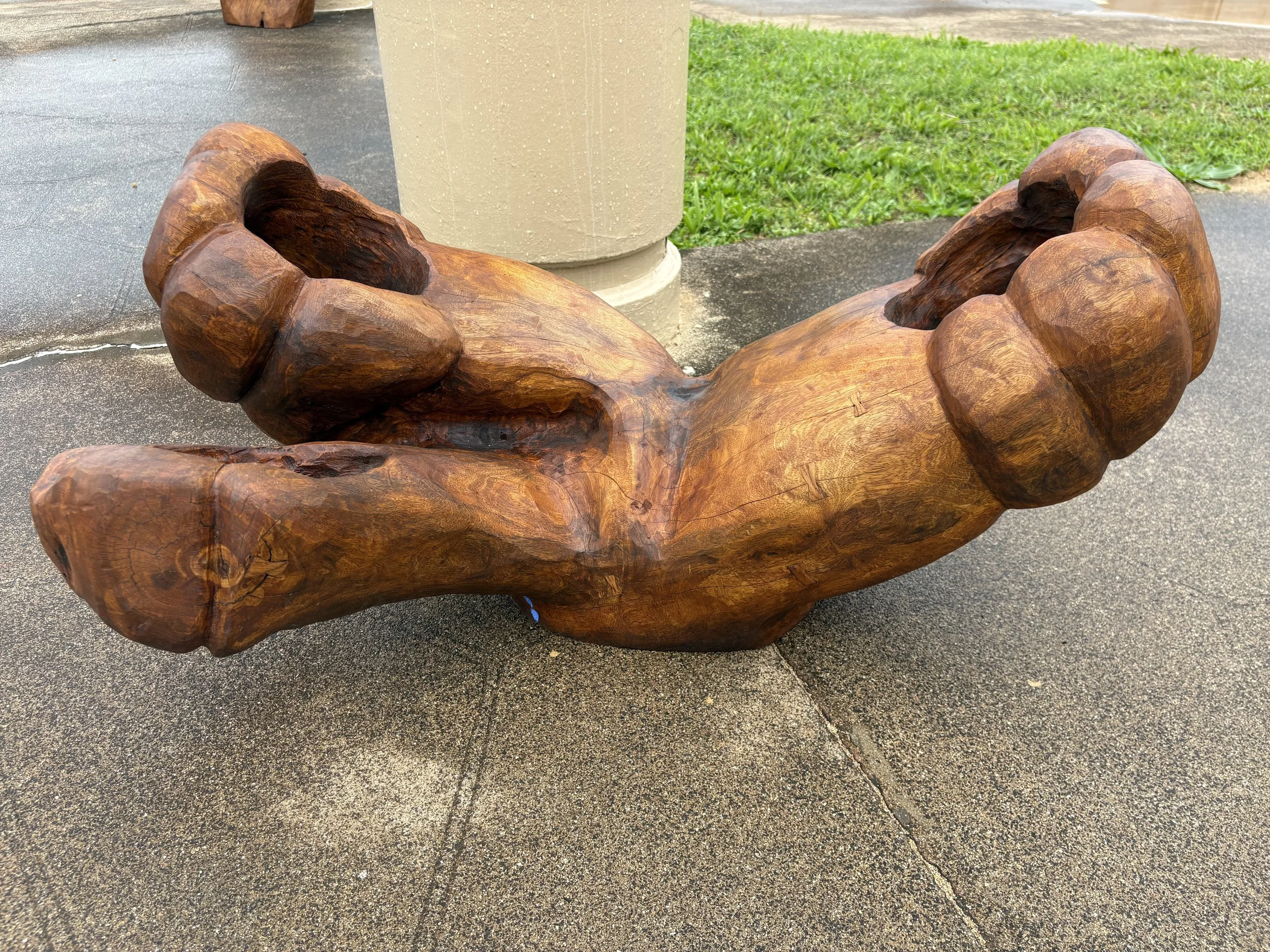
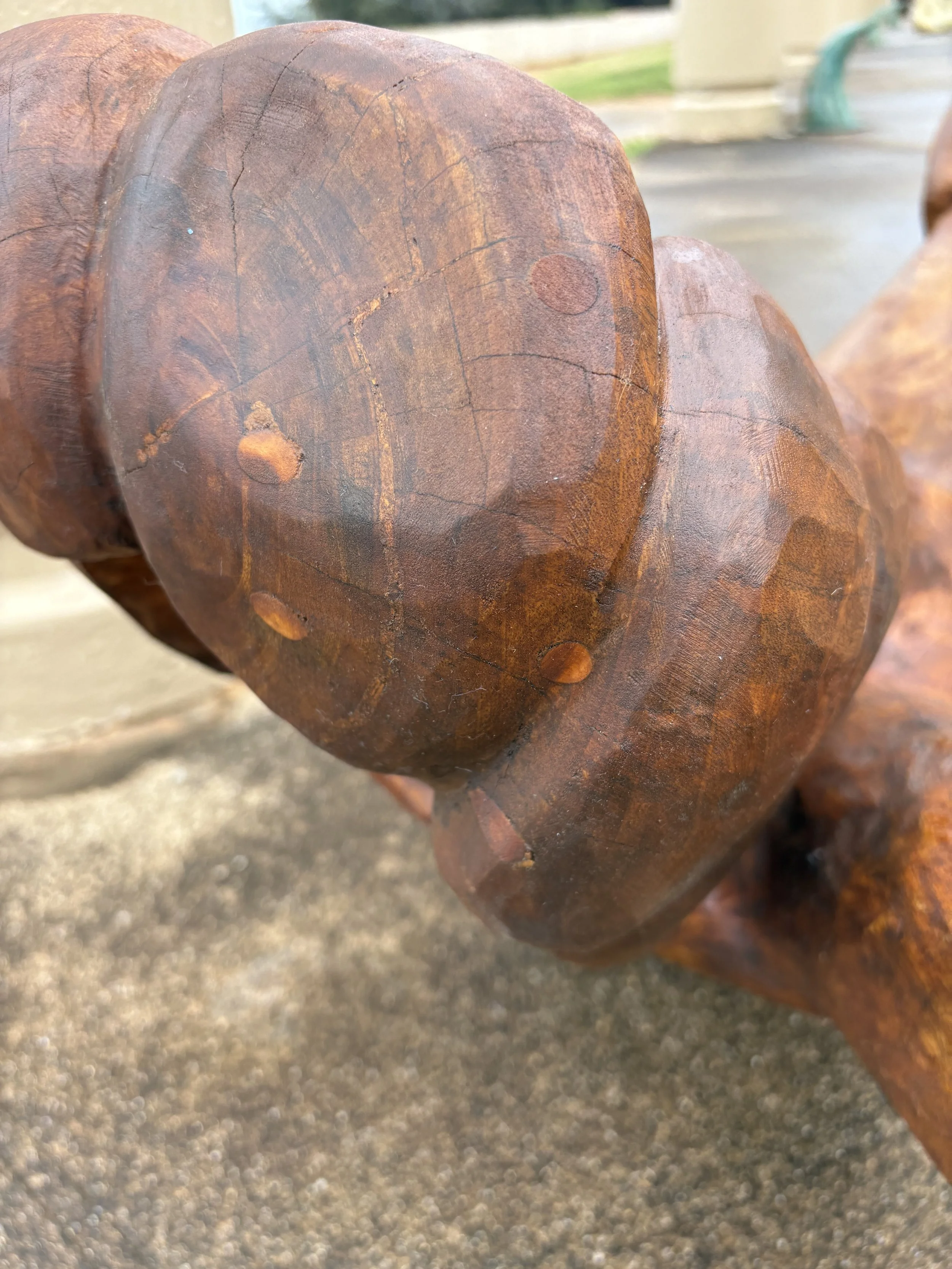
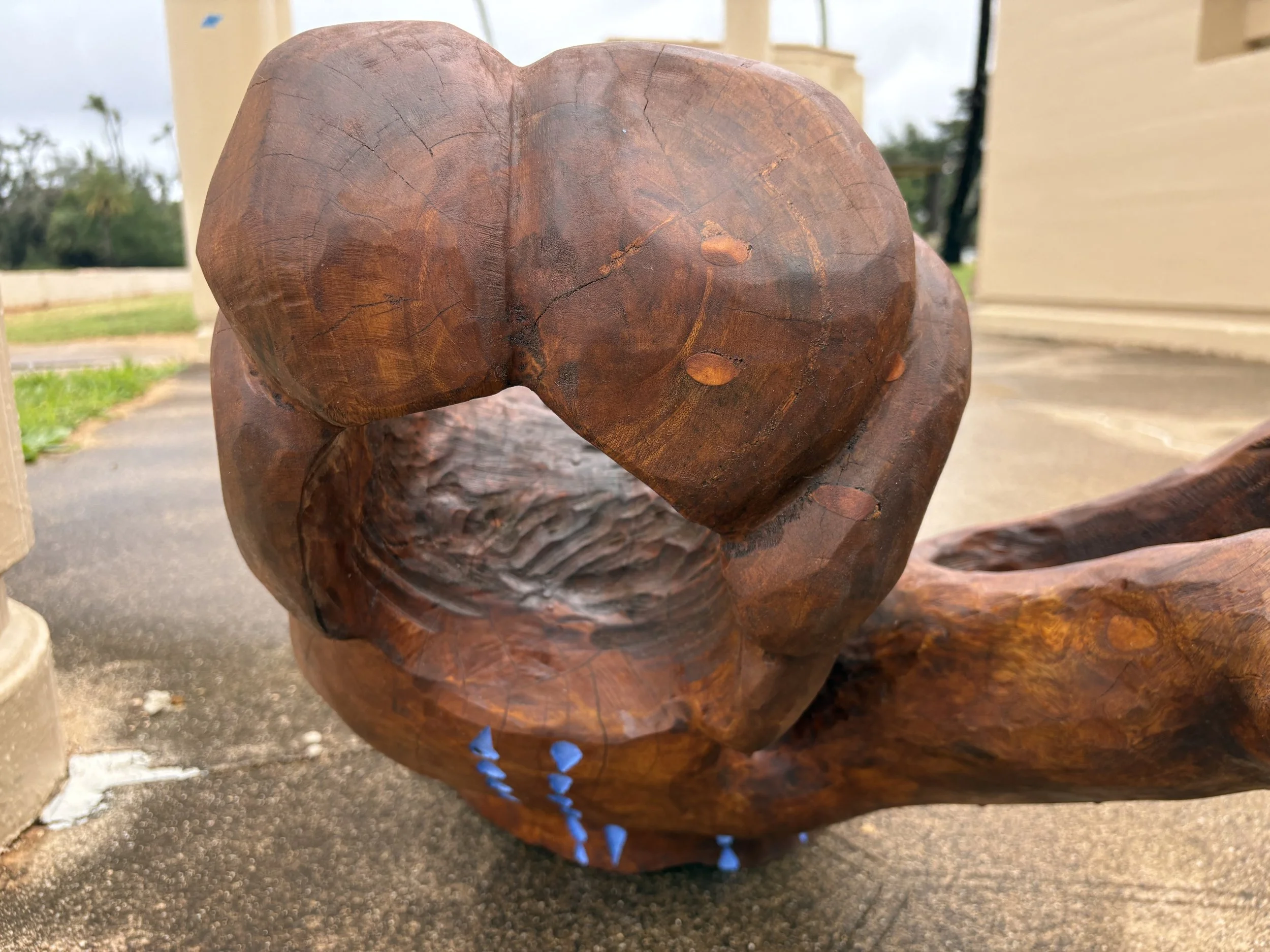
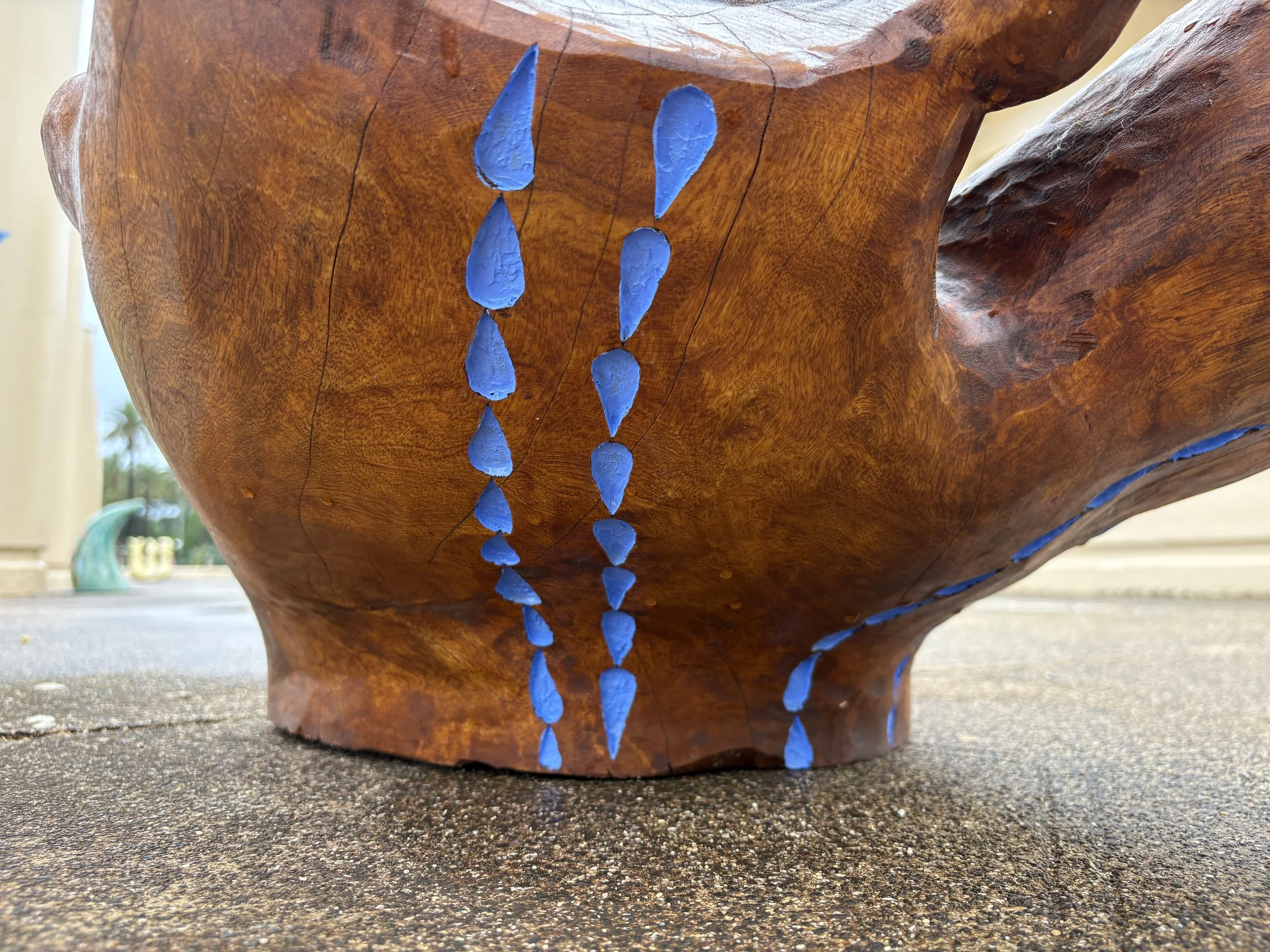
Hau Tree for Aunty Manu and Kupuna
Hau wood
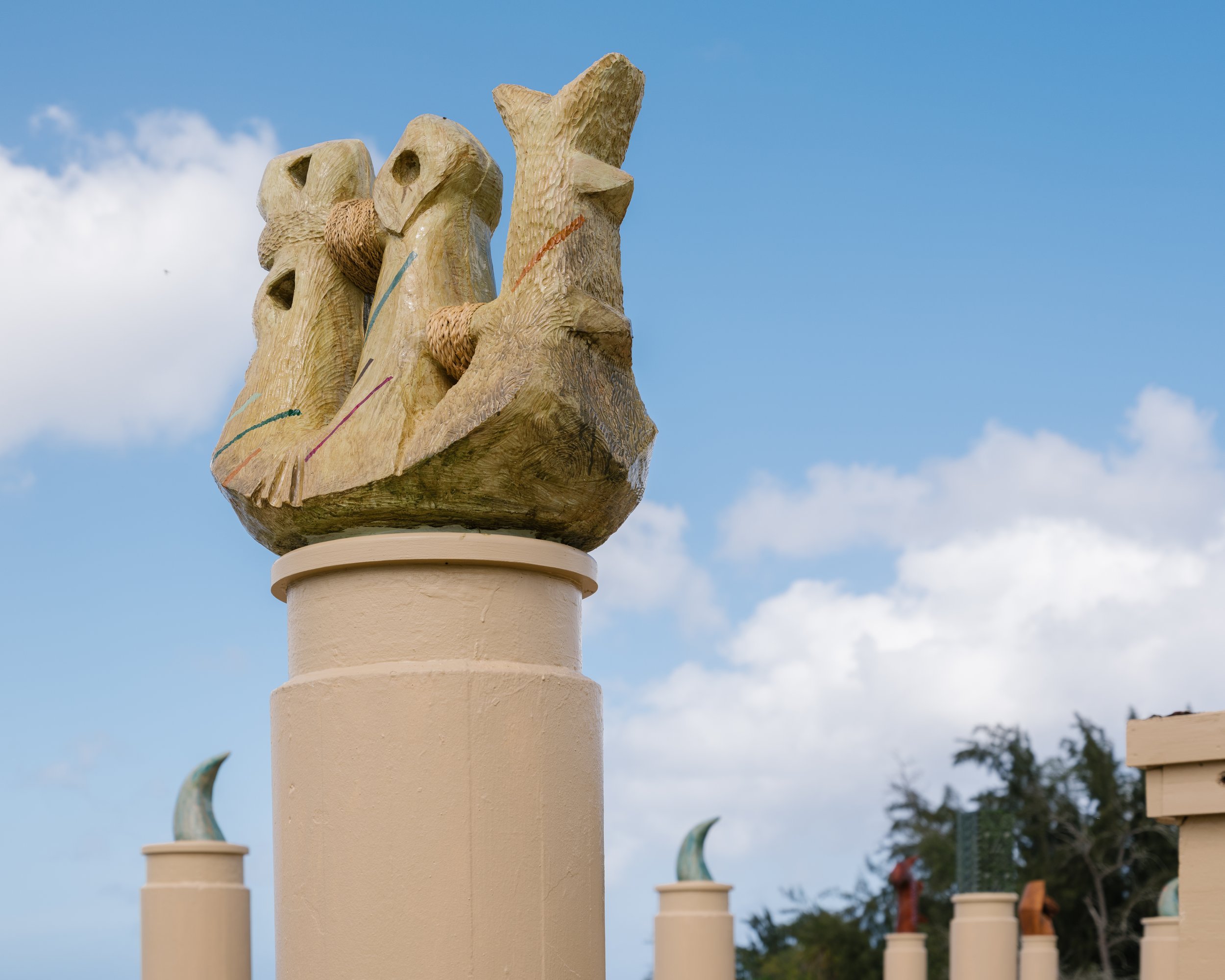
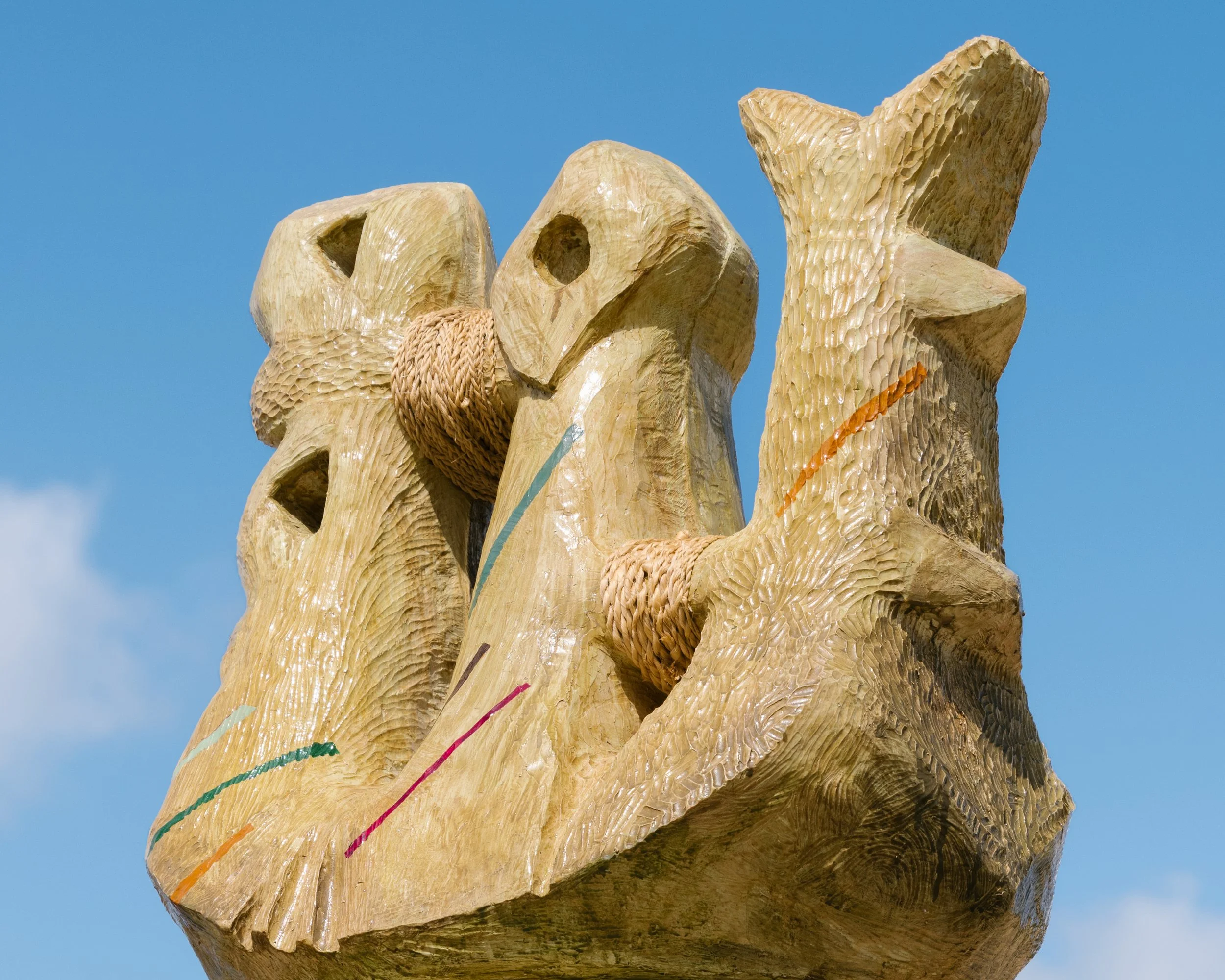
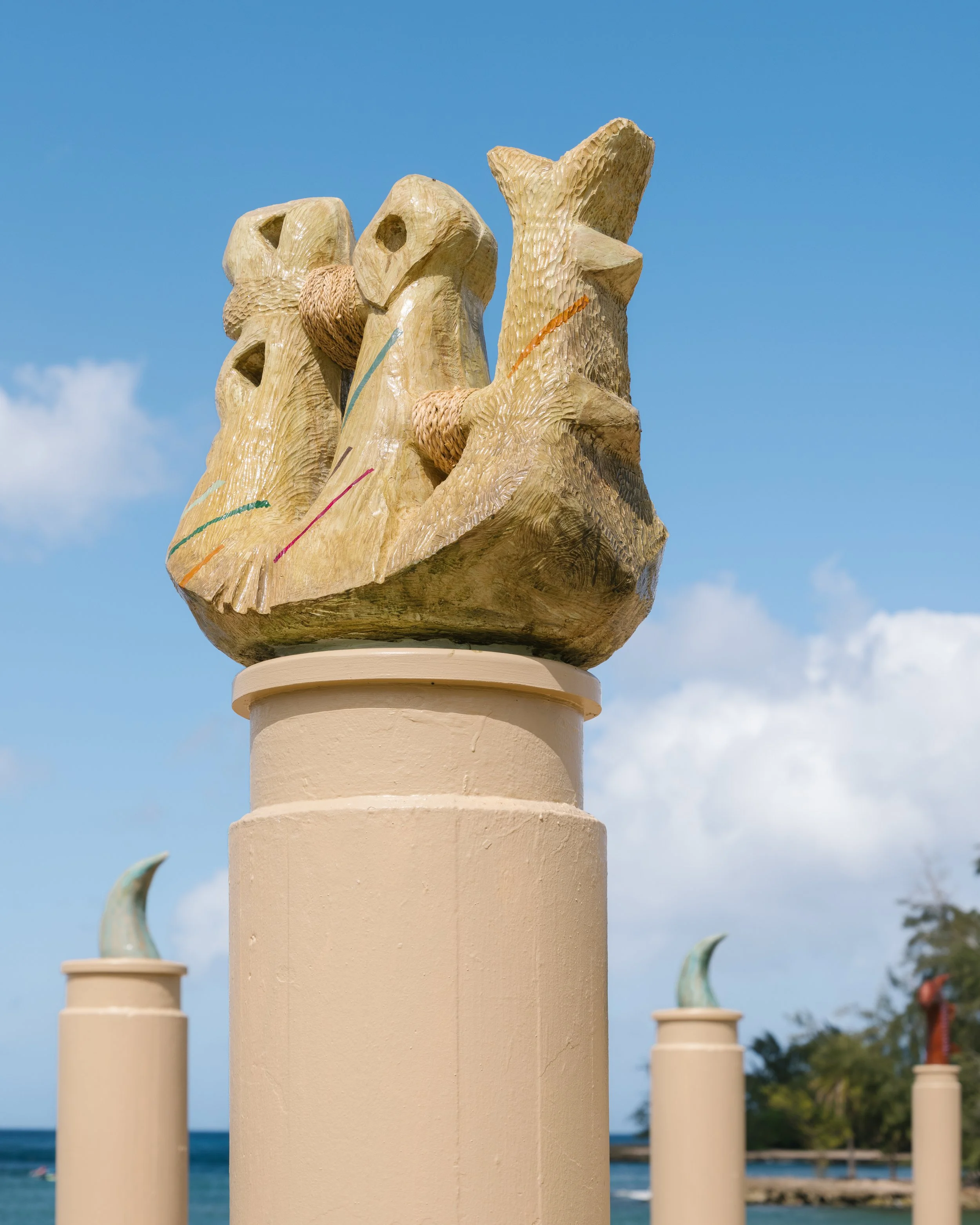
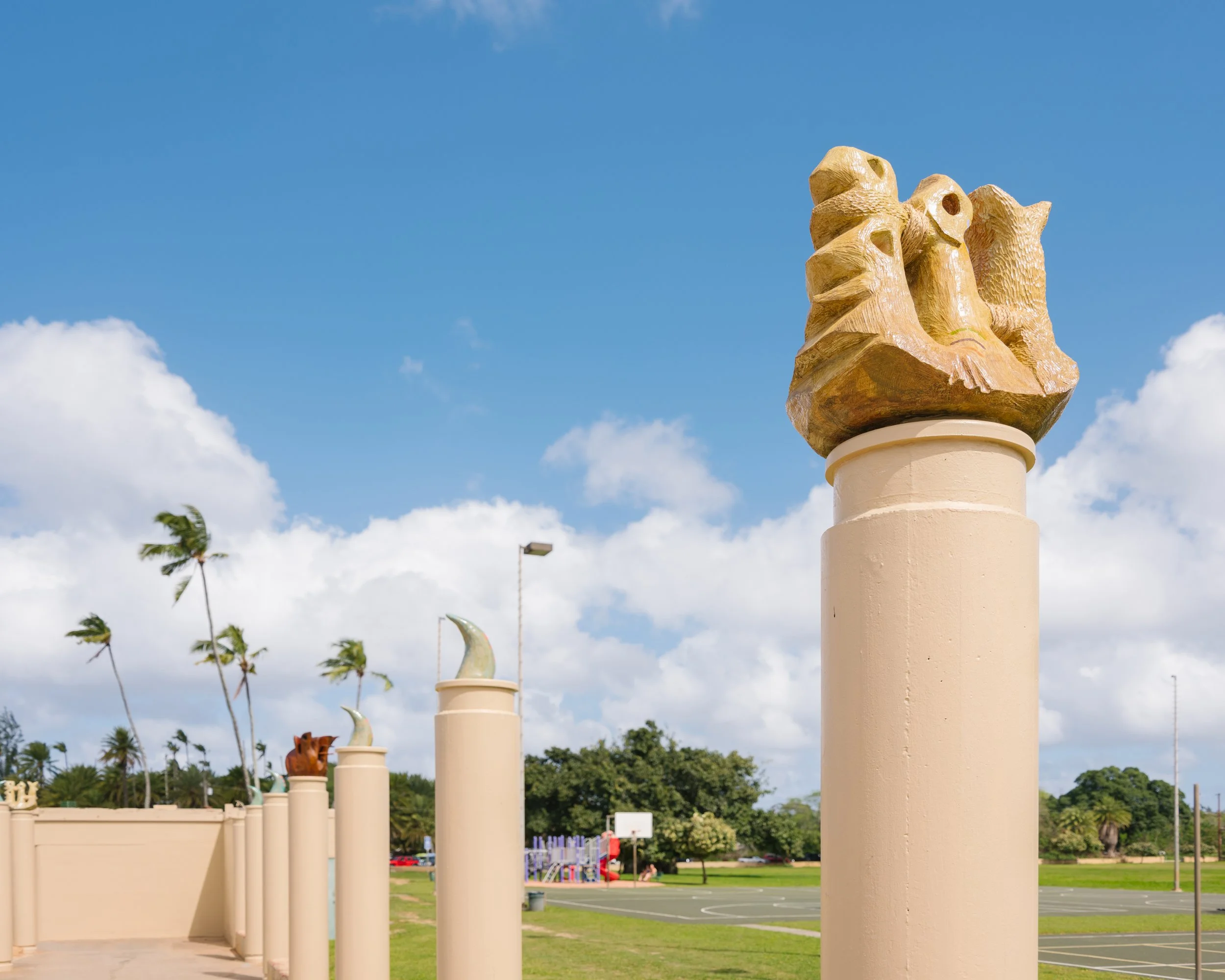
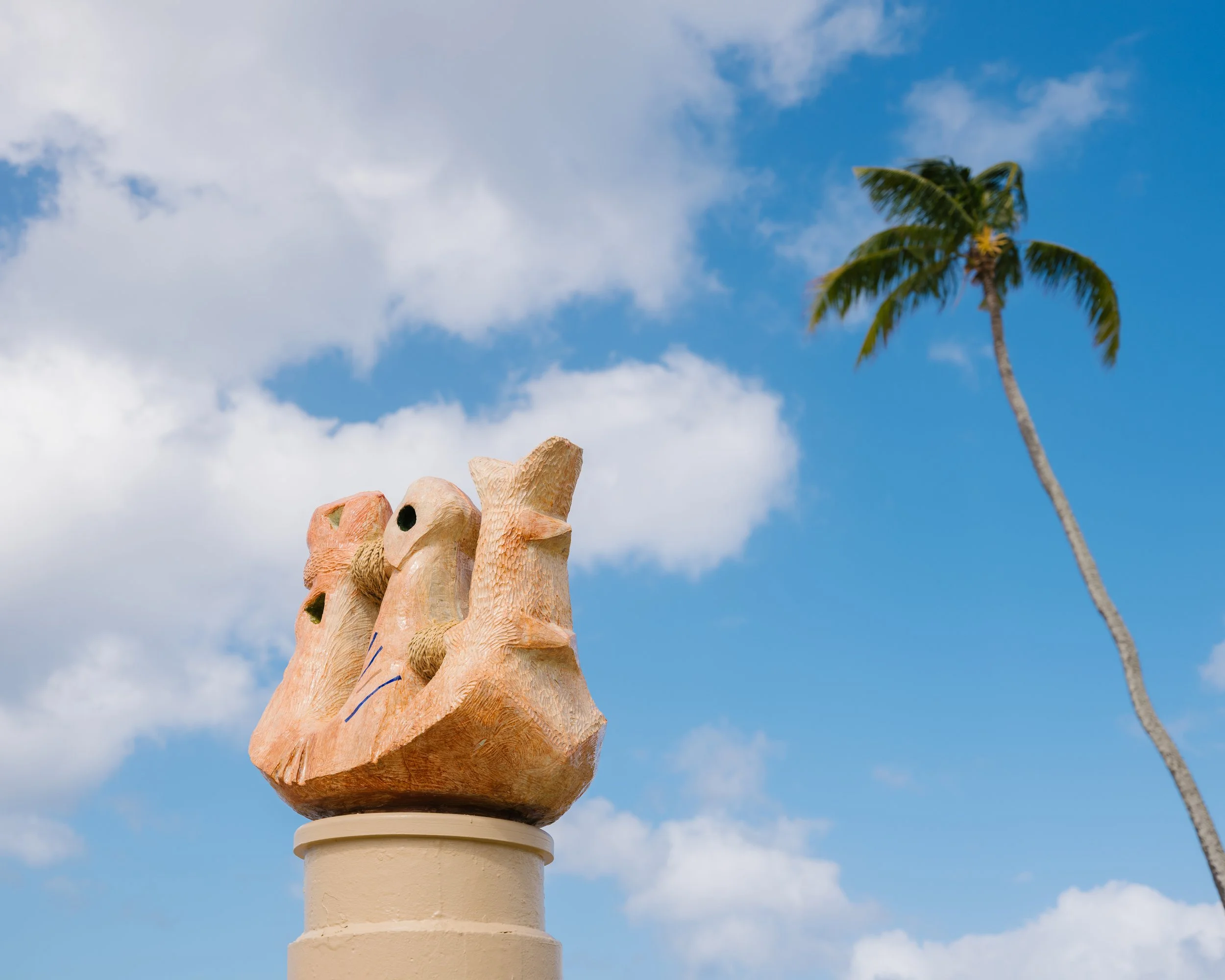
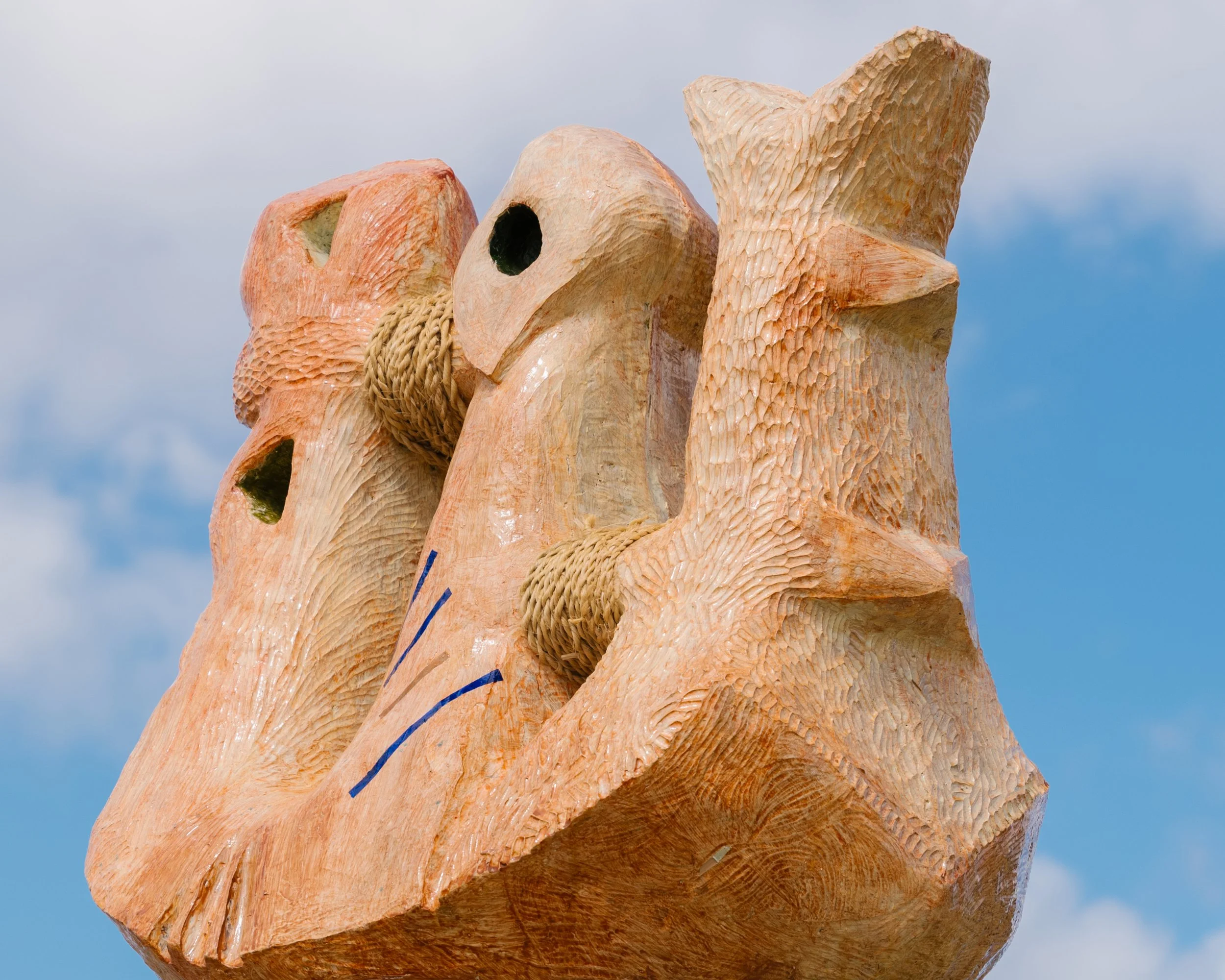
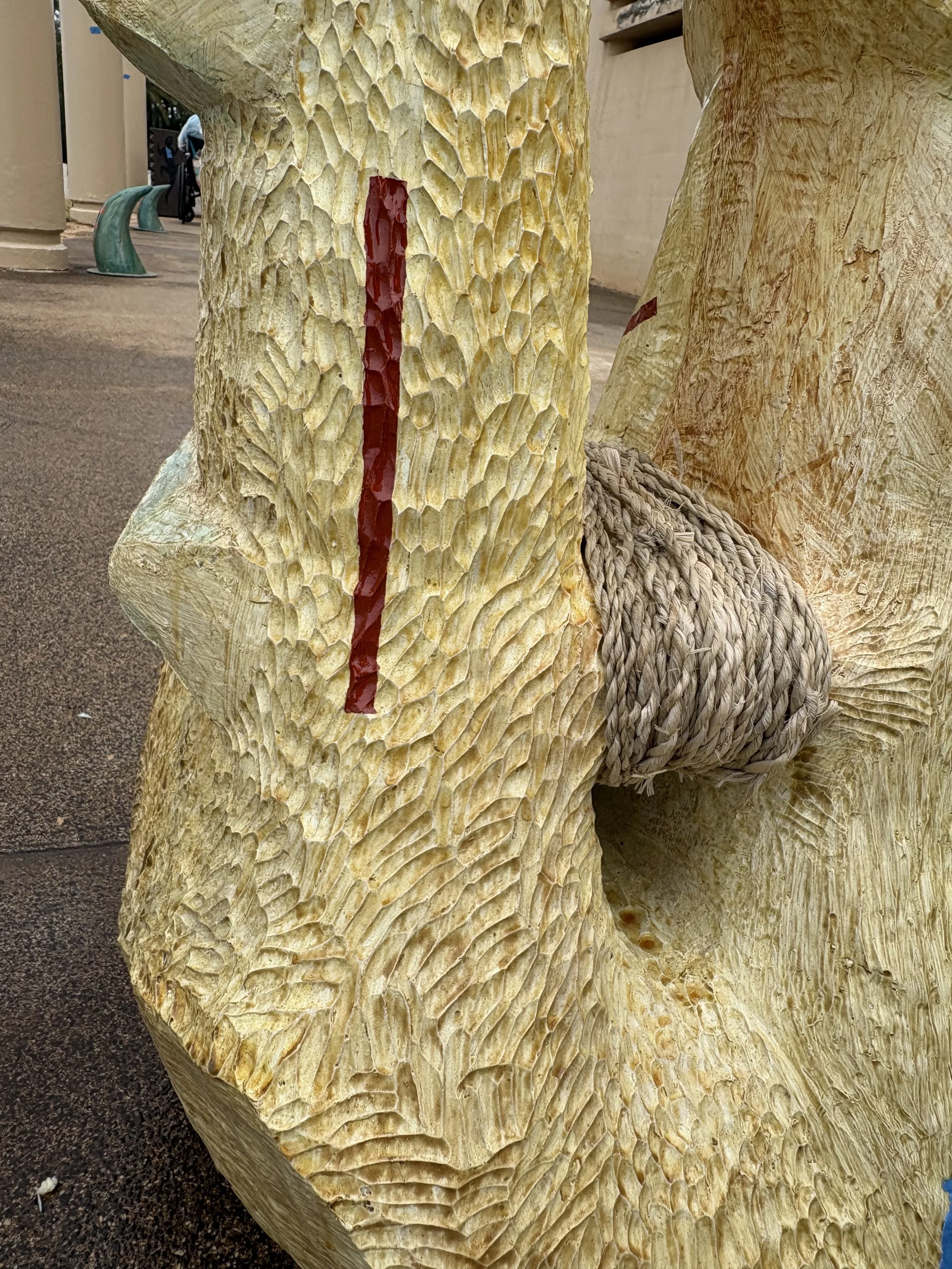
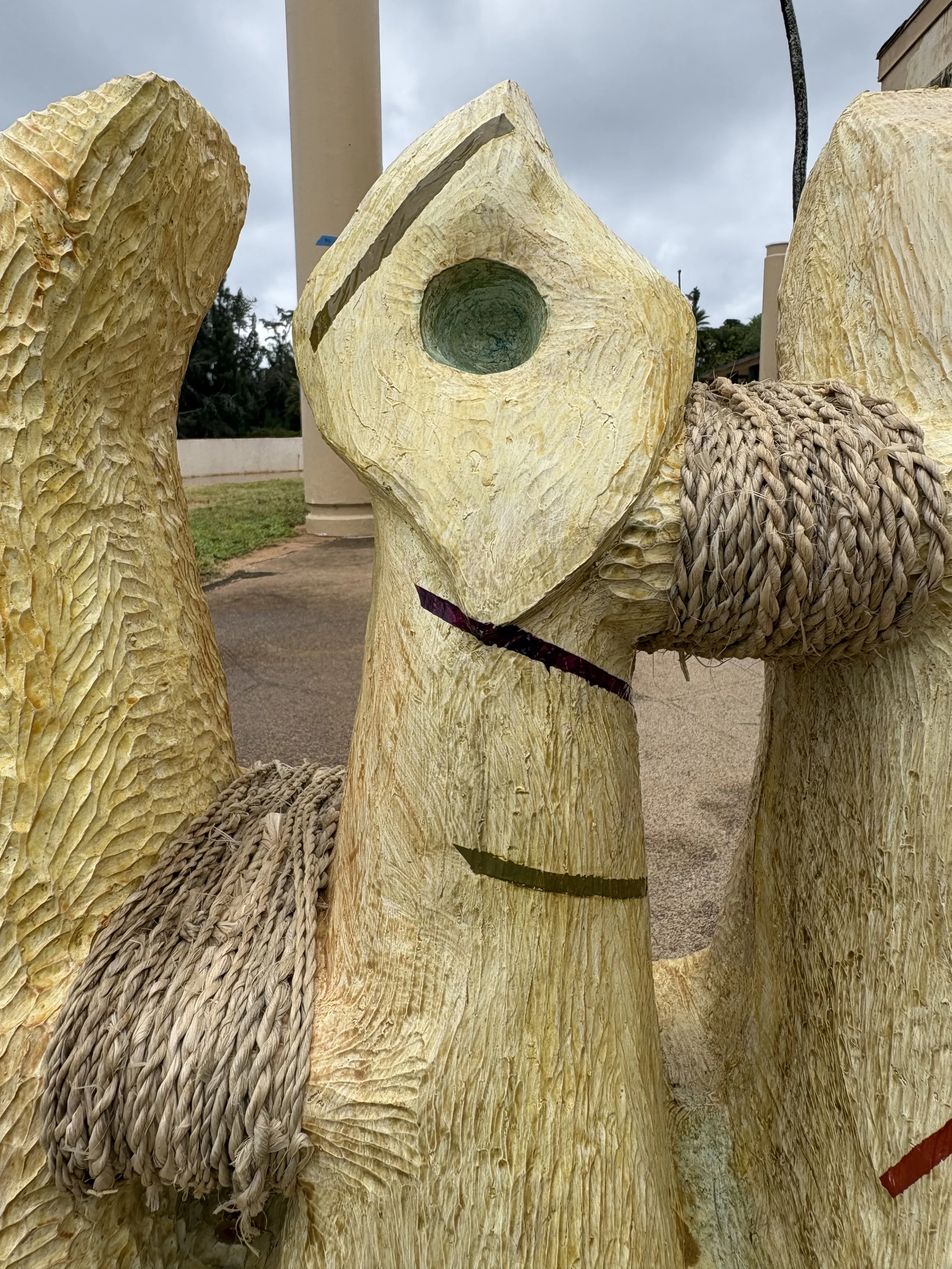
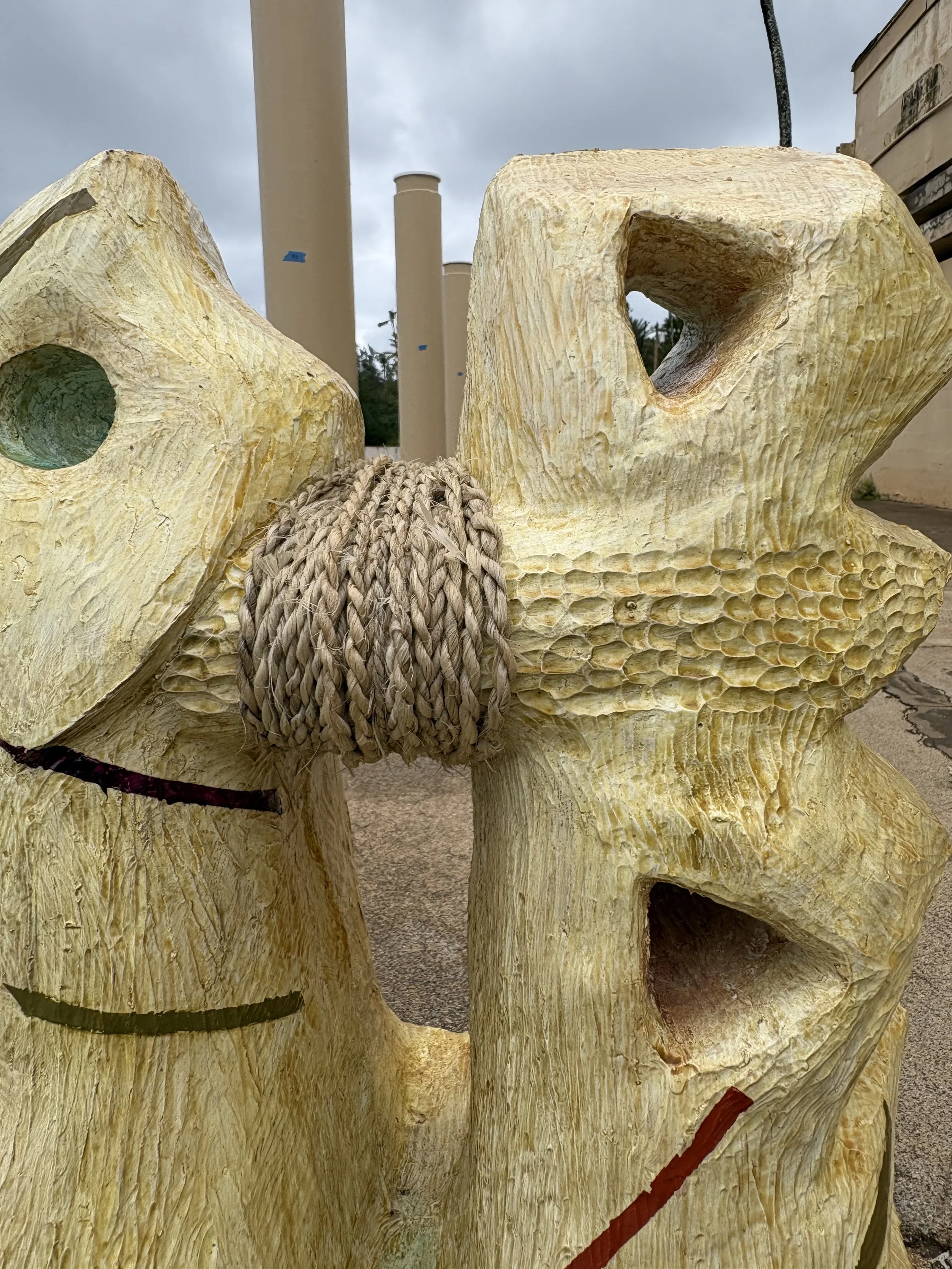
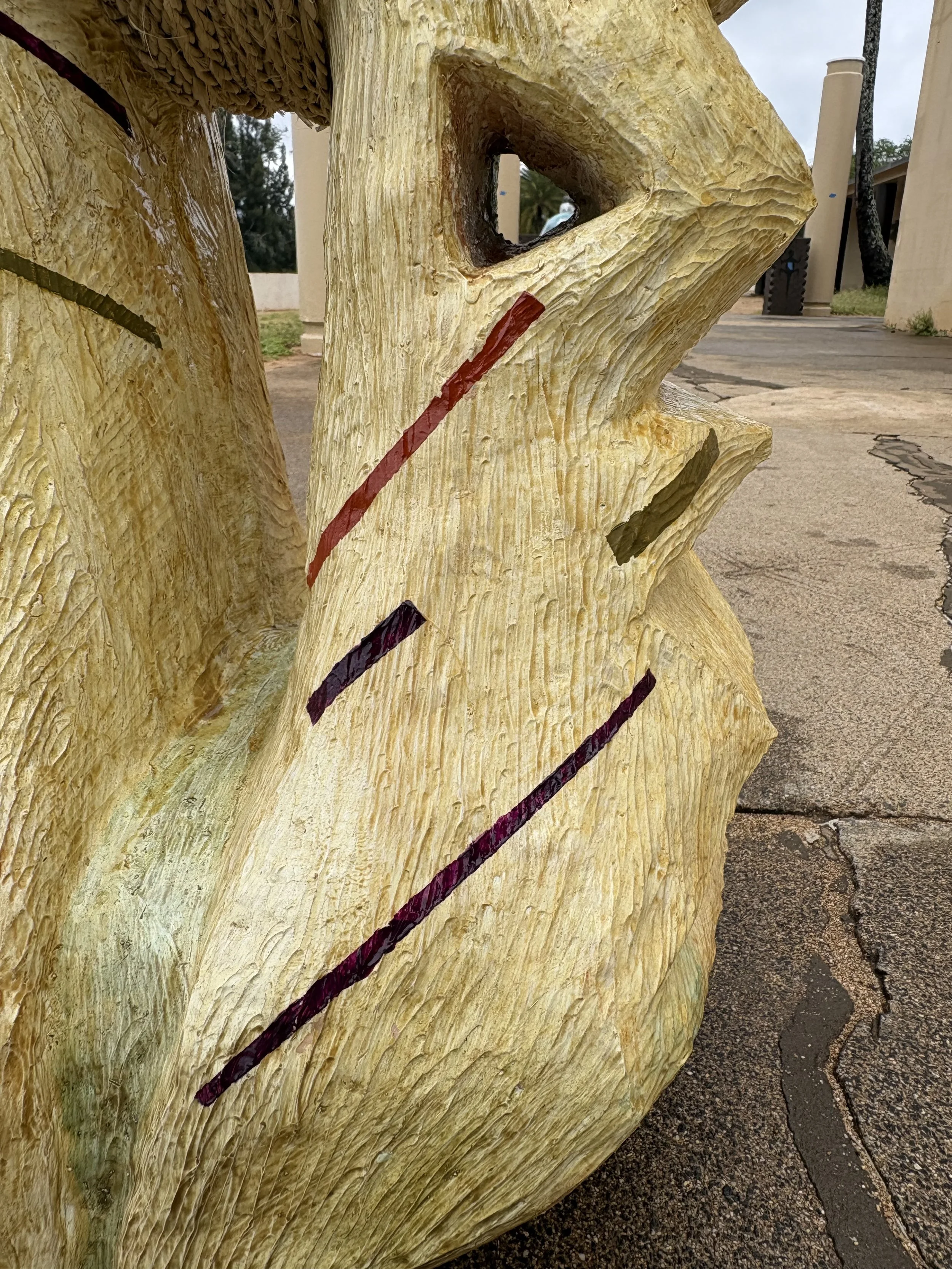
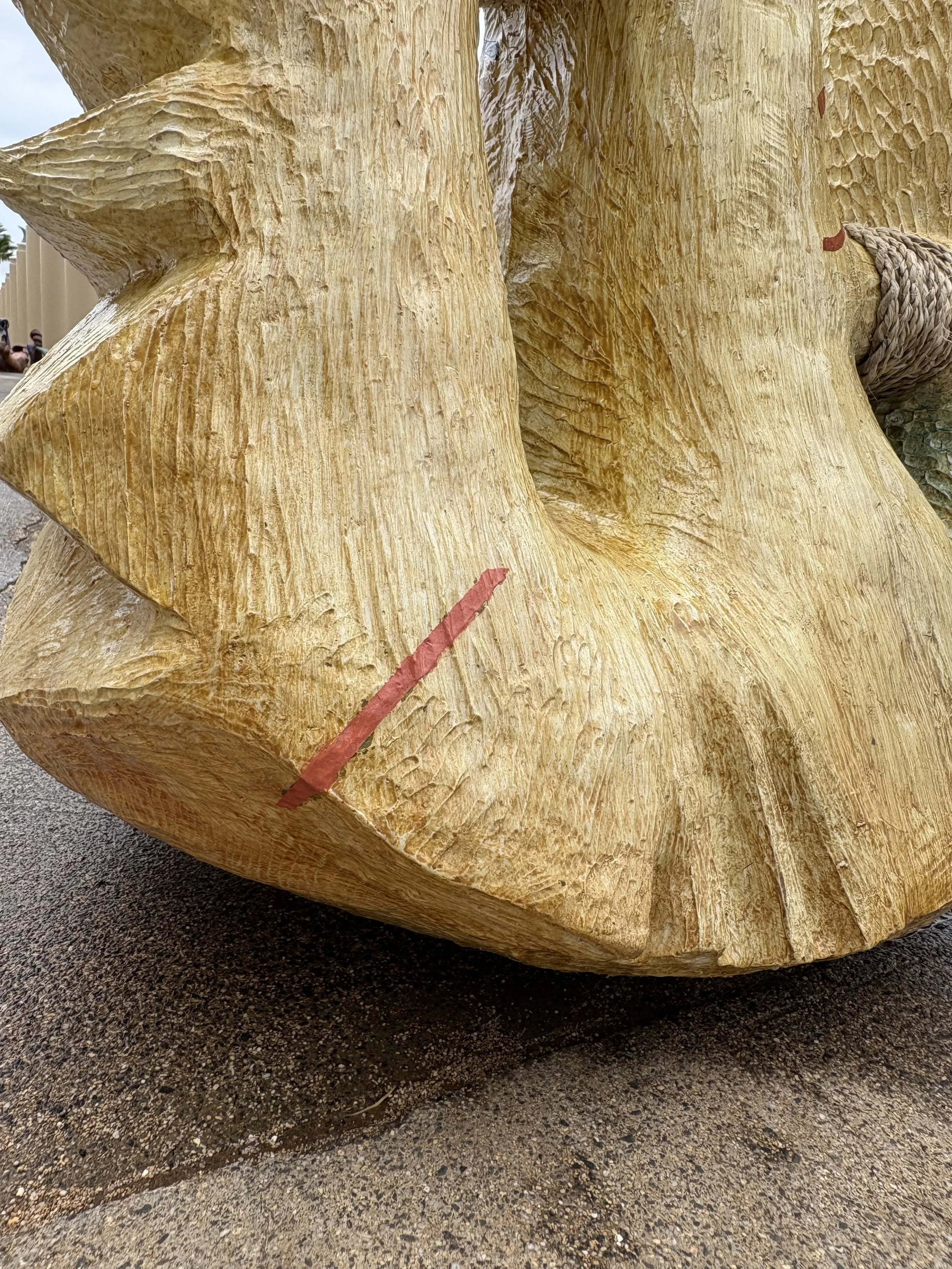
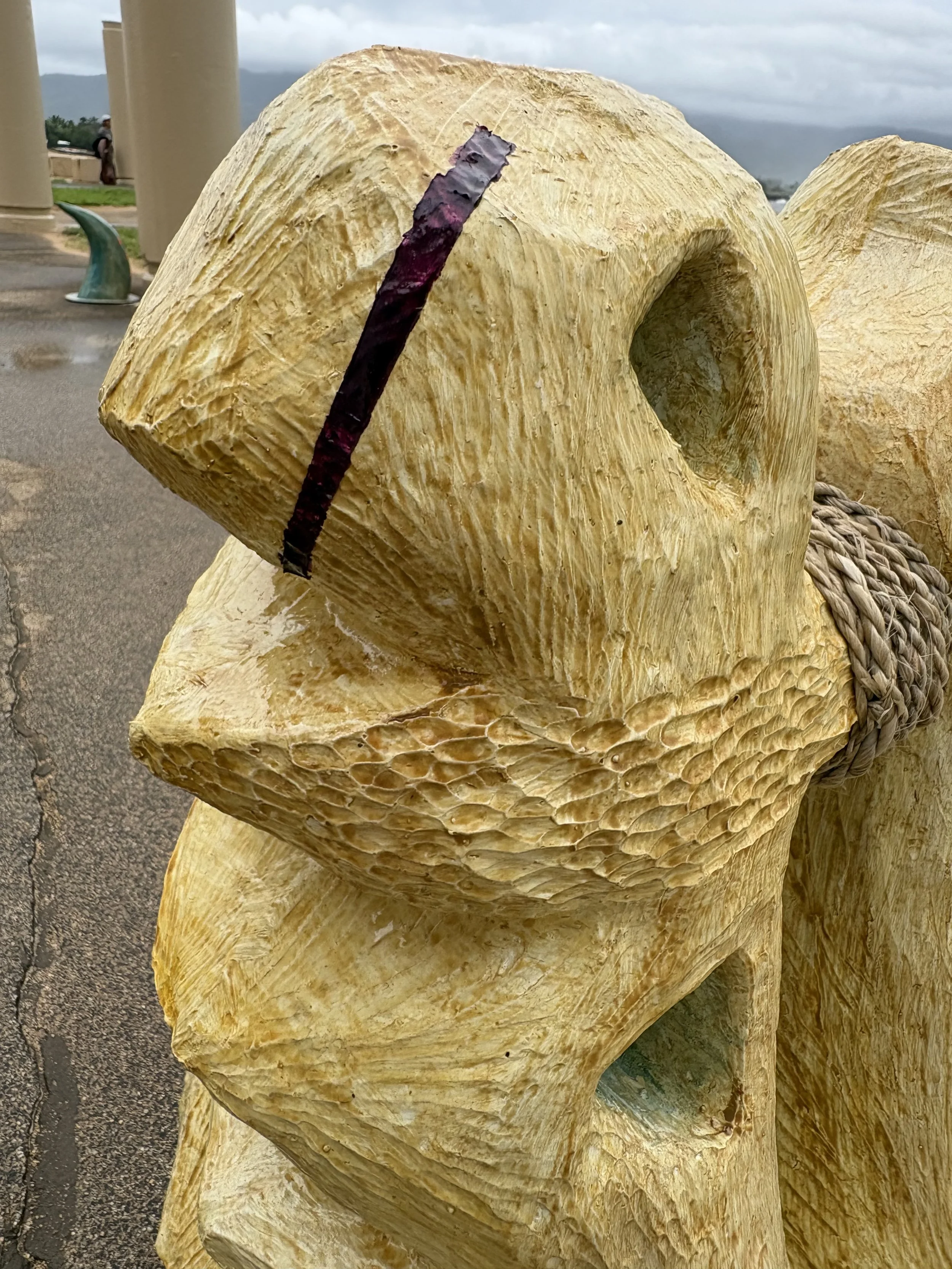
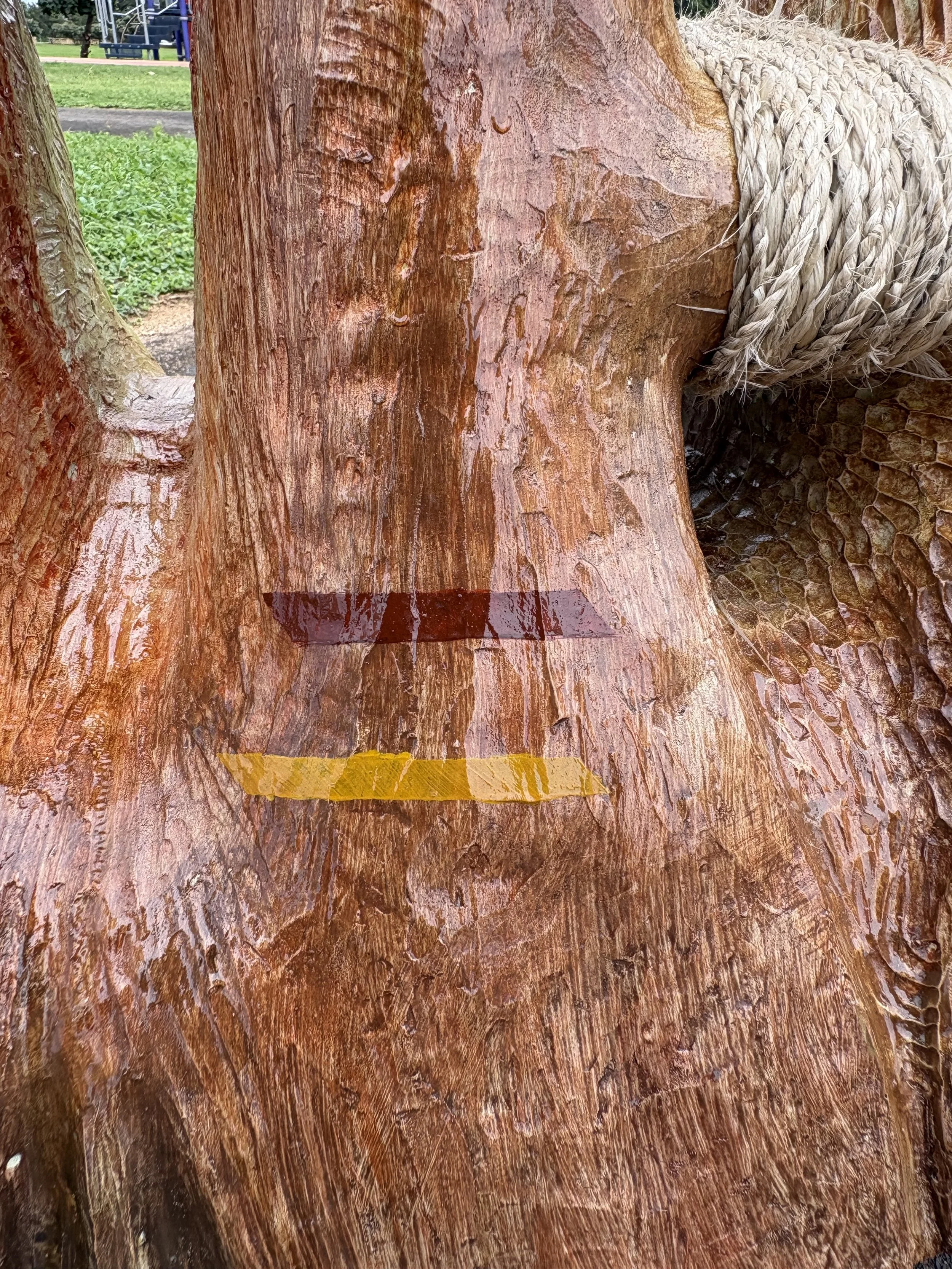
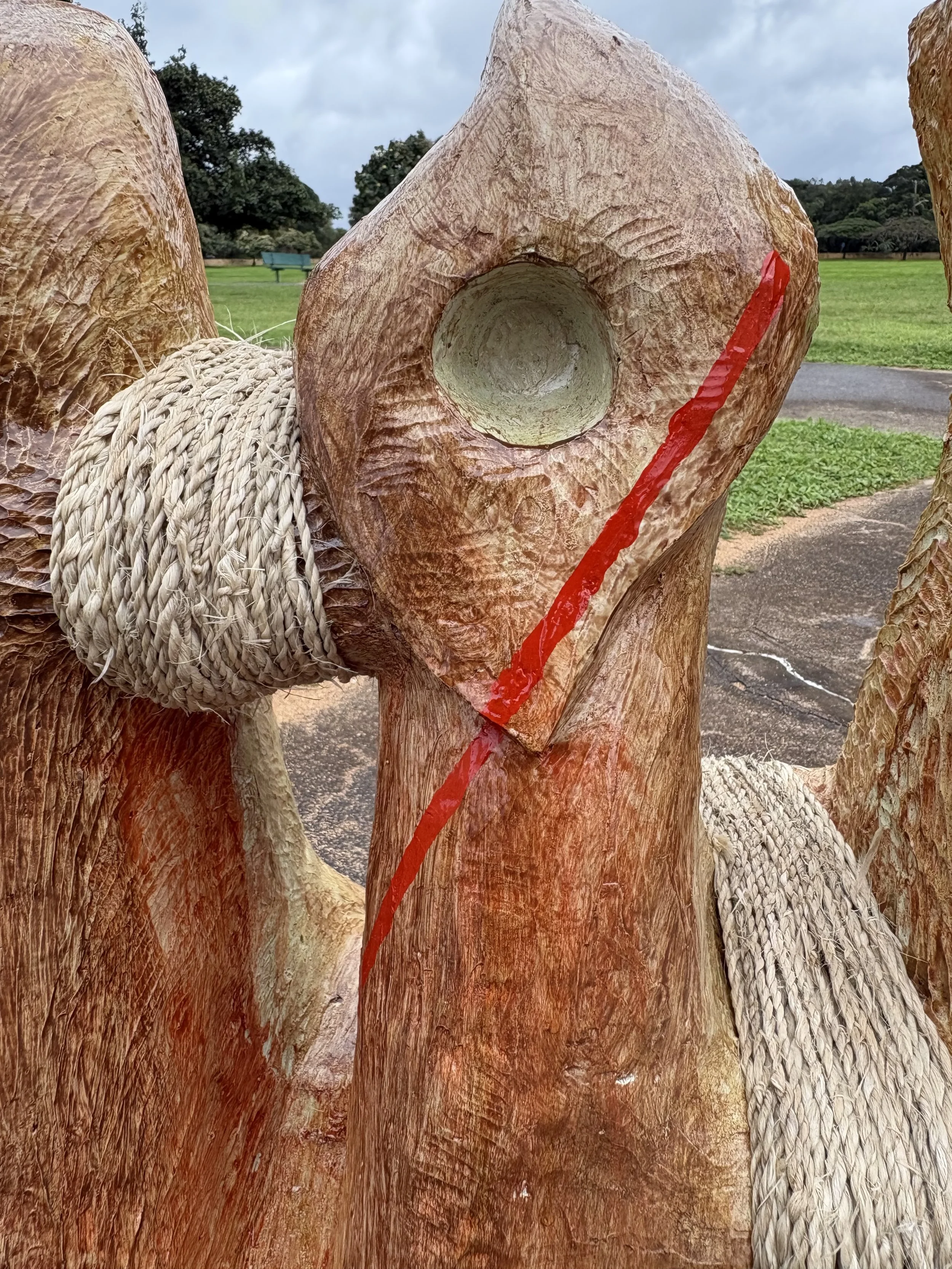
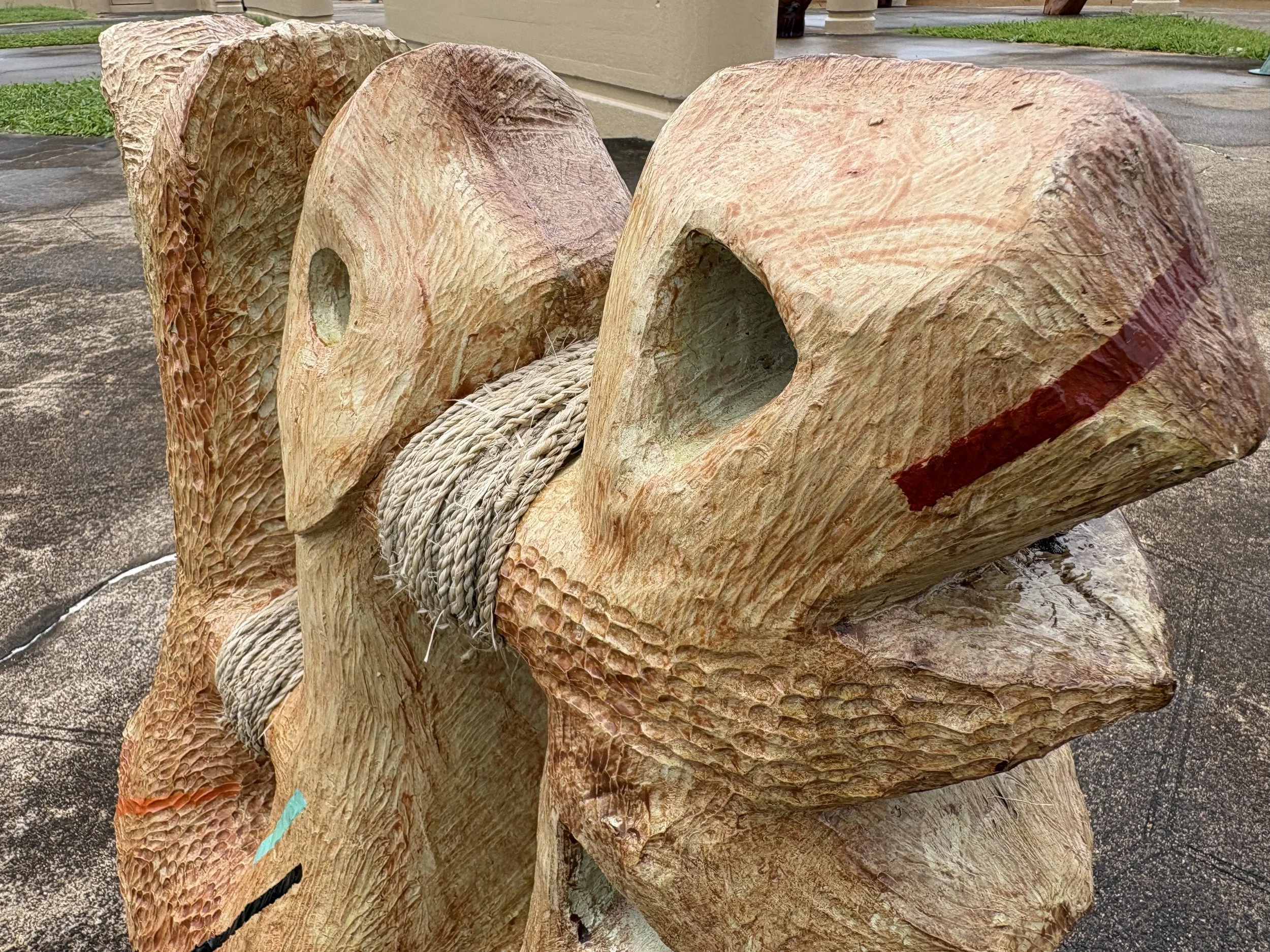
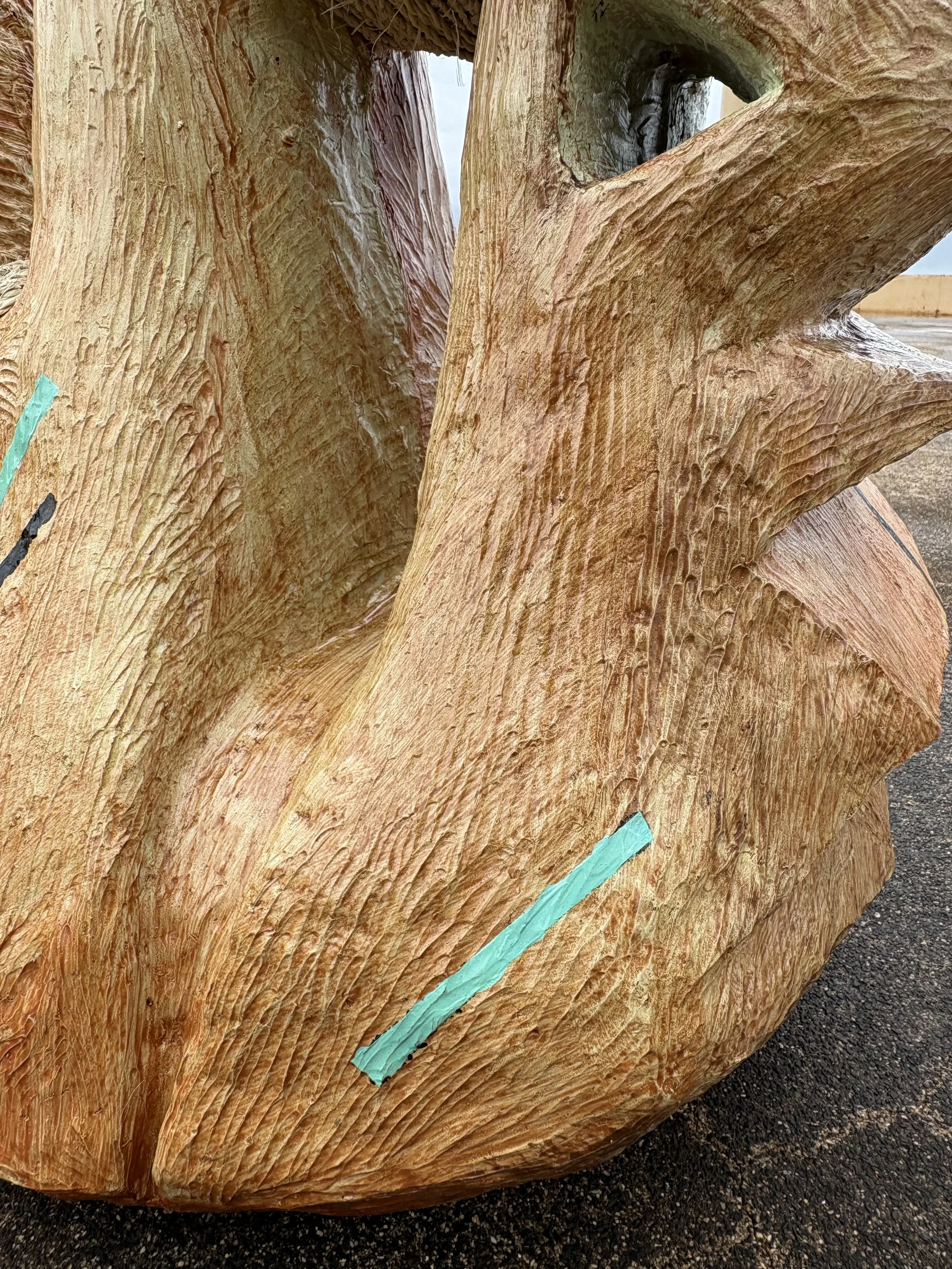
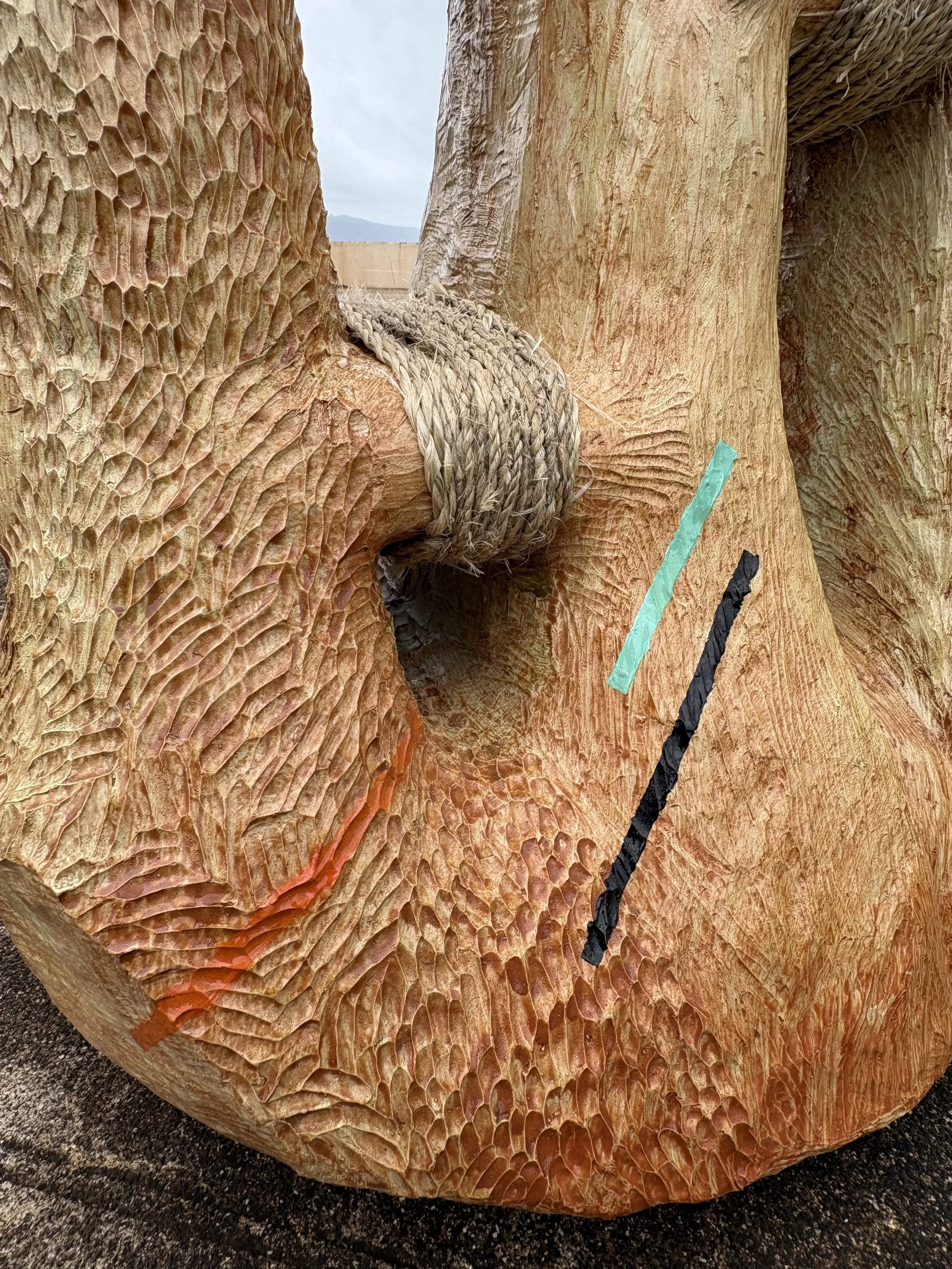
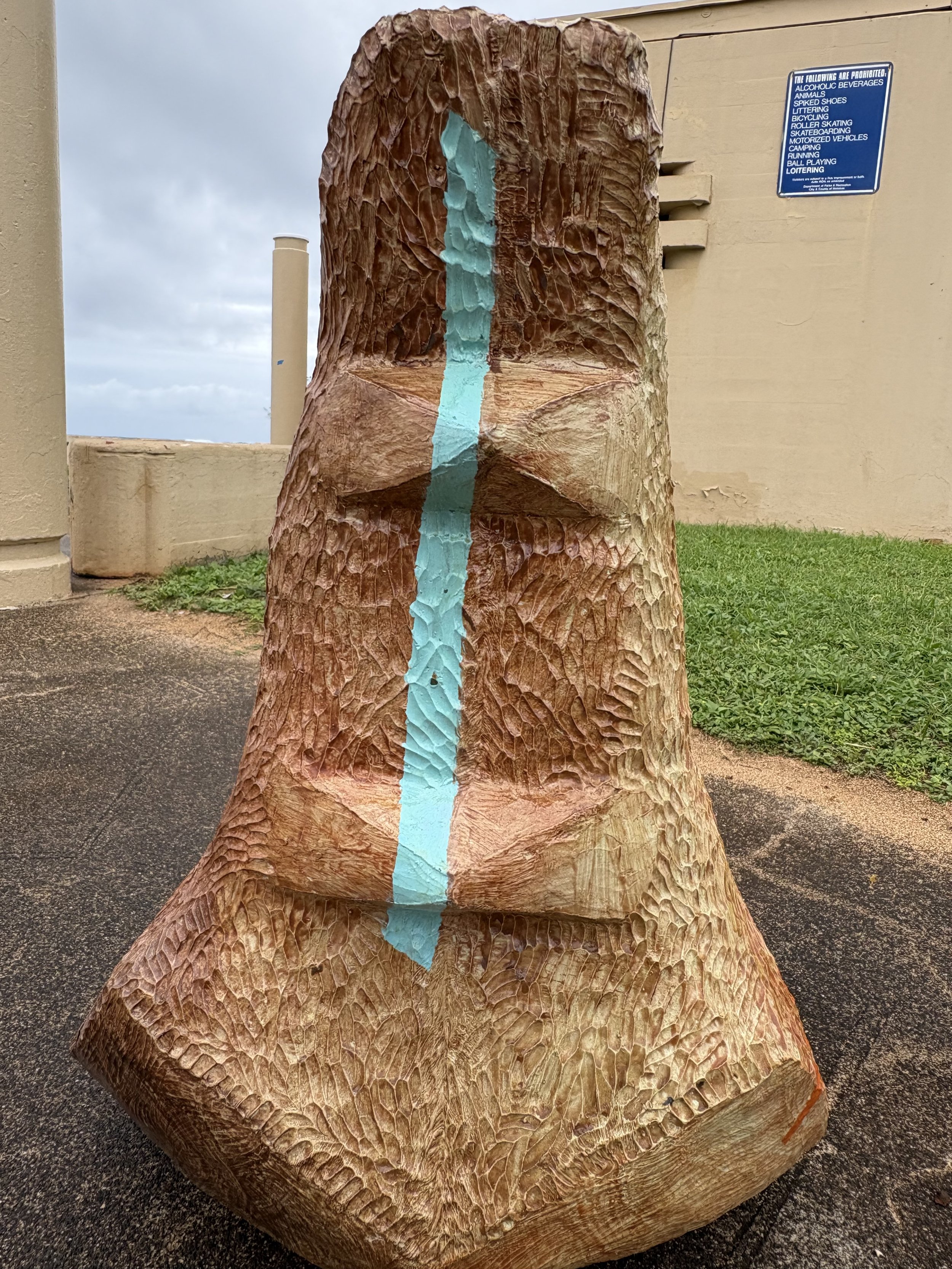
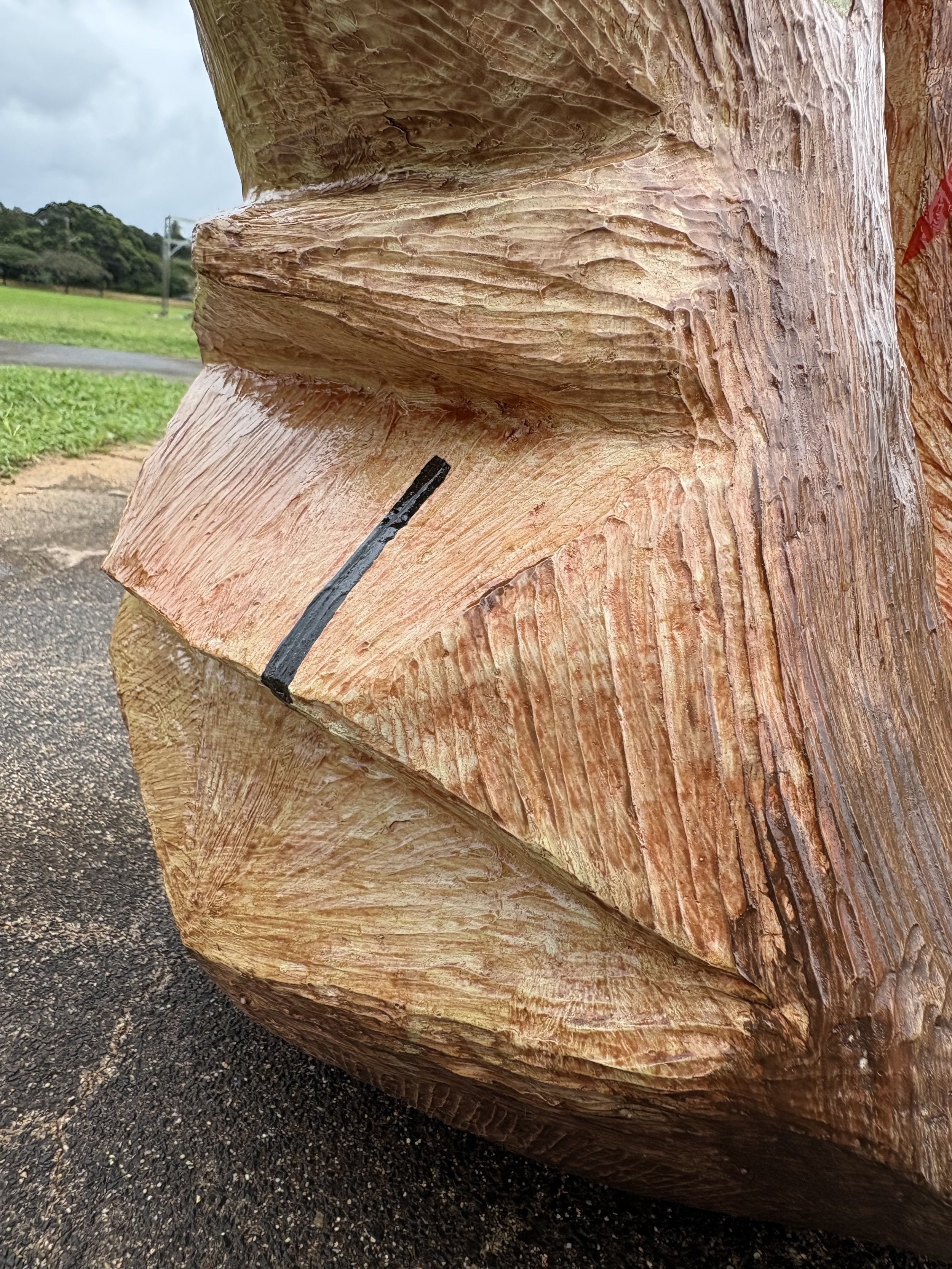
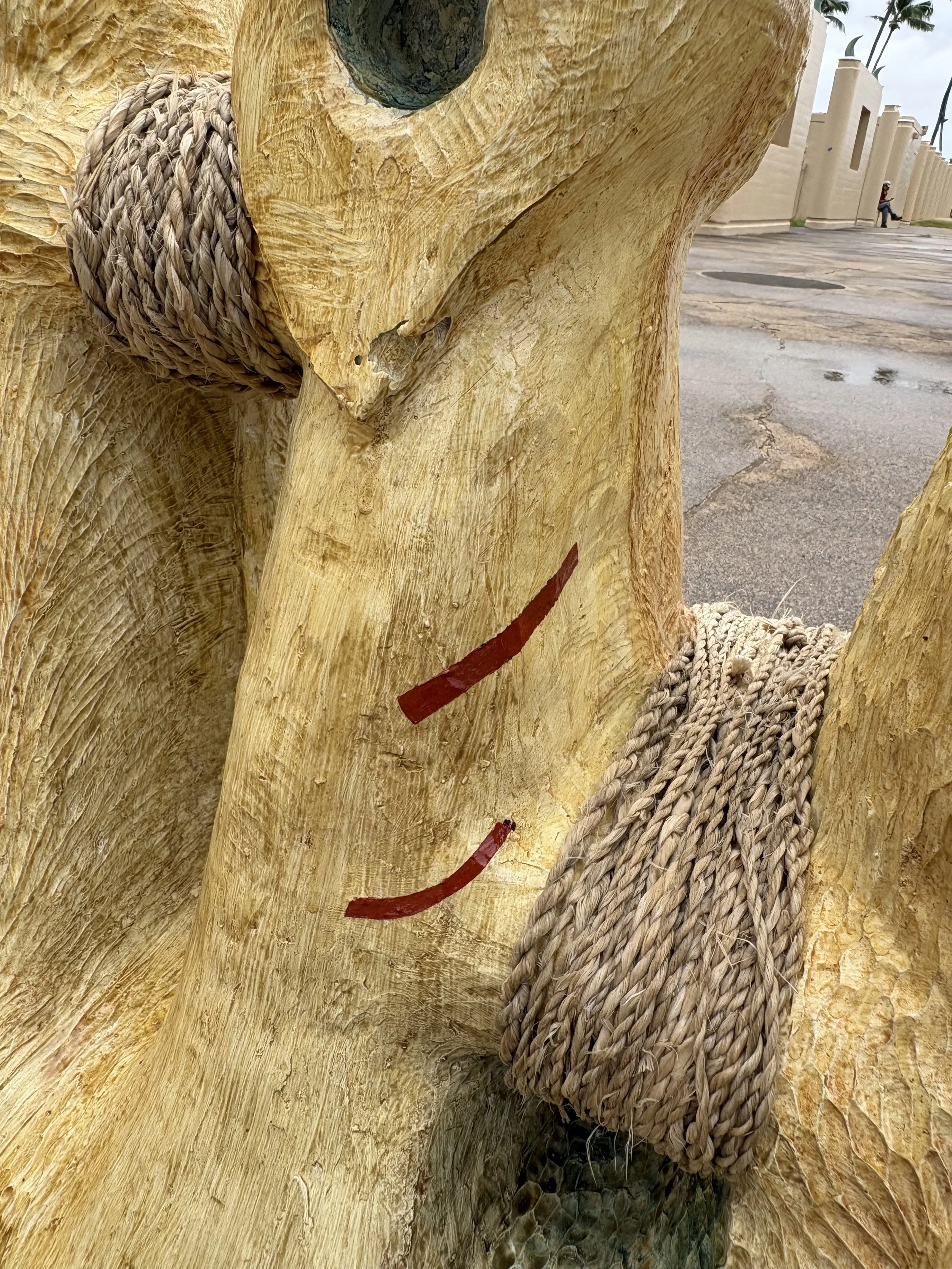
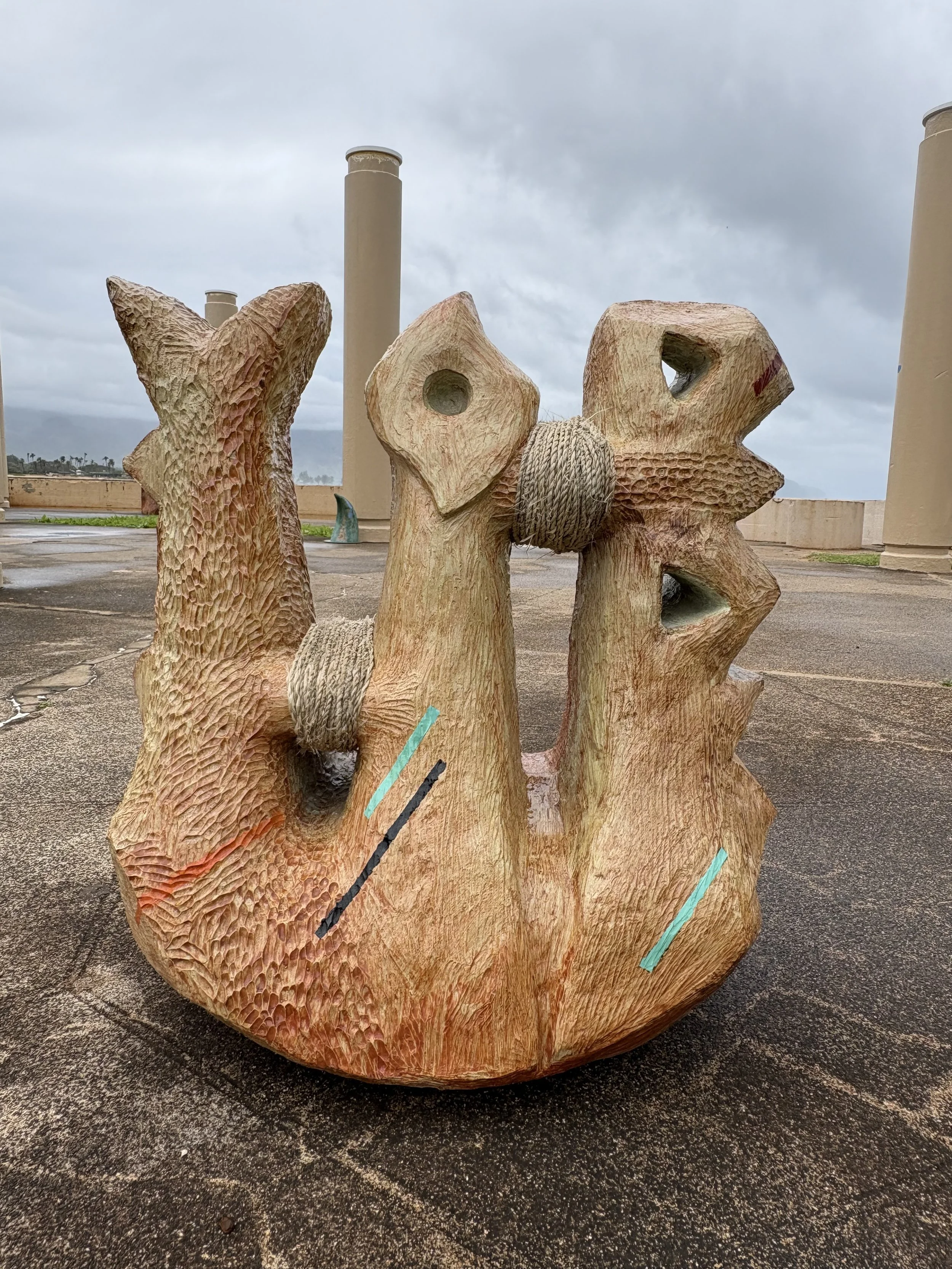
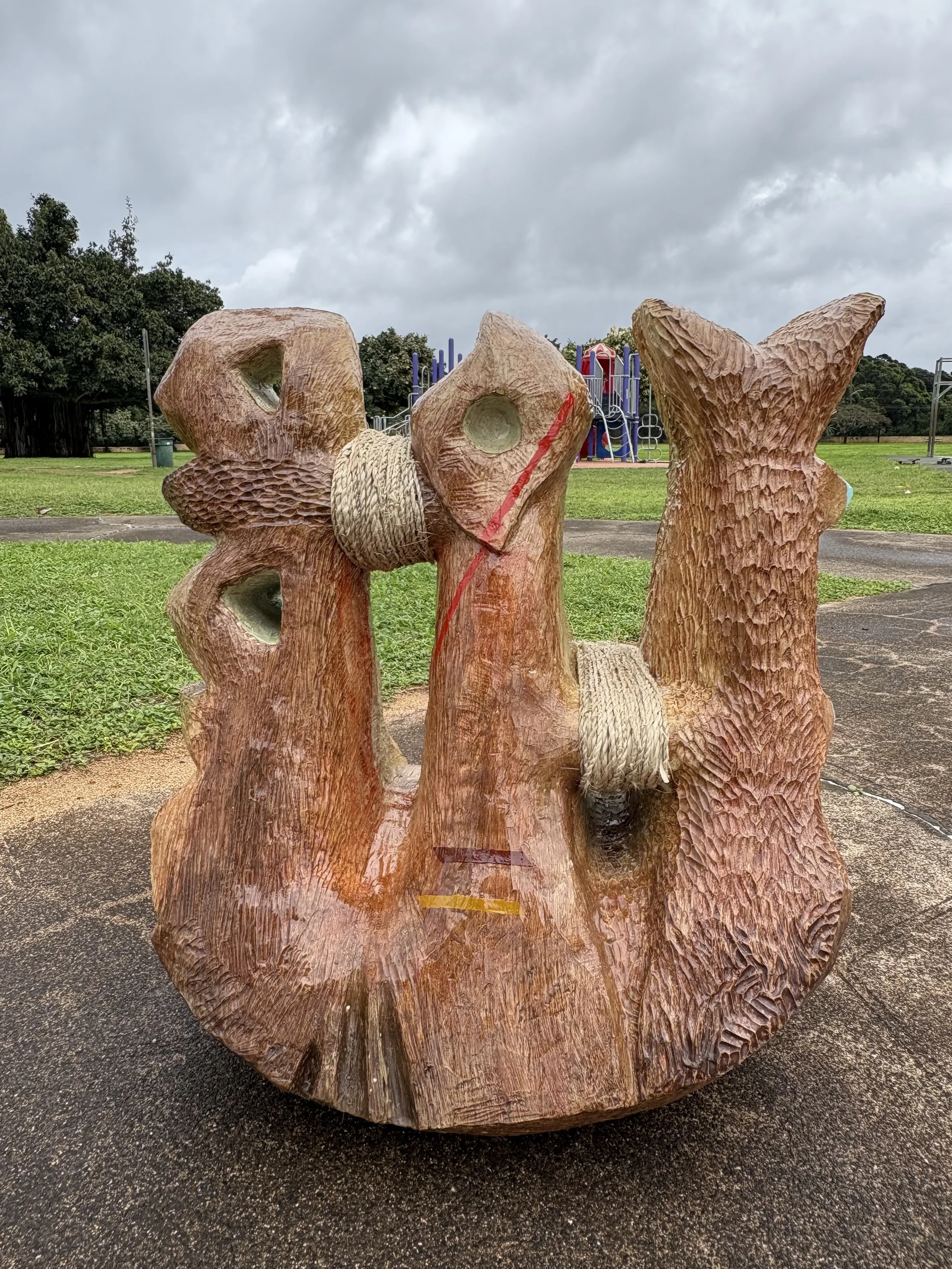
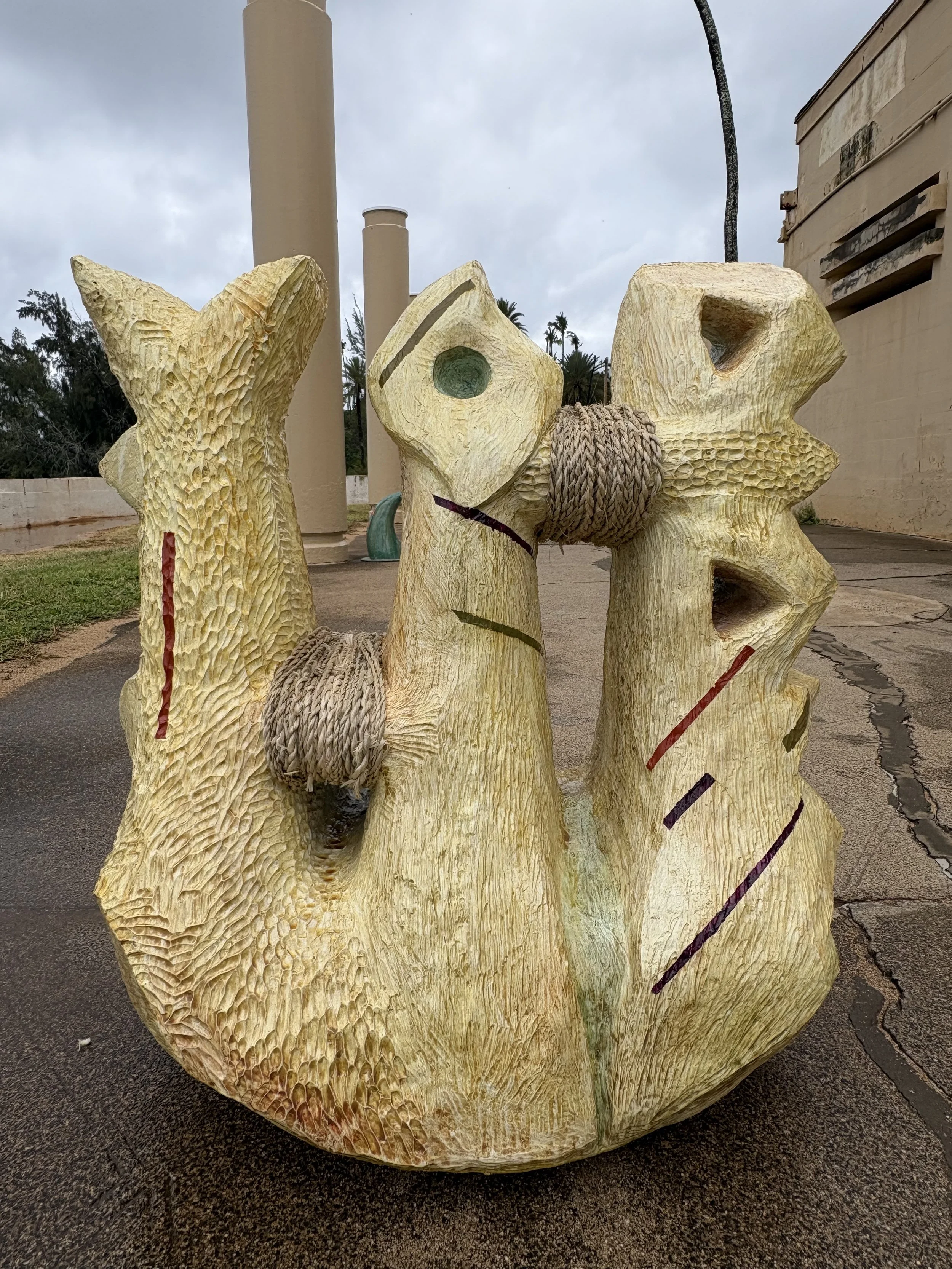
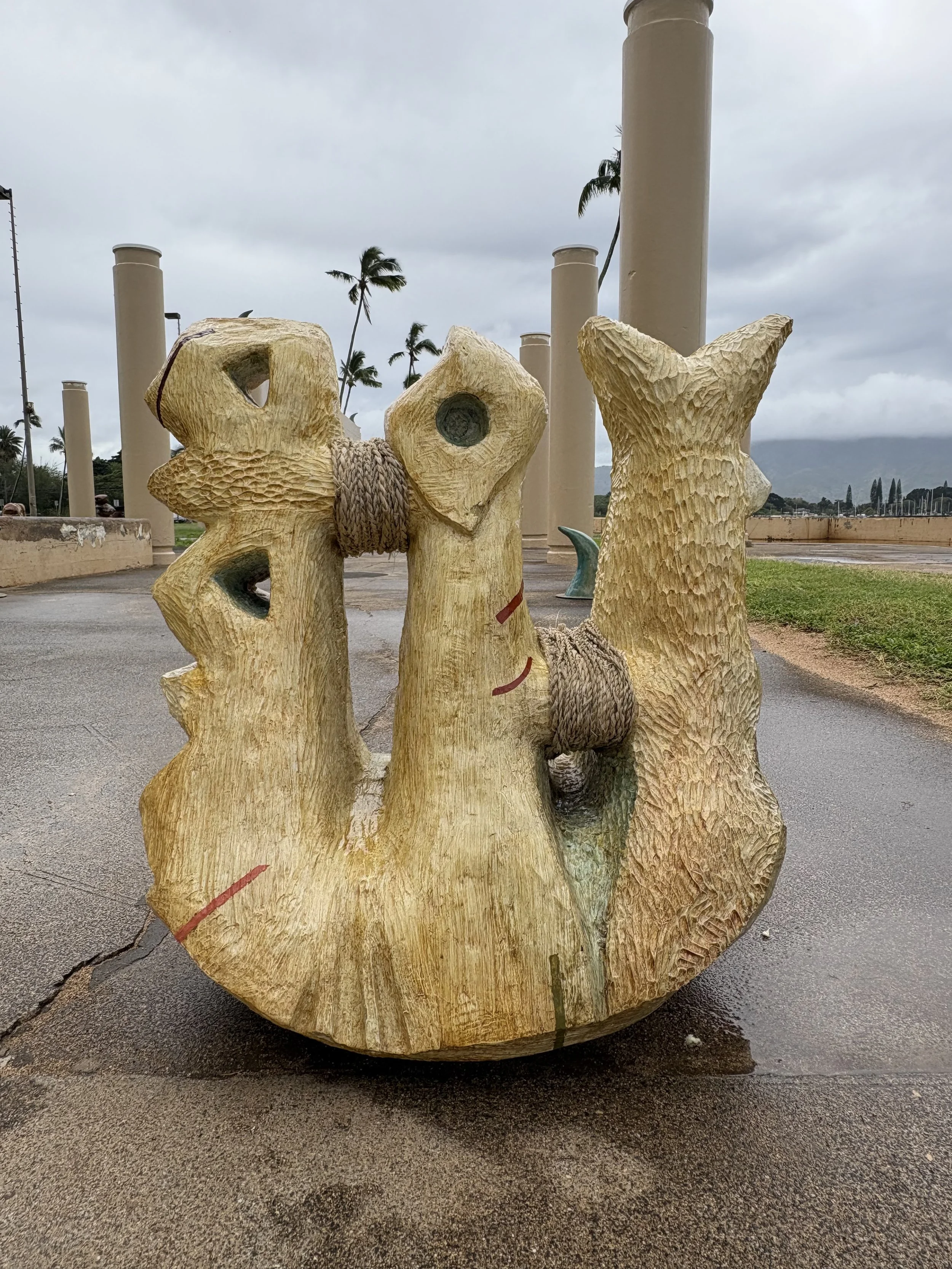
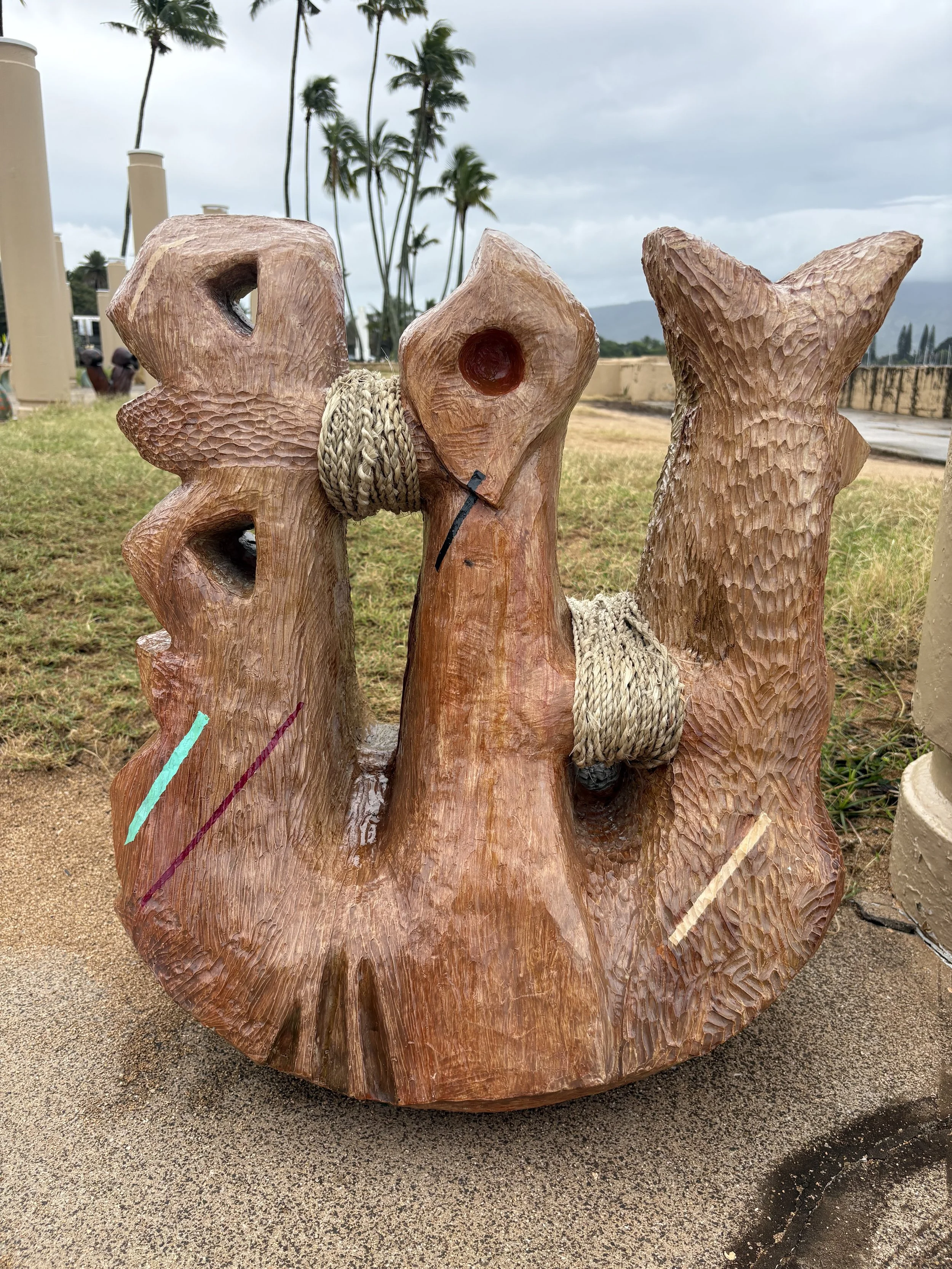
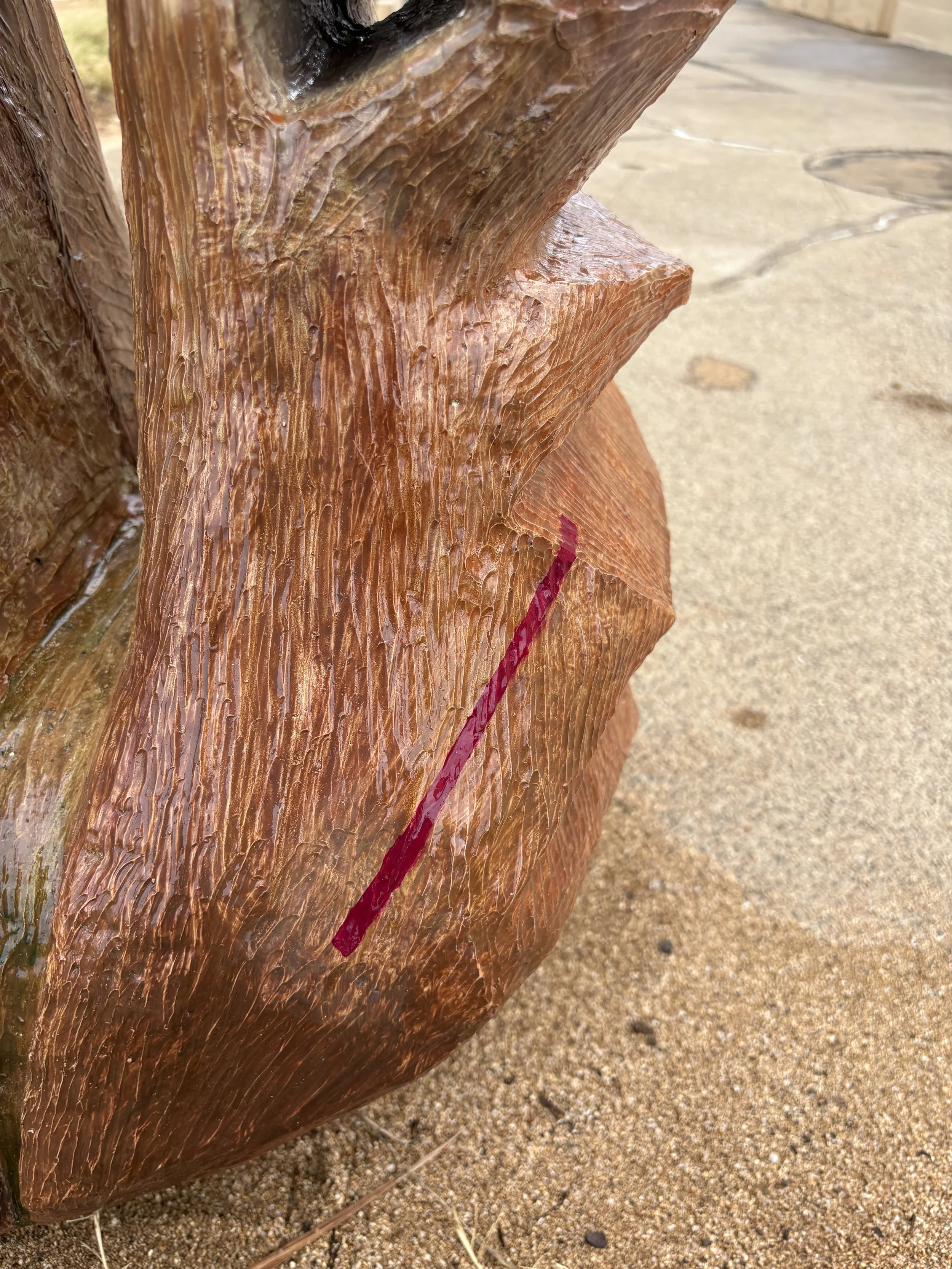
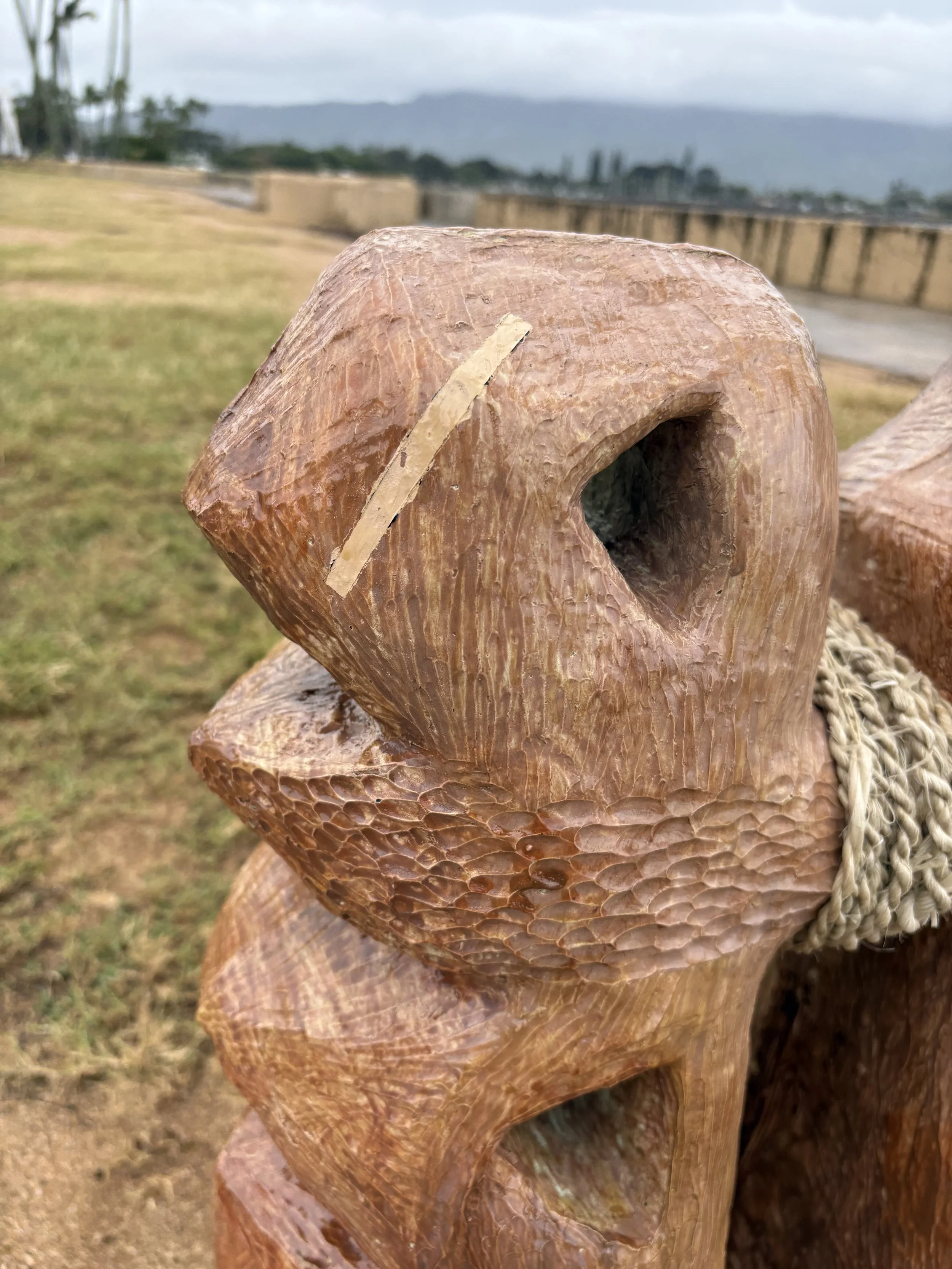
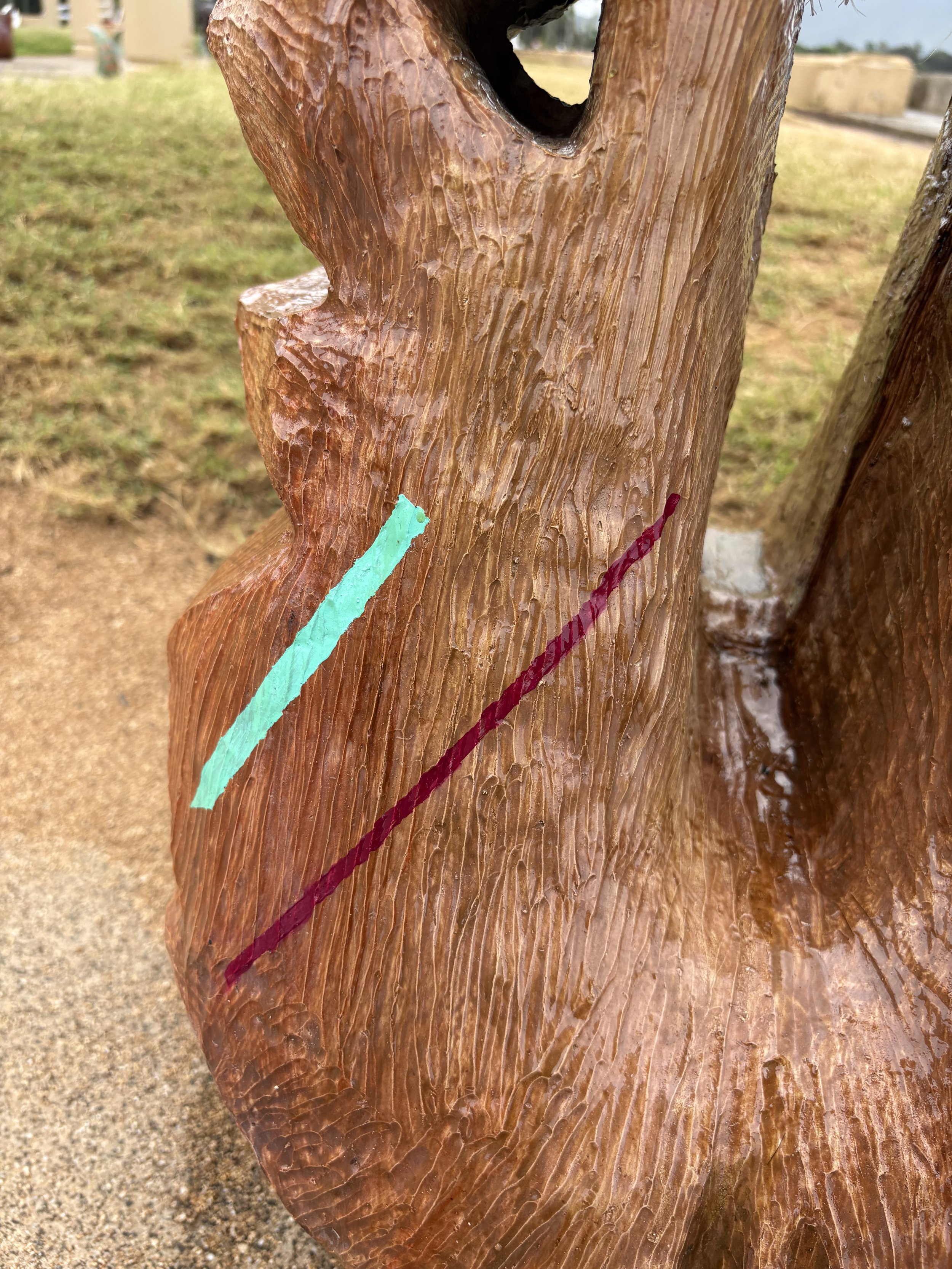
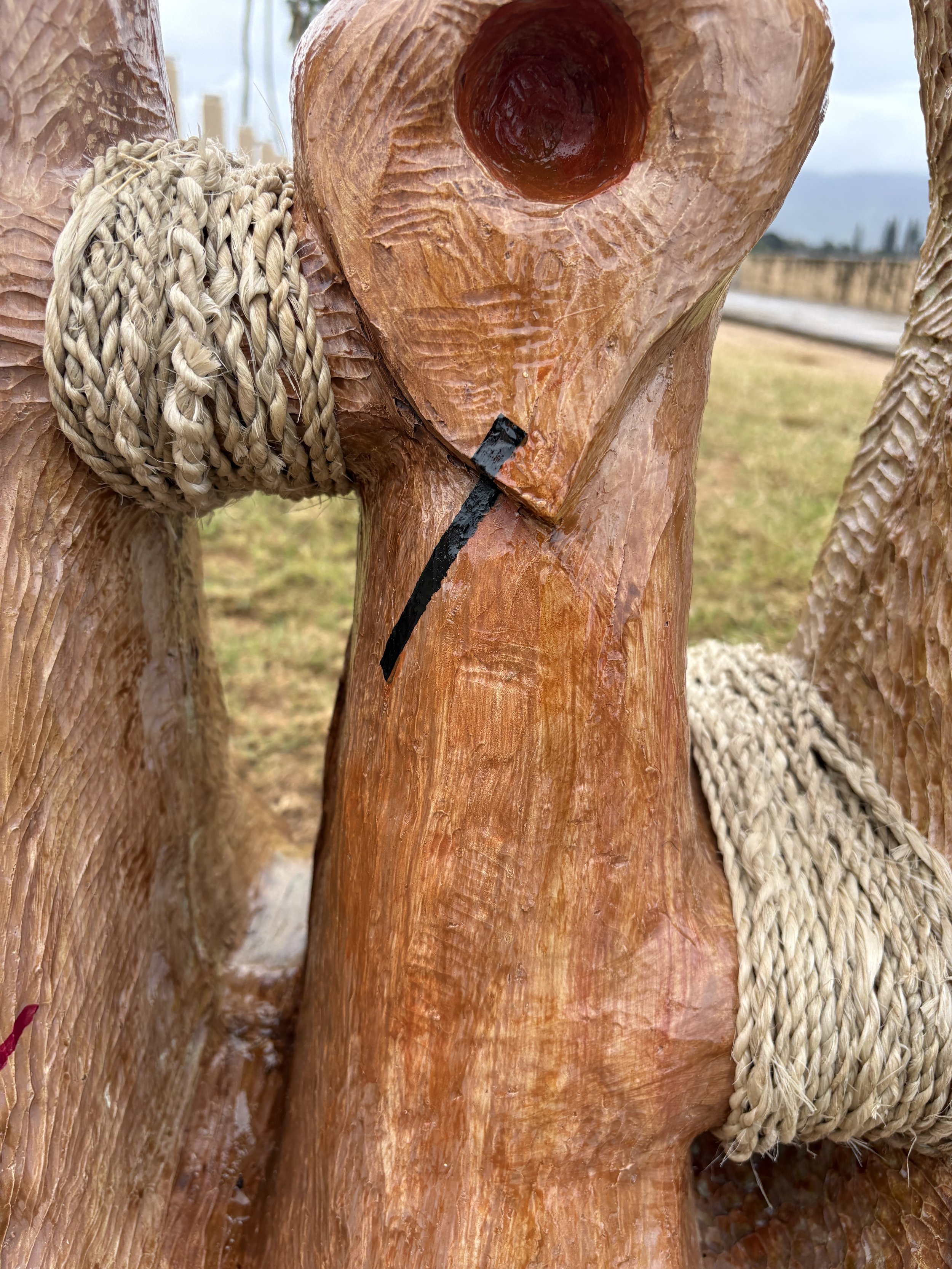
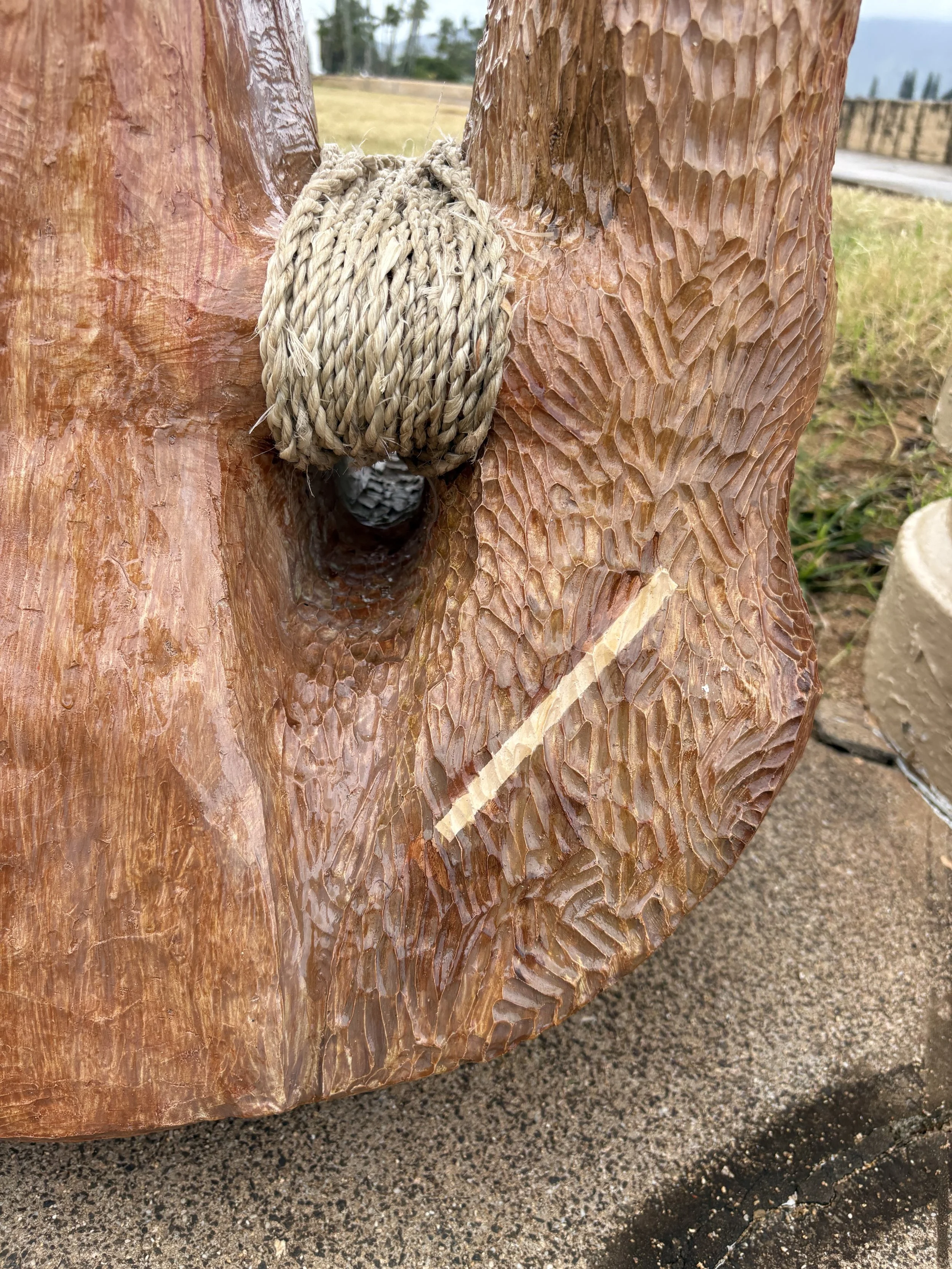
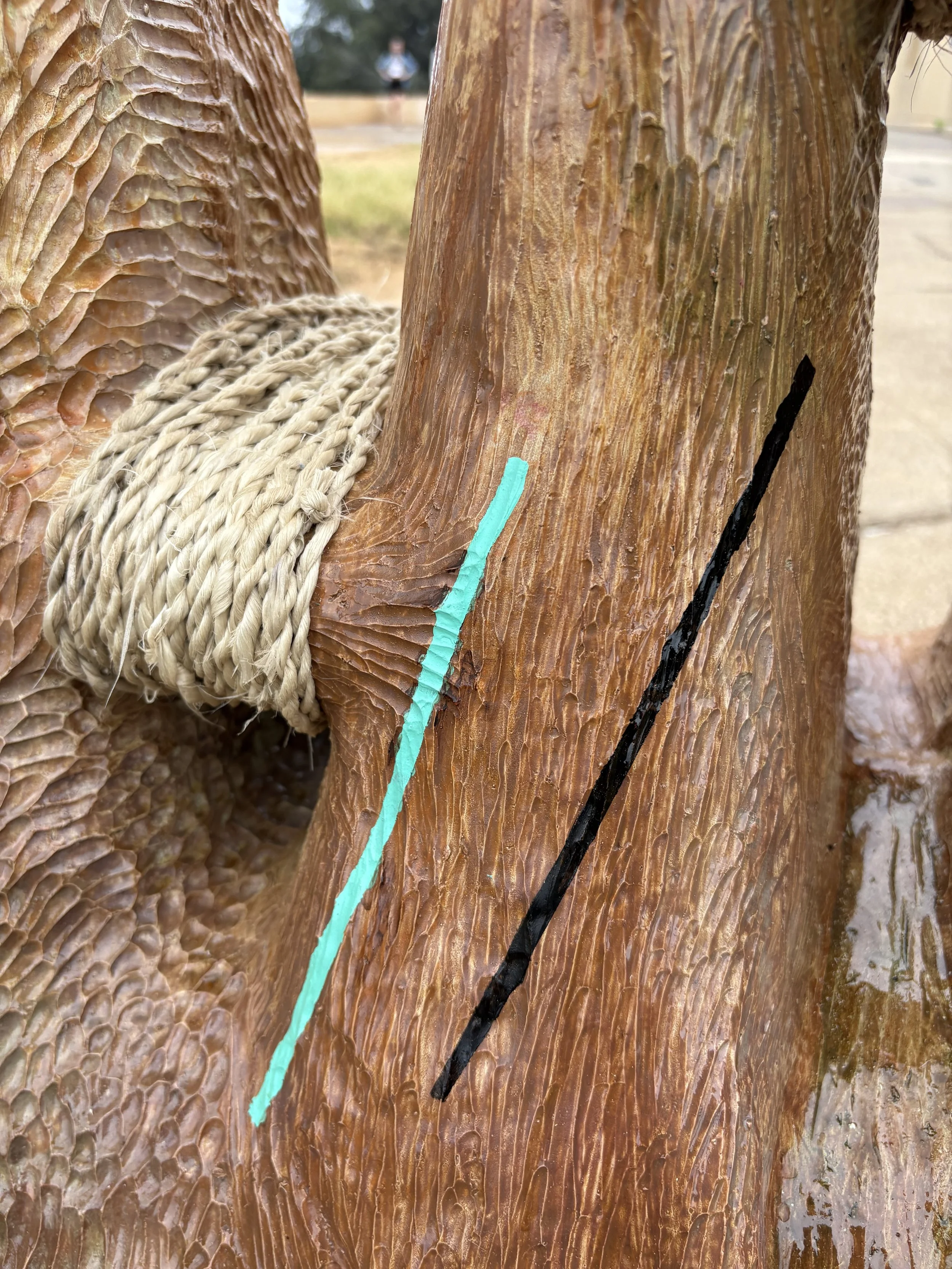
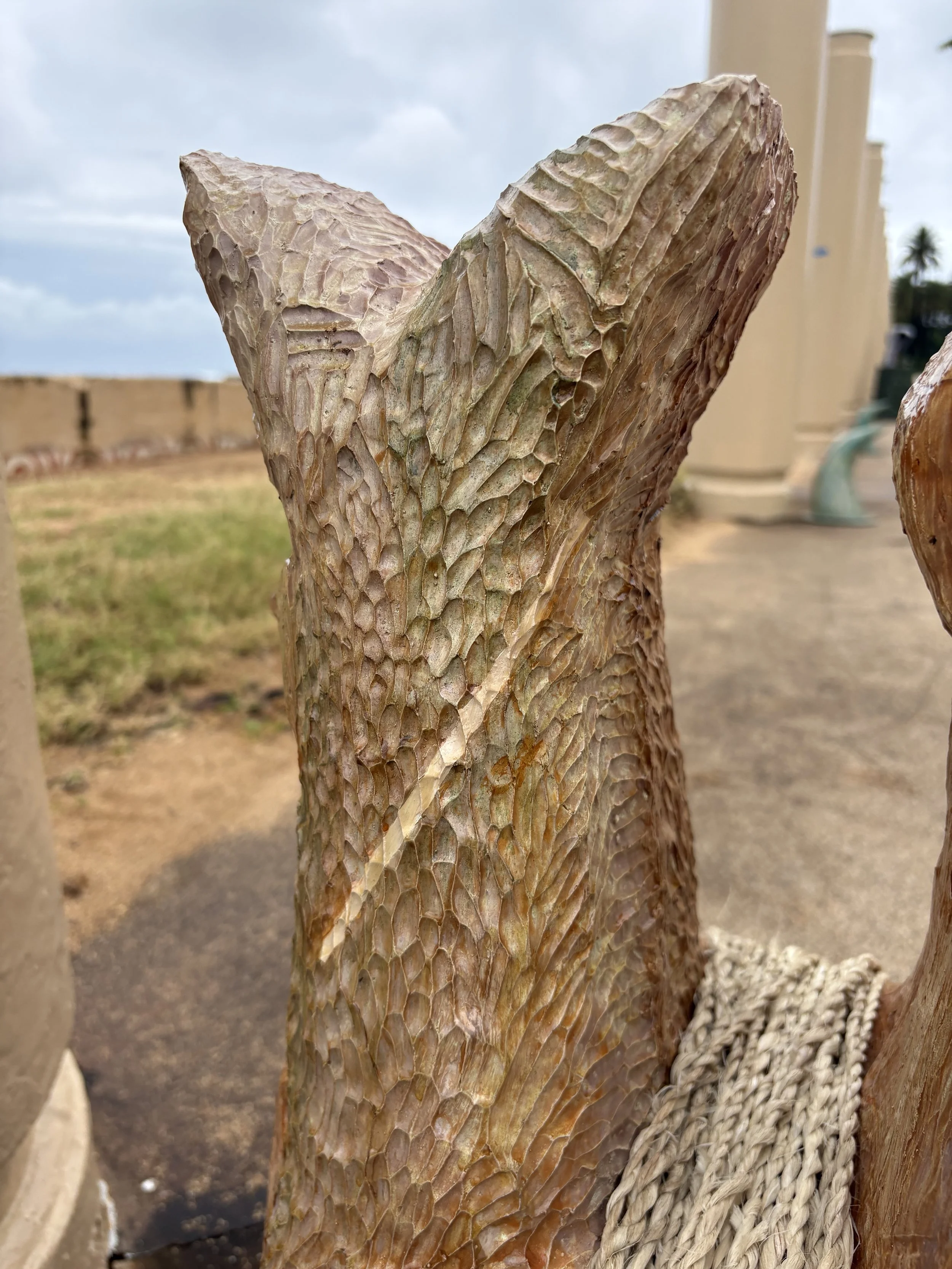
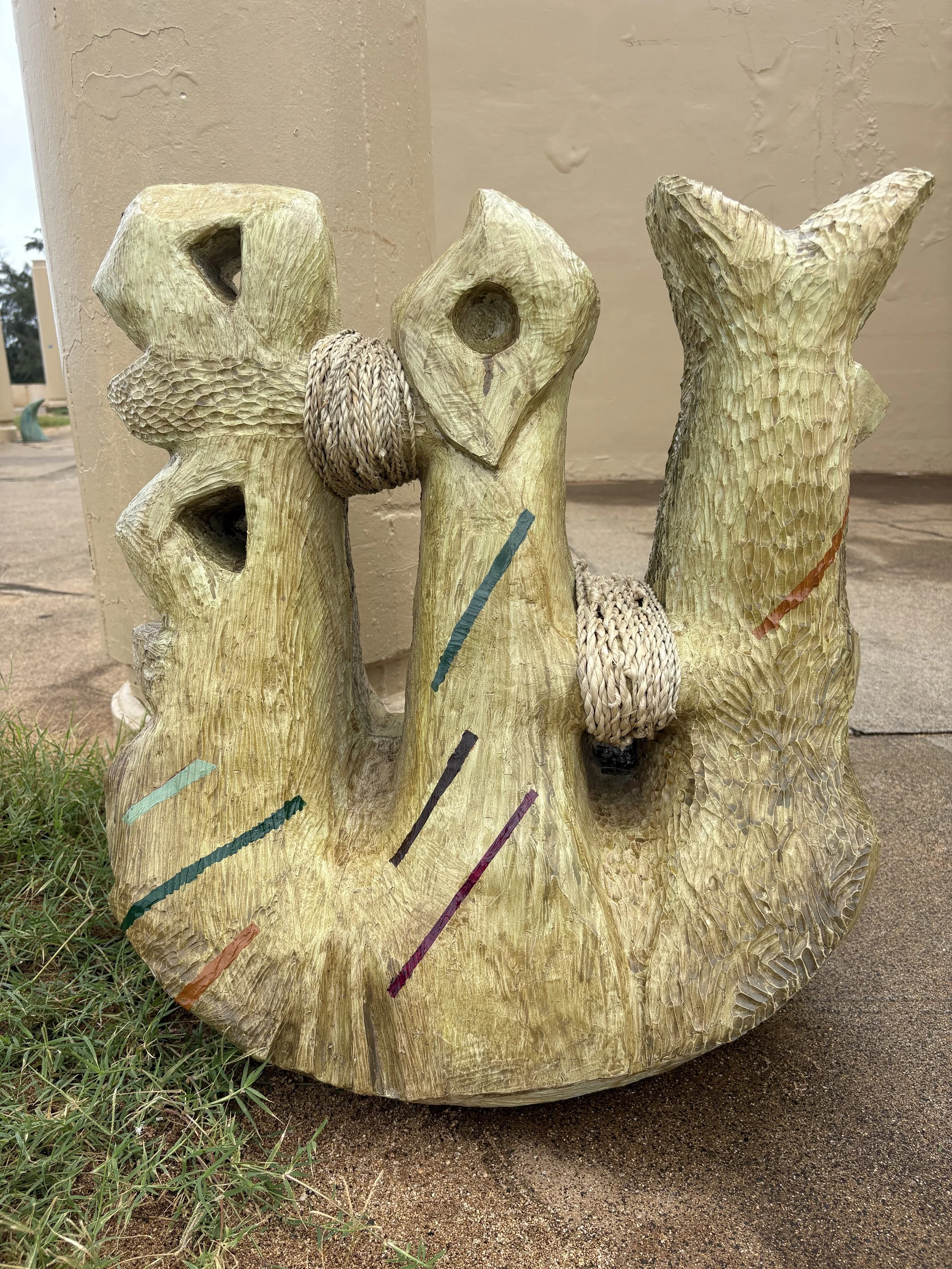
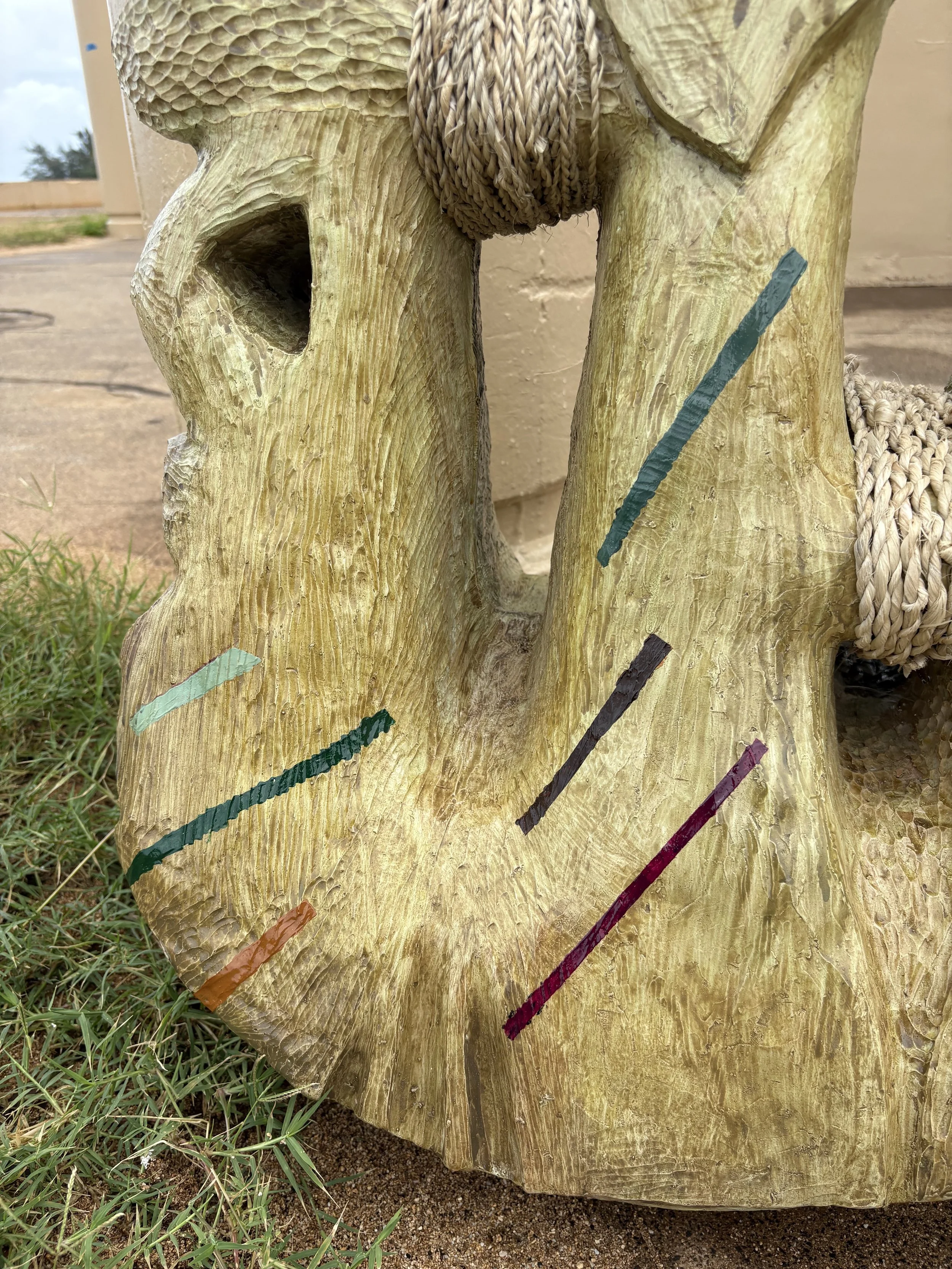
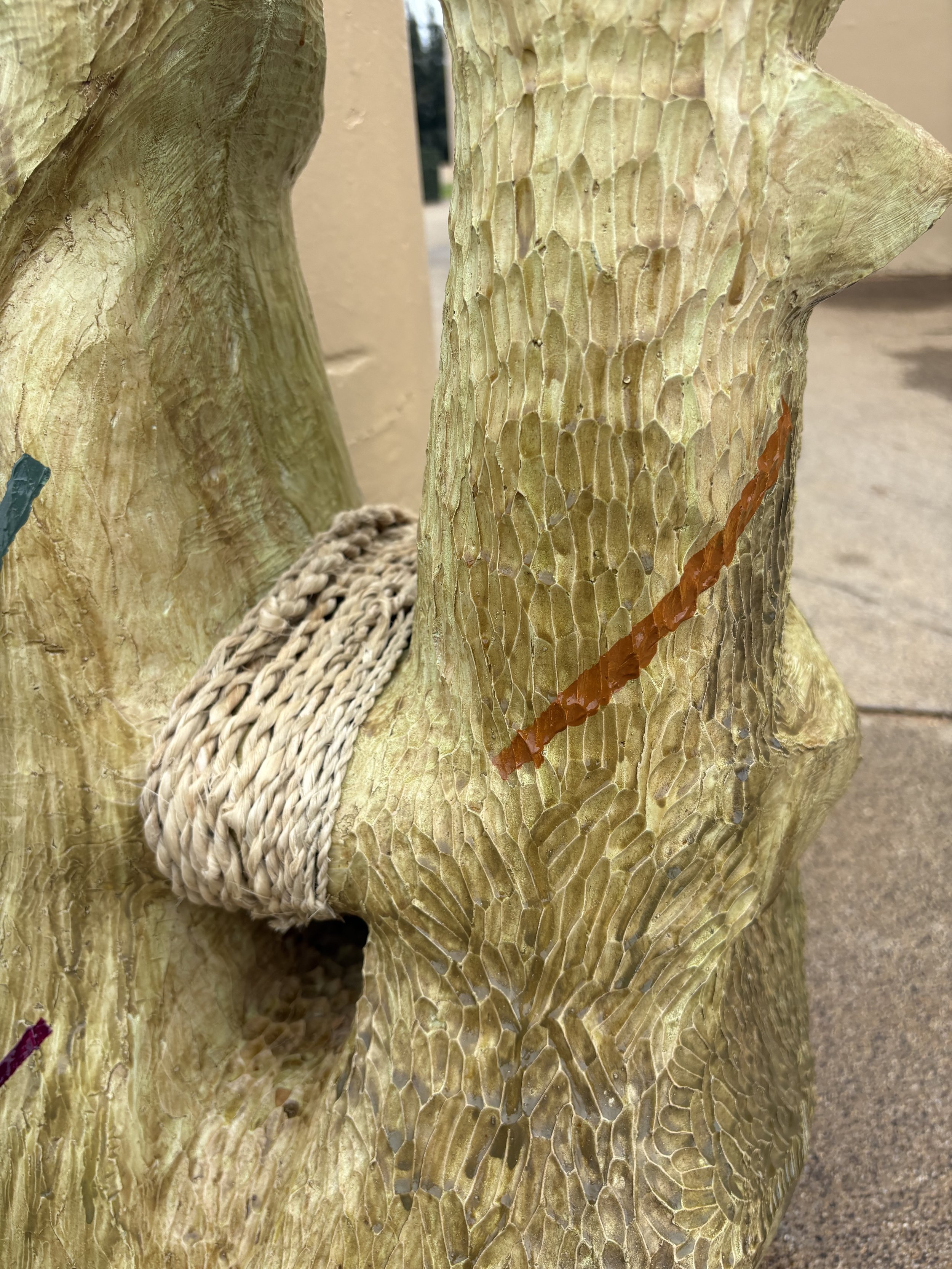
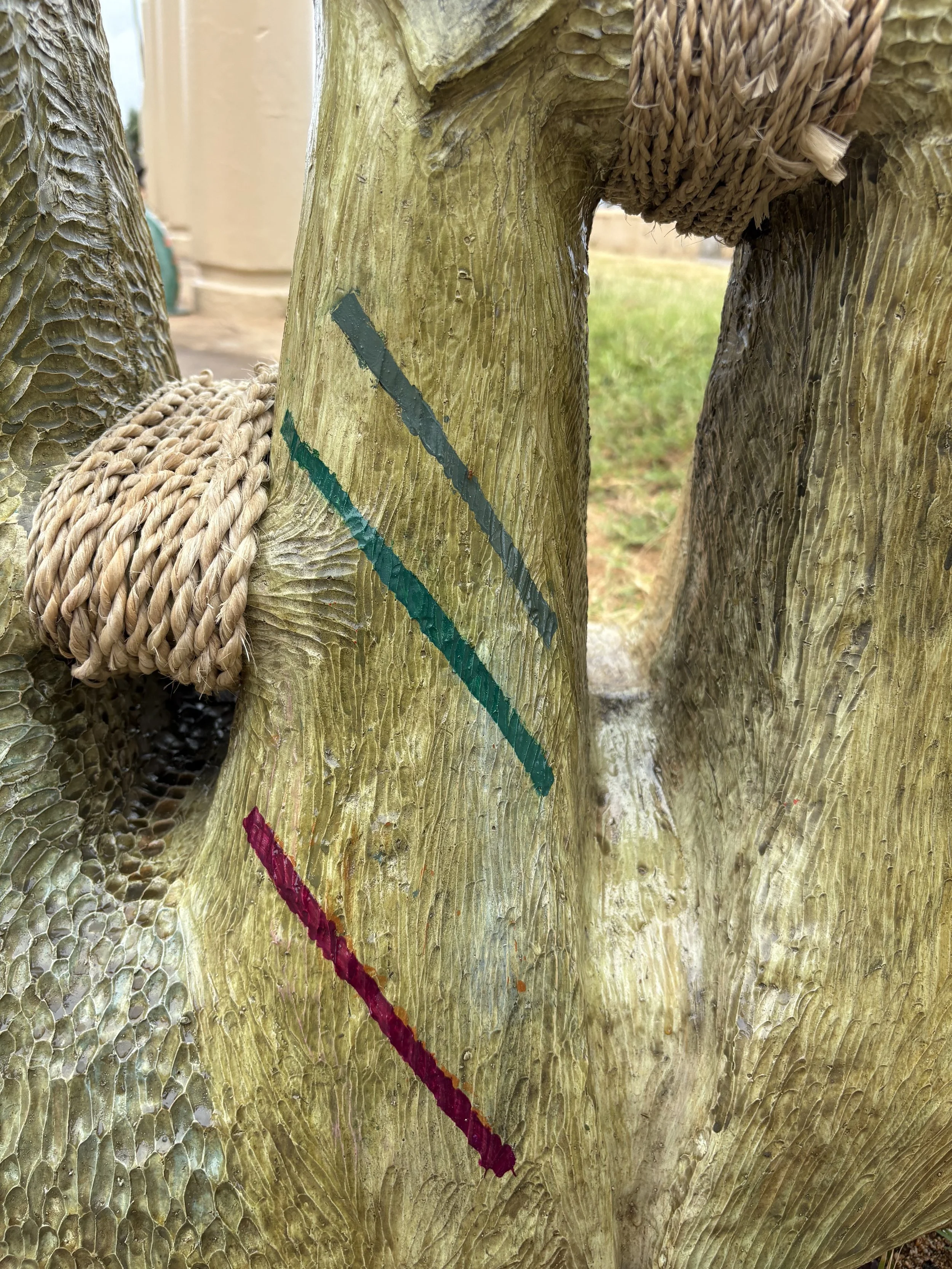
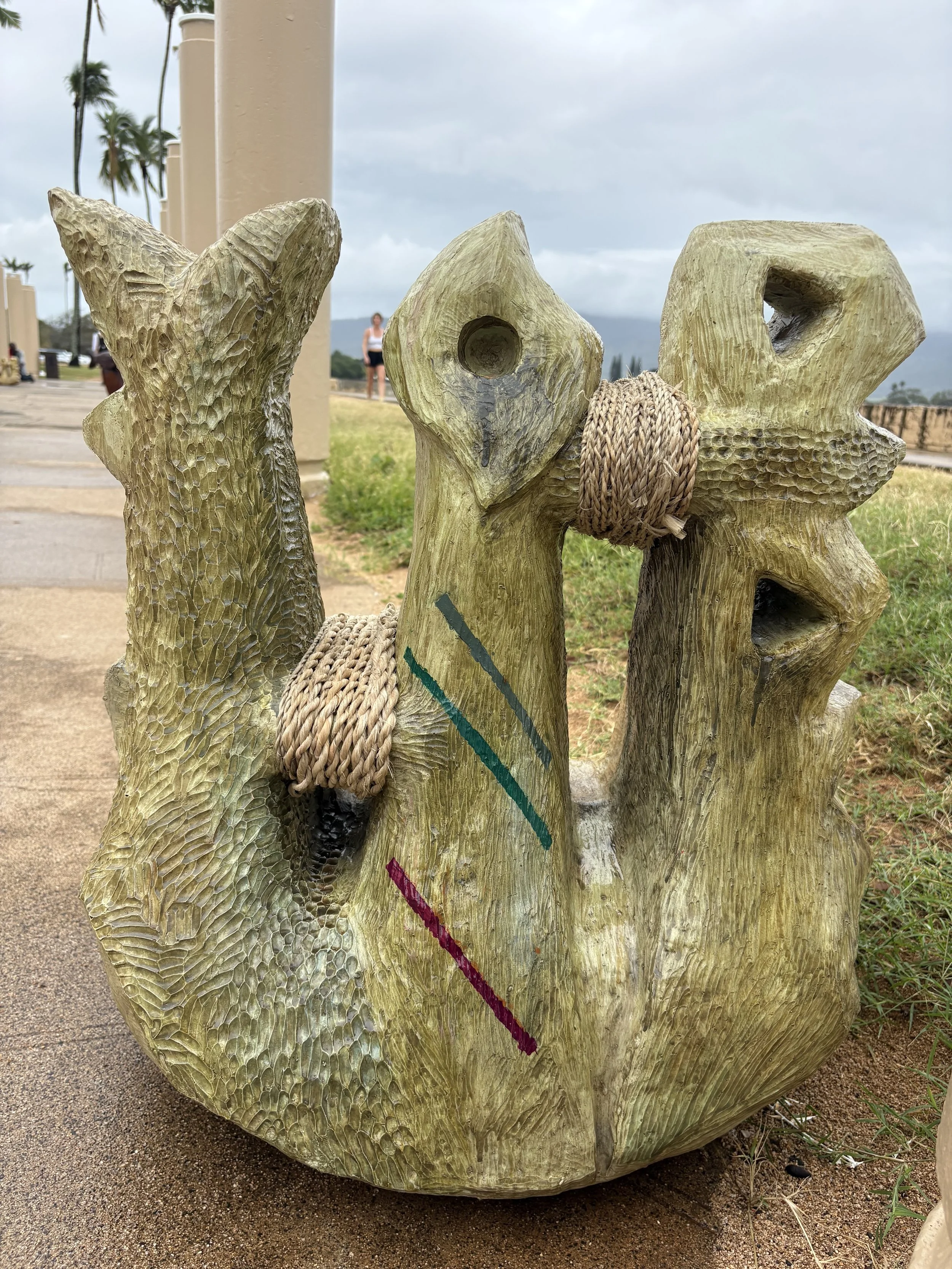
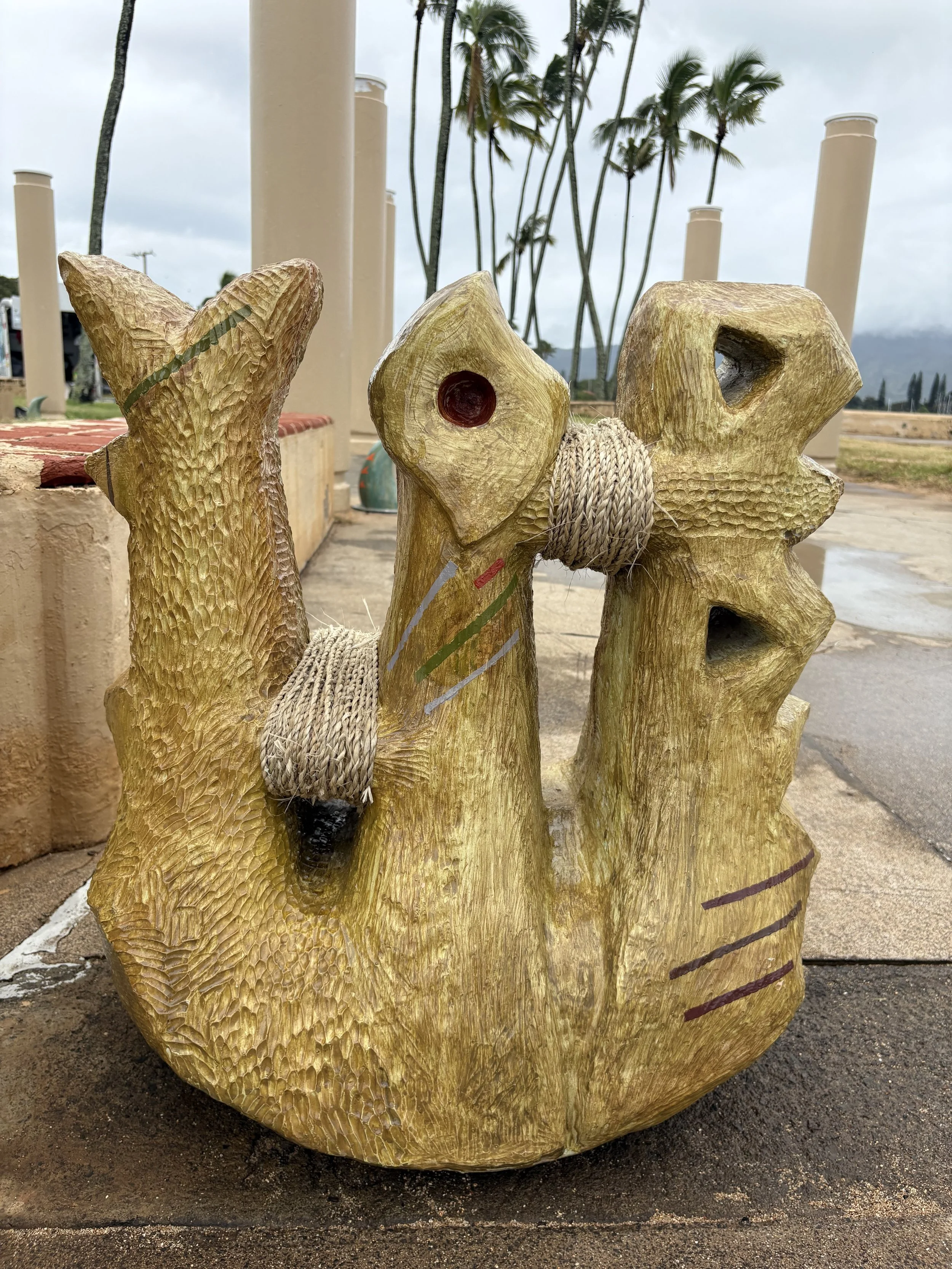
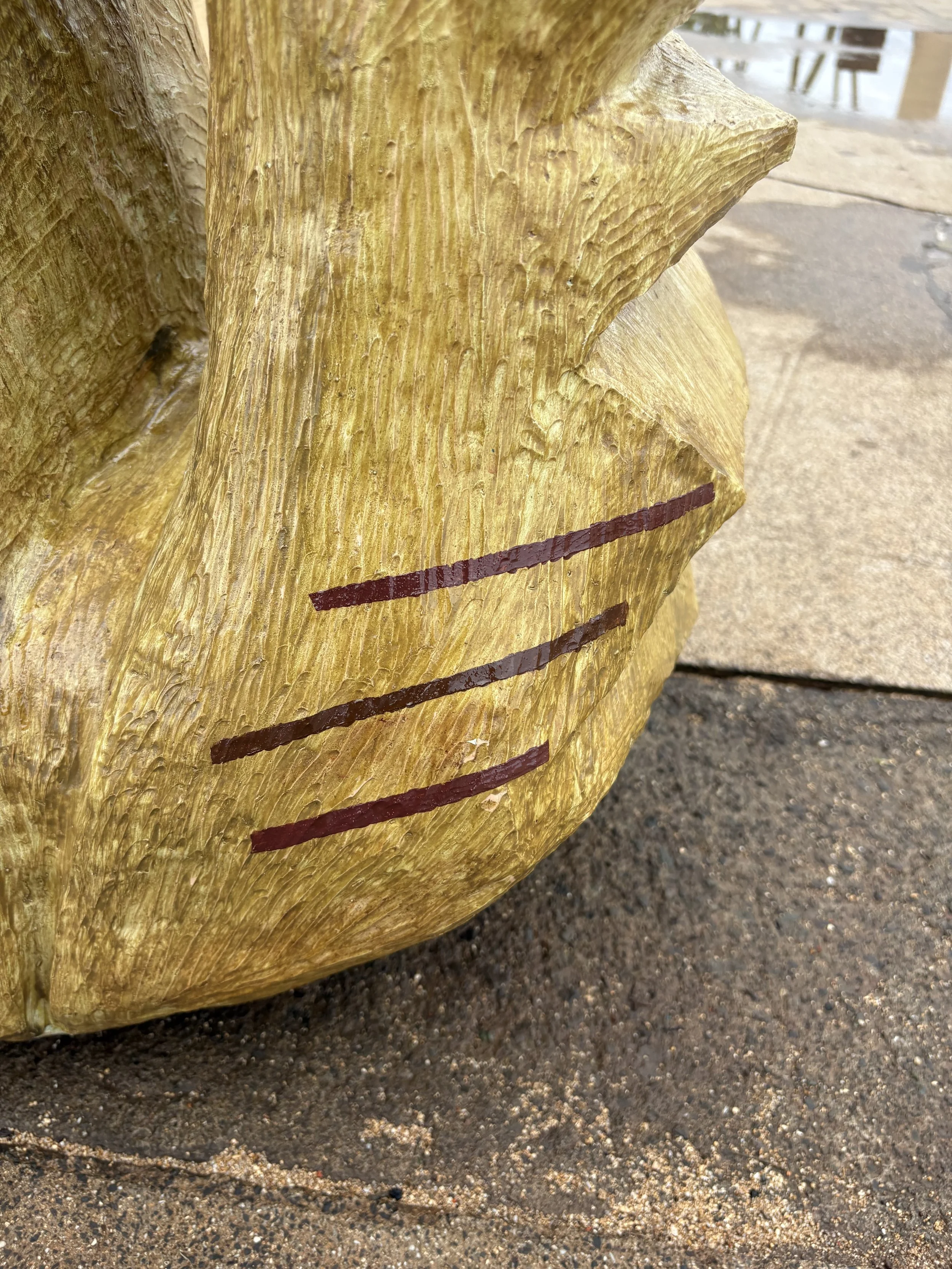
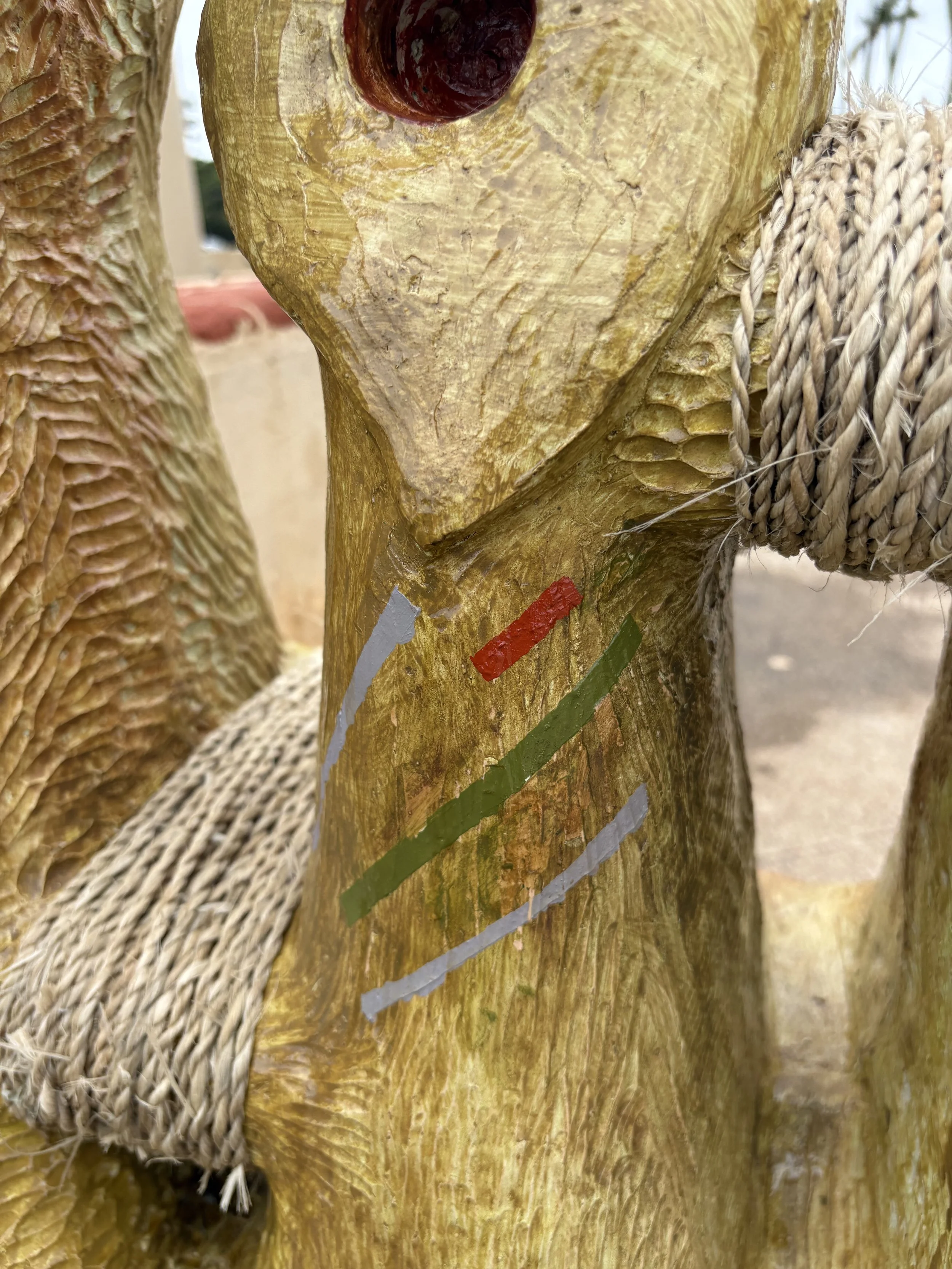
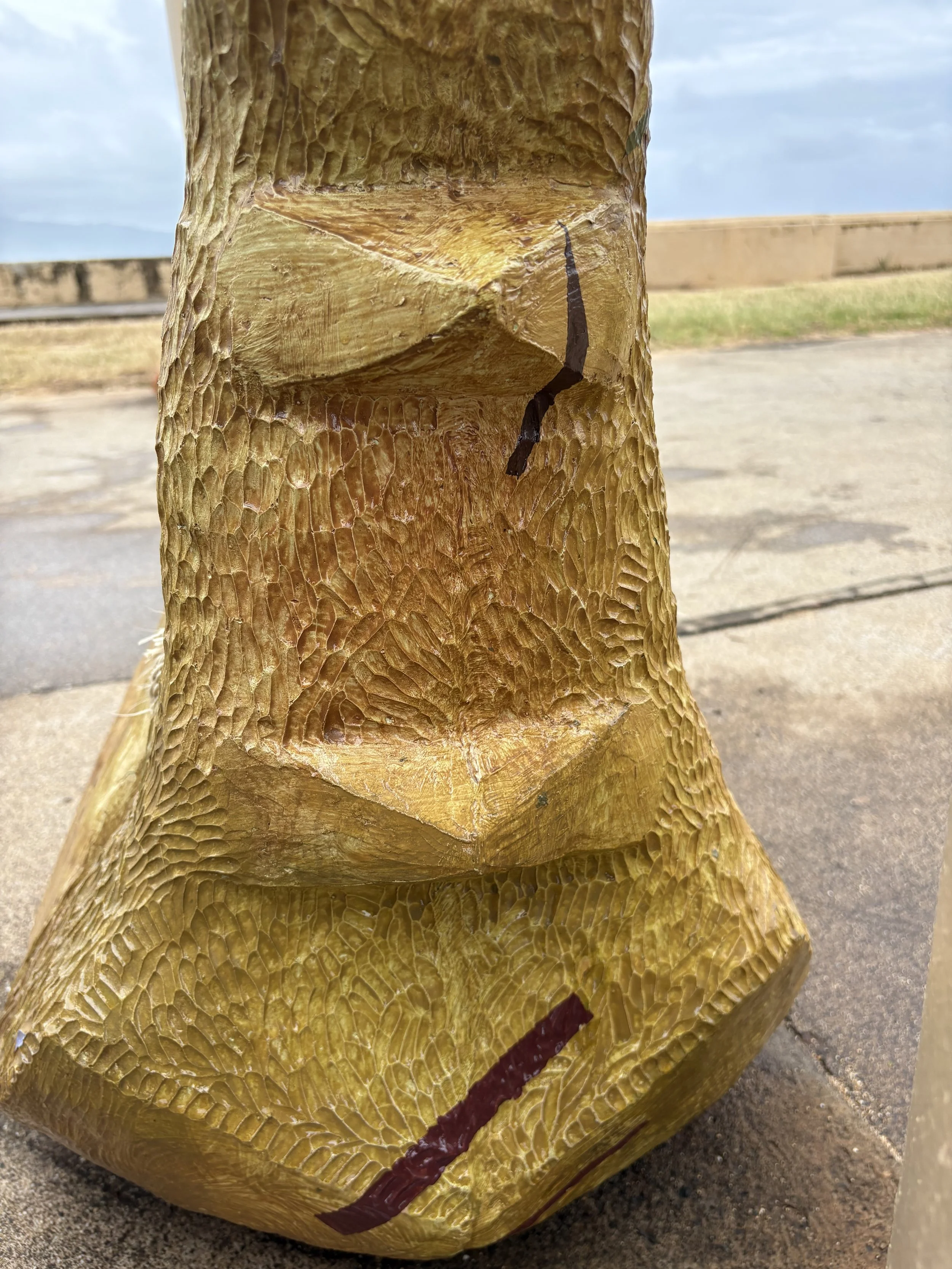
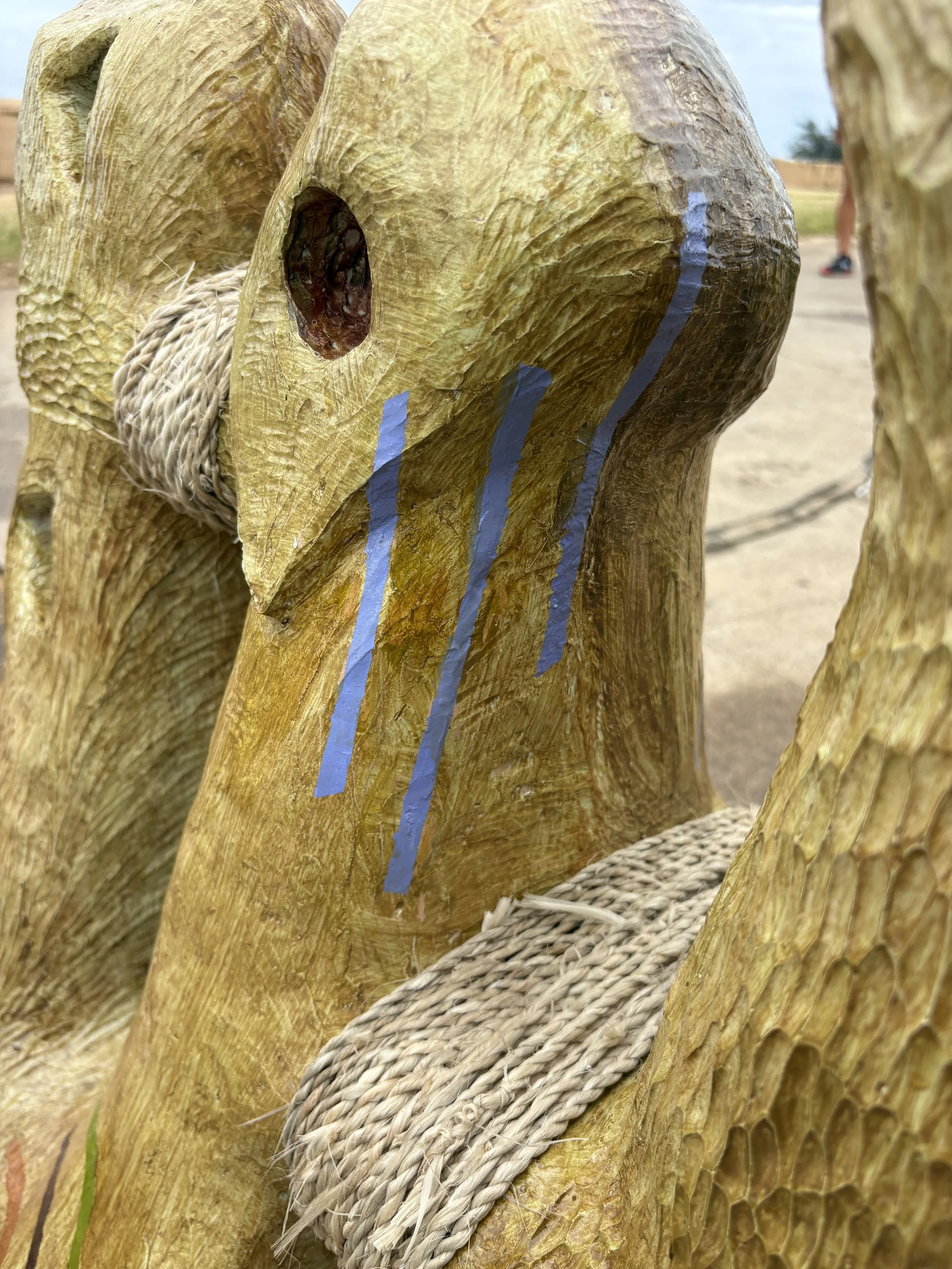
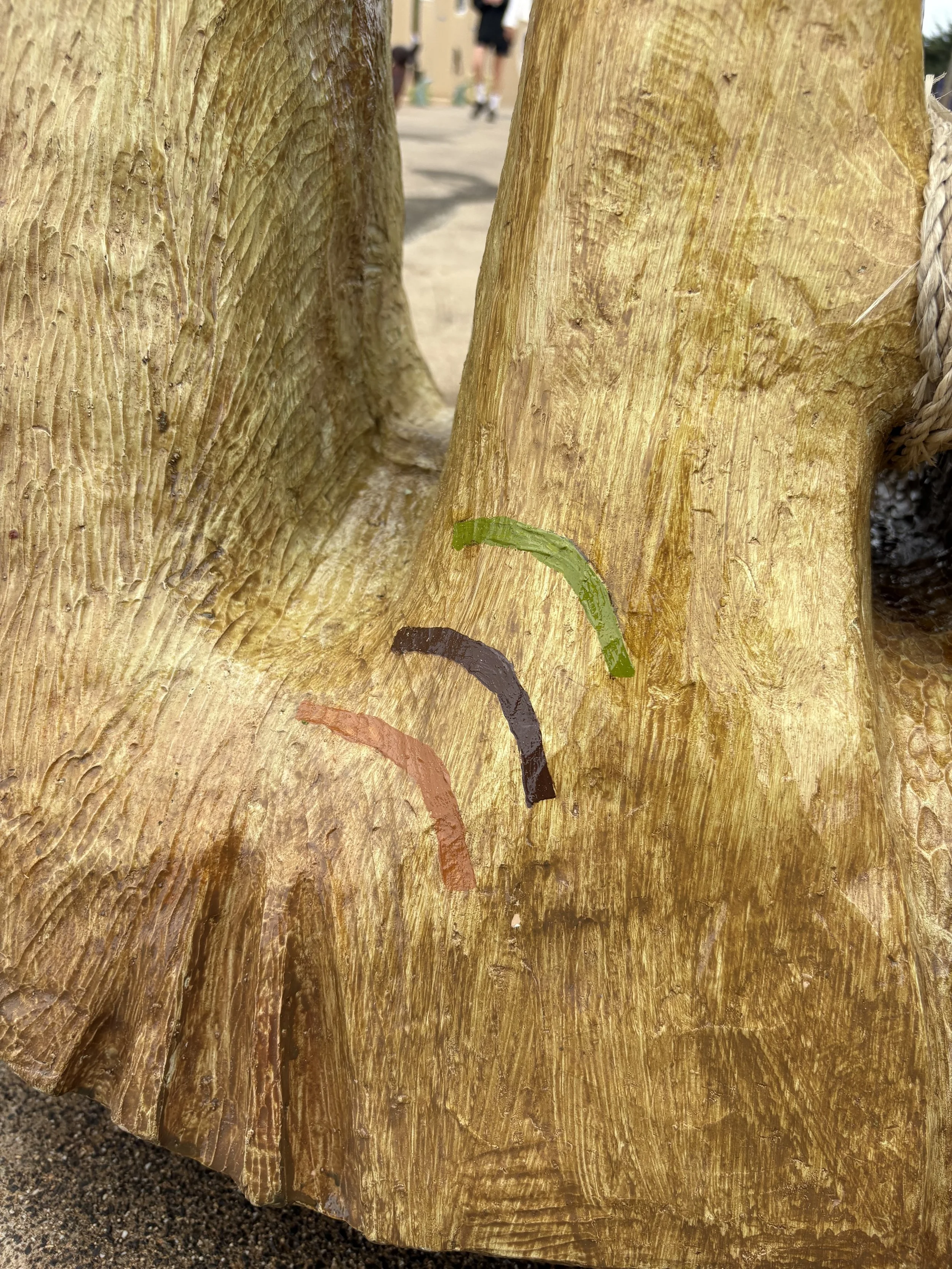
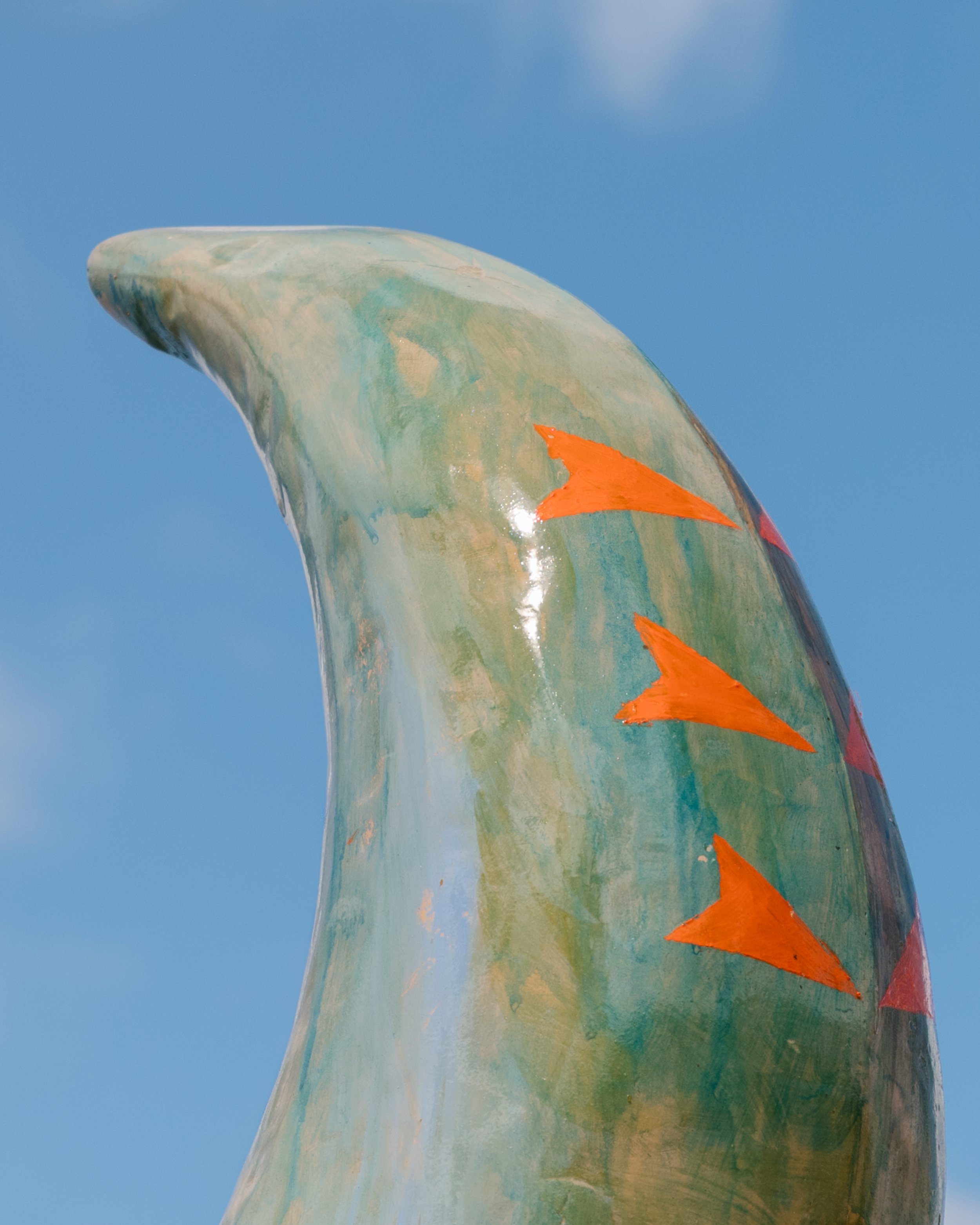
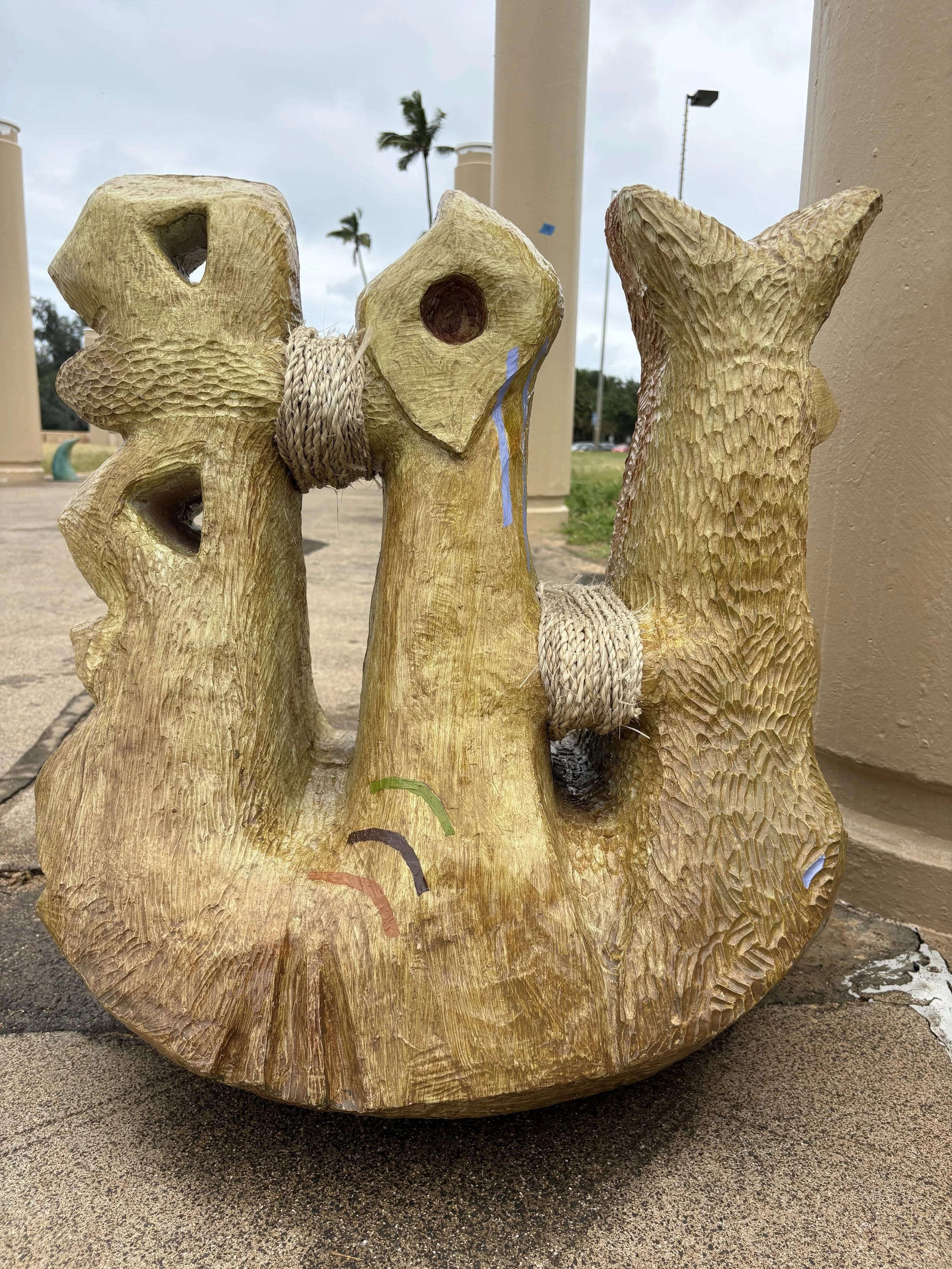
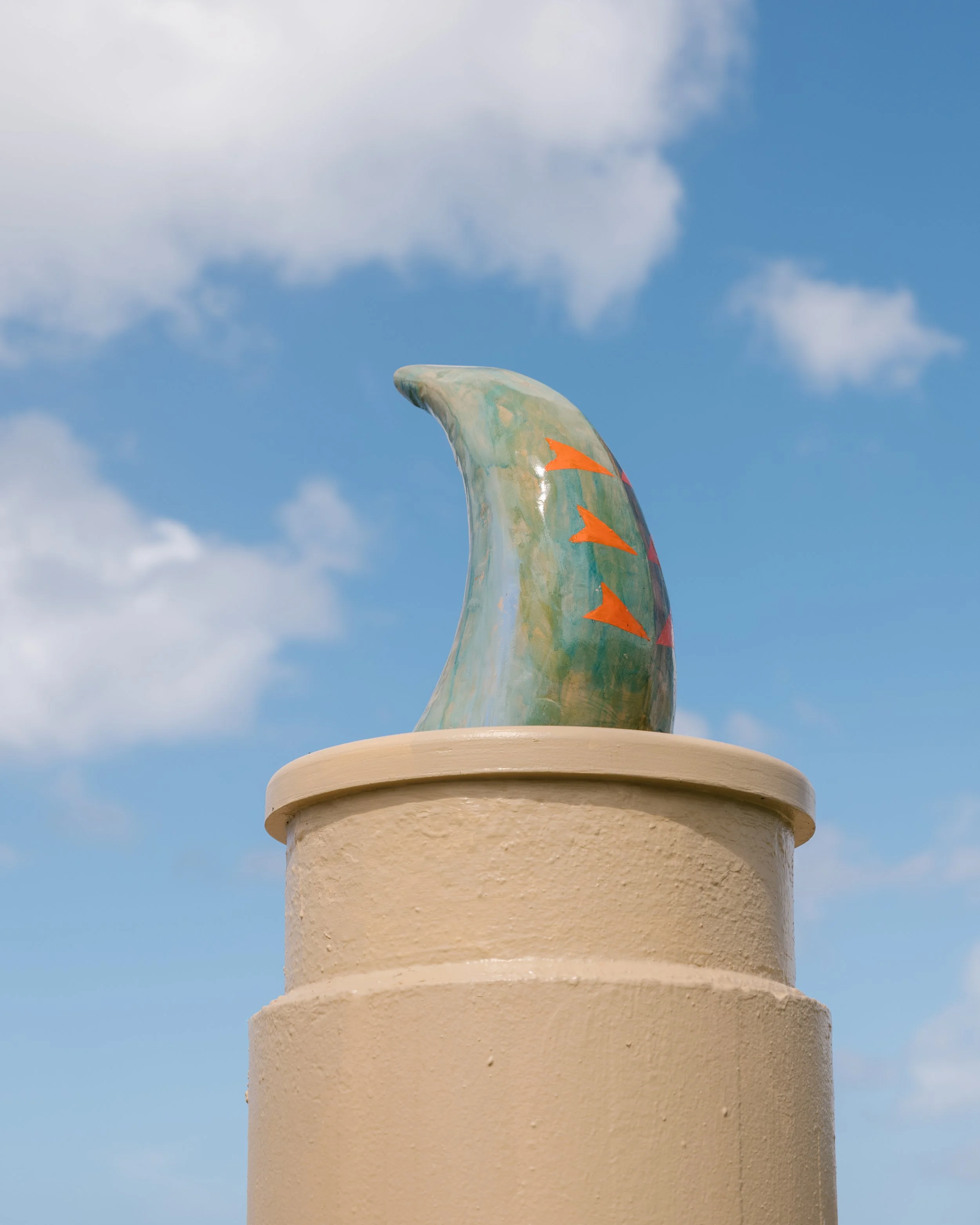
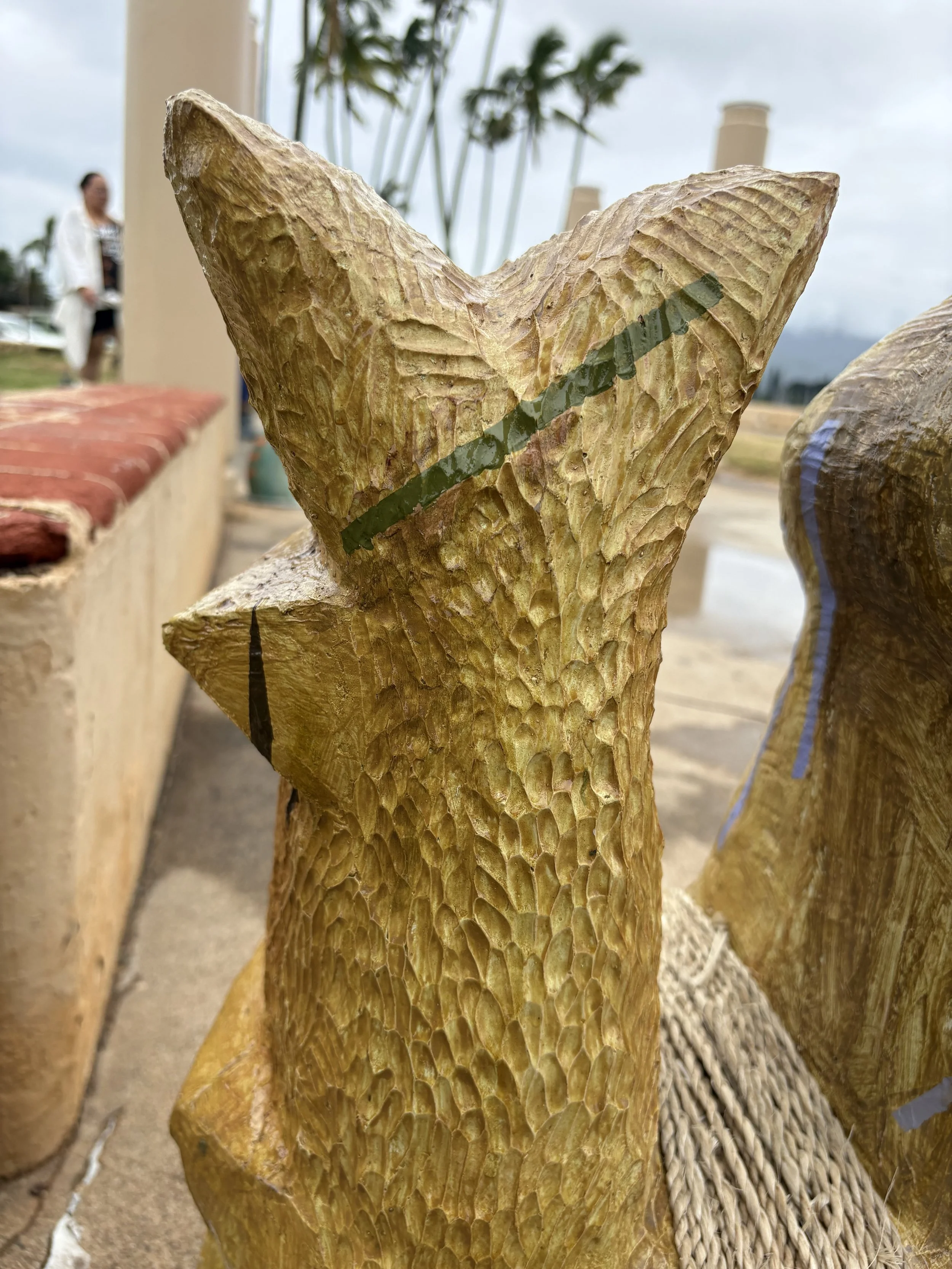
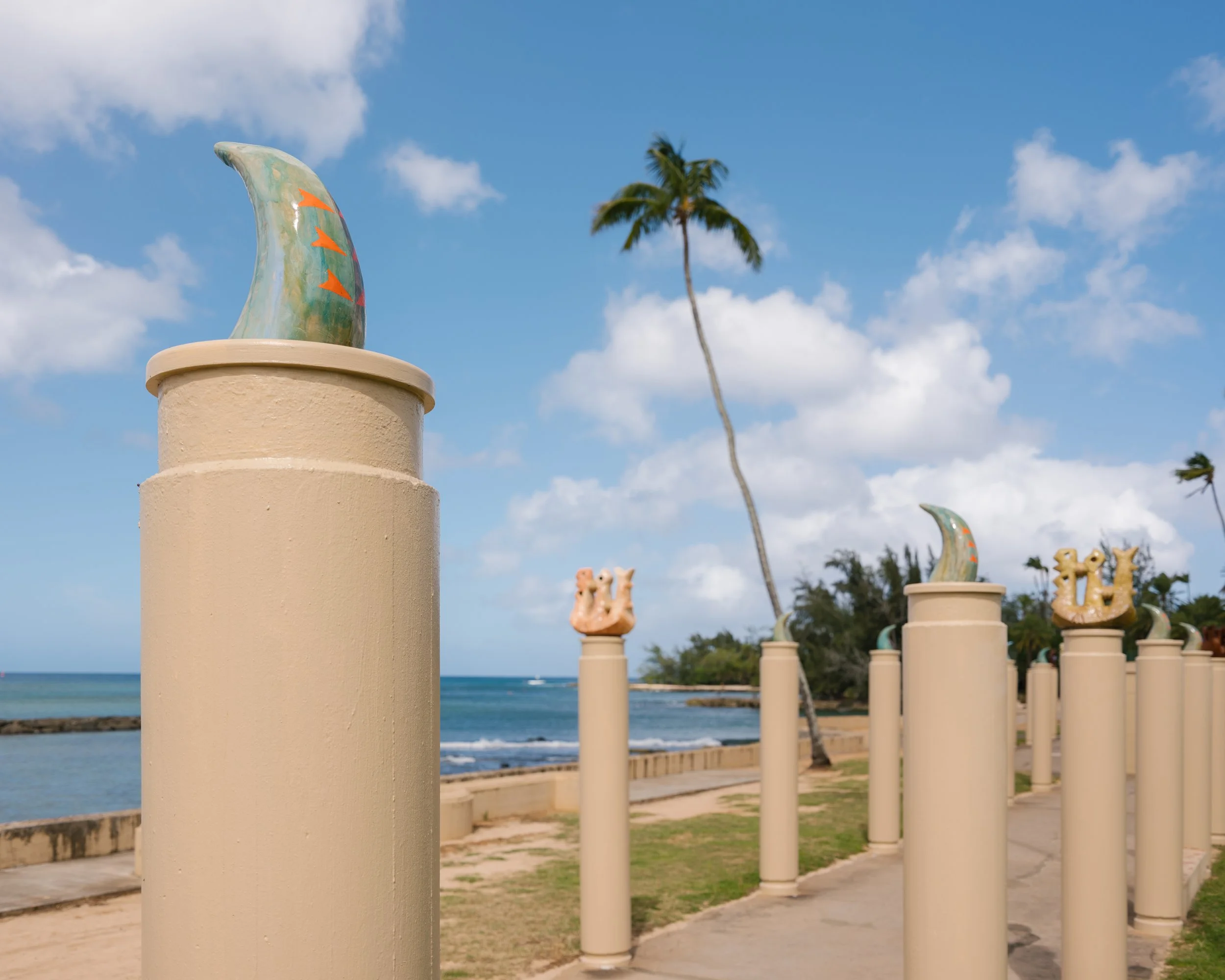
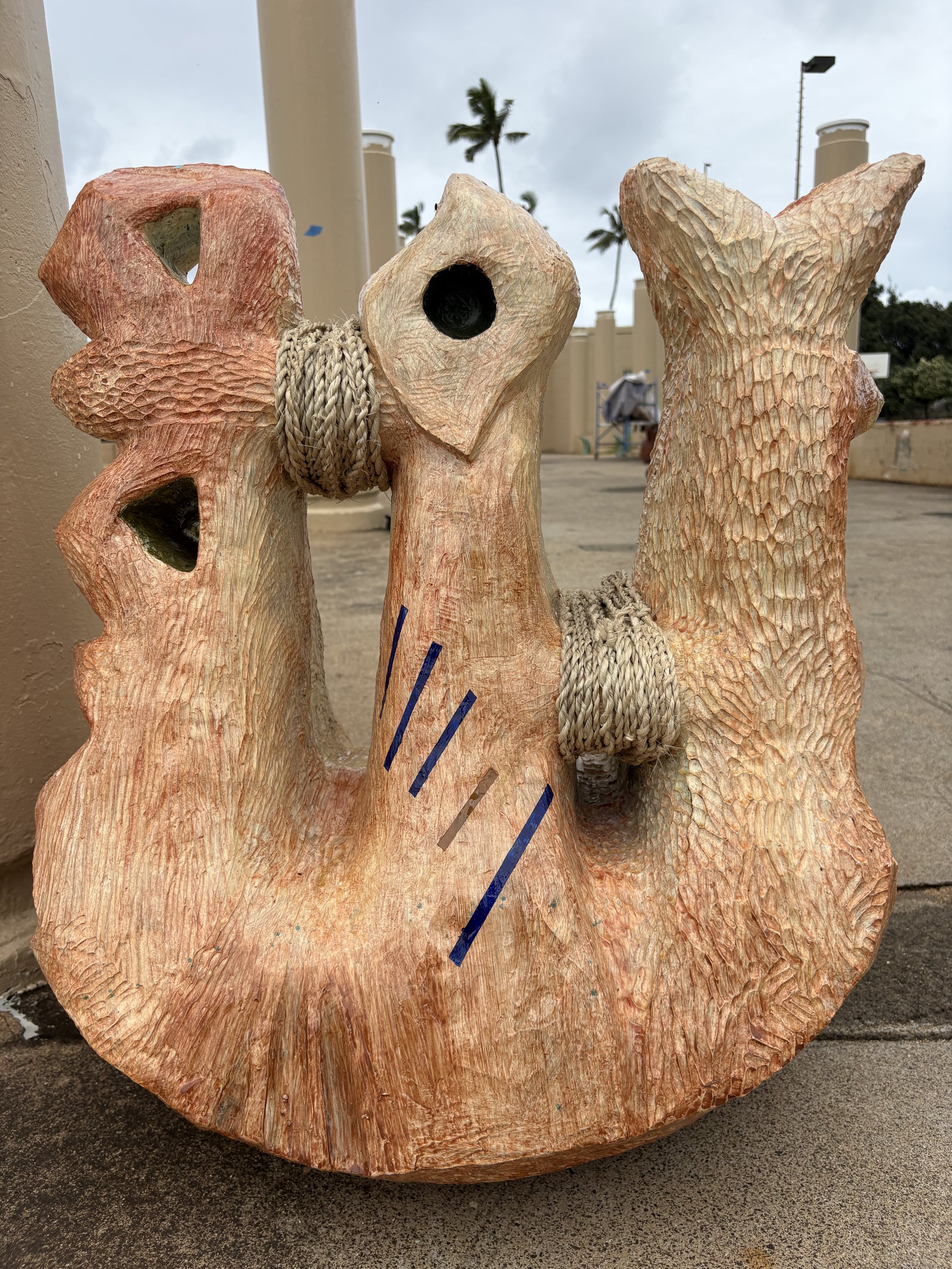
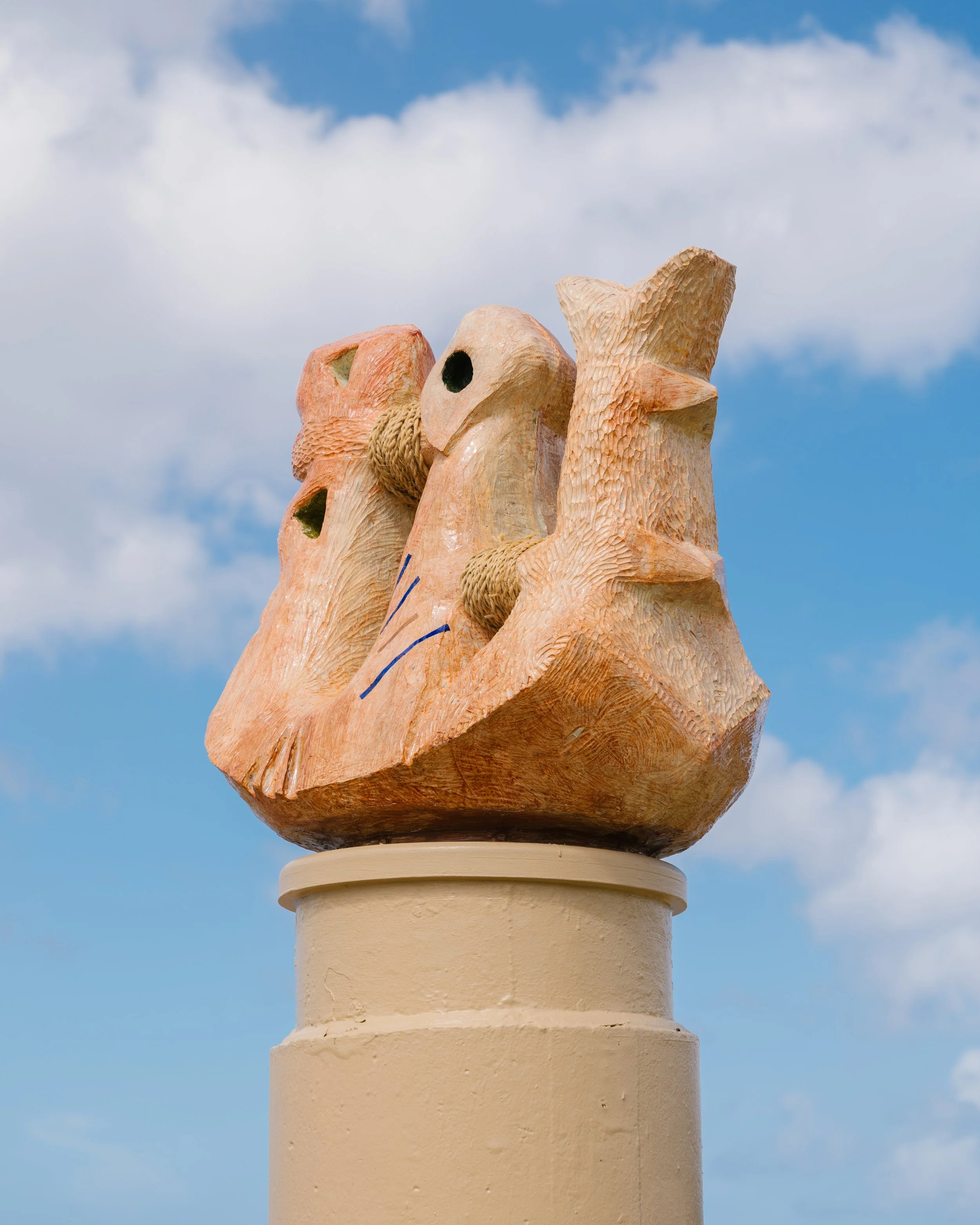
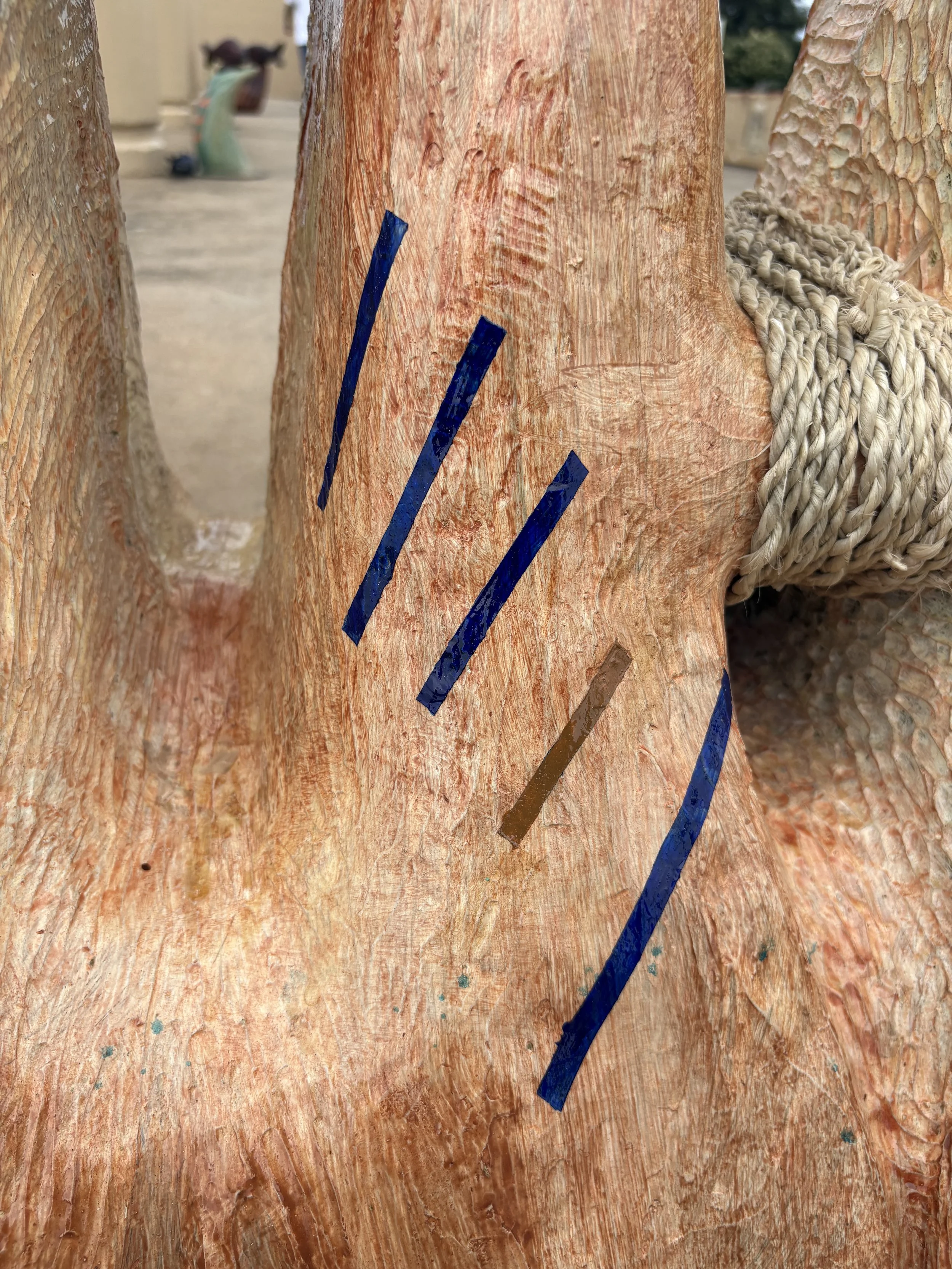
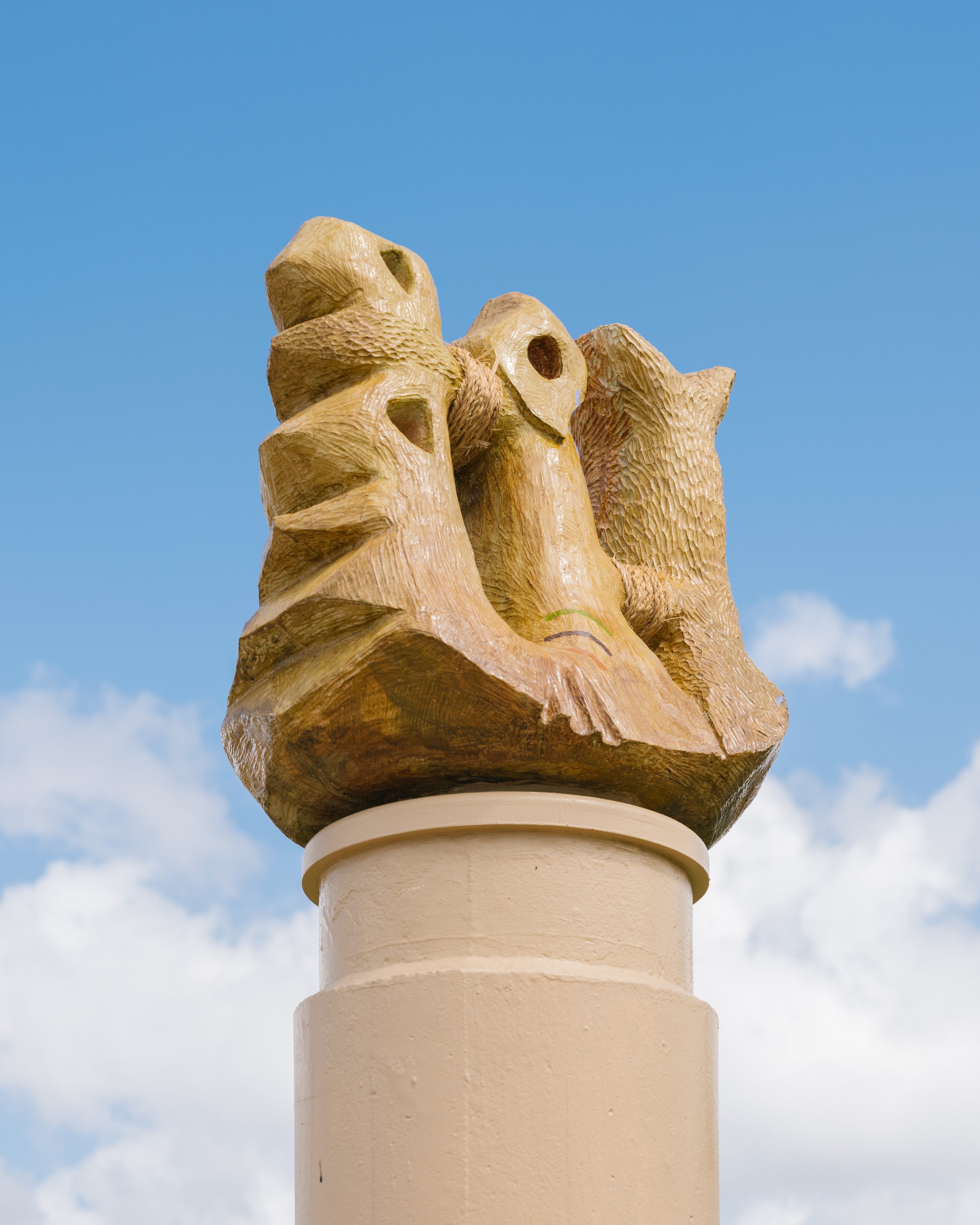
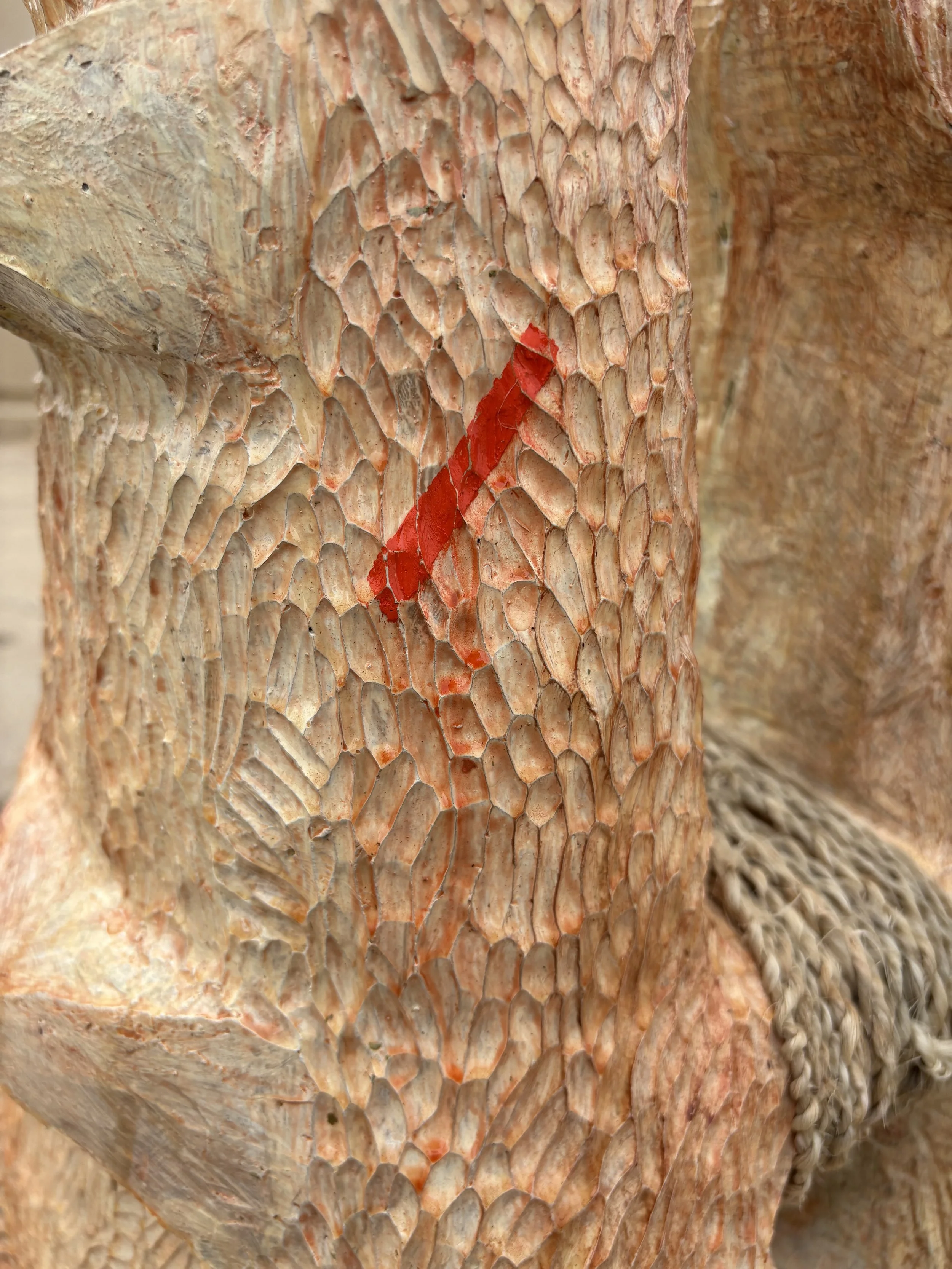
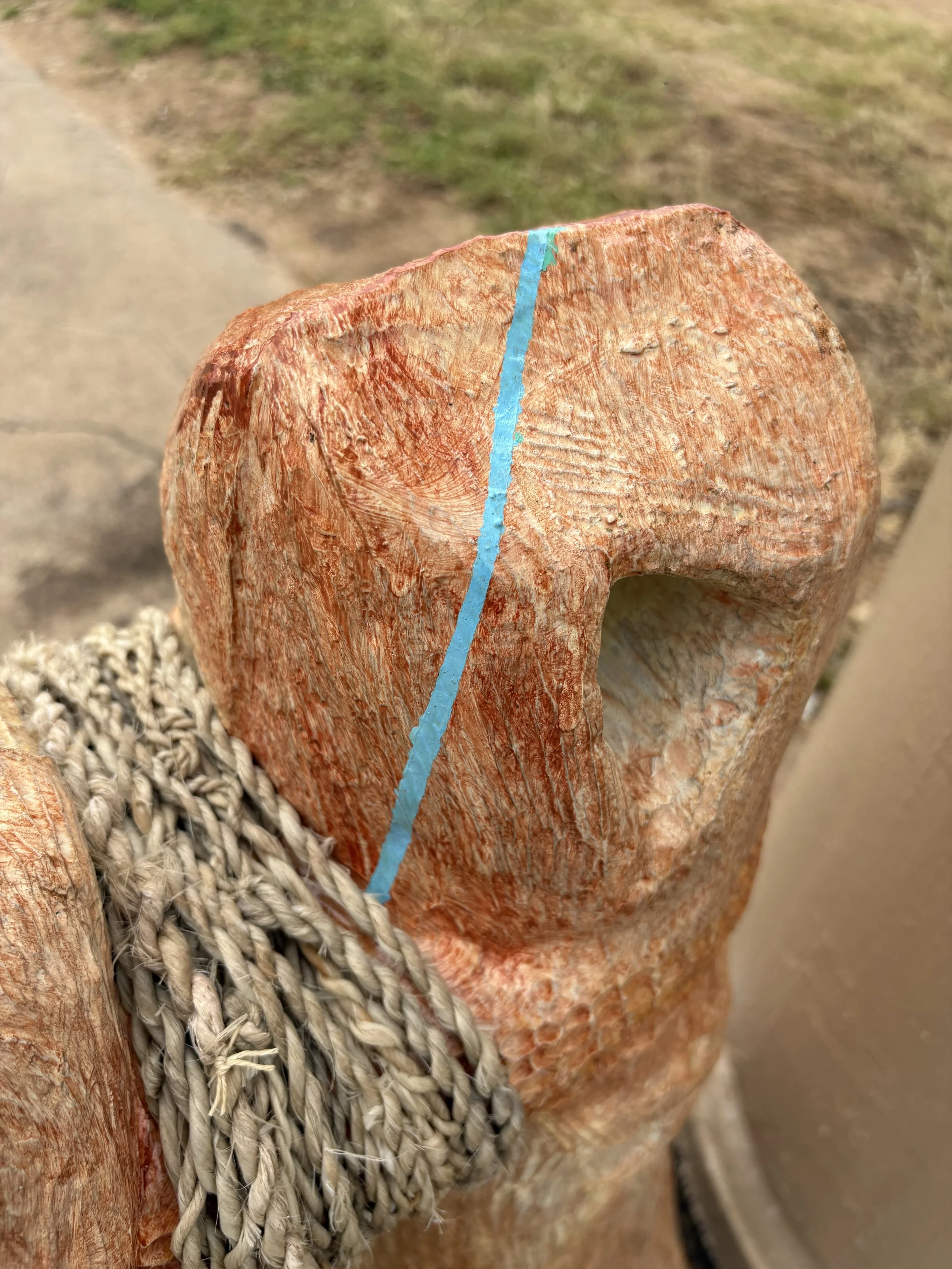
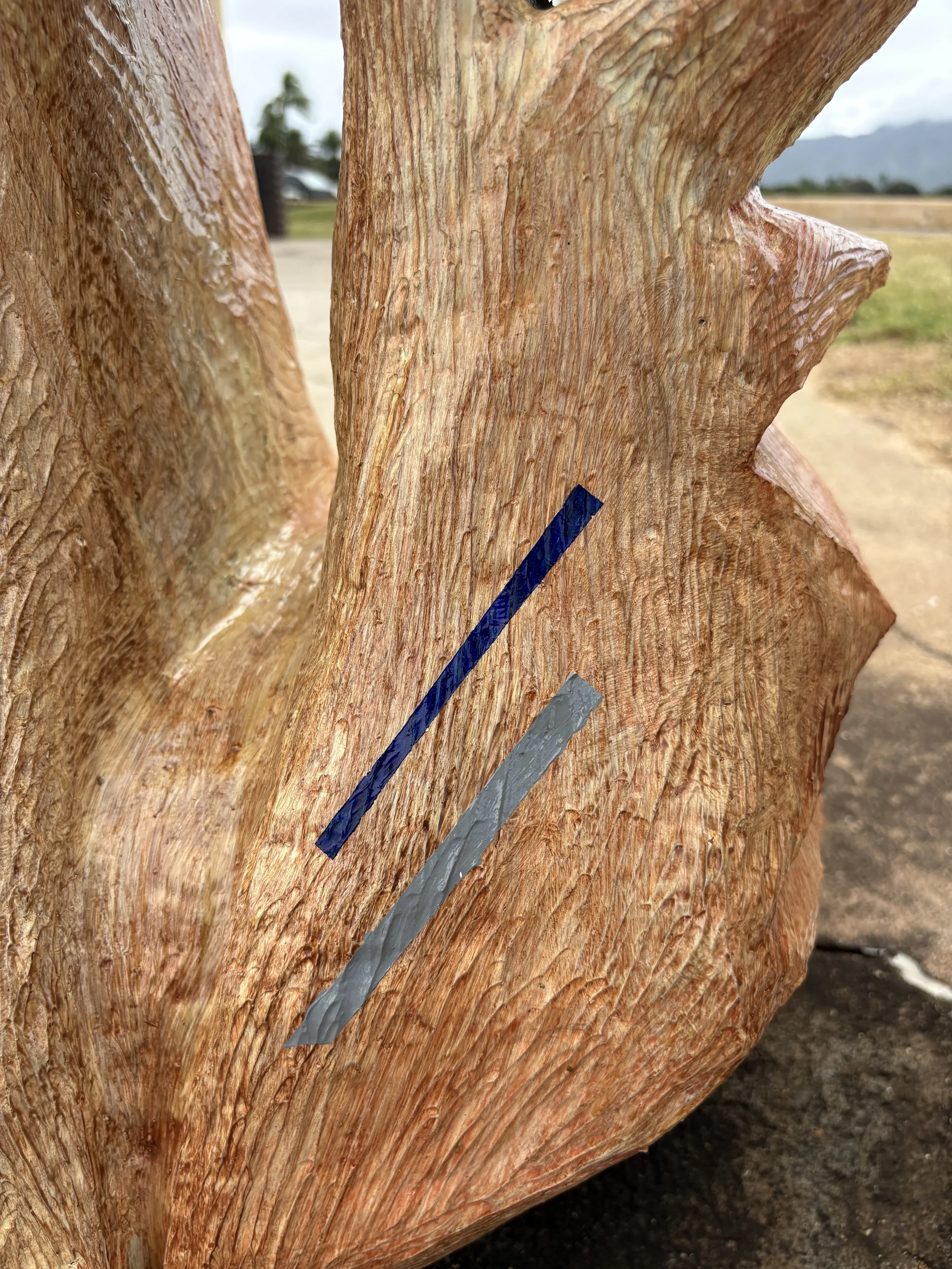
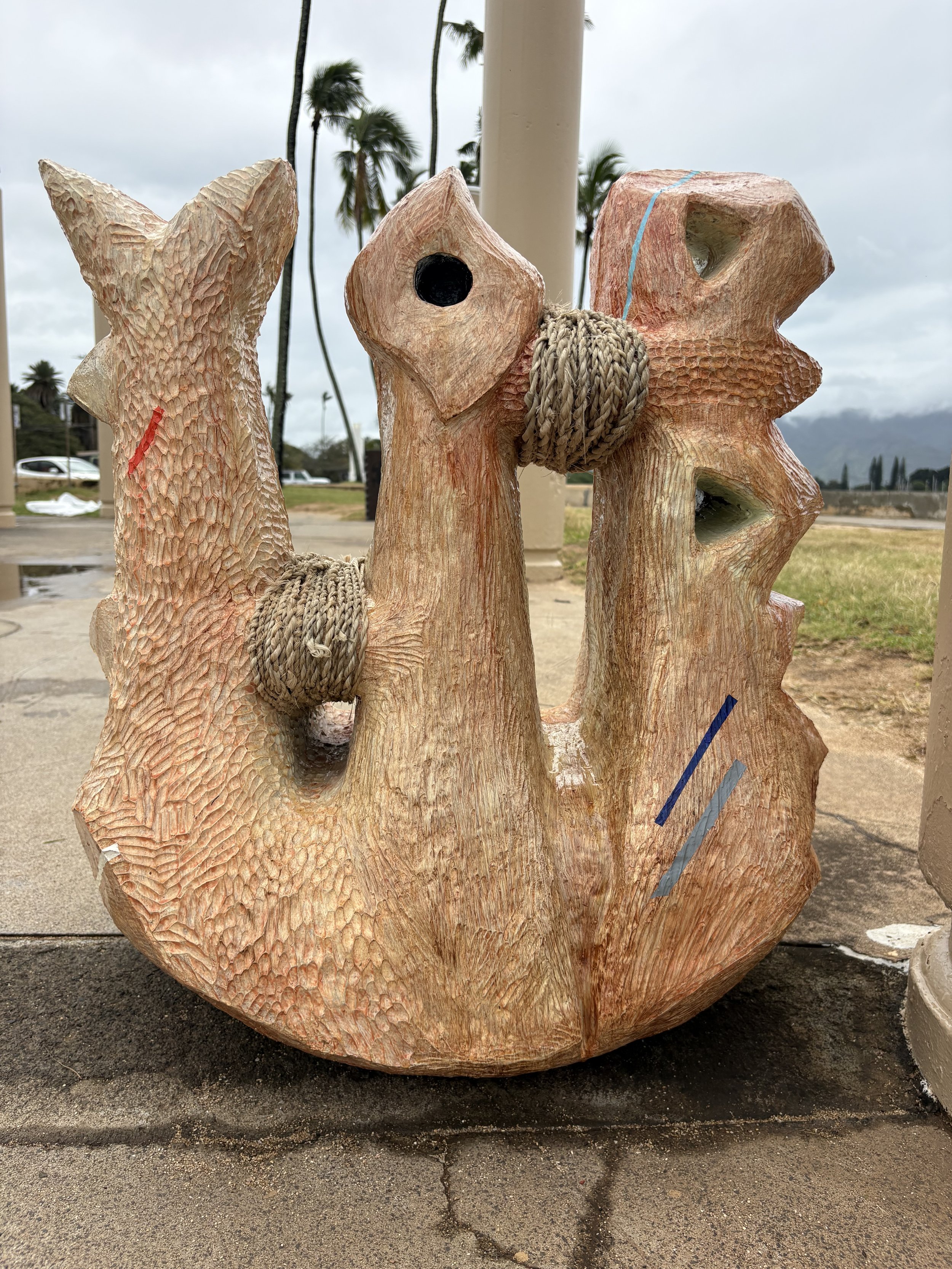
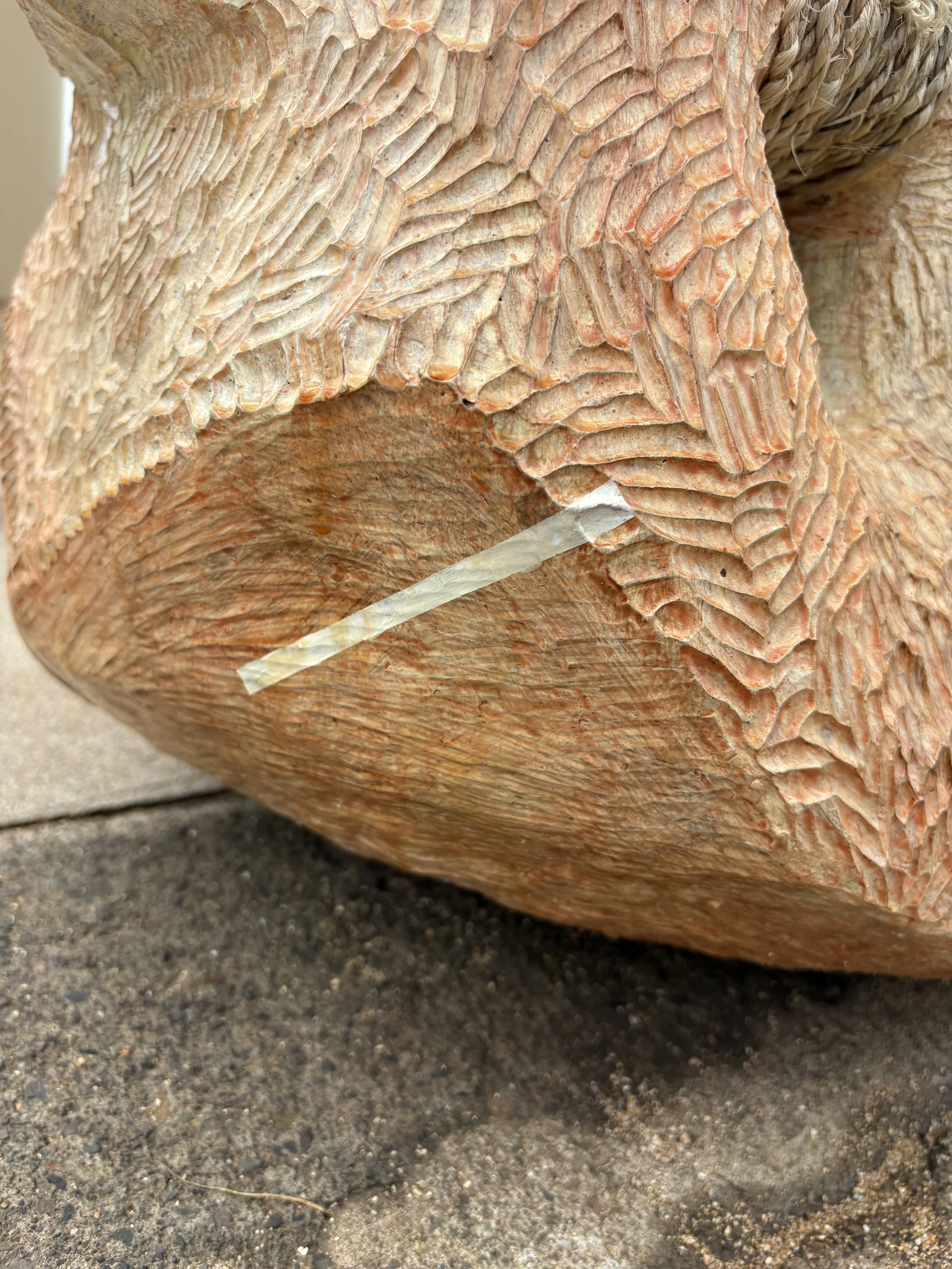
Mākāhā for Loko Ea
Fiberglass, paint, hau kaula/cordage